REVIEW · PRAGUE
Prague: Bike or E-Bike City Tour with A Local Guide
Book on GetYourGuide →Operated by HUGO Bike Prague · Bookable on GetYourGuide
That first slice of Prague can be tricky to plan. This bike and e-bike tour gives you a fast, local-feeling way to sort the city into places you can actually picture later. You’ll start in the center, get brief safety practice, then cruise a carefully chosen route that hits big landmarks and specific neighborhoods in just a few hours. I especially like the small group setup and the fact you can choose a regular bike or e-bike depending on your energy.
One drawback to consider: the route includes some real climbs, with elevation up to about 150m, and it’s not aimed at first-time bike riders. If you feel nervous on two wheels, a private option or an e-bike is the smarter move.
In This Review
- Key highlights I’d prioritize
- Why a Prague bike or e-bike tour is the fastest way to orient yourself
- Grandior meeting point: how the tour starts and what to expect
- Choosing e-bike vs regular bike for Letná hills and cobbles
- Expo 58, Metronome, and Letná Park: the view-setting combo
- Queen Anne’s summer palace, beer gardens, and shifting into the Castle mood
- Prague Castle area and Strahov Monastery viewpoints
- Petřín Park and the John Lennon Wall: street art with real context
- Dancing House, National Theatre, and the city’s modern edges
- Wenceslas Square and Municipal House: big-city Prague on wheels
- Powder Tower and the finishing rhythm that helps planning
- How the guides shape the experience (English, French, German, Spanish, Russian)
- Duration, pacing, and who this tour suits best
- Price and value: what $45 buys in a city like Prague
- Should you book this Prague bike or e-bike city tour?
- FAQ
- Where do I meet the guide?
- Can I choose between a bike and an e-bike?
- How long is the tour?
- What’s included in the price?
- Are entrance fees included?
- What languages are available for the guide?
- Is the tour suitable for children and beginners?
Key highlights I’d prioritize
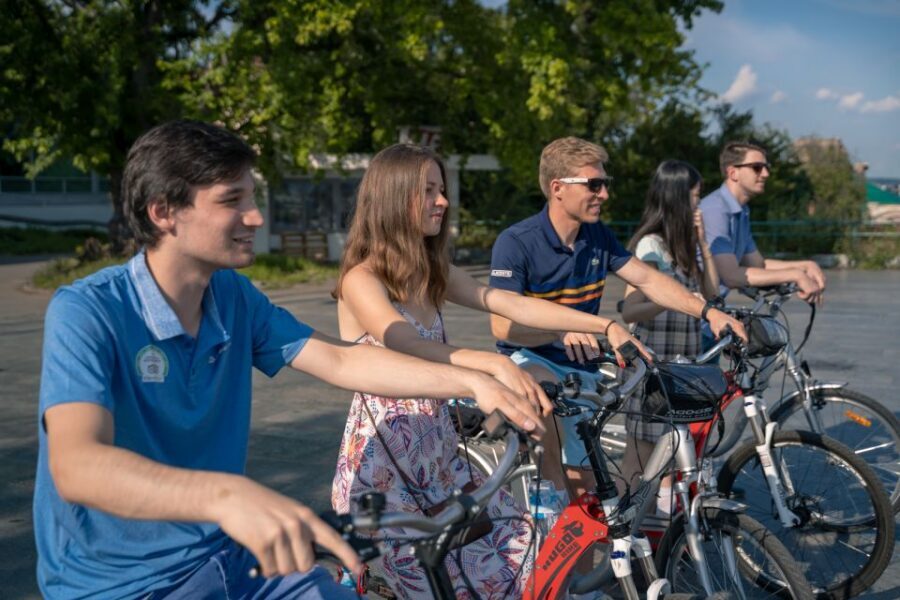
- E-bike option for the hills: the route climbs enough that an e-bike can feel like the difference between enjoying Prague and doing a workout you didn’t plan.
- A stop-by-stop guide narrative: you pause briefly at key points while the guide explains what you’re seeing, not just what to click in a photo.
- Letná viewpoints first, then the postcard chain: Expo 58 and the Metronome set the tone, before you roll into Castle-area scenery.
- Cold War art meets modern city icons: John Lennon Wall plus Dancing House and the National Theatre, all in one ride.
- Good pacing for photos: quick photo breaks are built in, so you don’t spend the whole ride sprinting for the perfect angle.
- Meet right in the action: start inside Hotel Grandior, so you’re not burning time crossing the city before the tour begins.
Why a Prague bike or e-bike tour is the fastest way to orient yourself
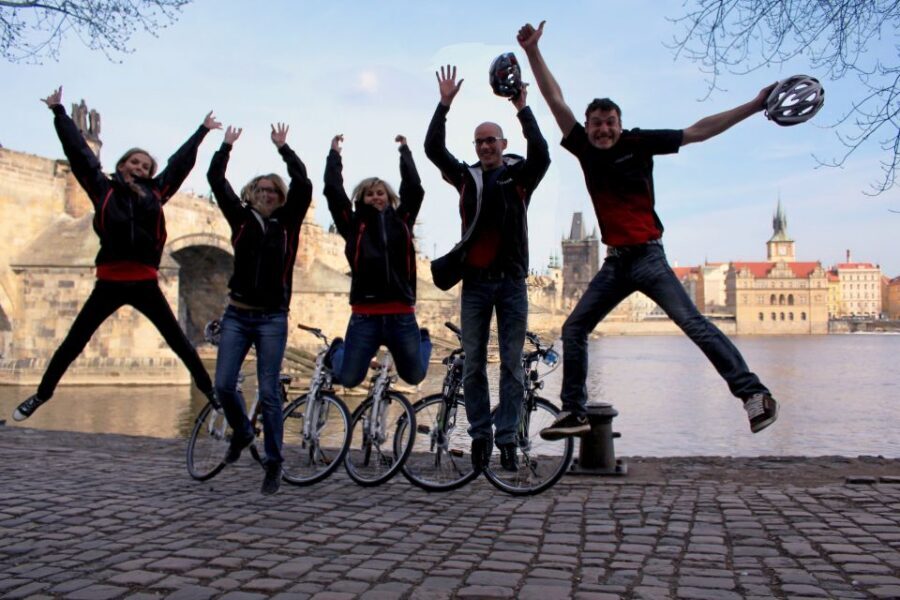
Prague is gorgeous, but it’s also a bit of a puzzle. Streets twist, viewpoints sit above you, and the river hides distances that feel shorter on foot until you hit the first hill. A guided bike route helps you learn the city by movement, so later you can pick the right direction without a guessing game.
This tour is built for that “first day” job: getting you from one major cluster to the next while a local guide fills in context. I like that it balances monuments with neighborhood texture, so you don’t leave thinking Prague is only Old Town postcard angles.
You’re also choosing between effort and ease. A regular bike gives you exercise and a slower feel through calmer streets. An e-bike keeps the ride fun when the city starts climbing toward viewpoints.
You can also read our reviews of more cycling tours in Prague


Grandior meeting point: how the tour starts and what to expect
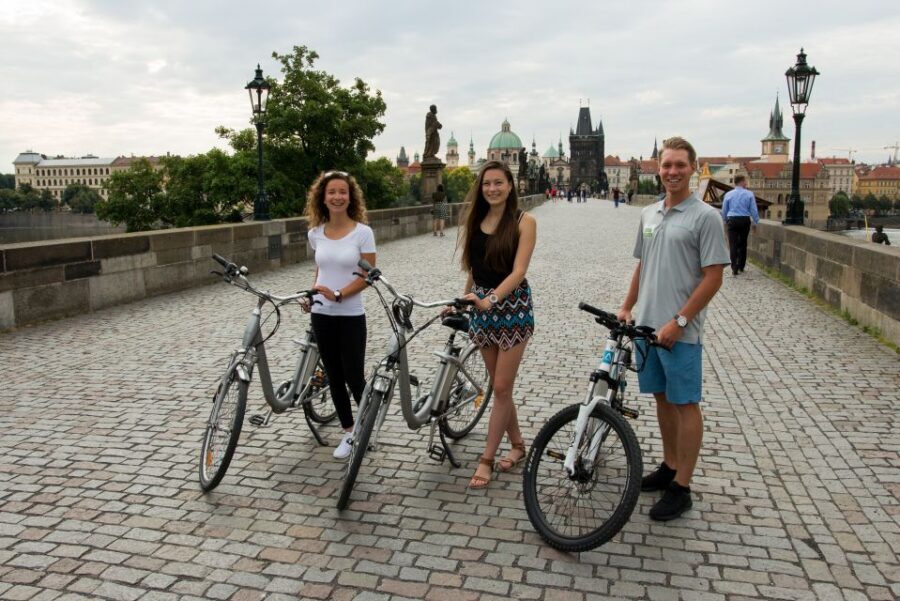
You meet the guide at the office on the 1st floor of Hotel Grandior, and you should arrive about 10 minutes early. That small timing buffer matters. It gives you a clean start: equipment check, quick route explanation, and a moment to get comfortable before you roll.
Before the tour proper begins, you get instructions and practice plus a short safety briefing. The tour provides gloves and rain gear options like a poncho or jacket if weather turns. Helmets are also part of the ride setup, and multiple riders mention the bikes feel reliable during the tour.
The tour happens in central Prague and the operator says they try to avoid traffic as much as possible. That’s practical: in a dense city center, the goal is to keep the ride smooth rather than fighting stop-and-go chaos.
Choosing e-bike vs regular bike for Letná hills and cobbles
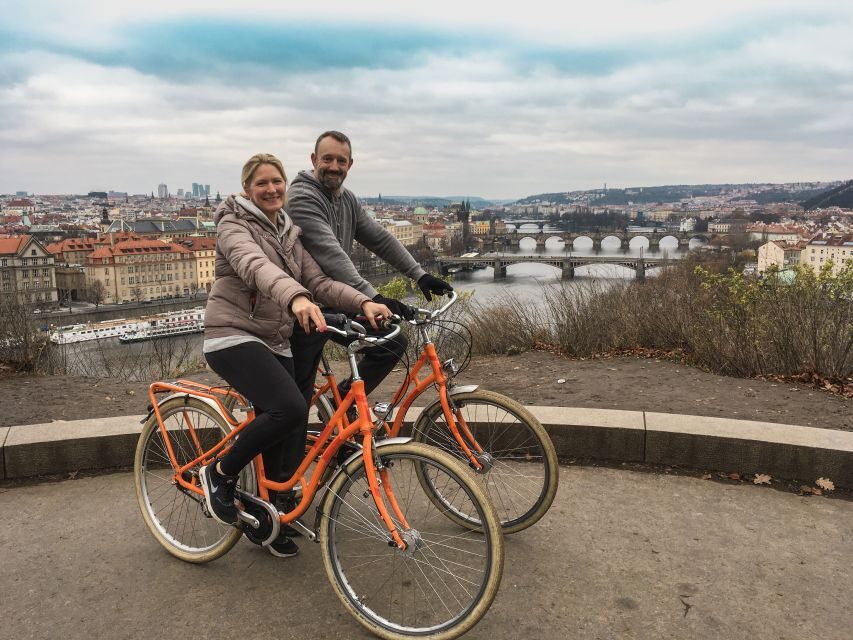
This route includes elevation of up to roughly 150m. The company even nudges you toward an e-bike for that reason. Translation: you can do it on a regular bike, but you’ll want leg stamina, and you’ll feel every incline.
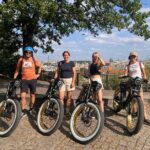
The practical win with an e-bike is not just speed. It’s control. You can maintain a steady pace through climbs and arrive at viewpoints ready to look around instead of wiped out. One rider specifically noted strong power on the e-bikes and mentioned suspension help on rough cobblestones, which is exactly the kind of detail that turns discomfort into manageable.
Regular bikes make sense if you’re a confident rider and you want more exertion. The tour is strongly not recommended for bike beginners, so if you’re unsure on balance or stopping, an e-bike or a private tour (with flexible pacing) is the safer bet.
Expo 58, Metronome, and Letná Park: the view-setting combo
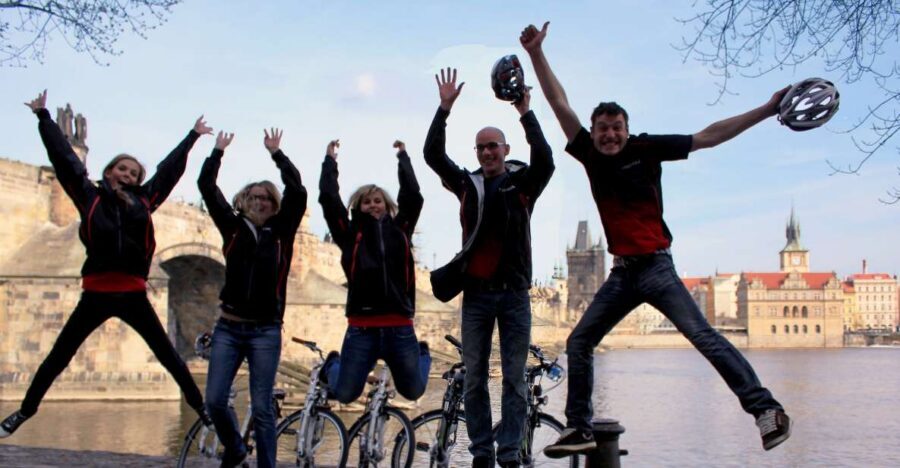
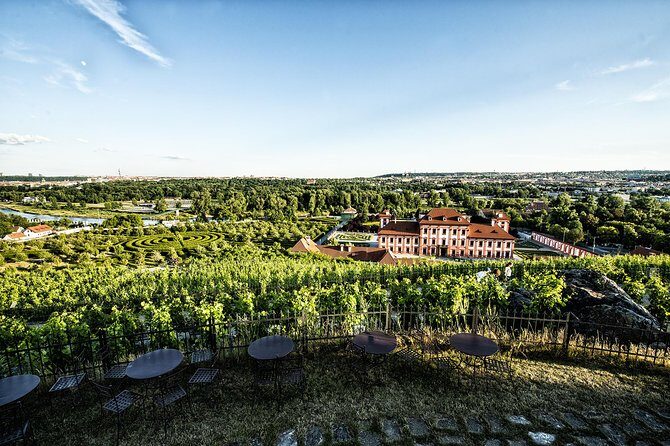
The tour starts building your “Prague map” almost immediately with the Letná area. Expo 58 is a useful entry point because it ties modern-looking structures to Prague’s political and cultural story, without forcing you into museum time. You’re up high enough here that your perspective changes fast, and that makes everything you see later feel connected rather than random.
Then comes the Metronome and the big open stretches around Letná Park. This is the kind of stop that works even if you don’t know Czech facts yet. You’ll see the city laid out below you, and the guide can point out how the river and bridges shape where people built major landmarks.
Why this matters: early viewpoints teach you geography. After Letná, you understand why certain places feel like they belong together, and why later climbs and descents feel logical instead of exhausting.
If the weather is windy or chilly, this area can feel exposed. It’s not a deal-breaker, but it’s a good reason to keep your layers and rain gear handy.
Queen Anne’s summer palace, beer gardens, and shifting into the Castle mood
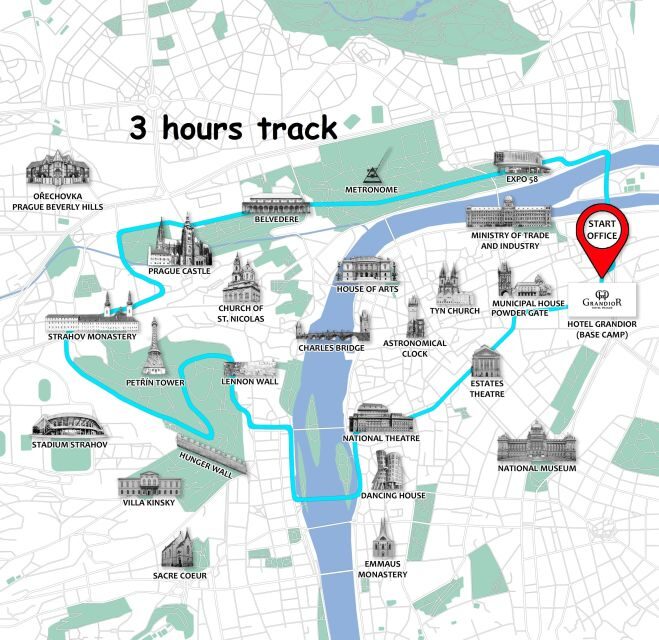
From Letná, the ride moves you toward the grand “feels bigger when you’re on a slope” part of Prague. Queen Ann’s Summer Palace is a great example of why a bike tour works so well: you get a sense of placement without spending hours searching for the perfect angle.
A beer garden stop also fits the local rhythm here. Even if you don’t stop for a drink, you’re getting a break in a realistic way. You pause, regroup, and let the route keep flowing at a human pace.
This is the shift: from wide city views to layered monument scenery. The guide’s stop-by-stop commentary helps you connect what you’re seeing to who built it, why it matters, and how the city’s power centers moved over time.
Possible drawback: beer-garden areas can attract more people during peak hours. The good news is that the tour pauses briefly, so you’re not stuck in a long wait.
You can also read our reviews of more guided tours in Prague
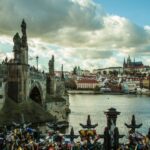
Prague Castle area and Strahov Monastery viewpoints
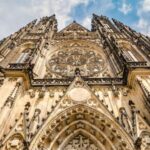
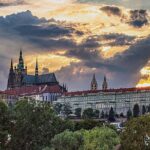
When you reach the Prague Castle area, the city starts behaving like a story with chapters. You’re surrounded by walls, towers, and gradients that make the place look larger than it is. Even without entering any site buildings, cycling through the approaches gives you a strong sense of layout.
Next, Strahov Monastery adds a different texture. It’s not just another viewpoint. It’s one of those stops where the guide can connect architecture, landscape, and religious or cultural influence, and you get to see why Prague’s hilltop locations mattered.
A bike tour is valuable here because the Castle complex area is spread out. Walking can make it feel like forever. On a bike, you travel the distance efficiently and still get to stop long enough to take in the scene.
If you choose regular bike, take this portion seriously. Elevation climbs earlier and later, and you’ll want to pace yourself rather than sprint.
Petřín Park and the John Lennon Wall: street art with real context
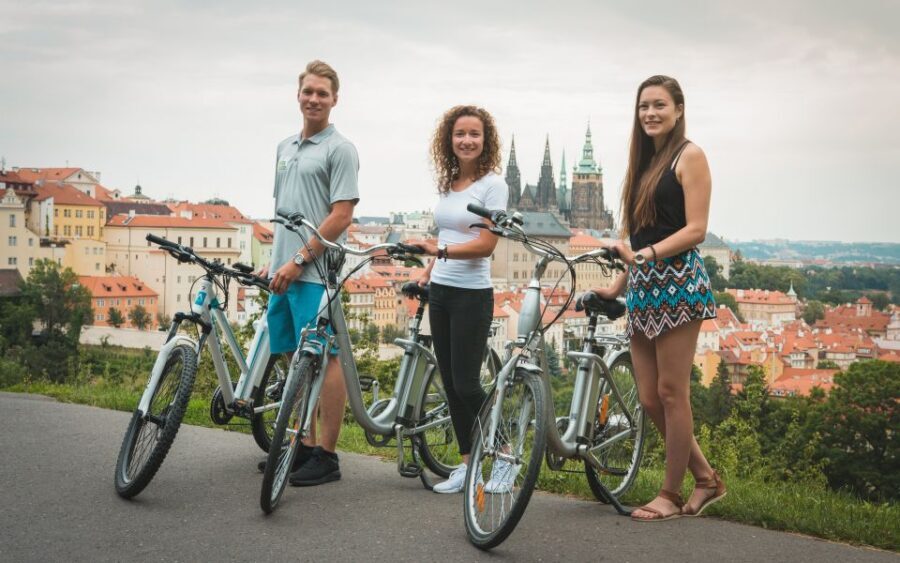
Petřín Park is where Prague turns from monuments to human-scale charm. Gardens and paths make you slow down without forcing you to stop walking for hours. From a bike perspective, it’s a pleasant interlude before the ride gets more urban again.
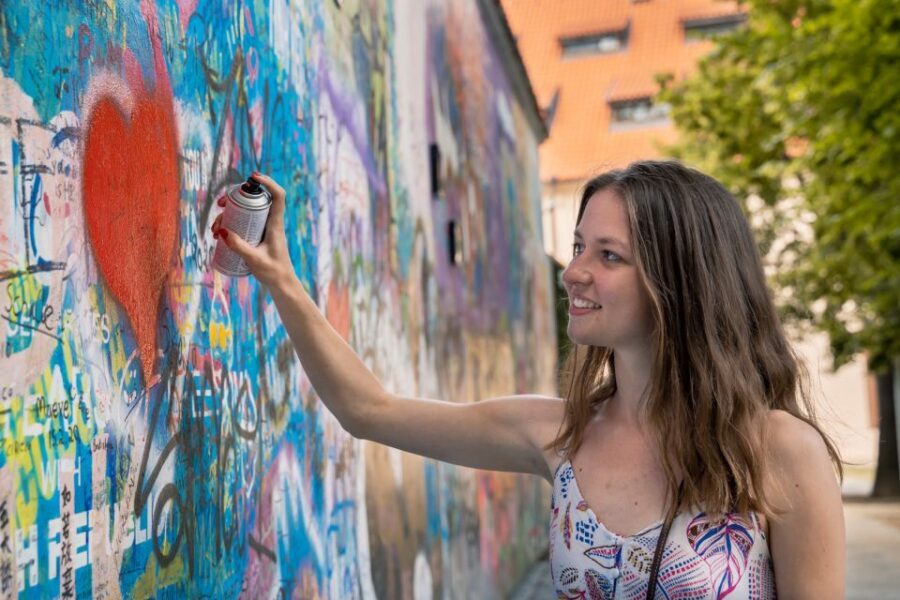
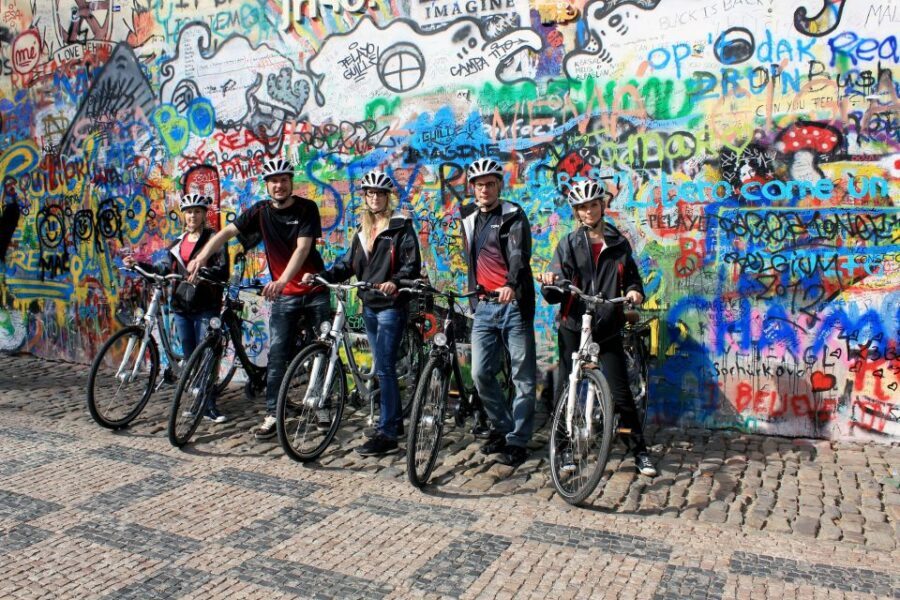
Then there’s the John Lennon Wall. This stop is the perfect “I get it now” moment for many visitors. You’re standing in one of Prague’s most famous symbols, and the guide can connect the wall’s story to the broader idea of modern protest and cultural memory.
Why a guided stop helps: without context, you might read it as just colorful graffiti. With context, it becomes a timestamp of how people used art to speak when politics tightened.
Photo-wise, this is a strong stop. The only caution is that it can be busy. If you want less crowd energy, your guide can often help you time your shots with the group.
Dancing House, National Theatre, and the city’s modern edges
After the hilltop segments, you start moving back toward central Prague’s recognizable skyline. The View of Dancing House gives you a clean shot of one of the city’s most distinct modern silhouettes, and it’s a good reminder that Prague isn’t only medieval.
Then the route heads toward the National Theatre area. Even if you’ve seen photos before, seeing it from the street level you reach by bike feels different. It sits in a real urban context, and you can look at the building in relation to the river and surrounding streets.
This is also where guides earn their pay. Several guides mentioned in rider feedback include story-telling with extra visual context, and you can feel the difference when someone points out small design intentions rather than repeating generic facts.
Drawback to note: as you return to central roads, the ride can feel more active. The operator says they try to avoid traffic, but you’re still in a busy part of the city.
Wenceslas Square and Municipal House: big-city Prague on wheels
Wenceslas Square is one of those places you’ve likely heard about, but it’s hard to absorb fully while you’re checking maps and trying not to get lost. On this tour, it becomes part of a route, not just a destination.
The Municipal House adds contrast. It’s a strong pick because it’s ornate and visually bold, and it helps you shift from monument tourism to a sense of Prague’s civic and cultural identity. A guided stop here is practical because the building’s details are easier to notice when someone points out what to look for.
This segment works well if you’re trying to understand Prague as a functioning city, not only a museum. You ride through the day-to-day urban fabric and then immediately get the historical threads.
Powder Tower and the finishing rhythm that helps planning
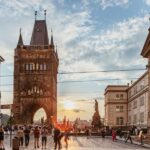
Ending with the Powder Tower gives the tour a satisfying closure. It’s not just a random landmark. It connects to Prague’s defensive past and helps you understand why certain streets and fortifications shaped where the city grew.
The last stretch is also a planning advantage. After the ride, you’ll have a mental map of where the hills are, where the river matters, and which landmarks cluster together. That makes your remaining days easier—especially if you want to revisit the Castle area, spend more time in Petřín, or base your evening strolls around places you actually rode to.
If you prefer to keep your schedule tight, this is a good “anchor” tour to book early in your stay. You get the big orientation without losing a full day.
How the guides shape the experience (English, French, German, Spanish, Russian)
The tour is led by a live guide, and languages include English, German, French, Spanish, and Russian. That matters because it changes what you hear at each stop. A good guide turns each pause into a story you can remember later.
From rider feedback, the guides often adjust for the group. I like the approach where pace and spacing stay flexible, especially when there’s a mix of more confident riders and first-timers who still want to experience the route. Guides also check in on comfort and safety, and some even help with photo timing.
Names that come up include Petr, Jane, Joseph, Tomas, Hanna, Fabian, Zuzana, Adam, Tom, Dan, Andrea, Freya, and Luba. That variety is a sign the experience isn’t just automated commentary. You’re more likely to get a human style of storytelling.
A small-group limit also helps. With up to 12 participants, it stays easier for the guide to keep track of everyone. If there are more riders, additional guides join so the group doesn’t turn into a long pack.
Duration, pacing, and who this tour suits best
The tour runs from about 90 minutes to 3 hours, depending on your chosen option and the starting time. In real terms, that time window is perfect for people who want big sights without feeling stuck for half a day.
The pacing is structured around short stops for a few minutes at each highlight. That means you spend more of your time moving between locations and less time waiting around. For photography, it’s usually enough time to capture the moment without the tour collapsing into slow traffic.
Who this is best for:
- Couples and friends who want a first-day orientation fast
- Confident cyclists who don’t mind hills (and can handle cobbles)
- Families with children aged 8 to 12 who are comfortable on bikes (otherwise consider private)
Who should think twice:
- Bike beginners (the tour isn’t recommended for them)
- Pregnant travelers
- People under about 120 cm or over about 110 kg
- Anyone who’s not comfortable with riding for the full route
Price and value: what $45 buys in a city like Prague
At about $45 per person, this isn’t a bargain tour, but it’s also not priced like a luxury day. The value comes from what’s included and what’s avoided.
Included items reduce friction: you get gloves, and if weather turns, you can use a rain poncho or jacket. The guide-led stops also save time. Instead of you hunting for viewpoints and trying to interpret landmarks alone, you get a route that connects the stops into a coherent Prague story.
Also, you’re not paying entrance fees on this tour. That keeps the price steadier, and you can decide which sites are worth deeper time after the ride.
The biggest “value” is energy management. A bike tour covers distances on hills and back to central Prague without turning into a full workout for everyone—especially if you choose an e-bike.
Should you book this Prague bike or e-bike city tour?
Yes, if you want a practical, guide-led way to see the city’s main clusters in one outing, and you’d rather learn Prague by riding than by walking between distant stops. The Letná viewpoints plus Castle-area scenery plus Lennon Wall and Wenceslas Square is a strong lineup, and the route helps you understand how Prague connects vertically (hills) and horizontally (river and bridges).
Consider a private tour if you have kids between 8 and 12, if you don’t feel 100% comfortable riding, or if you want flexible pacing and route optimization. If you’re a true beginner on a bike, skip this one and find a gentler option.
FAQ
Where do I meet the guide?
You meet the tour guide or manager in the office on the 1st floor of Hotel Grandior. Arrive 10 minutes before the tour time.
Can I choose between a bike and an e-bike?
Yes. You can choose a regular bike for more exercise or an e-bike for more comfort, and you can try the bike before you start.
How long is the tour?
The duration is listed as 90 minutes to 3 hours, depending on the option and starting time.
What’s included in the price?
You get instructions and practice before the tour, a live tour guide, and provided gloves plus a rain poncho or jacket if needed.
Are entrance fees included?
No. Entrance fees or interiors of visited sights are not included.
What languages are available for the guide?
The tour offers live guides in English, German, French, Spanish, and Russian.
Is the tour suitable for children and beginners?
It’s not suitable for bike beginners. It also isn’t recommended for children under 8. People who do not feel 100% comfortable riding a bike are strongly recommended to book a private tour.