REVIEW · PRAGUE
Best of Prague Private Walking Tour (Left and Right Riverbank)
Book on Viator →Operated by Private Prague Guide Day Tours · Bookable on Viator
First day in Prague? This walk helps. I like how the route strings together Prague Castle and the views from Charles Bridge without making you fight for your bearings. You’ll get a relaxed half-day intro as the city shifts from hilltop grandeur to quieter river lanes and back again.
Two things I really value: the private format (so you can ask questions and set the pace), and the practical guidance that goes beyond big landmarks. Guides like Gabriela and Linda are repeatedly praised for mixing history with real-life tips, including where to eat and drink. Add in pickup on foot from your hotel area, and you start sightseeing fast.
One heads-up: you’ll spend a lot of time outside, and the busiest spots (especially around the Old Town sites and Charles Bridge) can feel slower in crowds or bad weather. Dress for that reality and you’ll enjoy the day much more.
In This Review
- Key highlights you’ll feel right away
- Left and right riverbanks: why this route is such good orientation
- Getting going: meeting point, pickup, and how you actually start
- Stop 1: Prague Castle—more than one viewpoint, it’s a whole world
- Malá Strana’s Lesser Quarter: Baroque streets with a layered past
- St. Nicholas Church: where Mozart’s organ fits into the story
- Lennonova zeď: a graffiti wall that still carries risk
- Charles Bridge: iconic views, plus the legend you’ll spot on the bridge
- Klementinum and the Jewish quarter: synagogues that make history feel personal
- Pinkas Synagogue: names on the walls
- Old-New Synagogue: the oldest serving synagogue in Europe
- Old Town Square and the Astronomical Clock: timing is everything
- Estates Theatre, Charles University, Wenceslas Square, and Powder Gate
- Estates Theatre and Mozart’s Don Giovanni
- Karolinum and Charles University
- Wenceslas Square: from horse market to Velvet Revolution
- Prasná brána (Powder Gate)
- The finish near Municipal House: a refined Prague note
- Price and value: what $134.23 per person is buying
- Who should book this tour (and who might want a different fit)
- Should you book this tour?
- FAQ
- How long is the Best of Prague Private Walking Tour?
- Is this tour private?
- Is pickup included?
- Where do we meet the guide?
- Are admission tickets included?
- What language is the tour offered in?
- What fitness level do I need?
- Is free cancellation available?
- Who is this best for?
Key highlights you’ll feel right away
- A true left-and-right riverbank day that connects Castle → Malá Strana → Charles Bridge → Old Town
- Prague Castle’s scale and symbolism with St. Vitus’ Cathedral and the Czech president’s seat
- Malá Strana stoplights that make sense like St. Nicholas Church and the Lesser Quarter’s story
- Charles Bridge legends you can spot in real time including the St. John of Nepomuk statue halo
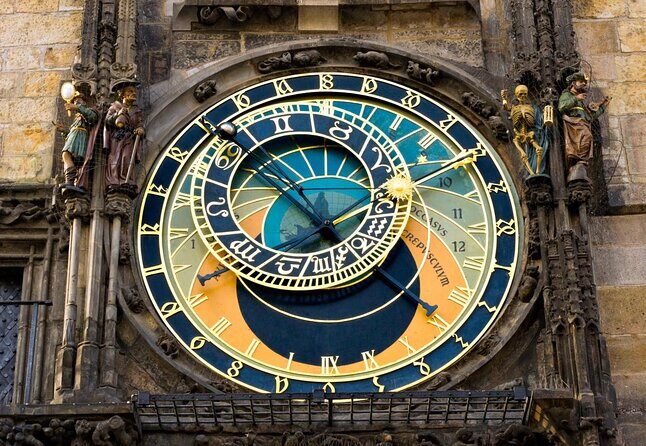
- Hourly Old Town drama at the Old Town Hall and the Astronomical Clock
- Guide-led flexibility so you can lean history-heavy or keep it more story-driven
Left and right riverbanks: why this route is such good orientation
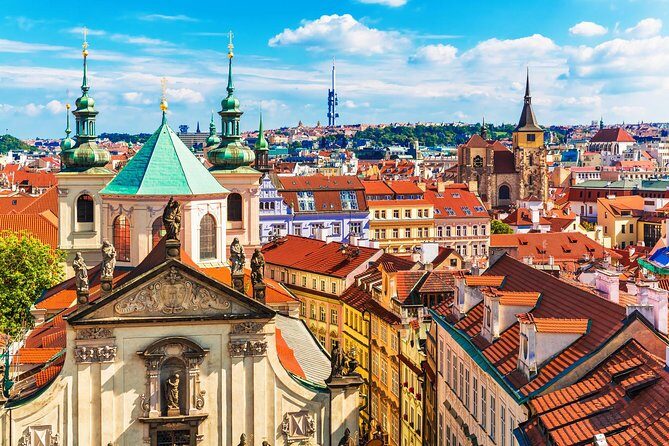
Prague can feel like a puzzle with too many perfect pieces. Streets curve. Levels change. One turn can take you from postcard views to steps you didn’t plan for. This tour helps because it’s built around a logical spine: the Castle hill, the Lesser Town along the river, and then the Old Town core.
What you get is not just a list of sights. You get a mental map. After a walk like this, you understand how the city’s neighborhoods “talk” to each other—how the Castle overlooks everything, how Malá Strana sits below it, and how Charles Bridge becomes the human link between the two sides.
And because it’s private, you’re not stuck with a rigid group pace. If you want more stops for photos—or less time under a cathedral’s front steps—you can generally steer the day.
You can also read our reviews of more walking tours in Prague



Getting going: meeting point, pickup, and how you actually start
You can begin at Náměstí Republiky 5 in Prague 1 (Staré Město). That’s near the Municipal House and close to the Powder Gate area, so you’re positioned well for the Old Town side first glance.
Pickup is offered from your hotel reception or outside your apartment building, but it’s on foot (not by car). You’ll want to provide your address when booking so the guide can meet you efficiently. That matters more than it sounds—Prague’s center has enough lanes and pedestrian-only blocks that “nearby” can still be a hassle.
Also, keep a little buffer in your schedule. Most of the time it’s smooth, and the tour is praised for being well organized. But there are occasional reports of a replacement guide and a later start, so it’s smart not to book anything tight right after the tour ends.
Stop 1: Prague Castle—more than one viewpoint, it’s a whole world
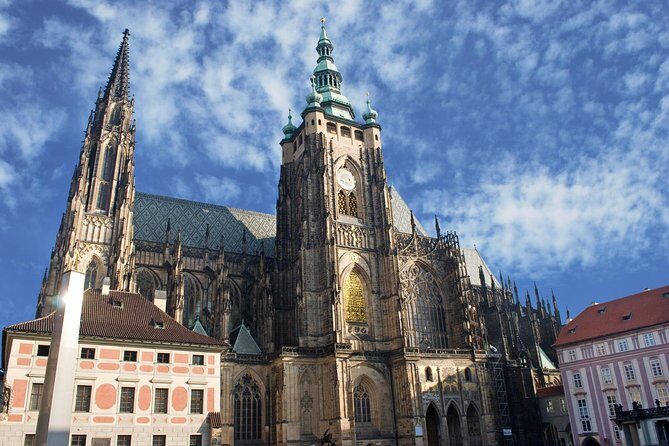
Prague Castle is the kind of place that resets your sense of scale. From the hill, it dominates the city. Up close, it’s not just one building; it’s a vast complex that took centuries to shape.
You’ll spend time at key anchors like St. Vitus’ Cathedral, the mostly Gothic centerpiece that took about a thousand years to build. The cathedral’s long timeline is part of the point: Prague didn’t develop in one style or one era, it layered. You’ll also get context that Prague Castle is the seat of the Czech president today, plus its older roles when it served as the seat of the Holy Roman Empire.
Two practical notes:
- Expect walking and stair climbing in and around the complex. This is listed as moderate fitness, and you’ll feel it if you’re not used to uneven stone paths.
- Even when you’re not spending hours inside everything, the guide’s job is to connect what you’re seeing to why it matters. That helps you avoid the “I saw it, but I don’t know what I’m looking at” feeling.
Malá Strana’s Lesser Quarter: Baroque streets with a layered past
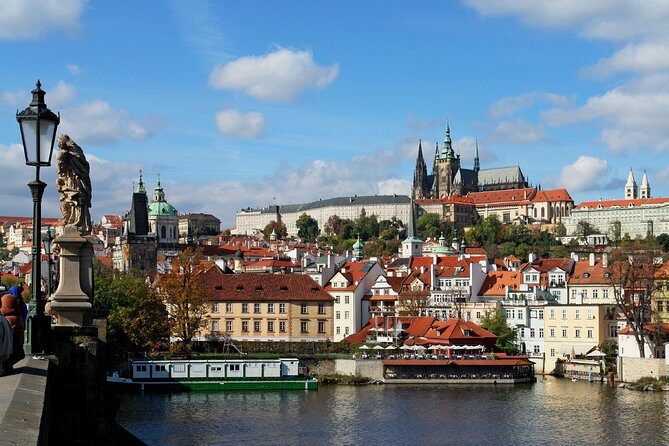
After the Castle, the tour drops into Malá Strana, also called the Lesser Quarter. This area sits below the fortifications along the Vltava River. It started as small settlements outside the castle walls and was shaped by outside merchants invited by King Přemysl Otakar II. Then history punched through—fires in the Hussite period and again in 1541, damage that also touched St. Vitus’ Cathedral.
That background changes how you read the buildings. Instead of seeing “pretty houses,” you start seeing why the neighborhood looks the way it does—why it expanded when it did, and how repeated rebuilding left its mark.
St. Nicholas Church: where Mozart’s organ fits into the story
St. Nicholas Church is one of Malá Strana’s standout Baroque interiors, and it’s highlighted for a specific reason: Mozart practiced on the organ here because the acoustics are excellent. That’s a great example of how a guide makes a landmark feel less like a stop on a checklist and more like a living place tied to real people.
If you’re the type who likes art and music details, this stop tends to land well.
You can also read our reviews of more private tours in Prague





Lennonova zeď: a graffiti wall that still carries risk
Then comes a very different kind of landmark: Lennonova zeď, a long wall covered in graffiti that began as a tribute to John Lennon. The guide’s framing is key here. During the Communist era, Western music was banned, and people still risked punishment to show admiration openly.
So when you see the wall today, it’s not random scribbles. It’s a record of cultural longing and protest-by-style. You don’t need to be a Beatles fan to appreciate the human story behind it.
Charles Bridge: iconic views, plus the legend you’ll spot on the bridge
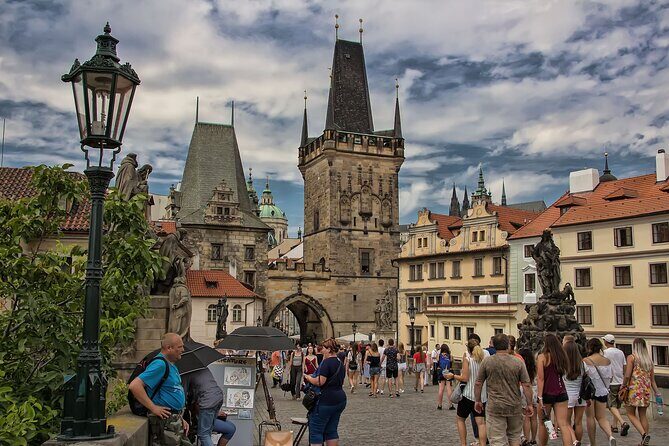
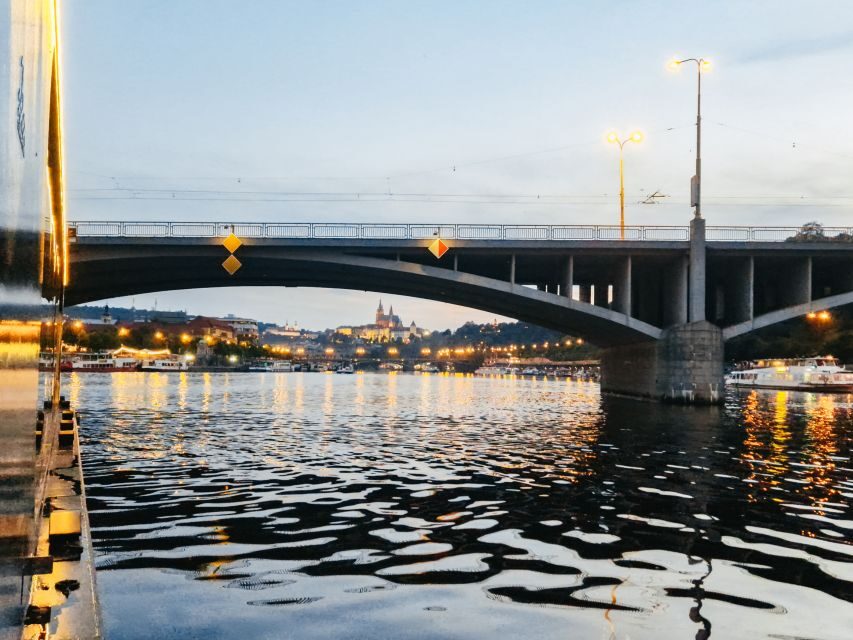
Charles Bridge is often called the most beautiful gothic bridge in the world, but what matters more on the ground is what it does for your understanding of Prague. It has served as the link between Old Town and the Lesser Quarter for hundreds of years.
Along the bridge are 30 Baroque statues, mostly added in the 18th century (many are replicas). One that people look for is the bronze St. John of Nepomuk statue. The legend says John refused to reveal a confession, was thrown from the bridge, and the night of his death brought five stars in the sky—so his statue is associated with a five-star halo.
This is where a good guide earns their fee. Instead of walking past statues like background noise, you learn what to notice. The bridge also delivers some of the best historical-center views, especially in softer light when the crowds thin a bit.
Crowd reality: Charles Bridge is a magnet. If you hate queue energy, plan to pause only for the best angles, not every single step of the walk. Your guide can help you time it based on the flow of pedestrians.
Klementinum and the Jewish quarter: synagogues that make history feel personal
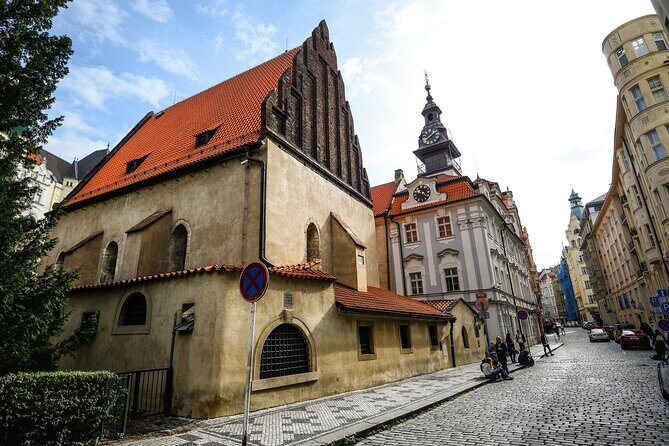
After the bridge, the tour heads into the Jewish Museum area and nearby cultural sites, including the Klementinum. Founded as a Jesuit college, it’s home to the National Library and valuable collections of books. This stop is a good change of pace after outdoor walking, and it helps anchor you in Prague as a city of learning, not just castles and churches.
Pinkas Synagogue: names on the walls
The Pinkas Synagogue is part of the Jewish Museum. Its walls are covered with names of Jews who perished during World War II, and it also provides access to the Old Jewish Cemetery.
This stop isn’t built for quick photo ops. It asks for respect and time. If you’re on a tight schedule, you might need to remind yourself to slow down. A guide can help you understand what you’re looking at so it doesn’t feel like a signboard experience.
Old-New Synagogue: the oldest serving synagogue in Europe
The Old-New Synagogue is the oldest serving synagogue in Europe. It was completed in 1270 in gothic style. That “still used” detail matters because it turns a historical site into something more immediate.
If you care about architecture, this is also a useful contrast point: you’ve seen Gothic at the Castle (and beyond), and now you see how Gothic design shows up in a different religious context.
Old Town Square and the Astronomical Clock: timing is everything
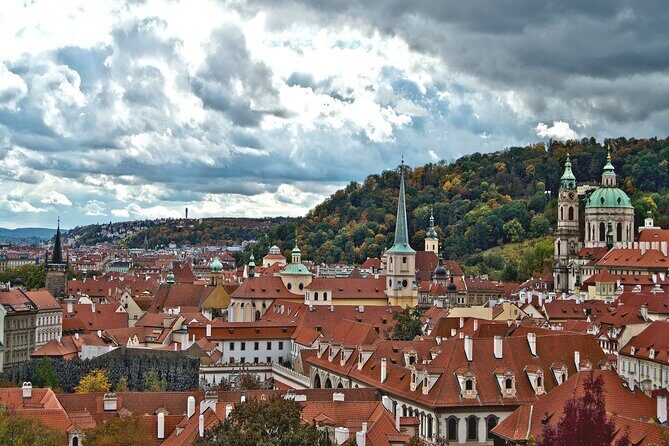
Old Town Square (Staroměstské náměstí) is Prague’s most famous meeting point: palaces, churches, and major moments in Czech country history. Your guide’s job here is to help you read the square as more than a postcard backdrop.
Then you move to the Old Town Hall and its Astronomical Clock. The clock and the surrounding show happen on the hour, so it’s worth understanding the rhythm. The guide walks you through what you’re seeing: Death tipping an hourglass, a bell ringing, and the procession where the 12 apostles appear—plus a cock’s call and another bell.
If you arrive right before the hour, you’ll feel the excitement. If you arrive too early, you might get stuck standing while crowds grow. Either way, your guide can help you choose where to stand so you’re not fighting for a sightline.
A small practicality: wear something comfortable to stand in. Even with a private guide, these moments pull you into the crowd.
Estates Theatre, Charles University, Wenceslas Square, and Powder Gate
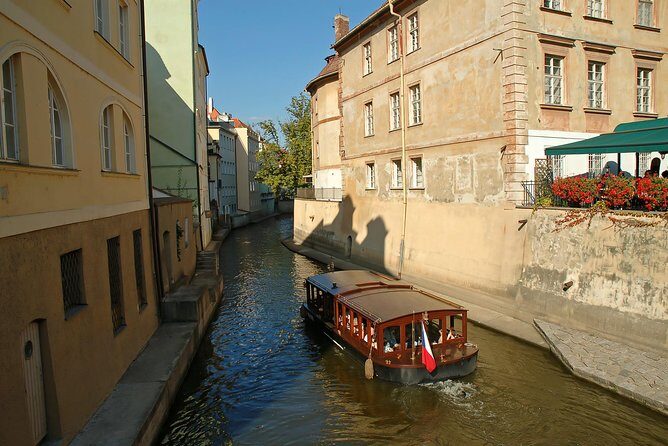
This section of the walk is where Prague starts shifting from “medieval centerpiece” into “big city politics and culture.”
Estates Theatre and Mozart’s Don Giovanni
The Estates Theatre is linked to Mozart. He conducted the world premiere of Don Giovanni here in October 1787. This is one of those stops that rewards curiosity. If you like music history, you’ll probably enjoy how the guide ties the building to the moment.
Karolinum and Charles University
Next is Karolinum, part of Charles University. The university was founded in 1348 by Emperor Charles IV and it’s the oldest university in the Czech Republic, one of the oldest in Europe. Even if you don’t step inside, the guide helps you place Prague within Europe’s longer academic tradition.
Wenceslas Square: from horse market to Velvet Revolution
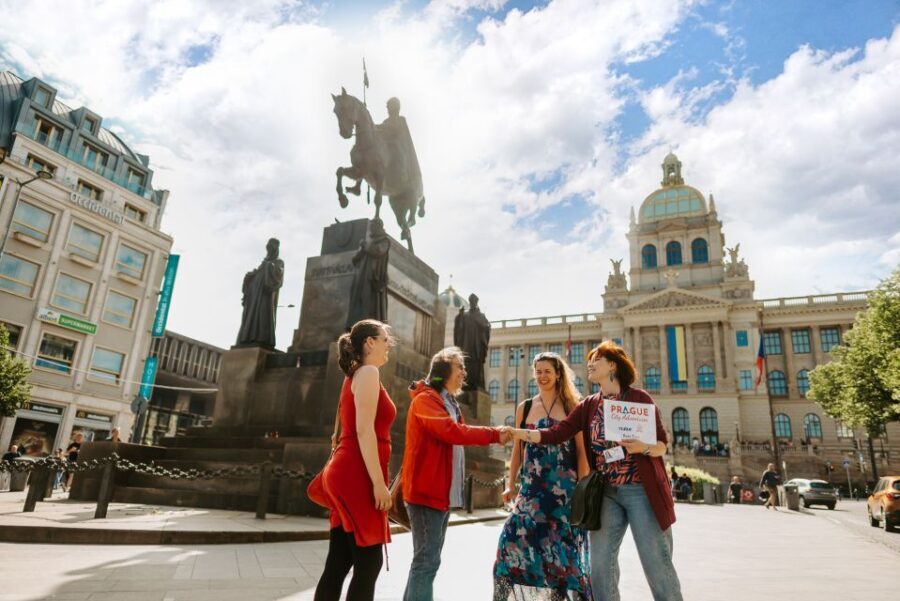
Wenceslas Square is part of the New Town founded by Charles IV in 1348. Originally it was called the Horse Market, and it became a stage for decisive events, including the Velvet Revolution in 1989 that pushed down the Communist regime.
This is a strong example of how Prague isn’t only about old stone. It’s also about modern turning points, and you feel that when the guide links the square to the people who lived through it.
Prasná brána (Powder Gate)
Prasná brána is a Gothic tower that served as a gateway to the Medieval Royal Route. It’s one of the city’s most iconic buildings, and it frames your walk like a “now you’re entering the historic spine” moment.
The finish near Municipal House: a refined Prague note
The tour concludes back near Obecní dům (Municipal House). Built in 1912 on the site of the former Royal Court, it was meant to celebrate Czech nationhood. The building’s reputation comes from its decorations and its famous concert hall.
Even if you don’t plan to go inside, this stop gives a sense of Prague’s modern pride—how the city commemorates itself through architecture.
If you started with the Castle and ended in a grand civic building, you’ve covered two very different expressions of power. That’s exactly what helps you understand Prague as a whole.
Price and value: what $134.23 per person is buying
At $134.23 per person for about 3 hours 30 minutes, you’re paying for three things that add up fast in Prague: a licensed local guide, private pacing, and reduced stress.
You’re not just “paying to walk.” You’re paying for interpretation—the difference between looking at a statue and understanding why that particular legend matters, or between standing in a square and knowing what moments unfolded there.
This tour also includes:
- a local, licensed guide
- pickup from your hotel reception or apartment area on foot
- recommendations for restaurants, shops, hidden photo spots
- a charity contribution supporting local children’s homes
Two practical value checks:
- Many listed stops are ticket-free, so your extra costs are usually limited to any paid interiors you choose or that the guide brings you to. The key is that admissions are not bundled—you can pay on the spot by card.
- Private walking tours can get pricey, especially when you only do a “hits tour.” Here, you’re getting a structured flow across neighborhoods, and the guide is specifically praised for being flexible and personal.
Who should book this tour (and who might want a different fit)
This is a great fit if you:
- want a strong orientation on a first or second day
- like stories that connect buildings to people
- enjoy moving neighborhood-to-neighborhood without losing time to figuring out routes
It’s also smart if you’re traveling with kids or teenagers, since multiple guides are praised for being friendly and working at an appropriate pace.
Consider looking at other options if you:
- hate crowds. Charles Bridge and the Old Town Hall clock moment can get busy.
- need a very low-walking day. It’s designed for moderate fitness and is a half-day on your feet.
Should you book this tour?
I’d book it if you want a guided, structured “Prague orientation” that covers the Castle, Malá Strana, Charles Bridge, and the Old Town core in one go. The guides (Gabriela, Linda, Jana, Tereza, Hana, and others) are repeatedly described as funny, flexible, and good at connecting sights to real details. That combination is the difference between memorizing buildings and actually understanding them.
Just go in prepared for outside time and crowd points. Bring comfy shoes, plan to move at a human pace, and come ready with a couple questions you care about—then you’ll get far more out of the day.
FAQ
How long is the Best of Prague Private Walking Tour?
It runs about 3 hours 30 minutes.
Is this tour private?
Yes. It’s a private tour/activity, and only your group participates.
Is pickup included?
Pickup is offered from your hotel reception or another location in Prague’s city center on foot. You should provide your address when booking.
Where do we meet the guide?
The main meeting point is Náměstí Republiky 5, 111 21 Prague 1-Staré Město, Czechia. If you want to start in Old Town, you can meet at the entrance to the Municipal House next to the Gothic Powder Tower at the same address.
Are admission tickets included?
Admission is not included. You can pay for admission on the spot by card.
What language is the tour offered in?
The tour is offered in English.
What fitness level do I need?
The tour is for travelers with a moderate physical fitness level.
Is free cancellation available?
Yes. You can cancel for free up to 24 hours in advance for a full refund.
Who is this best for?
It’s a strong choice for first-timers who want an organized intro to Prague, and for anyone who prefers private, guide-led pacing rather than navigating the city alone.