REVIEW · PRAGUE
Prague: Castle Tour with Local Guide and Entry Ticket
Book on GetYourGuide →Operated by Fun in Prague · Bookable on GetYourGuide
Prague Castle can swallow an afternoon fast. This 150-minute guided route helps you see the big-ticket sights inside the complex without getting lost, and it’s built for real-world crowds with headphones. I especially like the skip-the-ticket-line setup plus the guided backstory you’ll hear through your headset while you move between major stops.
The tour also takes you through the places most people only glance at: St. Vitus Cathedral, the Old Royal Palace and Vladislav Hall, St. George’s Basilica, and Golden Lane. One possible drawback to plan for: parts of Prague Castle can close on short notice due to official rules, so you may not get every single room on the day you go.
In This Review
- Key moments worth prioritizing
- Meeting at Malostranská and riding up without the stress
- The headphones part you’ll feel the first minute
- St. Vitus Cathedral: Mucha stained glass and the royal tomb trail
- Old Royal Palace and Vladislav Hall under the vaulted ceiling
- The defenestration chamber: politics with a very physical punch
- St. George’s Basilica: a quieter counterpoint to all the grand scale
- Golden Lane: from sharpshooters to goldsmiths to Kafka vibes
- Small-group vs private: how to choose what fits your day
- How long it really takes: 150 minutes with enough “see and breathe”
- Value check: is $61 a good deal?
- Who should book this Prague Castle highlights tour
- Should you book? My practical take
- FAQ
- How long is the tour?
- Where do we meet the guide?
- What’s included in the price?
- Do I need to buy separate entry tickets?
- What languages are offered?
- Is there free cancellation?
- Are kids included?
Key moments worth prioritizing
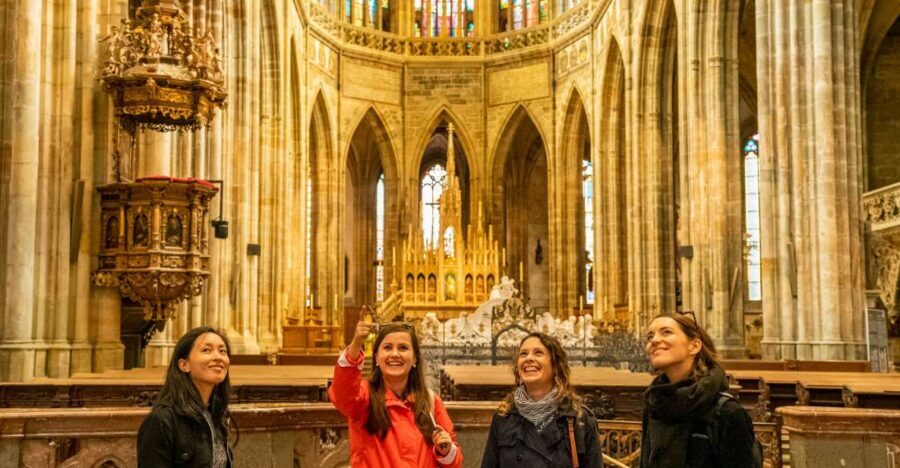
- Headsets for crowded interiors so you don’t have to crane your neck or guess what the guide is saying
- Skip-the-ticket-line + short security line to reduce the time lost to waits
- St. Vitus Cathedral highlights like stained glass by Alfons Mucha, royal tombs, gargoyles, and the mosaic of the Last Judgment
- Old Royal Palace + Vladislav Hall with the massive vaulted ceiling that makes you pause
- The Defenestration of Prague story tied to the room where the famous incident happened
- Golden Lane contrasts from sharpshooter cottages to goldsmith homes, plus the Kafka connection
Meeting at Malostranská and riding up without the stress
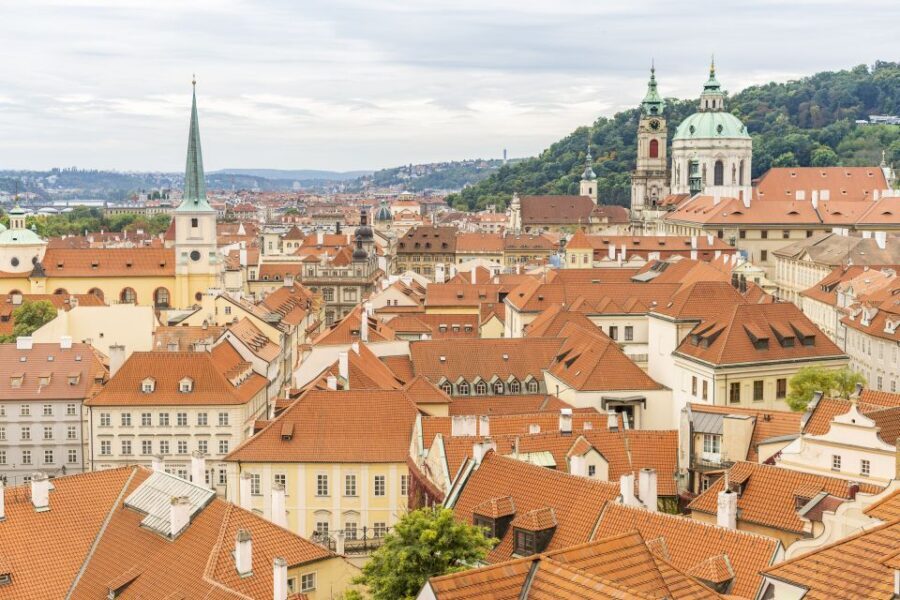
Your day starts at Malostranská metro station, right by the exit with a small water fountain nearby. In winter, that fountain may be covered, so use the meeting signage as your anchor: a brown and white sign that says Meeting Point, and a guide holding an orange umbrella.
You’ll take a tram up to the Castle district. That sounds simple, but it matters. Prague Castle is spread out on a hill, and doing the climb by tram keeps the energy for the actual walking inside the complex.
This is also one of those tours where timing feels “tight but fair.” You’re not stuck waiting around for long stretches, and the tram helps the group stay together through the bottlenecks.
You can also read our reviews of more tours and experiences in Prague


The headphones part you’ll feel the first minute
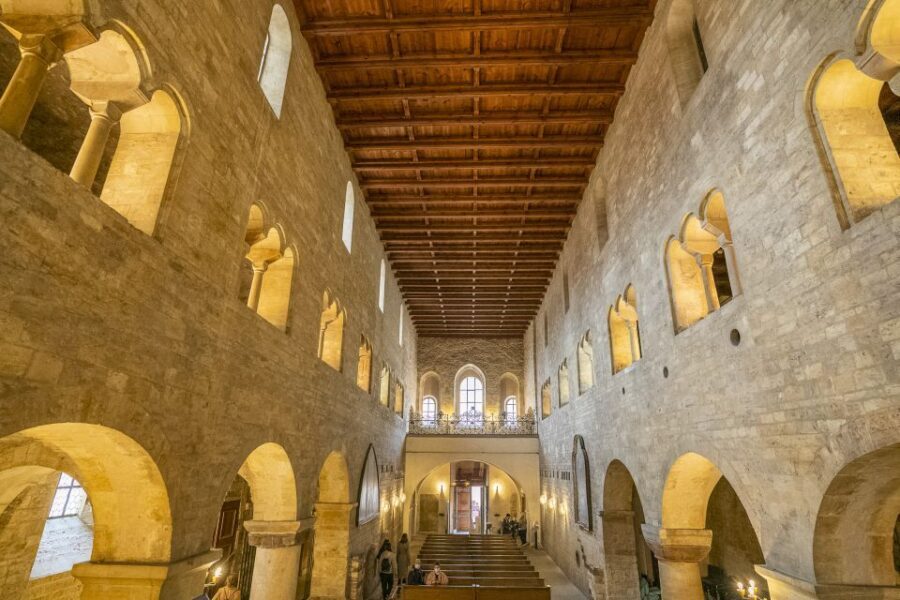
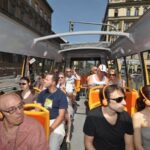
Inside Prague Castle, noise and crowding turn sightseeing into guesswork. This tour solves that with headphones so you can hear your guide clearly while you’re standing among groups, snapping photos, and moving through narrow passageways.
In the feedback, people consistently praise how well this works at the busiest stops. One theme keeps showing up: when you have an earpiece, you don’t need to hover near the guide. You can pause for a photo, glance around for details, and still follow the story.
It also helps if you don’t speak Czech. Even if you know Prague’s big names already, your guide is going to point out specific things most self-guided visits miss—like what you should look for in the cathedral carvings, which tombs matter, and why certain rooms feel dramatic.
St. Vitus Cathedral: Mucha stained glass and the royal tomb trail
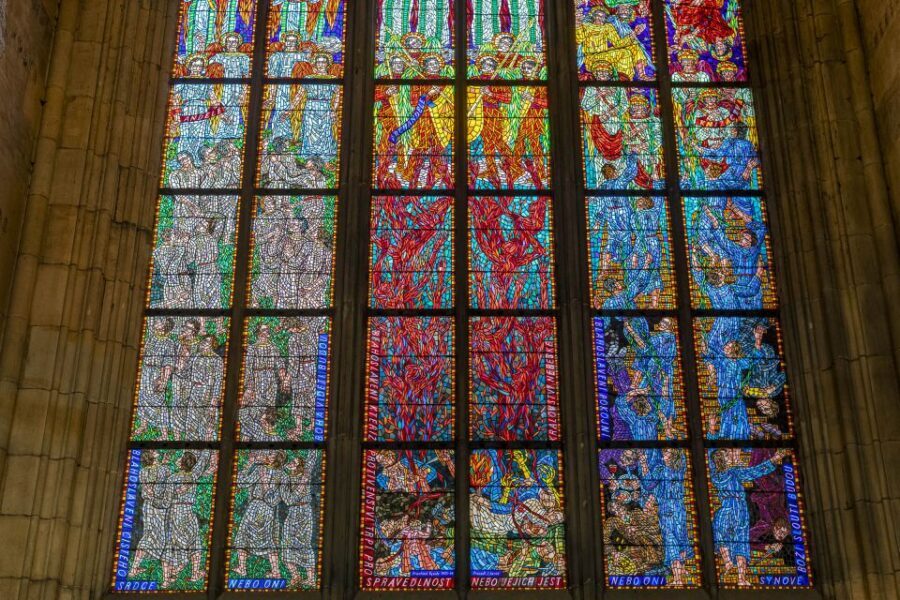
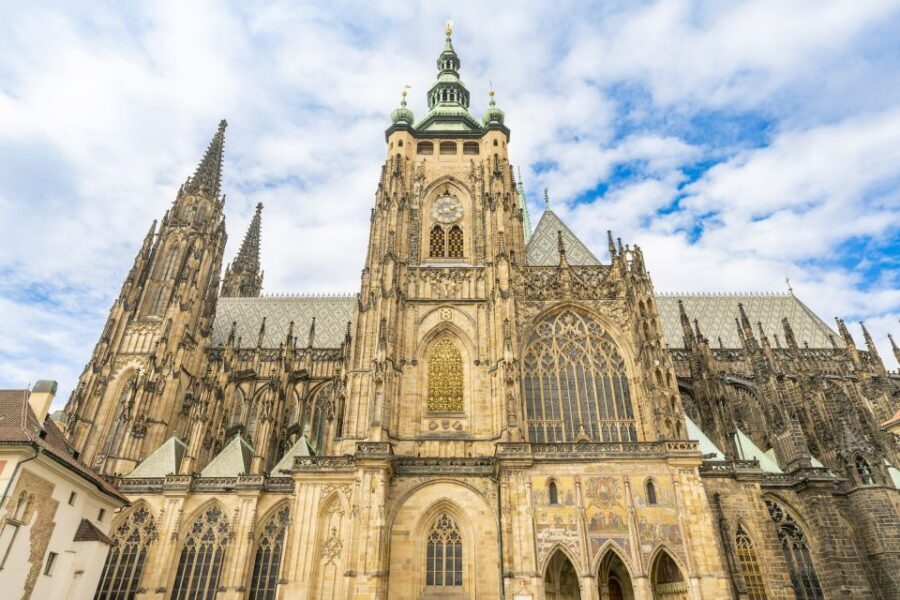
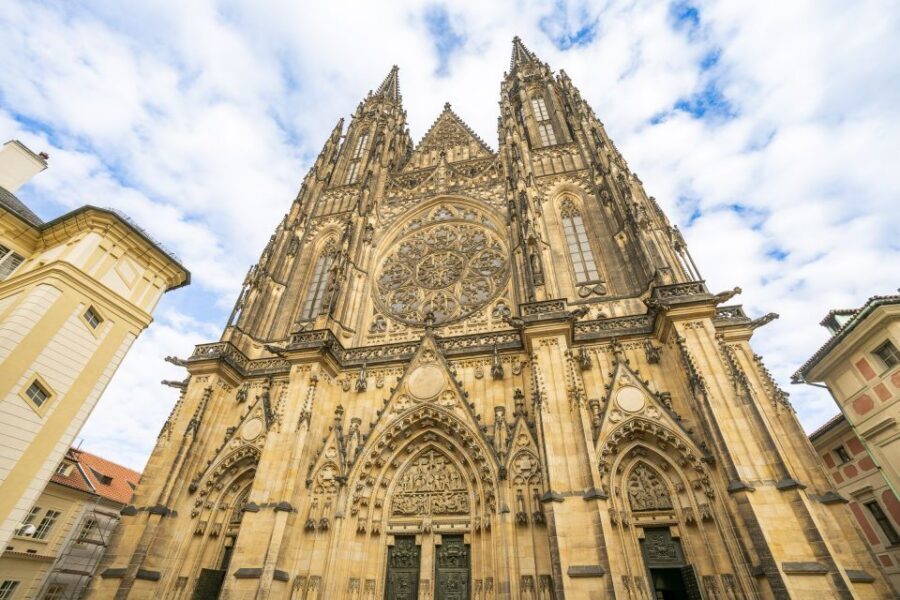
St. Vitus Cathedral is the heart of the Prague Castle complex, and this tour gives it the attention it deserves. You’ll look at the Gothic architecture up close, spot gargoyles on the exterior, and then move inside to the features people usually recognize only as background décor.
One of the standout moments is the stained glass window by Czech artist Alfons Mucha. If you like art that feels both decorative and meaningful, this is where the tour turns from “tourist checklist” into something more memorable.
You’ll also see the 14th-century mosaic of the Last Judgment. It’s the kind of artwork that’s easy to overlook if you’re rushing, but with a guide’s commentary you’ll notice the details you’d otherwise miss.
Then comes the royal-tomb section—where the atmosphere shifts. You’ll see tombs and chapels tied to major figures, including St. Wenceslas and Charles IV, along with the baroque tomb of St. John of Nepomuk and the Chapel of St. Wenceslas.
Practical tip: wear comfortable shoes. The cathedral route includes enough walking and standing that you’ll want your feet to be happy before you reach the palace area.
Old Royal Palace and Vladislav Hall under the vaulted ceiling
After the cathedral, you move into the Old Royal Palace. This is where the castle starts to feel less like a church complex and more like the political stage of Czech and imperial power.
One major highlight is Vladislav Hall. You’ll stand under the massive vaulted ceiling—big enough that your sense of scale changes. It’s a room that looks impressive, but it hits harder when you understand what it was used for and how power played out in stone and ritual.
This part of the tour is valuable because the “palace” areas can be confusing without a guide. You might otherwise wander through rooms and miss the way different spaces relate—church authority one moment, court authority the next.
The defenestration chamber: politics with a very physical punch
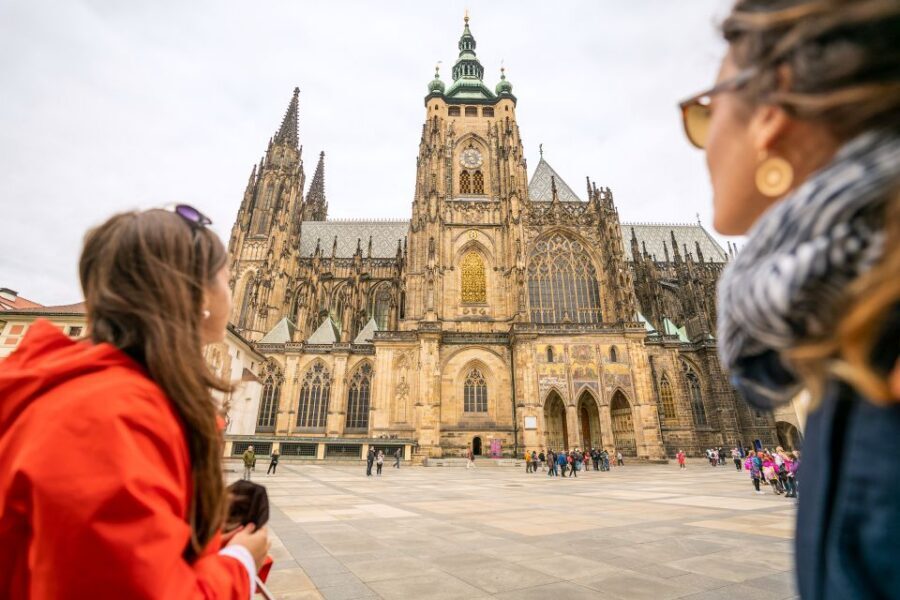
The tour also includes the chamber where the Defenestration of Prague occurred—an event tied to the start of the Thirty Years War. In simple terms: Czech Protestant aristocrats threw Catholic governors of the Habsburg emperor and their secretary out the window.
That’s a wild story, but the value here isn’t only the drama. Your guide uses the space to connect the dots: why this incident mattered, how it fed larger conflict, and how the castle functioned as more than just a pretty backdrop.
If you like history that has consequences you can picture, this stop is a winner. It turns the castle from “old building” into “the place where things happened.”
You can also read our reviews of more guided tours in Prague



St. George’s Basilica: a quieter counterpoint to all the grand scale
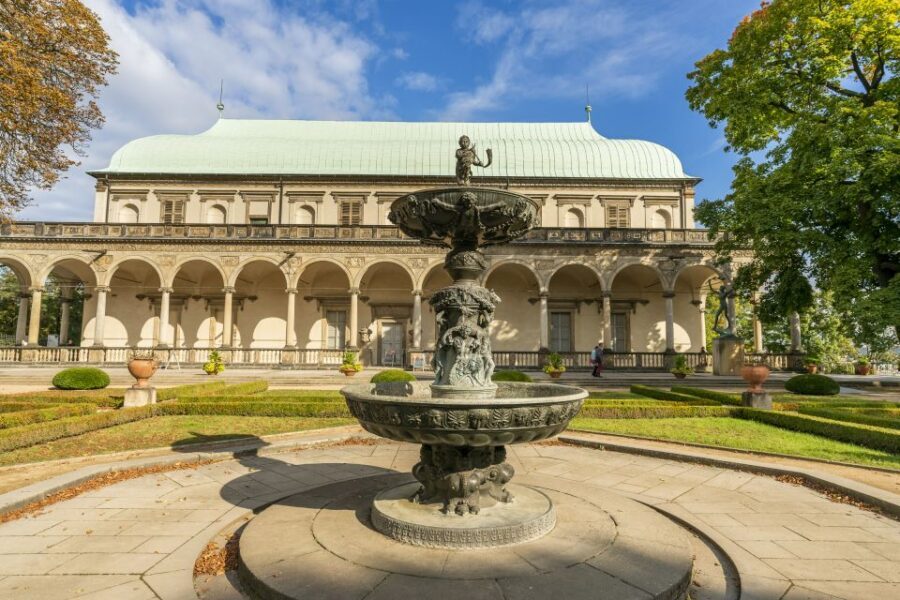
Next up is St. George’s Basilica. This is a good pacing change. After cathedral grandeur and palace scale, the basilica offers a calmer, more grounded feel.
You’ll see fragments of 12th-century frescoes. Even when they’re not in full view, a guide can help you know what you’re looking at so the remnants feel intentional rather than random.
One detail that people will likely remember: the double staircase where the remains of St. Ludmila lie. That staging makes a clear visual point about how the basilica handled devotion and presentation in earlier centuries.
If you tend to get “cathedral fatigue,” this is where you’ll feel the tour’s balance. You’re not only chasing height and ornament. You’re also seeing contrast in design and mood.
Golden Lane: from sharpshooters to goldsmiths to Kafka vibes
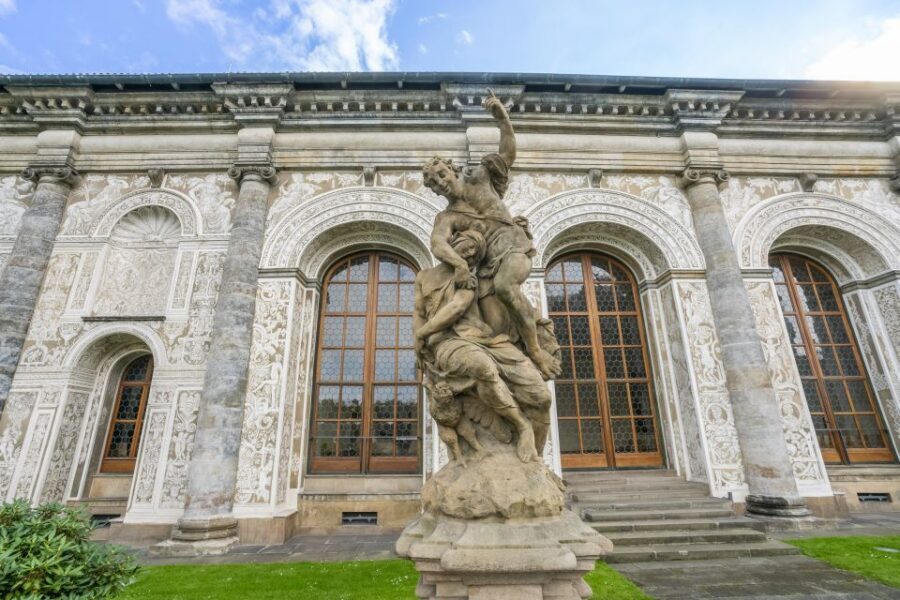
Golden Lane is one of those places where the “small” scale is the whole attraction. The cottages originally built for sharpshooters later housed goldsmiths, so the lane tells a story of working life inside the shadow of the castle.
During your walk through Golden Lane, you’ll examine reconstructed workshops and homes. That’s important: without a guide, it’s easy to treat Golden Lane like a scenic alley. With commentary, you understand how the castle’s power structures connected to everyday labor and craft.
And yes, there’s the Kafka connection. The lane is linked to artists who lived there later, including Franz Kafka. Even if you’re not a die-hard literature person, knowing the human layer helps you see the lane as lived-in space rather than a curated set.
Small-group vs private: how to choose what fits your day
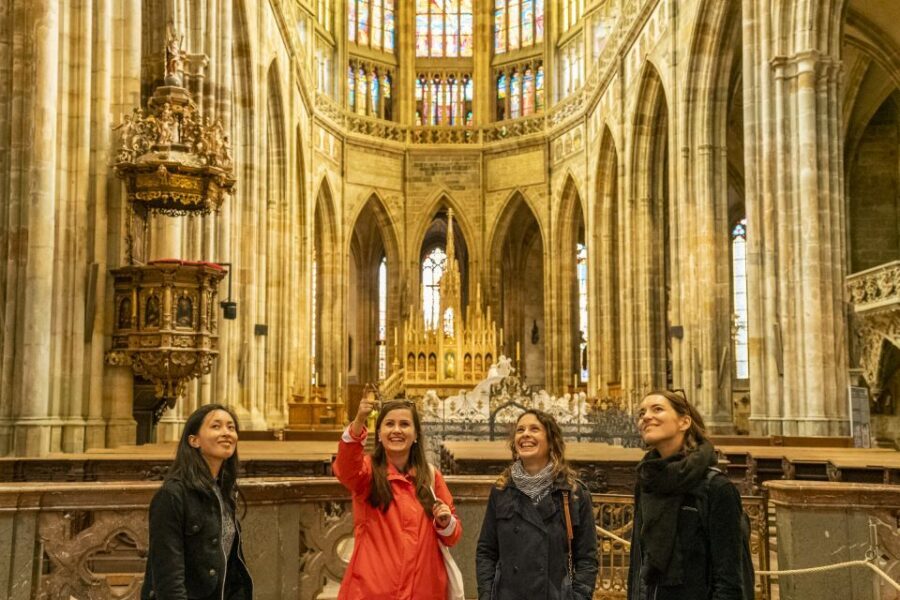
This experience is offered either as a small-group or private guided option. If you want the easiest listening experience in busy rooms, private tends to give the guide more flexibility with pacing and questions.
If you choose small-group, it’s still a guided route in a complex that gets packed. In one case from the feedback, a group ended up feeling larger than what the phrase small group suggests. If you’re sensitive to crowds, you’ll get more comfort by choosing private or by double-checking what group size you can expect for your exact departure time.
The big takeaway: either option can be great. Your comfort level matters more than the label.
How long it really takes: 150 minutes with enough “see and breathe”
The tour duration is listed as 150 minutes, which is a sweet spot for Prague Castle. It’s long enough to get inside major buildings and learn the main story beats, but short enough that you don’t feel stuck for the entire morning.
That also means you should plan your day around it. Don’t schedule back-to-back museum visits immediately after. You’ll likely want time to re-orient yourself after the tour and decide whether you want to linger.
In some cases, the tour ends and you’re free to choose your return route—either down steps or by tram—and you can stay longer if you want to explore on your own.
Value check: is $61 a good deal?
At $61 per person, this tour can be strong value for the simple reason that it bundles several costs and headaches together:
- You get the Prague Castle admission ticket that covers St. Vitus Cathedral, the Old Royal Palace, St. George’s Basilica, and Golden Lane.
- You get the tram ticket to reach the castle area.
- You get the practical “time savers”: skip the ticket line and use the short security line.
- You get the part that’s hard to self-buy: a local guide with live commentary, delivered through headphones.
If you were planning to visit these sights anyway, this package often makes more sense than buying tickets one-by-one and trying to figure out what matters most while crowds push you around.
If you hate guided tours or you prefer total freedom with zero structure, then it might feel like too much direction. But if you want the highlights with a story and less waiting, this is priced for that goal.
Who should book this Prague Castle highlights tour
You’ll likely love this if:
- It’s your first time at Prague Castle and you want the main sights in a logical flow.
- You want cultural context, not just signage.
- You prefer headphones because you’ll be stopping for photos and walking through busy interiors.
- You want an easy way to connect major sites: St. Vitus, palace spaces, St. George’s Basilica, and Golden Lane.
It may not be the best fit if:
- You’re the type who wants hours of solo wandering and deep reading with no group pacing.
- You strongly dislike group logistics. (Even small groups can get crowded in cathedral spaces.)
Should you book? My practical take
If Prague Castle is on your must-do list, this is the kind of tour that helps you get more out of your time. The headphones alone reduce stress, and the guided route keeps you from missing the connections between buildings and events—like the Defenestration story and the way royal spaces contrast with working-life Golden Lane.
One last planning point: because parts of the complex can close on short notice due to official regulations, go in with flexibility. Your guide can’t control closures, but the structure of the tour still targets the core highlights.
If you want a clear, high-impact first visit to Prague Castle without spending your day stuck in lines, I’d book it.
FAQ
How long is the tour?
The tour runs for 150 minutes.
Where do we meet the guide?
Meet directly in front of the exit of Malostranská metro station near the Mánes Bridge, by the small water fountain. Look for a brown and white sign that says Meeting Point and a guide holding an orange umbrella.
What’s included in the price?
You get a tram ticket, admission to Prague Castle (including St. Vitus Cathedral, the Old Royal Palace, St. George’s Basilica, and the Golden Lane), an expert local guide, live commentary, headphones, and use of the short security line.
Do I need to buy separate entry tickets?
This tour includes your entry ticket to the Prague Castle highlights listed above.
What languages are offered?
Guided commentary is available in Italian, French, Spanish, English, German, and Russian.
Is there free cancellation?
Yes. You can cancel up to 24 hours in advance for a full refund.
Are kids included?
Children aged 5 and under go free of charge.