REVIEW · PRAGUE
Prague: Skip-the-line Strahov Monastery and Library Tour
Book on GetYourGuide →Operated by Rosotravel - Czech · Bookable on GetYourGuide
Prague gets quiet at Strahov. This 3-hour private tour is built around skip-the-line access to the monastery complex and the famous Strahov Library, with a licensed guide in the language you choose. You start in Hradčany and get guided context as you walk past major nearby landmarks before you reach the religious heart of the day.
I especially like how much you see for the time: the tour connects the monastery interiors, the library’s ornate halls, the Strahov Gallery, and the Baroque Basilica of the Assumption of Our Lady in one smooth route. One thing to consider is pacing: if your only goal is the monastery and library, the first part of the walk and neighborhood story can feel long, and the line bypass still doesn’t eliminate security checks.
In This Review
- Key things you’ll notice on this Strahov Monastery tour
- Where to meet and how the walk really works in Hradčany
- Why the skip-the-line setup is worth it (and what it doesn’t do)
- Starting at Hradčany Square: you’ll see Prague Castle and Loreto before Strahov
- Strahov Monastery: the building that survived repeated conflicts
- The Strahov Library halls: fresco ceilings and woodwork you’ll want to stare at
- Strahov Gallery: religious art moving across Gothic, Renaissance, and Baroque
- The Basilica of the Assumption: Baroque beauty with a calm tone
- Gardens included: a breather between interiors
- Picking the right tour goal: library-first vs full Hradčany context
- Price and value: what you’re paying for (and why it can still feel steep)
- Guide quality you can feel: Valentina and Ilia stand out in the experience
- Who this tour suits best
- Practical tips before you go
- Quick heads-up on what’s included and what you won’t automatically get
- Should you book the Strahov Monastery and Library skip-the-line tour?
- FAQ
- FAQ
- How long is the Strahov Monastery and Library tour?
- Is this a private tour or a group tour?
- What does skip-the-line mean for this experience?
- What sites are included?
- Are special exhibitions and the brewery included?
- How much walking is involved?
- What languages are available for the live guide?
- Where do I meet the guide?
- Is there a cancellation option?
Key things you’ll notice on this Strahov Monastery tour
- Skip-the-line tickets help you bypass the ticket office queue for your chosen date (security checks still apply at the entrance)
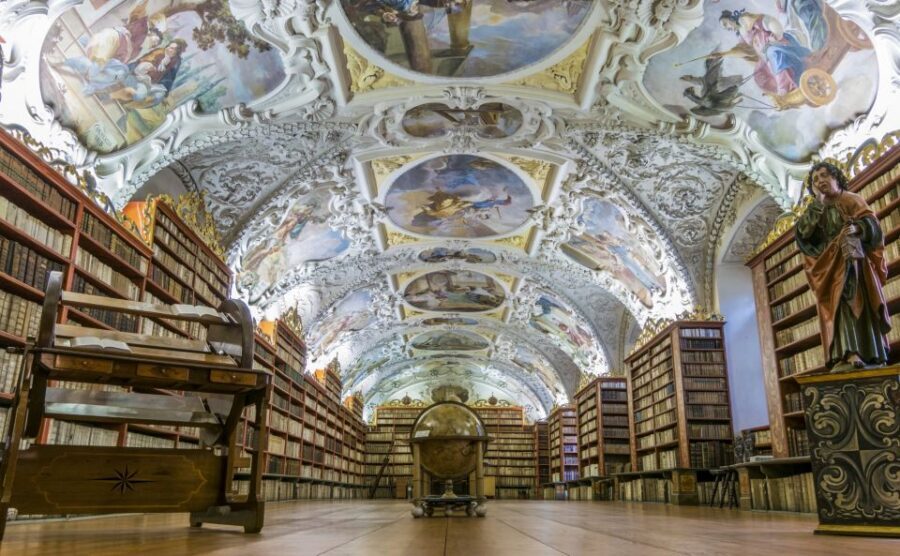
- Strahov Library explanations focus on the Theological and Philosophical Halls, including frescoed ceilings and ornate woodwork
- Hradčany route starts at Hradčanské náměstí and passes key sights like the Prague Castle complex and the Loreto pilgrimage site
- Strahov Gallery covers religious art across Gothic, Renaissance, and Baroque periods
- Basilica of the Assumption delivers a classic Baroque interior visit as part of the core ticket
Where to meet and how the walk really works in Hradčany

The meeting point is easy to find once you’re oriented: stand in front of the Statue of Tomáš Garrigue Masaryk at Prague’s Hradčanské náměstí (118 00 Praha 1-Hradčany). This matters because the whole feel of the tour is about getting your bearings first—then letting the monastery complex do the talking.
You’re on a moderately-paced walking tour with about 25–30 minutes on foot. The route may include uneven surfaces and some steps, and your guide adjusts the pace for your group. I’d treat this as a “comfortable shoes” day rather than a heavy hike day, but do plan for cobbles and occasional stairs.
Weather-wise, the tour runs rain or shine. Bring a light layer and something to protect yourself from drizzle, because the walk through Hradčany happens before you settle into the monastery spaces.
You can also read our reviews of more tours and experiences in Prague


Why the skip-the-line setup is worth it (and what it doesn’t do)
The main value for your time is the date-specific skip-the-line ticket for the Strahov Monastery complex. That means you’re meant to bypass the ticket office queue—so you spend more of your paid time inside, and less of it waiting outside in a line.
But be aware of the limits: the tickets bypass the ticket office, not the entrance and security checks. So even with “skip-the-line,” you should still expect a short checkpoint process once you arrive.
For many visitors, this is the sweet spot. Strahov isn’t just “a quick stop,” and your guide is scheduling your arrival to make the experience flow. If you hate delays, this structure helps a lot—especially when you’re traveling with limited time in Prague.
Starting at Hradčany Square: you’ll see Prague Castle and Loreto before Strahov
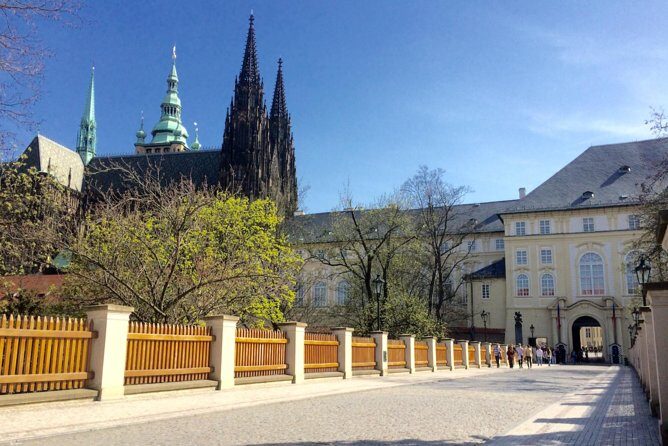
This tour begins in Hradčany Square, surrounded by historic Baroque architecture. The early minutes are practical: you get street-level context for how Hradčany’s layers developed, and you get the mental map that helps the rest of Prague make more sense.
From there, your licensed private guide leads you past the Prague Castle complex and toward the Loreto pilgrimage site. Even if you’ve already seen Prague Castle from afar, I like how this approach connects viewpoints and religious sites in the same walking story. It turns “pretty scenery” into “why that matters” without turning into a lecture.
This is also where group type matters. Because it’s a private group, your guide can slow down for photos or adjust how much time you spend at viewpoints. In a city that can feel overwhelming fast, that flexibility can be the difference between a day you remember and a day you rush through.
Strahov Monastery: the building that survived repeated conflicts
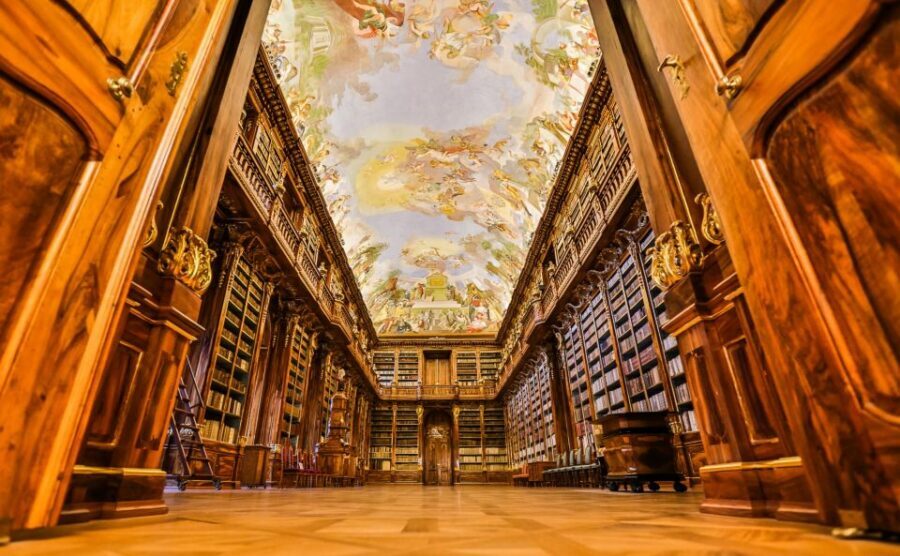
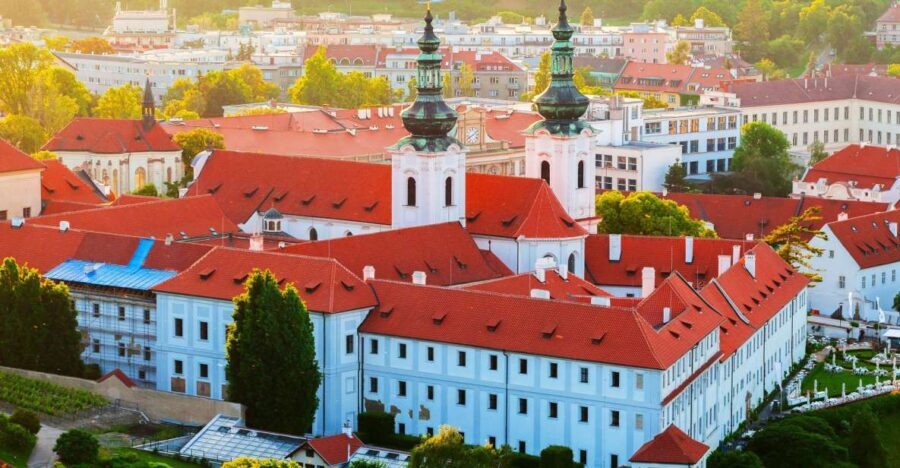
Once you reach the Strahov Monastery complex, the tour becomes more than sightseeing. The guide frames the monastery as a site that endured major upheavals—religious conflicts over the centuries, plus the heavy pressures of two world wars and the communist regime.
That context changes what you notice. Instead of treating rooms and courtyards like backdrops, you start looking for what was preserved, what adapted, and how the monastery functioned through change. Even if you’re not the religious-sculpture type, the survival story gives the place weight.
Inside, you’re not just left to wander. Your guide’s job is to connect the dots—so the monastery feels like a coherent place rather than a series of rooms you walk past.
The Strahov Library halls: fresco ceilings and woodwork you’ll want to stare at
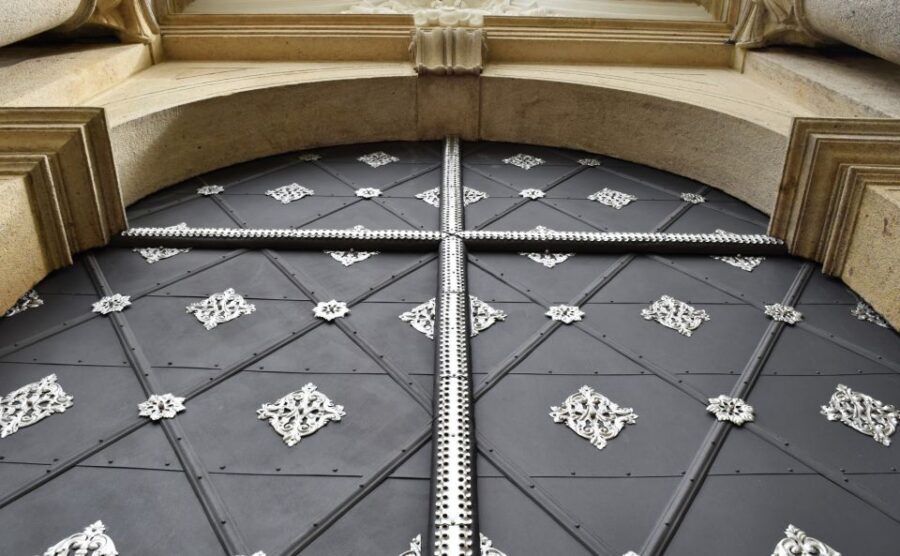
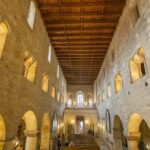
The Strahov Library is the signature stop for most people, and the tour is built around doing it properly. Your visit focuses on the world-famous Theological and Philosophical Halls, which are known for frescoed ceilings and ornate woodwork.
This is where the “private guide” part really earns its keep. The ceilings and carved details can be stunning, but it helps to have someone point out what you’re looking at—how the room layout supports reading and learning traditions, and why the library mattered beyond its physical collection.
You may also encounter the sense of “cabinets of curiosities” style displays during the visit, depending on what’s visible as part of the library area you’re touring. Even if you don’t know the term, the effect is recognizable: curated objects and themed compartments that make knowledge feel tangible.
A practical note: the library can be visually intense. If you’re the kind of visitor who wants to take in details slowly, ask your guide to give you a bit of breathing room at each main hall. Because this is a private tour, you’re less likely to get rushed along.




Strahov Gallery: religious art moving across Gothic, Renaissance, and Baroque
After the libraries, you shift into the Strahov Gallery. This section focuses on religious art spanning Gothic, Renaissance, and Baroque periods. That range is useful: it shows how the visual language of faith changed over time—more decorative and dramatic in later styles, more structured and formal in earlier ones.
I like this stop because it doesn’t feel like filler. If the library is about knowledge and preserved texts, the gallery is about preserved ideas—how artists communicated beliefs through sculpture, painting, and rare works.
Even if you’re not an art historian, you’ll likely enjoy the contrast. Baroque pieces tend to feel more emotional and theatrical, while Gothic and Renaissance works often look more architectural and measured. Your guide can help you spot those differences without making you feel behind.
The Basilica of the Assumption: Baroque beauty with a calm tone
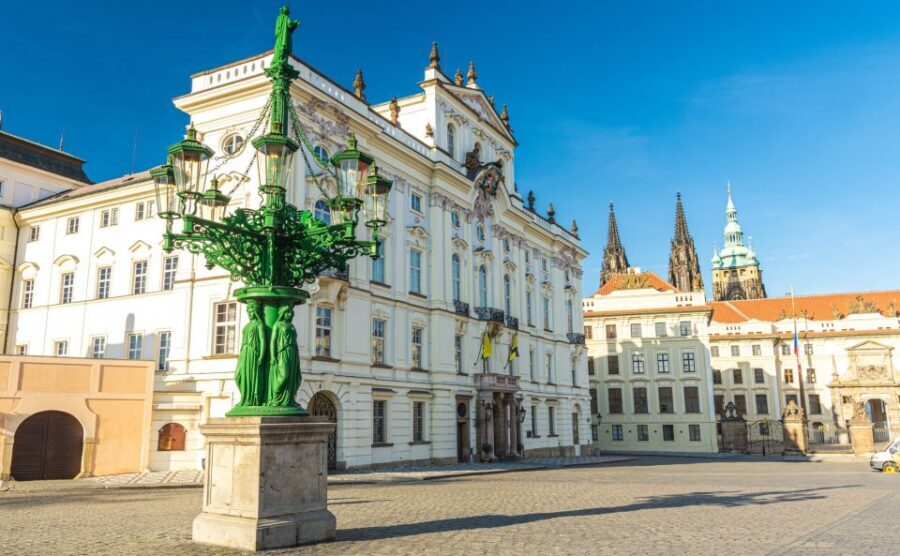
The tour includes a visit to the Basilica of the Assumption of Our Lady, a Baroque masterpiece within the monastery complex. Here, you’ll see intricate frescoes and serene altars, with the interiors designed to feel both dramatic and restful.
This is a great moment to slow down. The basilica’s design naturally invites you to look upward and then settle into the space. If you’ve been moving fast through Prague’s streets, this stop gives you a quieter rhythm.
The guide’s explanations help connect the basilica to what you saw in the monastery and library. You’re not just absorbing two or three separate sites—you’re seeing one religious compound as a functioning whole.
Gardens included: a breather between interiors
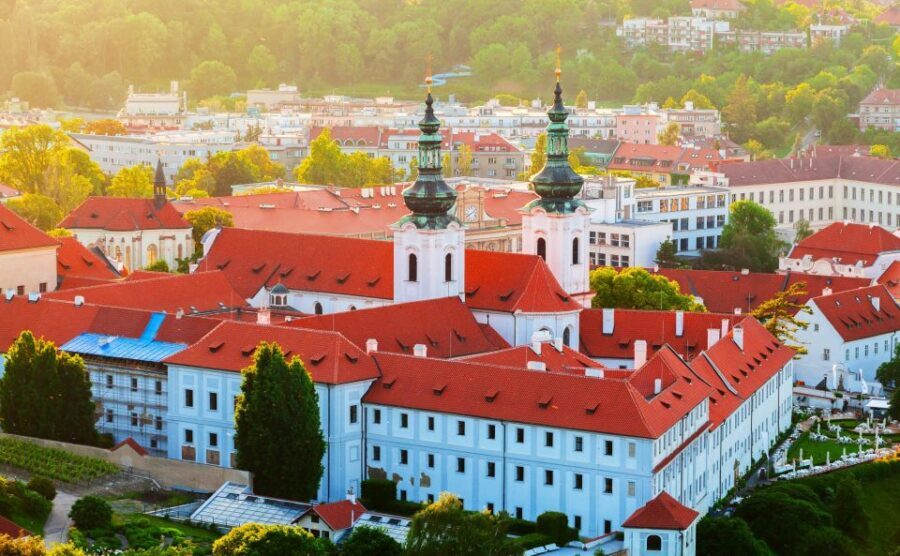
This experience also includes the monastery gardens. While the data doesn’t list specific garden highlights, gardens are rarely “just scenery” here. They give you a chance to step out of interior air, refocus your eyes, and reset before you head back into the city.
I appreciate garden stops in Prague days because they reduce sensory overload. After fresco ceilings and ornate carved details, a bit of green space (even in small amounts) makes the day feel more balanced.
Picking the right tour goal: library-first vs full Hradčany context
Let’s talk about how to choose this based on your priorities.
If you want the monastery and library most of all, you’ll still get them as the centerpiece, but you should expect the day to start with Hradčany context. The tour includes walking and sight-passing (Prague Castle complex and Loreto pilgrimage site), and that early storytelling can take time.
If you love understanding how neighborhoods work—how the Castle hill area connects religious sites across centuries—then the pacing is likely a strength. It helps you feel like you’re learning the geography of belief and power in Prague, not just checking off a single building.
That’s also where the private guide can save your day. In a private group, you can ask for more focus on the library rooms and less time on the softer “stroll and story” parts.
Price and value: what you’re paying for (and why it can still feel steep)
The tour is priced at $161 per person. That can feel reasonable when you compare it to the cost of entry tickets plus the value of having a licensed private guide who can navigate the complex and keep the flow moving.
Still, it’s not the cheapest way to see Strahov. One real-world example I’ve seen for this kind of private setup: a group of four paid 315€ total, which is a reminder that the per-person number can change depending on how many people are in your group and which language/guide option you choose.
Here’s my honest take on value: you’re paying for three things at once—
1) skip-the-line convenience for the complex,
2) structured time inside the library halls and gallery,
3) a private guide who can tailor the pace to you.
If your group includes people who enjoy interpretation (history, art cues, “what to look for”), this is typically a good buy. If your group is full of “we’ll figure it out ourselves” folks, you might feel the cost more.
Guide quality you can feel: Valentina and Ilia stand out in the experience
Your guide is a major part of the payoff, and the experience is offered with licensed private guides fluent in multiple languages. The tour runs in German, English, Russian, Spanish, French, Italian, Polish, and Czech.
Names that have come up in guides for this experience include Valentina (praised for smart, engaging explanations) and Ilia (praised for being knowledgeable and helpful, and for keeping the tour moving to the right sites). Whether your guide is one of these or someone else, the pattern is clear: great guides make the library halls and gallery feel purposeful.
A practical strategy: before you arrive, tell your guide what you care about most (library ceilings, art gallery styles, basilica details, or the Hradčany walk). Since it’s private, that request can shape the emphasis.
Who this tour suits best
This is a strong choice if you want:
- Skip-the-line access so you don’t waste your limited Prague hours
- A deep visit to Strahov Library and the Strahov Gallery
- A guide who can explain why the monastery complex mattered through major historical upheavals
- A private format where you can set your own pace
It also works well for couples, small families, and anyone who’s already done the big “outer sights” like Charles Bridge or the Astronomical Clock and wants a calmer, more cultural stop.
If you’re short on time and only want a quick look, you may find the full 3-hour structure heavier than you expected.
Practical tips before you go
Wear comfortable shoes. Even though only about 25–30 minutes are walking time, you’re moving over uneven ground and steps.
When you book, look at your language preference and plan for a rain-or-shine day. If you arrive dressed for the weather, your enjoyment stays higher during the initial Hradčany walk.
Also, check your email the day before the tour. The operator sends important info the previous day, and it helps you avoid surprises on meeting location timing and similar details.
Quick heads-up on what’s included and what you won’t automatically get
Admission includes the Monastery, Library, Picture Gallery, and Basilica. The tour also includes gardens as part of the overall experience.
Access to special exhibitions and the brewery is not included. If those are must-sees for you, ask your guide for recommendations after the core tour so you can decide based on what’s running that day.
Should you book the Strahov Monastery and Library skip-the-line tour?
If you want the best chance of experiencing Strahov without wasting time in queues, and you care about understanding what you’re seeing, I think this is a book-worthy option. The combination of skip-the-line convenience, a licensed guide, and access to the library halls, gallery, basilica, and gardens is the reason.
Skip it—or at least manage expectations—if you only want the monastery interiors with zero interest in the Hradčany walk-and-context setup. In that case, you might feel the 3 hours is more than you need.
FAQ
FAQ
How long is the Strahov Monastery and Library tour?
The tour lasts 3 hours.
Is this a private tour or a group tour?
It’s a private group tour.
What does skip-the-line mean for this experience?
Skip-the-line tickets help you bypass the ticket office queue, but you still go through entrance and security checks.
What sites are included?
The tour includes the Strahov Monastery, Strahov Library, Picture Gallery, Basilica of the Assumption of Our Lady, and the monastery gardens.
Are special exhibitions and the brewery included?
No. Access to special exhibitions and the brewery is not included, though your guide can recommend options.
How much walking is involved?
You can expect about 25–30 minutes of walking, with some uneven surfaces or steps.
What languages are available for the live guide?
The tour is available in German, English, Russian, Spanish, French, Italian, Polish, and Czech.
Where do I meet the guide?
Meet the guide in front of the Statue of Tomáš Garrigue Masaryk at Prague, Hradčanské nám., 118 00 Praha 1-Hradčany, Czechia.
Is there a cancellation option?
Yes. You can cancel up to 24 hours in advance for a full refund.