REVIEW · PRAGUE
Prague Jewish Town/Skip-the-Line Official Entry Ticket
Book on GetYourGuide →Operated by Židovské muzeum v Praze/Jewish museum in Prague · Bookable on GetYourGuide
Prague’s Jewish sites hit hard and close.
This ticket gives you skip-the-line entry into Prague Jewish Town’s core stops, so you can move at your pace through centuries of community life. I especially like that it covers the big emotional and historic anchors: Old-New Synagogue (Altneushul) and the Old Jewish Cemetery with the Maharal connection.
The second thing I like: it lets you spend as long as you want at each building, without forcing a rigid group rhythm. One drawback to plan for: if you want a full story told in sequence, you’ll probably wish you had a live guide or a strong audio option to tie everything together.
In This Review
- Key highlights at a glance
- A skip-the-line ticket that works as a self-paced route
- Maisel Synagogue: starting with a community leader’s legacy
- Pinkas Synagogue: where remembrance becomes the main message
- Old Jewish Cemetery: walking where centuries rest
- Old-New Synagogue (Altneushul): the oldest active thread in Europe
- Spanish Synagogue: Moorish interior design and the Alhambra link
- How to pace it over 3 days without turning it into a chore
- Timing and closures: when your ticket won’t help
- What to pack and wear for Prague Jewish Town sites
- Price and value: $27 for five major sites
- Who should buy this ticket
- Should you book the Prague Jewish Town skip-the-line ticket?
- FAQ
- What does the Prague Jewish Town ticket include?
- Does the ticket let me skip the line?
- How long is the ticket valid?
- Where do I start, and what order should I visit the sites?
- Are the sites open every day?
- What are the opening hours?
- Is the ticket wheelchair accessible?
- What items are not allowed inside?
- Can I bring food or drinks?
- Is there a cancellation option?
Key highlights at a glance
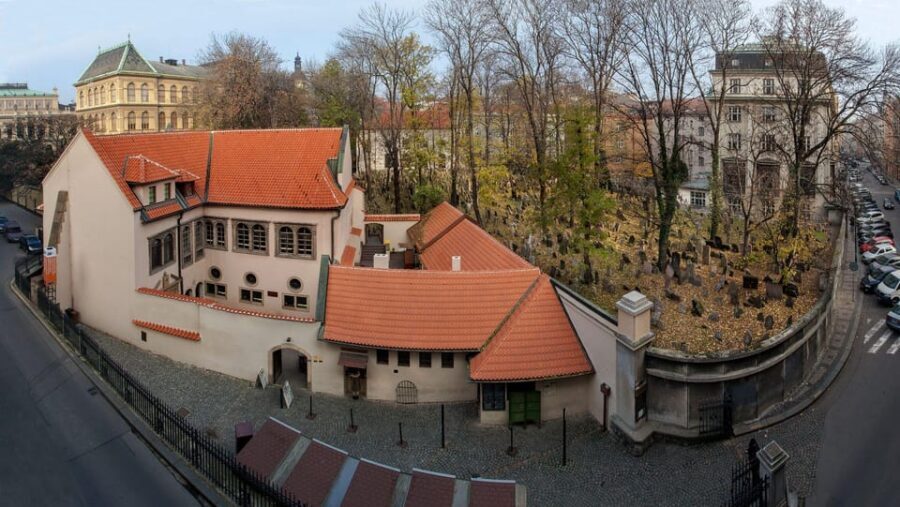
- Five official admissions in one ticket: Maisel, Pinkas, Old Jewish Cemetery, Old-New, and Spanish Synagogue
- Old-New Synagogue (Altneushul): the oldest extant synagogue in Europe and a main synagogue for more than 700 years
- Old Jewish Cemetery: founded in the first half of the 15th century and tied to Rabbi Judah Loew Ben Bezalel, the Maharal of Prague
- Pinkas Synagogue: memorial to nearly 80,000 Jewish victims from the Czech lands during the Shoah
- Spanish Synagogue: named for its Moorish interior design, influenced by the Alhambra
A skip-the-line ticket that works as a self-paced route
This is an official entry ticket from Židovské muzeum v Praze / Jewish Museum in Prague, and it’s built for flow. The big practical win is that you get skip-the-ticket-line access to each of the five sites, which matters in a compact area where waiting can eat up your day.
You also get a little structure without getting locked in. Your visit order is set for you: Maisel synagogue → Pinkas synagogue → Old-Jewish Cemetery → Old-New synagogue → Spanish synagogue, and then it ends back at the starting point. If you follow that sequence, you reduce backtracking and you naturally build from institutions of daily community life toward the sites that carry heavier memory.
Plan for a long-but-manageable experience. The ticket is valid for 3 days, counted from the moment you first activate it, which is perfect if you want to spread the visit around your Prague schedule instead of cramming it into one exhausting block.
You can also read our reviews of more tours and experiences in Prague
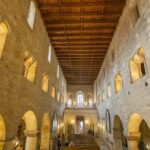
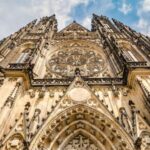

Maisel Synagogue: starting with a community leader’s legacy
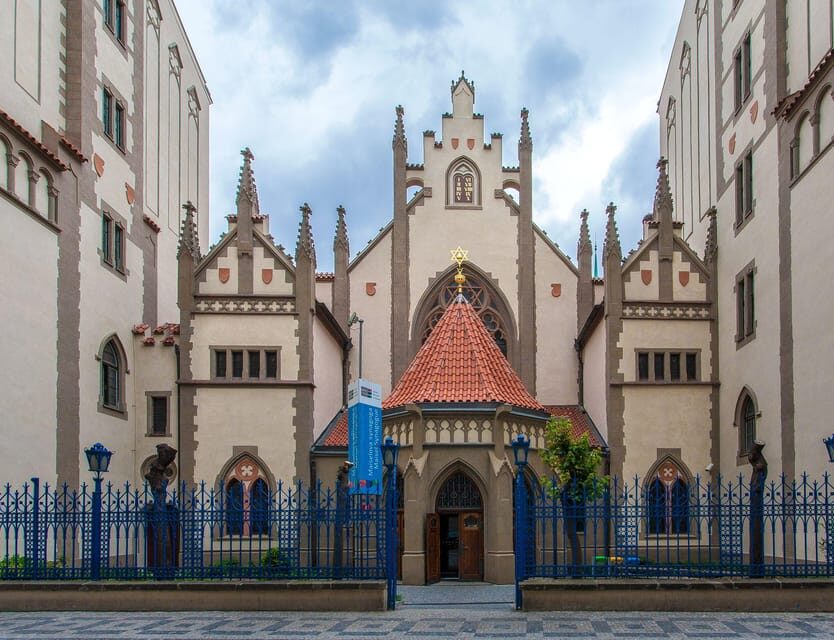
You begin at the Maisel synagogue, tied to Mordecai Maisel, who was the mayor of the Prague Jewish Town during Emperor Rudolf II’s rule. That detail matters because it reframes the buildings: you’re not only looking at religious architecture, you’re seeing evidence of civic life, leadership, and survival in a specific time and place.
When you’re at the Maisel, pay attention to how the synagogue connects to the idea of a Jewish town within Prague. This stop helps you understand that these places weren’t isolated. They were part of how a community organized itself, negotiated authority, and held identity through changing rulers.
If you like context, this is also a good place to reset your expectations. Think of your visit as five separate experiences, each with its own emotional temperature and design language. Starting here gives you a calmer entry point before the memorial weight at Pinkas.
Pinkas Synagogue: where remembrance becomes the main message
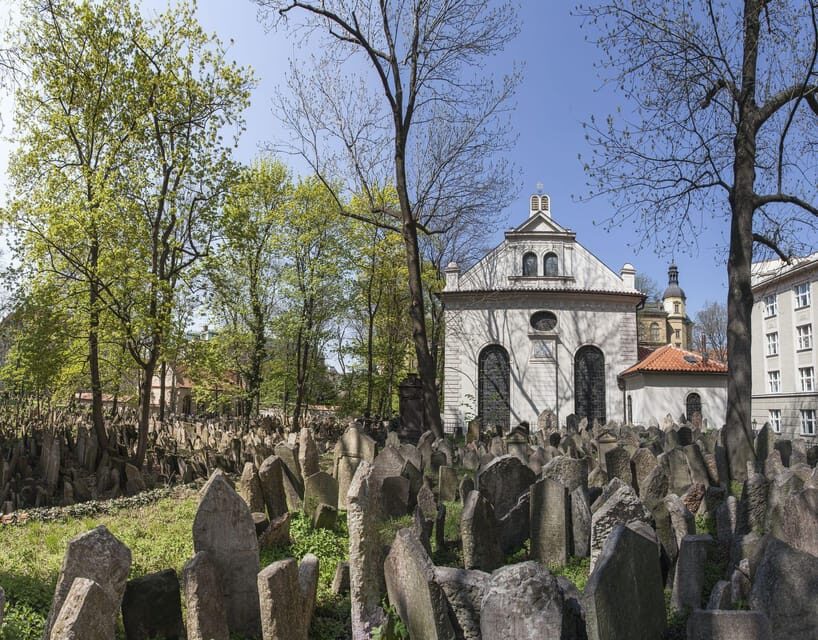
Next is the Pinkas Synagogue, and this is the stop that usually changes the mood fast.
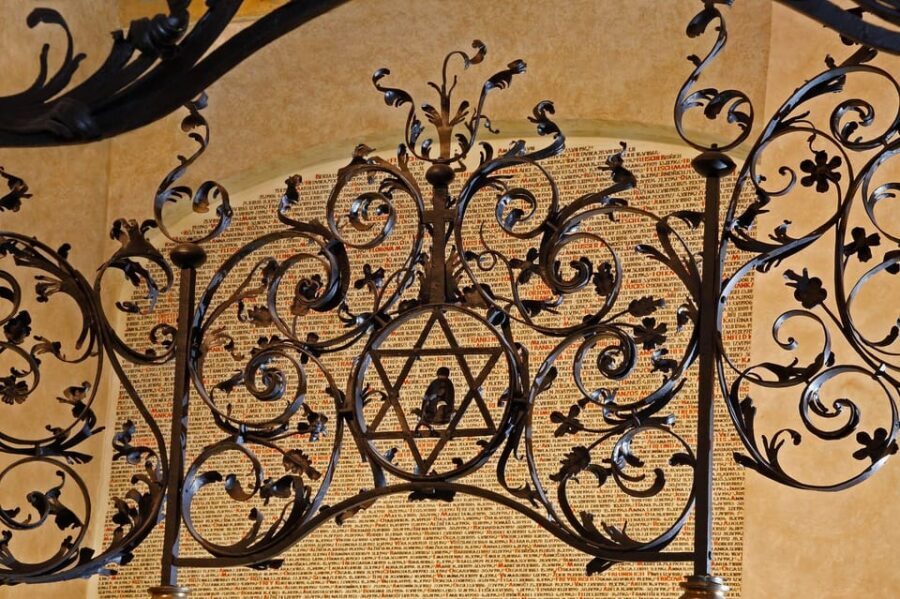
Pinkas is a memorial to nearly 80,000 Jewish victims of the Shoah from the Czech lands. That means you’re not just touring an old room of prayer. You’re walking into a place built to keep names, loss, and history in view.
Come with your attention turned on. Give yourself time here. If you rush, you miss why this place lands so hard: it’s designed so that remembrance is not an afterthought. It’s the point.
A practical note: because this synagogue is a memorial space, you may feel the urge to slow down and read closely. The good news is the ticket format supports that. You can take your time at each site instead of being pulled along.
Old Jewish Cemetery: walking where centuries rest
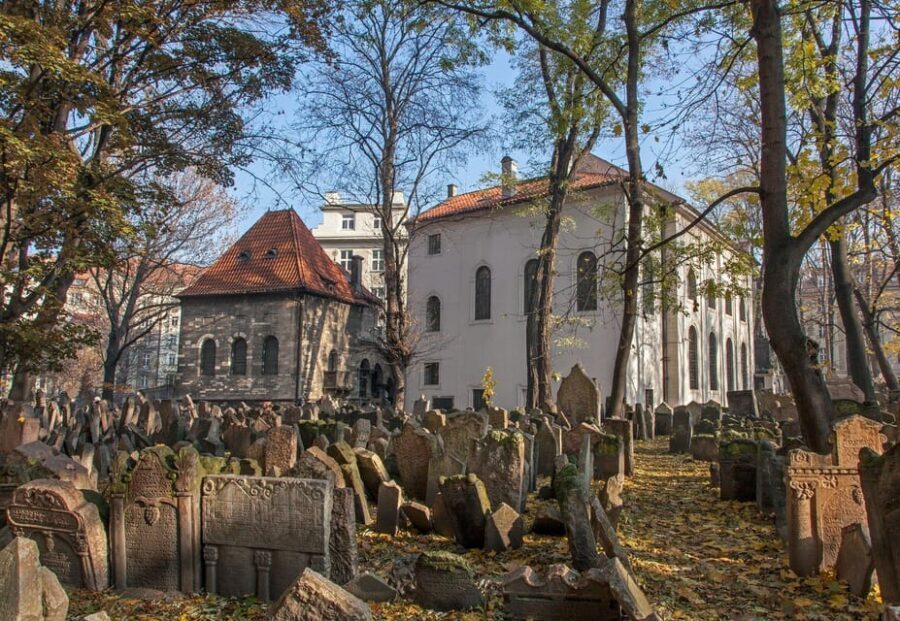
The route continues to the Old-Jewish Cemetery, one of the oldest surviving Jewish burial grounds in the world. It was founded in the first half of the 15th century, which means you’re stepping into a landscape of memory that has been active for generations.
A name you’ll hear here is Rabbi Judah Loew Ben Bezalel, known as the Maharal of Prague. Even if you don’t know his story yet, his presence anchors the cemetery to a figure that became central to Prague Jewish life and thought.
What I like about the cemetery stop is how it connects belief to human time. Synagogues focus on community and ritual. A cemetery focuses on continuity and loss, which changes the way you interpret everything else you’ve seen.
You’ll also likely notice that the cemetery is not meant to feel like a quick photo stop. Plan for quiet. Even if you’re traveling with energy, keep your voice down and give your eyes time to adjust to the density of meaning on the grounds.
Old-New Synagogue (Altneushul): the oldest active thread in Europe
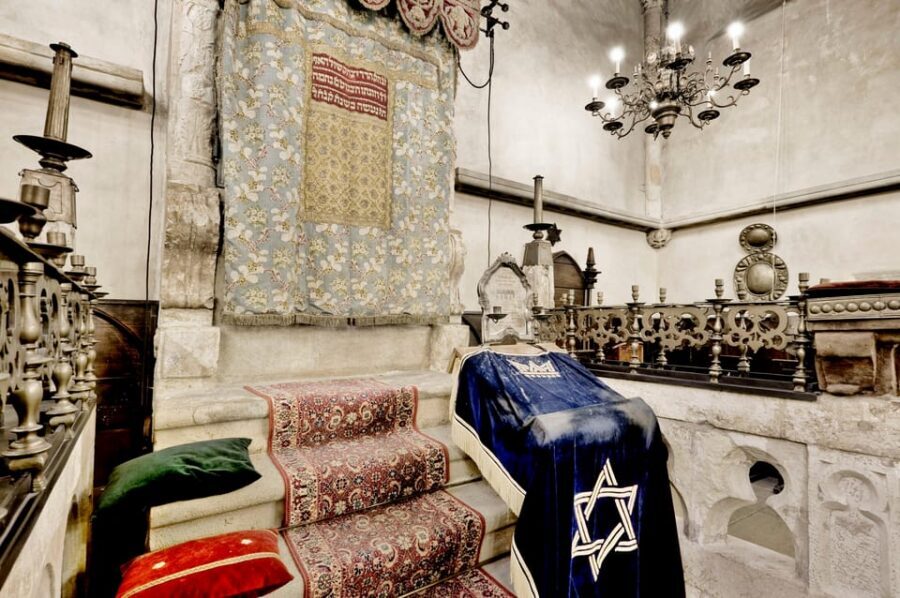
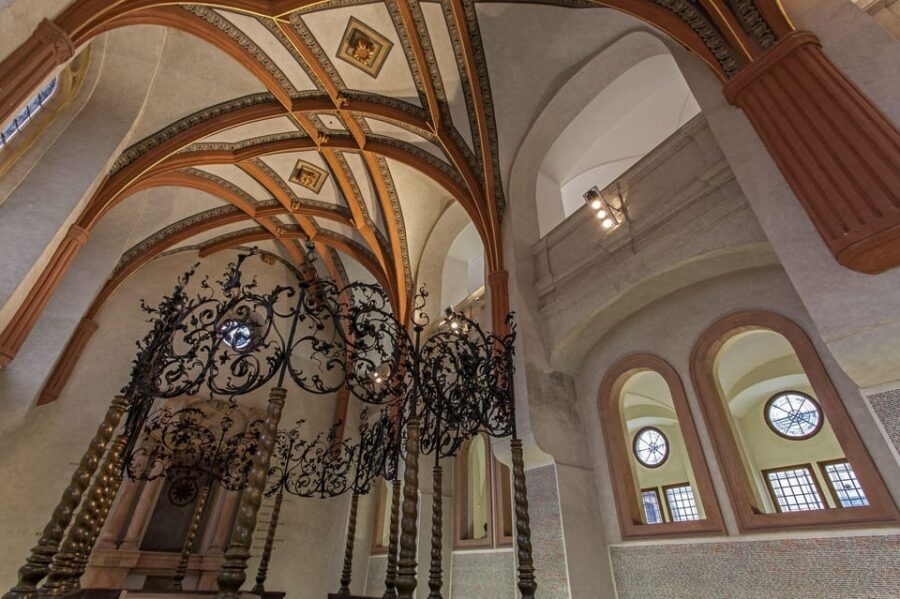
Then comes the big architectural and historic anchor: the Old-New Synagogue, also called the Altneushul. This is the oldest extant synagogue in Europe and it has been the main synagogue of the Prague Jewish community for more than 700 years.
That 700-year fact is not trivia. It’s the reason this stop feels different from the others. Many historic sites tell you what happened long ago. This one tells you what kept happening. The building’s age becomes a kind of witness.
If you want to “read” the building, look at how the space communicates endurance. Even if you don’t catch every detail, you’ll sense that this is a living link between generations, not just preserved stone.
This is also a place where many people appreciate extra explanation. The self-guided ticket format is great for pace, but if you crave a stronger narrative thread, consider pairing your visit with an audio guide option. One practical tip: audio helps most when you’re standing still and taking in the room, not when you’re rushing from doorway to doorway.
You can also read our reviews of more tours and experiences in Prague


Spanish Synagogue: Moorish interior design and the Alhambra link
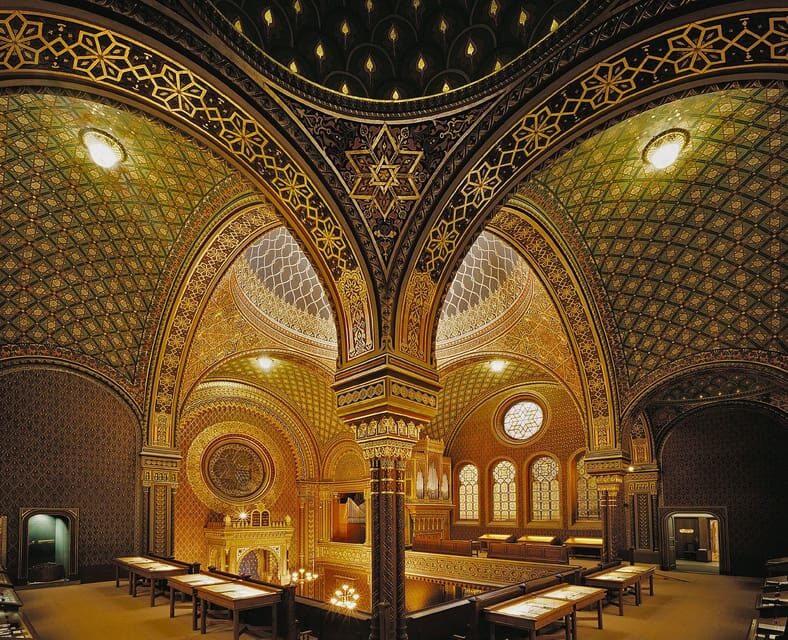
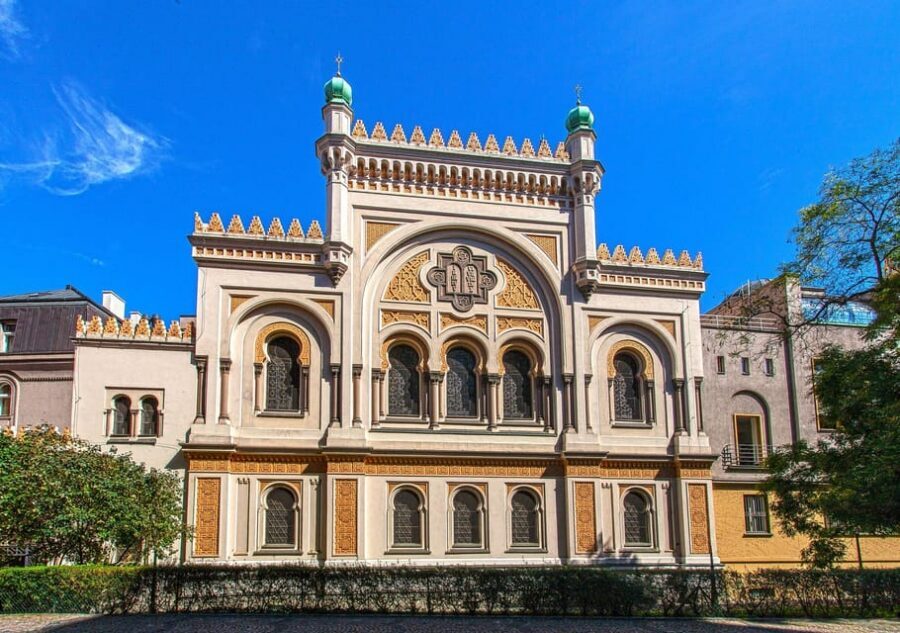
Finally, you reach the Spanish Synagogue, named for its impressive Moorish interior design, influenced by the famous Alhambra.
This is where your “Prague Jewish Town” story expands visually. The older you get in history, the more you expect to see styles that look local and simple. Spanish Synagogue flips that expectation. It’s a reminder that Jewish communities expressed identity in different artistic languages depending on time, taste, and influences.
Take your time with this stop because it’s visually driven. If your eyes are tired from reading memorial material earlier in the day, let the design do some of the work. Let your brain reset into pattern, color, and form.
And since it’s the final stop on the suggested path, it also works as a closing note. You end your journey with a building that feels expressive and crafted, not just solemn.
How to pace it over 3 days without turning it into a chore
The best way to use this ticket is to avoid the classic mistake: trying to do all five stops in one long day. You can, but it can flatten the impact.
A smarter approach is to split the emotional arc. One day can focus on the “life” and “community” side (Maisel and then possibly Pinkas if you’re ready for it). Another day can focus on the cemetery and the Old-New Synagogue for atmosphere and continuity. Then the Spanish Synagogue can be your design reset, ideally when you’re mentally fresh enough to appreciate the style.
Even if you keep it all in one day, use the self-paced nature to your advantage. The ticket lets you spend as much time as you want at each synagogue, so you can slow down for questions and reading instead of feeling guilty about stopping.
If you’re the type who gets lost in details, do shorter sessions per stop. Ten minutes of thoughtful looking beats forty minutes of drifting.
Timing and closures: when your ticket won’t help
Hours vary by season, so check your dates before you head out. Here are the opening ranges listed for the sites:
- 1 January 2025: 11:00 a.m. to 4:30 p.m.
- 2 January to 31 March 2025: 9:00 a.m. to 4:30 p.m.
- 1 April to 30 April 2025: 9:00 a.m. to 6:00 p.m.
- 1 May to 31 August 2025: 9:00 a.m. to 7:00 p.m.
- 1 September to 18 October 2025: 9:00 a.m. to 6:00 p.m.
- 19 October to 31 December 2025: 9:00 a.m. to 4:30 p.m.
- 24 December 2024: 9:00 a.m. to 2:00 p.m.
- 1 January 2026: 11:00 a.m. to 4:30 p.m.
One more key planning point: all sites are closed on Saturdays and during Jewish holidays. That can affect your best sightseeing day. If your trip lands near a holiday, shift your route to another day rather than hoping for a miracle.
Wheelchair access is listed as available, but limited, so if mobility is an issue, check in advance for specific accommodations.
What to pack and wear for Prague Jewish Town sites
These synagogues and the cemetery come with clear visitor rules. If you show up with the wrong stuff, you might slow down your whole day.
Plan to leave at home or store away:
- Oversize luggage and large bags
- Weapons or sharp objects
- Tripods
- Food and drinks
- Pets (assistance dogs allowed)
- Alcohol or drugs
- Smoking
- Short skirts and sleeveless shirts
- See-through clothing
Also, do not bring weapons/sharps and avoid anything that could be considered disruptive. This area is respectful by design, and the rules are there to keep visits focused and quiet.
A simple packing strategy: bring only what you need for a few hours—water if you’re allowed elsewhere nearby, but not inside these sites—and wear clothing that keeps you comfortable without crossing the short-sleeve and skirt limits.
Price and value: $27 for five major sites
At $27 per person, this ticket can feel like a bargain or a splurge depending on what you usually pay for museum entry.
Here’s the value logic I like: you’re paying once for admission to five separate major stops—Maisel Synagogue, Pinkas Synagogue, Old-Jewish Cemetery, Old-New Synagogue, and Spanish Synagogue. If you were lining these up individually, you’d be dealing with separate schedules and separate payments. The ticket bundles the experience and keeps your route simple.
It’s also good value for how you travel. If you want flexibility—pause when something catches your eye, return another day, or fit the route between other Prague highlights—this ticket format is built for that.
Where the price might not feel as “worth it” is if you only want one or two stops. If that’s your plan, you may question whether paying for all five makes sense. But if you want the full Prague Jewish Town arc, the bundle is the cleanest way to do it.
Who should buy this ticket
This is a great fit if:
- you want official, fast entry into the main Jewish Town sites
- you prefer self-paced visiting over guided group timing
- you care about both architecture and historical memory
- you’re planning for multiple days and want the ticket to last 3 days from first activation
It’s less ideal if:
- you want every detail explained in a nonstop story, the whole time
- you dislike memorial spaces and would rather skip the deeper remembrance stop (Pinkas)
If you fall into the first group, you’ll likely get your money’s worth. If you fall into the second, consider adjusting your priorities so you’re not forcing yourself through parts that don’t match your mood.
Should you book the Prague Jewish Town skip-the-line ticket?
I’d book it if your goal is to see the five signature places in an efficient way and give each one enough attention to matter. The skip-the-line entry helps you protect your time, and the self-paced format helps you linger where you need to.
If you love context, plan to add support. Even with the ticket giving you access, some buildings make more sense with extra explanation. A guide or an audio option can help you connect the dots between community leadership, prayer spaces, burial memory, and the architectural style shifts you’ll see from Old-New to Spanish Synagogue.
If you’re traveling with limited time in Prague, this route can also prevent you from missing key sites because of line delays or schedule confusion.
FAQ
What does the Prague Jewish Town ticket include?
It includes admission to the Old-Jewish Cemetery, the Old-New Synagogue, the Maisel Synagogue, the Pinkas Synagogue, and the Spanish Synagogue.
Does the ticket let me skip the line?
Yes. It’s listed as a skip-the-line official entry ticket.
How long is the ticket valid?
It’s valid for 3 days, starting from the first time you activate it.
Where do I start, and what order should I visit the sites?
The suggested order is Maisel synagogue, then Pinkas synagogue, then Old-Jewish Cemetery, then Old-New synagogue, then Spanish synagogue. The activity ends back at the meeting point.
Are the sites open every day?
No. All sites are closed on Saturdays and during Jewish holidays.
What are the opening hours?
Opening hours vary by date. The listed ranges include 9:00 a.m. to 4:30 p.m. for much of the season, with later closing times in spring and summer and different hours around holidays like 24 December. Check the listed dates for your travel period.
Is the ticket wheelchair accessible?
Wheelchair accessibility is listed, but access is limited. It’s recommended you check in advance for specific accommodations.
What items are not allowed inside?
Weapons or sharp objects, oversize luggage, smoking, food and drinks, large bags, short skirts, sleeveless shirts, pets (assistance dogs allowed), tripods, alcohol and drugs, and see-through clothing are not allowed.
Can I bring food or drinks?
No. Food and drinks are not allowed.
Is there a cancellation option?
Yes. Free cancellation is available up to 24 hours in advance for a full refund.