REVIEW · WALKING TOURS
Private Prague Art Nouveau and Cubism Walking Tour
Book on Viator →Operated by Prague Articulate · Bookable on Viator
Prague’s architecture has a surprising personality. This tour helps you spot the shift from sweeping Art Nouveau curves to sharp-edged Cubism shapes across real streets, not museum posters. I really like Max Hutar’s storytelling, because he connects what you’re seeing to why people built this way in the early 1900s. I also love how the route mixes landmark exteriors (like the Central Station) with quirky street-level details (like the cubist lamppost). One drawback: there’s walking and some transit between stops, so the experience can drift past the 2.5-hour estimate—plus not every site has an included interior visit.
You’ll get a true private feel: it’s just your group (up to 15), in English, with a mobile ticket and close-by public transportation options. At $94.93 per group, the value depends on how you travel—split it among friends and it can get very affordable for a guide-led, style-focused day window.
Expect a lot of “stop, look, compare, repeat.” The announced stop times don’t add up to the full duration because the in-between walking and short public-transport hops matter. Bring comfortable shoes and keep your eyes up—Prague rewards that habit.
In This Review
- Key highlights worth planning for
- Why Art Nouveau and Cubism fit together in Prague
- Your guide and the pacing game (so you don’t feel rushed)
- Start at Praha hlavni nadrazi: Art Nouveau you can walk into
- Jerusalem Synagogue: the Moorish look with Art Nouveau timing
- Senovážné náměstí apartment palaces: Art Nouveau on the home front
- Hybernska 10 and Hotel Central: early Art Nouveau experiments
- Obecní dům (Municipal House): a civic monument of culture
- The Cubist flagship moment: House of the Black Madonna
- Na Příkopě and Vaclavské náměstí: stylish streets with major-square energy
- Vodičkova: where Art Nouveau and Cubism overlap in your field of view
- Emil Kralíček’s cubist lamppost: proof that Cubism went public
- The Three Cubist Houses and the Vyšehrad rock line
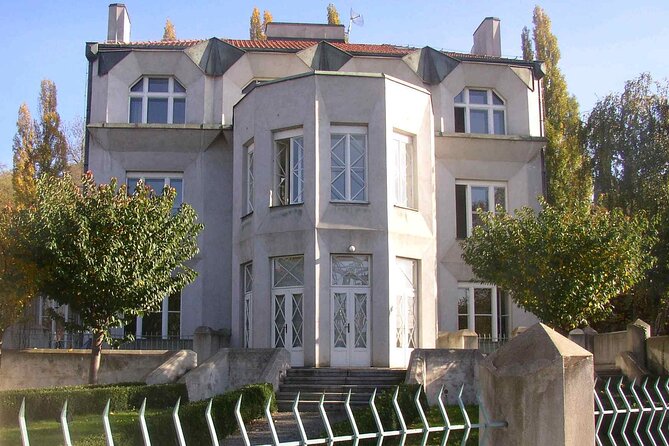
- Villa Kovarovic by the Vltava: Cubism with Gothic and Baroque echoes
- Neklanova’s 1913 cubist apartment building: ending with a sharp finish
- Where the tour ends: Albertov tram stop for a quick return
- Price and value: when $94.93 per group actually works
- Who should book this tour
- Should you book this Art Nouveau and Cubism walking tour?
- FAQ
- How long is the Prague Art Nouveau and Cubism walking tour?
- How much does the tour cost?
- Is this tour private?
- What language is the tour in?
- Where does the tour start and end?
- Are admission tickets included for all stops?
- Does the tour involve public transportation?
- What if I need to cancel?
Key highlights worth planning for
- Max Hutar’s practical art-to-street storytelling: you learn to recognize design features on your own as you go.
- Art Nouveau + Cubism in one continuous walk: you stop treating them like separate topics and start seeing the evolution.
- A route built around Prague’s real neighborhoods: Central Station through New Town streets toward the Albertov tram area.
- Street furniture and facades, not just famous buildings: the cubist lamppost is the kind of detail many people miss.
- A smart “look first” approach: several stops are exterior viewing, so you don’t lose time hunting for entrances.
- Group pricing that can work for families and friend groups: $94.93 is per group, up to 15.
Why Art Nouveau and Cubism fit together in Prague
Prague in the early 1900s was a city trying on new ideas fast. Art Nouveau grew out of a belief that design should feel alive—organic lines, decorative surfaces, and an optimism you can see on façades. Cubism, on the other hand, chops that idea into geometry: planes, angles, and buildings that look like they’re reorganized for a new viewpoint.
This tour matters because it doesn’t treat those styles like trivia. You start learning a visual language. By the end, you’re not just looking at pretty buildings—you’re comparing elements: curves versus planes, floral ornament versus bold structure, and how architects turned modern life into stone.
Your guide and the pacing game (so you don’t feel rushed)
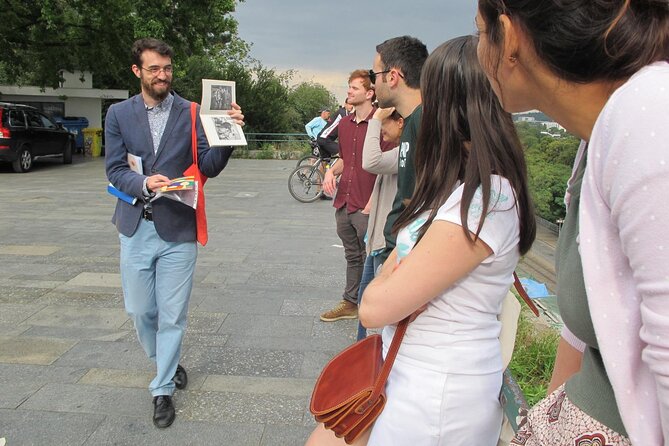
The biggest reason this tour works is the way Max Hutar guides you. He doesn’t dump names and dates. He points your attention to what your eye can actually catch: window shapes, façade symmetry, ornament style, and the overall “attitude” of a building.
Pace is the practical part. The itinerary lists short time blocks at stops, but the real duration includes quick walks and some public transportation. That’s normal for this route through central Prague. Your best move: wear shoes that handle uneven pavement and be ready to keep moving for stretches.
Also, don’t assume every stop has an interior visit. Some sites are listed as free viewing, while others are marked as admission not included—so you’ll often get the exterior experience plus context from your guide.
Start at Praha hlavni nadrazi: Art Nouveau you can walk into
You begin at Prague’s Central Train Station, a building opened in 1909 that’s a standout example of local Art Nouveau. Even before you understand style terms, you can feel the architecture’s confidence. The station’s reconstructed interiors and long halls make it easy to see how Art Nouveau designers used flow and detail to make everyday travel feel ceremonial.
What to watch for: the station is about more than one façade. As you move through corridors and approach different angles, you’ll notice how the building’s design creates momentum. It’s a great first stop because it gets your eye in “pattern mode” early.
A small consideration: the tour portion here is relatively quick, and the station is a working hub. You’ll likely spend more time noticing features than lingering for deep interior exploration.
Jerusalem Synagogue: the Moorish look with Art Nouveau timing
Next comes the Jerusalem Synagogue, built in 1906 in a traditional Moorish style that includes Art Nouveau elements from that era. That mix is the key lesson: Prague architecture didn’t stick to one script. Designers borrowed, blended, and adapted.
This stop is short, so the goal isn’t to study every decorative layer. Instead, you’re training yourself to catch stylistic fingerprints fast—how one tradition’s silhouette can be reshaped by another’s decorative mood.
Here’s the practical note: admission isn’t included, so plan for exterior viewing and guide-led explanation rather than an extended inside visit.
Senovážné náměstí apartment palaces: Art Nouveau on the home front
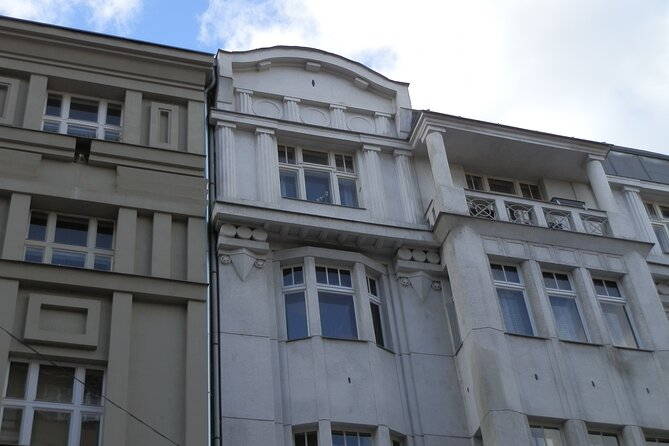
At Senovážné náměstí, you’ll see three luxurious apartment buildings from the Art Nouveau era. Squares like this are where you learn the difference between architecture meant to impress tourists and architecture meant for daily living—but still built with serious design ambition.
What makes this stop useful: apartment façades often show how an architectural style handles repetition. You’ll notice how the designers maintained elegance across multiple living units, without turning the building into a clone of itself.
This one is labeled free for admission, which makes it low-stress. Use it to compare what you saw at the station: ornament and form, but applied to residential scale.
Hybernska 10 and Hotel Central: early Art Nouveau experiments
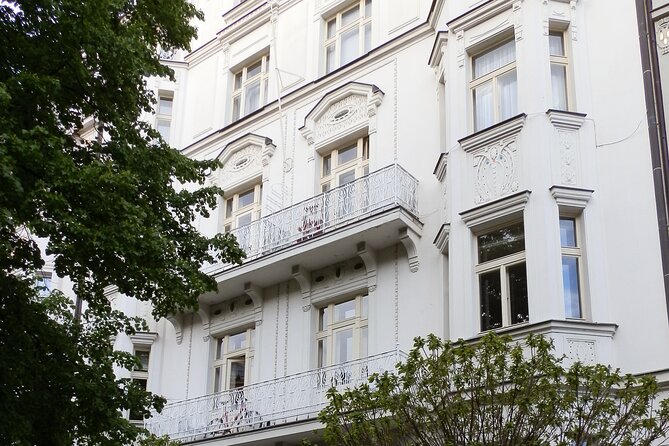
Hybernska 10 (Hotel Central Palác) dates to 1899 and is described as one of the city’s earliest Art Nouveau-style buildings. That early date matters. When you see later Art Nouveau, it can feel polished. Earlier examples show the experimentation stage—designers testing what works.
A quick stop can still be worthwhile if your attention is guided well. You’ll want to look for the design choices that feel transitional: elements that hint at future trends but still carry the feel of their original moment.
Admission isn’t included here, so you’ll focus on exterior details and the guide’s comparison points.
Obecní dům (Municipal House): a civic monument of culture
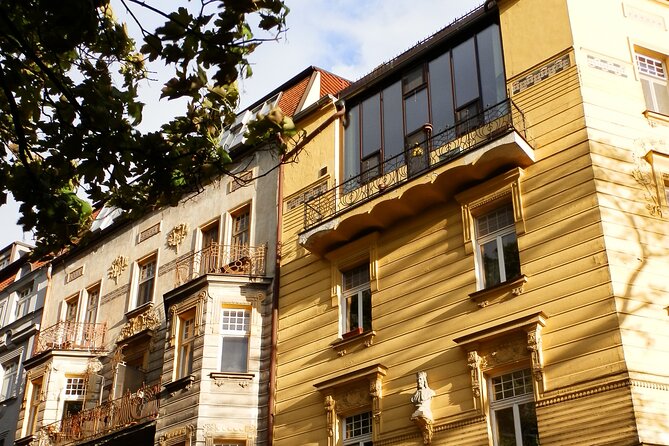
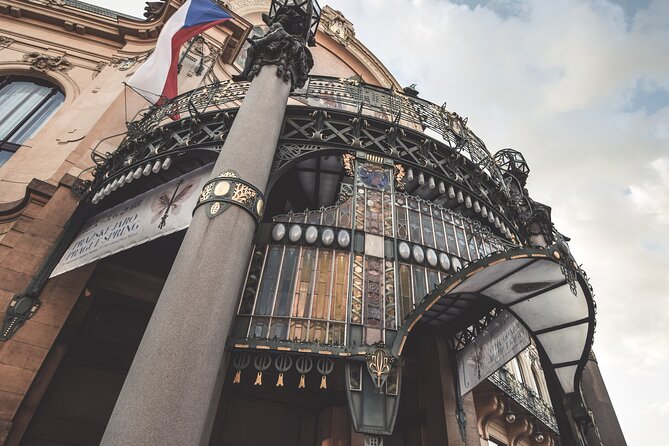
Then you reach Obecní dům, the Municipal House, projected in 1905 and still used as a house of culture and representation. If you want to understand why architecture became a matter of civic identity, this is the stop.
Why it’s valuable: big cultural buildings reveal how a style gets amplified. Art Nouveau here isn’t just decorative. It’s presented as something meant for public life—events, gatherings, and a shared cultural stage.
Admission isn’t included, so you’re mainly viewing and learning from the outside context and architectural cues. But don’t treat that as a limitation. For a style-focused tour, exterior comprehension can be enough to leave you seeing patterns everywhere afterward.
The Cubist flagship moment: House of the Black Madonna
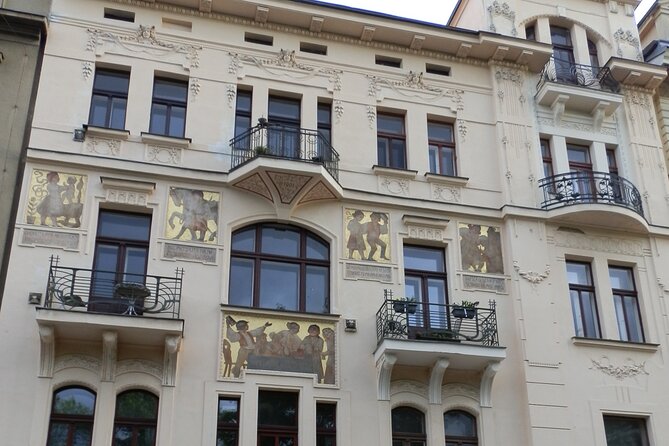
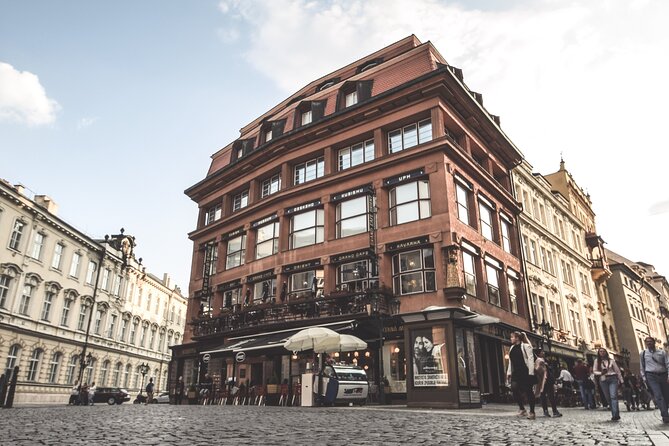
Now you hit Cubism in a big, unmistakable way: the House at the Black Madonna, built in 1912 and described as the flagship of Cubist architecture pioneered in Prague before World War I.
This is where the tour’s logic becomes clear. Art Nouveau often feels like it’s moving and flowering. Cubism feels like it’s restructuring the surface of reality. As you walk near the building, you’ll be prompted to notice the “shattered” sense of planes and the way the structure creates visual tension.
Time is tight at this stop, and admission isn’t included. Still, Cubist architecture works even when you’re only looking at it from street level—because the façade is doing the talking.
Na Příkopě and Vaclavské náměstí: stylish streets with major-square energy
From here, you start walking the border boulevard between Old Town and New Town along Na Příkopě. It’s a corridor of buildings where the Art Nouveau story turns into a street-level scavenger hunt. The boulevard feel matters because it gives you repeated opportunities to compare façades from different angles.
Then you reach Vaclavské náměstí, a central square with several Art Nouveau hotels and department stores. This is a good reality check stop. On a grand square, ornament and modern shopping design were treated as part of the same cultural package.
Practical tip: since you’re in busy central areas, don’t try to photograph everything. Instead, pick one building and study it for 60 seconds. Your brain needs repetition, not random snapshots.
These stops are marked as free for admission, so they stay easy to enjoy even if you’re low on time.
Vodičkova: where Art Nouveau and Cubism overlap in your field of view
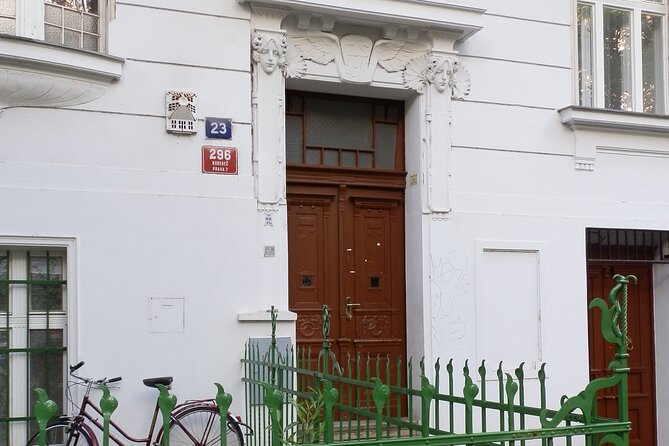
Vodičkova is next, and it’s famous for multiple breathtaking Art Nouveau and Cubist buildings. This is the stop where your “style reading” starts to stick.
I like this part of the route because you stop treating Cubism as a single monument and start seeing it as a pattern that shows up repeatedly in the street fabric. When two styles appear close together, it’s easier to spot what changes: decoration style, surface rhythm, and overall massing.
Admission is free here, which means you can keep your momentum and stay focused on what you can actually see.
Emil Kralíček’s cubist lamppost: proof that Cubism went public
One of the most fun moments comes from Emil Kralíček’s cubist lamppost, a unique piece of street furniture described as one of the most radical interventions this style added to Prague.
This is one of those details that turns an architecture tour into a memory. Why? Because it’s not confined to a building. Cubism shows up in the everyday city kit.
Look at it like a sculpture. The shape choices make sense even without the building context. And for a lot of people, this is where the tour’s concepts become less abstract.
This stop is free for admission and quick, but it’s a strong payoff-to-time ratio.
The Three Cubist Houses and the Vyšehrad rock line
Under the rock of Vyšehrad fortress, you’ll see the triplet of houses often called the Three Cubist Houses. This is one of Prague’s best-known Cubist constructions, and the arrangement reinforces the style’s obsession with viewpoint.
Even if you only spend a few minutes here, you can learn something practical: Cubism isn’t just about angles. It’s about the relationship between surfaces. A group of buildings like this makes it easier to notice how mass and voids are balanced.
Admission isn’t included, so plan for exterior viewing and guide-led explanation rather than prolonged entry.
Villa Kovarovic by the Vltava: Cubism with Gothic and Baroque echoes
Next comes Villa Kovarovic, built in 1912 by the Vltava river banks and described as a cubist masterpiece inspired by gothic and baroque architecture. That blend is an important takeaway: Prague’s modernist directions didn’t wipe out older influences. They borrowed from them.
By the river, the setting also helps you see scale. Many architecture tours focus on streets and façades alone. Here, the surroundings make the villa feel like part of a larger city scene.
Admission isn’t included, so you’ll take in the style through exterior observation and the guide’s framing.
Neklanova’s 1913 cubist apartment building: ending with a sharp finish
Finally, the tour concludes on Neklanova, a street that wraps things up with an amazing cubist apartment building from 1913. Ending with a residential-scale example is smart. It reminds you that this style wasn’t only for grand buildings and public institutions.
This is also a good moment to test yourself. After so many stops, you should start recognizing features without being told every single detail. That’s the whole point: leaving Prague with your eyes turned on.
This stop is marked free for admission.
Where the tour ends: Albertov tram stop for a quick return
The walk finishes at the Albertov tram stop area (Na Slupi 2102/2b). The ticket used for public transportation is still valid long enough for you to get back toward the center.
That’s practical for timing. Instead of fighting with the “how do we get back” problem, you’re already pointed in the direction that works with your city momentum.
Price and value: when $94.93 per group actually works
At $94.93 per group (up to 15), this is priced for groups, not per-person theater. If you’re traveling solo, it may feel steep compared with a standard group walking tour. If you’re a couple or a small group, it can become a very good deal—especially because you’re paying for a live guide who teaches you how to identify styles across many different buildings in one concentrated block of time.
It’s also a value-style tour. You’re not paying for entrance tickets at every stop (some are noted as not included), and you’re not stuck in a single building for the whole time. Instead, you’re buying pattern recognition: how to see Art Nouveau and Cubism as living design languages across Prague.
Who should book this tour
This is a great fit if:
- you care about architecture and want a guided way to learn what to look for
- you want a compact route that covers Art Nouveau and Cubism together
- you’re traveling with others who will share the group cost
It may be less ideal if:
- you hate walking or you’re sensitive to transit time between stops
- you want lots of included interior museum-style time at each location (several admissions are not included)
Should you book this Art Nouveau and Cubism walking tour?
Yes, if your goal is to leave Prague with a working visual checklist. This tour doesn’t just point at famous façades. It teaches you to read them—so you can keep spotting style features after the walk ends.
I’d book it especially if Max Hutar’s approach sounds like your kind of guide: energetic, story-driven, and focused on making architecture make sense in real street context. Just plan for shoes-and-pace reality, and treat it as a high-quality style orientation session rather than a marathon of indoor ticketed sights.
FAQ
How long is the Prague Art Nouveau and Cubism walking tour?
It runs about 2 hours 30 minutes.
How much does the tour cost?
The price is $94.93 per group, up to 15 people.
Is this tour private?
Yes. Only your group participates.
What language is the tour in?
The tour is offered in English.
Where does the tour start and end?
It starts at Prague Main Station, Wilsonova 300/8, Vinohrady, and ends at Na Slupi 2102/2b near the Albertov tram stop.
Are admission tickets included for all stops?
Some stops are free for admission, while others are marked as admission not included (for example, the Jerusalem Synagogue and several major buildings on the route).
Does the tour involve public transportation?
Some parts use public transportation, and the same ticket used for the last leg is still valid long enough to get you back toward the city center.
What if I need to cancel?
Cancellation is free if you cancel at least 24 hours before the experience start time for a full refund.