REVIEW · PRAGUE
Prague: Museum of Torture Entry Ticket
Book on GetYourGuide →Operated by Museum of Torture · Bookable on GetYourGuide
Prague’s torture museum is not for everyone. The experience focuses on how torture was used in the legal system, pairing authentic-looking replicas with period engravings and a cellar-style setup on Celetná Street. You’ll move through a compact 400 m² exhibition with around 100 exhibits plus sound and audiovisual effects that heighten the mood.
What I really like is the way the museum mixes objects (replicas like the iron maiden and Spanish boot) with context (text and documents explaining torture law over centuries). I also appreciate that the visit is short and targeted: with a 1-day, entry-ticket format, you can fit it into a day of Prague sightseeing without turning it into a full itinerary.
One possible drawback: the content is graphic and can be upsetting, and one verified booking complaint highlights a strong smell of black mold in parts of the rooms. If that kind of sensory detail bothers you, plan accordingly.
In This Review
- Key highlights before you go
- Prague’s Celetná Street cellars: what your entry ticket is built around
- Inside the 400 m² exhibition: 100 exhibits and dozens of engravings
- Torture instruments you’ll recognize: iron maiden, Spanish boot, rack, pear
- The cellar atmosphere: wax figures, sound effects, and two audiovisual moments
- Torture law explained through texts, documents, and consequences
- A reality check: what to do about the reported mold smell
- Price and value at $9: why this ticket can be a smart stop
- Language and guidance: English host/greeter support
- Who should book, and who should skip
- Quick planning tips for your 1-day visit
- Should you book the Prague Museum of Torture entry ticket?
- FAQ
- How much is the Museum of Torture entry ticket in Prague?
- How long should I plan for the visit?
- Where is the museum located?
- What language is available during the visit?
- What will I see inside?
- Are there audiovisual effects?
- Is the exhibition suitable for children?
- Is free cancellation available?
Key highlights before you go
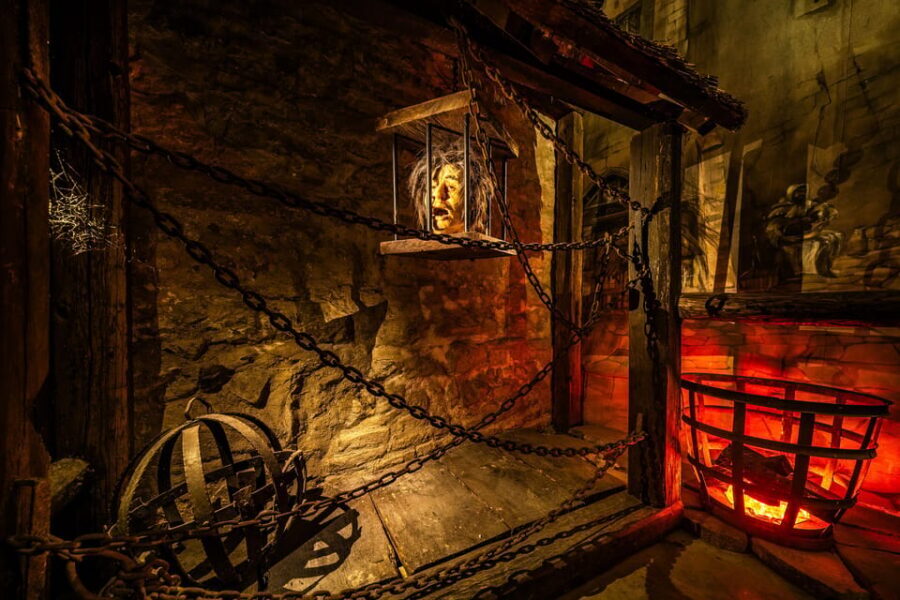
- Celetná Street cellars: reconstructed spaces that keep the whole story grounded in a dungeon-like setting
- About 100 exhibits: plus dozens of period engravings packed into roughly 400 m²
- Torture instrument replicas: iron maiden, Spanish boot, rack, pear, and more
- Sound and two audiovisual effects: extra layers during the cellar tour
- Wax-figure staging: figures placed in situ to support the atmosphere
- Law-focused context: texts and documents explaining how torture was applied and what it did to society
Prague’s Celetná Street cellars: what your entry ticket is built around
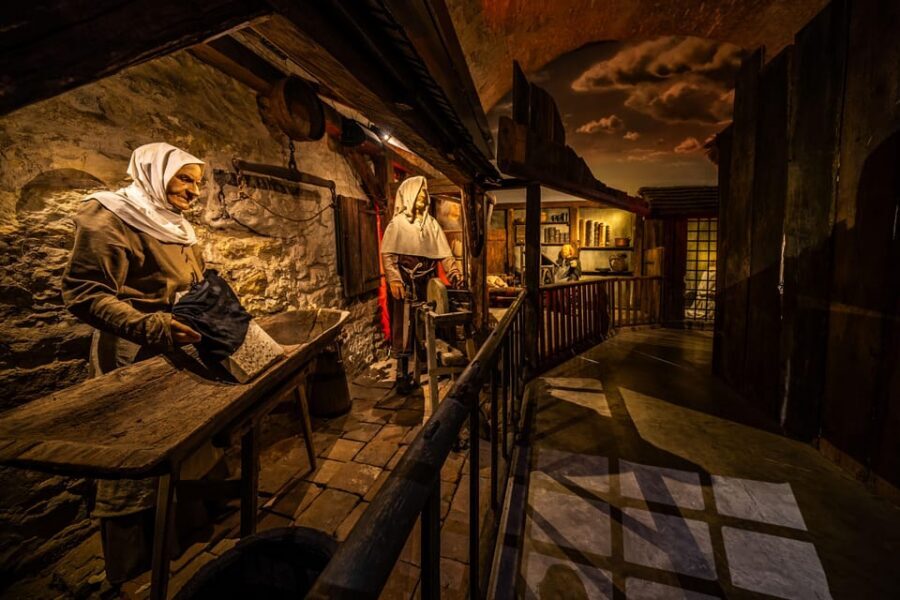
This ticket is a focused way to spend time with one of Prague’s darker special-interest attractions: the Museum of Torture and Torture Law. Instead of being just a collection of scary props, the museum frames its displays around the idea that torture wasn’t random cruelty. It was tied to judicial processes and built into how laws were enforced over time.
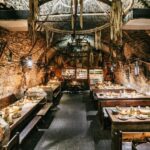
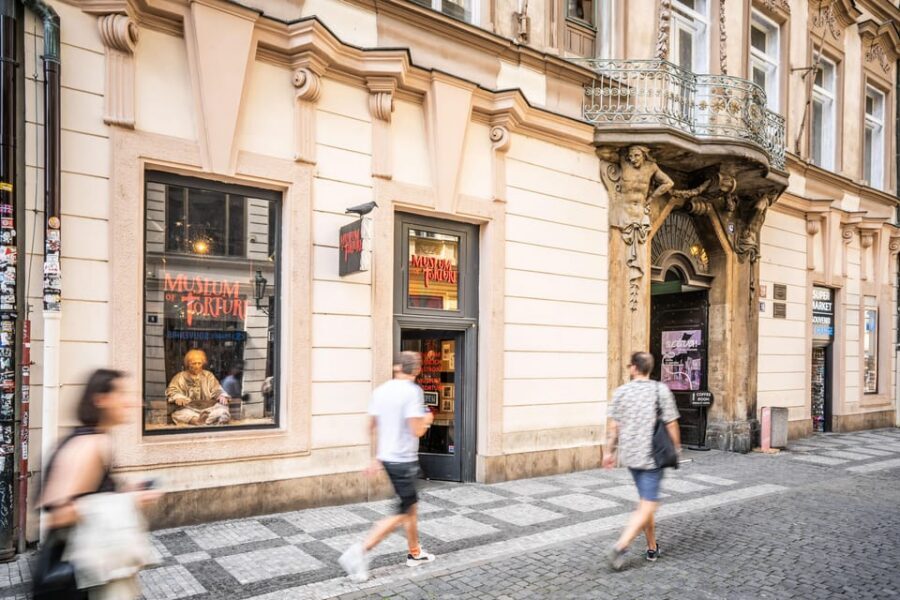
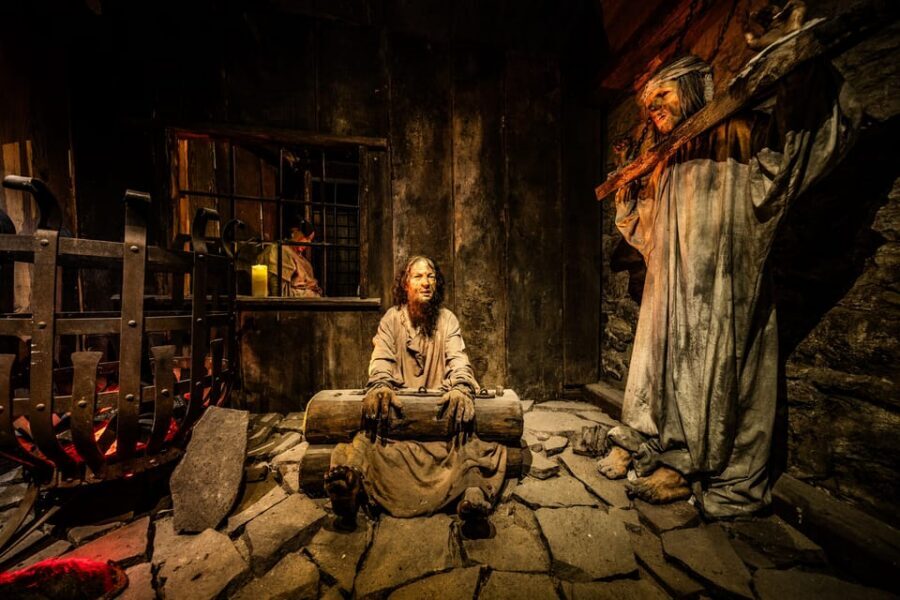
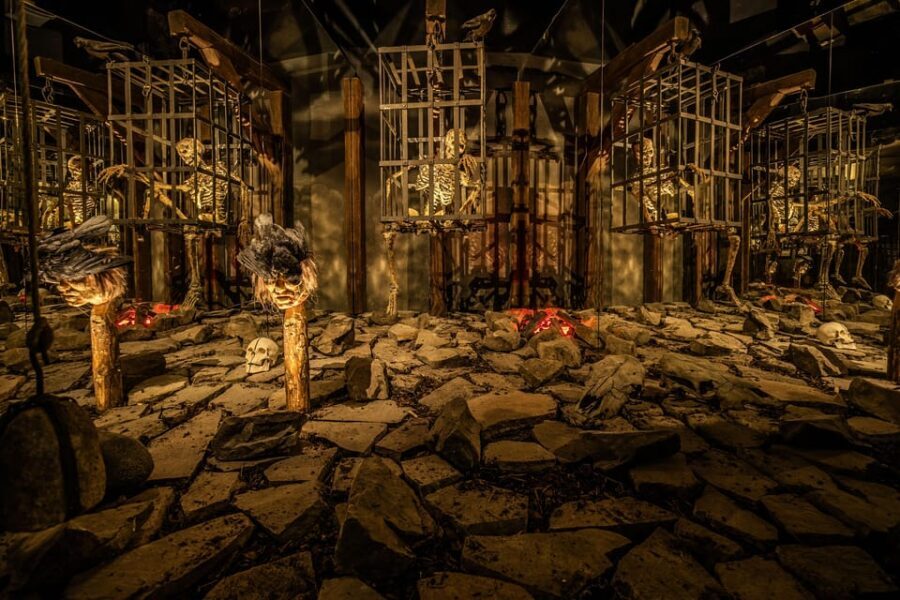
The setting matters. You’re in reconstructed cellar spaces on Celetná Street, in the center of Prague. That location gives the visit a strong sense of place: you’re not picturing a courtroom in your head. You’re stepping into the “underworld” environment the museum is trying to recreate, with sound effects and carefully staged exhibits to keep the atmosphere consistent.
The practical upside is that it stays manageable. The exhibition spreads across about 400 square meters, and the museum presents roughly 100 exhibits along with period engravings. You’re not wandering for hours through an endless maze. You can plan a clear stop, absorb what you can, then move on with your day.
You can also read our reviews of more tours and experiences in Prague


Inside the 400 m² exhibition: 100 exhibits and dozens of engravings
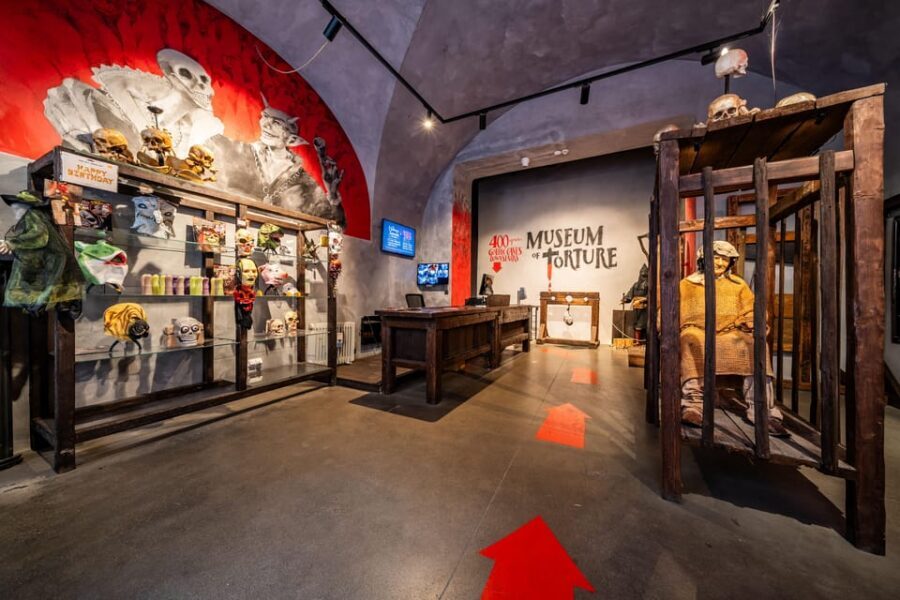
The museum’s layout is essentially a condensed tour through torture’s legal logic and its physical tools. Expect a lot of information in a relatively small footprint—around 100 exhibits plus dozens of period engravings. Because it’s not spread out across massive galleries, the experience can feel intense even if you take breaks.
Here’s what that means for you as a visitor:
- You’ll likely encounter multiple themes in quick succession: how torture was justified, what instruments were used, and what the results were supposed to achieve.
- You can skim and still get the core story, or slow down if you’re the type who reads the labels and wants the context.
The engravings are especially important because they show how torture was historically represented. Even when you’re not reading every document, the visual language helps the museum communicate how widely torture imagery circulated and how “official” it could look in period art.
Torture instruments you’ll recognize: iron maiden, Spanish boot, rack, pear
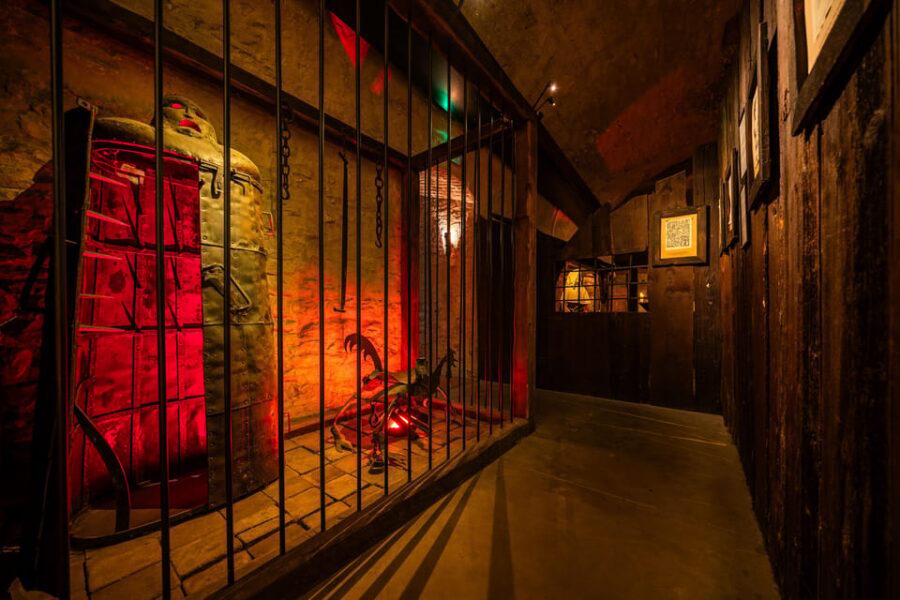
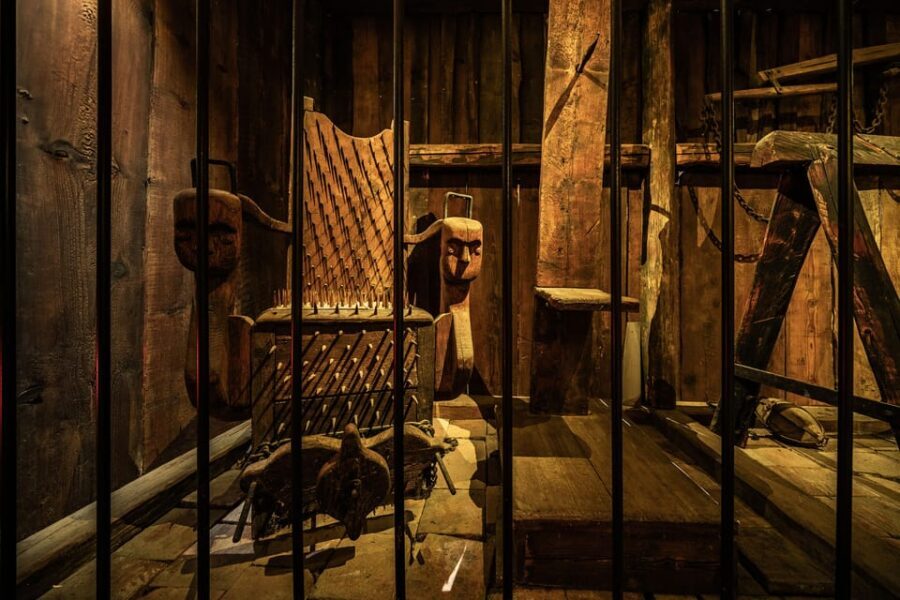
One of the main reasons this museum draws people in is the set of replica torture instruments. The displays include well-known examples such as the iron maiden, Spanish boot, rack, and the pear (as listed by the museum’s content descriptions). There are also other instruments beyond the most famous names.
You don’t need to be a history scholar to understand why these props matter. They translate an abstract idea—torture as a tool for extracting information or punishing—into something concrete. When you can see a device (even as a replica) and then read what it was intended to do, the story shifts from “scary museum” to “how a system worked.”
Still, keep your expectations realistic. This is not a hands-on engineering lab. It’s interpretive, with replicas and explanation. The museum’s goal is to show how torture law and enforcement played out through objects and procedures, not to create a museum where you test mechanisms yourself.
The cellar atmosphere: wax figures, sound effects, and two audiovisual moments
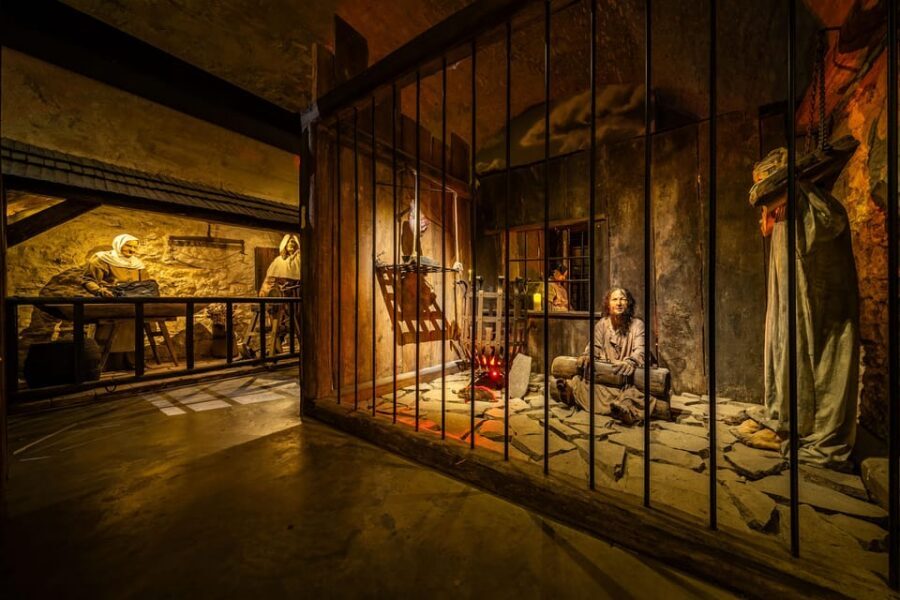
The museum doesn’t rely only on displays. It also uses theatrical elements to tighten the emotional impact—especially during the cellar tour.
You can expect:
- Wax figures placed in authentic settings
- Sound effects that add to the dread without needing gore
- Two special audiovisual effects that the museum uses to intensify the cellar experience
For many visitors, that combination is the difference between reading about torture law and feeling the museum’s narrative rhythm. The audiovisual effects and sound cues are also why this attraction can feel more immersive than typical small museums.
But this is also where you should be honest about your comfort level. If you’re sensitive to mood-heavy experiences—dark spaces, staged scenes, and amplified sound—this one can push past “educational” and into “stressful.” The museum’s own guidance flags the content as not recommended for sensitive individuals or young children.
Torture law explained through texts, documents, and consequences
The standout educational angle here is that the museum treats torture as a legal and social mechanism. Alongside replicas, you’ll find textual information and documents that clarify the historical and legal context. The museum’s emphasis is on how torture law was applied over the centuries, and what it did to society.
That focus helps you read the exhibits differently. Instead of treating the instruments as horror-show centerpiece items, you can see them as part of a system:
- Torture was connected to judicial processes.
- Confessions or punishments were the intended outcomes.
- The practice had consequences that extended beyond individual cases.
If you enjoy history that connects courtroom rules to real-world outcomes—how law shapes behavior—this element is likely the most satisfying part of your visit. It’s also where the ticket’s educational value becomes clearer, because you’re not only looking at objects; you’re getting the legal framing.
You can also read our reviews of more museum experiences in Prague




A reality check: what to do about the reported mold smell
One verified booking complaint describes a strong smell of black mold in some rooms, with black-painted walls that were reportedly affected and peeling. That’s a serious detail, and it’s the kind of thing you’ll want to account for if you’re picky about indoor air, odors, or cleanliness.
I’d suggest a common-sense approach:
- If you’re arriving sensitive to smells, give yourself time to adjust and take breaks.
- If the environment feels off to you, don’t force it. Shorten the visit and focus on the parts that feel comfortable.
- If you have health concerns triggered by strong odors, treat this as a potential deal-breaker.
Most importantly, don’t let curiosity override your comfort. This museum is already intense for content reasons. You should not have to tolerate an unpleasant sensory environment on top of that.
Price and value at $9: why this ticket can be a smart stop
At about $9 per person, this is priced like an inexpensive add-on to a Prague day, not a major splurge. And for the money, you do get a lot of content density: roughly 100 exhibits in 400 m², plus period engravings, documents, and special effects.
Is it “worth it”? It depends on your interests:
- If you like courtroom-history context and want a compact, focused experience, the value is strong. You’re paying for a bundle: objects + explanations + atmosphere.
- If you’re mostly looking for light sightseeing or a casual museum, this one may feel like a mismatch, even at a low price.
I also like that it’s not a half-day commitment you have to over-plan around. The ticket is valid for 1 day, and you check availability for starting times, so you can slot it without turning your day into a complicated puzzle.
Language and guidance: English host/greeter support
The museum experience is listed with English availability. There’s a host or greeter noted as English, which is helpful if you want a straightforward entry and basic orientation.
That matters because this kind of museum can involve confusing pacing if you’re on your own. Even if most of the learning comes from labels, documents, and the exhibition design, a staff presence can help you get oriented faster and avoid wasting time.
Who should book, and who should skip
This is one of those attractions where your comfort level is the main deciding factor.
You’ll likely enjoy it if:
- You’re interested in the legal and historical angle of torture, not just the shock factor
- You want a compact museum stop with lots of objects and explanatory material
- You’re okay with dark themes and a cellar-based atmosphere with sound and audiovisual effects
You should probably skip it (or at least think hard) if:
- You’re sensitive to graphic or heavy historical subject matter
- You’re bringing young children, since it’s specifically noted as not recommended for them
- You’re bothered by strong indoor smells or reports of issues in some rooms
The museum’s warning isn’t a formality. It’s there because the topic is genuinely difficult, and the exhibition is built to communicate that impact.
Quick planning tips for your 1-day visit
Here are the practical points that help you have a smoother experience:
- Plan for an intense mood: cellar spaces, sound effects, and two audiovisual effects can make the visit feel heavier than a typical museum.
- Give yourself enough time to read the context materials. If you only skim the labels, you’ll miss the main point: the museum is about torture law, not only tools.
- Choose your starting time thoughtfully. The ticket is valid for 1 day, and starting times depend on availability, so pick when you’re feeling mentally ready.
- Travel light emotionally. If you know this topic hits you hard, consider shorter exposure and then move on.
Should you book the Prague Museum of Torture entry ticket?
Book it if you want a compact, law-focused museum experience with about 100 exhibits, period engravings, and strong staging in reconstructed cellar spaces on Celetná Street. At around $9, the value is hard to ignore—especially because the exhibits come with texts and documents, and the museum adds sound plus two audiovisual effects to sharpen the storytelling.
Skip it if you’re looking for a gentle or family-friendly museum outing. Also think twice if you’re sensitive to unpleasant indoor odors, since a verified booking complaint points to a strong black mold smell in at least some areas.
If you want to learn how punishment and confession were treated through historical law—and you can handle a dark, theatrical setting—this ticket is a clear, cost-effective way to do it in a single Prague day.
FAQ
How much is the Museum of Torture entry ticket in Prague?
The entry ticket is listed at $9 per person.
How long should I plan for the visit?
The experience is listed as lasting 1 day, but starting times depend on availability.
Where is the museum located?
The museum is in the center of Prague, in reconstructed cellar spaces on Celetná Street.
What language is available during the visit?
English is listed for the experience, including an English host or greeter.
What will I see inside?
You’ll see around 100 exhibits in about 400 m², plus dozens of period engravings. The museum also displays replicas of instruments such as the iron maiden, Spanish boot, rack, and pear, along with textual information and documents.
Are there audiovisual effects?
Yes. The exhibition includes sound effects and two special audiovisual effects that intensify the cellar tour experience.
Is the exhibition suitable for children?
It is not recommended for sensitive individuals or young children due to its graphic content.
Is free cancellation available?
Yes, free cancellation is available up to 24 hours in advance for a full refund.