REVIEW · PRAGUE
Small-Group World War 2 & Operation Anthropoid Tour in Prague
Book on Viator →Operated by McGee's Trips & Tickets · Bookable on Viator
Prague has a talent for turning corners into history. This small-group walk strings together real WWII locations—Nazi offices, resistance safehouses, and the places tied to Operation Anthropoid—in about 3 hours. I especially loved how it made the big events feel human and local, from the tightening of the Protectorate to the 1942 assassination of Reinhard Heydrich (real sites, not just textbook summaries). I also liked the pacing: short stops, clear storytelling, and then you’re back out exploring Prague fast.
One thing to consider: the subject is heavy. You’ll hear about executions, terror tactics, and reprisals (including Lidice), and the tour involves a good amount of standing and walking, so it’s not a great match if you want a light, fluffy stroll.
If you’re the type who likes your travel with context—who wonders how one political decision turns into years of fear—this tour is a strong fit. And because the city’s old streets can be confusing, it’s nice to let a guide keep you moving and oriented (mobile ticket, central meeting points, and a finish back in town).
In This Review
- Key highlights worth your time
- Prague WWII in 3 hours: occupation to uprising without the maze
- Týnská Street start and walking pace you can handle
- From Versailles to the Protectorate: the early war setup in Old Town
- Tightening Nazi control: the Celetná crackdown and resistance safehouse stories
- Operation Anthropoid framed by the Baťa display and the assassination aftermath
- From Lidice to Petschek Palace: reprisals, Nazi favorites, and the hunt
- St Cyril and Methodius plus the Heydrich Terror crypt: the ending that sticks
- Price, pacing, and who should book this WWII tour
- Should you book this Operation Anthropoid walking tour?
- FAQ
- Where does the tour start and where does it end?
- What time does the tour begin?
- How long is the tour?
- How much does it cost?
- Is it offered in English, and how big is the group?
- What’s included in the price?
- What’s not included?
- Is this tour suitable for children?
- Do you need to be in good physical shape?
- Is there free cancellation?
Key highlights worth your time
- Operation Anthropoid explained on the streets tied to Heydrich’s assassination and the resistance network
- Small-group feel (max 30) with a guide who can answer questions as you walk
- WWII cause-and-effect, not just dates from WWI fallout to the Protectorate of Bohemia and Moravia
- Places you’d miss on your own, including resistance hideouts and Nazi-linked buildings
- A powerful ending at the St Cyril and Methodius area and the Heydrich terror memorial crypt
- Short stop format that works even when your Prague days are packed
Prague WWII in 3 hours: occupation to uprising without the maze
This tour is built like a focused timeline. You start in central Prague and move through the “how it happened” story: WWI consequences, the slide toward Nazi control, the crackdown on Czech life, and then the resistance turning points that led to the 1942 assassination of Reinhard Heydrich. The best part is that it doesn’t treat Heydrich as a random villain. It shows how his role fed Nazi repression—and how the assassination triggered brutal retaliation.
Along the way, you also get the 1945 shift: the Prague Uprising story, plus the bombing effects that changed the city at the end of the war. And yes, the tour ends where the “cost” of all this becomes very real—at the memorial and crypt connected to the paratroopers involved in the Heydrich operation.
You can also read our reviews of more tours and experiences in Prague.
Týnská Street start and walking pace you can handle
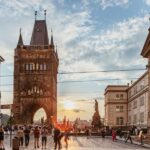
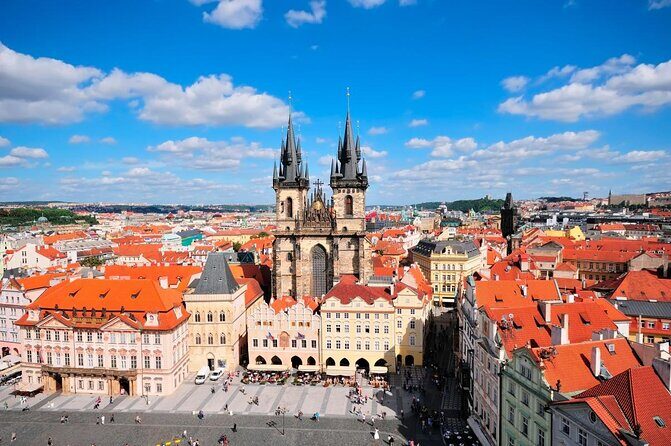
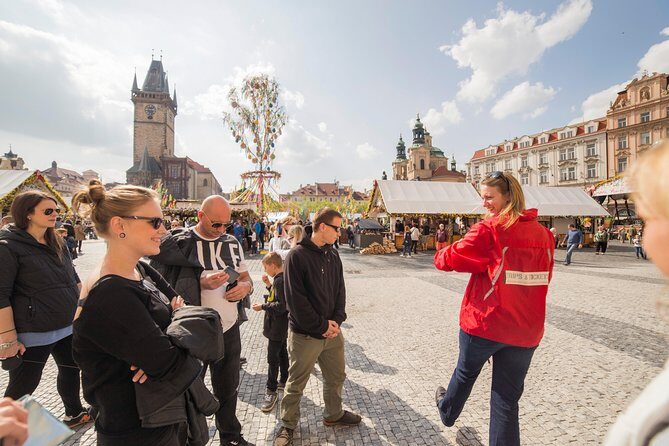
You’ll meet in Old Town at Týnská 627/7 (the tour starts in front of the shop area at that address). The start time is 1:30 pm, and the tour concludes back in central Prague at the Orthodox Cathedral of Saints Cyril and Methodius area on Resslova 9a.
The practical rhythm: you’ll spend only a short stretch at each stop, then walk to the next one. You should plan on some standing, and the tour asks for moderate physical fitness. It’s not a marathon, but it is a real walking tour. If you’re traveling with kids, note the age guidance: the content is not recommended for small children, while children up to 6 are free but still need to be with an adult.
From Versailles to the Protectorate: the early war setup in Old Town
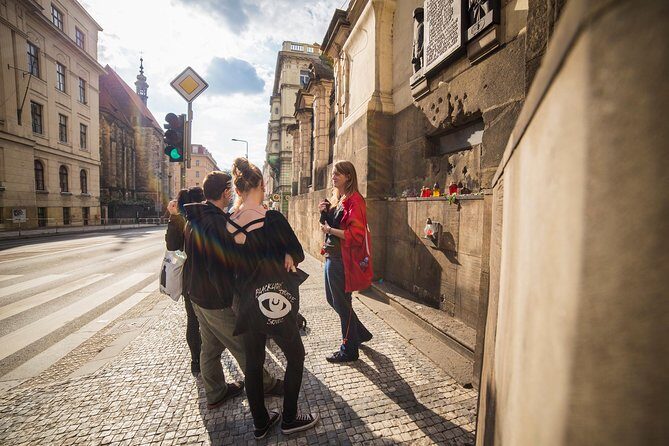
The tour opens by setting the stage for WWII in a way that helps the rest of the walk click. One early stop explains how the post–World War I order created the conditions for WWII—right down to the Treaty of Versailles, the fall of major powers, and the creation of new nations (including Czechoslovakia and Poland). You also hear about the economic chaos that followed: inflation, the Great Depression, and how economic stress fed rising nationalism across Europe.
Next comes a stop that connects the political domino effect to Nazi strategy. You’ll hear about the Sudeten Deutsche Party, the Munich Agreement, and the Protectorate of Bohemia and Moravia. Even if you already know WWII history in broad strokes, this part is useful because it explains why Czech lands became such a strategic target.
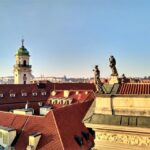
Then you get an Old Town viewpoint tied to the city’s medieval character—a Gothic church that has been the main church for this part of Prague since the 14th century. The contrast matters. Nazi occupation didn’t erase the city’s identity; it used the city’s bones while changing everyday life.
And the walk doesn’t jump straight to 1945. It transitions into the wartime endgame through a look at the Old Town Hall (Staroměstská radnice), including the wing destroyed during the Prague Uprising in 1945. From there, the guide ties the occupation’s final chapter to the May uprising and the end of the war on May 8.
Tightening Nazi control: the Celetná crackdown and resistance safehouse stories
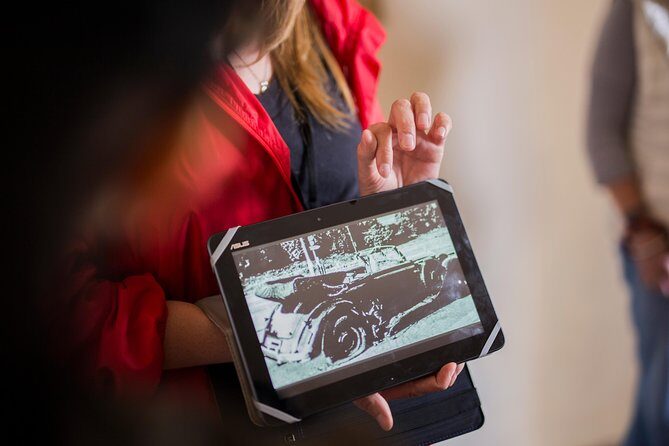
Once the Protectorate is in place, the tour becomes much more about daily life under control—and how quickly freedoms were squeezed. On Celetná Street, you’ll hear about the 17th of November 1939 crackdown: the execution of Czech students and the closing of Czech universities. You also get context for Konstantin von Neurath’s period in the region and how the appointment of Reinhard Heydrich on September 27, 1941 became a turning point.
From there, the story moves into the resistance world, which is where Prague feels especially striking. At Melantrichova, you’ll hear about the buildup to the Anthropoid operation through details connected to the exiled government in London—including Operation Benjamin and the linked silver operations (Silver A and Silver B). This stop also includes a look at a building associated with key resistance figures, including the apartment connection to Josef and Marie Svatoš, described as a major resistance hideout.
What makes these stops valuable is that the guide isn’t just listing “resistance happened here.” You’re shown how the network functioned and why specific buildings mattered. It’s one of those rare times travel history feels structural—like you can actually imagine people planning, hiding, and waiting.
Operation Anthropoid framed by the Baťa display and the assassination aftermath
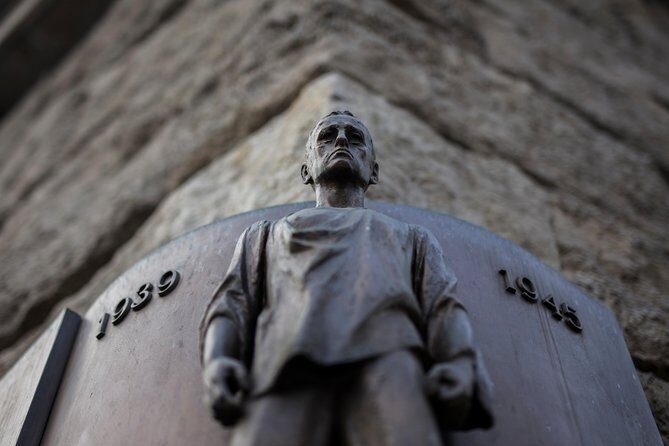
At Baťa, you’re in for a particularly focused detail: objects from the assassination scene were displayed in a way that connected the real event to the public space. It’s a blunt reminder that the Nazis didn’t treat this as a distant plot; they made the consequences visible.
This is also where the tour’s core arc becomes clear: how paratroopers were flown in to carry out the mission to kill Heydrich—the operation codenamed Operation Anthropoid—and how this target earned the nickname Butcher of Prague. The guide explains the daring assignment and places it in the broader chain of resistance planning rather than treating it as a Hollywood-style one-off.
And then, right after those assassination-linked details, the walk turns toward what happened when the Nazis tried to crush the resistance through fear.

From Lidice to Petschek Palace: reprisals, Nazi favorites, and the hunt
One of the most chilling segments happens at Wenceslas Square, where you hear the tragic story of Lidice. On June 10, 1942, around ten in the morning, the men were executed and the women were sent to concentration camps. The result was total destruction—Lidice ceased to exist. This is the kind of moment where the guide’s job is not to sensationalize, but to keep the history accurate and the human impact clear.
The tour then moves into the Nazi power footprint around Prague. At Esplanade Hotel Prague, you’ll hear it was a favorite of the Nazis during the occupation. It’s a strange detail in the best way: you realize repression didn’t only happen in grim prisons. It also happened in places that served as social and administrative center points.
Finally, the story lands at Petschek Palace, described as a Gestapo headquarters. Here you’ll hear about interrogations, torture, and killings—thousands, as the tour explains. And you’ll get a specific turning-point moment: Karel Čurda entering this building on June 16, 1942 and betraying his comrades, which helped ignite the hunt for Heydrich’s assassins.
You’ll also pass through a few additional wartime-connected layers that help round out the picture, including:
- A pass by the National Museum area, with a note about its vast collection size (nearly 14 million items across natural history, history, arts, music, and librarianship).
- A look at the Vodičkova street area, tied to covert, unfortunately unsuccessful operations, including Tin a Bioscop.
- A stop at Karlovo náměstí, connected to the bombing of Prague in 1945.
St Cyril and Methodius plus the Heydrich Terror crypt: the ending that sticks
The close of the tour is designed to hit emotionally and historically at the same time. You start with a guided visit at St Cyril and St Methodius Cathedral. The guide helps frame why this place matters in the story of Heydrich’s assassination and the Nazi response that followed.
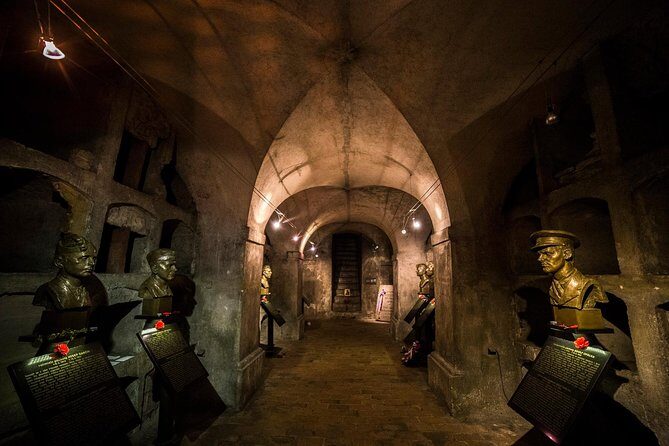
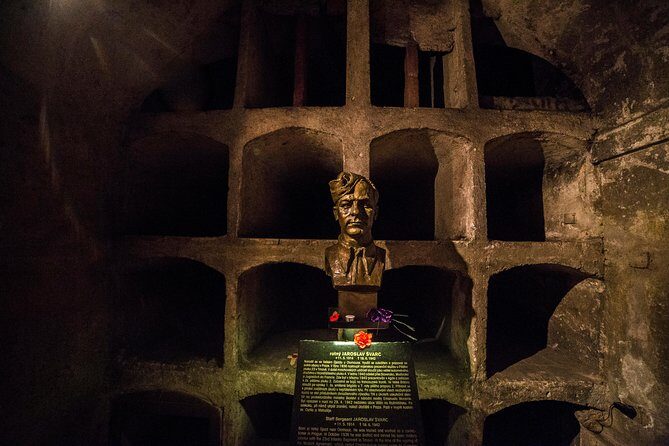
Then the final stop is the National Memorial to the Heroes of the Heydrich Terror, including the crypt where the Czech paratroopers who paid the ultimate price are remembered. The crypt is the moment you’ll likely think about after you’ve left—because it changes the story from “operation” to “people.”
If your Prague itinerary includes castles, beer halls, and postcard views, this ending grounds the trip. It makes the city feel more real, not just pretty.
Price, pacing, and who should book this WWII tour
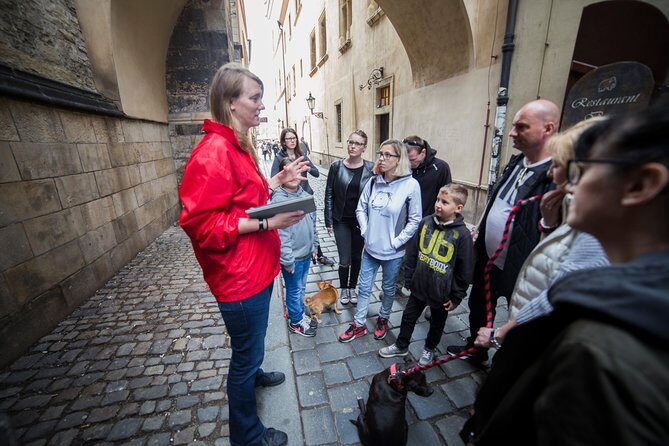
At $33.88 per person for about 3 hours, this is strong value if you want guide-led context and access to a memorial/crypt experience that’s hard to piece together on your own. You’re paying for a guided walk plus included access for the St Cyril and St Methodius visit. You should also assume there’s no food included, so you’ll want to plan a meal before or after.
This tour is especially worth booking if:
- You like WWII history that focuses on the Czech story, not only the Western Front
- You enjoy street-level historical context and short, frequent stops
- You want the Operation Anthropoid narrative connected to real Prague locations
It may be less appealing if:
- You get impatient with standing and listening (some stops are more “explanation and context” than dramatic exterior sights)
- You’re looking for a lighter walking tour vibe, since the material is dark and the reprisals are explicit
Should you book this Operation Anthropoid walking tour?
Book it if you want a guided, small-group way to understand how Nazi control tightened in Prague—and how Czech resistance answered back, culminating in Operation Anthropoid and the brutal fallout. The walk is built for people who want clarity, not just screenshots of landmarks.
Skip it if you need a family-friendly outing or you’re mainly chasing visually flashy sites. This is not a wow-every-corner photo tour. It’s a story tour. And if that’s your style, it’s a memorable use of a few hours in Prague.
FAQ
Where does the tour start and where does it end?
It starts in central Prague at Týnská 627/7 (the meeting point is in front of Mcgee’s Trips & Tickets). It ends at the Orthodox Cathedral of Saints Cyril and Methodius area on Resslova 9a.
What time does the tour begin?
The tour starts at 1:30 pm.
How long is the tour?
The duration is about 3 hours.
How much does it cost?
The price is $33.88 per person.
Is it offered in English, and how big is the group?
The tour is offered in English and has a maximum group size of 30 travelers.
What’s included in the price?
Included items are a local guide and a visit to St Cyril and St Methodius Church. The tour also includes admission tickets for the church and the memorial/crypt at the end.
What’s not included?
Hotel pickup and drop-off and food and drinks are not included.
Is this tour suitable for children?
It includes historical facts connected to WWII, so it is not recommended for small children. Children up to 6 years old are free, and children must be accompanied by an adult.
Do you need to be in good physical shape?
The tour calls for a moderate physical fitness level, with walking and standing throughout.
Is there free cancellation?
Yes. You can cancel for a full refund if you cancel up to 24 hours in advance of the experience start time.