REVIEW · BRNO
Trip to the Austerlitz Battlefield near BRNO in the Czech Republic
Book on Viator →Operated by BRNOguide · Bookable on Viator
Austerlitz is one of those places that clicks fast. This private day trip takes you across the key ground from Napoleon’s 1805 battle, with an English-speaking guide who can explain what happened at each turn and why it mattered. I like that you get door-to-door pickup in Brno and a smooth plan for a site that’s spread across villages and hills. I also love the mix of real monuments plus replica weapons and dioramas, so it’s not just names on a map. One consideration: you’ll do a short uphill hike (moderate fitness helps), and you should budget extra for the museum on the Pratzen Heights.
What makes this tour feel practical is the way it solves the main problem at Austerlitz: finding the right spots without wasting hours guessing. Your guide can point you toward positions like ŽUráň and the French left flank near Tvarožná, then translate that terrain into what troops likely saw and did. The other thing I appreciate is how flexible it is with starting logistics, because you can be picked up from your preferred location in Brno (and people arriving by train have been accommodated near the station). If you want a completely laid-back stroll with no effort at all, this may feel a bit active.
By the end, you’ll leave with a better mental picture of the battle than you’d get from photos alone. And since this is a private group setup, the pace is easier to manage—your questions don’t get left behind. Booking is usually done about 50 days in advance, and the overall rating stays strong (about 4.8 with many people recommending it), so it’s a solid bet if you’re in the area and care about the Napoleonic era.
In This Review
- Key highlights worth planning for
- Why Austerlitz near Brno is a story you can walk through
- Private pickup at 9:00 am: how logistics help you enjoy the day
- Zamek Slavkov-Austerlitz: the chateau where Napoleon cooled down
- Pratzen Heights and the Monument of Peace: where the museum costs extra
- ŽUráň hill and Napoleon’s command post: short stop, big payoff
- Tvarožná, SANTON hill, and the French left flank trenches
- Sokolnice and Telnice: villages that explain the battle’s edges
- How the guide makes Napoleon make sense (Helena and Marco)
- Replicas, dioramas, and museums: why you get more than open-air views
- Price and time: what $216.04 buys you (and what to budget)
- Who should book this Austerlitz day trip from Brno
- Should you book this tour?
- FAQ
- What time does the Austerlitz battlefield tour start from Brno?
- Is pickup included, and where does the guide meet me?
- How long is the tour?
- Is the tour offered in English?
- Is the Pratzen Heights museum included in the price?
- Do I need lunch money?
- How physically demanding is the tour?
- Is this tour private or shared?
Key highlights worth planning for
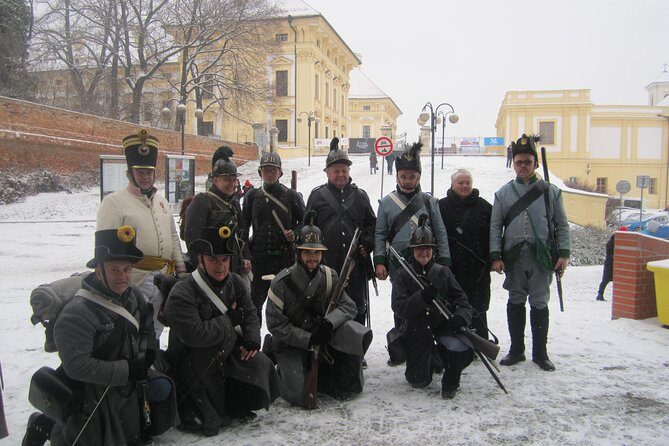
- Private, English-led routing across the Austerlitz battlefield so you don’t spend the day hunting for viewpoints
- Pick up and drop off in Brno (including options near train stations for arrivals from Prague or Vienna)
- Pratzen Heights + Monument of Peace with a museum stop where you can expect an extra fee
- SANTON hill and the French left flank area plus a commanding view over the battlefield
- Replicas, dioramas, and monuments that turn geography into an actual story
- Sokolnice lunch timing built into the schedule, so food isn’t an afterthought
Why Austerlitz near Brno is a story you can walk through
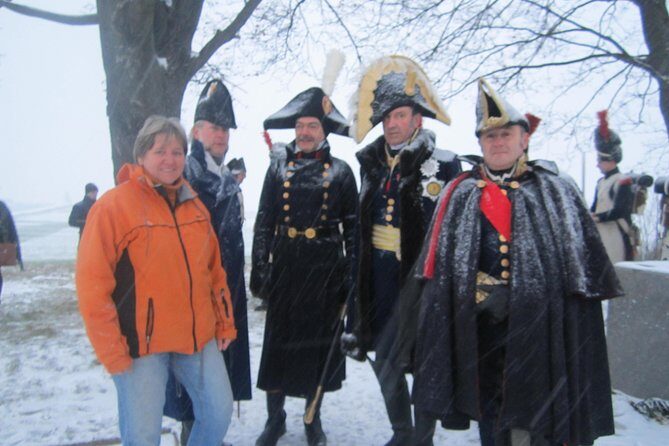
Austerlitz isn’t one tight museum room. It’s a whole battlefield spread across about 12 km by 8 km, threaded through farmland, villages, and hills. That spread is the whole point: the battle flowed across space, not just along a single line.
What you’re really buying with a guided tour is direction. With the wrong plan, you can end up at a few nice-looking stops and still feel like you missed the logic of the day. With this approach, you move from the chateau setting (Napoleon’s post-battle presence) to the Pratzen Heights (where the stakes were high) and then out into the flanks where trenches, batteries, and local geography influenced decisions.
The best part is that the ground is still legible. Many key features are preserved well enough that, with the right narration, you start to see how terrain shaped movement—why an advance looked possible from one spot, and why it became harder from another.
You can also read our reviews of more tours and experiences in Brno.
Private pickup at 9:00 am: how logistics help you enjoy the day
The tour starts at 9:00 am, and it’s designed so you don’t burn the morning on transportation stress. You can be picked up from any location in Brno or near Brno, and if you’re arriving by train (Prague or Vienna are common routes), the guide setup has worked for meeting near the station.
You’ll ride in an air-conditioned vehicle. That matters on hot days, but also because battlefield days add little annoyances—parking, walking between scattered sites, and time lost when you’re running on your own schedule.
This is a private tour, so it’s only your group. That usually means:
- You can ask questions without feeling like you’re hijacking a group day
- The guide can adjust the pacing to your comfort level
- The hike segments don’t become a frantic race
If you dislike early starts, this one is still manageable because the day is structured. You begin at 9, you hit the important stops before the afternoon drift, and you end with enough time to get back into Brno feeling like you actually did something.
Zamek Slavkov-Austerlitz: the chateau where Napoleon cooled down
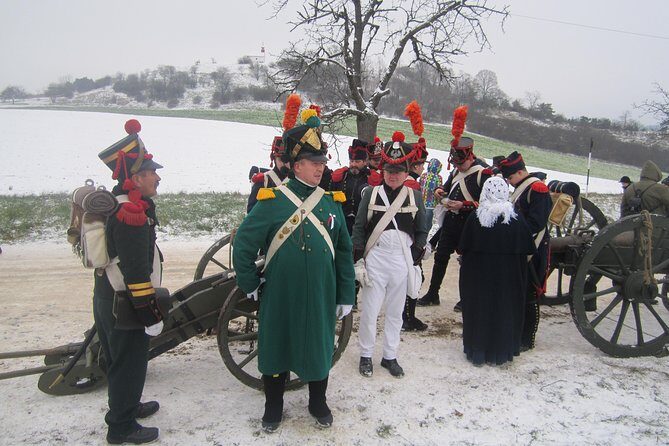
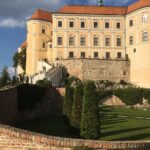
Your first stop is Zamek Slavkov-Austerlitz, a lovely Austerlitz chateau with a park where Napoleon spent time after the battle. Even if you don’t know a single detail about the campaign, this kind of location helps you anchor the day. It turns the battle from a textbook event into something that had a before and after—strategy, then aftermath.
This stop is about 20 minutes, and the admission here is listed as free. That short timing is intentional. You get a quick sense of the setting, then you move out to the positions where the fighting actually played out.
A practical tip: chateaus and parks can be visually pleasant but also easy to overthink. Use this stop to orient yourself. Try to notice sightlines and the general “feel” of the area—your guide will connect it to how the battle unfolded afterward.
Pratzen Heights and the Monument of Peace: where the museum costs extra
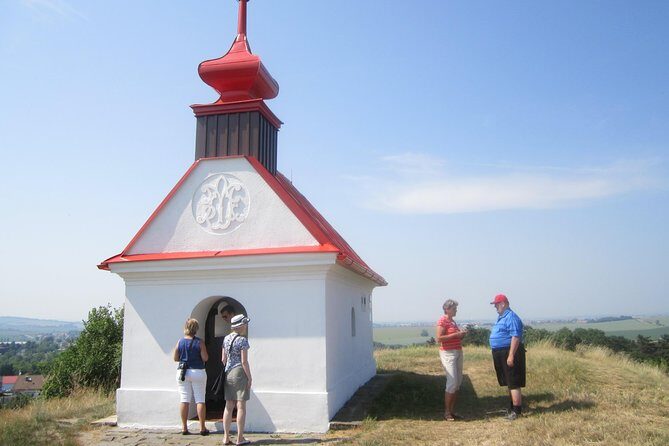
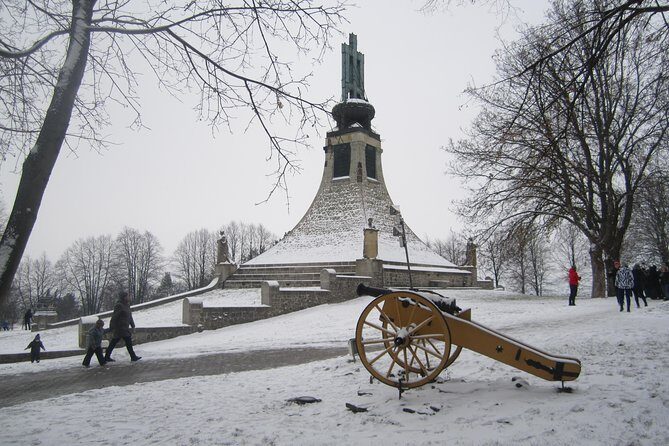
Next you head to Pamatnik Mohyla miru, on top of the Pratzen Heights. This area centers on the “Battle of Three Emperors,” plus the Monument Cairn of Peace, which is also a chapel.
The timing here is about 50 minutes, and this is the one spot where you should expect an extra cost: the museum admission is listed as €10.00 per person and isn’t included.
Even if you’re not a museum person, I’d still treat this as a key stop. Pratzen Heights is one of the moments where the battle’s stakes come into focus. If you want the day to make sense, this is where your guide can connect the terrain to the bigger strategic picture.
The only drawback is budget and pacing. Since the museum fee is extra, it’s smart to mentally separate included vs. not-included costs early. Also, at this point in the day, you’ll be glad you started early—50 minutes on a hill can feel longer than you expect.
ŽUráň hill and Napoleon’s command post: short stop, big payoff
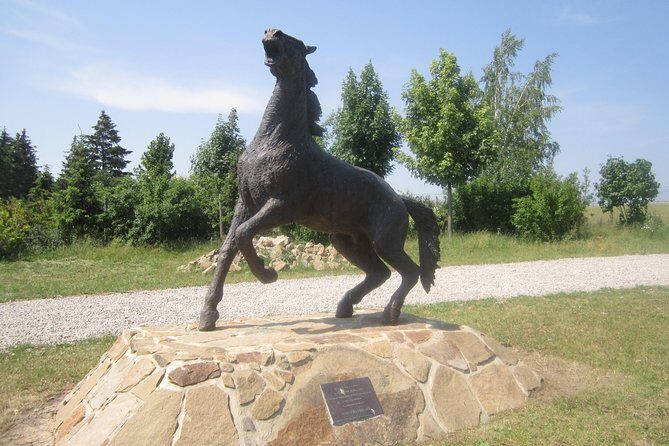
A quick hop follows at Napoléon’s commande post during the Battle of Austerlitz, tied to ŽUráň, a hilltop name associated with where Napoleon commanded the battle on 2 December 1805.
This stop is only about 10 minutes and listed as free, but that’s exactly why it works. The short duration keeps you moving, and the payoff is the narrative clarity your guide can add in a small space: who had the vantage, what a command point implies, and why that location matters when you’re tracking the battle’s movement.
If you tend to read every sign slowly, you might want to spend a few extra moments—just don’t lose the thread. The real value here is understanding the command perspective rather than turning it into a long museum-style break.

Tvarožná, SANTON hill, and the French left flank trenches
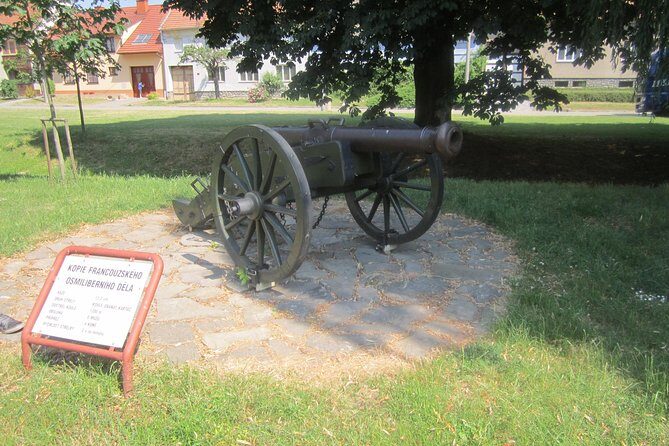
One of the most important segments of the day is the French left flank area around Tvarožná and the SANTON hilltop viewpoint. You’ll hear about places like SANTON hill in relation to trenches dug for 19 cannons, and you’ll also connect that to nearby locations such as Kostel Sv. Mikulase near Tvarožná.
There are a few linked stops here, which is useful because this area is geography-heavy. The tour includes:
- A short viewpoint-related stop near Kostel Sv. Mikulase (about 15 minutes, free)
- A more scenic and active stop around SANTON and Tvarožná (about 30 minutes, free)
- Time in Tvarožná itself for a replica French cannon and a diorama with 1,500 soldiers (included)
The hike aspect is the consideration. You’ll hike up SANTON hilltop for a view that helps you understand the broader battlefield. You only need moderate fitness, but comfortable shoes help. This is the kind of hike that’s over quickly—still, it’s not just standing in place.
What I like about this section is that the tour gives you both the “where” and the “what.” You get the trenches connection, the cannon placement, and then the diorama that turns numbers into a visual scene.
Sokolnice and Telnice: villages that explain the battle’s edges
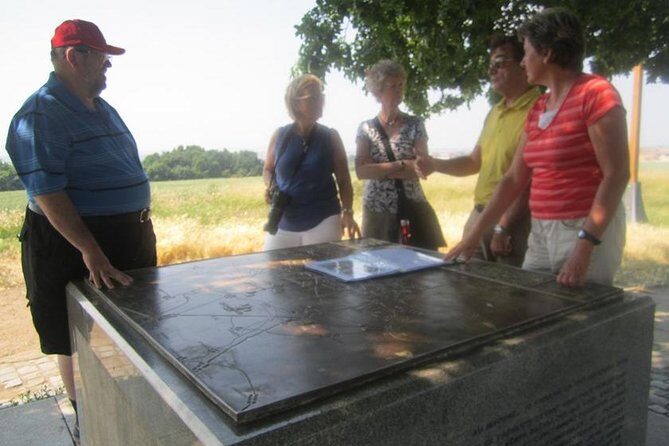
After the cannon-and-view segment, the day shifts to village areas that help you understand how the battle spread into communities.
First is Sokolnice. The schedule gives about 1 hour here, and it’s listed as free. This is also where the day naturally lines up with lunch: your guide usually goes to Sokolnice village for lunch, so you have a practical reason to pause without turning the tour into a food hunt.
Sokolnice also includes sights like Sokolnice chateau, granary, and phesantry. Even if you don’t spend long at each building, you’re getting context: the battle didn’t happen in a vacuum. It happened around farm structures, village layouts, and local movement routes.
Then you head to Telnice (TELNITZ), in the very south of the battlefield. This stop is about 15 minutes and free. The tour includes showing you where ponds used to be, and there’s a possibility of visiting a nearby church/parish center in the area.
These end-of-day village stops can be surprisingly satisfying. They’re easy to overlook when you picture battlefields as only hills and artillery. But corners of the battlefield—pond areas, village centers, older routes—are often the details that make your understanding click.
How the guide makes Napoleon make sense (Helena and Marco)
The tour’s success really comes down to the guidance. The local expert—often Helena—has a reputation for balancing battle specifics with local context. You’ll get explanations of what happened at each position and what legends or details connect to the place.
A strong theme in the experience is not just facts, but routing. The guide can get you to “the major places” without you needing to play cartographer all day. That matters on a battlefield that covers a wide area and includes spots you would likely miss if you were driving yourself.
Also, there’s often a friendly companion in the mix: Marco, a dog that has shown up in the day’s details. If you’re traveling with a service animal, service animals are allowed, which is good to know.
One more practical point from the experience style: this tour isn’t only about marching from stop to stop. The narration helps you process what you’re seeing while you’re standing there—so the day feels like a connected story, not a checklist.
Replicas, dioramas, and museums: why you get more than open-air views
Battlefields can be emotional, but they’re also easy to misunderstand. A flat field doesn’t tell you where the units went. That’s where the built displays help.
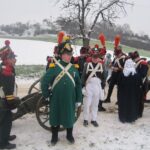
This tour includes viewing replica weapons, dioramas, museums, and monuments across multiple stops. The best example is in Tvarožná, where you’ll see a replica French cannon and a diorama with 1,500 soldiers. That kind of visual scale is a shortcut to comprehension.
Even at free stops, you’ll usually get some kind of interpretive structure: monuments, chapels, command points, and curated viewpoints. Together, they reduce the mental workload of figuring out the battle from terrain alone.
So yes, you’ll walk and look. But you’ll also learn how to look.
Price and time: what $216.04 buys you (and what to budget)
The price is listed at $216.04 per person for the day, with about 7 hours on schedule. That’s not a cheap lunch-and-photo outing. It’s a full guided day with pickup, a vehicle, and an English-speaking specialist.
What’s included:
- Air-conditioned vehicle
- Guiding in English
What’s not included:
- Museum fee on the Pratzen Heights: €10.00 per person
- Lunch
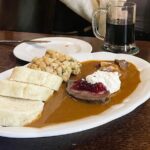
So your realistic budget for the day is $216.04 plus the museum fee (if you go for it, which is effectively part of the stop) and whatever you spend on lunch. The good news is the schedule places you in Sokolnice around lunch time, so you’re not stuck trying to eat wherever you happen to be.
Value-wise, this works best if you:
- Want a guided plan for a spread-out battlefield
- Care about Napoleon beyond a quick photo stop
- Would struggle to connect terrain to battle events on your own
If you’re already comfortable with the battle map and love driving between points, you could save money. But most people who pick this kind of tour are doing it because they want the day to make sense.
Who should book this Austerlitz day trip from Brno
Book it if you’re the type who likes:
- Clear, site-by-site explanations
- Napoleonic history with practical place context
- A structured day that doesn’t depend on your own navigation skills
It also suits travelers who want manageable activity. The tour notes moderate physical fitness, and the main “effort” moment is the hike up SANTON hilltop.
You might skip it if you:
- Want only flat walking with no uphill segment
- Prefer history in a purely classroom or indoor setting
- Need a totally flexible, unscheduled itinerary
The private setup is a big plus for families, couples, and small groups who want to ask questions and keep the pace comfortable.
Should you book this tour?
Yes—if you want a coherent Austerlitz day with someone who can connect command posts, heights, flanks, and village edges into one timeline. The combination of pickup, English guiding, and battlefield-wide routing makes the price feel more reasonable, especially once you realize how hard it is to DIY a spread-out battlefield day well.
Before booking, do two quick checks in your head: you’re comfortable with moderate walking and a hilltop hike, and you’re ready for the €10 museum fee at Pratzen Heights plus lunch. If those fit, you’ll get a far clearer picture of why Austerlitz is remembered the way it is.
FAQ
What time does the Austerlitz battlefield tour start from Brno?
The tour starts at 9:00 am.
Is pickup included, and where does the guide meet me?
Yes. The guide will pick you up from any location in Brno or near Brno, and meeting options have worked for train arrivals near the station.
How long is the tour?
The duration is listed as about 7 hours.
Is the tour offered in English?
Yes. Guiding is in English.
Is the Pratzen Heights museum included in the price?
No. The museum on the top of the Pratzen Hills costs €10.00 per person and isn’t included.
Do I need lunch money?
Yes. Lunch is excluded, so you’ll need to plan and pay for your own meal. The Sokolnice stop is timed well for lunch.
How physically demanding is the tour?
It’s noted for moderate physical fitness. There is a hike up SANTON hilltop, so comfortable shoes help.
Is this tour private or shared?
This is private, so only your group participates.