Prague Castle is big. This private walk makes it make sense. You start on Hradčany Hill, then move through the Royal District’s key buildings while a historian guide explains how one complex picked up Romanesque, Gothic, Baroque, Rococo, Renaissance, and Neoclassical layers over centuries. I like the private format because it’s easy to keep your questions on track, not stuck to a rigid script. I also like the chance to focus on the stories behind the stone, not just the postcard views.
The one thing to plan for is that Prague Castle admission is not included, so you’ll want to budget for entrance fees before you go. Also, you’re walking uphill and around uneven historic ground, so comfy shoes matter more than fashion.
In This Review
- Key takeaways before you go
- Why Prague Castle feels easier with a historian guide
- Price and ticket reality: what $397.36 covers
- Morning or afternoon: schedule it for the Castle mood
- Where you meet and how pickup works on this private route
- Stop-by-stop: the Royal District in the order that makes sense
- Prague Castle complex: start at the big picture
- Ball Game Hall in the Royal Garden: tennis history, oddly fascinating
- Queen Anne’s Summer Palace: a Renaissance building with astronomy baggage
- St. Vitus Cathedral: Gothic that took centuries
- Old Royal Palace and Vladislav Hall: the power theater
- St. George’s Basilica: Romanesque contrast
- Golden Lane: tiny houses, big stories, and a different kind of crowd
- Walking load, timing, and what to wear
- Who this private Prague Castle tour is for (and who should skip it)
- Should you book this private Prague Castle walking tour?
- FAQ
- How long is the private Prague Castle walking tour?
- Is Prague Castle admission included in the tour price?
- Where does the tour start and end?
- Do you offer hotel pickup?
- Can I choose a morning or afternoon departure?
- How big is the group on this private tour?
- What language is the tour offered in?
Key takeaways before you go
- Historian guide, not just a standard audio-style tour: you get context that connects buildings to real events.
- Pick morning or afternoon: afternoon is often less crowded, so it’s a good default if your schedule allows.
- A route through the Royal District highlights multiple architectural eras in one loop.
- Smart Castle approaches may help you avoid some of the worst line headaches by using garden-side routes.
- Stops are curated for variety: cathedral, royal palace spaces, Romanesque basilica, and Golden Lane.
Why Prague Castle feels easier with a historian guide
If you’ve ever stared at a major site and thought, okay, where do I even start, this is built to solve that. Prague Castle is presented as a whole political and cultural machine, not a single monument. You’ll hear how it grew into the world’s largest castle complex and how it kept getting rebuilt and re-purposed as rulers, wars, and tastes changed.
What makes the guide work especially well is the way the tour ties the buildings to pressure and power. You’ll walk and listen to stories of attacks, marauding armies, and royal residents. It turns the usual wow-factor into something you can actually remember, because the guide gives you the why behind the walls.
And yes, you’ll still get the dramatic payoff. The best part is that you see the views over Prague while your brain is already running on history mode, so the scenery feels earned rather than random.
You can also read our reviews of more walking tours in Prague



Price and ticket reality: what $397.36 covers
This tour is priced per group at $397.36, and it’s private for up to 10 people. That can be good value if you travel with a few friends or your family, because you’re paying for a guide and a custom pace, not per head.
In a full group, the math comes out roughly to about $40 per person for the guide portion. Of course, there’s a catch: Prague Castle entrance tickets are not included. The listed adult price is CZK 450, and for students and seniors it’s CZK 300. The way I think about it: the tour price buys you the thinking and the navigation; the ticket buys you the right to enter the complex.
So I’d plan your budget as:
- your group tour fee
- plus Castle admission for whoever is entering the cathedral and palace spaces
Also note that tickets can be provided if you don’t have a pass, but you still need to cover admission.
Morning or afternoon: schedule it for the Castle mood
You can choose a morning or afternoon departure. Here’s the practical tip: go afternoon if you can. The reason is simple—this castle complex often feels less crowded later in the day.
Morning can still be great if you like starting early and want cooler, calmer streets before the big sightseeing wave. Afternoon can feel easier inside the gardens and around high-traffic spots like St. Vitus Cathedral and Golden Lane.
Either way, a private guide helps because you’re not stuck waiting for everyone else. If the route gets bottlenecked, the guide can usually steer you toward the next best place to stand, look, and move.
Where you meet and how pickup works on this private route
The default starting point is Bagel Lounge Malostranská (Letenská 118/1, 118 00 Praha 1-Malá Strana). The tour ends back at the meeting point.
Pickup is offered in the practical sense: the guide meets you at your central hotel or flat if you’re nearby. If you’re staying farther away, you’ll meet the guide in Prague’s Lesser Town instead. The guide then leads your group by metro, tram, or on foot depending on how close the sites are.
If pickup is part of your plan, make sure you provide your address when the supplier asks for it. If you don’t, you should meet your guide 15 minutes before start time at the default location.
One more small but important detail: the tour uses a mobile ticket, which is convenient day-of.
Stop-by-stop: the Royal District in the order that makes sense
This is the heart of the value. Rather than jumping randomly between highlights, the walk follows the natural logic of Prague Castle’s main spaces and viewpoints. You’ll get a steady flow of architecture and stories that build on each other.
You can also read our reviews of more private tours in Prague





Prague Castle complex: start at the big picture
You begin uphill at Prague Castle on Hradčany Hill. From there, the guide takes you through the Royal Garden and over the Stag Moat. That sequence matters because it gives you orientation right away—where you are, how the castle sits, and why each section exists.
As you move around, you’ll spot major shifts in architectural style:
- Romanesque
- Gothic
- Baroque
- Rococo
- Renaissance
- Neoclassical
The guide also explains why those styles show up where they do, including the effect of artillery, plunder, and long periods of neglect. That background helps you stop treating the complex like a random museum of eras.
Typical time here is about 3 hours total for the whole walk, with the key stops spaced so you’re not sprinting between entrances.
Ball Game Hall in the Royal Garden: tennis history, oddly fascinating
Next you pass the Ball Game Hall in the Royal Garden. This Renaissance space is short and sweet, but it’s memorable. It’s described as a place where sporty aristocrats played tennis with the Emperor.
You’ll also get the look at the Renaissance sgraffito artwork showing allegories of virtues, arts, and sciences. Even if you’re not into art galleries, these details can be a nice breather between bigger monuments.
It’s a quick stop (around 10 minutes), but it gives you a human side of court life.
Queen Anne’s Summer Palace: a Renaissance building with astronomy baggage
Then comes Queen Anne’s Summer Palace, credited as one of the purest Renaissance designs outside Italy. It was commissioned by Ferdinand I in the mid 1500s, later converted into an astronomical observatory under Rudolf II.
This is one of those stops where the guide turns the building into a story engine. You’ll hear about famous visitors connected to astronomy, including Tycho de Brahe and Johannes Kepler. The palace also links to a dramatic personal note—Rudolf II died here after losing the royal title.
Expect a brief visit (about 10 minutes). Still, it’s a great way to break up the cathedral and palace heaviness.
St. Vitus Cathedral: Gothic that took centuries
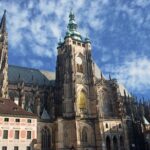
St. Vitus Cathedral is where Prague Castle becomes unmistakably Gothic. The cathedral is described as one of the most monumental in Central Europe, and it’s also a long project: founded in the first half of the 14th century, then completed about 600 years later in the first half of the 19th century.
Inside and around, you’ll also get royal context. It’s the site of the royal crypt of Czech sovereigns and patron saints.
The guide highlights specific features you’ll want to look for:
- the Baroque tomb of St. John of Nepomuk, described as silver and tied to the Seal of the Confessional
- the Gothic St. Wenceslas Chapel, which houses relics of St. Wenceslas
Plan on about 30 minutes here. The big drawback is that this is a ticketed interior stop, and it’s easy to underestimate how long you’ll want once you’re inside.
Old Royal Palace and Vladislav Hall: the power theater
Next is the Old Royal Palace, with a highlight in Vladislav Hall. This hall was built at the end of the 15th century and it mixes Late Gothic with Renaissance style.
This is where you hear how court life looked: coronation festivities, banquets, and knights’ tournaments. One detail I love here is the description of how armored knights and horses played their part in events, including the Riders’ Staircase designed for that purpose.
Then you step toward the Ludwig Wing to see the window tied to the defenestration of two Austrian governors and their scribe. That incident is presented as a spark for the Thirty Years’ War.
It’s another ticketed stop (about 30 minutes). If you like political history, this section usually lands well because it’s not abstract. It’s a single dramatic moment connected to the layout and the building itself.
St. George’s Basilica: Romanesque contrast
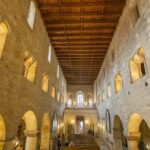
After the Gothic cathedral, St. George’s Basilica offers a clear contrast. It’s described as Romanesque and built in the 1100s.
This is one of those stops that works best as a comparison moment. The guide helps you look at what changes from Romanesque to Gothic, so you’re not just viewing another church—you’re tracking architectural logic across the complex.
Time is short here, about 10 minutes, and the pay-off is better understanding of the overall architectural shift.
Golden Lane: tiny houses, big stories, and a different kind of crowd
Golden Lane is the last major flavor: a quaint, diminutive street built in the 16th century to house Rudolf II’s castle guards. The guide helps you walk it like a neighborhood, not a souvenir aisle.
You’ll be able to peek into tiny rooms that today are mostly used by souvenir shops. There’s also a museum of medieval armory within a former 14th-century fortification connected to Golden Lane.
Golden Lane is also connected with Dalibor Tower, which used to be a dungeon.
This is a 20-minute stop, and it’s worth it even if you skip some museum interiors, because it gives you a different scale of life inside the castle walls—human-sized rather than empire-sized.
Walking load, timing, and what to wear
This is a castle walk with real uphill moments. Even if the pace is guided and you’ll get frequent pauses at each stop, you’re still on historic terrain with stairs and short distances that add up.
Wear shoes you trust for uneven ground. Bring a light layer even in pleasant weather; cathedral interiors can feel cooler, and you’ll be moving between sun and shadow.
One practical plus: because it’s private, you can usually take extra breaks when you need them without derailing a whole group’s schedule.
Who this private Prague Castle tour is for (and who should skip it)
This works best if you want more than highlights. If you’re the type who likes to understand why something looks the way it does, the architectural walk plus the political stories is exactly the sweet spot.
It’s also a strong pick for first-timers who want a guided overview without getting lost in the sheer size of the complex. You’ll cover key stops in about 3 hours and get a sense of how the Royal District pieces connect.
You might want to consider a different format if:
- you only have a tiny amount of time and need a very fast, top-3 overview
- you don’t like guided storytelling and just want to wander independently
For groups, this private setup is especially good value because you’re paying once for the guide and can keep your pace together.
Should you book this private Prague Castle walking tour?
I’d book it if you want Prague Castle explained in plain language, with a real historian guiding your attention. The architecture variety, the royal palace drama, and the shift from St. Vitus to Romanesque St. George’s give you a complete sense of what this complex is, not just what it looks like.
The decision hinge is the entrance ticket cost and whether you’re comfortable with an uphill walking experience. If you’re okay adding the Prague Castle admission budget and wearing sturdy shoes, this tour is a smart way to see the big names while also understanding the forces that shaped them.
If you want a guided plan you can customize to your interests, this is built for that. And if you love the kind of detail that makes you feel like you’re reading the place, not just looking at it, you’re going to enjoy the pacing.
FAQ
How long is the private Prague Castle walking tour?
It lasts about 3 hours.
Is Prague Castle admission included in the tour price?
No. Prague Castle entrance tickets are not included. Adults are listed at CZK 450, and students and seniors at CZK 300.
Where does the tour start and end?
It starts at Bagel Lounge Malostranská (Letenská 118/1, Praha 1-Malá Strana) and ends back at the same meeting point.
Do you offer hotel pickup?
Pickup is offered if you are staying centrally. If you’re farther away, the meeting point shifts to Prague’s Lesser Town. If pickup isn’t arranged, you should meet 15 minutes before start time at the default meeting point.
Can I choose a morning or afternoon departure?
Yes. You can choose between morning and afternoon departures when booking.
How big is the group on this private tour?
It’s private, for only your group, up to 10 people.
What language is the tour offered in?
The tour is offered in English.