REVIEW · PRAGUE
Prague: Clam-Gallas Palace Entry Ticket with Audio Guide
Book on GetYourGuide →Operated by Muzeum Prahy · Bookable on GetYourGuide
This palace rewards slow wandering. Clam-Gallas Palace is one of Prague’s best-preserved Baroque palaces, and the visit is built for getting your bearings quietly. I like that you explore the rooms at your own pace, and I especially like the audio guide option that lets you read more deeply without waiting on a group.
One thing to consider: this ticket is mainly about self-guided wandering. There’s no live guide included, and the palace route involves stairs, so it is not suitable for wheelchair users or people with mobility impairments.
In This Review
- Key things to know before you go
- Clam-Gallas Palace: a Baroque showpiece you can take at your own pace
- Design and artists: Fischer from Erlach, Carlo Carlone, and Matyáš Bernard Braun
- Entering the route: the antecamera and theater-era twist
- Piano nobile and conservatory wings: what to look for on each side
- The ceremonial staircase: Fischer’s solution to tight old-town space
- Marble Hall and the Chinese Lounge: restored drama in two flavors
- Winter garden rooms and a courtyard finish when the weather behaves
- Audio guide tips: how to make it feel personal (not robotic)
- Price and value: what $8 gets you in a palace setting
- Practical logistics inside the palace: stairs, strollers, and the right expectations
- Who should book this Clam-Gallas Palace audio visit?
- What I’d watch for when you’re there
- Should you book the Clam-Gallas Palace audio guide ticket?
- FAQ
- How much does the Clam-Gallas Palace entry ticket cost?
- How long is the experience?
- Is a live guide included?
- Does the ticket include an audio guide?
- Can I use my smartphone for the audio guide?
- What if I can’t use my smartphone for the audio guide?
- Are headphones provided?
- Is the experience suitable for wheelchair users or mobility impairments?
- Are baby strollers allowed?
- What is the cancellation policy?
Key things to know before you go
- You get a smart audio setup: download on your phone inside the palace, or borrow an audio kit if needed.
- Two wings are part of the route: the west wing piano nobile and the north wing conservatory.
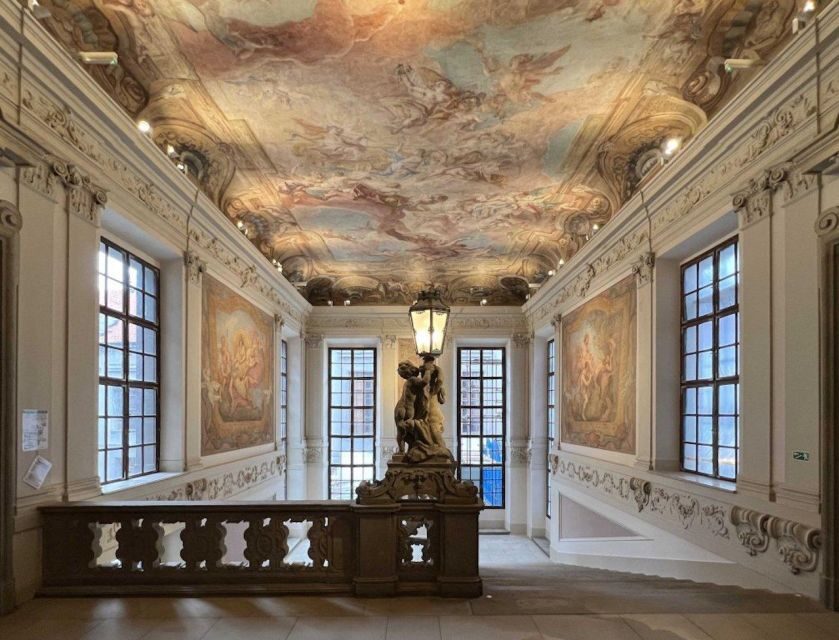
- You climb a ceremonial staircase to the 2nd floor for big views of how Fischer from Erlach handled tight old-town space.
- Restored room details matter: tiled stoves, hanging lamps, and door fittings show up in the Golden and Turquoise Halls.
- The highlights come in clusters: Marble Hall pairs with the Chinese Lounge, then you finish with winter-garden-style rooms and, in good weather, the courtyard.
Clam-Gallas Palace: a Baroque showpiece you can take at your own pace
Clam-Gallas Palace is the kind of Prague building you appreciate more the longer you stay. It was built between 1713 and 1718, during a period when palaces were designed to impress from the very first step inside. The palace is also described as newly renovated, and the sightseeing route is set up so you can move through the main rooms without feeling rushed.
The best part for me is the rhythm. You are not stuck following someone’s pace, and you are not stuck waiting for a group to shuffle forward. If you like art and interiors, the slow route helps you notice the small stuff—like the way rooms transition from one style to another.
You can also read our reviews of more tours and experiences in Prague


Design and artists: Fischer from Erlach, Carlo Carlone, and Matyáš Bernard Braun
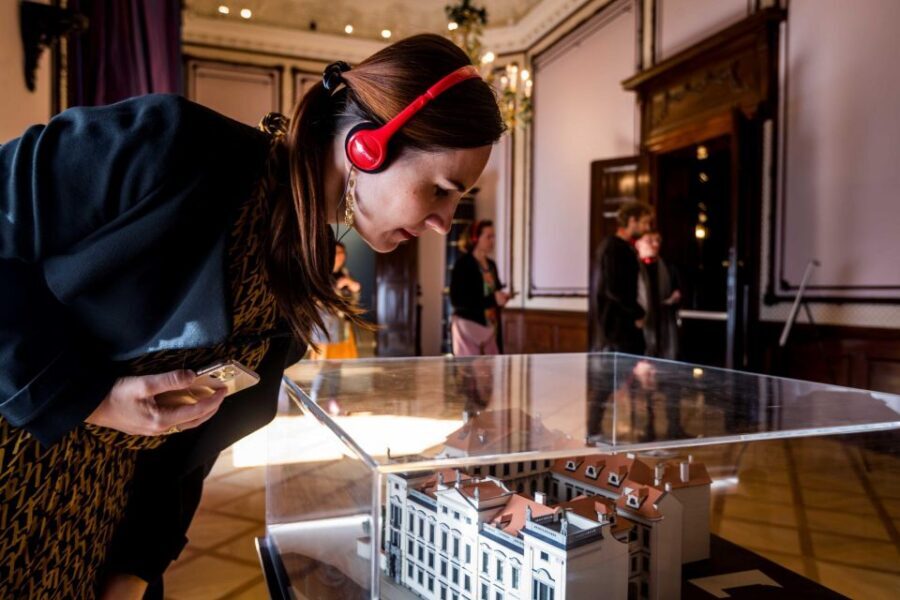
This palace has heavyweight names behind it. The design is credited to Johann Bernard Fischer from Erlach, with decoration connected to Carlo Carlone and the workshop of Matyáš Bernard Braun. Even if you are not a Baroque expert, those names are a clue that you’re not just looking at furniture—you’re looking at an intentional visual program.
What you’re walking through is called the representative part of the palace. That matters, because this is where design choices serve display: grand rooms, dramatic ceilings, and surfaces made to catch light. Baroque art can feel like it’s everywhere at once, but the palace’s layout gives you natural places to reset your eyes.
Entering the route: the antecamera and theater-era twist
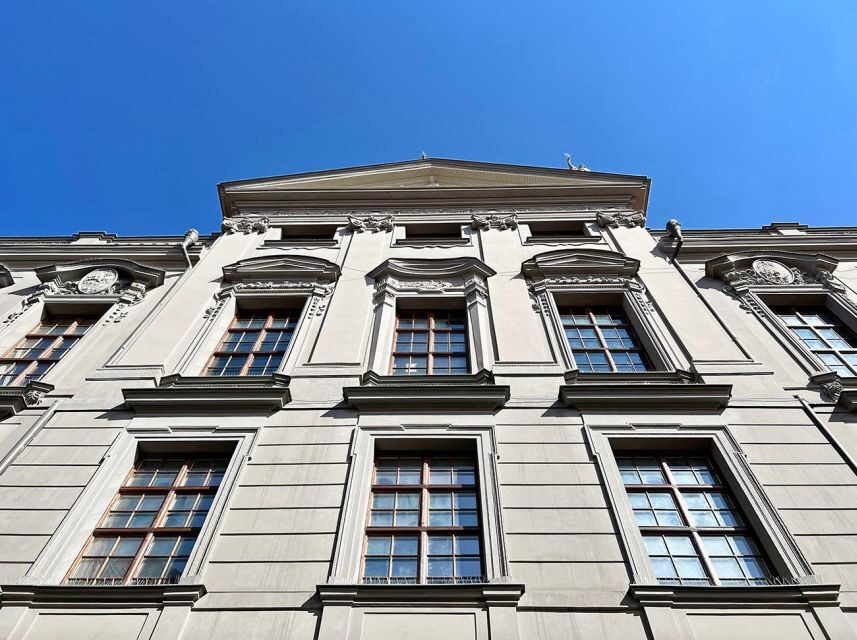
Your visit starts with the antecamera, an anteroom that was adapted for the needs of a palace theater at the start of the 19th century. That’s a small detail, but it changes how you read the space. You see how the palace kept evolving, long after it was first built.
From there, the Golden and Turquoise Halls come next. These rooms are impressive because many elements are restored and you can spot practical items as part of the decorative whole. The tiled stoves, hanging lamps, and the impressive door fittings turn the rooms into something more tactile than just painted plaster.
Piano nobile and conservatory wings: what to look for on each side
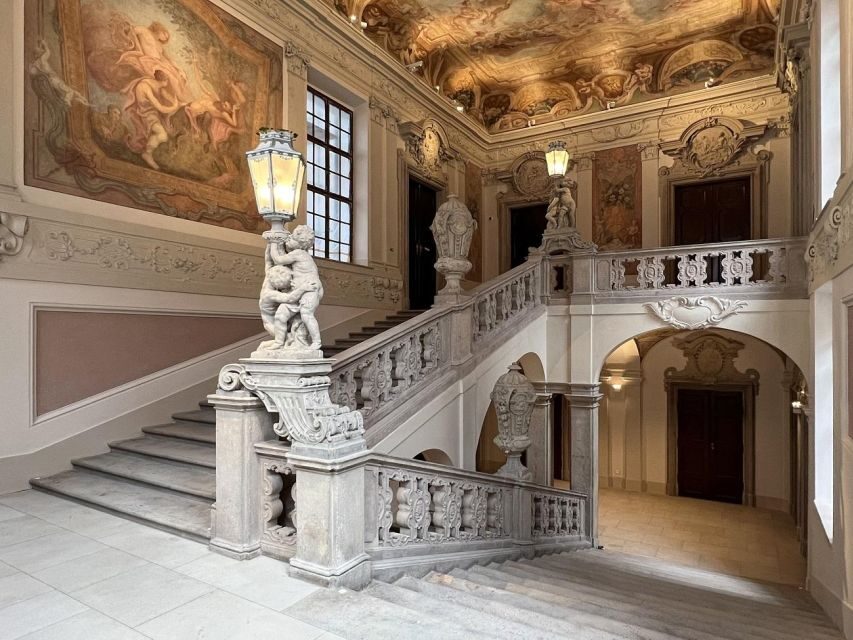
The sightseeing route is not random. It points you to specific areas that explain how the palace worked for real life.
In the west wing, you visit the piano nobile, which is the noble floor. You’re meant to understand the palace layout as a lived-in system: rooms for receiving, moving, and displaying. You also see how later modifications fit into the original Baroque shell, which helps you avoid the common problem of only seeing one time period.
In the north wing, you visit the conservatory. A conservatory in a palace setting isn’t just about plants—it’s about comfort and atmosphere. Even if you’re not there for botany, it gives you a different kind of visual focus, so the tour doesn’t feel like one long parade of the same look.
The ceremonial staircase: Fischer’s solution to tight old-town space
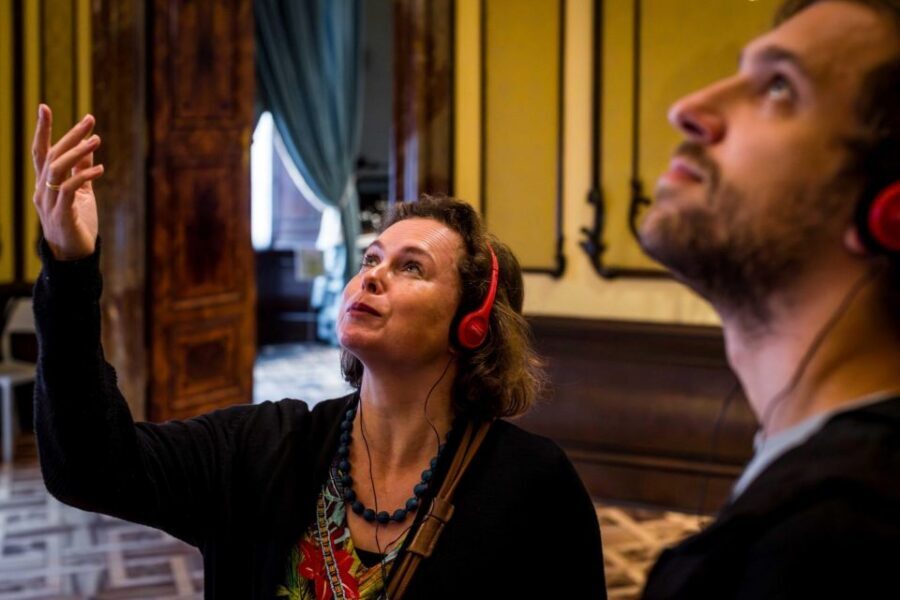
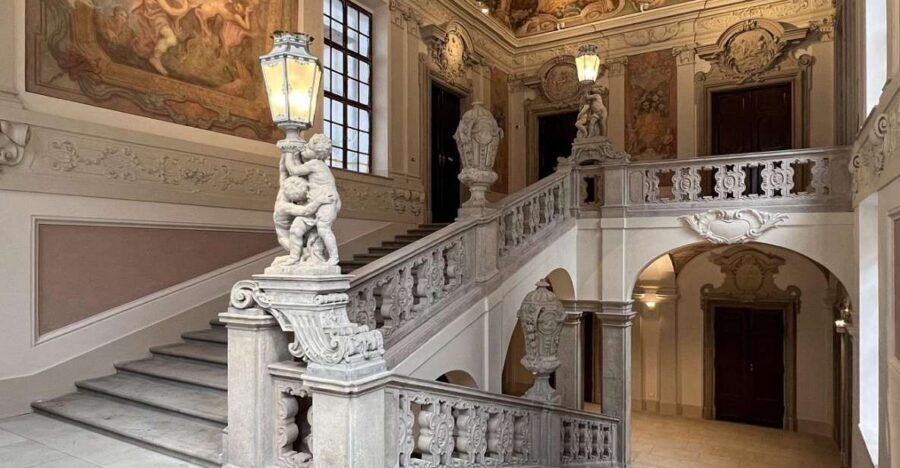
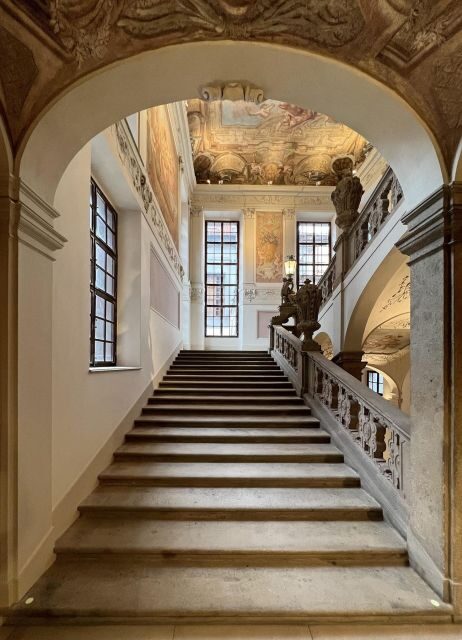
Then comes one of the most important moments: the ceremonial staircase to the 2nd floor. This is where you start seeing the building problem the architect solved. You get to admire how Fischer from Erlach coped with cramped old town buildings.
That detail matters because it turns the palace from a pretty interior into a real architectural feat. You’re not just impressed by decoration; you’re also impressed by the brainwork required to fit a grand plan into a constrained urban footprint.
As you go up, you’re also meant to notice sculpture, stucco, and painting works from the first third of the 18th century. This is one of those times where the audio guide can really help, because it gives context to what you’re seeing instead of letting it blur together.
You can also read our reviews of more guided tours in Prague



Marble Hall and the Chinese Lounge: restored drama in two flavors
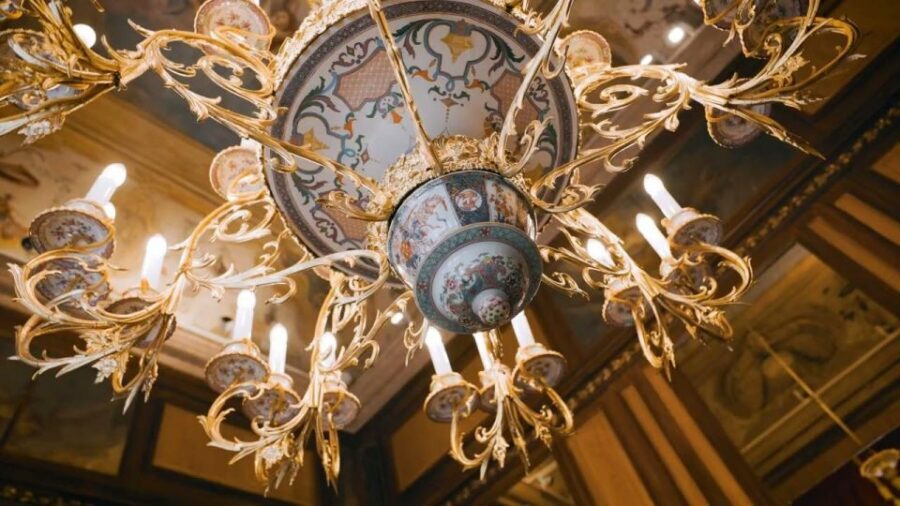
The Marble Hall amazes visitors with its airiness and whiteness. That kind of visual brightness can make Baroque details pop more than you’d expect. It’s a useful contrast point in the route, especially if you have been looking at darker or more ornate rooms.
Nearby is the Chinese Lounge, and the pairing is part of what makes this section work. The tour design seems to use these adjacent spaces like a narrative switch: you get one look, then you get a different atmosphere, without losing the overall palace feel.
If you like interiors, treat these rooms like a mini circuit. Spend a little extra time, then move on. You’ll come away with two distinct impressions rather than one long blur.
Winter garden rooms and a courtyard finish when the weather behaves
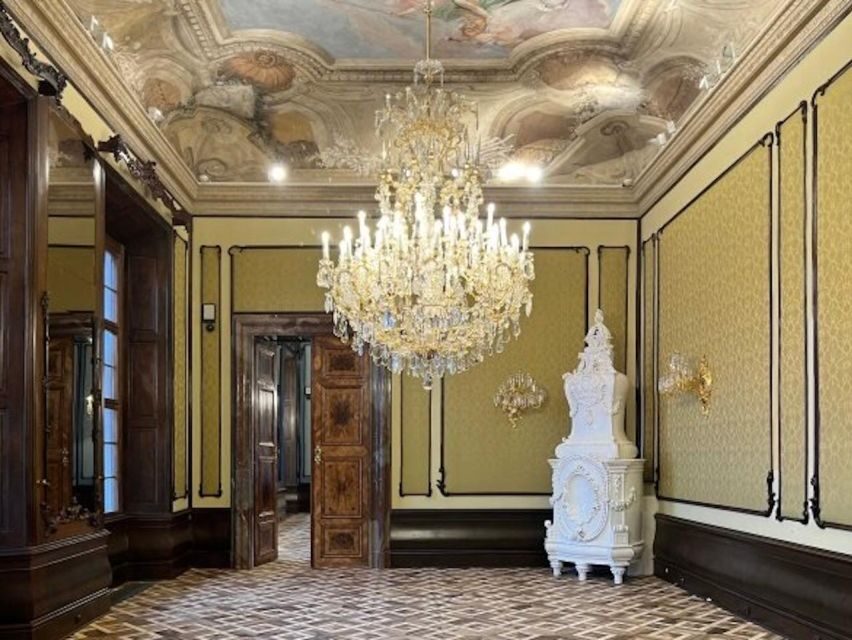
Near the end, you visit two rooms adapted to a winter garden in the first third of the 19th century. This is another example of the palace changing with time. You are not trapped in a single era, and that makes the building feel more believable.
And if the weather is fine, the tour ends in the courtyard. Courtyards do something simple but valuable: they reset your perspective. After indoor drama, you get a calmer space to look back at what you’ve seen.
Even when the courtyard is not the main event, the route still lands well. The winter-garden rooms act like a bridge from the earlier grand spaces into a more seasonal, practical rhythm.
Audio guide tips: how to make it feel personal (not robotic)
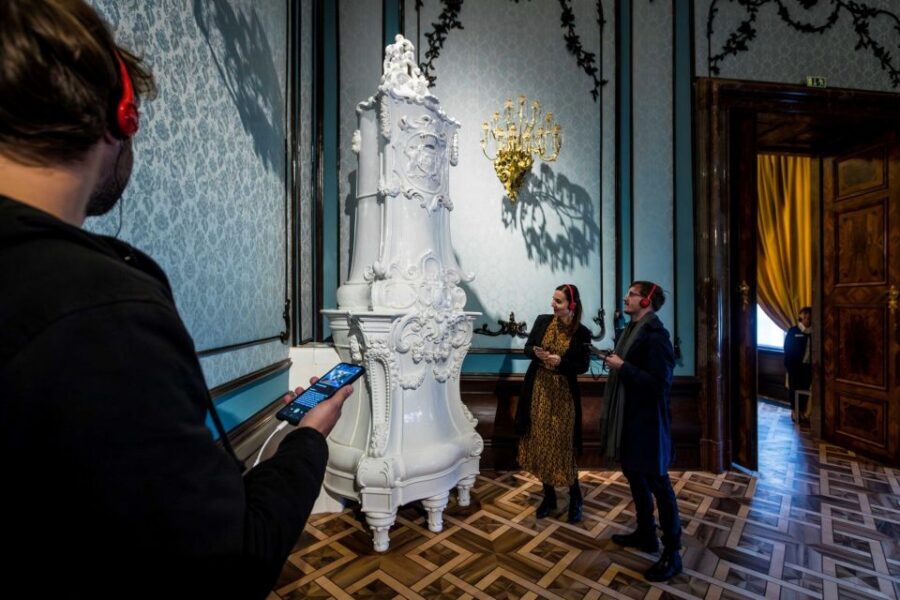
This ticket includes an audio guide in English and Czech, with texts that go beyond the basic room descriptions. I like this structure because it respects different speeds. If you want the short version, you can do that. If you want to read more, the audio gives you a deeper layer without needing to hire a live guide.
The format is also practical. You can download the audio guide to your smartphone right in the palace. If you cannot use your phone, you can borrow an audio guide kit on-site. Headphones can be rented there too, which is useful if you forgot yours or you’d rather not rely on your phone speaker.
Here’s how I suggest using it: start with the audio for the first few rooms, just to learn the pace and style of the commentary. Then, if you want, pause the audio for a minute so you can look closely. The rooms are designed to be viewed, not just listened to.
Price and value: what $8 gets you in a palace setting
At about $8 per person, this feels like strong value because you’re paying for two big things: entry into a major Baroque palace and an audio guide system. For that price, you’re not expected to get a live guide, so your payoff comes from time in the rooms plus the self-paced storytelling.
The duration is listed as 1 day, with starting times tied to availability. That means you should plan for a visit window rather than treating it like a quick stop between meals. You’ll get more from the ticket if you allow enough time to move at an easy pace and not rush through the piano nobile section or the staircase area.
Also, the ticket supports flexibility in planning. Free cancellation is offered up to 24 hours in advance, and reserve-and-pay-later is available. If your Prague schedule is still shifting, that flexibility can be genuinely useful.
Practical logistics inside the palace: stairs, strollers, and the right expectations
This palace is not built for everyone. The route is not suitable for wheelchair users or people with mobility impairments, and baby strollers are not allowed. That is the kind of policy detail that can make or break your day, so it’s worth treating it as a dealbreaker if it applies to you.
If you can manage stairs, you’re in better shape. The route includes climbing the ceremonial staircase and reaching the 2nd floor. Expect a proper walking circuit, not a flat museum stroll.
The other expectation to set: it’s English-hosted. The host or greeter is listed as English, and you’re getting audio guide support rather than a full spoken tour. So if you want deep human explanation in real time, you’ll likely feel limited. If you like reading and listening on your schedule, it works well.
Who should book this Clam-Gallas Palace audio visit?
I’d book this if you want an iconic Baroque interior without the pressure of a live group. The combination of preserved Baroque spaces, the specific stops like the Golden and Turquoise Halls, and the practical audio guide setup makes it a good fit for independent travelers who enjoy architecture and decoration.
It also suits you if you like structure in your wandering. The route is clear: piano nobile and conservatory wings, the ceremonial staircase, then rooms like Marble Hall and the Chinese Lounge, and finally winter-garden-style rooms with a courtyard finish when possible.
You might skip it if you are hoping for a guided lecture in person. Since a live guide is not included, the deeper explanations come through the audio track. If you strongly prefer someone speaking directly to you, you may want a different type of tour.
What I’d watch for when you’re there
A good palace visit feels like noticing patterns. Here are the patterns I’d look for while you move through the rooms:
- Restoration details: pay attention to restored fittings, lamps, and stove elements in the halls.
- Time layering: notice how early 19th-century changes (like the theater adaptation and winter garden rooms) sit inside an 18th-century Baroque framework.
- Building logic: when you’re on the staircase and on the 2nd floor, focus on the idea of fitting grand plans into tight spaces.
- Room-to-room contrast: use the Marble Hall and Chinese Lounge pairing as a mental breakpoint.
Should you book the Clam-Gallas Palace audio guide ticket?
Book it if you want value plus independence. For around $8, you’re getting entry to one of Prague’s best-preserved Baroque palaces and an audio guide in English (plus Czech), with smartphone download and backup audio kit options.
Skip it if you need wheelchair-friendly access or if you expected a live guide. Also skip it if you know you will hate self-guided visits. This is a calm, self-directed experience built around listening and looking, not around a person leading you step by step.
If your goal is to see real palace interiors—piano nobile rooms, ceremonial staircase drama, restored hall details—this ticket is a very practical way to do it.
FAQ
How much does the Clam-Gallas Palace entry ticket cost?
The price is listed at $8 per person.
How long is the experience?
It’s listed as lasting 1 day.
Is a live guide included?
No. A live guide is not included.
Does the ticket include an audio guide?
Yes. The entry ticket includes an audio guide (English and Czech).
Can I use my smartphone for the audio guide?
Yes. You can download the audio guide to your smartphone right in the palace.
What if I can’t use my smartphone for the audio guide?
You can borrow an audio guide kit on-site.
Are headphones provided?
Headphones can be rented on-site if you need them.
Is the experience suitable for wheelchair users or mobility impairments?
No. It is not suitable for people with mobility impairments and wheelchair users.
Are baby strollers allowed?
No. Baby strollers are not allowed.
What is the cancellation policy?
Free cancellation is offered up to 24 hours in advance for a full refund.