REVIEW · PRAGUE
Private Former Concentration Camp Terezin Tour from Prague
Book on Viator →Operated by Eva Prague Tours · Bookable on Viator
Terezín changes you, fast. This private day trip from Prague brings you to the sites of Theresienstadt with an expert guide, starting at Mala Pevnost and moving through the ghetto museums and burial grounds. You also get the practical help that matters on a tough day: hotel pickup, a private group, and ticket access handled for you.
I love how the tour is built for a personal pace instead of rushing with a crowd. Two things I especially like are the comfort of round-trip transportation and the way each stop has enough time to absorb what you’re seeing—without turning it into a checklist.
One consideration: this is heavy, real-world history. You should expect an emotional day and plan for some walking across a large complex.
In This Review
- Key highlights worth planning around
- A private Terezín day trip from Prague: why it works
- Getting to Terezín: pickup, comfort, and a clear start at 9:00
- Mala Pevnost (Small Fortress): from Joseph II’s fortress to the Gestapo’s prison
- Terezín Memorial – The National Cemetery: why the graves were organized after liberation
- Terezín Ghetto Museum: the ghetto story told through rooms, models, and children’s art
- The Jewish Prayer Hall: a hidden spiritual space and a secret that lasted decades
- Magdeburska Kasarna (Magdeburg Barracks): ghetto administration and the arts behind it
- The Jewish Cemetery and crematorium: the mechanics of mass death
- Price and value: what $356.42 buys you
- When to ask your guide for extra context
- Who this private tour suits best (and who should reconsider)
- Should you book this private Terezín tour from Prague?
- FAQ
- What time does the tour start?
- Where is the meeting point in Prague?
- Do you offer pickup from hotels or Airbnbs?
- Is this a private tour?
- What language is the tour offered in?
- Are entrance tickets included?
- Can I cancel for a refund?
Key highlights worth planning around
- Private guide, not a crowd shuffle: Your questions and the pace are part of the experience.
- Skip-the-line entrance: Your time goes to the sites, not ticket lines.
- Hotel pickup in Prague (including Airbnbs): The meeting is easy, and you don’t have to figure out transit with a full schedule.
- Six distinct memorial stops: Fortress, cemetery, museum, prayer hall, barracks, and the crematorium—each with a different angle.
- Admission tickets included: Stops at the main museums and memorial halls are covered in the price.
- Guided context for the difficult parts: The story connects—from early prison use to the ghetto period and mass death.
A private Terezín day trip from Prague: why it works
Terezín isn’t a casual sightseeing stop. You’re walking into a deliberately grim chapter of 20th-century history, and it helps when your day is structured by someone who knows what you’re looking at and why it mattered.
With this tour, you’re not sharing the day with strangers and their chatter. That private setup makes a difference when you’re trying to hold on to details. Even simple moments—standing in a room that held spiritual life, reading the names and dates, or seeing how the crematorium was set up—land better when the pacing is your guide’s choice, not a bus schedule.
The other thing I appreciate is that the guide doesn’t just point. You’re guided through the meaning of each location. The story connects: first the fortress and its transformation, then the ghetto’s institutions, and finally the cemetery and crematorium. When you see those links in order, the place starts to make more sense in your head, and that can help your heart catch up.
You can also read our reviews of more private tours in Prague

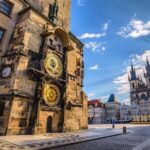
Getting to Terezín: pickup, comfort, and a clear start at 9:00
This is a true day trip with a defined rhythm. Pickup starts at 9:00 am from the Prague Marriott Hotel (V Celnici 8, Nové Město). The operator also offers pickup from your hotel or Airbnb in Prague, as long as you provide the exact name and address.
You’ll return to the same meeting point when the tour ends. That matters more than it sounds. Terezín is far enough from Prague that a “self-arranged” day can turn into logistics stress—especially on a day you already know will be emotionally demanding.
The tour also includes comfortable round-trip transportation, plus a mobile ticket for convenience. Dress code is smart casual, so you’re not expected to show up in formal wear, but you should still dress for being on your feet for hours.
Mala Pevnost (Small Fortress): from Joseph II’s fortress to the Gestapo’s prison
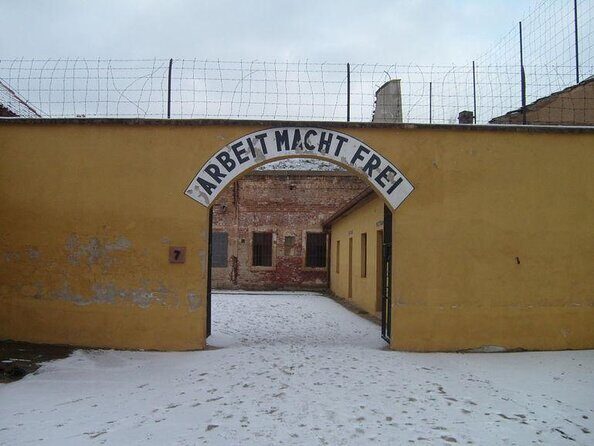
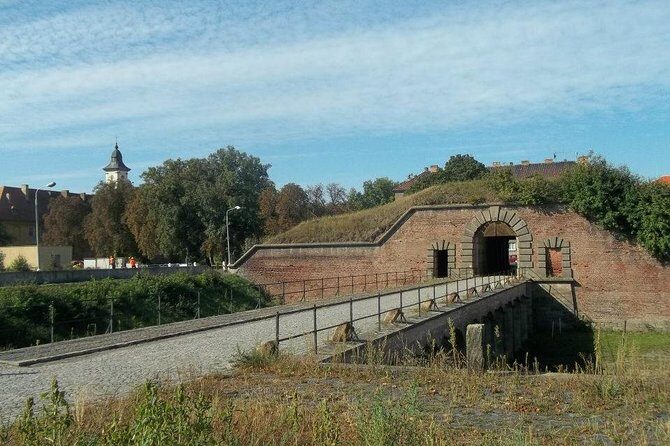
Your first stop sets the tone. Mala Pevnost—the Small Fortress—was designed in the late 1700s as an impregnable fortress surrounded by walls and protected by flood trenches. It’s the kind of place that was meant to signal power and control.
Then the story turns: this fortress never really protected anything from anyone. Over time, it became a jail. In the mid-19th century it shifted into a prison role, and even notable prisoners passed through—such as Gavrilo Princip, brought here in 1914 before his role in Sarajevo helped ignite World War I.
During World War II, the site’s function became even darker. In 1940, Mala Pevnost became a prison of the Prague Gestapo, sending especially political prisoners. Only about a year later, the entire town was turned into a collective and pass-through camp for Jews.
How this stop feels: you’re not just looking at buildings. You’re looking at a structure built for confinement that kept getting re-purposed into harsher systems. If you want one “anchor moment” for the whole day, this is usually it—because it gives you the prison logic behind what you’ll see later in the ghetto and burial sites.
Practical note: this is where your guide’s pacing helps. With so much timeline inside one location, you don’t want to feel rushed. Give yourself a few minutes between explanations to look around and orient.
Terezín Memorial – The National Cemetery: why the graves were organized after liberation
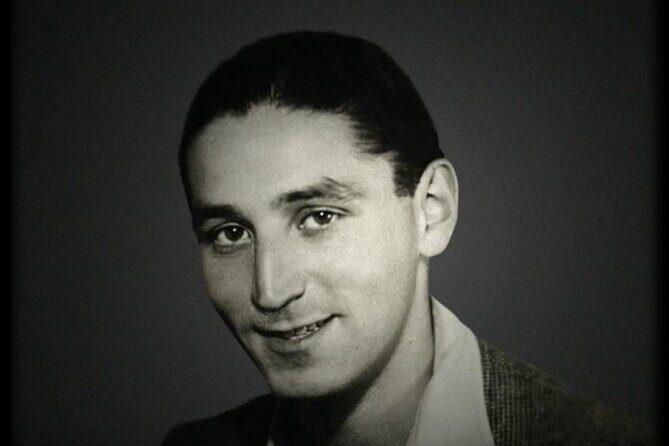
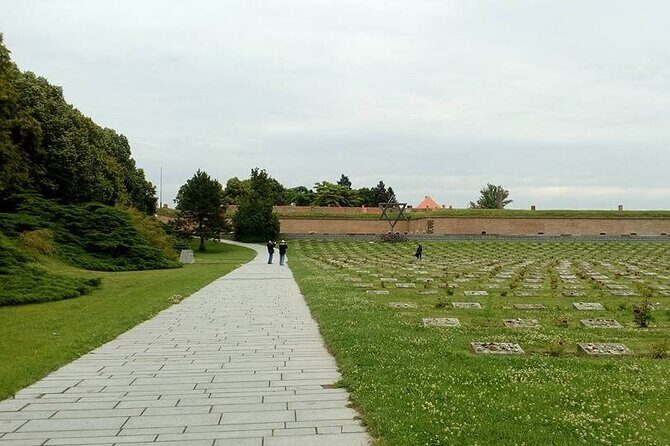
Next comes the National Cemetery, part of the Terezín Memorial complex. What I like about this stop is that it doesn’t only show what happened—it explains how remembrance was handled afterward.
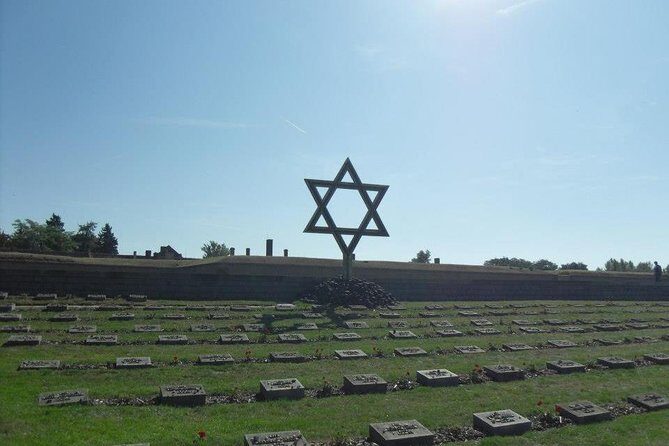
The National Cemetery was created artificially after liberation in 1945. The push for its creation came from former prisoners and the heirs of those who died. At their request, physical remains were exhumed from six mass graves located in the ramparts of the Small Fortress.
Those mass graves were in use during March 1 to May 7, 1945, including victims who arrived from a death march at the Small Fortress in May 1945.
This stop is short, but it’s heavy. The value here is context: you learn that remembrance wasn’t automatic, and it wasn’t immediate. People had to fight for the dignity of proper identification and burial, long after the camp systems had collapsed.
Terezín Ghetto Museum: the ghetto story told through rooms, models, and children’s art
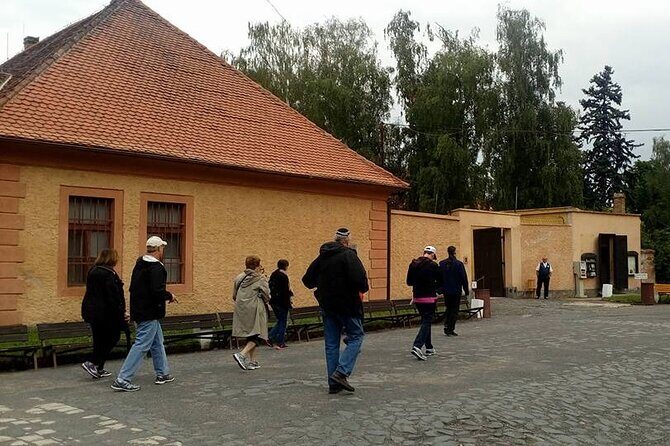
The Ghetto Museum stop takes you into how Terezín functioned as a Jewish ghetto town. The museum opened in 1991 in the former municipal school, which gives it an institutional feel. It isn’t just an archive; it’s a place built for explaining history in a structured way.
A permanent exhibition titled Terezín in the Final Solution of the Jewish Question, 1941–1945 opened in 2001, and you’ll also see a Memorial Hall dedicated to the ghetto’s children—some of the youngest victims.
One of the most meaningful parts is a collection of drawings made by children from the ghetto. Seeing art created under forced conditions isn’t “comfort art.” It’s evidence of imagination and humanity surviving where it wasn’t supposed to.
You’ll also encounter a scale model of the ghetto with an electronic orientation system that helps you visualize different thematic units. The museum even includes a local reading room and a cinema screening documentary films.
What you should do: let the museum time be quiet time. Even if you’re an information person, this is the place where slow attention pays off. Ask your guide to connect the museum pieces back to the fortress and later to the cemetery, so the day feels like a coherent story—not separate rooms.

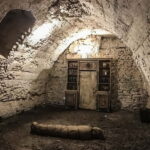


The Jewish Prayer Hall: a hidden spiritual space and a secret that lasted decades
This stop is brief, but it’s uniquely powerful because it’s about spiritual life rather than just buildings of confinement.
The small Jewish prayer hall was founded during the ghetto period and served the spiritual needs of prisoners living in neighboring houses. Before World War II, it was owned by František Bubák, and the space served as part of a funeral parlor.
During the war, Bubák’s family was forced to leave Terezín in 1942. After the war, he reclaimed the property. But the family kept the prayer room’s existence secret while using it as storage. The reason wasn’t mystery—it was fear of repercussions under the Communist regime.
Access came later. Bubák’s descendants did not inform authorities until after the 1989 Velvet Revolution, when Czechoslovakia shifted to democracy. Visitors have been allowed to see the room since the late 1990s.
Why it’s worth your time: it shows that meaning can be protected in silence, not only in monuments. When you stand inside a space like this, the story feels more human-scale—less “system” and more “people trying to keep something alive.”
Magdeburska Kasarna (Magdeburg Barracks): ghetto administration and the arts behind it
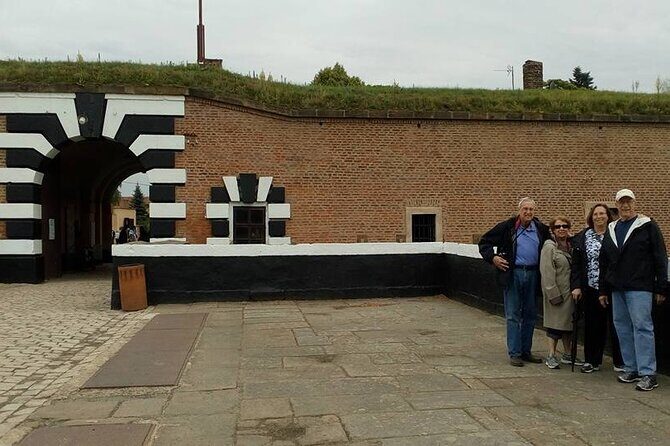
Next you’ll visit Magdeburska Kasarna, the building that served as the headquarters for the ghetto’s local government. That detail matters: the ghetto had internal structures, even though the most important issues stayed under SS control.
The building today features a replica of prison barracks from the ghetto period. But the main focus is an exhibition on the ghetto’s artistic and cultural life. You’ll see items connected to music, visual arts, literature, and theatre—evidence of how forced residents created moments of hope and humanity despite the camp’s conditions.
Alongside the exhibition, the building houses an educational Meeting Centre.
How this stop helps the rest of your day: after the fortress and the cemetery, you may feel overwhelmed by death and confinement. The Barracks exhibition gives you another angle—showing that culture wasn’t just decoration. In Terezín, it was a way people tried to stay human.
The Jewish Cemetery and crematorium: the mechanics of mass death
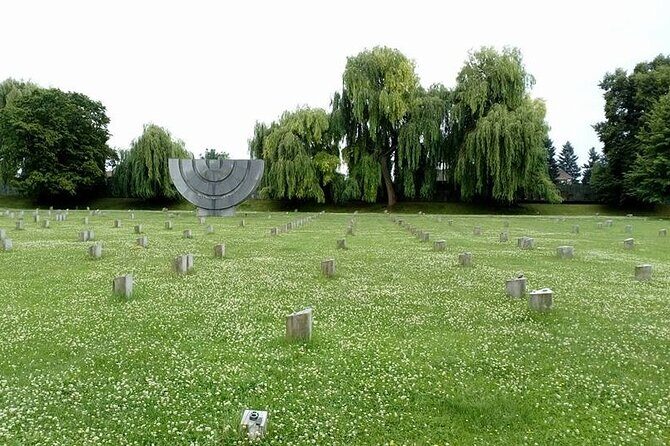
This is the most sobering stop on the day. The crematorium at the Terezín Jewish Cemetery was built by ghetto prisoners under order from the SS commanders, and it began operating in early October 1942.
The facility’s central part included four oil-powered incinerators, supplied by Ignis Hüttenbau from Teplice-Šanov. The front section served as an unloading area for corpses from coffins. One side bordered an autopsy room, and an annex housed guards made up of Czech police officers and prisoners who worked at the crematorium.
At peak mortality, there were up to 18 prisoner workers rotating in permanent shifts. When mortality rates dropped, the number decreased to four.
Supervision included SS personnel, specifically SS-Scharführer Heindl, described as one of the camp’s feared top officers. Routine checks were also carried out by camp commanders.
What I’d suggest for your visit: give your guide permission to slow down. You’re not meant to “skim” a site like this. If you have questions, ask them, but keep your own pace too. This stop is not about entertainment; it’s about bearing witness to how systems processed human lives.
Price and value: what $356.42 buys you
At $356.42 per person for about six hours, you’re paying for more than a ride and a few photos. This price reflects a private guide plus admission tickets included for the memorial and museum stops.
That “included tickets” part is key for value on a day like this. You avoid time-consuming ticket-line friction and get a guided narrative instead of hunting for explanations in your own.
The tour also offers hotel pickup (including Airbnbs) in Prague, plus round-trip transportation. For a Terezín day, transportation and scheduling are usually half the headache. This format turns that into a background task.
One more value signal: this tour is booked far in advance on average (about 108 days). That suggests people plan Terezín as a priority part of their Prague trip, not a last-minute add-on.
When to ask your guide for extra context
A great guide can help you process information without turning it into a lecture. Before you move from stop to stop, you can ask questions like:
- How should I connect Mala Pevnost to the ghetto institutions I’ll see next?
- What should I focus on inside the museums to understand what daily life was like?
- At the cemetery and crematorium sites, what details help explain the timeline and purpose of the facilities?
If you’re the type who likes to ask questions, this private setup is ideal. If you’re more quiet, you’ll still benefit, because your guide can match your pace and keep the story coherent.
Who this private tour suits best (and who should reconsider)
This is a strong fit if you want:
- A private, guided day rather than a big group atmosphere
- A careful, stop-by-stop understanding of the fortress, museums, and burial grounds
- Hotel pickup and ticket access handled for you
It may be less ideal if you:
- Struggle with intense historical subject matter. This day involves mass imprisonment, death, and cremation-related details.
- Don’t want to walk. The Terezín complex covers enough ground that you should expect a fair amount of walking time.
If you do book it, you’ll get the most out of it by treating it like a memorial visit, not a checklist run.
Should you book this private Terezín tour from Prague?
Yes—if you want your Terezín day to feel organized, respectful, and truly explained. The private format is the real advantage here. It gives you the space to absorb difficult sites without the noise and rush that come with larger groups.
I’d book it particularly if this is your first visit and you want the whole arc: fortress, ghetto memory sites, spiritual life, cultural life, and finally the cemetery and crematorium. The combination of expert guidance, admission included, and hotel pickup makes it a practical choice, not just an emotional one.
FAQ
What time does the tour start?
The tour start time is 9:00 am.
Where is the meeting point in Prague?
The meeting point is Prague Marriott Hotel, V Celnici 8, Nové Město, 110 00 Praha-Praha 1, Czechia.
Do you offer pickup from hotels or Airbnbs?
Yes. Pickup is offered from the hotel or Airbnb accommodation. You need to share the exact name and address.
Is this a private tour?
Yes. This is a private tour/activity, so only your group participates.
What language is the tour offered in?
The tour is offered in English.
Are entrance tickets included?
Yes. Tickets are included for Mala Pevnost, the Ghetto Museum, the Terezín Memorial sections, the Magdeburg Barracks, and the Jewish Cemetery (and the National Cemetery has free admission as listed).
Can I cancel for a refund?
You can cancel for a full refund up to 24 hours before the experience’s start time.