REVIEW · PRAGUE
Prague Art Nouveau and Cubism Walking Tour
Book on GetYourGuide →Operated by insightcities.com · Bookable on GetYourGuide
Prague looks different when you know what to stare at. This 3-hour walking tour teaches you to spot Art Nouveau details in real buildings, then connects them to Prague’s Cubist and Rondo-Cubist style through famous landmarks and a few elegant interiors.
I especially like the way guides turn architecture into something you can read fast: ginkgo-like leaf motifs, signature light fixtures, and even the style’s hint of oriental influence. I also like the human side of it—how the city’s pre-war social elite used cafés, restaurants, and hotels as their daily stage, long before the world changed. A key consideration: this walk stays moving, so if you need long stops for photos, you may wish you brought extra patience (and keep your camera ready).
The vibe is smart, not stiff. The guides are serious scholars—professors, doctoral students, historians, journalists, art critics, and published authors—and you can feel that in the explanations. You’ll get a clear framework for how Prague’s modern identity formed at the turn of the 20th century, and why those styles still shape what you see today. One possible drawback: at 3 hours, the stops are detailed but not slow; you’ll walk away with a strong visual toolkit rather than a full museum-style experience.
In This Review
- 6 Key Things You’ll Notice on This Prague Art Nouveau and Cubism Walk
- Why Art Nouveau and Cubism Fit Together on a 3-Hour Walk
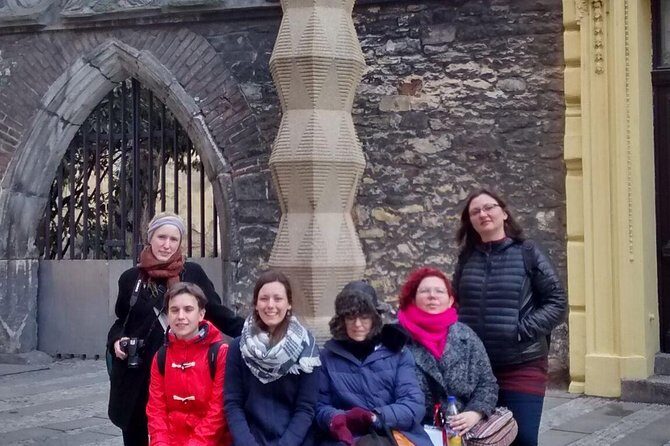
- Starting at Ovocný 19: The House of the Black Madonna and Grand Café Orient
- Art Nouveau in the Street: Leaves, Light Fixtures, and Oriental Influence
- How Pre-War Café Culture Made Art Nouveau Feel Modern
- Lucerna Bar: Seeing Art Nouveau as an Interior, Not Just a Façade
- Grand Hotel Europa: When Elegance Was the Point
- Cubist and Rondo-Cubist Parallels: The Bank of the Legions and the Style Shift
- How the Guide Changes Everything: Robert, Vadim, and Bonita-Style Storytelling
- Pace, Timing, and Photo Reality in 3 Hours
- Price and Value: Is $123 Worth It?
- Who Should Book This Tour (And Who Might Prefer Something Else)
- Should You Book This Prague Art Nouveau and Cubism Walking Tour?
- FAQ
- Where does the tour start?
- How long is the Prague Art Nouveau and Cubism walking tour?
- Is the tour guide live, and is it available in English?
- What styles and buildings will this tour focus on?
- Are Lucerna Bar and Grand Hotel Europa included?
- What’s included in the price?
6 Key Things You’ll Notice on This Prague Art Nouveau and Cubism Walk
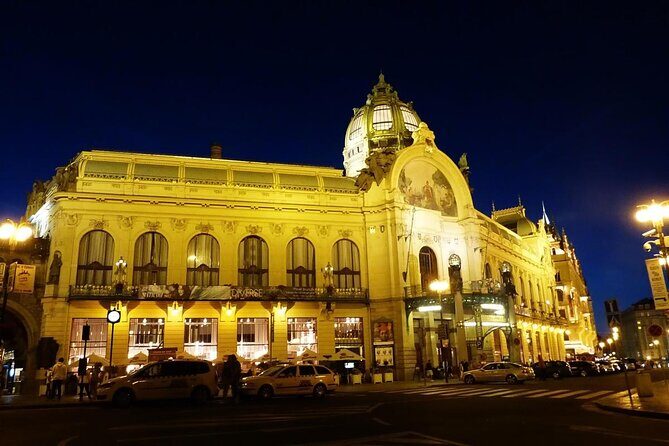
- The guide’s “how to see” method: you’ll learn to recognize Art Nouveau features quickly, not just memorize names.
- Ginkgo leaf motifs and oriental cues: those design choices show up on façades and inside fixtures.
- The café-and-hotel pattern: many Art Nouveau buildings were made for public life—bars, restaurants, train stations, and hotels.
- Lucerna Bar as an interior stop: a chance to experience style, not just exterior views.
- Cubism in context: Prague’s Cubist/Rondo-Cubist landmarks get compared directly with Art Nouveau’s modern look.
- Scholarly storytelling from guides like Robert, Vadim, or Bonita: you get expert knowledge with humor and clear pacing.
Why Art Nouveau and Cubism Fit Together on a 3-Hour Walk
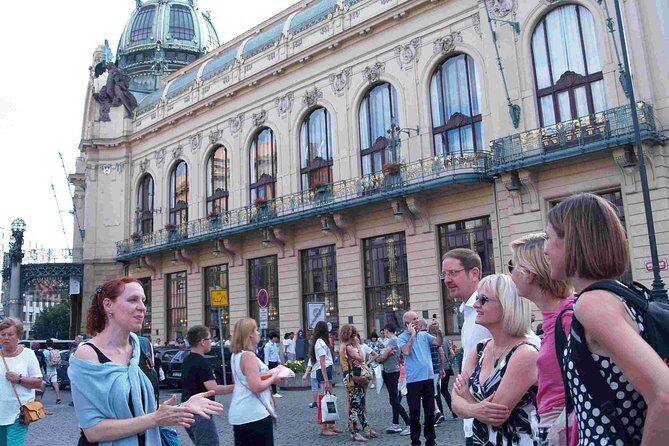
Prague didn’t develop one “look” and stick with it. Around the late 1800s into the early 1900s, the city explored modern styles the way people explore new cities: trying things, testing what feels current, and building identity through design.
That’s why this tour works. It doesn’t treat Art Nouveau and Cubism like separate museum wings. Instead, you’ll see how they answer similar questions with different visual languages. Art Nouveau leans into organic curves, symbolic motifs, and decorative interiors—designed for movement, conversation, and a sense of sophisticated leisure. Cubism (including Prague’s signature variations like Rondo-Cubism) turns geometry into attitude: modern, assertive, and often tied to a national “we’re here, and we’re modern” mood.
And here’s the practical payoff for you: after 3 hours, you’ll know what to look for while you wander on your own. That’s the real value of a style-focused walk. You stop sightseeing like a tourist with a checklist and start walking with a trained eye.
You can also read our reviews of more walking tours in Prague


Starting at Ovocný 19: The House of the Black Madonna and Grand Café Orient
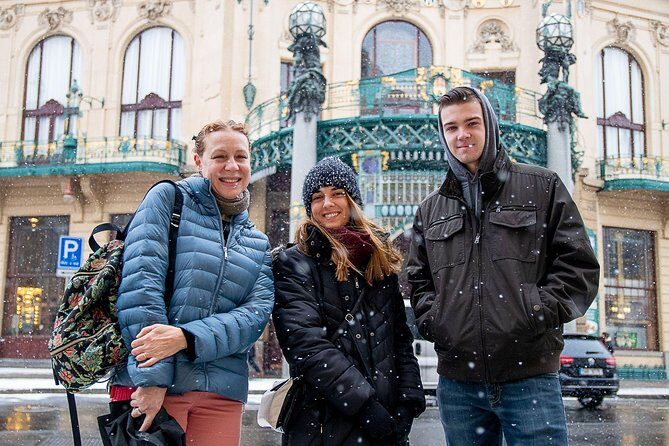
You begin at the House of the Black Madonna / Grand Café Orient area, downstairs at the front doors on the square (Ovocný 19, Prague 1). It’s a smart place to start because it’s instantly tied to the kind of design thinking you’ll keep seeing.
From the first moments, your guide sets up a comparison mindset. Instead of only describing what a building looks like, they point out how style signals status and time period—who the design was made for and what kind of modern life it imagines. That matters because Prague’s center is full of architecture that has been repurposed, renovated, or rebranded over time. When you understand the original “why,” the details start making sense.
Also, you’re in the right neighborhood for early momentum. You’re not starting out at a remote viewpoint that feels like a mission. You’re in the compact core where buildings change character every few blocks.
Art Nouveau in the Street: Leaves, Light Fixtures, and Oriental Influence
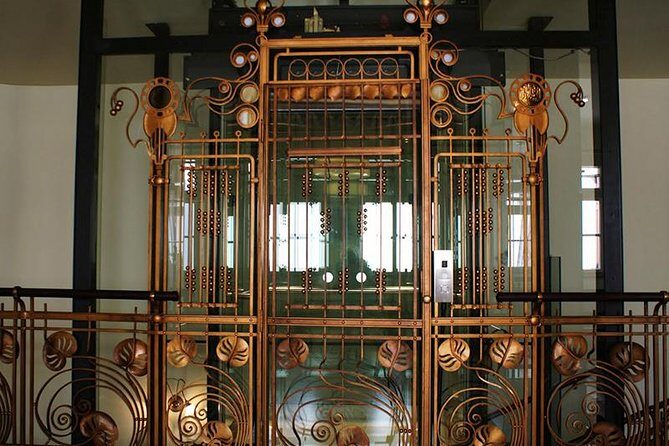
The heart of the tour is learning to read Art Nouveau like a language. The guide shows you features that are easy to spot once you know the trick.
Here are the kinds of details you’ll train on:
- Façade motifs, including ginkgo-like leaf shapes that act like visual signatures.
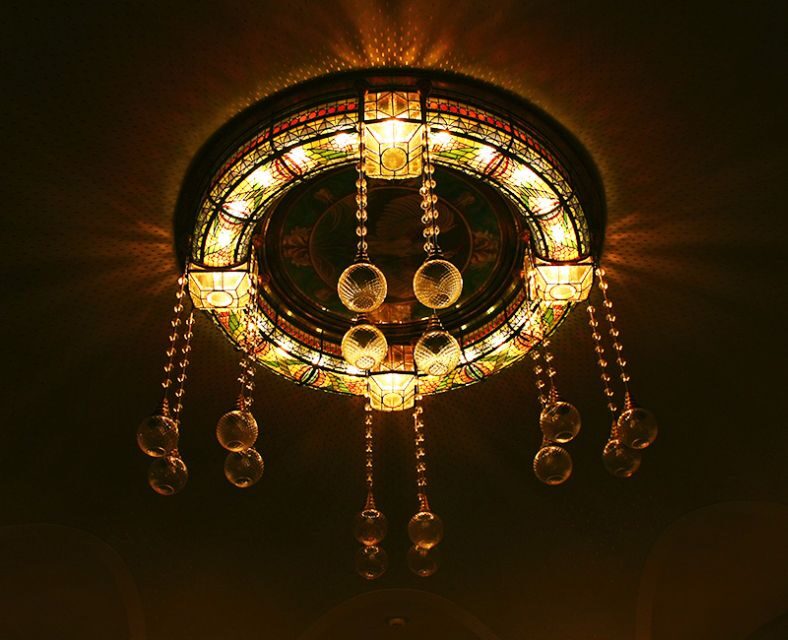
- Light fixtures and interior design elements that reflect the style’s love of crafted ornament.
- Oriental influences, which show up less as a copy-paste of foreign design and more as a mood—an openness to stylization and pattern.
This is where I think the tour earns its price tag. Many architecture walks give you names and dates. This one focuses on recognition. You’ll be able to stand in front of a façade and think, That’s not just decoration—that’s a design philosophy.
One more thing: the tour also connects those visual choices to the era’s social energy. Art Nouveau wasn’t only for wealthy showpieces. It spread through places people used daily or often: hotels, cafés, restaurants, and even transport hubs. That’s why these designs are still visible in the city’s routine life.
How Pre-War Café Culture Made Art Nouveau Feel Modern
A surprising part of this style story is how practical it is. Art Nouveau buildings often weren’t built to isolate people; they were built to host them. They created spaces for meeting, being seen, and enjoying travel-time modernity—especially in the years when industrialization was reshaping how people lived and moved.
As you walk, your guide draws parallels to the social elite who used cafés and restaurants before the world was disrupted by war. The details matter here: elegant interiors weren’t only about taste. They were about how public life should feel—polished, comfortable, and a bit theatrical.
If you’re the type who likes history but hates lecture-y tours, this section is for you. It turns architecture into a story about habits: where people went, what they did there, and why design became a status marker.
Lucerna Bar: Seeing Art Nouveau as an Interior, Not Just a Façade
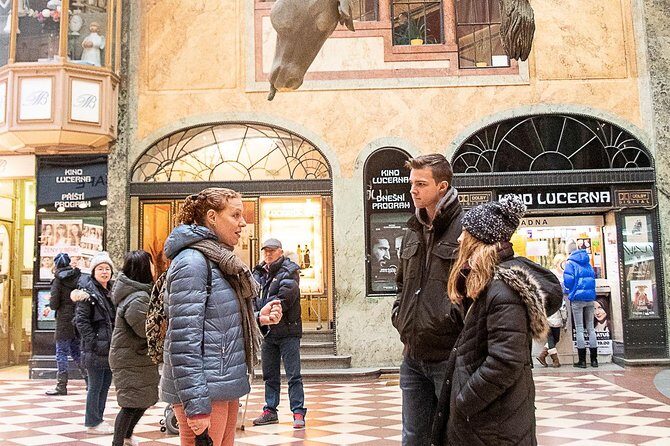
One of the standout stops is the Lucerna Bar. This is your chance to experience how Art Nouveau works when you’re not just looking at stone from the sidewalk.
The tour frames places like Lucerna Bar as part of a broader pattern: hotels and refined bars were among the stages where early 20th-century travelers and social groups spent time. You get why the architecture emphasized atmosphere—how the lighting, decorative elements, and overall feeling supported the act of gathering.
Practically, it’s also a great move for comfort. Architecture tours can be long days of cold air and numb toes in Prague. The route includes opportunities to look closely, and on chilly days, you may appreciate that you can get brief indoor warmth while still focusing on details.
Don’t expect a casual “grab a drink and go.” The point is observational. You’ll be directed toward what to notice, and that makes the interior stop feel more rewarding than a quick photo moment.



Grand Hotel Europa: When Elegance Was the Point
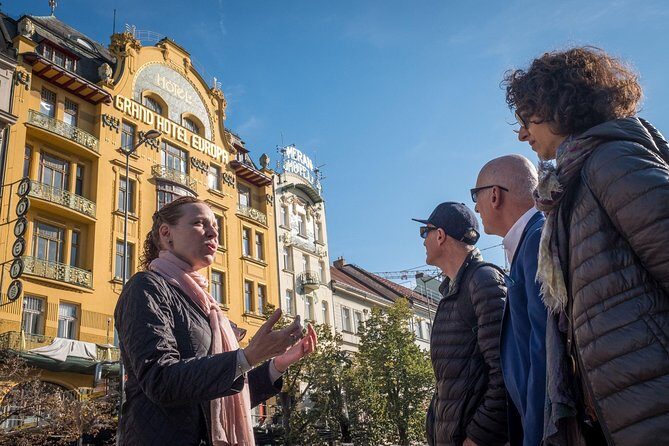
Another highlight is the Grand Hotel Europa, which the tour treats as an architectural statement—exactly the kind of building where Art Nouveau made its case for modern sophistication.
Hotels are useful for your understanding because they concentrate style in one place. The décor, the sense of arrival, the refined public areas—everything points to a designed experience. The city’s early globetrotters and frequent café-goers weren’t just passing through; they were participating in a new kind of cosmopolitan life. A hotel like this becomes a physical symbol of that shift.
Your guide links these details to broader themes in Prague’s identity. The tour doesn’t treat style as surface-level decoration. Instead, it explains how design choices express a city’s self-image: modern, confident, and comfortable with showing off craftsmanship.
If you love places that feel like time capsules but still function in the present, this stop is a strong reason to book. It’s architecture you can appreciate without needing a museum ticket.
Cubist and Rondo-Cubist Parallels: The Bank of the Legions and the Style Shift
This tour also gives you Cubism in context, using comparisons that help the visuals stick.
You’ll see direct references to Prague’s Cubist and Rondo-Cubist architecture, including landmarks like the House of the Black Madonna and the Bank of the Legions. The key is not just seeing the shapes. It’s understanding what changes when Cubism takes over:
- Instead of organic curves and natural motifs, you get sharper geometry and stylized forms.
- Instead of light as a decorative mood, you get architecture as a structured idea—often more assertive.
- Instead of public elegance through ornament, you get modern identity communicated through form and rhythm.
This is where the tour’s “walk, compare, understand” style pays off. By the time you reach the Cubist comparisons, you’ll already have an Art Nouveau toolkit. That makes the contrast clearer—and the city feels less random. Prague stops looking like a grab bag of famous buildings and starts looking like a connected evolution.
How the Guide Changes Everything: Robert, Vadim, and Bonita-Style Storytelling
A walking tour lives or dies on the guide. This one benefits from an impressive guide profile: professors, doctoral students, historians, journalists, art critics, and published authors. That’s academic, sure—but what you care about is clarity and energy at street level.
In practice, the style shows up in how guides talk. Guides like Robert, Vadim, and Bonita are described as clear explainers with humor, and they keep the tour moving so you don’t waste time standing around. That pacing matters, especially with 3 hours on the clock.
You’ll also appreciate that the guide can answer questions in a way that doesn’t freeze the group. If you’re curious—about why a façade motif appears where it does, or how Cubism relates to national identity—this tour is built to handle that curiosity without turning into a lecture that never ends.
Pace, Timing, and Photo Reality in 3 Hours
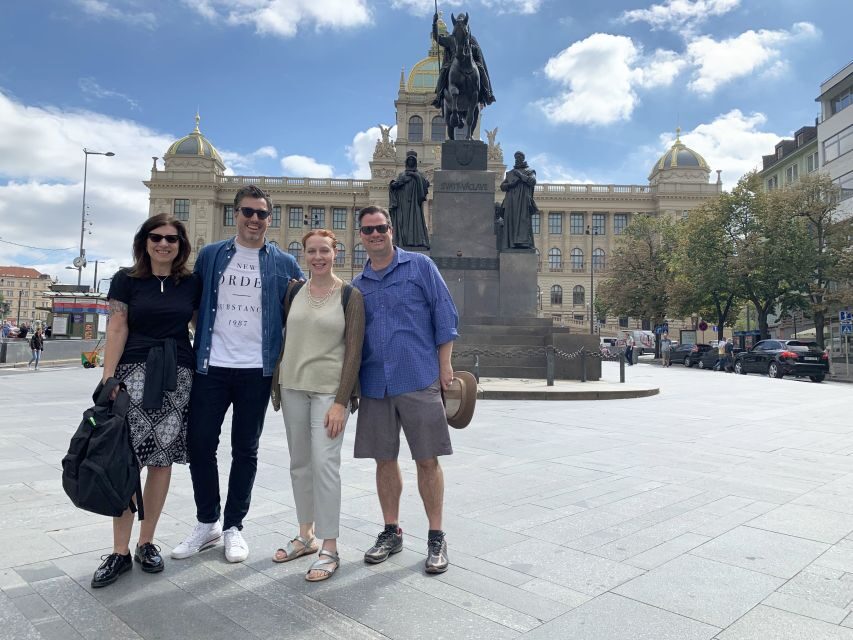
The tour is 3 hours long and built for walking. That’s good news if you like momentum. It’s also a small warning if you’re the type who needs long, slow photo sessions.
A common theme in feedback about this kind of tour is that the guide keeps you moving and doesn’t linger forever at each corner. That’s often better than a slow slog, because it keeps your brain focused on patterns: you’re always seeing the next design clue.
For photos, plan smarter rather than longer. Stand where the guide tells you, shoot fast, then move on. You’ll get better results by capturing the overall façade and one close detail rather than trying to perfect every angle.
And yes, the route can include indoor looks. That gives you a break and a chance to see those “interior hallmark” elements that make Art Nouveau more than just an exterior style.
Price and Value: Is $123 Worth It?
At $123 per person for a 3-hour guided walking tour, the price lands in the middle-to-higher range for Prague. The question is what you’re buying besides a route.
Here’s the value case:
- You pay for a trained eye—learning to recognize design features fast.
- You get context, not just aesthetics, including how pre-war social life shaped where Art Nouveau appeared.
- You visit specific interiors and landmark spaces tied to the themes, like Lucerna Bar and Grand Hotel Europa.
- You benefit from guides who are described as experts and strong storytellers, including humor and clear explanations.
If you’re mainly interested in ticking off iconic sights, you could do a self-guided stroll and look at façades. But if you want Prague to “click” as a set of connected visual ideas, this tour is built to deliver that. It teaches you the vocabulary, so your remaining time in the city becomes more rewarding.
Who Should Book This Tour (And Who Might Prefer Something Else)
This tour is a great match if you:
- Like architecture and want to learn how to recognize styles on your own.
- Enjoy when history connects to everyday life—cafés, hotels, public spaces.
- Want a smaller-group feel with expert guidance rather than a huge coach-style crowd.
It may be less ideal if you:
- Want lots of free time at each stop for long, slow wandering.
- Prefer a broader “best of Prague” route with more monument time and less style analysis.
- Are only interested in one style (like only Art Nouveau or only Cubism), since the tour is intentionally comparative.
Should You Book This Prague Art Nouveau and Cubism Walking Tour?
If you’re even slightly curious about why buildings look the way they do, book it. This walk gives you a practical skill: spotting features quickly and understanding what they meant in their era. With strong expert guides and key stops like Lucerna Bar and Grand Hotel Europa, you get both exterior clarity and meaningful interior perspective.
If your priority is pure sightseeing volume, consider a different tour. But if your goal is to see Prague with smarter eyes, this is a solid use of 3 hours.
FAQ
Where does the tour start?
The meeting point is the House of the Black Madonna / Grand Café Orient area, downstairs at the front doors, on the square at Ovocný 19, Prague 1.
How long is the Prague Art Nouveau and Cubism walking tour?
It lasts 3 hours.
Is the tour guide live, and is it available in English?
Yes, it’s a live guided tour, and it runs in English.
What styles and buildings will this tour focus on?
You’ll learn to recognize Art Nouveau design features and you’ll also see connections to Cubist and Rondo-Cubist architecture, including places like the House of the Black Madonna and the Bank of the Legions.
Are Lucerna Bar and Grand Hotel Europa included?
Yes. The tour includes visits connected to the Lucerna bar and the Grand Hotel Europa.
What’s included in the price?
The price includes the 3-hour guided walking tour.