REVIEW · PRAGUE
Prague in One Afternoon: Private Walking Tour with Marek
Book on Viator →Bookable on Viator
Fast Prague, real stories.
This private walking tour keeps you moving from medieval gates to Cubist corners to postcard bridges, so you get a lot of Prague without spending the afternoon in line queues. I especially like how the route strings landmarks together into a readable story, and it finishes near the Infant Jesus of Prague church, making your final stop feel purposeful instead of random.
One thing to plan for: you’ll do steady outdoor walking for about three hours, and a couple of sights have extra entrance fees. If you’re hoping everything is included, note that Prasná brána costs extra, and Prague Castle tickets are also not part of the package.
In This Review
- Key highlights at a glance
- Prague in One Afternoon: what this 3-hour route really gets you
- Pickup, meeting points, and how the walk is laid out
- Prasná brána: the Powder Gate’s gothic façade and the gunpowder name
- House of the Black Madonna: Cubism in 1912 and a corner you can’t miss
- Týn Yard and Ungelt: a calmer pocket of medieval Prague
- Old Town Square at Staroměstské náměstí: the stage set for everything else
- The Old Town Hall and Astronomical Clock: legends, dials, and hourly performance
- Mariánské náměstí and Klementinum: Baroque learning, Kepler energy
- Charles Bridge: medieval stone, saint statues, and river views
- The John Lennon Wall: a constantly changing symbol of protest and hope
- Kostel Panny Marie Vítězné a Pražské Jezulátko: the Church of the Infant Jesus
- Price and value: does $95.18 per person make sense?
- Who this tour fits best (and who should skip it)
- The Marek factor: why the guide quality changes the whole day
- Should you book Prague in One Afternoon with Marek?
- FAQ
- How long is the Prague in One Afternoon private walking tour?
- Is pickup available?
- What are the main ticket costs, and is everything included?
- Where does the tour start and where does it end?
- Is this tour offered in English, and is it private?
- What if the weather is bad?
Key highlights at a glance
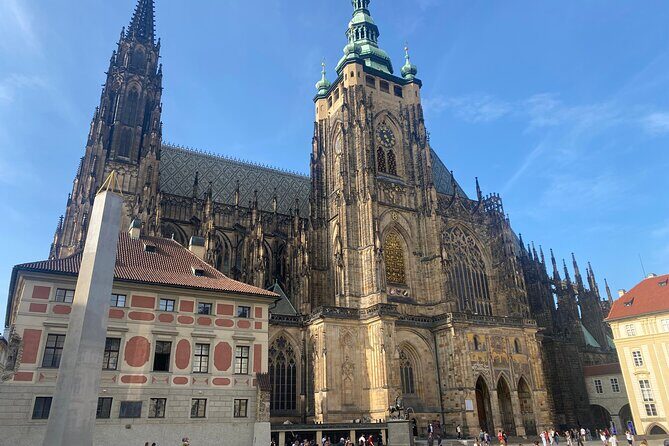
- Marek runs the show: licensed guiding with humor and clear, practical answers
- A route that actually fits in an afternoon: Old Town to Malá Strana with smart pacing
- Mostly free sights: you’ll spend your time seeing, not ticketing
- Paid options along the way: Prasná brána costs extra if you want the interior/exterior access tied to the gate
- A small end-of-tour gift: a nice touch that makes the finish feel like a moment
Prague in One Afternoon: what this 3-hour route really gets you
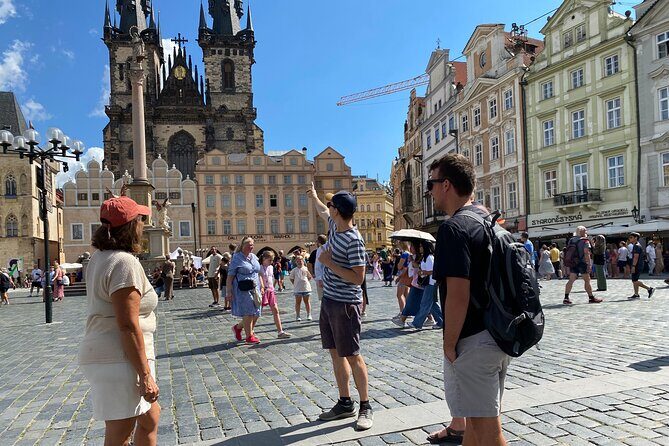
This tour is built for a simple goal: you want to understand Prague faster. In a few hours, you’ll see medieval defenses, early 20th-century architecture, Gothic church drama, and Baroque book-and-science grandeur—plus the river view that anchors the postcard version of the city.
You’ll like it most if you enjoy walking at a steady pace and want a guide who points out what matters. The tour runs about three hours, and it’s private, so you can ask questions without the awkward pause that happens in group tours.
You can also read our reviews of more walking tours in Prague

Pickup, meeting points, and how the walk is laid out
The tour starts at Náměstí Republiky 3/4 (Praha 1-Nové Město) and ends at Karmelitská (Praha 1-Malá Strana), near the Infant Jesus of Prague Church. That means you’re not backtracking the whole time—you’re trending naturally from Old Town toward Lesser Town.
If you’re staying in central Prague, pickup from hotels in the center is offered. That’s a real value-add because it reduces the “how do we get started?” friction, especially if you’re juggling jet lag or trying to fit sightseeing around meals.
Prasná brána: the Powder Gate’s gothic façade and the gunpowder name
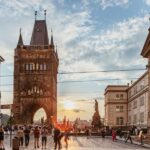
Prasná brána, also called the Powder Gate, is one of those spots that looks dramatic even when you’re just passing. The dark, gothic façade and the gate’s towering presence give you an immediate sense of Prague as a fortified city, not just a pretty postcard.
You’ll learn why the name stuck. In the 17th century, this gate was used for storing gunpowder, which is exactly how you get from medieval architecture to a very human, very practical purpose.
The drawback to consider: the entrance to Prasná brána costs extra (250 CZK, or a reduced 170 CZK). If your goal is purely street-level photos and quick exterior context, you can still get plenty from the stop, but plan for the ticket if you want the full experience.
House of the Black Madonna: Cubism in 1912 and a corner you can’t miss
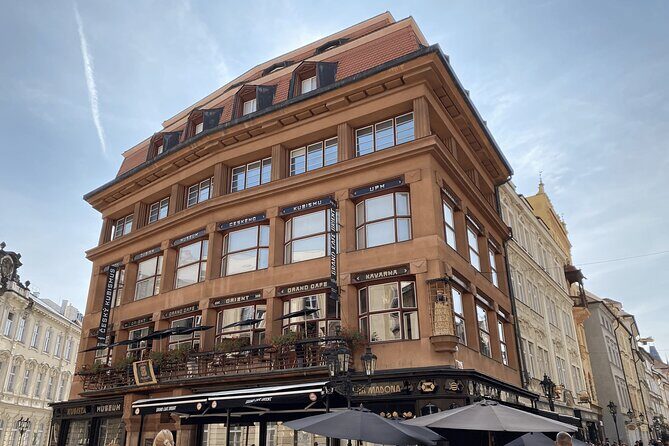
Next comes a surprise that makes Prague feel modern in the best way. The House of the Black Madonna (built in 1912) is early Cubist architecture, full of sharp angles and unusual lines that don’t match the surrounding stone-and-gold vibe.
It also helps you connect two time periods: the building’s name comes from a baroque statue of the Black Madonna placed on its corner. So you’re looking at a street-level reminder of older devotion, while the building itself pushes into early 20th-century modernism.
This stop is short, but it changes how you see Prague. You start noticing how the city layers styles instead of staying stuck in one era.
Týn Yard and Ungelt: a calmer pocket of medieval Prague
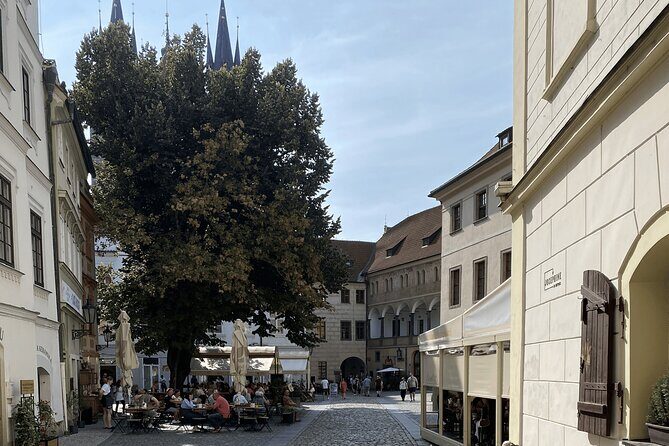
Týn Yard is the kind of place you appreciate after a few big highlights. It’s a historic square with a quieter feel than nearby attractions, where you can slow down for a minute and focus on the medieval architecture around you.
This is also a nice palate cleanser before Old Town Square, because it gives your feet (and your eyes) a break. If you’re the type who gets overloaded by too many landmarks in a row, this stop helps the day feel manageable.
You can also read our reviews of more private tours in Prague



Old Town Square at Staroměstské náměstí: the stage set for everything else
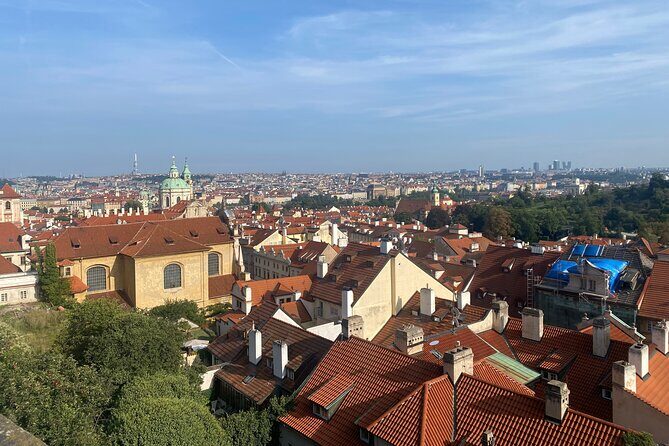
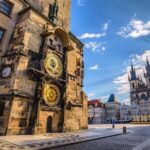
Then you step into Prague’s main square: Staroměstské náměstí. The Astronomical Clock sits here, surrounded by colorful buildings and the kind of central energy that makes you feel like you’re in the middle of the city’s story.
This stop works best if you don’t try to do everything at once. Give it time to sink in. Look outward first—lines, façades, and how the square frames the clock—then let your guide point out what to focus on.
A practical bonus: this section includes time to enjoy the area without requiring an extra ticket for the square itself.
The Old Town Hall and Astronomical Clock: legends, dials, and hourly performance
When you reach the Old Town Hall, you get the main event: the Astronomical Clock. What’s striking here is how the clock blends design with ritual. You’ll notice three main dials and zodiac symbols, which help you see it as something more than just a timepiece.
The hourly show is the part people remember. Mechanical figures, including the Twelve Apostles, perform on the hour. The clock also comes with a legend: the clockmaker was blinded by city officials so he couldn’t create another masterpiece.
Watch for one consideration: the clock’s appeal is tied to timing. If you’re there a little before or after the show, you’ll still enjoy the details, but the full punch comes when the figures start moving. Your guide can help you judge where to stand and what to watch for.
Mariánské náměstí and Klementinum: Baroque learning, Kepler energy
From Old Town Square you’ll head to Mariánské náměstí (Marian Square). The vibe here is different—still central, but less like a constant spectacle. This stop also points you toward nearby cultural powerhouses like the Klementinum.
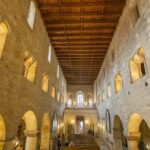
Klementinum is where Prague shows off its Baroque side. The highlight is the Library Hall with ornate ceilings and historic bookshelves, the kind of interior that makes you understand why scholars cared so much about this place.
You also get a science angle. The complex was a Jesuit university, and the astronomer Johannes Kepler conducted research here. So the stop isn’t only about pretty architecture—it connects the city to big ideas.
The payoff for you: even though this is a walking tour, Klementinum gives a “slow down” moment. It’s also a great stop if you like architecture that feels functional, not just decorative.
Charles Bridge: medieval stone, saint statues, and river views
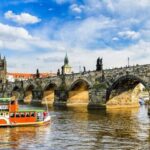
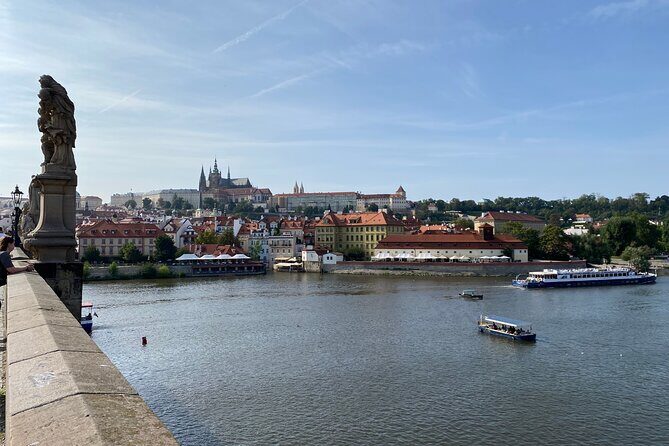
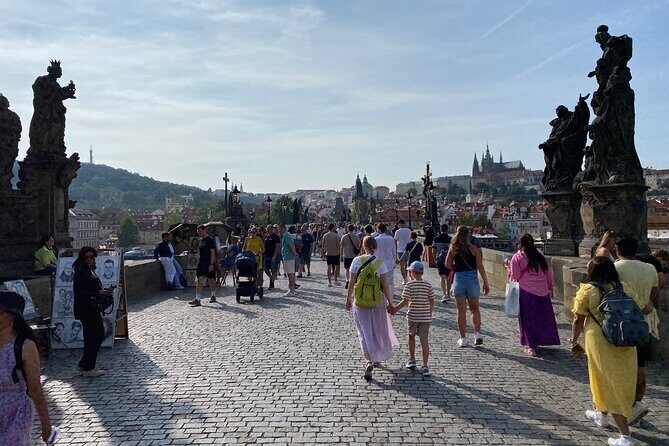
Charles Bridge is the must-see link between Old Town and the Lesser Quarter. It was built in the 14th century, and once you’re on it, the bridge’s mass and stonework make sense right away.
The views help too. On this bridge, you get a clear sense of how Prague sits by the Vltava River, and you can look toward Prague Castle. The route is especially good for photos, and sunrise or sunset tends to be when the light makes the scene feel extra dramatic.
One practical consideration: this is a famous location, so you’ll want to stay patient and not expect to move through like you’re walking down a quiet street. Your guide can help you keep your priorities straight so the bridge doesn’t swallow your entire time budget.
The John Lennon Wall: a constantly changing symbol of protest and hope
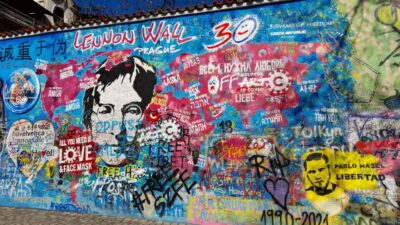
Near Charles Bridge you’ll find the John Lennon Wall. It’s essentially an ever-evolving canvas, and it has become a symbol of resistance and hope—rooted in Prague’s history of political activism and artistic expression.
This stop is short, but it adds a modern human layer to the day. After gates, clocks, and churches, the wall reminds you that Prague’s story isn’t only about buildings. It’s also about people using art to take a stand.
Kostel Panny Marie Vítězné a Pražské Jezulátko: the Church of the Infant Jesus
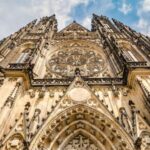
Your final major church stop is in the Lesser Town: the Church of the Infant Jesus in Prague. This is Baroque architecture with a very specific reason people come.
The star is the statue of the Infant Jesus of Prague, believed to have miraculous powers. It sits in a beautifully decorated shrine, and the statue is dressed in elaborate robes. You’ll see why this is pilgrimage territory as much as it is sightseeing territory.
This is also a smart ending point because it gives the day emotional closure. After wandering through history and architecture, you finish at a place connected to faith and devotion—an entirely different kind of intensity than the clock shows.
Price and value: does $95.18 per person make sense?
At $95.18 per person for about three hours, this sits in the mid-range for a private guide in central Prague. The key question is what you get for that money.
Here’s the value equation I’d use:
- You get a professional and licensed guide plus a private format where it’s only your group. That usually means more Q&A and less waiting.
- Most of the route is built around free or low-friction stops, including Old Town Square, the Astronomical Clock area, Mariánské náměstí, Charles Bridge, and the John Lennon Wall.
- The paid add-ons are selective. Prasná brána costs extra, and Prague Castle entrance is also listed as not included.
So if you’re the kind of traveler who wants guidance to make sense of architecture and legends in real time, the price can feel fair quickly. If you only want exterior photos and you’re determined to skip every ticketed moment, you might ask whether a cheaper self-guided strategy would work better. But the day is short—so having someone who can steer your attention is often what you’re really paying for.
Who this tour fits best (and who should skip it)
This works well for:
- First-timers who want a fast but organized path through Old Town and Lesser Town
- People who like history explained in plain language, with humor and real context
- Anyone traveling as a small group or family and wanting private pacing
It’s less ideal if:
- You hate walking for long stretches, because this is built as an afternoon walk
- You want a lot of time inside major paid attractions, since ticketed entrances are limited in the plan
The Marek factor: why the guide quality changes the whole day
The standout theme here is the guide’s style. Marek is friendly, passionate about Prague, and able to answer questions without turning the day into a lecture. Humor matters because it keeps you listening when the details get heavy, like the Astronomical Clock legends or the shift from gothic fortifications to modern Cubism.
Music also shows up as part of the experience. More than once, the tour includes guitar music and singing, which makes the walking rhythm feel less like a checklist and more like a shared stroll.
And there’s a smart, traveler-friendly approach: he’s honest about what’s worth your time and what isn’t. That matters because in Prague, your biggest risk isn’t paying for the wrong thing—it’s spending your limited time on the right things in the wrong order.
Should you book Prague in One Afternoon with Marek?
Book it if you want a high-impact afternoon with a guide who can connect what you see—gothic gates, Cubist angles, clockwork drama, Baroque interiors, and bridge views—into one clear story. It’s especially a good pick if you’re short on time and you’d rather walk with a pro than guess your way through Prague’s layout.
Skip it if you want long museum time, or if you want every single entrance included in the price. A couple of key sights come with extra ticket costs, and the day is designed around walking, not lingering.
If you’re on the fence, I’d base your decision on this: do you want someone to help you look well? If yes, this is a strong choice for an efficient, fun, and very Prague-feeling afternoon.
FAQ
How long is the Prague in One Afternoon private walking tour?
It runs for about 3 hours.
Is pickup available?
Yes. Pickup is offered from all hotels in the center of Prague.
What are the main ticket costs, and is everything included?
Prasná brána entrance is not included (250 CZK, reduced 170 CZK). Prague Castle entrance is also not included (450 CZK, reduced 300 CZK). Many other stops are free.
Where does the tour start and where does it end?
It starts at Náměstí Republiky 3/4, 110 00 Praha 1-Nové Město and ends at Karmelitská, 118 00 Praha 1-Malá Strana, near the Infant Jesus of Prague Church.
Is this tour offered in English, and is it private?
Yes, it’s offered in English and it’s a private tour/activity, meaning only your group participates.
What if the weather is bad?
The experience requires good weather. If it’s canceled due to poor weather, you’ll be offered a different date or a full refund. Service animals are allowed, and a moderate physical fitness level is recommended.