REVIEW · PRAGUE
Prague Art Nouveau and Cubism Walking Tour
Book on Viator →Operated by Insight Cities · Bookable on Viator
Prague turns design into a time machine. This 3-hour walk pairs Art Nouveau elegance with Cubist drama, so you learn how Prague looked and thought around the turn of the 1900s. You’ll spot design clues like gingko-leaf motifs, curvy letterforms, and crystal-like shapes, then connect them to history, art, and the big political changes that followed.
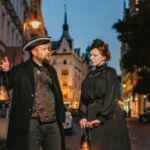
Two things I really like: the focus on concrete, face-to-street details (not just vague art talk), and the way the historian guide keeps the story moving from style to real life. It’s also a small group of up to 8 people, which makes questions feel easy instead of rushed.
One possible drawback: you’ll be on your feet for about 3 hours. Also, food and drinks aren’t included, so plan a snack or save your appetite for the finish near Café Louvre.
In This Review
- Key highlights at a glance
- Why Prague’s Art Nouveau and Cubism belong together
- What the 3-hour walk feels like (and how to prep)
- Cubist beginnings at the House of the Black Madonna
- Art Nouveau landmarks: Obecní Dum, K+K Hotel Central, and Café Imperial
- Learning to read Cubism at Czechoslovak Legion Bank
- Prague Main Train Station: Art Nouveau on a practical scale
- Wenceslas Square: Art Nouveau and Art Deco side-by-side
- Lucerna Music Bar arcades and the Upside-Down King
- The guide matters: how the tour stays personal
- Price and value: what $126.71 buys you
- Who should book this tour
- Should you book Prague Art Nouveau and Cubism?
- FAQ
- How long is the Prague Art Nouveau and Cubism walking tour?
- How big is the group?
- Is the tour offered in English?
- Where does the tour start and end?
- Does the tour include food or drinks?
- Do I need a ticket for the stops?
Key highlights at a glance
- Art Nouveau details to hunt like gingko-leaf façades, Eastern influences, and curvy typography
- Cubism you can actually see in Prague’s buildings, including the House of the Black Madonna
- Construction-tech stories covering heating, ventilation, drinking water, hydraulic elevators, steam-powered laundry, and intercoms
- Stop-inside moments at major interiors and arcades, including Lucerna Music Bar and Café Imperial
- Small group energy (max 8) that makes Q&A feel natural
- A strong finish in the center near restaurants and sights, ending at Café Louvre
Why Prague’s Art Nouveau and Cubism belong together
Prague is famous for Gothic spires, baroque flourishes, and castle views. But in the late 1800s and early 1900s, the city also went through a design phase that feels almost futuristic. That’s where Art Nouveau and Cubism come in, and this tour is built to show you they are not random styles.
Art Nouveau is about motion in stone. Think of leaf-like ornaments, flowing lines, and typography that looks like it’s trying to dance. You’ll also learn how Eastern art and aesthetics influenced the movement, from the overall look to the use of dramatic, decorative light fixtures.
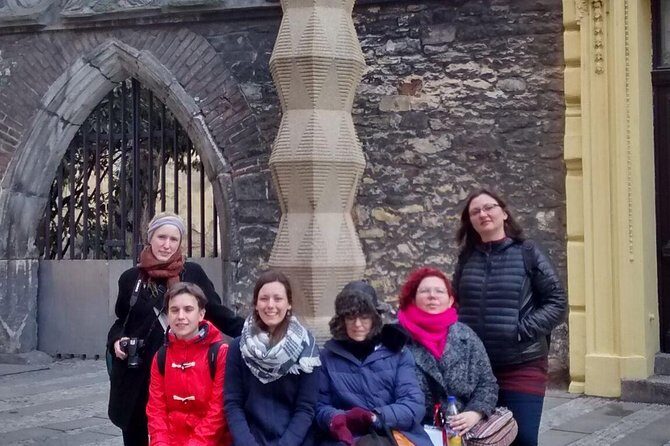
Cubism is the opposite mood. It’s geometry with attitude: crystal-like forms, pyramids, and sharp angles that make you pause and stare. Prague was one of Europe’s major centers for Cubist art, and you’ll see that fact in the layout and attitude of real buildings—not just in textbooks.
You can also read our reviews of more walking tours in Prague


What the 3-hour walk feels like (and how to prep)
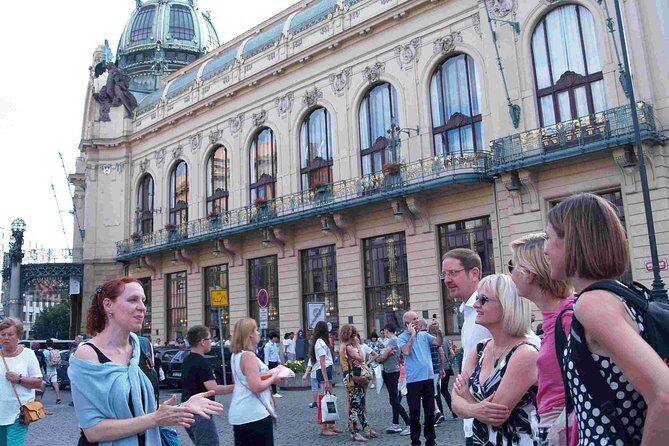
This is a compact walking tour. Plan on around 3 hours, with multiple stops and time to look closely. Some stops are short exterior moments; others are brief interior looks, depending on what’s available on the day.
Practical note: your group size is capped at 8, which helps the pace. Still, you’re moving between stops in central Prague. Wear comfortable shoes with decent grip, especially if it’s wet.
Since food and drinks aren’t included, I’d treat this tour like a design-sprint and plan either:
- a light breakfast or snack before you start, or
- a proper meal right after you finish near Café Louvre.
The start is at Ovocný trh 19 (Staré Město) and the tour ends near Café Louvre (Národní 22), which is handy for staying in the action.
Cubist beginnings at the House of the Black Madonna
Your first stop sets the tone quickly. The House of the Black Madonna is a Cubist-style building, and it’s a strong entry point because it shows Cubism as something architectural, not just painterly.
When you look at it, focus less on whether you like the style (you might, you might not) and more on how the building communicates ideas through form. Cubism tends to make you read shapes from multiple angles, and that’s exactly what you’ll practice throughout the tour: see how the structure is made to feel “reconstructed,” like it’s been broken into planes and reassembled.
This is also a good moment to get your bearings. Early in the walk, your guide can explain the visual language you’ll keep spotting later—so the rest of the route feels easier.
Art Nouveau landmarks: Obecní Dum, K+K Hotel Central, and Café Imperial
Next comes the Art Nouveau side, and the tour gives you a real tasting menu of it.
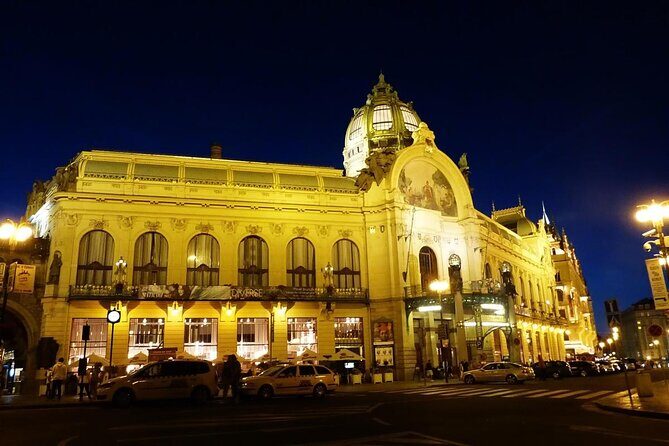
At Obecní Dum, you’re looking at one of the iconic Art Nouveau landmarks in Prague. This stop matters because it’s not just about decorative beauty. You’ll connect what you see—ornament, materials, and design choices—to what was going on in the era that built it.
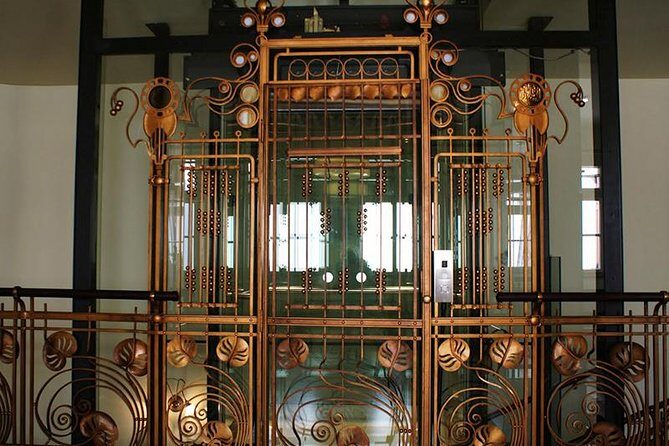
A major theme on the tour is the era’s “we can build anything” confidence. Your guide points out construction and comfort technologies that were groundbreaking at the time, including central heating and ventilation and also practical systems like drinking water, hydraulic elevators, and even details like steam-powered laundry and an intercom system. Even if you’re not a building-systems person, these facts make the architecture feel real and human.
Then you move to the K+K Hotel Central Prague, known as the first Art Nouveau building in Prague. That label is worth paying attention to. Firsts matter, because they show you the starting point of a style before it got copied, refined, or diluted.
Finally, Café Imperial offers an interior moment. You’ll get to see Art Nouveau in a space where people actually meet—so it stops being a museum idea and becomes a lifestyle idea. The goal here is not to admire everything equally. It’s to learn how the style uses light, ornament, and layout to shape mood.
Learning to read Cubism at Czechoslovak Legion Bank
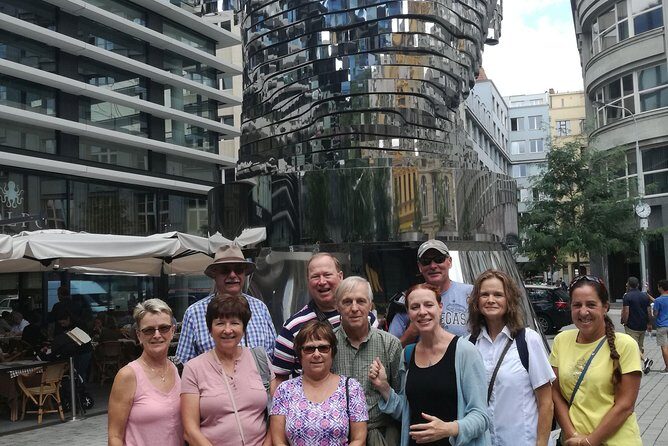
Prague history isn’t only political speeches and battles. It also lives in buildings dedicated to national stories.
At the Czechoslovak Legion Bank, you get a Cubist architecture and interior associated with the Czechoslovak Legion of the 1st World War. This stop is useful because it ties visual style to identity. Cubism here isn’t just about angles; it’s linked to what the era wanted to remember and celebrate.
Look for how the interior feels organized. Cubist design often creates a sense of structure through repeated geometric thinking. The lesson you take away is that Cubism in Prague wasn’t only experimental art in galleries. It was part of civic life and public memory.


Prague Main Train Station: Art Nouveau on a practical scale
Most people think of train stations as boring. This tour politely argues with that idea.
At Praha hlavni nadrazi (Prague Main Train Station), you’ll see a dramatic Art Nouveau dome inside. This matters because it proves your point: Art Nouveau wasn’t limited to fancy cafés and hotels. It could show up in places built for crowds and daily routines.
One of the practical perks here is orientation. Your guide helps you navigate the station, which can be genuinely useful if you’re moving between connections or just trying not to lose time. If you like having someone point out the easiest way to move through a complicated space, this stop is for you.
Wenceslas Square: Art Nouveau and Art Deco side-by-side
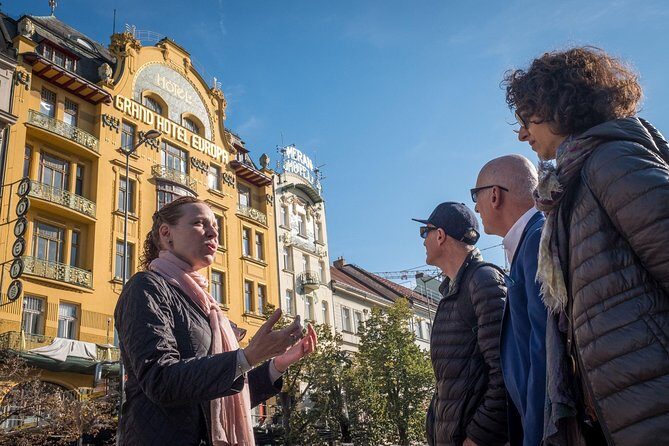
Then you reach Wenceslas Square, and the tour shifts into comparison mode. You’ll discuss the square’s Art Nouveau and Art Deco architecture, which helps you understand how styles evolved instead of treating them like sealed-off museum rooms.
This part is especially valuable if you’ve only seen Prague architecture through postcards. Wenceslas Square is where you can train your eye to spot different design languages at street level: how ornament changes, how shapes get more streamlined, and how the mood moves from flowing to more geometric.
Spend a few minutes looking from different angles. The point isn’t to find a single perfect photo spot. It’s to start recognizing patterns that show up on buildings across the city.
Lucerna Music Bar arcades and the Upside-Down King
After the big public squares, the tour turns toward spaces with atmosphere.
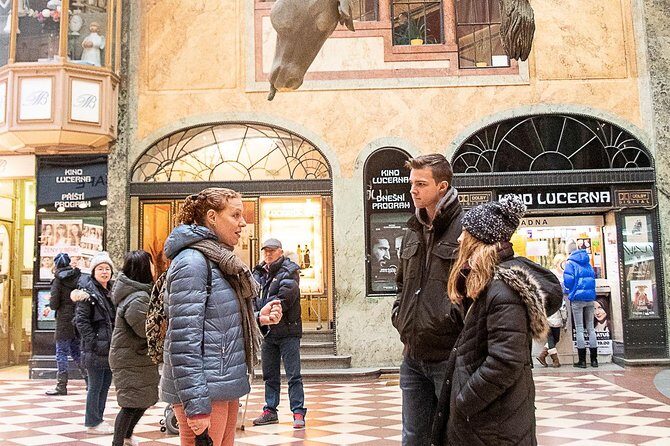
At Lucerna Music Bar, you get a look at the Art Nouveau interior of one of Prague’s beautiful arcades. This stop connects design to optimism. You’ll hear how the era carried a kind of avant-garde confidence—and how later wars and upheavals changed the course of Prague’s story.
Then you end with the Upside-Down Statue of King Wenceslas, built into modern symbolism. You’ll discuss what the sculpture is saying in the context of Czech history and the Czech National Revival. The value here is how the tour doesn’t treat public art as random street decoration. It’s presented as commentary—sometimes political, sometimes cultural.
By the time you reach the finish near Café Louvre, you’ll feel like you’ve learned a new way to look at the city. And since the end is central, you can immediately turn the architecture lesson into a real break: coffee, a meal, and a slow re-walk of streets you just studied.
The guide matters: how the tour stays personal
What makes this experience work best is the historian guide style. Across multiple guide variations, the consistent theme is that the tour is story-driven and responsive.
You’ll typically get explanations that connect design choices to history and the pressures of the era, not just name-dropping. Many guides also tailor the pace and focus to your questions, including when you want more time on Cubism details or more time on Art Nouveau motifs.
A small group also changes the tone. When you can ask things without feeling like you’re taking over, you learn faster. If you’re the kind of traveler who loves asking Why? and What does that mean?, you’ll get your money’s worth in the Q&A moments.
Price and value: what $126.71 buys you
At $126.71 per person for about 3 hours, the price can feel steep if you compare it to generic walking tours.
Here’s why it can still be good value:
- You’re paying for a historian guide focused on a narrow design topic.
- The group is small (up to 8), which usually means more attention and less standing around.
- You get a high-density route through major architectural examples—Art Nouveau and Cubism in one connected story.
- Several stops have admission listed as free, which helps keep the cost under control while still letting you see interiors and landmark spaces.
So think of this as paying for interpretation. Prague architecture is everywhere, but this tour helps you read it with purpose.
Who should book this tour
Book it if you:
- want a first serious taste of Prague’s turn-of-the-century architecture
- enjoy comparing styles and training your eye (Art Nouveau vs Cubism)
- like history that explains how people lived, not just who ruled
- prefer smaller groups where questions land
You might skip it if you’re only interested in castle views and quick photo stops. This tour is built for architecture lovers and curious generalists who want more than a highlight list.
Should you book Prague Art Nouveau and Cubism?
If you want to see Prague as more than postcards, I’d book it. The route is designed to teach you a visual skill: spotting motifs like gingko leaves, recognizing Cubist geometry, and understanding why those choices mattered to the people building their world.
The biggest reason to choose this over a generic city walk is the structure of the story. You won’t just look at buildings. You’ll learn how Art Nouveau confidence and Cubist ideas became part of daily life, public identity, and even the engineering behind the scenes.
Go with this when you have at least one morning or afternoon free and you can walk comfortably for a few hours. Then spend the rest of your day using what you learned to look at Prague like you’ve never looked at it before.
FAQ
How long is the Prague Art Nouveau and Cubism walking tour?
The tour lasts about 3 hours.
How big is the group?
The group size is limited to a maximum of 8 travelers.
Is the tour offered in English?
Yes, it is offered in English.
Where does the tour start and end?
It starts at Ovocný trh 19, Staré Město, and ends near Café Louvre on Národní 22.
Does the tour include food or drinks?
No. Food and drinks are not included unless specifically stated.
Do I need a ticket for the stops?
A mobile ticket is provided, and the stops listed on the route show admission tickets as free.