REVIEW · PRAGUE
Pedestrian tour of Prague in Spanish
Book on Viator →Operated by DORADO TOURS · Bookable on Viator
Prague gets easier when you have a guide. This Spanish pedestrian tour takes you through Prague’s historic core, a UNESCO World Heritage Site (since 1992), with stops at standout landmarks like the Powder Tower, Týn Church, the Clementinum, and the Astronomical Clock. You’ll also get a Charles Bridge photo moment and a walk into the Jewish Quarter area before ending in Old Town.
I like how the route is planned for real orientation. You start at Wenceslas Square and work your way toward Old Town Square, then keep threading through major streets and squares so landmarks connect like a story, not random photos. I also like the human side: you’re guided by a local bilingual expert in Spanish and Czech, and the tour style is described as attentive and question-friendly, with guides such as Nelson Villarroel, Monica, and Gabriela Franková noted for being punctual and genuinely engaging.
One drawback to consider: entrances aren’t included. It’s a walking tour focused on exterior views and explanations, so if you want to go inside monuments, plan to pay extra and align with opening hours.
In This Review
- Key highlights at a glance
- What this Spanish walking tour is really good for
- Wenceslas Square start: where modern Prague meets the historic center
- Powder Tower and Celetná Street: the quick route to Prague’s geometry
- Old Town Square: Týn Church, Saint Nicholas, and the “big picture” feel
- Franz Kafka Square and Marianské Square: small stops with big context
- Charles Bridge photo op: classic views, timed for momentum
- Jewish Quarter approach and the edge of Old Town
- Finishing at the Astronomical Clock: what to do with your last minutes
- Price and value: is $18.44 a good deal?
- What to expect on the ground: pace, walking, and group reality
- Who should book this tour (and who might choose differently)
- Should you book this Spanish Prague walk with DORADO TOURS?
- FAQ
- How long is the Prague pedestrian tour in Spanish?
- Where does the tour start?
- Where does the tour end?
- What time does the tour begin?
- Is the tour in Spanish?
- Do I need to buy tickets for entrances during the tour?
- What is included in the price?
- Is there a mobile ticket?
- Is the tour family-friendly?
- How big are the groups?
- Is cancellation free if plans change?
Key highlights at a glance
- Spanish + Czech bilingual guidance that keeps things clear even when street names get tricky
- UNESCO core essentials across big squares and famous streets
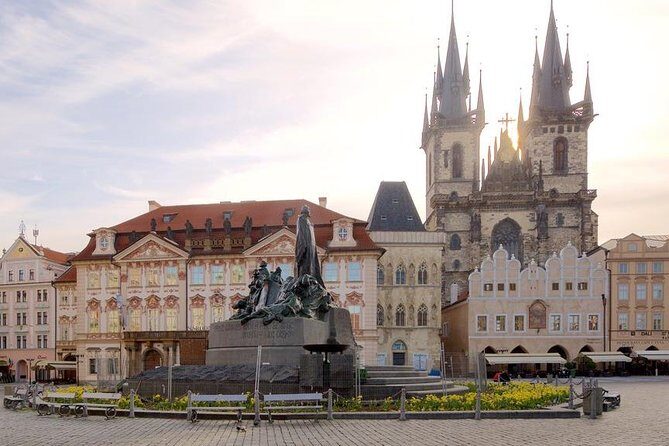
- Powder Tower, Týn Church, and Saint Nicholas as major architectural stops
- Charles Bridge mandatory photo op so you leave with the classic postcard shot
- Jewish Quarter walk plus a strong finish at Old Town Square
- Max 25 people for a group size that stays manageable
What this Spanish walking tour is really good for
This is the kind of tour that helps you get your bearings quickly. Prague can feel like a maze of streets and spires, especially if you’re trying to see the highlights while also eating well and not sprinting between places. Here, the flow is deliberate: you begin in Wenceslas Square, move through the historic center’s standout points, cross the famous photo checkpoint at Charles Bridge, and then finish at the Astronomical Clock area.
You’re also paying for guidance, not just movement. The tour includes an official bilingual guide in Spanish, plus sightseeing explanations that connect what you’re seeing with what it means. At $18.44 for about 3 hours, that’s strong value if you like understanding buildings instead of just taking pictures.
And since it’s a walking tour, you’ll experience Prague the way most locals do on an ordinary day: on foot, moving block by block, seeing how squares open up, how churches sit at street corners, and how the city changes as you approach Old Town.
You can also read our reviews of more tours and experiences in Prague.


Wenceslas Square start: where modern Prague meets the historic center
You start at Václavské nám. 806/62 in Prague 1, near public transport, with a 10:00 am start time. This location matters. Wenceslas Square isn’t just a convenient meeting point; it’s a wide, practical “reset button” after travel days. From there, your guide can set the stage for the walk ahead—what you’ll see, why it’s here, and how Old Town’s layout makes sense.
A smart early stop on the route is the Municipal House area. Even if you don’t go inside (entrance tickets aren’t included), the guide’s commentary helps you notice design choices you might otherwise miss: how modernist and historic styling can sit side by side in a city that constantly reinvents itself.
Then you shift toward Old Town’s core. This is the part I like best about the structure: you don’t start in the densest tourist zone first. You ease into it. By the time you reach the heart of the UNESCO area, you understand where you are and what you’re looking for.
Powder Tower and Celetná Street: the quick route to Prague’s geometry
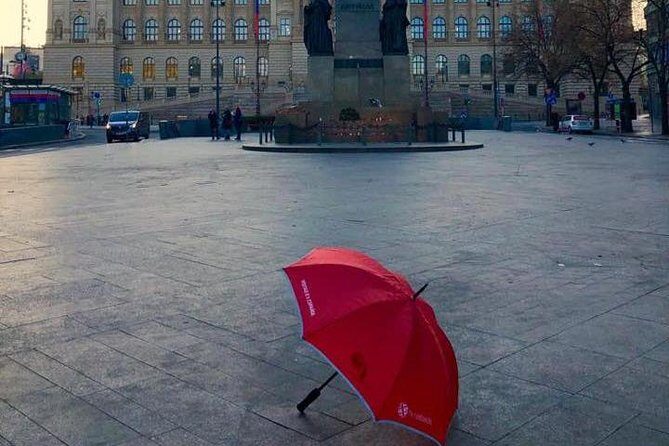
Once you’re moving through the central streets, you’ll stop at the Powder Tower and head along Celetná Street toward Old Town Square. The Tower is one of those Prague details that becomes clearer when you hear the story behind it. A good guide helps you see not just what it looks like, but how it relates to the city’s historic defenses and movement of people through the center.
Celetná Street is also a practical choice for walkers. It helps you connect squares and landmarks without feeling like you’re losing time in random detours. You’re still in the classic Prague corridor, with enough street life around you to feel the city rhythm, but with a route that keeps you on track.
The tour’s value here is in the explanations. If you love architecture, these mid-walk stops are where you start spotting patterns—how façades communicate power, how religious buildings anchor neighborhoods, and how the city uses openings and viewpoints to guide your eye.
Old Town Square: Týn Church, Saint Nicholas, and the “big picture” feel
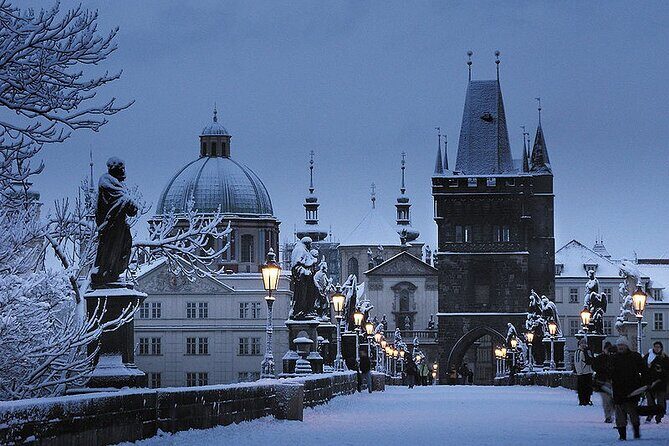
Old Town Square is the obvious famous stop, but the way this tour handles it is what makes it work. You’re not just standing in the middle for the photo. You get a guided look at the architectural layers around the square, including Our Lady of Týn and Saint Nicholas.
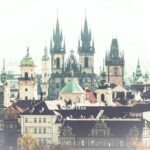
Here’s what I think makes this section especially worthwhile: Old Town Square can look like one giant postcard. With a guide, it becomes a set of clues. Týn Church is a key sight because it’s visually dominant, with a shape that reads instantly even from a distance. The guide’s job is to explain why it feels so central to the area, and how that church fits into Prague’s broader identity.
You’ll also pass through the square’s wider mix of styles—your guide points out how you can see different artistic moments on the same stage. Then Saint Nicholas is a strong counterpoint, giving you another religious landmark to compare and mentally file.
If you enjoy getting your bearings for future independent exploring, this is where you lock in your mental map: you’ll know what’s nearby, which streets funnel toward Old Town’s edges, and where to return later if you want longer time inside a specific building.
Franz Kafka Square and Marianské Square: small stops with big context
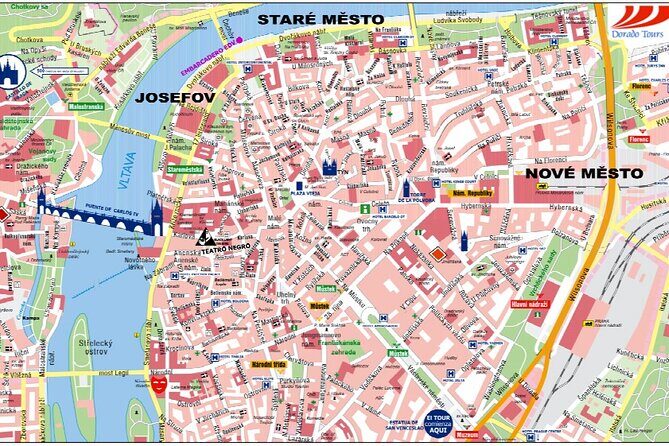
After Old Town Square, the tour continues through Franz Kafka Square and toward Marianské Square, where the Clementinum stands. These are the kinds of stops that might seem small compared with Charles Bridge, but they’re useful because they teach you how Prague “stacks” important sites close together.
Franz Kafka Square is a breather in the route rhythm. You’re still in the historic center, but it gives you a moment to reset your walking pace and absorb the street-level atmosphere. Then Marianské Square pulls the focus back to major architecture.
The Clementinum is a highlight because it’s tied to Jesuit education—built as a university in its day. Even if you don’t go in, hearing that context helps you interpret the building’s presence. It also helps you understand why this part of town feels like a learning-and-institution district rather than just a tourist corridor.
If you’re the type who likes to understand what you’re looking at, this section pays off. You’ll start to notice that the city is not only about famous monuments; it’s also about where people studied, worshiped, traded, and gathered.

Charles Bridge photo op: classic views, timed for momentum
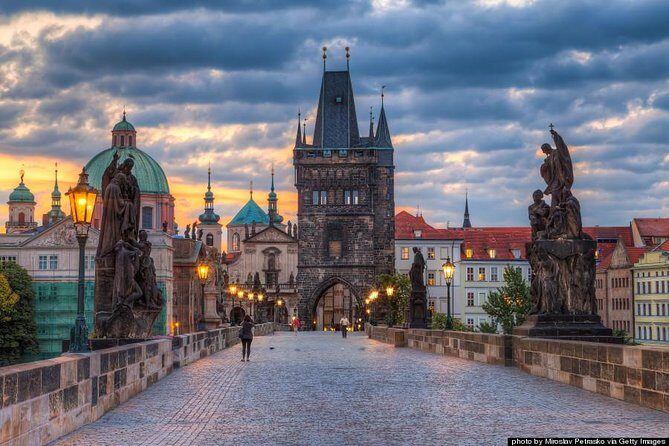
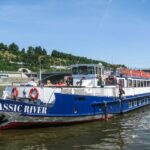
At some point, you’ll reach Charles Bridge, and the tour includes the mandatory photo op there. This is the correct way to handle this famous location. If you try to do Charles Bridge as a standalone mission, you can burn time waiting for the right light or getting stuck in the densest crowds. A scheduled stop gives you structure.
Also, because you’re guided, you get practical pacing. You’re not wandering around wondering which direction best shows the statues, the river perspective, and the approach back toward Old Town. You’ll be pointed toward the most useful angles for photos and the easiest routes for continuing the walk.
One thing to keep in mind: after Charles Bridge, you’ll be moving into a different feel of the city. So treat this photo stop as a checkpoint, not the end of your visit. The tour is designed to take you beyond the most obvious postcard moment.
Jewish Quarter approach and the edge of Old Town
After Charles Bridge, the tour takes you through the Jewish Quarter area and toward the edge of Old Town, keeping you in the historic heart of Prague while gradually shifting the scenery and mood. This part of the walk is valuable because it turns your visit from pure scenery into geography. You learn where neighborhoods sit relative to each other, and how Prague’s older districts connect.
The guide’s explanations matter here. Prague’s Jewish Quarter area can be easy to reduce to a short list of sights. With a guide, you understand why these places feel different from the main square centers. You also get a clearer sense of where you’re headed next.
This section also sets you up for the finish. You’ll arrive in the Old Town Square area with less confusion and more confidence, knowing you’re closing the loop on the city’s historic core.
Finishing at the Astronomical Clock: what to do with your last minutes
The tour ends at Old Town Square (Staroměstské nám.) in front of the Astronomical Clock. That’s a smart finishing move. The clock area is a natural hub for continuing your own exploration afterward—cafés nearby, museums and viewpoints a short walk away, and plenty of street-level energy.
I like that you don’t finish far from the most famous point. After a 3-hour walk, you’re likely ready for a short pause. Ending at the clock means you can choose what to do next based on your energy: slow stroll around the square, snack and people-watch, or grab a nearby viewpoint.
If you want to make your time count, use the guide’s advice before you split up. Ask where to go for your next interest—church interiors, river views, or another neighborhood. Even when entrances aren’t included, the tour gives you the context to decide what’s worth your extra money and time.
Price and value: is $18.44 a good deal?
At $18.44 per person for about 3 hours, this tour is priced like a solid, no-frills guide-led orientation. What you’re paying for is not museum access. You’re paying for an official bilingual guide in Spanish and a guided walk through key parts of Prague’s historic center.
That’s often the best value when you’re trying to see a lot in limited time. If you already plan to pay for only one or two entrances during your stay, a guided exterior-focused tour can be a smart way to decide which interior you actually want. Hearing explanations also helps you avoid wasting time in places you end up not caring about.
There’s also a practical value in group size. With a maximum of 25 people, you’re less likely to feel swallowed by the crowd compared with very large coach-style tours. The tour is also described as family-friendly, and children must be accompanied by an adult, so it’s set up to work with mixed groups.
What to expect on the ground: pace, walking, and group reality
This is a walking tour, so plan for cobblestones and steady movement for the full duration. The itinerary includes multiple major areas, meaning you’ll be on your feet for most of the approx. 3 hours. If you prefer long seated breaks, you might find you want more pauses than the route offers.
The good news is that it’s also near public transportation, so you can easily come back to the starting area later or get yourself out to the rest of your day without major hassle. And since it uses a mobile ticket, you don’t have to worry about printed paperwork in your pocket.
As for guides, the overall pattern in the feedback is consistent: people appreciate guides who are punctual, attentive, and able to answer questions clearly. Some Spanish guides connected with this operator have been singled out by name, including Nelson Villarroel, Monica, and Gabriela Franková, which is a nice sign that the Spanish component is taken seriously.
Who should book this tour (and who might choose differently)
This experience is a good match if you want:
- A Spanish-language overview that helps you understand Prague fast
- A route that covers the core highlights: Old Town Square, Charles Bridge, and the Astronomical Clock area
- Architecture and place context more than interior ticket-hopping
It may be less ideal if you:
- Want lots of inside-the-building time (entrances are not included)
- Have mobility limits that make cobblestone walking hard
- Want a slow, flexible day with minimal group pacing
For most people, it lands in the sweet spot: you get enough structure to feel confident afterward, without turning your day into a checklist of tickets.
Should you book this Spanish Prague walk with DORADO TOURS?
I’d book it if you’re planning a first or second day in Prague and you want a guided storyline through the UNESCO historic core. The price is fair for what you get: a bilingual guide in Spanish, a smart walking route, and a finish right where you’ll want to be for the Astronomical Clock atmosphere.
Skip it if you already know Prague well, or if your priority is buying multiple monument entrances and spending more time indoors. In that case, you might prefer a tour that includes ticketed sites or a smaller, more targeted theme.
If you do book: wear comfy shoes, keep your phone charged for the bridge photos, and come prepared to ask questions. A good guide can turn these streets into something you remember, not just something you pass through.
FAQ
How long is the Prague pedestrian tour in Spanish?
The tour lasts about 3 hours.
Where does the tour start?
It starts at Václavské nám. 806/62, 110 00 Praha 1-Nové Město, Czechia.
Where does the tour end?
It ends at Old Town Square (Staroměstské nám.), 110 00 Praha 1-Staré Město, Czechia, in front of the Astronomical Clock.
What time does the tour begin?
The start time is 10:00 am.
Is the tour in Spanish?
Yes. It includes an official bilingual guide in Spanish (also Czech).
Do I need to buy tickets for entrances during the tour?
No. Entrance tickets to buildings or monuments are not included.
What is included in the price?
You get an official bilingual guide in Spanish and a sightseeing tour.
Is there a mobile ticket?
Yes. The tour offers a mobile ticket.
Is the tour family-friendly?
Yes. It’s described as family-friendly, and children must be accompanied by an adult.
How big are the groups?
The tour has a maximum of 25 travelers.
Is cancellation free if plans change?
Yes. Free cancellation is available up to 24 hours in advance for a full refund.