REVIEW · PRAGUE
Private Prague Introduction Walking Tour
Book on Viator →Operated by Insight Cities · Bookable on Viator
Prague clicks into focus with a guide. This private walking tour pairs famous landmarks with the big ideas behind them, from medieval marketplace Prague to the modern political story. I love the historian guide approach (you’re not stuck with memorized facts), and I also love the flexible private pace, since you can ask questions as you walk. One consideration: it’s a lot of sight-watching in about 3 hours, so if you hate walking or get tired quickly, you’ll want to plan breaks.
You get a true private setup for your group (up to 10), with a choice of morning or afternoon departures and a mobile ticket. You also get a handy start-and-finish flow, meeting near Malá Strana and ending around Wenceslas Square, with photo views near the Vltava River.
In This Review
- Key highlights worth planning for
- What makes this Prague walking tour feel different
- Meeting point at Malá Strana café: the smart way to start
- Old Town Hall and the Astronomical Clock: what to look for
- Church of Our Lady before Týn: Gothic drama, explained
- Old Town Square: the marketplace that grew into power
- Charles Bridge: why this 600-year-old route still matters
- Bethlehem Chapel and Jan Hus: Reformation ideas in a small space
- St. Giles Church: religious wars in Baroque form
- New Town (Nové Město): when Prague wanted to be an empire center
- Wenceslas Square and Theatre des Etats: Mozart, Enlightenment, and public life
- St. Nicholas Church and the story of religious reversals
- Jan Hus Monument: why one person mattered
- Parizska Street and the Jewish Ghetto story in plain sight
- Franz Kafka’s rotating statue: modern art meets old memory
- Finishing near the Vltava River: Prague Castle views that actually work
- Price and value for a private group of up to 10
- Who this Prague tour suits best
- Should you book this private Prague introduction walk?
- FAQ
- How long is the private Prague introduction walking tour?
- How many people can be in the group for this private tour?
- Where does the tour start?
- Where does the tour end?
- Are there morning and afternoon departures?
- Is a historian guide included?
- Is hotel pickup or drop-off included?
- Do I need a ticket for the stops?
- Is food or drinks included?
- Can I cancel for a full refund?
Key highlights worth planning for
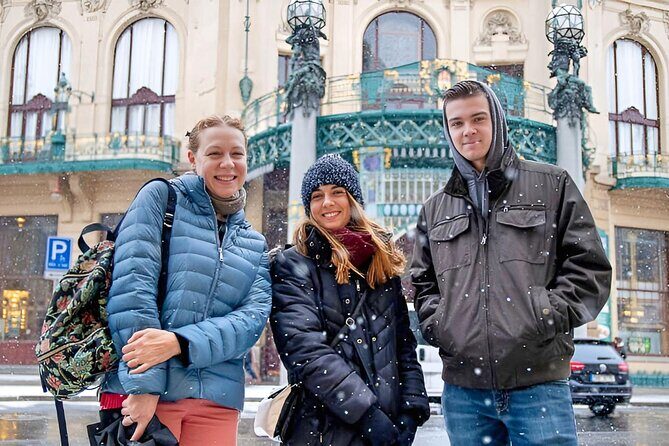
- Private historian guide who ties buildings to stories you can remember
- Old Town to New Town route with politics, religion, and everyday life threaded together
- Jewish Quarter focus via Parizska Street and the wider ghetto story
- Big-name sights plus thoughtful contrasts like Týn Church versus nearby Baroque landmarks
- Photo-worthy Prague Castle views near the river to close out your walk
- Up to 10 people per group keeps it social, but still manageable for questions
What makes this Prague walking tour feel different
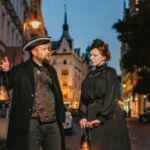
This isn’t a checklist tour that races past Prague like a slideshow. The private format matters. When you’re with one historian guide, you can slow down when something grabs you, and speed up when you’re already getting it. That’s the difference between hearing facts and actually understanding why a place looks the way it does.
I also like the way the route is built for context. You’re not just looking at pretty Gothic towers. You’re getting the story behind them—how Prague grew, changed hands, and rewrote its religious and political identity over centuries. The pace is built for questions, not for silence.
Practical stuff is handled too. You’ll meet at a local café in central Old Town (near Old Town Square), and you’ll end near Wenceslas Square. There’s a mobile ticket, the tour is private for your group only, and there’s a choice of morning or afternoon departure. Pickup is offered, but hotel pickup/drop-off isn’t included, so treat that as something to confirm for your exact starting point.
You can also read our reviews of more walking tours in Prague
Meeting point at Malá Strana café: the smart way to start
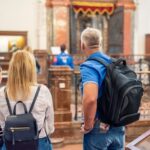
Your start is at MONDIEUM at Maltézské nám. 480, Malá Strana. Malá Strana puts you close to the older layers of the city, and it’s a good place to begin if you want Prague’s history to feel layered rather than random.
The guide meeting at a café is more than a nice touch. It helps you settle before you start walking, and it gives you a clean moment to align on what you care about. If your interests lean toward religion, politics, architecture, or Jewish history, this is the part where you can set that tone—without slowing the tour down later.
Old Town Hall and the Astronomical Clock: what to look for
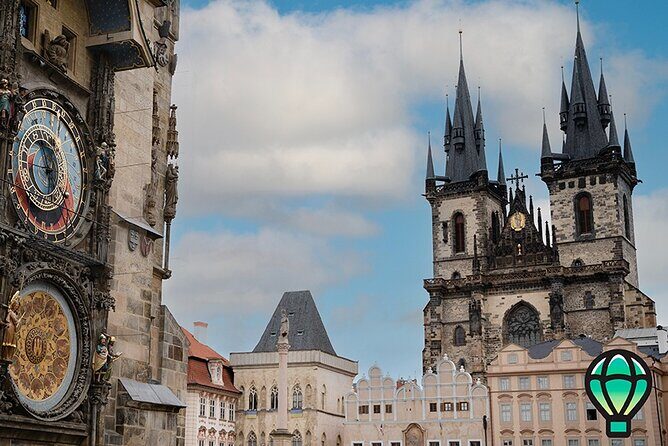
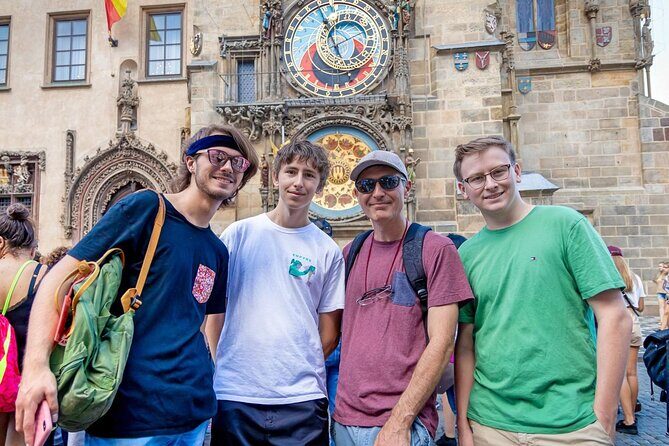
Your first stop focuses on the Old Town Hall and the Astronomical Clock. This is one of those Prague icons where the surface is famous, but the meaning is the real payoff. Your guide’s job here is to decode the symbolism: what the clock represents, why it mattered in its time, and how city power showed up in public space.
Even if you’ve seen photos online, I’d still treat this stop like a mini lesson. The clock is not just a machine. It’s a message. You’ll spend about 15 minutes here, and the tour plan notes free admission for this stop, which keeps your budget calmer.
Church of Our Lady before Týn: Gothic drama, explained
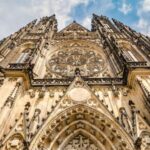
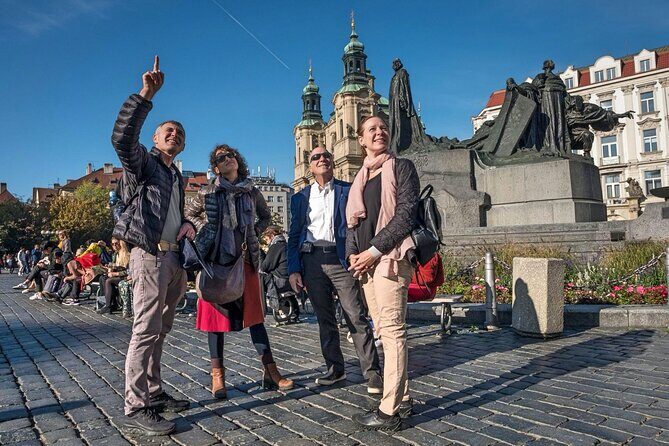
Next comes Church of Our Lady before Týn, with its late-Gothic look and a strong sense of presence in the square. What I like about this stop is the comparison angle: the tour explicitly contrasts the Gothic character of Týn Church with St. Nicholas’ Church across the square.
Why that matters: architecture is political and cultural. When Prague’s different styles sit close together, you can see how tastes, faith, and power shifted over time. This is also an easy stop to enjoy without needing tickets—just take in the exterior details and let your guide translate what you’re seeing.
Old Town Square: the marketplace that grew into power
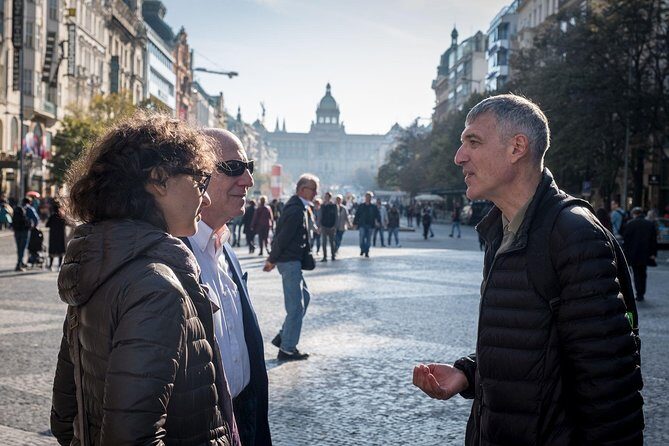
Then you’re back in the center of gravity: Old Town Square. The tour frames it as a 1000-year-old space tied to politics and architecture. That’s a big claim, but it’s also the point. Here, you learn how the city’s market life turned into public influence.
This stop is about learning to read a place. You’ll spend around 15 minutes, and the goal is to connect what you see now with how the square functioned when Prague was still building its identity. If you like history that feels grounded in daily life, this is where it starts to click.
You can also read our reviews of more private tours in Prague


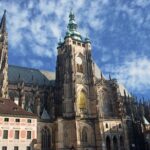
Charles Bridge: why this 600-year-old route still matters
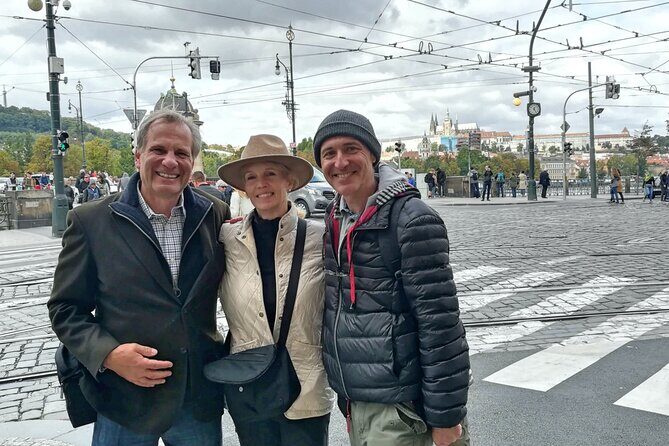
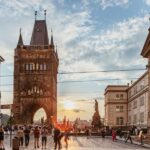
You’ll reach Charles Bridge, and the tour frames it as a 600+ year Gothic bridge lined with Baroque statues of saints. This is more than a pretty walk. The bridge played a unique role in Prague’s development, acting like a physical link between communities and ideas.
If you’re taking photos, this is one of your best chances to get a classic Prague angle while also understanding why the bridge became so central. The tour plans about 15 minutes here, and it’s a smart length: long enough for the story, not so long that you’re stuck in bridge traffic wishing you’d chosen a slower day.
Bethlehem Chapel and Jan Hus: Reformation ideas in a small space
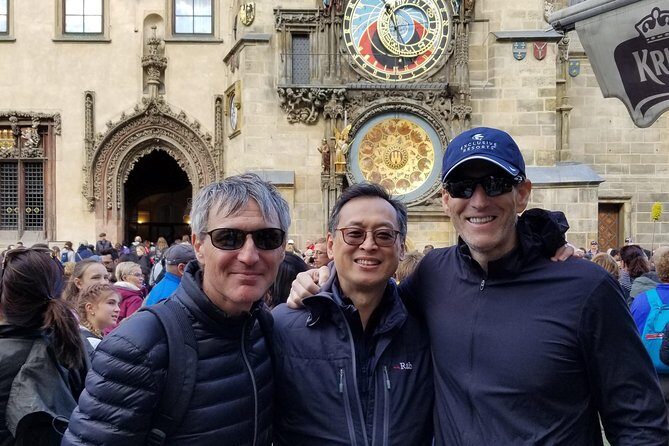
The tour continues with Bethlehem Chapel, where Jan Hus comes into focus and the story connects him to the Reformation era and the broader shifts in Christianity. This is the kind of stop that changes how you see other places later in the walk, because it anchors a major turning point in a specific Prague context.
You’ll likely spend about 10 minutes here, with the tour plan listing free admission. Even at that short time, the guide can help you place Hus in the bigger chain of events—how conflict grew, how reform ideas spread, and why Prague became a focal point in European religious change.
St. Giles Church: religious wars in Baroque form
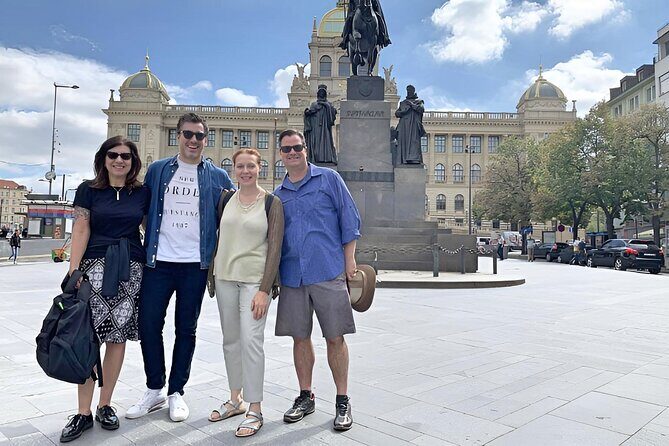
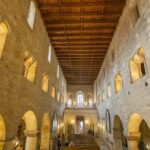
At St. Giles Church, the tour points out how the Baroque interior decoration reflects Czech religious wars, plus the Reformation and the Counter-Reformation. I like this stop because it’s not just about style. It’s about why style changes when belief and politics collide.
Baroque decoration can look dramatic on its own, but your guide’s job is to connect drama to intent—how art and architecture were used to communicate authority, comfort, or power. You’ll spend about 10 minutes here, and the plan notes free admission for this stop as well.
New Town (Nové Město): when Prague wanted to be an empire center
Next up is Nové Město (New Town). The tour frames it as 600+ years old, with a relationship to Prague becoming the capital of the Holy Roman Empire. This helps you understand why the city’s plan and prestige shifted. Prague wasn’t only growing; it was aiming higher.
This stop is about “why here?” thinking. You spend around 15 minutes, and the value is learning how New Town differs from Old Town in purpose and identity. If you’ve ever wondered why some parts of Prague feel more official and outward-looking, this is where you get the answer.
Wenceslas Square and Theatre des Etats: Mozart, Enlightenment, and public life
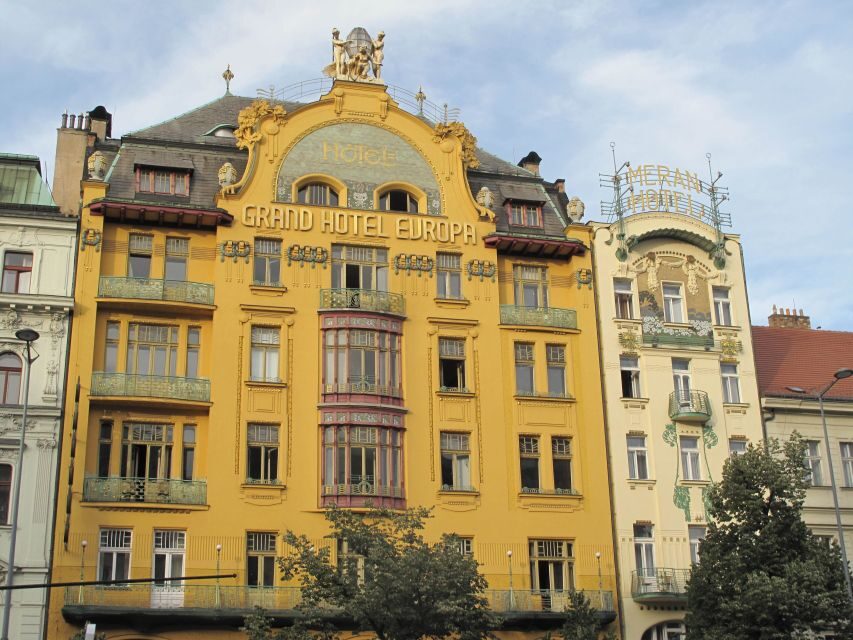
Then comes Václavské náměstí (Wenceslas Square), where the guide puts the square’s history in the wider context of Prague and the Czech Republic. This is where your tour stops feeling like pure architecture and becomes about public life—how the city’s big stages shaped national identity.
From there, you’ll visit Theatre des Etats and hear about Mozart’s relationship to Prague and the Age of Enlightenment. You won’t get a long lecture, but you will get the key idea: art and politics share the same streets. In Prague, culture often isn’t decoration. It’s part of the machinery of society.
St. Nicholas Church and the story of religious reversals
Back to architecture, and back to religion. St. Nicholas Church is part of the walk for a reason: the tour connects it to Baroque and Gothic architecture and to the idea of religious reversals of fortune in the Czech lands.
This kind of stop is useful if you don’t want to treat Prague’s churches as separate postcards. You’ll start to see them as signals—of who held influence at different times and what that influence tried to communicate through design.
The plan lists about 10 minutes here with free admission.
Jan Hus Monument: why one person mattered
The Jan Hus Monument stop centers on his revolutionary role in the development of European Christianity and how it connects to the history of the Czech lands. This is a quick stop—around 10 minutes—but it’s meant to “lock in” a major theme: Prague’s history isn’t only about rulers. It’s also about ideas that refused to stay contained.
Even if you already know the name, the guide’s framing helps you connect Hus to the larger European story, not just Czech timelines.
Parizska Street and the Jewish Ghetto story in plain sight
Then comes Parizska Street, where the tour focuses on the history of the Jewish Ghetto of Prague and the destruction tied to it. This is not a vague stop. It’s included as a key part of the route that ties the Jewish Quarter into the larger city narrative.
I appreciate that this is handled as part of the same walk, not as an optional side excursion. You learn to connect everyday city geography to the past—where communities lived, how space changed, and how remembering fits into the present streets.
The stop is short at about 10 minutes, with free admission noted.
Franz Kafka’s rotating statue: modern art meets old memory
The tour includes the Franz Kafka Statue, the kinetic, revolving bust that resembles Kafka. It’s credited to Czech artist David Černý, and the tour plan says it’s included. This is a clever ending note because Kafka represents modern Prague in a way that feels immediate, even after centuries of older political and religious shifts.
It’s also a relief from standing still. You get movement, a quick photo moment, and a final mental reset before the walk concludes.
Finishing near the Vltava River: Prague Castle views that actually work
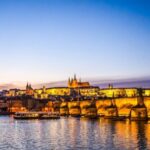
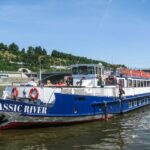
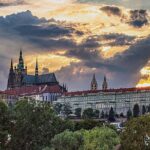
Near the end, the tour finishes on the banks of the Vltava River, where you’ll get photo-worthy views of Prague Castle. This is a practical wrap-up. Walking all day through dense Old Town streets can make the city feel flat or crowded. The river gives you space, scale, and perspective.
Then the tour ties off around Václavské náměstí (your end meeting point is listed near Václavské nám. 772/2, Můstek). That matters because it puts you near a lot of tram and metro connections, plus it’s a convenient launching pad for dinner plans.
Price and value for a private group of up to 10
The price is $367.61 per group (up to 10) and the tour runs about 3 hours. That pricing model can feel pricey at first glance—until you do the math for your group size.
- If you’re booking as a couple, it’s roughly $184 per person (based on 2 people).
- If you can fill a family group of 4, it drops to around $92 per person.
- If you truly have a group near 10, it becomes about $37 per person.
Here’s the value logic: you’re paying for a single historian guide and a private Q&A format. If you want a fast orientation plus deeper context—especially around religion, politics, and Jewish history—the private setup is what justifies the cost. If you’d rather wander independently and only need a few landmark photos, a cheaper group tour may suit you better.
Who this Prague tour suits best
This is a strong match if:
- You’re in Prague for a short time and want your first-day context done right.
- You like history that connects buildings to power, conflict, and identity.
- You have a mixed-age group and want someone to keep the pace lively while still making things make sense.
- You care about Prague’s Jewish history and want it placed directly into the city story—not stuck at the end like an afterthought.
It also works well if your group includes students or people doing research, because the format makes it easier to ask specific questions and steer the conversation.
Should you book this private Prague introduction walk?
If you want Prague to feel organized instead of overwhelming, I’d book it. The private historian guide format, the Old Town plus New Town sweep, and the Jewish Quarter emphasis make this more than a sightseeing walk.
I’d think twice only if you hate walking in crowds or you’re very sensitive to stepping into crowded squares and bridges. Also, because it’s a short, dense route, it helps to arrive ready to focus. Bring water, wear comfortable shoes, and treat it like an active lecture with great visuals.
FAQ
How long is the private Prague introduction walking tour?
The tour is approximately 3 hours.
How many people can be in the group for this private tour?
It’s a private group experience for up to 10 people.
Where does the tour start?
The tour starts at MONDIEUM, Maltézské nám. 480, Malá Strana.
Where does the tour end?
The tour ends near Václavské nám. 772/2, Můstek.
Are there morning and afternoon departures?
Yes. You can choose a morning or afternoon departure when booking.
Is a historian guide included?
Yes. A historian guide is included.
Is hotel pickup or drop-off included?
Hotel pickup and drop-off are not included, though pickup is offered.
Do I need a ticket for the stops?
The tour plan lists free admission tickets for the listed stops, and the Kafka statue is noted as included.
Is food or drinks included?
No. Food and drinks are not included unless specified.
Can I cancel for a full refund?
Yes. You can cancel up to 24 hours in advance of the experience start time for a full refund.