REVIEW · PRAGUE
From Prague: Terezin Concentration Camp Private Tour
Book on GetYourGuide →Operated by Private Prague Guide Day Tours · Bookable on GetYourGuide
History here is heavy, but clear. This private tour takes you out of Prague to Terezín, a former garrison town turned Nazi prison and ghetto-transit hub, where you’ll walk the same kinds of spaces that held tens of thousands of prisoners. I like that your driver-guide doesn’t just recite dates; they explain what changed over time, from the Minor Fortress police prison to the later deportation system.
I also like the way the tour uses multiple stops to build the story piece by piece, from the Terezín Ghetto Museum to the Small Fortress and Big Fortress, then on to the cemetery and crematorium area. One possible drawback: this is an emotionally intense day, and you’ll be walking through sites connected to suffering and death, so it helps to be mentally ready.
If you want a private setup, an English-speaking guide, and a route that you can slightly shape to your pace, this is a strong way to do Terezín without getting lost in details on your own.
In This Review
- Key things that make this tour work
- From Prague to Terezín: the drive and the tone
- Terezín Ghetto Museum: the story before the grounds
- The Small Fortress: prison spaces you can feel
- The Big Fortress: the larger machinery of a ghetto-transit camp
- Crematorium and Jewish Cemetery: the final stop that changes how you remember
- The guided pacing: why private matters at Terezín
- How value stacks up: $459 per group and the extra entrance fee
- What you learn (and what to listen for)
- Who should book this tour
- Should you book Terezín from Prague with a private guide?
- FAQ
- How long is the tour from Prague?
- Is pickup and drop-off included?
- What’s included in the price?
- What entrance fees should I plan for?
- What does the tour cover at the memorial?
- Is the tour private?
- What language is the guide?
- What should I bring?
Key things that make this tour work
- A private day from Prague: pickup in Prague, round-trip van time built in, and one focused group.
- Small Fortress + Big Fortress in one go: you don’t have to choose between the prison side and the larger camp grounds.
- Ghetto Museum + an educational film: you get both exhibits and guided context before walking the grounds.
- Cemetery and crematorium stop: a respectful, necessary part of the bigger picture.
- Guides often connected to survivor stories: you’ll hear accounts that add human scale to the numbers.
- Price includes your guide and transport: the main extra cost is the on-site entrance fee.
From Prague to Terezín: the drive and the tone
You’ll start with hotel or apartment pickup in Prague, and then you head out by van with your driver-guide. The trip takes about an hour each way, so even though the tour is listed at 6 hours, you’re really spending most of your day in a single, uninterrupted arc: arrive, learn, walk, then return.
That matters because Terezín isn’t one simple monument you can zip through. It’s a place where the history is layered: the Habsburg-era fortress, the wartime prison, and then the Nazi reorganization into a ghetto-transit camp. The change in purpose is part of the lesson, and the long drive gives you time to shift from sightseeing mode to something more serious.
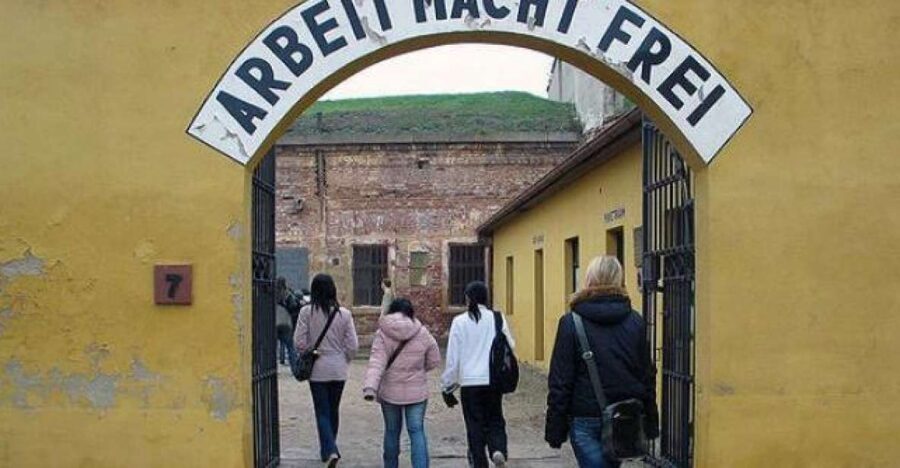
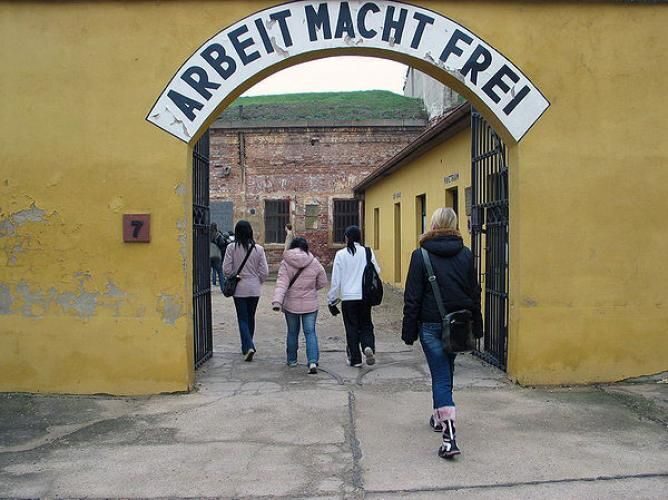
When you enter the main area, you’ll see the gate message ARBEIT MACHT FREI (Work sets one free). It’s the kind of bitter sign that makes you feel how propaganda can be built into a physical place. You’ll get the right context for that rather than treating it as just a grim photo spot.
You can also read our reviews of more private tours in Prague



Terezín Ghetto Museum: the story before the grounds
The first main stop once you arrive is the Terezín Memorial – Ghetto Museum, guided for about an hour. This is where the day gets organized for you. Instead of bouncing between buildings, you’re given a framework for what you’re about to see.
You’ll learn how Terezín began as a military fortress and garrison town, originally built by the Habsburg Monarchy as a stronghold against threats from the north. Then the focus turns sharply to World War II: in 1940, Prague’s Gestapo installed the Minor Fortress police prison. You’ll also hear the scale of the prison experience—about 32,000 prisoners passed through the Minor Fortress between 1940 and 1945, and roughly 2,500 were killed through hunger, disease, abuse by guards, and executions.
This museum-style grounding helps on the walking portion later. Without it, the grounds can feel like “a lot of buildings.” With it, you start to connect specific spaces to specific functions in the Nazi system.
Your guide also shows an educational movie, which is helpful if you want something steady and chronological before you move into the darker, more physically stark areas.
The Small Fortress: prison spaces you can feel
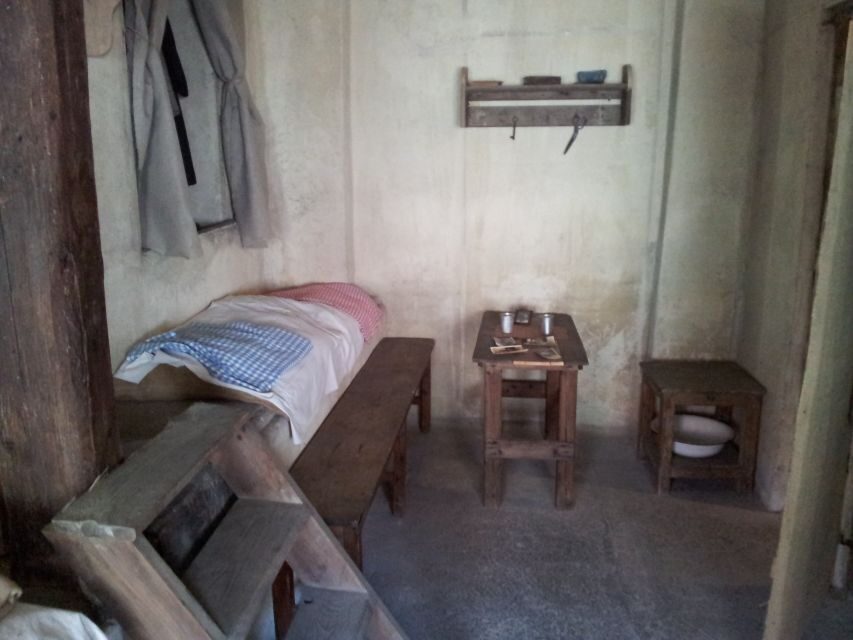
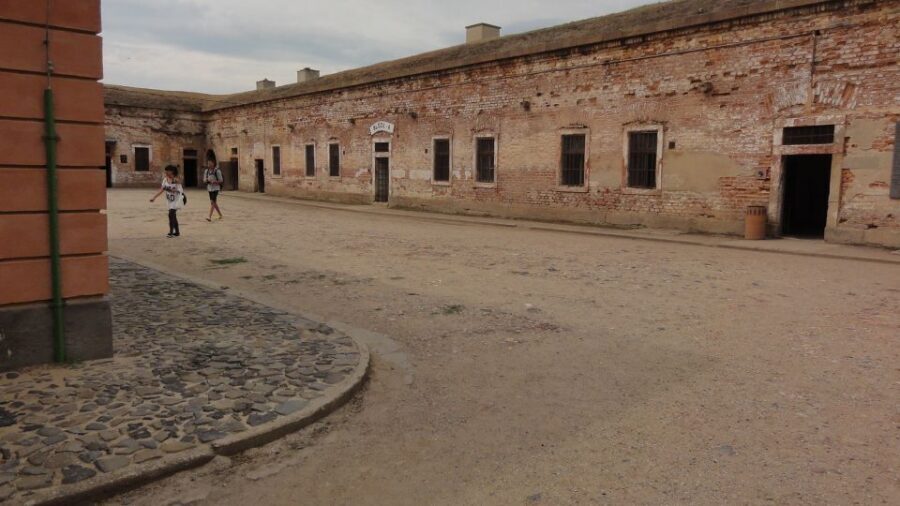
Next comes the area often described as the Small Fortress. This portion is typically the part that makes people pause, because you’re moving through the prison-like world of cells, restrictions, and executions.
You can expect to walk through barracks and areas linked to punishment and confinement: execution grounds, workshops, and isolation cells. The guide’s job here is crucial. You don’t want only images; you need explanation for how the prison operated and what the daily reality looked like.
It’s also where the numbers start to land in your head as something human-scale. If you focus only on the death tolls, you miss the point that the system was designed to break people slowly and then remove them. Your guide should help you see that the process was intentional, not accidental.
The Big Fortress: the larger machinery of a ghetto-transit camp
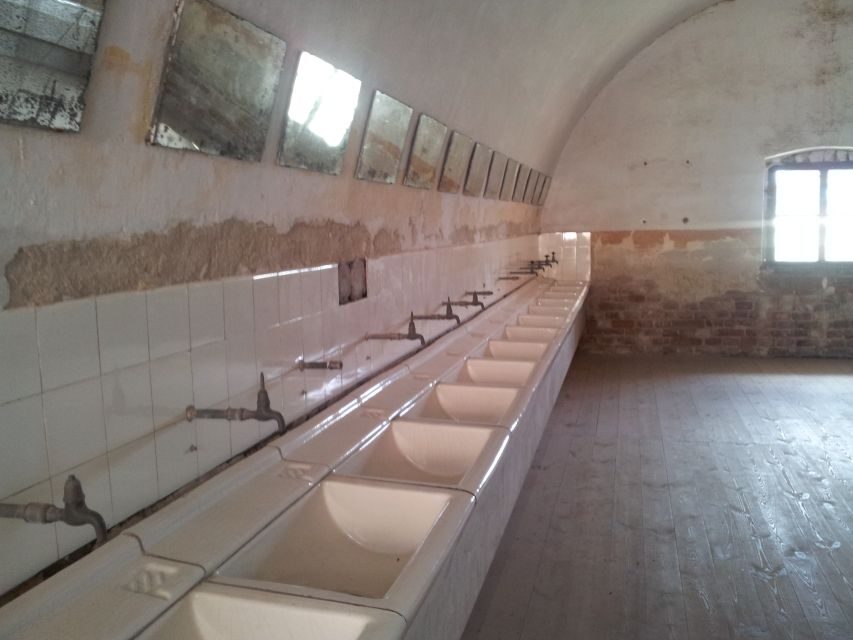
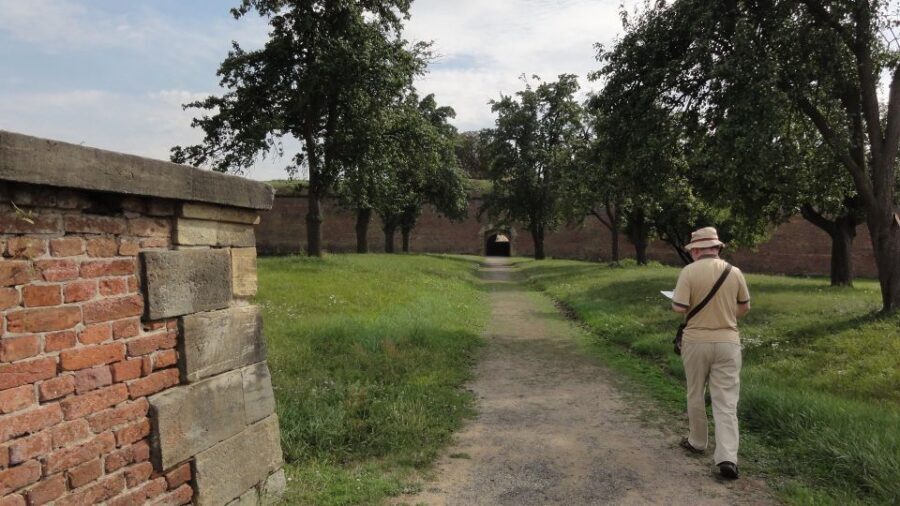
After the Small Fortress, you’ll spend time at the Theresienstadt concentration camp grounds, including the broader Big Fortress area. This isn’t just a change in scenery; it’s a change in the way the site functioned.
In 1941, the Nazis transformed the town into a Jewish ghetto-transit camp. From there until the end of the war, more than 150,000 deportees passed through, and about 35,000 of them died there. Those figures are large, and your guide will help you interpret them without turning the day into a statistics exercise.
One of the most important things you’ll get from this section is the idea of Terezín as a transit system—where deportation was a central mechanism. That can feel counterintuitive if your mental picture of concentration camps is only “captivity.” Here, it’s also about being processed, moved, and controlled as part of a larger plan.
Crematorium and Jewish Cemetery: the final stop that changes how you remember
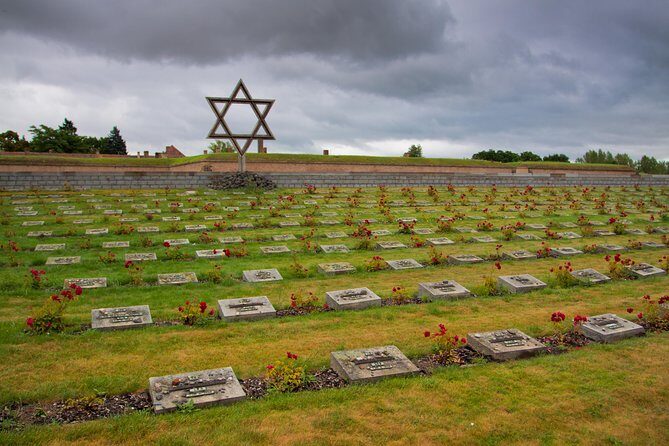
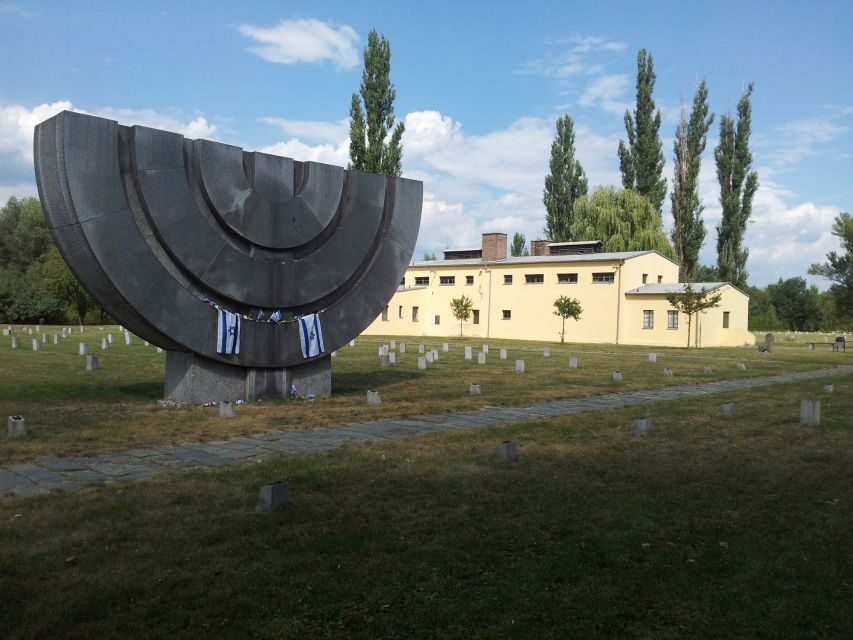
Later in the day, you’ll visit the Crematorium and Jewish Cemetery area as part of the memorial complex. This stop is shorter—about 30 minutes—but it has a different weight than the earlier museum and fortress walking.
This is where the day stops being about understanding the system and becomes more about honoring the people affected. You’ll learn what the memorial spaces mean, and you’ll also see how the cemetery and related sites fit into the overall remembrance of Terezín.
For me, the cemetery stop is often what makes the history feel real in a non-graphic way. It’s not just about what was done; it’s about what remains as a duty to remember.



The guided pacing: why private matters at Terezín
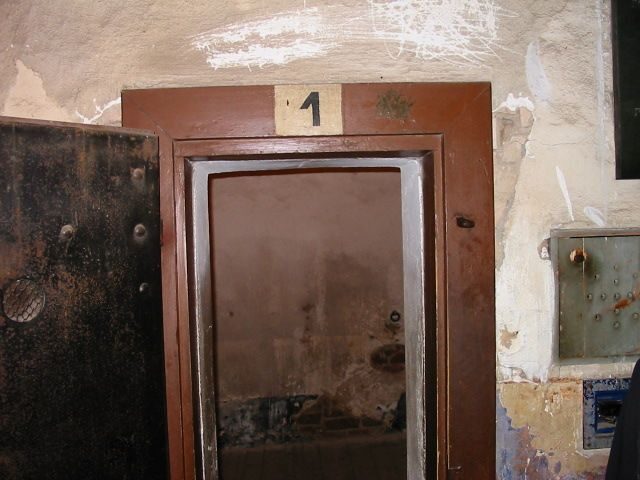
This is a private group tour, which changes the feel. In a small group, your guide can answer questions as they come up, and you aren’t stuck with the pace of strangers who need to keep moving for the next bus. The tour is designed for English-speaking guests, and the guide’s style can vary, which is a real factor at a place like this.
From Prague Guide Day Tours, guides you might be assigned include George, and there are accounts of guides like Natalia, Michaela, and Prem bringing different strengths: survivor-focused storytelling, strong historical context, and careful pacing. Even if you get a different guide, the format stays the same—guided explanations where you’re standing, not just facts rattled off from afar.
One practical note: the tour includes walking around the memorial sites. Bring a mindset for a serious walking day, not casual strolling. If you tend to run warm, dress accordingly; if you get chilled indoors, plan a layer for museum spaces.
How value stacks up: $459 per group and the extra entrance fee
The price is $459 per group up to 3 passengers for about 6 hours total. That’s not cheap, but at Terezín it can feel fair because you’re paying for a full guided day plus transportation from Prague, and you’re not sharing the experience with a large crowd.
The important budgeting detail is the on-site entrance fee: 310 CZK (about 13 EUR) per person, which isn’t included. So the real cost depends on how many people are in your group, but you’ll likely find this still pencils out well for a family or small group who want private attention.
Also, the tour includes a charitable contribution, which you’re not just paying for as a checkbox. It supports the kind of educational and memorial work that keeps places like this meaningful rather than purely commercial.
What you learn (and what to listen for)
Terezín can become a blur if you only remember the broad timeline. What makes the guided approach worthwhile is hearing the key transitions explained clearly:
- How the fortress started as a Habsburg-era stronghold, then became a prison system under Nazi control.
- How the Minor Fortress functioned and why it’s different from the larger grounds.
- How the ghetto-transit setup turned the town into part of a deportation pipeline.
- How liberation happened in a matter of days once the war turned—Russian forces liberated Terezín on May 10, 1945, eight days after Berlin fell.
Your guide’s best contributions are usually the ones that connect your feet on the ground to what those buildings were used for. When you hear survivor-oriented stories—shared with care and often in a quiet, deliberate tone—it tends to make the day stop feeling abstract.
Who should book this tour
This private tour is a good fit if you:
- Want to cover Small Fortress and Big Fortress in one structured day.
- Prefer a guided narrative rather than piecing things together solo.
- Care about context—especially the way Terezín shifts from fortress to prison to transit camp.
It’s also a solid choice if you’re traveling with one or two companions and you want the flexibility to match your pacing. The tour is described as allowing adjustments based on preferences, which matters when you hit a space you want to linger in.
If you’re the type who needs constant breaks, this might be harder. The day is packed with guided stops, and the overall subject matter is emotionally heavy.
Should you book Terezín from Prague with a private guide?
Yes—if you want a guided, well-paced way to understand Terezín’s full wartime story without getting bogged down in facts by yourself. For the price, you’re buying three things that matter at this site: transport from Prague, focused time with a live English-speaking guide, and a route that covers both fortresses plus the museum and cemetery.
Just go in prepared for intensity. This isn’t the kind of day where you can treat history like entertainment. It’s the kind of day where a careful guide makes the difference between seeing buildings and understanding what happened inside them.
FAQ
How long is the tour from Prague?
The total duration is 6 hours, including pickup in Prague and travel time.
Is pickup and drop-off included?
Yes. The driver-guide picks you up at your hotel reception or at the entrance to your apartment building in Prague, and returns you to Prague afterward.
What’s included in the price?
Included are the driver-guide, private transport (car up to 3 passengers or van up to 7 passengers), pickup and drop-off, guided walking/driving tour of Terezin, and a charitable contribution.
What entrance fees should I plan for?
An entrance fee of 310 CZK (about 13 EUR) per person is not included in the tour price.
What does the tour cover at the memorial?
You’ll visit the Terezín Memorial – Ghetto Museum, the Theresienstadt concentration camp area, and the Terezín Memorial area with the crematorium and Jewish Cemetery, plus additional guided time at the memorial grounds.
Is the tour private?
Yes. It’s a private group experience.
What language is the guide?
The live tour guide speaks English.
What should I bring?
Bring a passport or ID card.