REVIEW · PRAGUE
Communism and its fall Prague private tour
Book on Viator →Operated by Jana Neubergova Private Tour Guide · Bookable on Viator
A lot can fit into two hours. This private walk through Prague’s communist era connects big landmarks with street-level moments, and it does it with Jana Neubergova, a licensed guide and a firsthand witness to the November 1989 protests. I especially like how the tour is paced for clarity, and how you get both landmark context and personal perspective.
There’s just one thing to consider: this is a walking-focused experience, and some sites you’ll pass (like the National Theatre) have admissions not included, so plan for that if you want to go inside.
What really makes this tour worth your time is the way it links history to place—Wenceslas Square, Narodni Street, and the memorial space for victims of communism. You’ll cover the highlights fast, but you’ll still get meaning, not a rushed checklist. If you want private transportation bundled in, you’ll need to arrange that separately, since the tour does not include it.
In This Review
- Key highlights you’ll actually feel on this walk
- Two hours that make Prague’s communist story make sense
- Starting off right: Czech intellectuals and your first orientation
- National Theatre: identity, culture, and public stakes
- Narodni Street and the Velvet Revolution spark
- Lucerna Arcade: a social and cultural center tied to Havel
- Wenceslas Monument and Wenceslas Square: public demonstrations, still alive
- Memorial to the Victims of Communism: a free, necessary pause
- What’s included for $85: the value check
- Who this tour is best for (and who should skip it)
- Timing and pacing: how to fit it into your Prague day
- Should you book Communism and its fall Prague private tour?
- FAQ
- How long is the Communism and its fall Prague private tour?
- What does the tour cost?
- Is the tour private?
- Are admissions included for the stops?
- What language is the tour offered in?
- Is pickup available?
- What is the cancellation policy?
Key highlights you’ll actually feel on this walk
- A guide with real ties to the events: Jana worked in Vaclav Havel’s office shortly after the Velvet Revolution and participated in the November 1989 demonstrations
- Street-level history, not just monuments: Narodni Street is treated as a starting point for the Velvet Revolution story
- Stop-by-stop interpretation: you’ll connect the National Theatre’s role in history to the broader civic push
- Places linked to Havel: Lucerna Arcade is highlighted as a social and cultural center tied to his family
- A final reflective stop: the Memorial to the Victims of Communism is free to visit and created by sculptor Olbram Zoubek
Two hours that make Prague’s communist story make sense
Prague can feel like a museum—beautiful, clean, and full of layers. This tour is different. Instead of treating the city like a backdrop, it treats Prague like an evidence board: buildings, squares, and streets that held arguments, pressure, hope, and grief.
You’ll start with a guided introduction and then move through key sites that connect to the fall of communism. The experience runs about 2 hours, and because it’s a private tour (only your group), you’re not stuck with awkward pacing or listening through a crowd. Pricing is $85 per person, which is easier to justify when you remember what you’re buying: a professional, fully licensed guide plus focused interpretation in English.
The biggest value comes from Jana’s angle. Her background adds texture you can’t get from a plaque. She brings context about what people were thinking, why public spaces mattered, and how demonstrations changed the rhythm of daily life.
You can also read our reviews of more private tours in Prague

Starting off right: Czech intellectuals and your first orientation
The tour begins around a meeting point tied to Czech intellectuals, and that start matters more than it sounds. Before you hit the monuments, Jana helps you frame what you’re going to see: Prague wasn’t only about leaders and official speeches. It was also about ideas, cultural spaces, and ordinary people gathering in public.
This is also where you’ll get oriented about the route’s logic. You’re not just walking from one landmark to another; you’re walking through a timeline. That makes the later stops easier to read, especially at places where multiple historical meanings overlap.
And if you’re joining from a hotel, you can get on-foot pickup from all Prague hotels. That’s handy in a city where you might otherwise lose time figuring out where to meet. You’ll also find the tour near public transportation, which gives you a backup plan if pickup doesn’t work out.
National Theatre: identity, culture, and public stakes
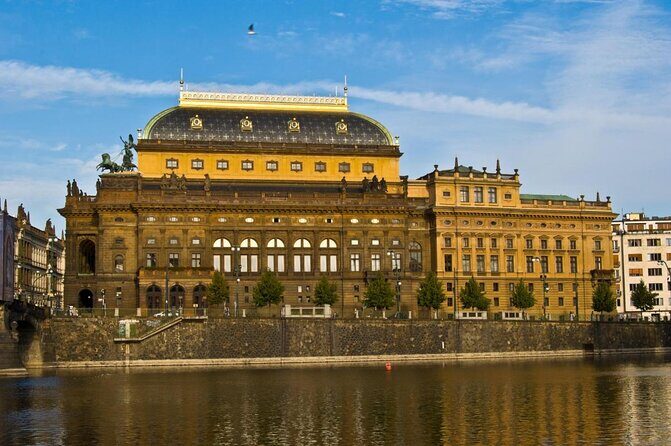
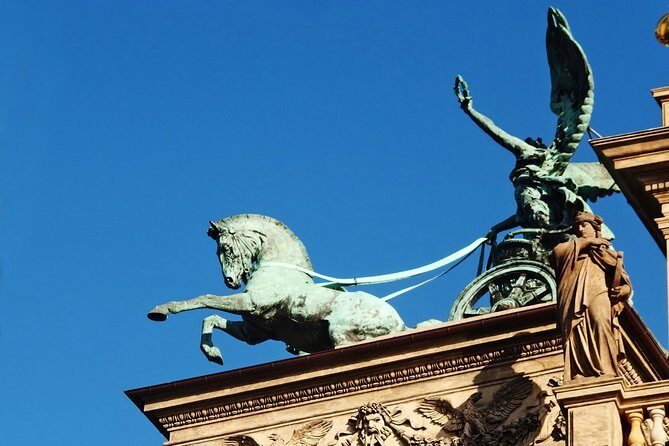
Your first major landmark stop is the National Theatre. It’s described as a theatre that played an important role in history, and that’s a useful way to approach it on the walk: don’t just look at a pretty building. Look at it as a cultural symbol—one of those places where art and public life can merge.
From a practical standpoint, the stop is short (about 10 minutes). That means you’ll get a clear explanation without the detour time that comes with longer theatre visits. The tour notes that an admission ticket isn’t included, so if you plan to go inside, set aside extra time and budget.
The real takeaway here is how a cultural institution can become part of political atmosphere. Even if you only watch from the outside, you’ll understand why places like this matter when people start pushing for change.
Narodni Street and the Velvet Revolution spark
Then you move to Narodni Street, the street where the Velvet Revolution started. This is one of the most emotionally charged stops on the route—not because the street is dramatic in itself, but because it’s treated as an origin point.
Expect about 15 minutes here. That’s enough time to connect the location to the moment, without turning it into a long stop where you lose the thread. Jana’s personal perspective adds weight. She’s the kind of guide who can explain why people chose certain streets and why the idea of public demonstration felt urgent.
If you love history that comes with a clear timeline, this stop is a key payoff. It helps you answer a simple question: where exactly does the story begin when you’re standing on it?
Lucerna Arcade: a social and cultural center tied to Havel
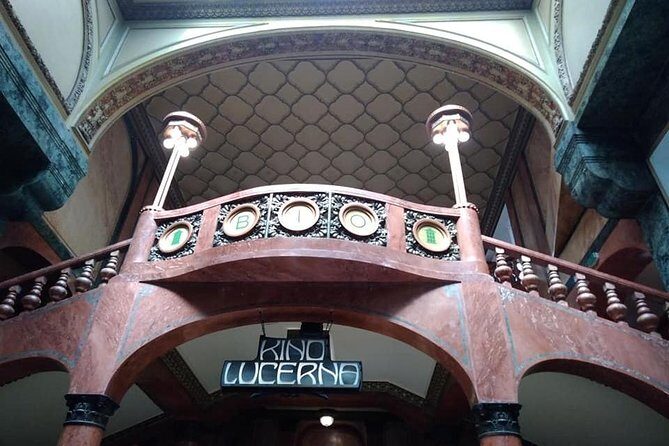
Next is Lucerna Arcade, highlighted as an important culture and social centre founded by Vaclav Havel’s family. This stop adds a different texture to the story. After the revolution’s spark, you get the cultural-social angle: where people gather, talk, and build momentum.
You’ll spend about 10 minutes here. The stop is short, but the point isn’t to exhaust every corner of the arcade. It’s to show you why social spaces matter during political pressure. When public life is restricted, cultural and gathering places can become more than entertainment—they can become meeting rooms for ideas.
Lucerna Arcade also gives you a break from the largest squares. It’s a place to mentally switch gears and think about civic change as something that doesn’t happen only on stages or in government buildings. It happens where people can talk.


Wenceslas Monument and Wenceslas Square: public demonstrations, still alive
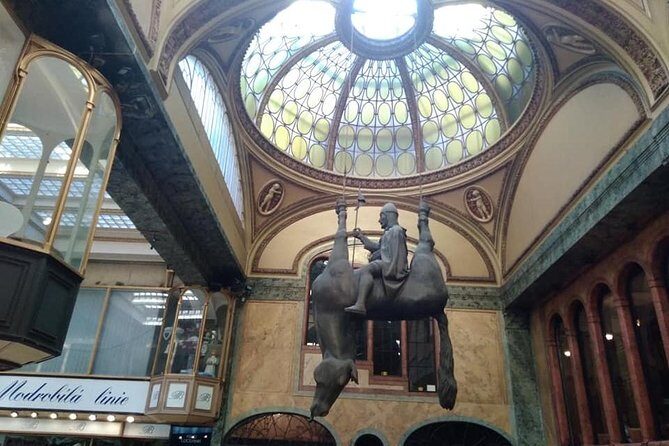
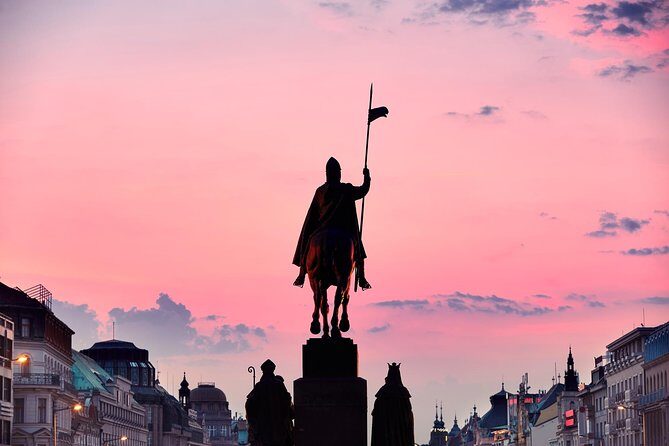
The walk continues to Wenceslas Monument at Wenceslas Square, described as the heart of Prague and the place where demonstrations are held. This stop is about 20 minutes, so you’ll have time to really look, not just pass by.
Here’s what I like about this portion: it connects the past to the present without pretending the world hasn’t changed. You’re reminded that demonstrations aren’t only historical events. They’re also part of how societies express demands.
Also, Jana’s kind of guide helps you see scale. Wenceslas Square is big enough to feel like a stage, and that helps you understand why it could become central during political upheaval. You’ll leave this stop with a more grounded sense of how geography influences collective action.
Memorial to the Victims of Communism: a free, necessary pause
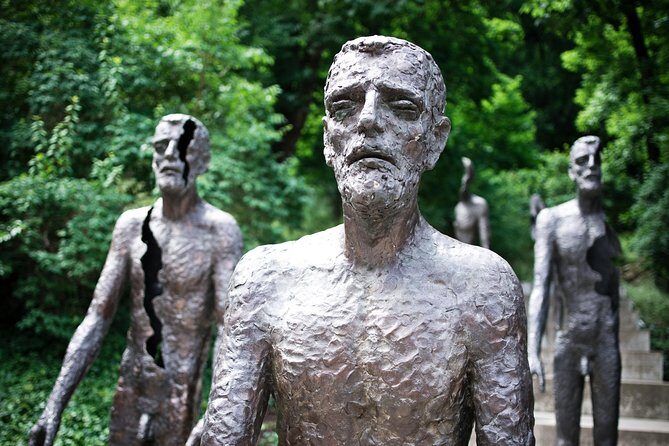
The final stop is the Memorial to the Victims of Communism. It’s free, and it’s created by sculptor Olbram Zoubek. You’ll spend about 15 minutes here, which is the right length for a reflective stop on a tour about a heavy subject.
This is also the moment where the tour’s title stops being abstract. Communism and its fall is not only about protests and monuments. It’s about people harmed by the system, and this memorial gives you a dedicated space to acknowledge that.
Because it’s free, it’s easy to include mentally in your plan. If you’re the type of person who appreciates quiet, thoughtful stops, this is the part that usually sticks.
What’s included for $85: the value check
Let’s talk value in plain terms. At $85 per person for about 2 hours, you’re paying for three things that matter:
- A professional, fully licensed guide who can connect locations to meaning
- A free map of Prague, which you can use right after the tour to keep exploring on your own
- A private format where your group is the only group participating
On the logistics side, the tour doesn’t include private transportation, so you should expect to walk and use the city’s easy transit or pickup options. Also, admission tickets aren’t included for some stops, including the National Theatre. The memorial is free, so at least the emotional endpoint doesn’t add extra cost.
If you’re on a short Prague schedule, this tour is strong because it concentrates attention. You don’t have to do homework on every stop before you arrive. You get a guided thread you can follow.
If you’re traveling solo and want maximum flexibility, a private tour like this can be a good deal even at the per-person rate, because you’re not competing for guide time.
Who this tour is best for (and who should skip it)
This walk is best for you if you want Prague history with context and a human voice behind it. It’s especially appealing if you care about:
- the Velvet Revolution and the fall of communism through real locations
- how civic spaces like squares, theatres, and cultural centers shape events
- history told with personal memory, not just dates
You might want to pick a different kind of tour if:
- you’re only interested in light sightseeing and don’t want a heavy memorial endpoint
- you dislike walking and want fully vehicle-based logistics (since the tour does not include private transportation)
- you’re hoping admissions are fully handled—since some stops require tickets you’ll need to buy yourself
Your physical needs are listed as moderate, so wear comfortable shoes and plan for a steady pace.
Timing and pacing: how to fit it into your Prague day
With a 2-hour duration, you can slot this into either the start of a day (to set your understanding) or later as a meaning-builder after you’ve seen a bit of the city. Because several stops have short time windows, the tour is designed to deliver clarity fast.
It also runs within posted daily hours (9:00 AM–6:00 PM) during the listed operating period, with confirmation at booking time unless you’re booking close to travel. If you’re planning around other timed entries, keep buffer time for the stops where admission isn’t included.
Should you book Communism and its fall Prague private tour?
If you want Prague history that feels rooted in actual places—without turning into a dry lecture—this is a smart booking. The standout reason is Jana Neubergova: she brings a perspective tied to real demonstrations and to Vaclav Havel’s office after the revolution, plus she has perfect English and a friendly, approachable style.
Book this tour if you’d rather understand the story behind the stones and streets than simply check off attractions. Pass if you’re looking for a relaxed, minimal-walking sightseeing loop or if you don’t want a serious finale at a memorial.
FAQ
How long is the Communism and its fall Prague private tour?
It runs for about 2 hours.
What does the tour cost?
The price is $85 per person.
Is the tour private?
Yes. It’s a private tour/activity, so only your group will participate.
Are admissions included for the stops?
Admission tickets are not included for some stops such as the National Theatre. The Memorial to the Victims of Communism is free.
What language is the tour offered in?
The tour is offered in English.
Is pickup available?
Yes. On foot pickup from all Prague hotels is offered, and the tour is also near public transportation.
What is the cancellation policy?
You can cancel for free up to 24 hours in advance for a full refund. Changes inside 24 hours aren’t accepted, and cancellations less than 24 hours before the start time aren’t refunded.
If you want, tell me your travel dates and whether you prefer morning or afternoon walks, and I’ll suggest a simple Prague day plan that pairs well with this tour.