REVIEW · PRAGUE
Stories of Jewish Prague Walking Tour
Book on Viator →Operated by Insight Cities · Bookable on Viator
Prague’s Jewish Quarter tells a whole history. This 3-hour walk links medieval building stories, Renaissance Jewish leaders, and the political shockwaves that followed into Nazi and Communist eras, starting at the Old-New Synagogue. I like that the route is built for meaning, not just photos, and I like how the stop choices connect the past to what you see in the streets today.
Two things really make it click for me: the small group (max 8) that keeps the pace human, and the historian guide who can answer your questions on the spot. One possible drawback: the tour is discussion-heavy and you may still feel a bit short on practical religious how-it-works details, so if you want ritual instruction, bring that expectation with you.
In This Review
- Key highlights to look forward to
- Entering Old-New Synagogue and the 13th-century story
- Walking the Jewish Quarter: streets shaped by Mordechai Maisel
- Medieval customs and social life (without losing the big picture)
- From Empress Maria Theresa’s expulsion to the Edict of Toleration
- Nazi Germany, ethnic tension, and the road toward invasion
- Communist-era Jewish life and what’s left today
- Price and value: what you pay for, and what you don’t
- Logistics that matter: meeting point, pace, and English guide
- Who this tour suits best
- Final verdict: should you book Stories of Jewish Prague Walking Tour?
- FAQ
- Where does the Jewish Prague walking tour start?
- How long is the tour?
- Does the tour run in the morning and afternoon?
- Is the tour offered in English?
- What’s included in the price?
- Are there entrance fees?
- How big are the groups?
Key highlights to look forward to
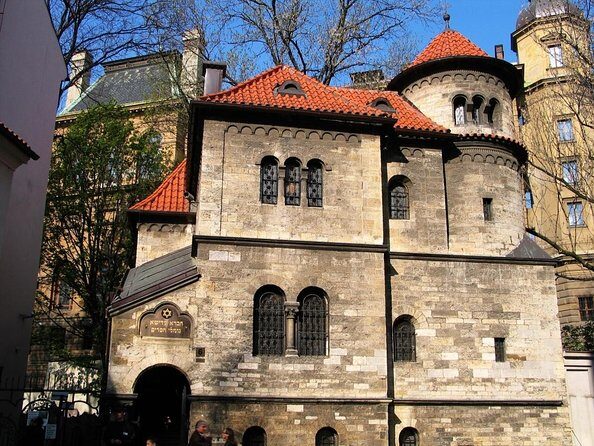
- Old-New Synagogue first: the longest functioning synagogue in Europe sets the tone right away
- A route tied to real leaders: Mordechai Maisel’s Renaissance impact shows up in the neighborhood itself
- Big turning points in plain language: Maria Theresa’s expulsion and the later Edict of Toleration explain the policy whiplash
- Wartime and later history in sequence: Nazi devastation, then Communist-era life, then today
- Max 8 people: enough questions, without the feeling of being rushed
Entering Old-New Synagogue and the 13th-century story
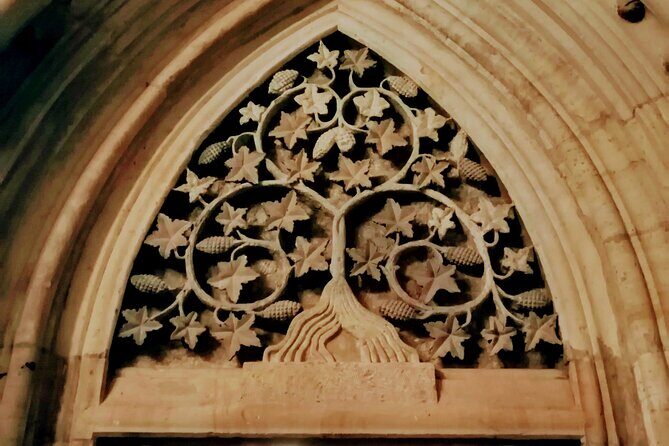
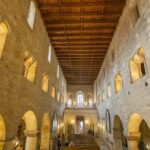
The walk starts near Josefov, at Maiselova 38/15, close to public transport. From there, the first major stop is the Old-New Synagogue, the longest functioning synagogue in Europe. Even if you’ve seen synagogue interiors in other countries, starting here matters because it anchors the whole tour in something continuous.
What makes the Old-New Synagogue especially interesting on this tour is the way the story is framed: you’re not just looking at old stone. You’re hearing about how, in the late 13th century, local Jews hired Christians to build the synagogue. That detail sounds odd at first, but it helps you understand the messy, real-world connections that shaped medieval Prague.
Practical note: you’ll need to budget for entrance. The tour price covers the historian guide, but not the entry fees to the Old-New Synagogue and the Jewish Museum (listed as 600 CZK for adults, 400 CZK for students). If you hate surprises, plan to pay on the spot or at the relevant sites.
You can also read our reviews of more walking tours in Prague


Walking the Jewish Quarter: streets shaped by Mordechai Maisel
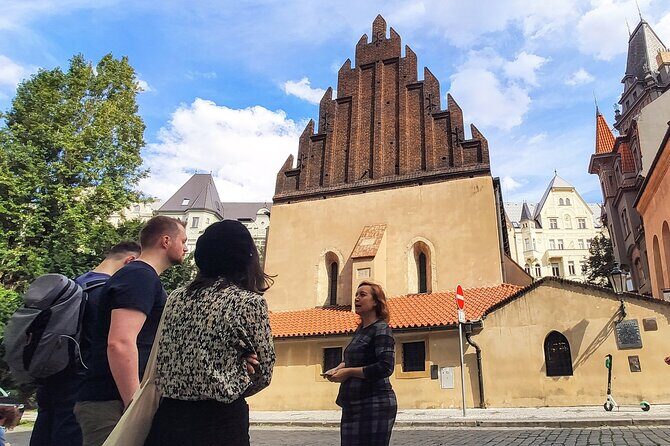
After the Old-New Synagogue, you shift into a specially designed route through the Jewish Quarter. One of the main “thread” stops is the Renaissance Town Hall associated with Mordechai Maisel, who helped lead the Jewish community during Prague’s “golden age.”
Here’s what you’re likely to get out of it: the tour doesn’t treat this era like a museum period. It explains how power, money, and civic decisions affected daily life. Mordechai Maisel is described as using his own money to pave neighborhood streets and provide charity. That’s a simple line on paper, but on the ground it helps you connect the Renaissance to the physical feel of the quarter.
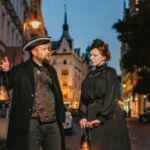
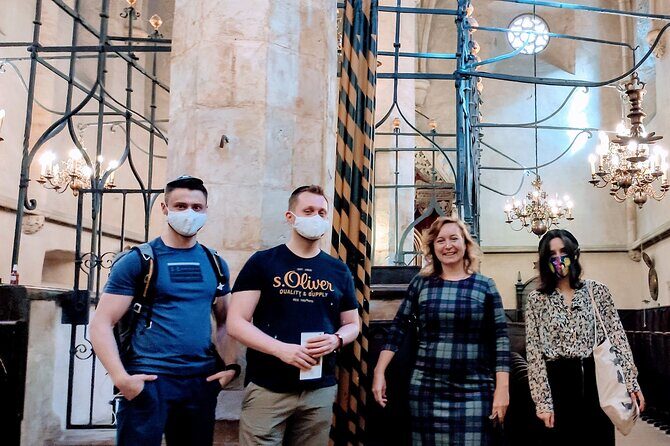
This is also where the guide’s style really matters. Several guides have been praised for making history feel personal and for keeping the story understandable. Names that came up in past departures include Martina, Petr, Katerina Prusova, and Bonita. One guest even mentioned Martina carrying a bag and umbrella, which tells you the guides often treat the tour like an attentive, human experience, not just a lecture.
Medieval customs and social life (without losing the big picture)
The medieval section isn’t just about buildings. You also learn about Jewish religious and social customs during the medieval period. That matters because Prague’s Jewish Quarter isn’t only about tragedy. It’s also about community life—work, leadership, rules, and relationships inside a city that treated Jews as both present and vulnerable.
A heads-up: one critical review noted the guide was strong on historical context but felt less detailed on Jewish religious practices and rituals. That doesn’t mean you’ll be left completely without that angle, but it does suggest the tour’s center of gravity is history and politics. If you want a step-by-step guide to religious practice, you might need to add museum time or ask your guide specifically.
From Empress Maria Theresa’s expulsion to the Edict of Toleration
Then the story turns. Empress Maria Theresa expelled the entire Jewish community, and you’re guided through what that meant and how it shifted everything. This part can hit hard, and that’s not the tour company being dramatic. It’s the history being blunt.
After that comes the reversal under her son, when the Edict of Toleration changes the rules again. The value of this sequence is that it shows you policy as the driver of human experience. You’re not only hearing about events; you’re seeing how governments could change Jewish life in a matter of decisions.
If you’re the kind of traveler who likes cause-and-effect, this is a highlight. It helps you understand why later eras feel like they arrive from the same emotional place—uncertainty, restrictions, and the constant need to adapt.
Nazi Germany, ethnic tension, and the road toward invasion
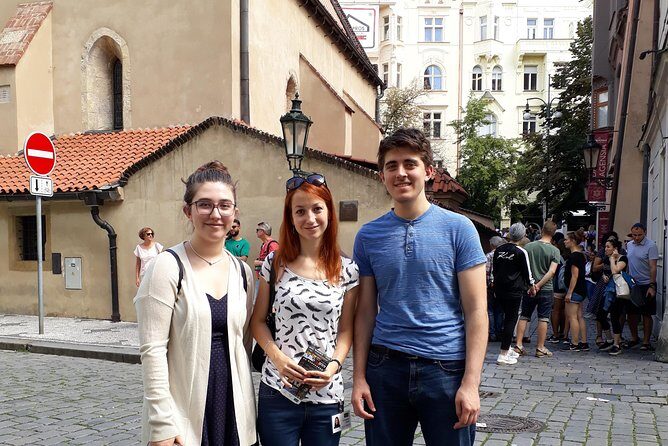
The tour continues into the Nazi years and the period leading up to Hitler’s invasion of Czechoslovakia. You learn how Nazi Germany decimated Prague’s Jews, and you also get context on local politics and ethnic tensions that preceded the invasion.
This is one of those sections where a good historian guide earns their pay. You need more than names and dates to make the streets make sense. On this route, you’re given the kind of framing that helps you look at the quarter and think: people lived here, argued here, hoped here, and lost people here.
Some departures include time around a cemetery or memorial area, and at least one guide-led experience included sobering access related to the cemetery/memorial. If that’s part of your specific walking route that day, take it slowly. This part of Prague doesn’t work as a quick photo stop. It works when you give it your attention.



Communist-era Jewish life and what’s left today
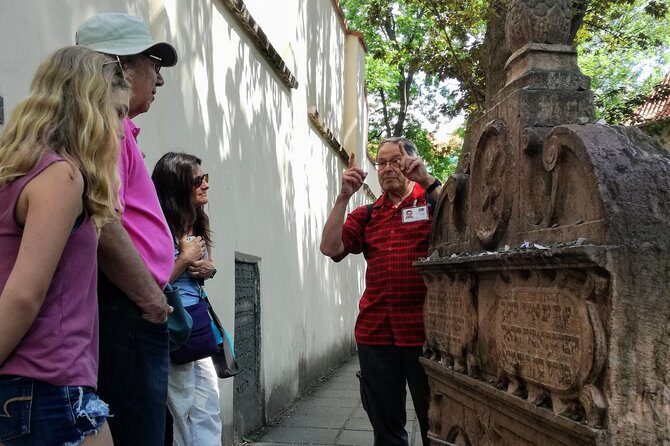
After the wartime section, the tour moves into Jewish experience during the Communist era. The goal is to explain the “after,” not only the catastrophe. Then you finish with a discussion of Prague’s Jewish community today.
That ending is important for two reasons. First, it keeps the experience from feeling like a closed chapter. Second, it gives you a way to interpret what you’re seeing now—synagogues, memorials, community institutions, and the fact that history is still present even when everyday life looks normal.
If you enjoy tours that end with something you can carry forward into the rest of your trip, this is that kind. You’ll likely leave with a sharper sense of Prague’s layers: medieval survival, Renaissance prosperity, catastrophic rupture, and long rebuilding.
Price and value: what you pay for, and what you don’t
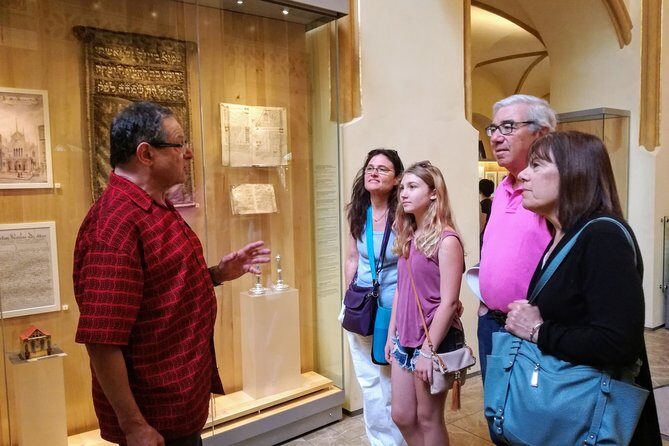
The tour costs $126.03 per person and runs about 3 hours (approx.). The price includes the historian guide and the English-language experience.
What it does not include is entrance to the Jewish Museum and the Old-New Synagogue. The listed fees are 600 CZK for adults and 400 CZK for students. So the real value question becomes: are you getting a guided, connected story across multiple major sites while paying reasonable local fees? In my view, yes—especially because this is a route-based walk from the key synagogue outward, with historical context tied to specific places.
Size also affects value. This is capped at 8 travelers, which is small enough for questions and pacing that doesn’t feel like a conveyor belt. One guest even experienced it as a private tour because only a couple people booked that day. That’s not guaranteed, but the small size makes it more likely than with big bus-style tours.
Duration is another value detail. The stated time is around 3 hours, but one departure ran about 4 hours. That’s not necessarily a problem. If you prefer a slower pace and more time for questions, that extra time can be a plus. If you’re on a tight schedule, plan a buffer.
Logistics that matter: meeting point, pace, and English guide
You’ll meet at Maiselova 38/15, 110 00 Praha 1-Josefov. The tour ends in Prague (the exact end point isn’t specified beyond that), and it’s near public transportation, which helps if you’re pairing it with other sights.
Departure times are flexible: you can choose a morning or afternoon departure when booking. That’s a practical advantage in Prague, where the weather can change fast and your energy levels do too.
On pace, expect lots of walking and standing. One guest described it as mostly standing and walking at a relatively slow pace, relaxed overall. Still, you’ll want comfortable shoes. And since at least one guide was helpful with an umbrella, it’s smart to bring a light rain layer or foldable umbrella. Prague weather doesn’t ask permission.
Who this tour suits best
This walking tour fits best if you want context and you like connected storytelling. It’s especially good for:
- First-time visitors who want the Jewish Quarter explained in a logical timeline
- Travelers who enjoy a local historian guide and Q&A
- People who want more than a surface-level “what you see” tour
It may be less perfect if:
- You’re expecting a heavy focus on Jewish religious ritual instructions (the historical/political framing is the core strength)
- You’re extremely time-boxed and can’t tolerate an extra hour if the group lingers at key moments
If you want emotional weight too, this tour can deliver it. Multiple guides were described as thoughtful and moving, with the history presented in a way that doesn’t rush your feelings.
Final verdict: should you book Stories of Jewish Prague Walking Tour?
I’d book it if your goal is understanding. The combo of starting at the Old-New Synagogue, then walking through leaders’ impact, then stepping through expulsion, toleration, Nazi devastation, and Communist-era life gives you a structured way to see Prague’s Jewish history in one coherent arc.
Add two practical checks before you commit:
1) Budget for the entrance fees to the synagogue and Jewish Museum.
2) If you care about religious practice details, be ready to ask pointed questions, since the tour’s strongest reputation is for historical storytelling and human context.
If that matches your style, this is a strong value pick for Prague.
FAQ
Where does the Jewish Prague walking tour start?
The meeting point is Maiselova 38/15, 110 00 Praha 1-Josefov, Czechia.
How long is the tour?
It runs about 3 hours (approx.).
Does the tour run in the morning and afternoon?
Yes, you can choose a morning or afternoon departure when booking.
Is the tour offered in English?
Yes, the tour is offered in English.
What’s included in the price?
The included item is a historian guide. Entrance fees and food/drinks are not included unless specified.
Are there entrance fees?
Yes. Entrance to the Jewish Museum and the Old-New Synagogue costs 600 CZK for adults and 400 CZK for students.
How big are the groups?
The tour has a maximum of 8 travelers, and there must be at least 2 people per booking.