REVIEW · PRAGUE
Wars and Totality History tour in Prague
Book on Viator →Operated by Spectrum Tours · Bookable on Viator
Prague’s hard years are written in its streets. This small-group walking tour strings together the city’s big 20th-century chapters, from World War II era references to communist rule from 1948 to 1989, and then the Velvet Revolution that helped end it. I like that you’re not just staring at monuments. You’re learning why specific corners mattered, so today’s Prague makes more sense.
Two things I especially like: you get a guided narrative that connects buildings to real political change, and the route focuses on key places you’d likely miss if you wandered alone. One drawback to consider is that, since this is a human-guided experience, quality can vary by departure. If you’re sensitive to pace, punctuality, or cigarette smoke, keep that in mind when you choose your time slot.
In This Review
- Key points before you go
- Why Prague’s 20th-Century Story Works Best on Foot
- Meeting at Na Příkopě and Ending at Národní (Easy, Central Flow)
- Municipal House and the Independence Connection You Might Skip
- New Town’s Streets: World War to Communist Rule Without the Confusing Detours
- Wenceslas Square: The Czech Pressure Point in One Public Space
- Narodni Trída Hands-on-Wall Memorial and the Velvet Revolution Trigger Spot
- Guide Quality: Personal Attention Helps, But Pace and Attitude Matter
- Price and Timing: Is $34.39 Worth It for 3 Hours?
- Who This Prague Tour Suits Best
- Should You Book Wars and Totality History in Prague?
- FAQ
- How long is the Wars and Totality History tour?
- Where do I meet and where does the tour end?
- Do I need to buy tickets for the stops?
- What is the group size?
- What is the cancellation policy?
- Is the tour suitable for kids or service animals?
Key points before you go
- Municipal House stop ties the walk to Czechoslovak independence and the WWI turning point
- New Town area walk helps you read Prague’s layout through war and communist-era change
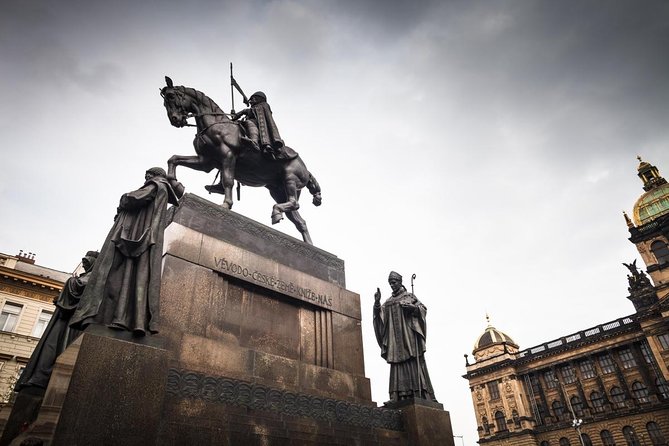
- Wenceslas Square and the monument show why this public space kept becoming a political stage
- Narodni Trída memorial wall connects the Velvet Revolution story to a specific spot in the city
- Small group (max 15) keeps the tour conversational and easier to track
- Short, free-entry stops mean you mostly pay for the guide, not ticket fees
Why Prague’s 20th-Century Story Works Best on Foot
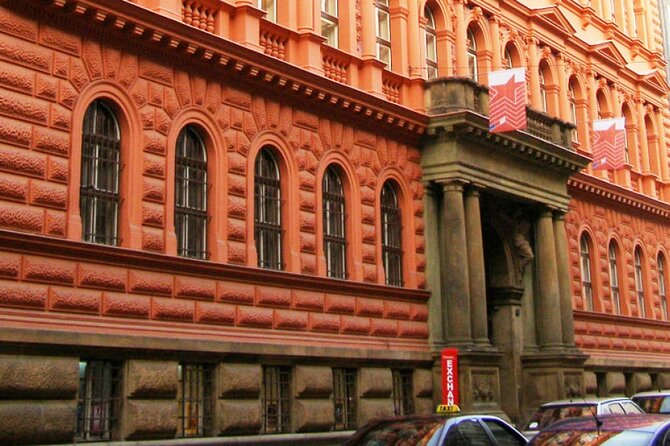
Prague can look like a postcard, but the city has another layer. The hardest chapters of the 1900s are still anchored to streets, squares, and facades. A walking format matters because it lets you connect the geography to the events.
Also, in a city this photogenic, it’s easy to get lost in pretty details and miss the why. This tour keeps you pointed toward meaning: where crowds gathered, where power showed up, and how public space was used. That’s the difference between sightseeing and actually understanding the place.
You can also read our reviews of more tours and experiences in Prague.

Meeting at Na Příkopě and Ending at Národní (Easy, Central Flow)
You start near Na Příkopě 864/28 in Nové Město, and you finish at the Národní / Narodni Trída transit area. That end point is practical because it drops you back into the center where trams and the metro help you continue your day.
Plan for a focused, walking-first experience for about 3 hours. Since it’s a small group, you’ll move together most of the time, so arrive a few minutes early and start the tour with shoes that can handle city sidewalks.
Municipal House and the Independence Connection You Might Skip
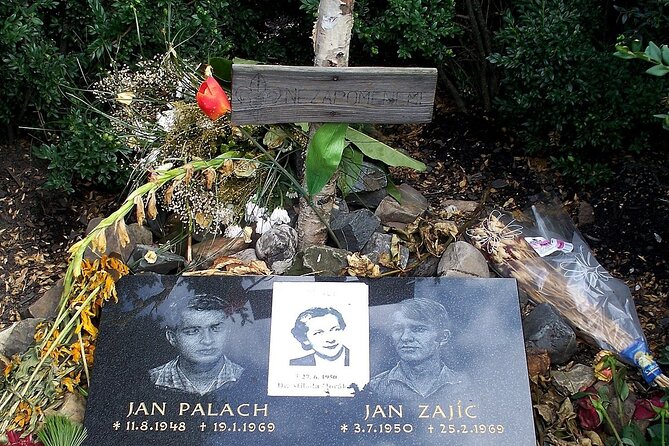
Your first stop is the Municipal House area, linked here with a Declaration of Independence reference, plus a quick look around the nearby modernist setting. This is a strong opening because it frames the 20th century not as random tragedy, but as a sequence of political shocks and sudden turns.
This part of Prague is also good for orientation. You get a sense of the broader city center before the route pushes you into the more politically charged spaces later. The stop is short, so you’re not stuck in one spot. You get just enough context to make the next stops click.
Tip: If you like history that connects to architecture, spend a minute before the tour starts just looking at the building details from the outside. Even at a quick stop, the guide can help you see what’s symbolic.
New Town’s Streets: World War to Communist Rule Without the Confusing Detours
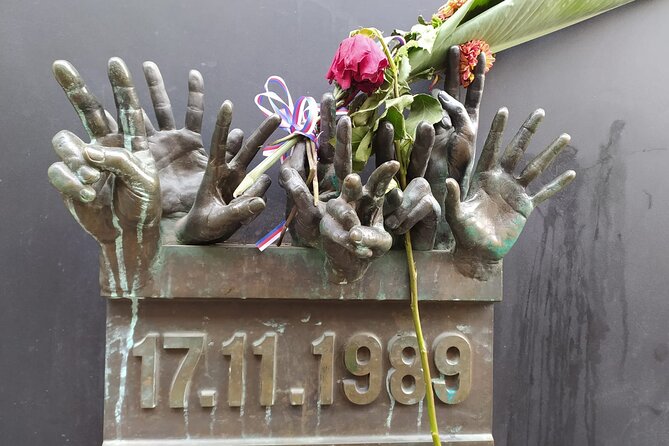
After the first anchor point, the tour shifts into New Town (Nové Město) for a longer stretch. This is where the tour becomes more than a list of landmarks. The guide helps you read the district as a map of power—how regimes and ideologies leave fingerprints on everyday life.
You should expect the guide to connect what you’re seeing to broader patterns: wartime pressures, post-war changes, and then the communist era running from 1948 to 1989. Even if you already know the timeline in general, it helps to hear it placed into the specific streets you’re walking.
A useful part of this longer segment is that it gives you time to ask questions and settle into the story. With a max group size of 15, it’s easier for the guide to keep track of who needs a clearer explanation.
Consideration: This is still a walking tour, so if you want lots of stand-and-stare time at every corner, you’ll need to pace your expectations. The value comes from movement plus commentary, not from long museum-style pauses.
Wenceslas Square: The Czech Pressure Point in One Public Space
You then head to Wenceslas Monument and the Wenceslas Square area, described as the nerve center of Czech history where major events played out. This is one of the best stops to understand why public squares matter in times of conflict and change. Wenceslas Square is built for visibility—crowds, announcements, tension, and symbolism all fit there.
The guide’s job here is to help you interpret what the square represents beyond its current-day look. You’re not just viewing a statue. You’re learning how the space became a stage for national feeling and political pressure across the decades.
The time here is about 20 minutes, so it’s enough to absorb the big picture without turning into a slog. If you enjoy moments where a single location can hold multiple chapters of history, this is your stop.
Tip: Keep your camera ready, but don’t let it take over. A few minutes of careful listening here can make your photos far more meaningful later.
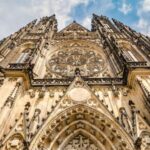

Narodni Trída Hands-on-Wall Memorial and the Velvet Revolution Trigger Spot
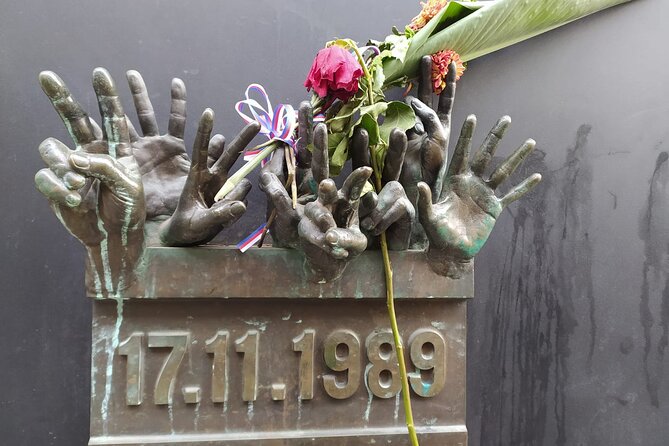
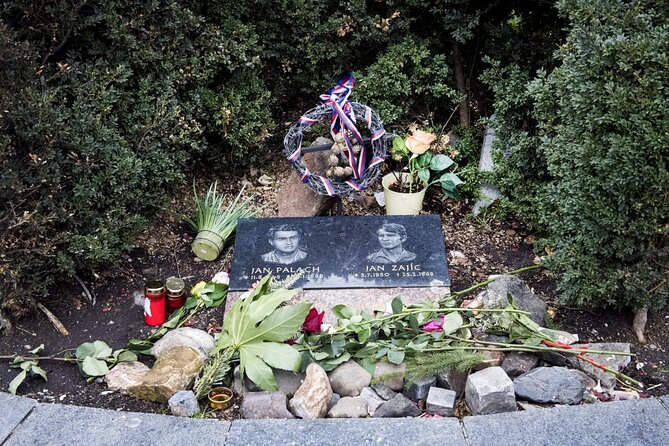
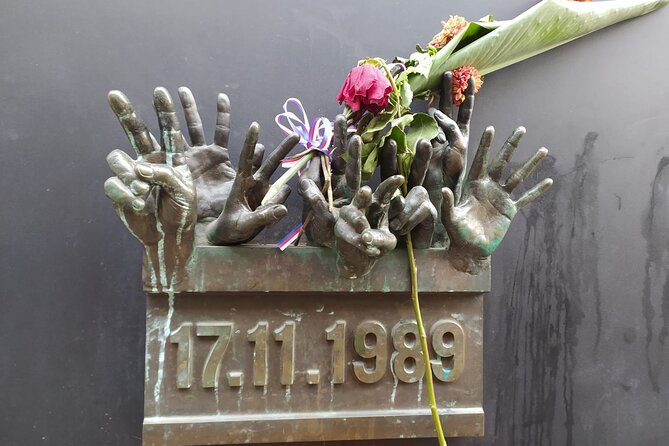
The final stop focuses on the hands reaching out of the wall on Narodni Trída. It’s tied to a memorial desk and the story that the Velvet Revolution was triggered from this kind of symbolic place. The point of this stop is emotional as much as educational.
The great value here is the specificity. You’re hearing how political change can connect to a real location in the city’s fabric. This is the sort of detail that makes Prague history feel personal instead of abstract.
It’s also a strong ending because you close the tour on the shift away from communist rule, landing in the era people often refer to as the turning point: the end of the communist period in 1989. You finish with a clearer sense of what changed, not just when it changed.
Practical note: This stop is only about 10 minutes, so if you’re the type who likes to linger, plan a quick self-guided extra walk afterward. The guided part moves on, but you’ll likely want to come back for a second look.
Guide Quality: Personal Attention Helps, But Pace and Attitude Matter
This tour clearly leans on the guide to make the story land. When the guide is on form, you get personal attention and the kind of context that connects history to real human experience. In one of the stronger reported experiences, the guide shared family history and made the locations tied to Nazi and communist-era events feel real in a direct, emotional way.
That’s the best-case scenario you should hope for: clarity, patience, and a narrative that stays grounded in the places you’re standing in. With free-entry stops and no museum time, the guide becomes the product. The story has to be strong enough to justify the price.
At the same time, there’s a real consideration: some departures may not meet your comfort level. On an unhappy departure, issues were reported around lateness, smoking, and group handling that made people uncomfortable. I can’t promise what any future guide will do, but I’d treat this as a sign to choose your departure thoughtfully if you’re picky about quiet, punctual starts and a steady pace.
Price and Timing: Is $34.39 Worth It for 3 Hours?
At $34.39 per person for about 3 hours, you’re paying for guided interpretation more than for tickets. The itinerary’s stops are marked as free admission, which helps the math. In other words, you’re buying time with a professional guide who can connect the city’s political timeline to the real geography.
For me, the value comes from the route design: Municipal House for the independence angle, then New Town for the longer context, Wenceslas Square as a public stage, and Narodni Trída for the Velvet Revolution memorial. That’s a lot of 20th-century focus packed into a short block of walking.
Group size matters here too. With a maximum of 15, you’re more likely to get questions answered and explanations tailored than on a mega-bus style tour. If your schedule is tight and you want a dense story without spending a whole day in formal museums, this fits.
Who This Prague Tour Suits Best
This is a great match if you like history that’s not stuck in a textbook. If you enjoy seeing how political systems show up in squares, streets, and memorials, you’ll get a lot from the guided connections. It’s also ideal if you want to understand communist-era Prague without guessing where the key events happened.
It’s not as ideal if you want a relaxed walk with lots of free time for independent exploring. The tour is structured around getting through the core sites and tying them together fast.
It can also work well for first-time Prague visitors who want a history lens. Even if you haven’t studied Czech history, the guide’s job is to translate the story into what you can see.
Should You Book Wars and Totality History in Prague?
Book it if you want Prague’s 20th-century chapters explained in the open air, with specific stops tied to independence, major public political moments at Wenceslas Square, and the Velvet Revolution memorial connection on Narodni Trída. The small-group size and guided narrative are the real wins, especially if you like your travel with meaning and context, not just views.
Skip it or think twice if you’re very sensitive to guide behavior, punctuality, or cigarette smoke, since this is entirely dependent on how the group is managed that day. And if you prefer slow wandering with lots of unscheduled time, you might find the pacing too focused.
If you’re curious about how modern Czech identity formed through the wars and communist rule, this tour is a strong, efficient way to start.
FAQ
How long is the Wars and Totality History tour?
The tour runs for about 3 hours.
Where do I meet and where does the tour end?
You meet at Na Příkopě 864/28, Nové Město, and you end at Národní on the Narodni Trída tram and subway station area.
Do I need to buy tickets for the stops?
The listed stops are marked with free admission, so you are not paying admission fees for each site during the tour.
What is the group size?
The tour has a maximum of 15 travelers.
What is the cancellation policy?
You can cancel for a full refund up to 24 hours before the experience start time. Changes inside 24 hours aren’t accepted.
Is the tour suitable for kids or service animals?
Children must be accompanied by an adult. Service animals are allowed, and the tour notes that most travelers can participate.