REVIEW · PRAGUE
The Ultimate Prague History Tour
Book on Viator →Operated by KulturCaféPrag · Bookable on Viator
Prague history can feel heavy. This tour keeps it sharp and human. You’ll start in New World (Novy Svet) where the pace is calmer, then move through monastery legends, the big-ticket Prague Castle cathedral, and finish with coffee at the Art Nouveau Municipal House. What I like most is the history-to-street-level storytelling (politics, religion, art, all tied together) and the way Günther uses route choices to avoid the worst crowds. The group stays small and personal, so questions actually get answered.
One thing to consider: this is a walking-forward day with multiple neighborhoods and hill areas. If you’re sensitive to early start times or long strolls, plan your energy accordingly and wear strong shoes.
In This Review
- Quick hits: what makes this tour different
- Why this 7-hour route avoids the worst Prague crowds
- Novy Svet first: the New World quarter with breathing room
- Loreta Praha: St. Mary’s sanctuary, a treasury, and legend with receipts
- Prague Castle cathedral and the Gothic story you rarely hear
- Nerudova and St. John’s Hill: art, religion, and politics in a quiet neighborhood
- Malostranské and Maltezské squares: baroque drama and medieval power symbols
- Museum Kampa: abstract painting in a former mill
- Legions’ Bridge to Old Town when Charles Bridge is too busy
- Old Town walk: medieval villages becoming a city
- Obecní dům (Municipal House) for Art Nouveau coffee and context
- Price and value: is $216.25 per person worth it?
- Who should book this tour
- Should you book the Ultimate Prague History Tour?
- FAQ
- How long is the Ultimate Prague History Tour?
- Is pickup included?
- What language is the tour offered in?
- Is admission included for all stops?
- Is this a private tour?
- What’s included in the price?
- Does the tour run all year?
- Is the tour suitable if I have mobility concerns?
- What if the weather is bad?
- Can I cancel for a refund?
Quick hits: what makes this tour different
- Crowd-smart routing: tram stop past the castle and, if needed, a swap from Charles Bridge to Legions’ Bridge
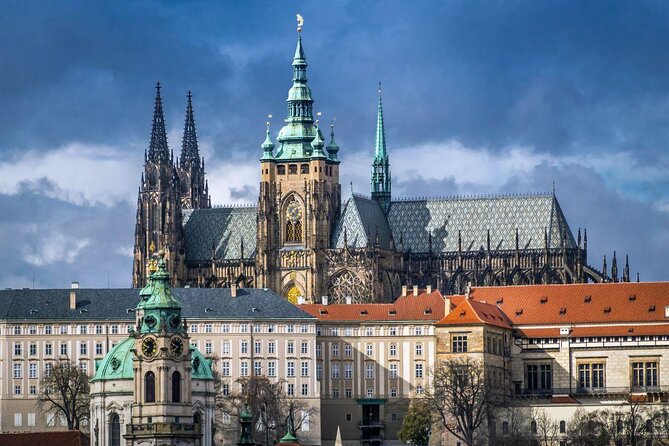
- Prague Castle explained with a Gothic lens: the cathedral’s unusual setting and how Gothic style gets its shape
- Loreta Praha story work: St. Mary’s sanctuary, its treasury, and legend elements that match real research
- Kampa + art history together: Museum Kampa in a former mill, with František Kupka’s Abstract Painting collection
- Old Town with a method: you don’t just see squares—you connect medieval village growth to what you still see today
Why this 7-hour route avoids the worst Prague crowds
This is a private tour, meaning it’s just your group, not a cattle car. That matters in Prague because the famous places can turn into lines fast—especially around Prague Castle and the busiest bridges. The route is designed to reduce time stuck at the most crowded chokepoints. You’ll even start by taking a tram and getting off at a stop past the castle, then walking through Novy Svet, which is picturesque and usually far less packed.
Time-wise, think of it as a day where you’ll see big names and still get breathing room. It’s about 7 hours total, with short, focused stops that add up without turning into a museum marathon. And you’ll get bottled water as part of the experience, which is small but genuinely useful in warmer months.
If you’re prone to rushing, you may need to resist it here. The best part is the pacing—Günther adjusts to your questions and your speed, so the “history” doesn’t come at you like a lecture. The possible drawback is that you won’t just hop randomly. This is a guided walking day with a clear narrative path, so comfortable shoes and a steady pace help a lot.
You can also read our reviews of more tours and experiences in Prague.

Novy Svet first: the New World quarter with breathing room
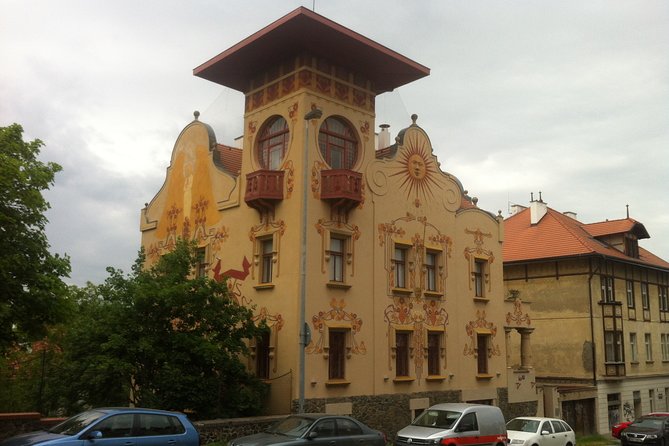
You begin at Novy Svet, taking the tram and hopping off at a stop beyond Prague Castle. The point is smart: you skip the worst crush and approach the castle area with calmer streets. Then you walk through the New World quarter, which is known for being extremely pretty—and, on this route, it’s basically empty compared to the usual tourist flow.
This stop sets the tone. You’re not immediately pressed against crowds or ticket lines. Instead, you get a sense of how Prague Castle’s world sits above the city, and you get a short geography lesson that makes everything later feel clearer.
Expect a scenic stroll rather than a “stand in one spot and listen” experience. You’ll get time here—about 30 minutes—so it’s enough to orient yourself without burning the day.
Loreta Praha: St. Mary’s sanctuary, a treasury, and legend with receipts
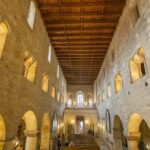
Next comes Loreta Praha, one of the most attractive sanctuaries dedicated to St. Mary, set in a monastery-like setting. The standout here is the combination: the church feels breathtaking, and there’s also a treasury component. That matters because the story is not only visual—it’s layered.
What makes this stop especially interesting is the way the tour treats legends. Recent research is mentioned as confirming large parts of the mystic legend, so you’re not just being told a fairy tale. You’re learning why certain traditions survived, and how historical evidence can align with belief.
A practical note: admission is not included for this stop. So factor in an entry fee if you decide to go inside, and keep some cash/card ready. The upside is that the setting is the kind you can’t fully “get” from looking at it from the street.
Prague Castle cathedral and the Gothic story you rarely hear
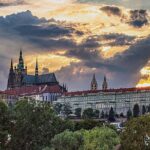
Then you reach Prague Castle, the big attraction that’s often crowded. The tour doesn’t pretend otherwise. Instead, Günther gives you the choice on the spot about whether you want to walk through more broadly or focus on what fits your energy and interests.
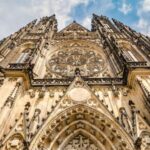
The highlight focus is the cathedral, and not in a generic way. The tour explains why its unusual location has both religious and political reasons. That combo is the key: you’re seeing architecture as a power tool, not only as religion in stone.
The other big value here is the Gothic angle. Günther shares a detailed idea of the amazing genesis of Gothic style—exactly the kind of explanation you usually don’t get on short castle visits. If you’ve ever looked at Gothic cathedrals and wondered why they look the way they do, this is where the tour earns its keep.
Admission for this stop is listed as free for the tour context, but the cathedral experience still depends on what you choose to enter on the day. If you want maximum time indoors, plan your walking energy early.
One caution: castle crowds can still exist even when you route smarter. You’ll feel the castle area’s gravity, so if crowds make you anxious, lean into the fact that you can choose how deep you go.
Nerudova and St. John’s Hill: art, religion, and politics in a quiet neighborhood
From the castle area, the tour heads toward Nerudova, a very pretty but also touristic street. That’s normal for central Prague. The difference is what comes next: you soon turn right to St. John’s Hill, a quieter neighborhood that once housed many Italian artists.
This is a good stop for people who like history that explains why places look the way they do. The tour connects art, religion, and politics—so you understand why an artists’ community would cluster where it did, and how those forces overlapped.
The time here is about 1 hour. Admission isn’t listed as included for this part, but you’re mostly street-walking and learning, not buying a ticket to a building. Still, plan for the hill factor and the fact that you’ll be on foot.

Malostranské and Maltezské squares: baroque drama and medieval power symbols
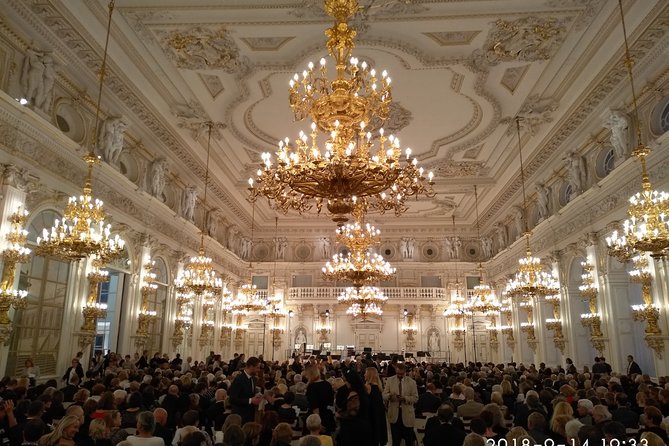
Two central stops bring you into Lesser Town (Malá Strana) and toward the river.
First is Malostranske namesti, a beautiful central square. Here you’re guided through what you see in the architecture and how it connects to history—religious upheaval, baroque splendor, and even WWI espionage stories. That’s a fun combination: it shifts Prague from medieval poster-child to a real stage for more modern drama.
Then comes Maltezske namEsti, with its lovely little square near the Vltava. You’ll look at a church, an embassy of the Maltese knights, and the palace of the French embassy. The tour also notes that the palace might be visitable upon prior request, which is a rare chance to go beyond the “just look from outside” routine.
You’ll also reach the Lennon Wall, but the tour frames it as a sad remnant of what it once was. That honesty is useful—expect the meaning more than the spectacle.
And the stop doesn’t stop at buildings. It points you toward Kampa island, described as a green oasis with several interesting attractions. The tour uses this moment to set up the next stop so it feels like a single story rather than random sightseeing.
Admission here is listed as free for the tour stops you’re viewing, but again, entry into specific spaces isn’t necessarily included. Keep your expectations flexible.
Museum Kampa: abstract painting in a former mill
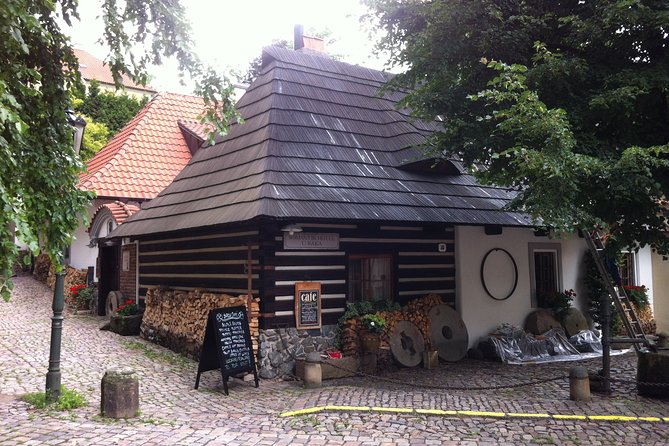
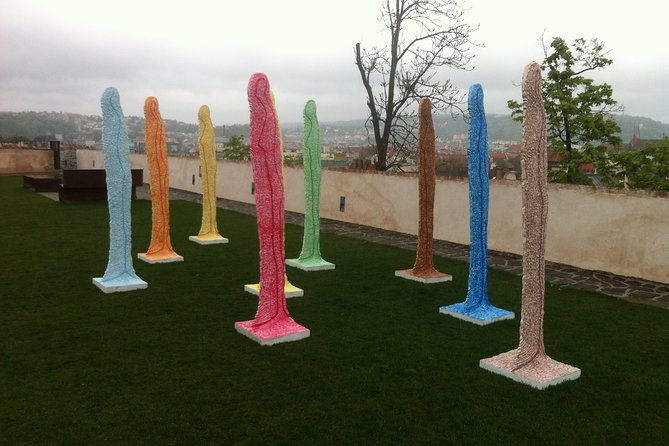
Next up is Museum Kampa, a contemporary art museum housed in a former mill. This stop works well because it breaks the heavy “old stone” vibe with something different, but still keeps the history thread alive through culture and art.
The tour highlights one major reason to go: the museum holds the largest collection of František Kupka, a pioneer of abstract painting. If you think abstract art is “hard to understand,” this is the kind of context that can make it click—especially when the tour explains why the collection matters.
Another strong point is the human story. Museum Kampa is initiated by one of the most interesting women of Prague’s recent history, and Günther has her biography in his library. So you don’t just see art; you learn how this collection came to exist in the first place.
Admission isn’t included here. If you hate surprise expenses, ask in advance what ticket costs apply for Museum Kampa, or confirm how the tour handles entry. Either way, this stop is often the one that feels most personal and less crowded than the headline sights.
Legions’ Bridge to Old Town when Charles Bridge is too busy
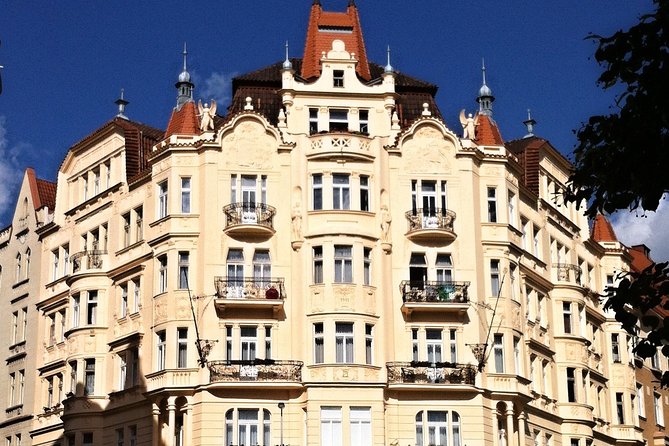
After Kampa, you approach the river area and cross with a flexible strategy. If Charles Bridge is too busy, the tour crosses using Legions’ Bridge. From there, you reach Old Town and the National Theatre area.
Even the bridge crossing gets narrative treatment: the tour explains why the National Theatre played an important role in the country’s fight for independence in the 19th century. This is a smart example of how a “just a crossing” can become part of a bigger story about nationhood and culture.
This stop lasts about 30 minutes, and it fits well because it resets your brain. You get the river air, you move across into Old Town, and you’re ready for the medieval city walk.
Old Town walk: medieval villages becoming a city
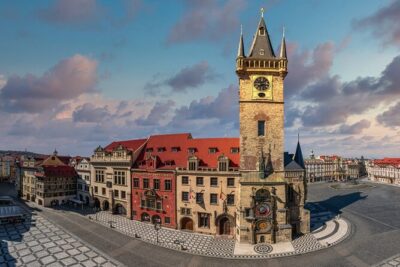
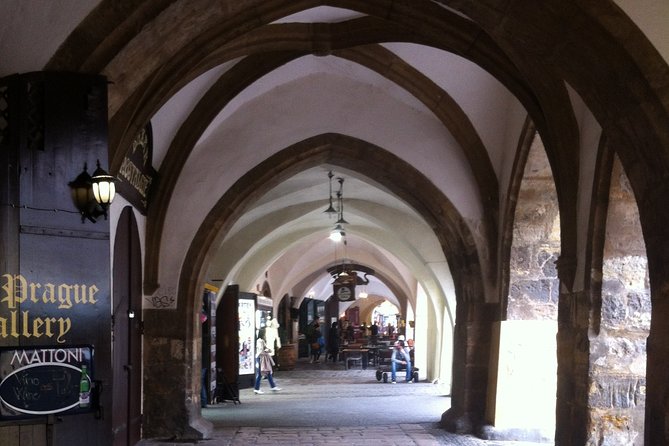
Then you’re in Stare Mesto (Old Town). The tour doesn’t treat Old Town as a checklist. You’ll walk criss-cross around Old Town depending on what you’ve already seen, with an emphasis on the less-known attractions.
The guiding idea here is how medieval villages became cities—and what’s still visible in Prague after 1000 years of change. That framing is powerful for first-timers because it stops the city from feeling like random old buildings. Instead, you learn to read the city as an evolution.
Expect about 30 minutes of walking here, but the key is that the tour aims to teach you how to look. You start noticing patterns: where people clustered, how neighborhoods grew, and how older village structures can shape city layouts long after the original settlement life is gone.
This is also where you can ask questions. If you’re the type who likes to understand why something happened, Old Town gives you plenty of hooks.
Obecní dům (Municipal House) for Art Nouveau coffee and context
If timing allows, the tour finishes at Obecní dům, Prague’s Municipal House—described as the city’s most beautiful Art Nouveau building. The stop is set up as a coffee moment, which is not just a break. It’s where Günther explains the genesis of Art Nouveau.
You’ll also learn why this building mattered in practical terms: it has a concert hall, an exhibition space, two restaurants, and a gorgeous café. Even if you don’t go into all those areas, the conversation gives the exterior and interior design a reason to exist.
This ending is excellent for travelers who want the day to land well. You wrap up the heavy history with an art movement explanation that connects to the idea of power, identity, and modern taste.
The drawback is simple: Art Nouveau buildings are popular, and you might want a little extra time for photos. With a 7-hour schedule, you’ll have to decide how long to linger once coffee starts.
Price and value: is $216.25 per person worth it?
At $216.25 per person for about 7 hours, the tour isn’t the cheapest option. But it does offer meaningful value if you care about more than ticking sights off.
Here’s what you’re paying for:
- A private tour (your group only), which usually means more time for questions
- Pickup offered personally anywhere within a defined area
- Multiple neighborhoods plus major anchor sights across the city
- Water included, plus a lot of guiding time that links sights to politics, religion, and art
If you compare this kind of guiding to doing everything on your own, the cost becomes easier to justify. You’d spend a day on transit, pay for entry tickets at some stops, then still miss the specific connections—especially the Gothic-style explanation and the political-religious angle on the cathedral.
One more value clue is demand. It’s booked an average of 87 days in advance, which usually means people are planning early because the guide’s style is in high demand. If you want the best chance of fitting your dates, book sooner rather than later.
If your ideal day is mostly photo stops with minimal walking and minimal explanation, this might feel like too much. But if you want history you can actually use to understand what you see, the price feels fair.
Who should book this tour
I’d book this if you:
- Want a history and architecture day with clear, story-driven explanations
- Like Prague’s political and religious layers as much as its pretty streets
- Prefer a route that avoids crowds rather than just accepting them
- Value a guide who adapts to your pace and questions
You might rethink if:
- You want mostly 1900s onward and very little medieval/early-modern focus
- You dislike extended walking on hills and uneven ground
Based on how Günther’s help shows up in emergencies and adjustments, this is also a solid pick if you want someone calm and proactive. His support style stands out: problem-solving, speaking with other people on your behalf, and keeping the day functional even when plans wobble.
Should you book the Ultimate Prague History Tour?
Yes, if you want Prague that makes sense. This is not a random walk through landmarks. It’s a guided story that moves from New World calm to castle power, then to river-crossing independence themes and Old Town’s long urban evolution.
Book it if you’re the kind of traveler who asks why. You’ll get answers. And if crowds stress you out, the route choices—tram exit past the castle and bridge switching—are the difference between a tiring day and a memorable one.
Skip it only if you want a light-touch day with minimal walking and minimal context. Otherwise, wear your best shoes, bring a curious mindset, and let Prague’s layers unfold in a way that actually clicks.
FAQ
How long is the Ultimate Prague History Tour?
It runs for about 7 hours.
Is pickup included?
Yes. Pickup is offered, and Günther will pick you up personally anywhere within the defined area.
What language is the tour offered in?
The tour is offered in English.
Is admission included for all stops?
Not for all stops. Loreta Praha, Nerudova, and Museum Kampa list admission as not included. The other listed stops are marked as admission ticket free.
Is this a private tour?
Yes. It’s a private tour/activity, and only your group participates.
What’s included in the price?
Bottled water is included.
Does the tour run all year?
It’s listed with opening hours from 06/15/2020 to 02/27/2027, Monday through Sunday from 10:00 AM to 5:00 PM.
Is the tour suitable if I have mobility concerns?
It’s marked for travelers with moderate physical fitness.
What if the weather is bad?
The experience requires good weather. If it’s canceled due to poor weather, you’ll be offered a different date or a full refund.
Can I cancel for a refund?
Yes. You can cancel up to 24 hours in advance for a full refund. If you cancel less than 24 hours before the start time, the amount paid won’t be refunded.