REVIEW · PRAGUE
Prague Renaissance & Baroque Gardens Walking Tour
Book on Viator →Operated by Insight Cities · Bookable on Viator
Prague’s gardens can surprise you. This 3-hour small-group tour turns stone, statues, and plants into stories, from Renaissance layouts to Baroque symbolism. I especially like the up-close garden architecture and the way the guide connects sculptures and myths to what you’re seeing in front of you. One catch: you’ll need to budget for some garden entry fees, and the Vrtba garden has steep stairs.
You get a calm, curated way to see the grounds around Prague Castle without sprinting from one highlight to the next. Another thing I like is the route mix: you’ll cover major named gardens like Wallenstein/Waldstein plus a quieter Baroque walled garden. If you prefer fully flat walking, plan for the stairs or choose a day when you can take it slow.
With departures at 10am and 2pm and a group size capped at 8, it’s the kind of tour where the pace stays human. You meet near Malostranská Metro and ride the 22 tram up toward the castle area. If you want English with serious art-and-history talk, this one fits well.
In This Review
- Key points to know before you go
- Prague Renaissance & Baroque Gardens: Why This Tour Feels Different
- Meeting Point and Getting to Prague Castle on Tram 22
- Stop 1: Vrtba/Vrtbovská Garden and Its Terrace Views (Plus Stair Reality)
- Stop 2: Waldstein (Wallenstein) Garden’s Italian Layout and Myth Machines
- Royal Garden and Queen Anne’s Summer Palace: Renaissance Symmetry With Hidden Stories
- Ball Game Hall Above the Stag Moat: A Renaissance Building With a Past
- What You Actually Pay for: Tour Price vs Garden Admission Fees
- How the 3 Hours Hold Up: Pace, Group Size, and What You Leave With
- Who This Tour Suits (and Who Should Skip It)
- Should You Book This Prague Renaissance & Baroque Gardens Walking Tour?
- FAQ
- How long is the Prague Renaissance & Baroque Gardens walking tour?
- What language is the tour offered in?
- How big is the group?
- Where do we meet for the tour?
- How do you get from the meeting area to the castle gardens?
- Is admission included for all the gardens?
- Which gardens have admission fees?
- Is the walk difficult?
- What departure times are available?
Key points to know before you go
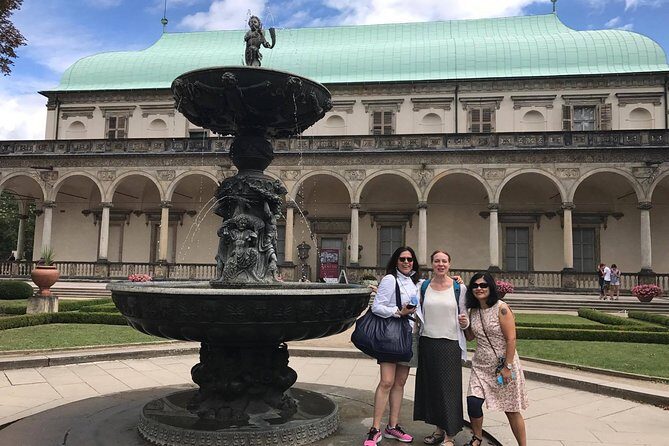
- Max 8 people means more time for questions and photos
- Vrtba/Vrtbovská Garden adds Baroque statuary, symbolism, and big Prague Castle views
- Waldstein (Wallenstein) Garden includes an Italian-style layout, grotto, aviary, and a fountain by Adrian de Vries
- Royal Garden + Queen Anne’s Summer Palace area brings Renaissance garden design and myth-heavy stonework
- Entry fees are partly on you, especially Vrtba/Vrtbovská and some castle-garden access
- Expect some steep stairs in the Vrtba garden; there’s a plan if you need to pause
Prague Renaissance & Baroque Gardens: Why This Tour Feels Different
Prague is famous for pretty buildings, but the gardens show a different side of power and taste. On this walk, you don’t just admire greenery. You learn how Renaissance and Baroque designers used plants, water, and sculpture to send messages—about prestige, politics, and who had access.
I love that the tour focuses on physical details: statues you can stand beside, fountains you can hear, and terrace viewpoints where the city makes sense from above. It also helps that the route mixes big-name places with quieter corners, so you get variety without feeling rushed.
The other reason this works is the guide style. You’re not getting random facts. You’re getting interpretive stories—especially around mythological figures and what designers were trying to communicate through stone decoration. That’s what makes the gardens stick in your head after you leave the grass behind.
You can also read our reviews of more walking tours in Prague



Meeting Point and Getting to Prague Castle on Tram 22
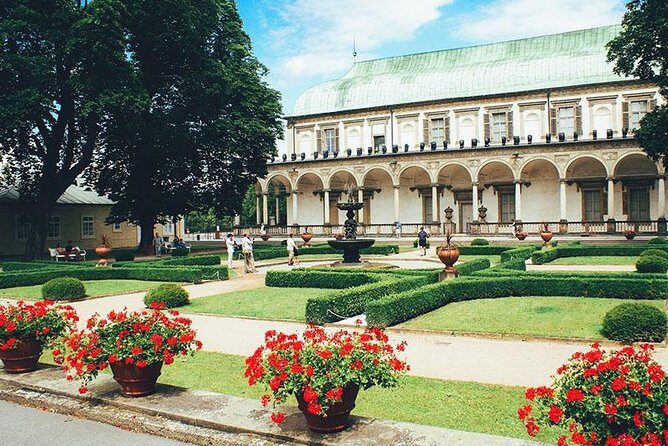
You start in Malá Strana near Malostranská Metro, at Bagel Lounge Malostranská Letenská, 118/1. The meeting location matters because it gets you into the right neighborhood mood right away. You’re also close to public transit, which makes it easier to plug into the rest of your day.
After you meet your group and guide, you ride the 22 tram together toward the Prague Castle garden area. This is a practical touch: it reduces walk time on steeper streets and helps keep the 3-hour window realistic.
You’ll have a choice between a 10am or 2pm departure. If you like fewer crowds and calmer photos, the earlier slot often feels easier. If you’re building this tour into an afternoon of castle sights, the later departure can be a smooth fit.
Group size is capped at 8 travelers, so your guide can actually manage timing and keep everyone together through small stairways and narrow garden paths.
Stop 1: Vrtba/Vrtbovská Garden and Its Terrace Views (Plus Stair Reality)
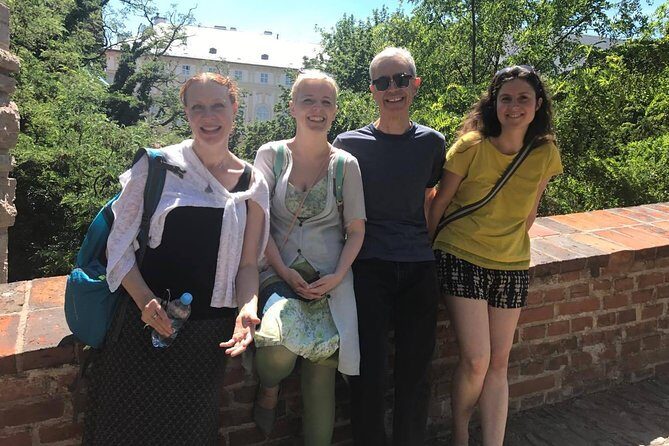
Vrtba Garden (also listed as Vrtbovská Garden) is the Baroque showpiece you’ll talk about afterward. Expect a walled-garden layout with early-1700s statuary and sculptural decor. The guide connects the design choices to the garden’s historic cultural value, which is part of why this place isn’t just pretty—it’s purposeful.
The views are the payoff. From the higher terraces you can look out over Prague and toward Prague Castle in a way that feels very different from street-level sightseeing. It’s the kind of viewpoint that makes you stop mid-walk just to reframe the city.
Now the practical note: this garden involves steep stairs to reach the highest terrace. If climbing is an issue, there’s a built-in option: you can wait for the group on the second terrace while the guide returns later (about 10 minutes). If you’re on a private tour, the route can be modified for your group.
Time on this stop is around 25 minutes, but the vibe is slower. Give yourself permission to pause for photos, because the garden angles are best when you’re standing still rather than rushing forward.
Ticket note: Vrtba/Vrtbovská admission is not included. Budget for it so you’re not stuck at the gate figuring out payment on the fly.
Stop 2: Waldstein (Wallenstein) Garden’s Italian Layout and Myth Machines
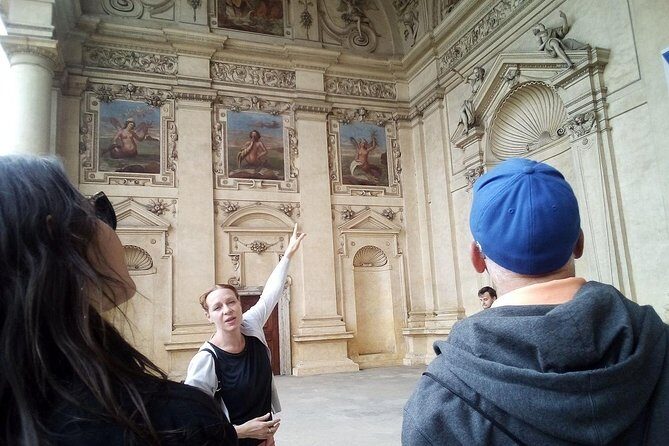
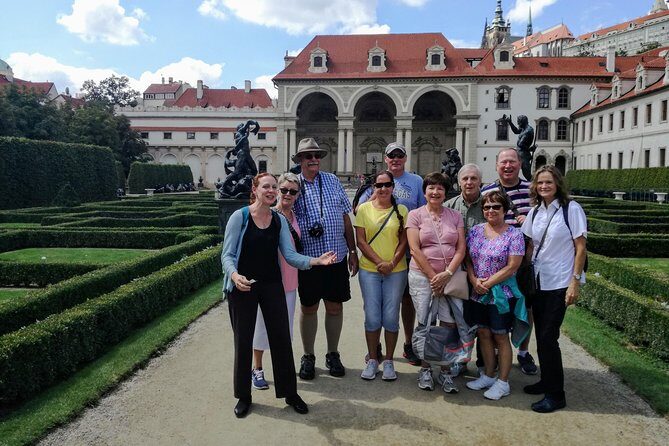
Next you move into the Wallenstein/Waldstein Garden, an Italian-style garden that opened to the public after its earlier life as part of the Waldstein palace gardens in the 1600s. Today, it’s open as the gardens of the Senate of the Czech Republic, which gives the whole place a formal, dignified feeling.
What makes this stop fun is the mix of “things to look at” inside one walk. You’ll see:
- An aviary
- An artificial grotto
- A sculptural gallery of mythological heroes
- A fountain by Adrian de Vries
That list sounds like a museum floor plan, and that’s basically what it is—just outdoors, in the shade, with the city humming in the background. The guide’s stories matter here. Mythology isn’t treated like trivia; it’s tied to how the garden’s sculptures create a reading experience as you walk.
Entry here is listed as free, which makes it a smart use of time. Even if you’re not a “garden person,” the architecture and sculptural placement give your eyes a job. You’ll always have something to track: a figure, a water feature, or a structure that changes as you turn a corner.
Expect around 25 minutes in this area. It’s long enough to get the patterns and short enough to keep the overall tour flowing.
Royal Garden and Queen Anne’s Summer Palace: Renaissance Symmetry With Hidden Stories
After Waldstein, the tour transitions into the Prague Castle gardens zone, starting with the Royal Garden. This garden began on the site of medieval vineyards in the 1500s. Later, it became known for rare botanical specimens and exotic plants from distant places.
That botanical detail is more important than it sounds. Renaissance gardens weren’t only about beauty—they were also about collections, experiments, and status. When you hear that rare plants and exotic species were part of the garden identity, the whole place stops feeling generic. You start reading the gardens like a living library.
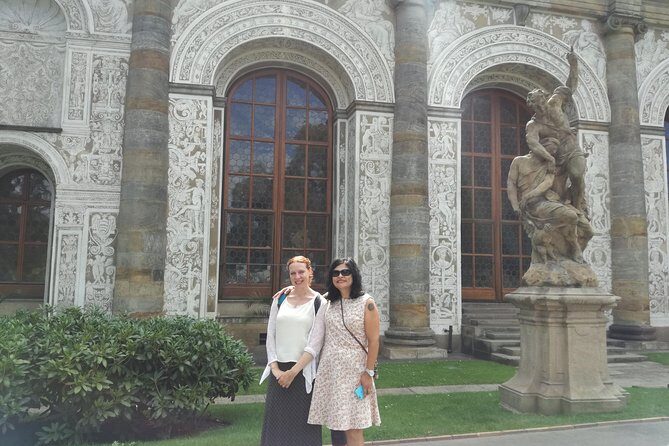
As you continue through the castle garden area, you’ll reach Queen Anne’s Summer Palace. This is often described as some of the purest Renaissance architecture outside Italian territory. What you’ll notice isn’t only the building itself—it’s the way the decoration tells stories.
Look closely for:
- An ornamental and figurative frieze
- Outdoor arcades with columns featuring decorated Tuscan heads
- Reliefs that depict mythology, hunting, and wars
- A founder figure, Ferdinand I, shown with the Order of the Golden Fleece
- The symbolic detail of Ferdinand offering Queen Anna a fig tree blossom
That fig detail is the kind of thing that’s easy to miss on your own. With a guide, you learn how these images connect to power, lineage, and the garden world that supported elite life.
Time here is brief—about 5 minutes around the palace stop—so don’t treat it like a photo-op only. Even in a short stop, you can still learn to spot the sculptural storytelling instead of just capturing the exterior.



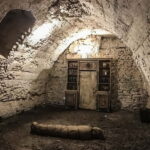


Ball Game Hall Above the Stag Moat: A Renaissance Building With a Past
The final architectural stop is the Ball Game Hall in the Royal Gardens. This Renaissance building sits on the south side of the Royal Gardens, directly above the Stag Moat. It was built in the mid-1500s and served as a ball games hall. Later, it became a riding school and stables.
This is one of those spots where knowing the building’s original function changes how you feel about it. Instead of seeing it as just another stone structure, you start picturing daily life—training, sport, and movement—happening in a formal setting.
It’s also a good “pace reset” after the heavier symbolism of the palace decoration. You get a more grounded architectural story: what activities happened here, and how the castle complex adapted over time.
The stop lasts about 5 minutes, and since this tour is only about 3 hours total, it’s designed to land at the right moment: after you’ve built context, not before.
What You Actually Pay for: Tour Price vs Garden Admission Fees

The tour price is $126.03 per person for about 3 hours, with a guide described as a professional scholar. Small-group size and the art-history framing are part of what you’re paying for—not only for the walk itself.
Some admissions are included, but not all. Based on the listed costs, you should expect to pay:
- Vrtbovská Garden admission: CZK 130; students and seniors CZK 100
- Gardens under Prague Castle admission: CZK 90; students and seniors CZK 60
This matters for your budgeting. If you’re doing Prague Castle later anyway, you may already plan to pay entry fees. Still, don’t assume everything is covered just because it’s called a gardens tour. Plan for a couple paid gates so the day stays smooth.
If you like math before you commit: this tour’s value is strongest when you’d rather spend time learning from a guide than cobbling together several separate visits with guesswork.
How the 3 Hours Hold Up: Pace, Group Size, and What You Leave With
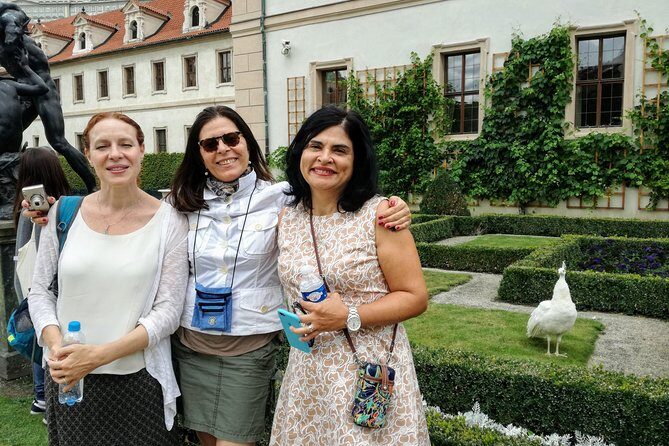
This isn’t a long slog. It’s a focused stroll through several garden zones plus key architectural moments. With a maximum of 8 people, the pace feels controlled, and your guide can adjust if someone needs a slower moment—especially around stairways.
The schedule also helps you “finish with context.” By the time you see the sculptures and reliefs, you’ve already learned how Renaissance and Baroque designers used symbolism. That makes the palace details and the mythological pieces feel connected instead of random.
One more plus: you can walk away with a mental map. You’ll know how these gardens relate to the castle complex, and you’ll understand why certain elements show up together—terraces paired with views, water features paired with sculpture, and architecture paired with story-driven ornament.
When done right, that’s what tours should do. Not just show you sights, but help you interpret what you’re looking at.
Who This Tour Suits (and Who Should Skip It)
This tour is a great fit if you:
- Want a guided art-and-garden experience rather than a self-guided wander
- Like Prague Castle area sights but want them organized through themes
- Enjoy sculpture and symbolism—especially mythological details
- Prefer small group pacing
It’s less ideal if you:
- Need fully flat walking for the whole route (Vrtba Garden has steep stairs)
- Want lots of free time to linger without any structured guide talk
- Don’t want to budget for some additional admission fees
If you fall into the middle ground—curious but not intensely into gardens—this tour still works because the guide ties plants and buildings to human stories. You’re never stuck only staring at greenery.
Should You Book This Prague Renaissance & Baroque Gardens Walking Tour?
I’d book it if you want a guided, high-value way to see Prague’s Renaissance and Baroque garden world in a short window. The best reason is the combination: small-group access plus a guide who can explain what you’re seeing, not just point at it.
I’d think twice if stairs are a deal-breaker for you. The Vrtba Garden climb is real, though there is a plan to pause and wait while the group goes on.
If you’re the type who likes to come home with more than photos—names, symbolism, and a better read on the city—this one earns its place on your itinerary.
FAQ
How long is the Prague Renaissance & Baroque Gardens walking tour?
It’s about 3 hours (approx.).
What language is the tour offered in?
The tour is offered in English.
How big is the group?
The tour has a maximum of 8 travelers.
Where do we meet for the tour?
You meet at Bagel Lounge Malostranská Letenská, 118/1, 118 00 Praha 1-Malá Strana, Czechia.
How do you get from the meeting area to the castle gardens?
The group rides the 22 tram together to reach the castle’s gardens.
Is admission included for all the gardens?
No. Vrtbovská Garden admission is not included. Gardens under Prague Castle also list an individual admission fee.
Which gardens have admission fees?
Vrtbovská Garden has an admission fee (CZK 130; students and seniors CZK 100). Gardens under Prague Castle list an admission fee (CZK 90; students and seniors CZK 60).
Is the walk difficult?
You should have a moderate physical fitness level. The tour involves climbing steep stairs in the Vrtba Garden to reach the highest terrace.
What departure times are available?
You can choose between a 10am and a 2pm departure time.