Terezín is history that doesn’t let go. This semi-private tour with Holocaust historian Jiri Kluc helps you make sense of what you’re seeing, from the Small Fortress prison sites to the memorial’s quieter corners. I like that the experience is structured, respectful, and designed to explain connections instead of just listing rooms. I also like the small group size (max 6), which makes it easier to ask questions without feeling rushed. One consideration: this is a heavy visit, and you should be ready for confronting material.
The day is built for learning on your feet. You’ll ride out from central Prague in an air-conditioned vehicle, then spend about 4 to 5 hours at the memorial area with admission included. It’s a straightforward outing with a mobile ticket, bottled water, and a clear return to the pickup point—but it also depends on good weather, since outdoor grounds are part of the experience.
In This Review
- Key points I’d anchor on
- Why Terezín needs context (not just sightseeing)
- Getting there from Prague without wasting half a day
- The Small Fortress: Gestapo prison and political imprisonment
- The ghetto story: more than names and numbers
- The National Cemetery: the quiet weight of remembrance
- What else is included at the Terezín memorial
- Price and value: $116.15 for a guided, admission-included day
- The best-fit traveler (and who should skip it)
- Should you book this Terezín historian tour?
- FAQ
- How long is the Terezin concentration camp tour?
- What is the group size for this semi-private tour?
- Is the admission ticket included?
- Where do I meet, and where does the tour end?
- What’s included in the tour besides the guide?
- Do I get a ticket on my phone?
- What happens if weather is bad or I need to cancel?
Key points I’d anchor on
- Historian-led, semi-private format with a maximum of 6 people for real questions and slower pacing
- Small Fortress and Jewish ghetto sites, including places that many first-time visitors miss
- Hidden locations such as the Prayer Room, plus the National Cemetery and remains of the railway to the ghetto
- Admission included in the tour price for the Terezín memorial
- Direct, practical transport: air-conditioned vehicle, bottled water, and pickup/return at Ládví
Why Terezín needs context (not just sightseeing)
Terezín—also spelled Theresienstadt—was one of the largest concentration camp complexes in what is now the Czech Republic. On a standard visit, it can be easy to get stuck in the logistics: where to go, what’s open, what each building is called. What makes this tour different is the pacing and interpretation. You’re guided through the memorial with an emphasis on meaning: why these spaces were used, how people were processed, and how the Nazi system shaped everyday life and forced choices.
The biggest value here is that you’re not just standing in a place where something terrible happened. You’re also hearing the chain of decisions that created it. That matters because Terezín isn’t only one story. It includes prisons, forced confinement, a Jewish ghetto area, and memorial sites that help connect names, numbers, and physical remnants.
I also appreciate the tone. The guide’s approach is described as respectful toward survivors and careful about the history of the camp and the Holocaust more broadly. That kind of tone matters because the site itself is emotional. A good guide won’t try to make it lighter. Instead, they give you a way to hold the information without getting lost.
You can also read our reviews of more private tours in Prague



Getting there from Prague without wasting half a day
The tour starts and ends at the same place: Ládví (182, 00 Prague-Prague 8). You meet near public transportation, and you’re transported in an air-conditioned vehicle. The trip includes bottled water, which sounds small until you’re walking memorial grounds in real weather. These practical touches help you keep your focus on what’s in front of you.
The duration is about 4 to 5 hours, which is a sweet spot for many people. Long enough to cover the major areas and some less-obvious ones, short enough that you’re not exhausted before the hardest sections. Also, because the group is capped at 6, the pace tends to feel controlled rather than like a conveyor belt.
There’s one logistical reality to plan for: the experience requires good weather. If it’s canceled due to poor weather, you’ll be offered a different date or a full refund. That’s not a “nice to have” detail. Terezín’s grounds and memorial paths are part of the visit, so if conditions are bad, the experience may not run the same way.
The Small Fortress: Gestapo prison and political imprisonment
The heart of the visit begins with the Small Fortress, a place used as a prison by the Gestapo for political prisoners. This is one of those areas where the physical layout does a lot of emotional work. You’re not just learning definitions; you’re looking at a system built to control people through confinement.
What I find most helpful about a historian-led walk here is that it puts the Small Fortress into a wider picture of Nazi methods. You get explanations that connect the prison function to the broader operation of the camp complex. Instead of treating the Small Fortress as an isolated stop, the guide helps you understand it as part of how the Nazis moved, detained, and exploited human beings.
There’s also a practical benefit to this approach. When you know why a place existed and what it was designed to do, you stop asking the same “basic” questions over and over. Your brain can actually focus on the experience in front of you: the sense of containment, the historical timeline, and the human impact.
The ghetto story: more than names and numbers
Next comes the Jewish ghetto area, tied to the history of Terezín’s role in Nazi persecution. You’ll hear that over 35,000 people perished. That number is not meant to sit alone as a statistic. With the right guide, it becomes a clue to the realities of forced confinement—how overcrowding, deprivation, disease, and violence shaped life.
This is also where the tour’s “go beyond the usual stops” emphasis starts to matter. You’re not only taken to the most obvious memorial points. You’ll also visit hidden and less standard locations linked to the daily reality of the ghetto, along with the physical traces that remain.
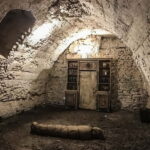
Two of the most compelling inclusions are the hidden Prayer Room and the remains of the railway to the ghetto. The Prayer Room matters because it points to what people tried to protect spiritually even under systematic brutality. The railway remains matter because they show how movement—who could go where, and how quickly—was controlled by the camp system. Together, these elements help you feel the contrast between imposed isolation and the persistence of cultural and religious life.
And if you care about understanding how places are connected, you’ll like that the guide doesn’t treat this as a checklist. The explanation aims to build a mental map: prison to ghetto, confinement to transport, and what the memorial preserves today.
The National Cemetery: the quiet weight of remembrance
Not every stop at Terezín feels equally intense in the moment, but the National Cemetery has a different kind of impact. It’s a space that asks you to slow down. A cemetery doesn’t require interpretation to tell you something is final. What a good guide adds is context—what the cemetery represents within the broader memorial effort and how it connects to the larger story you’ve been learning.
I like including a stop like this because it gives your brain a place to absorb without rushing. After prison spaces and the ghetto narrative, you’re carrying a lot. The National Cemetery helps shift you from learning what happened to understanding how remembrance is handled, both emotionally and historically.
This also is where a small group can help. If you have questions, the guide can address them in a way that doesn’t feel disruptive. In a larger tour, you often lose that gentle pacing.




What else is included at the Terezín memorial
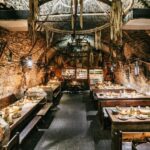
The memorial visit covers core parts of the complex: the Small and Big Fortress areas and a Museum component, plus those hidden locations and additional sites tied to the camp’s structure. The admission ticket is included in the price, so you’re not scrambling to buy anything on-site.
One practical upside of having admission bundled: you spend less time at the start dealing with forms and lines, and more time where the explanation matters. At Terezín, waiting around can feel like dead time because the site is one where meaning is best absorbed with guidance.
The tour is designed as a focused “one outing” package. You’re not bouncing between multiple venues around Prague. Instead, you’re taking a concentrated visit to the memorial itself, which keeps the emotional and educational tone consistent.
Price and value: $116.15 for a guided, admission-included day
At $116.15 per person, this isn’t the cheapest thing you can book in Prague. But it can be a strong value for the right traveler—mostly because of three practical elements you can’t always get together:
- Admission to the Terezín memorial is included
- You’re going with an expert guide who explains sites rather than just pointing them out
- The group is small (max 6), and the tour includes transport plus bottled water
Also, booking is described as happening on average 56 days in advance. That suggests demand for specific tour slots, especially those led by the same guide. If you want this exact historian-led setup, I’d treat it like a “plan ahead” booking, not a last-minute add-on.
The mobile ticket and near-public-transport meeting point also help your day flow. You’re meeting at Ládví, then returning there, which can be a relief compared with tours that scatter you across town at the end.
In plain terms: you’re paying for time with a historian and for guided access that’s organized for learning. If you want a quick look with minimal explanation, there are cheaper ways to see Terezín. If you want meaning—how to connect prison function, ghetto history, and memorial sites—this price starts to make sense.
The best-fit traveler (and who should skip it)
This tour is a good match if:
- You want a semi-private setting rather than a big bus crowd
- You care about understanding why these places were used, not just what they are called
- You like asking questions while the guide is in the right spot to answer them
It’s also a strong option if you want hidden or less obvious stops like the Prayer Room, the National Cemetery, and the railway remains included in your route. Those inclusions can be hard to manage on your own without the right context.
I’d be more cautious if you’re:
- Short on time and need a quick overview only
- Unprepared for emotionally heavy content
- Looking for a purely casual walk-through with minimal explanation
This is “respectful, enlightening” territory. That’s a compliment, but it also means you should come with the mindset for learning carefully.
Should you book this Terezín historian tour?
Yes—if your goal is to understand the camp complex with guidance and you appreciate small-group pacing. The combination of historian Jiri Kluc, admission included, and the focus on specific memorial areas (including Small Fortress, the ghetto story points, the hidden Prayer Room, the National Cemetery, and the railway remains) makes this more than a basic site visit.
Book it if you want a tour that treats the subject with respect and gives you explanations you can carry home. Skip it only if you want the lightest possible experience or you don’t want to spend several hours absorbing difficult history.
FAQ
How long is the Terezin concentration camp tour?
It’s about 4 to 5 hours.
What is the group size for this semi-private tour?
The maximum group size is 6 travelers.
Is the admission ticket included?
Yes. Entrance ticket to the Terezin memorial is included in the price.
Where do I meet, and where does the tour end?
You start at Ládví 182, 00 Prague-Prague 8, Czechia, and the activity ends back at the meeting point.
What’s included in the tour besides the guide?
It includes an air-conditioned vehicle, bottled water, all fees and taxes, and the driver/guide.
Do I get a ticket on my phone?
Yes. The tour uses a mobile ticket.
What happens if weather is bad or I need to cancel?
The experience requires good weather. If it’s canceled due to poor weather, you’ll be offered a different date or a full refund. You can cancel for a full refund up to 24 hours in advance. Confirmation is received within 48 hours of booking, subject to availability.