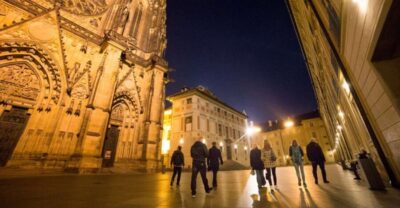
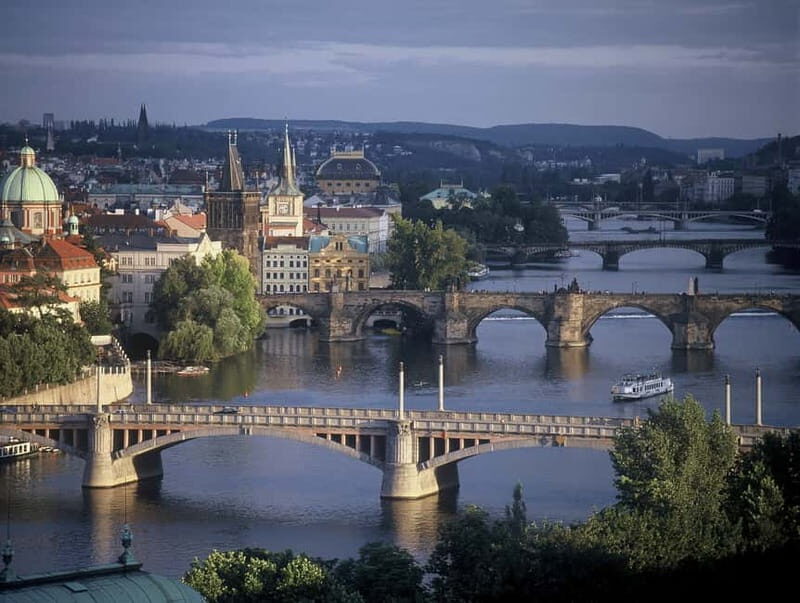
Prague looks different after this walk. This small-group, 2.5-hour Old Town and Jewish Quarter route is led by a British expat and takes you through the tight streets and courtyards that big buses can’t reach. I love how you’re taught to read Prague’s layout street-by-street, and I love the way Jewish Quarter stops are explained with clear what-to-look-for guidance and practical tips. A heads-up: it’s still a lot of walking in real city weather, and some themes are serious, so keep your head in the moment.
In a group of up to 6, you actually hear the guide and you can ask questions without shouting. You’ll also get a mobile ticket in English, plus a bunch of local pointers like how to handle the busy sights and where to grab food and drink.
If it’s your first time in Prague 1, I think this is one of the best ways to get your bearings fast.
In This Review
- Key Highlights You’ll Feel on the Side Streets
- Why the Small Streets Matter More Than the Big Sights
- The Stolpersteine Moment: Memorial Walk, Not Just Sightseeing
- Jewish Quarter in Layers: How the Guide Keeps It Clear
- What to watch for during the Jewish Quarter
- Old Town Hall and the Astronomical Clock: Learn the Mechanism
- Jan Hus, the Hussite Movement, and a Square That Changed
- Churches, Changing Denominations, and Gothic Details You Can Spot
- A practical tip for this part of the walk
- Havelska Street Market: Old Roots, Smaller Reality
- Food and Beer Directions: From Cake to Comfort
- Price and Pace: What $22.99 Buys You
- What It’s Like to Actually Walk This Route
- Who Should Book This Prague Old Town and Jewish Quarter Walk
- Should You Book It?
- FAQ
- How long is the Prague Old Town and Jewish Quarter walking tour?
- What does it cost?
- What language is the tour offered in?
- How many people are in the group?
- Where does the tour start?
- Does the tour end back at the meeting point?
- Do I get a mobile ticket?
- Will I get confirmation after booking?
- Are service animals allowed?
- What’s the cancellation rule for a full refund?
Key Highlights You’ll Feel on the Side Streets
- Up-close Old Town lanes: passageways, alleyways, and courtyards help you understand the city’s shape
- Jewish Quarter walkthrough: multiple major sites explained with practical tips for getting around
- Old Town Hall + Astronomical Clock focus: learn how it works and when to watch the apostle procession
- Jan Hus and Reform-era context: the square’s stories connect to buildings you’ll see next
- Havelska Street Market context: why it matters and why it’s only about 10% of what it used to be
- Food and drink direction: including tips on the local way to eat chimney cake and where to go for beer
Why the Small Streets Matter More Than the Big Sights
This tour starts by changing your brain. Instead of treating Prague like a list of landmarks, you learn why the Old Town looks the way it does. The guide focuses on little streets, passageways, alleyways, and courtyards. On their own, those spaces might seem like “just streets.” After the explanation, they start to make sense. You begin to see how space, history, and power all shaped what you’re walking through.
That change is the main value. It’s the difference between taking photos and understanding the place. You’ll get tips for identifying building styles and reading basic building markers as you go. You also get a Czech-language mini-lesson, which might sound small, but it helps on the ground when you’re trying to decode signs and menus.
The pace is relaxed enough that you can ask questions and still cover a good chunk of ground. In practice, that means your shoes do the work, but your brain gets fed along the way.
The Stolpersteine Moment: Memorial Walk, Not Just Sightseeing
One of the first emotional pivots comes through the Stolpersteine project, often called the Stumble Stones. The guide uses them as a teaching tool: you learn what they are meant to do and why they fit into the streetscape.
This matters because it sets the tone for the Jewish Quarter portion. You’re not just seeing buildings. You’re learning how memory sits in everyday urban life. The route also gives you a way to interpret identifiers and context, so you’re less likely to walk past something meaningful without noticing.
If you prefer strictly scenic tours, this stop might feel heavier than expected. But if you want a Prague walk that connects beauty to reality, this portion is a strong anchor.
Jewish Quarter in Layers: How the Guide Keeps It Clear
The Jewish Quarter section is designed to be focused instead of overwhelming. You’ll get concise history for each stop, plus what it does today and what to look for when you arrive. You also get tips that can help you deal with crowds, including how to skip the lines when possible.
Key stops include:
- Pinkas Synagogue
- Old Jewish Cemetery
- Ceremonial Hall
- Klausen Synagogue
- Old/New Synagogue
- Spanish Synagogue
The guide also weaves in practical navigation thinking. You’ll learn what each place represents, what to expect in the modern setting, and how the sights connect as a system rather than random stops.
What to watch for during the Jewish Quarter
Your best move is to let the guide’s “what to look for” cues lead you. When the guide points out design styles and building identifiers earlier in the tour, you’re better prepared here. You’ll also get a better sense of the route so you’re not just moving between entrances. You’re following a story.
If you’re traveling with someone who wants fast facts and nothing emotional, you might find the tone more reflective than they expect. This is a history-and-place tour, not a performance or party stroll.
Old Town Hall and the Astronomical Clock: Learn the Mechanism
Then you hit the big headline moment: Old Town Hall and the Astronomical Clock. The guide’s approach is practical, not just ceremonial. You’ll learn when Old Town Hall first opened, how it came to have an Astronomical Clock, and who built it. You’ll also learn how the clock works, in a way meant for regular visitors, not museum scholars.
The Astronomical Clock area gets busy. So the guide also shares tips on where best to watch the apostle procession, which helps you avoid the worst viewing spots and the constant shuffling. You’ll feel more in control once you know when to position yourself and what you’re actually looking at.
If you’re the type who likes to understand the “how” behind the “wow,” this part is worth the price on its own.
Jan Hus, the Hussite Movement, and a Square That Changed
The tour doesn’t treat Old Town as frozen. It moves into civic and religious shifts through Jan Hus and the Hussite movement, plus the Czech Reformist movement. The goal is to connect what you’re walking past with the bigger ideas that shaped Prague.
You’ll also learn about the Marian Column. The guide explains why it was on the square, what it was used for, and why it’s not here anymore. That kind of detail is small on paper, but it changes how you interpret the space. You stop thinking the square is just a square. It becomes a record of past decisions.
If you like history explanations that point directly back to buildings in front of you, you’ll enjoy this segment. If you prefer only architectural sightseeing with minimal politics, you may find this the most “lecture-like” portion of the walk.
Churches, Changing Denominations, and Gothic Details You Can Spot
A big chunk of the tour is dedicated to churches and how their roles shift over time. You’ll get an overview of one church’s style and why it looks the way it does. The guide also covers how the denomination changed over the years, plus a first look at the last census data.
Later, you learn more about that same church’s history and what Gothic features to look out for. You’ll also be told how you get into it and opening times, which is useful if you want to return on your own after the tour.
Then there’s another stop focused on why a building was built, who built it, and the different names it has had over the years. The guide also shares a specific cultural rule: Czech language performances were not allowed here, along with the place’s claim to fame.
You don’t need to know anything before you go. The tour is built to give you the framework, then show you how to read the details on-site.
A practical tip for this part of the walk
When a guide mentions features to look for, don’t “mentally note it.” Actually look. Stand where the guide indicates. Prague churches can be visually busy, and it’s easy to miss what makes a building distinct.
Havelska Street Market: Old Roots, Smaller Reality
Between passageways, you’ll pass one of the oldest markets in Europe: the Havelska Street Market. The guide gives you context on when it opened, why you might want to come back, and why it’s only about 10% of its original size.
This is one of those “understand the scale” moments. It’s not just an interesting fact. It explains why today’s market feels compact compared with what once existed. You’ll also be better able to judge whether it fits your interests: quick browsing, snacks, and atmosphere, not a huge shopping destination.
If you’re planning a food-focused day, this stop gives you a good reason to add a second visit later.
Food and Beer Directions: From Cake to Comfort
The tour ends with food-and-drink energy built into the storytelling. You’ll learn why a popular cake is often referred to as chimney cake, and how Czechs prefer to eat it. You’ll also get directions to a popular beer garden.
These aren’t random “tour snack” moments. They’re the bridge from history into everyday life. Prague is at its best when you mix the big sights with the small rituals: a sweet treat, a cold drink, and a place where locals actually hang out.
The most helpful thing here is the guide’s local eye. A name on a map is one thing. A direction that matches the moment you’re in is another.
Price and Pace: What $22.99 Buys You
At $22.99 per person for around 2.5 hours, the value is in how much you’re taught, not how many doors you pass.
You get:
- a guided route that prioritizes side streets and courtyards
- multiple major Jewish Quarter sites with clear explanations
- Old Town Hall and the Astronomical Clock context and viewing tips
- history threads that connect the square and churches to what you see
- practical local tips on what to do and where to go next
Also, the group limit of 6 travelers keeps the experience interactive. You’re not competing with a loud crowd for audio or attention. Even when the group is tiny, the guide keeps the format moving and still covers the essentials.
One consideration: you’re paying for guidance and context, not for a long sit-down museum visit. If you want long interior time at each site, you might prefer a tour that builds in more stop-and-stay time.
What It’s Like to Actually Walk This Route
Expect steady movement with short educational breaks. It’s not an all-day hike, but you are outside for a couple of hours. If the weather is cold, you’ll likely appreciate that the guide keeps things organized and moving, and can even steer you toward a quick warm-up stop if needed.
The tour design also encourages questions. That’s where the small group really pays off. When the guide hears your question, they can answer in a way that ties back to what you’re standing near.
If you’re coming with a friend who wants to talk and ask why things look the way they do, this tour fits.
Who Should Book This Prague Old Town and Jewish Quarter Walk
Book this if:
- you want a first-day orientation that helps you understand what you’ll see next
- you like history explained with on-the-street examples
- you want Jewish Quarter context plus practical tips on handling busy spots
- you prefer smaller groups and real interaction
Consider another option if:
- you want only light, fast sightseeing with minimal serious themes
- you dislike walking for 2.5 hours in city weather
- you’re looking for a tour that focuses on one museum-like interior experience for a long time
Should You Book It?
Yes, I’d book this if your goal is to leave Prague Old Town with a working mental map. The tour’s strength is the way it connects small urban spaces to the big ideas behind them. You’ll see the clock and churches, but you’ll also learn how to read Prague like a local.
If you’re deciding between “top sights only” and “a guide who helps you understand why the city looks like it does,” this is the better choice. You’ll get enough structure to explore on your own afterward, plus enough local advice to keep your day from feeling like a checklist.
FAQ
How long is the Prague Old Town and Jewish Quarter walking tour?
It runs for about 2 hours 30 minutes.
What does it cost?
The price is $22.99 per person.
What language is the tour offered in?
The tour is offered in English.
How many people are in the group?
The maximum group size is 6 travelers.
Where does the tour start?
It starts at Staroměstské nám. 12, 110 00 Praha 1-Staré Město, Czechia.
Does the tour end back at the meeting point?
Yes, it ends back at the meeting point.
Do I get a mobile ticket?
Yes, it includes a mobile ticket.
Will I get confirmation after booking?
Confirmation is received at the time of booking.
Are service animals allowed?
Yes, service animals are allowed.
What’s the cancellation rule for a full refund?
Free cancellation is available, and you can cancel up to 24 hours in advance for a full refund.