REVIEW · PRAGUE
1.5h Prague E-Scooter Panoramic Tour small-group with PragueWay
Book on Viator →Operated by PragueWay Tours · Bookable on Viator
Prague looks different at scooter speed.
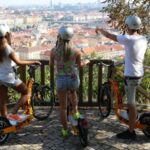
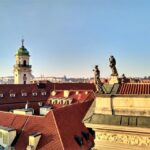
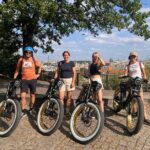
This small-group PragueWay tour mixes easy guided storytelling with big views, so you get the feel of places like Kampa, Charles Bridge, and Petřín without spending your whole day in lines. I like that the tour gives you more than sightseeing; it gives you the background behind what you’re seeing. The route also loops through viewpoints that you’d usually reach only after a lot of walking.
Two things I really love: you start with hands-on scooter training plus helmet, and the guide pacing is built for real people (not tour-robot timing). Second, you’re not just driving past monuments—you stop long enough to absorb details like Strahov’s library treasures and Petřín Tower’s specific height and platform levels.
One drawback to consider: this is active riding. Even with training, you need basic bike-handling comfort, and the rules exclude certain riders (like pregnant guests and people over 120kg). If you’re hoping for a totally relaxed, no-skill-required ride, this may not be your best match.
In This Review
- Key things to know before you go
- Why Prague is perfect for a 1.5-hour e-scooter loop
- What’s included in the $62.89 value (and what’s not)
- Scooter training: how they keep it fun for nervous riders
- Stop 1: Lennonova zeď in Kampa’s political art orbit
- Stop 2: Charles Bridge—old stones, statues, and that famous legend
- Kampa Island: why this little river world feels different
- Stop 3: Strahov Monastery and the Strahov Library vault
- Petřín Park and the hill that feeds Prague’s stone
- Petrin Lookout Tower: the 1891 Eiffel copy and your photo payoff
- Prague Castle: big views, big symbolism, short stop
- Letná Park: the Vltava sweep and the “queue for meat” story
- Kafka moment and the UNESCO ride through Hradčany
- Should you book this PragueWay e-scooter panoramic tour?
- FAQ
- How long is the Prague E-Scooter Panoramic Tour?
- What’s included in the tour price?
- Do I get an audio guide if I’m not comfortable with English?
- Where does the tour start and end?
- Is it okay if it rains?
- What do I need to bring?
- Who can participate?
- How big is the group?
Key things to know before you go
- Small group (max 9): more time for questions and less crowd pressure at stops.
- Helmet + scooter + training: you’re set up to ride, not just handed controls.
- Refreshments and weather gear: water and coffee at the start, plus rain poncho and winter gloves when needed.
- English guide with optional audio: you’ll get the core talk in English, with other languages available via audio guide.
- Stops are chosen for views and meaning: from Lennonova zeď’s protest-story wall to Petřín and castle-area panoramas.
Why Prague is perfect for a 1.5-hour e-scooter loop
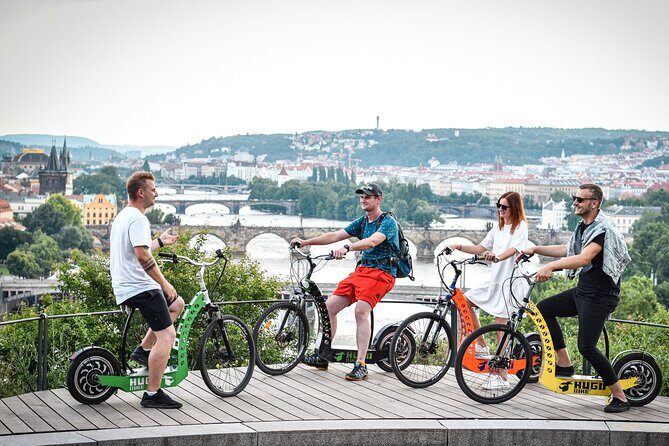
Prague can be a lot on foot. Streets twist, crowds gather, and hills show up when you least want them. This tour’s strength is simple: you move quickly enough to cover major highlights, yet slowly enough to actually enjoy them.
Because you’re on an e-scooter with a small group, you get a practical “best of Prague” rhythm: a guided stop, a quick photo window, then rolling to the next viewpoint. That pacing matters on a short trip. It helps you build a mental map fast—Old Town on one side, Lesser Quarter and castle district on the other, with the Vltava acting like the main stage.
And the guides behind this tour have a reputation for making first-timers comfortable. In the feedback I saw, Lucy helped nervous riders feel safe and relaxed, and David was noted as patient while keeping explanations clear. Alex also comes up as a guide who hit the right level of detail at each stop.
You can also read our reviews of more tours and experiences in Prague
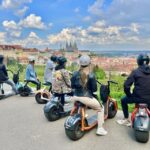
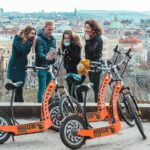
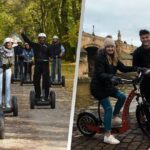
What’s included in the $62.89 value (and what’s not)
For $62.89 per person, you’re paying for a guide-led route plus equipment and start-of-tour comforts. Included basics are:
- E-scooter rental and helmet
- English-speaking guide
- Training before you start rolling
- Unlimited water at the meeting point
- Water and coffee provided at departure
- Rain poncho on request at the meeting point
- Gloves in winter season
- Audio guides available in German, Spanish, French, Italian, and Russian
- Mobile ticket
What you should plan for: the tour doesn’t include food during the ride, and you’ll need normal walking footwear. If you want hotel pickup/drop-off, that’s not included (it can be requested for an additional cost).
Where the price really makes sense is time saved. Instead of stitching together multiple taxi rides and hours of walking, you get one organized loop with interpretation at the stops. For many first-timers, that means you go home with both photos and a clearer story of the city.
Scooter training: how they keep it fun for nervous riders
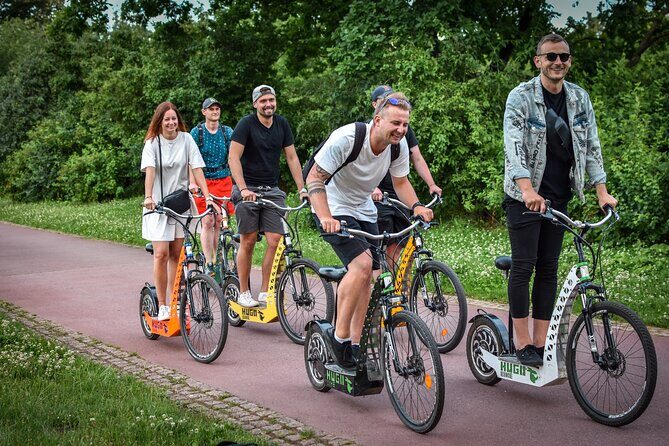
There’s a very honest line in the requirements: bike riding skill is necessary. That’s not said to scare you—it’s said because an e-scooter still needs balance and basic control.
The good news is that you’re not expected to be a pro from minute one. The guides start with training and typically go slowly at the beginning. That matches the feedback style I kept seeing: nervous riders felt safe because the team taught them step-by-step, then kept the pace manageable so everyone could enjoy the viewpoints.
My advice: if you can ride a bicycle even modestly, you’ll likely be fine. If you haven’t ridden in years, plan to show up ready to practice at the start and move carefully through the first minutes.
Stop 1: Lennonova zeď in Kampa’s political art orbit
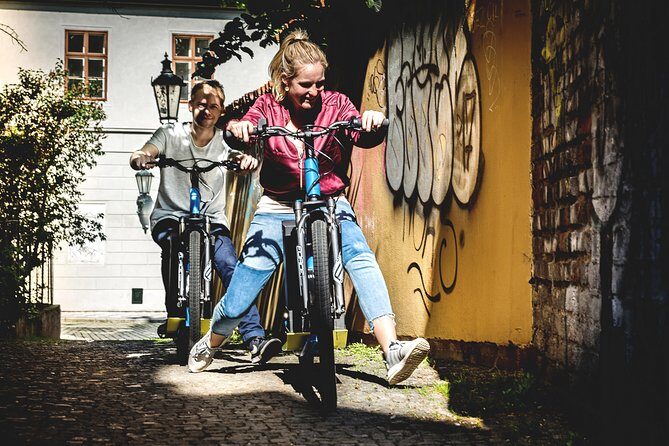
Your first stop is Lennonova zeď (Lennon Wall) in Kampa, near Charles Bridge. It’s famous for its all-over color and layered graffiti—and for the fact that it carries a real story about protest as much as it does about music.
Here’s what makes it more than a photo spot. After John Lennon was murdered, the wall’s idea grew around the concept of a tomb-like tribute in Kampa. People then began adding symbols and messages on adjacent walls connected to Lennon’s life and work. Even today, the wall changes day by day, because it’s allowed to keep evolving.
If you care about how places reflect politics, grief, and culture at the same time, this stop clicks. You’re looking at a living surface, not a fixed mural behind glass. And in a city full of official monuments, that’s a refreshing start.
Time-wise, you get about 10 minutes, so treat it like a quick story-and-photos break, not a deep study session.
Stop 2: Charles Bridge—old stones, statues, and that famous legend
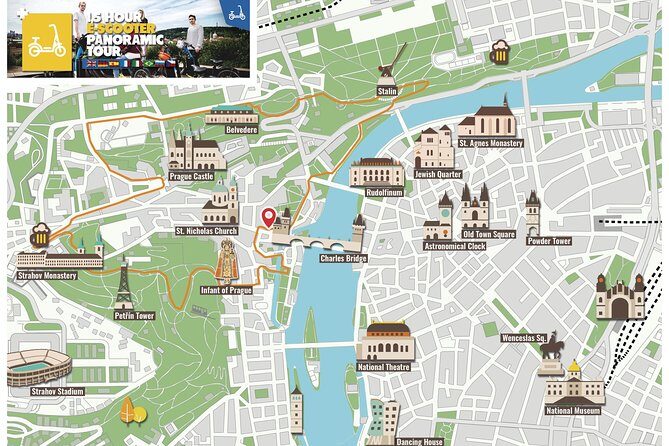
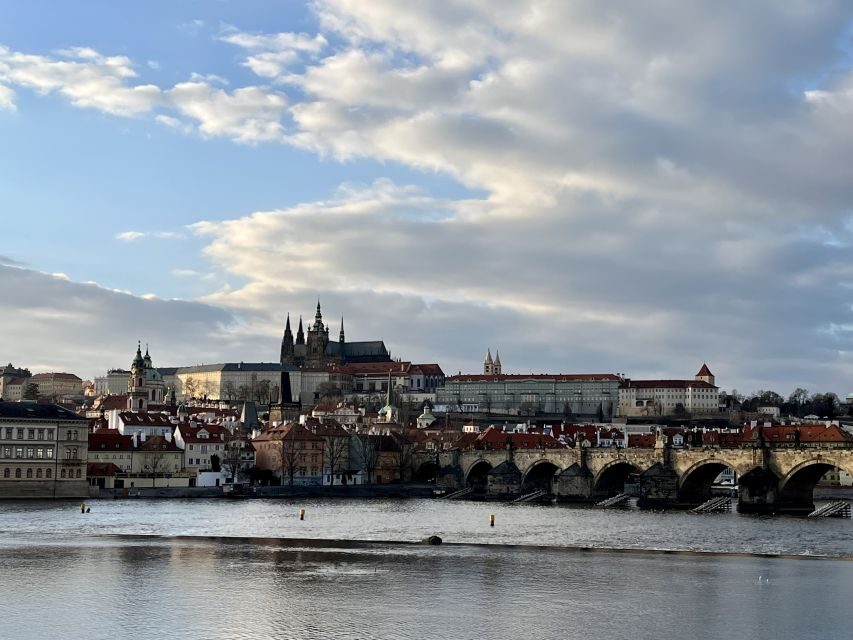
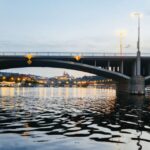
Next you roll to Charles Bridge, Prague’s oldest preserved bridge over the Vltava. It’s the classic connector between Old Town and the Lesser Quarter, and it’s also a statue gallery in the open air.
The bridge was built in 1357. Local legend even ties the foundation stone to 9 July at 5:31 a.m., with a number sequence that was believed to help the bridge last forever. You’ll also notice 30 baroque statues and sculptures spread across the span, including the well-known statue of Saint John of Nepomuk.
A realistic consideration: Charles Bridge is popular. Even with short stop time (about 5 minutes here), you’ll want to work fast for photos and then let the guide keep the flow moving.
That said, moving here by scooter helps. You’re not stuck for long at just one angle. You can get your bearings and see the bridge as part of the larger Vltava story.

Kampa Island: why this little river world feels different
After Charles Bridge, you get the setting behind Kampa Island. Kampa is separated from the rest of Prague’s Lesser Quarter by Čertovka, a mill drain.
This stop matters because it explains why Kampa feels like its own pocket. Historically, the island had fewer buildings due to floods. Its name is often linked to the Latin word campus, meaning field—an idea that fits the area before it became the built-up riverside neighborhood you see today. Now the northern part has houses, while the southern side is more park-like.
Think of this moment as your breath between mega-icons. You’re still in sightseeing mode, but you shift from bridge spectacle to river-side character.
Even if you don’t get a long sit-down break, it’s a strong reminder that Prague isn’t only stone buildings and castles. It’s also water, drains, small islands, and daily life shaping the view.
Stop 3: Strahov Monastery and the Strahov Library vault
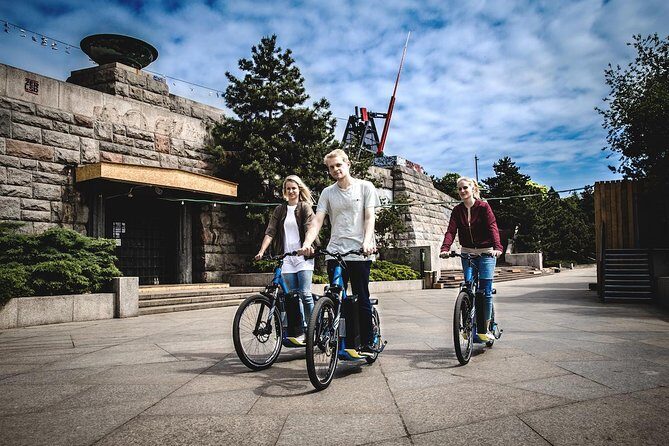
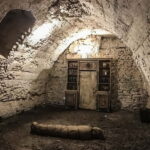
If you like places that feel peaceful and serious, this is the stop. Strahov Monastery (the Royal Canonry of Premonstratensians at Strahov) is the oldest premonstratensian monastery in Bohemia, established in 1143.
The monastery was restored after 1990, and it connects directly to major cultural institutions. It hosts:
- the Museum of National Literature
- Strahov Library
- Strahov Gallery
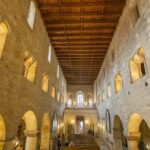
What I love about this stop is the scale of the library, because it’s not just a pretty room. Strahov Library holds more than 200,000 books, including over 3,000 manuscripts and about 1,500 originals stored in a special depository. You’ll also hear about how the library is organized into two halls—the Theological Hall and the larger Philosophical Hall—plus a connecting corridor.
Time here is about 15 minutes, so you’re not going to do a scholar-level museum day. But you will come away with a sense of why this library is considered one of the most valuable and well-preserved historical libraries in the Czech Republic.
If you’re tempted to skip a monastery stop because you think you’ve seen enough churches, don’t. The library angle makes it feel different.
Petřín Park and the hill that feeds Prague’s stone
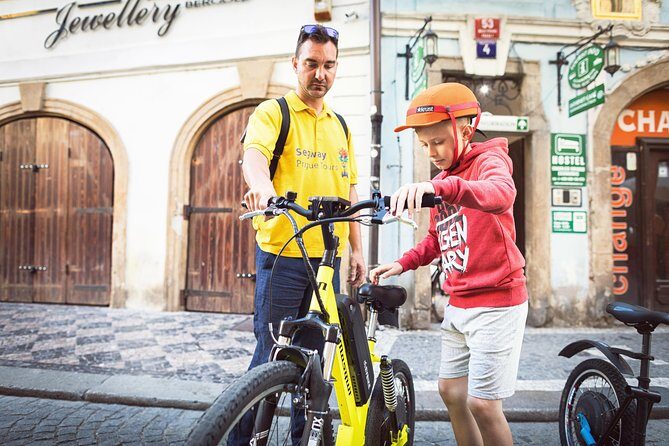
Then you ride toward Petřín, starting with Petřín Park. This hill sits in central Prague and rises 327 meters. It’s the kind of height that turns your city walk into a viewpoint tour.
You’ll hear why the name matters. Petřín connects to stone—“petra” is stone in Latin—and the area was mined for ages. Those stones were used in major constructions across Prague, including early church work in Prague Castle and early bridge building over the Vltava River.
Petřín also has layers in naming and storytelling: it’s been called Mountain, Hill, and Saint Lawrence Hill, linked to the patron saint church you can find on the hillside. Chronicler Kosmas described it as rocky, and that fits the feel when you’re up near it—Prague’s built environment is literally shaped by what this ground produced.
You get about 20 minutes here, which is a good length for a park-and-view break without losing the tour momentum.
Petrin Lookout Tower: the 1891 Eiffel copy and your photo payoff
From Petřín Park, you reach the Petřín Lookout Tower. It was built for the 1891 Anniversary Exhibition as a free copy of the Eiffel Tower of Paris. The details are fun and very specific:
- foundations about 11 meters deep
- tower 63.5 meters tall
- weight around 175 tonnes
- an octagonal tube structure with a lift
- two spiral staircases, 299 steps total, with one for up and one for down
- two platforms: one at about 20 meters, and another at 55 meters
Your guide will frame the view so it doesn’t become just sky and rooftops. With clear weather, you can see toward Bohemia, including Říp Mountain and parts of the Central Bohemian Uplands to the north, plus the Giant Mountains massif to the north-east. The south-east is more limited because of the Brdy Hills.
Your scheduled time is short (about 5 minutes), so treat this as your quick “get the skyline in one go” moment. If you want a relaxed top-of-tower hangout, this tour isn’t designed for that. It’s designed for fast, high-value panoramas—and it delivers.
Prague Castle: big views, big symbolism, short stop
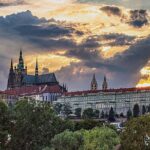
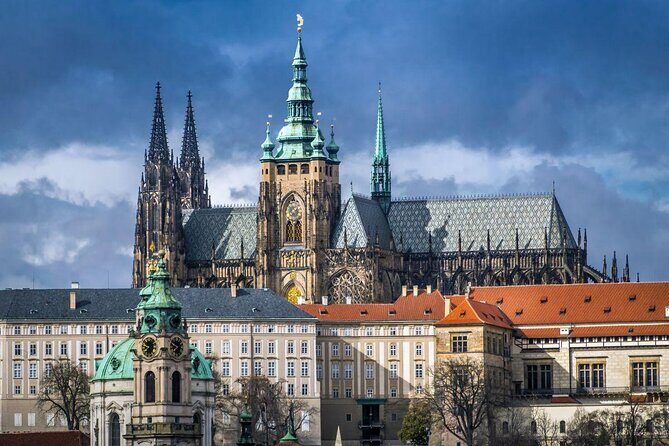
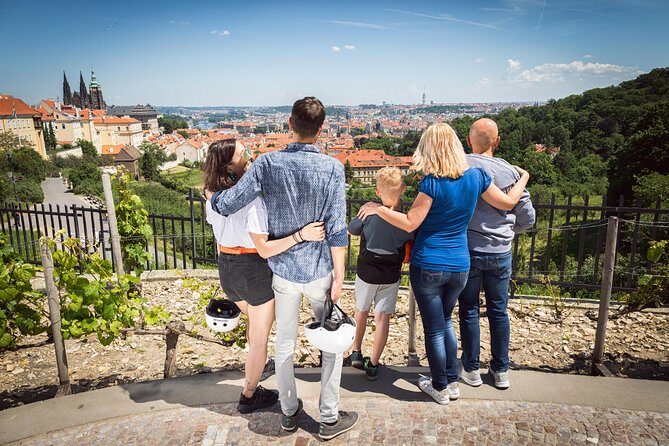
Next comes Prague Castle, one of the most dramatic panoramas in the city. The castle complex is huge—palaces, churches, gardens, courtyards. It has been a symbol of the Czech state for more than one thousand years.
It was founded in the 9th century, became the seat of Czech kings and later presidents, and it includes St. Vitus Cathedral, tied to royal coronations and burials. It’s also listed in the Guinness Book of Records as the largest ancient castle in the world.
This stop is about 10 minutes. That means you’ll get the broad “wow” and key context, but you won’t have time for a full cathedral visit. Still, the value is huge because castle-area views are hard to time on your own.
If you’re the type who likes your photos with meaning, the guide’s framing helps. You’re not just looking at buildings; you’re looking at political continuity across centuries.
Letná Park: the Vltava sweep and the “queue for meat” story
After castle territory, you roll to Letná Park, the second largest park in Prague. It’s also one of those places that keeps pulling you toward the river view.
Letná Park’s name is tied to Leteň, meaning Sunny Hill. It’s described as Prague’s largest non-built-up green area, good for sports, walks, and picnics. But the storytelling here adds weight.
This plain and nearby slopes served as a gathering place and campsite for armies. It also hosted celebrations like the coronation of Ottokar II of Bohemia. Then, in the 1950s, it became known for the huge Stalin monument people associated with the “queue for meat,” a 65-meter monument and the second largest of its kind in Europe.
Time here is about 15 minutes, which is perfect for both viewpoints and photo stops. If you’ve been focused on church and palace architecture, this park stop resets the mood and puts the Vltava back in the center of your mental map.
Kafka moment and the UNESCO ride through Hradčany
The route also includes a stop tied to Franz Kafka. You’ll hear core facts that help you connect the author to Prague rather than treating him as a distant name. Kafka was born in the Old Town, and his Jewish name was Anšel. He wrote major works like Amerika, Der Process (The Trial), Das Schloss (The Castle), plus stories such as die Verwandlung (The Metamorphosis).
You’ll also learn about his life pattern: he studied law, worked as an insurance clerk, never married, and dealt with tuberculosis. The story points out that his native house called U věže was destroyed by fire, and that the nearby square carries his name today.
Then the tour heads into Hradčany, riding through Prague’s UNESCO castle district. This is your final “big context” segment—an endcap that reinforces how the city is laid out: Old Town and Lesser Quarter below, castle district above, and always the river threading the middle.
Should you book this PragueWay e-scooter panoramic tour?
Book it if you want a short, high-effort-payoff experience. This tour fits especially well for first-timers who want major landmarks—Lennon Wall, Charles Bridge, Strahov, Petřín, Prague Castle, Letná—covered with an English guide and a pace that keeps moving.
I’d especially recommend it if you:
- like photos but hate long lines and slow slog
- want context while you walk and look
- are comfortable enough on a scooter after a training start
Skip it (or at least think hard) if you:
- don’t feel steady on two-wheel rides, even with training
- need a fully seated, no-skill option
- have limits on riding rules (like pregnancy or weight limits)
If you’re ready to handle basic scooter control for a fun, guided loop, this is a strong value choice for a tight Prague schedule.
FAQ
How long is the Prague E-Scooter Panoramic Tour?
It runs for about 1 hour 40 minutes (about 1.5 hours).
What’s included in the tour price?
The price includes the e-scooter rental and helmet, an English-speaking guide, training, unlimited water at the meeting point, and water and coffee at departure. Rain poncho is available on request, and winter gloves are provided in winter season.
Do I get an audio guide if I’m not comfortable with English?
Yes. The tour offers audio guides in German, Spanish, French, Italian, and Russian.
Where does the tour start and end?
It starts at Mostecká 53/4, Malá Strana, 118 00 Praha-Praha 1, Czechia, and ends back at the same meeting point.
Is it okay if it rains?
Light rain is not a reason to cancel. If weather is heavy, you’ll be offered a full refund or reschedule.
What do I need to bring?
Wear comfortable shoes and dress appropriately for the weather. Bring an ID or passport. You also need to be able to ride an e-scooter; bicycle riding skill is stated as absolutely necessary.
Who can participate?
Most travelers can participate, but children must be at least 150 cm tall (usually about 14 years old) to ride. Pregnant women and people over 120kg are not allowed, and riding is not allowed under the influence of alcohol or drugs.
How big is the group?
The tour has a maximum of 9 travelers.