REVIEW · PRAGUE
Private Prague Cold War Walking Tour
Book on Viator →Operated by Insight Cities · Bookable on Viator
Prague’s Cold War sites aren’t museum quiet. This private 3-hour walking tour takes you to the Soviet-era landmarks that shaped Czechoslovakia from 1948 to 1989, with a historian guide who ties politics to the streets. I like the way Vitkov Hill sets the tone fast, mixing monument scale, propaganda art, and the human stories behind it.
I also love how you connect the big events to places you’ll recognize, like the John Lennon Wall and Wenceslas Square. One possible drawback: there’s a steep climb up Vitkov Hill (about 20 minutes), so if that’s a concern, it’s worth flagging ahead of time.
In This Review
- Quick hits on this Prague Cold War walking tour
- Why this Prague Cold War walk feels different from a standard sights tour
- Private guide, real conversation, and names you might hear
- Meeting point in Prague 1: start where the tour makes sense
- The Karlin–Žižkov pedestrian tunnel: Cold War life underground
- Vitkov Hill and the National Monument: Soviet honor meets Czech memory
- Gottwald’s mausoleum: propaganda, preservation, and eerie details
- The view from Vitkov and Zižkov’s Brutalist skyline
- John Lennon Wall: freedom you could paint
- Letná Hill’s Stalin statue site: power watching from above
- Wenceslas Square: the 1968 tanks and the 1989 crowd
- Upside-down King Wenceslas: an ironic statue with political bite
- Time, pace, and price: what $390.37 buys you
- Fitness and comfort notes so you’re not surprised
- Who should book this Cold War tour?
- Should you book the Private Prague Cold War Walking Tour?
- FAQ
- How long is the Private Prague Cold War Walking Tour?
- Is this tour private, and how many people are in a group?
- Where do we meet the guide?
- Is hotel pickup included?
- What’s included in the price?
- What’s not included?
- Are there any tickets or paid admissions during the tour?
- Is the tour suitable if I have mobility issues?
- What language is the tour in?
- Can I cancel, and when is the refund deadline?
Quick hits on this Prague Cold War walking tour
- Private, small group feel with undivided attention (priced per group up to 10).
- Vitkov Hill’s Soviet soldier hall and Gottwald mausoleum put ideology in physical form.
- Locked nuclear-bomb shelter corridors in the Karlin–Žižkov pedestrian tunnel.
- John Lennon Wall + Lennon-era freedom talk in a place built for hope and graffiti.
- Wenceslas Square through multiple eras: parades, the 1968 invasion, and the 1989 Velvet Revolution.
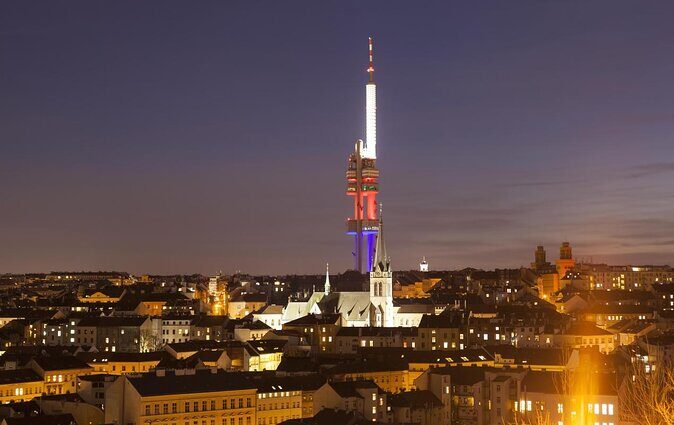
- Zižkov Television Tower viewpoints for a Prague skyline that matches the era’s mood.
Why this Prague Cold War walk feels different from a standard sights tour
Cold War Prague isn’t just monuments and dates. It’s about how a state shaped daily life: what people said, what they avoided, and what they could still carve out in public space. This tour does that with a street-level approach—buildings and symbols, then the stories that explain them.
You’ll get a historian guide in central Prague, and the pace is built for thinking. It’s not a speed-run with quick photos. You’ll walk, stop, and get context as you go, from Soviet honor culture to Czech resistance.
You can also read our reviews of more walking tours in Prague
Private guide, real conversation, and names you might hear
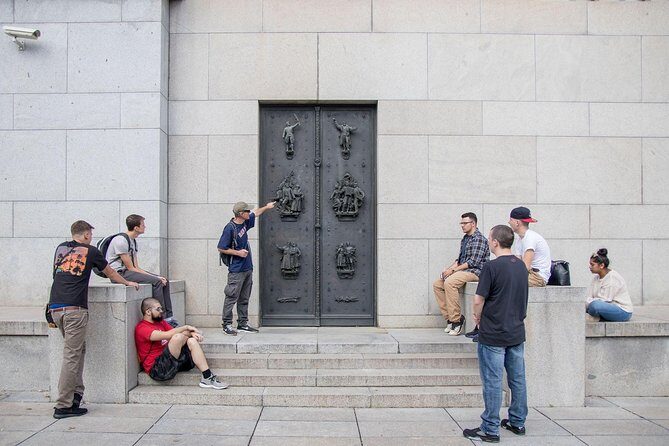
The private format changes everything. With a small group (up to 10), you can ask questions and steer the conversation to what you care about—propaganda, daily life, the 1968 Prague Spring, or why 1989 hit the way it did.
I’ve seen guides for this route described as engaging and interactive, not just reading facts. In particular, guides like Alzbeta and Vadim are noted for connecting locations to lived experience and for making the political themes understandable without flattening them.
Meeting point in Prague 1: start where the tour makes sense
You start at Náměstí Republiky 1077/2, Nové Město, meeting your guide near Kostel Svaty Josef. If you don’t arrange hotel pickup, plan to arrive 15 minutes early so you don’t miss the briefing and start clean.
This is also a practical tour to plan around transport. The meeting area is near public transportation, and you’ll receive tram tickets and a mobile ticket for the experience.
The Karlin–Žižkov pedestrian tunnel: Cold War life underground
Your first stop is the Pedestrian Tunnel Karlin–Žižkov, where you walk through an underground passage and notice the locked doors that lead to nuclear bomb-shelter corridors still maintained from the Cold War era. It’s an immediate gut-check. You go from normal street travel to the idea that everyday movement was planned alongside disaster.
What makes this stop valuable is how it changes your view of city space. Cold War thinking didn’t stay in government offices. It shaped infrastructure, too.
Tip: if you’re claustrophobic, go slow. This part is short, but it’s still an enclosed tunnel.
Vitkov Hill and the National Monument: Soviet honor meets Czech memory
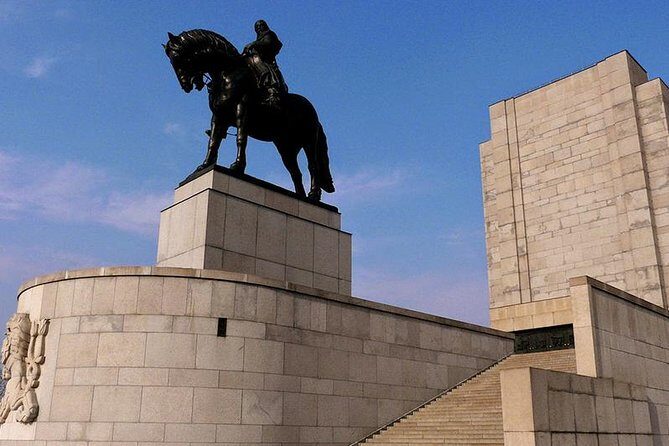
Then you head to Vitkov Hill and the National Monument area. This is the tour’s main “big statement” section, because it includes multiple layers of commemoration.
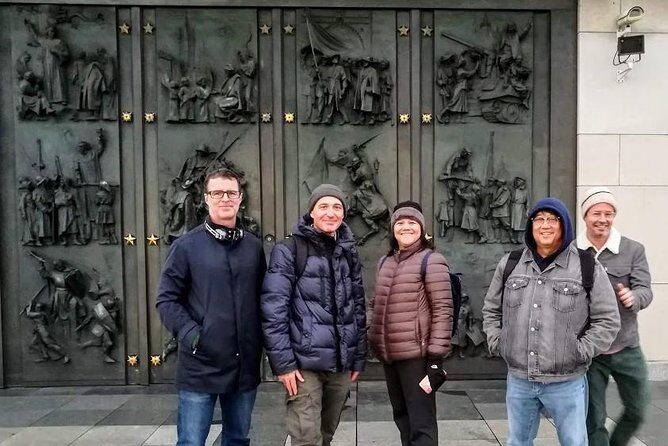
You’ll have time at the National Monument (about 30 minutes), where key features include:
- Jan Žižka and the monument complex
- The Hall of the Soviet Soldier (with Soviet-era decorative design intended to honor soldiers killed during World War II in Eastern Europe)
- The former mausoleum of Klement Gottwald
Admission is not included for the National Monument, so check your comfort level with paid entries before you go.
You can also read our reviews of more private tours in Prague

Gottwald’s mausoleum: propaganda, preservation, and eerie details
One of the most striking parts of this tour is stopping by the former mausoleum of Klement Gottwald, the communist president of Czechoslovakia from 1948 to 1953. You’ll hear what this site represented, including its connection to the mummified body displayed there and the behind-the-scenes engineering used to keep the body preserved.
The tour also references the laboratory and temperature-control center staff used to maintain the embalmed body. Even if you’re not a history-nerd, this is the kind of detail that makes Cold War politics feel concrete—less like a lecture, more like a system.
If you’re sensitive to macabre or unsettling exhibits, consider that this is part of the experience. It’s historically important, but it’s not the “pleasant Prague” version of the story.
The view from Vitkov and Zižkov’s Brutalist skyline
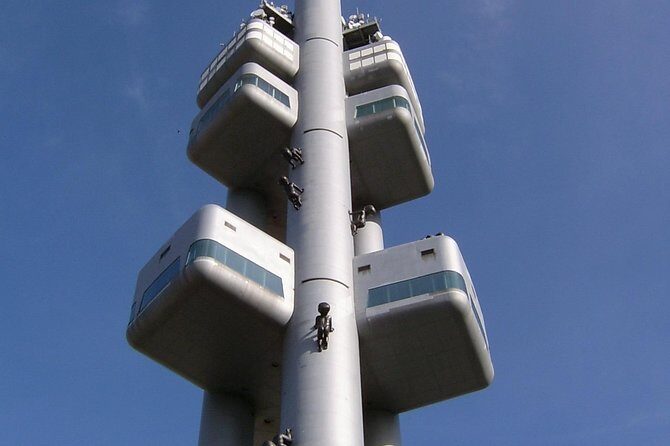
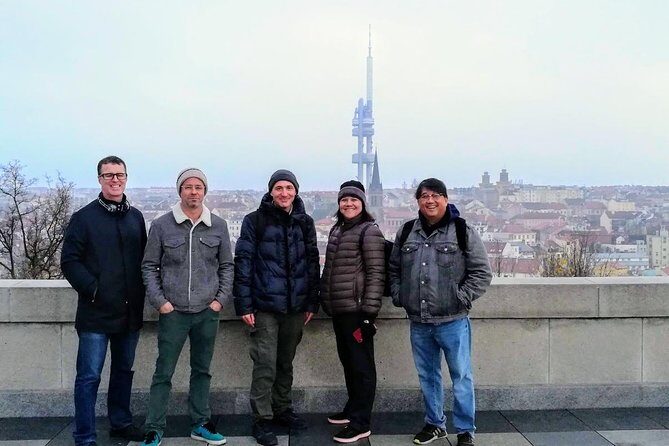
After the monument area, you’ll also see viewpoints connected to the Zizkov Television Tower, often called one of the best angles for the tower’s Brutalist style. Even with minimal time there (around 5 minutes), it adds contrast.
This is where Prague stops being postcard-straight and starts feeling like a city with pressure underneath it. The tower is bold and modern-looking, but it’s presented in a Cold War story about power, visibility, and control.
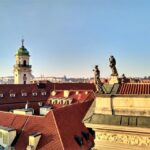
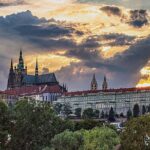
And if you time it right, the hill views can be stunning. One of the strongest notes from this experience is that the sunset over Prague from Vitkov can be a real moment.
John Lennon Wall: freedom you could paint
In the city center, you’ll walk past the John Lennon Wall, a famous spot associated with protest graffiti and messages of hope. This isn’t just street art as decoration. On this tour, it’s framed as an outlet for Western-style freedom during the Cold War—something people expressed when open dissent wasn’t easy.
The practical value here is how it gives you a different kind of “primary source.” You’re not just seeing buildings. You’re seeing the idea of public language: what people dared to write where others could read it.
Letná Hill’s Stalin statue site: power watching from above
The tour also includes Letná Hill, where you’ll hear about one of the world’s largest statues of Josef Stalin that once looked over the city. Even though the physical statue isn’t the main point today, the location matters. It shows how regimes used scale—literally towering over people—to send messages without speaking.
This is a good stop if you want to understand propaganda as design. The Cold War wasn’t only about speeches. It was also about monuments that told you who mattered.
Wenceslas Square: the 1968 tanks and the 1989 crowd
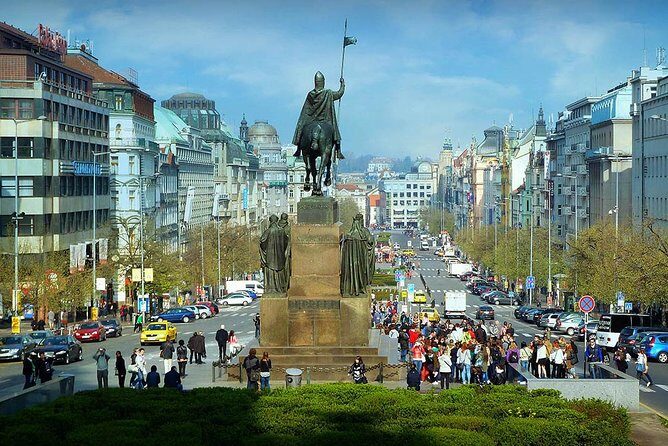
Next comes Wenceslas Square, one of Prague’s big stages. You’ll walk through it with context from its long timeline, including its role in 20th-century tensions.
Here’s the key story this tour connects:
- the square as a place of military parades tied to occupying powers
- the Prague Spring era and how it ended
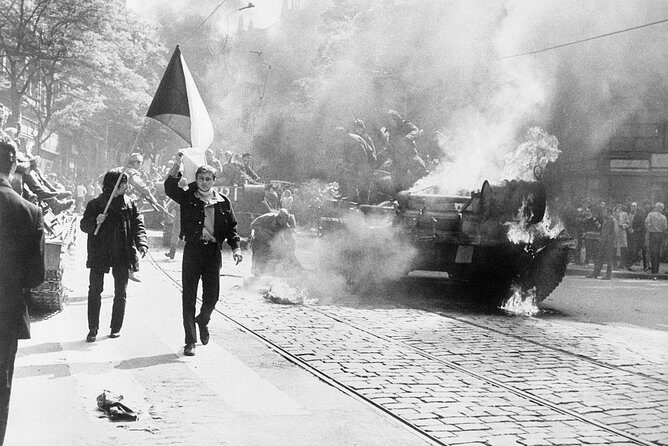
- the arrival of Warsaw Pact tanks in 1968 to crush that brief opening for freedom of speech and an independent press
- the shift into the Velvet Revolution in 1989, with crowds and demonstrations that pushed communist rule to collapse
You’ll also hear about monuments to Czech protestors. That matters because it makes resistance look less like a vague idea and more like a group effort with real victims and real outcomes.
Upside-down King Wenceslas: an ironic statue with political bite
Near the end, you’ll see the Upside-Down Statue of King Wenceslas Riding a Dead Horse. The point isn’t just the cleverness of the image. You’ll connect it to Czech and Central European attitudes toward power—how irony can be a coping tool and a warning.
This stop works especially well after the heavier sites. You’ve gone through Soviet symbolism, repression details, and public protest. Then Prague gives you a visual joke with teeth.
Time, pace, and price: what $390.37 buys you
The tour runs about 3 hours, and it’s offered with a morning or afternoon departure option. That flexibility matters if you’re also doing Old Town, the Castle area, or a food tour the same day.
Price is $390.37 per group (up to 10). In practical terms, that can be good value if you’re traveling with friends or family because it’s not per person. For example:
- If you split among 6 people, you’re roughly around $65 per person.
- If you split among 10 people, it’s roughly $39 per person.
You also get a historian guide plus tram tickets, which helps cover part of the in-city logistics. Food and drinks are not included, so plan on buying something later or keeping water handy.
Fitness and comfort notes so you’re not surprised
This tour calls for moderate physical fitness. The big factor is the steep climb up Vitkov Hill (about 20 minutes). If stairs and uphill walks are hard for you, let the operator know in advance—there’s an option to leave out Vitkov Hill and focus on other Cold War-related sights.
Also, expect Prague weather to matter. If it’s hot or rainy, you’ll want comfortable shoes and a light layer.
Who should book this Cold War tour?
You’ll enjoy it most if you:
- want Cold War context without turning it into a classroom lecture
- like learning through places—what the state built, where it stood, and what people did with public space
- appreciate guides who connect politics to everyday life, not just big historical events
- are interested in Soviet-era monuments and protest symbolism in modern Prague
If you mostly want postcard views and light commentary, this may feel heavy. But if you like understanding why Prague looks the way it does—built by power and resisted by people—this tour is a strong fit.
Should you book the Private Prague Cold War Walking Tour?
Yes, if you want a clear, place-based explanation of Cold War Prague, this is one of the more meaningful ways to spend a few hours. The combination of underground shelter details, Vitkov’s Soviet and Czech memory layers, Lennon Wall protest writing, and Wenceslas Square’s key turning points gives you a storyline you can carry back into the rest of your trip.
Book it especially if you’re traveling with others, because the per-group pricing can make it far more affordable than you’d expect for a private historian-led experience. Just be honest with yourself about the uphill portion—and if that’s an issue, ask about swapping out Vitkov Hill so you still get the Cold War story without the strain.
FAQ
How long is the Private Prague Cold War Walking Tour?
It lasts about 3 hours.
Is this tour private, and how many people are in a group?
It’s a private tour/activity, and pricing is per group up to 10 people.
Where do we meet the guide?
The start point is Náměstí Republiky 1077/2, Nové Město, near Kostel Svaty Josef. If you are not arranging pickup, meet your guide 15 minutes before the start time.
Is hotel pickup included?
Pickup is offered, but hotel pickup and drop-off are not included. If you want pickup, you’ll need to arrange it.
What’s included in the price?
The tour includes a historian guide and tram tickets.
What’s not included?
Food and drinks are not included, and hotel pickup and drop-off are not included. The National Monument at Vitkov also lists admission ticket not included.
Are there any tickets or paid admissions during the tour?
Some parts are listed as free (like the pedestrian tunnel), while admission is not included for the National Monument at Vitkov. You’ll want to plan for that.
Is the tour suitable if I have mobility issues?
You should have moderate physical fitness. There is a steep climb of about 20 minutes up Vitkov Hill. If mobility is an issue, you can let the operator know so they can leave out Vitkov Hill and focus on other sites.
What language is the tour in?
It’s offered in English.
Can I cancel, and when is the refund deadline?
Yes. You can cancel for a full refund up to 24 hours in advance of the experience start time. If you cancel less than 24 hours before, the amount paid is not refunded.