REVIEW · PRAGUE
Prague: Top Sights and Historic Center Introduction Tour
Book on GetYourGuide →Operated by Real Prague Guides · Bookable on GetYourGuide
Prague feels like a living puzzle. This 3-hour walking introduction strings together the city’s big icons with the smaller stories that explain why they matter, from the Powder Gate area to the Jewish Quarter and over Charles Bridge. You’ll get a clear Astronomical Clock tutorial and plenty of photo stops along the way, guided in English by certified local professionals.
What I like most is how hands-on it feels. First, you learn how to read the Prague Astronomical Clock instead of just staring at it. Second, the Jewish Quarter section comes with context you can actually remember, including the Golem legend and exactly what to do if you want synagogue interiors later.
One thing to plan for: it’s 3 kilometers of walking on uneven old-stone streets, and it runs rain or shine. It also isn’t suitable for wheelchair users or people with mobility impairments.
In This Review
- Key things you’ll notice on this tour
- Meeting at Prašná Brána: the smart start for your first day
- Powder Tower and the Powder Gate story you’ll actually use later
- Cubism and culture at the House of the Black Madonna and the Estates Theatre area
- Old Town Square and the Astronomical Clock: the main event, explained clearly
- Church of Our Lady before Týn, Jan Hus, and the monuments that tell Prague’s point of view
- The café break: a small pause that keeps the tour enjoyable
- Franz Kafka, Pařížská Street, and the shift toward the Jewish Quarter
- Old-New Synagogue, Old Jewish Cemetery, and the Golem story (without rushing ticket lines)
- Charles Bridge photo time with real context, not just a stamp
- Ending at the John Lennon Wall: the final clue to Prague’s modern soul
- Price and value: what $20 buys in real guidance
- Who this tour is best for
- Should you book this Prague orientation tour?
- FAQ
- Where do I meet the guide?
- How long is the tour and how much walking is involved?
- Is the tour in English?
- What sights are included in the walking route?
- Does the tour include the interior visits to synagogues?
- Is there a break during the tour?
- What’s the walking style—rain or shine?
- Is Prague Castle part of this tour?
- What should I wear or bring?
Key things you’ll notice on this tour
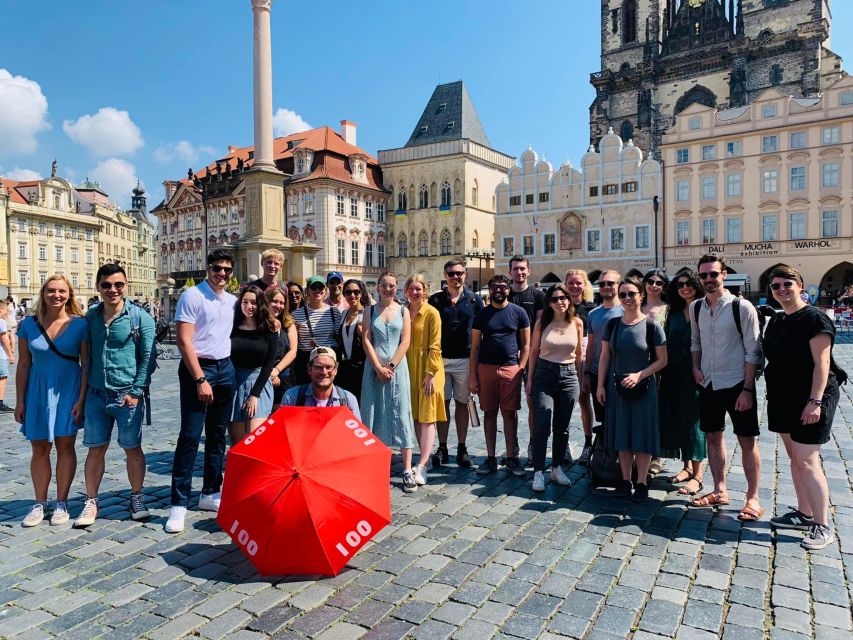
- Astronomical Clock explained step-by-step, so you know what you’re looking at
- A route that links major sights to the stories between them, not just postcard stops
- Jewish Quarter highlights with clear guidance on tickets for interior visits
- Charles Bridge and John Lennon Wall with great pacing for photos
- Local guide energy with humor that keeps the walk moving
- A short café break built into the timing
Meeting at Prašná Brána: the smart start for your first day
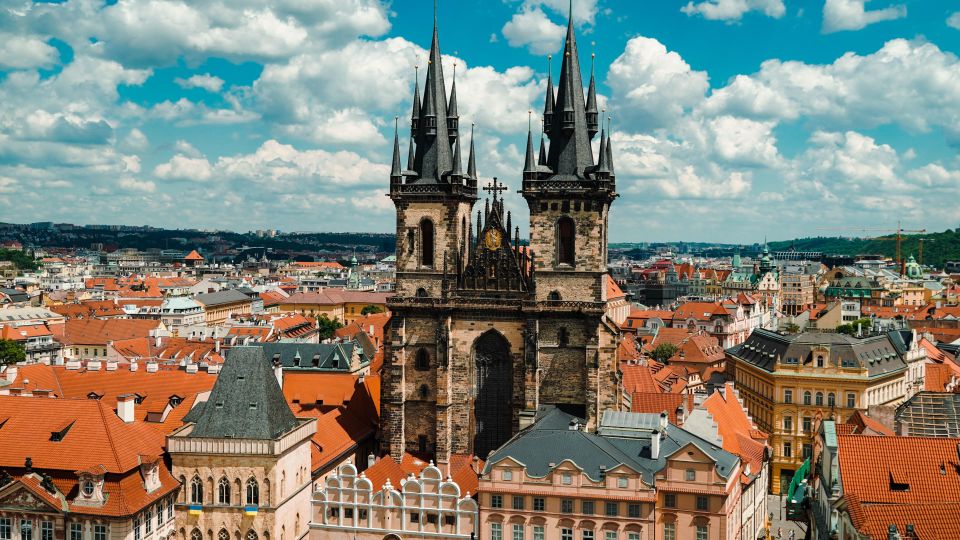
The tour begins at the Powder Gate (Prašná Brána) area, with the guide holding a red open umbrella that has a white 100 logo. This is a good choice because you’re starting where people naturally funnel toward Old Town. If you like to get your bearings fast, you’re in the right spot.
Your day is built for orientation. In just 3 hours, you cover the kind of central loop that helps you understand where everything sits: Old Town landmarks, the shift toward the Jewish Quarter, then the crossing over to the Charles Bridge side and, finally, the John Lennon Wall finish.
The walking itself is straightforward in theory, but you’re in historic Prague—real streets, real crowds, and occasional slippery patches when it’s wet. Wear comfortable shoes. You’ll cover about 3 kilometers total, and the pace is kept relaxed enough that it still feels like a conversation, not a sprint.
You can also read our reviews of more tours and experiences in Prague.


Powder Tower and the Powder Gate story you’ll actually use later
Early on, you’ll stop at the Powder Tower (often discussed with the Powder Gate complex). This is where the tour goes beyond “pretty view” and explains the defensive logic of Old Town—where the original wall line was, and how a moat fit into the city’s protection.
Why this matters: Prague is full of buildings that look like they’ve been standing forever, but the city’s shape makes more sense when you understand what used to be there. Once you grasp that defensive outline, you’ll start spotting the traces of old planning as you keep walking on your own later.
This section is also a nice mental warm-up. You’re not yet dealing with the heavy crowd energy of Old Town Square or the main tourist choke points, so the guide has an easier job keeping the group together while telling the bigger-picture story.
Cubism and culture at the House of the Black Madonna and the Estates Theatre area
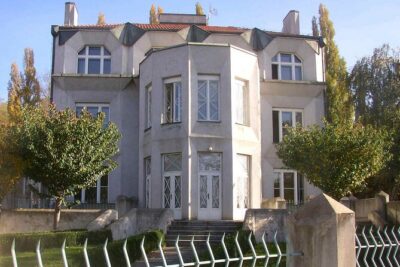
Next comes the House at the Black Madonna, described as the most famous cubist house in the world. Even if you’re not a design person, this stop helps you notice something important about Prague: it isn’t only medieval stone and Gothic spires. It keeps changing, and it keeps layers.
Right after that, you’ll pass by/see the Estates Theatre area for context that connects art, power, and public life in earlier centuries. This is the kind of stop that works well on an introductory tour because it teaches you to read the city like a document. The street isn’t just a route—it’s a timeline.
If you’re the kind of traveler who likes learning what happened around famous buildings (instead of only when they were built), this part of the walk is your speed.
Old Town Square and the Astronomical Clock: the main event, explained clearly
Old Town Square is where the city concentrates its theater of history. You’ll get time to look around, and the guide points out what to pay attention to so you don’t end up with that tired feeling of seeing everything and remembering nothing.
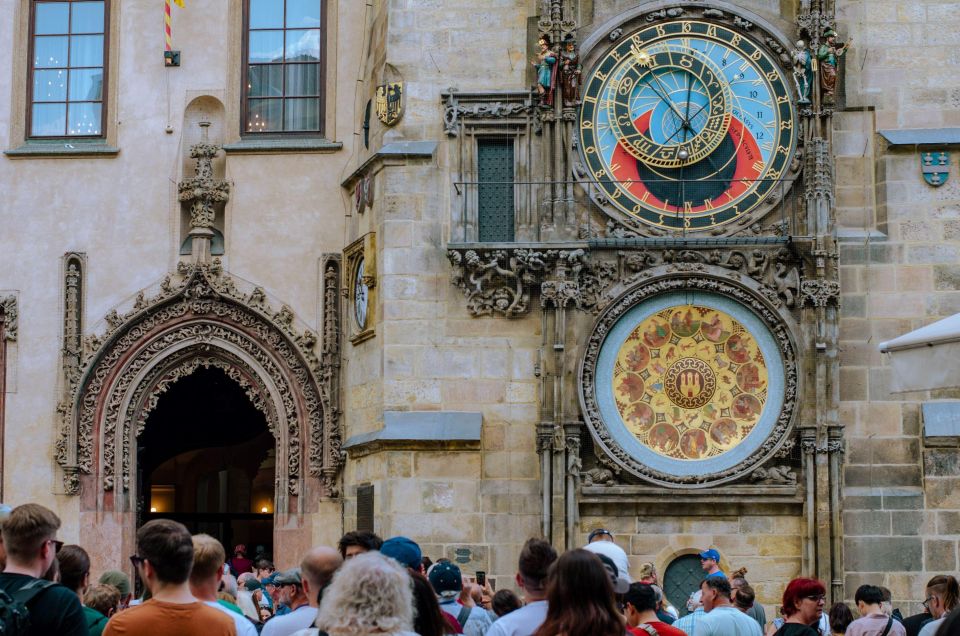
From there, the tour leads into the Astronomical Clock lesson. The key promise here is simple: you learn how to read it. Not just what it’s called, but what the different parts are doing and how to interpret the spectacle when it goes through its motions.
Also pay attention to what happens around Charles University. You’ll be taught some Czech, and you’ll hear about where Mozart premiered Don Giovanni. That mix—language, cultural trivia, and a real landmark—helps the Clock make more sense as part of a bigger intellectual and artistic scene.
Practical note: this is a busy stop. Expect crowds. That’s normal for Prague, and it’s exactly why a guide matters. You’ll learn where to stand for visibility and how to keep your spot without feeling like you’re fighting the crowd.
Church of Our Lady before Týn, Jan Hus, and the monuments that tell Prague’s point of view
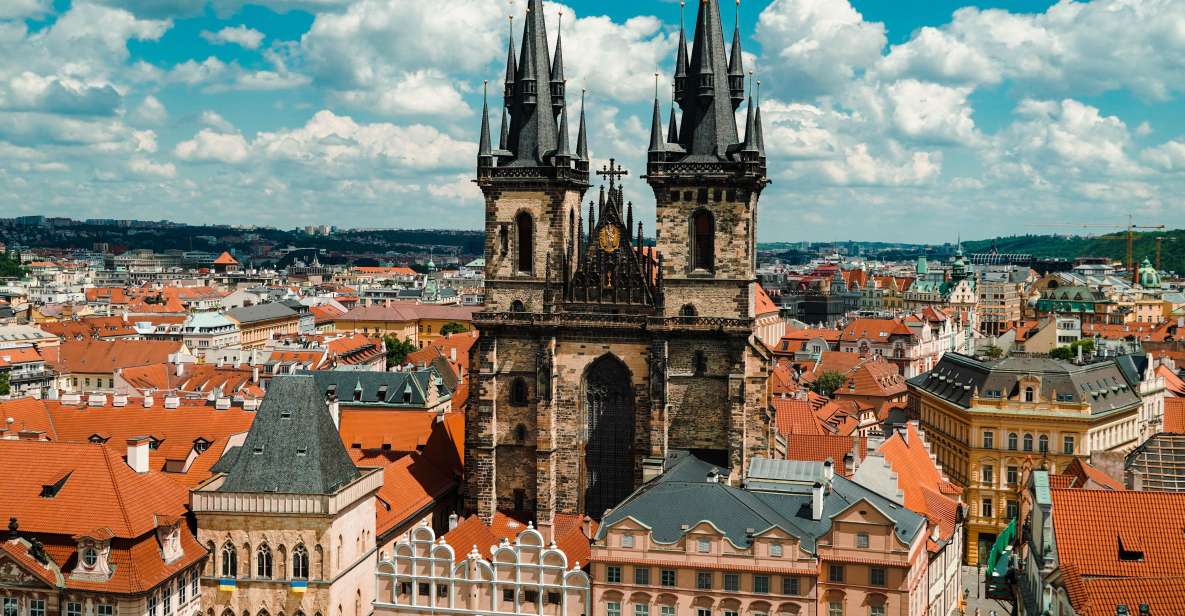
After the Clock area, you’ll continue with more Old Town identity markers: the Church of Our Lady before Týn and the Jan Hus Monument. These stops give you quick context for why names and symbols show up again and again in Prague’s streetscape.
What you’re really gaining here is interpretive power. Once you know who Jan Hus was and why his name remains attached to the city’s memory, you’ll read the rest of Prague differently. The architecture stops feeling random and starts feeling intentional.
This part of the tour also gives you a breather between the biggest crowd moments. It’s still central Prague, but the pacing helps you absorb information without constantly looking over your shoulder for the next photo moment.


The café break: a small pause that keeps the tour enjoyable
You’ll get a short coffee and restroom break in a local café for about 15 minutes. This is a smart time-out built into the route so you don’t end up rushing through the Jewish Quarter section on empty.
One caution: the restroom line can get long during breaks, especially in colder months when people want to warm up inside. If bathrooms are important to you, go early in the break window rather than right at the end.
Food and drinks aren’t included, so come prepared with a plan. A quick hot drink and a bathroom reset is usually all you need before continuing the walk.
Franz Kafka, Pařížská Street, and the shift toward the Jewish Quarter
After the café stop, the tour moves toward other central points that show how Prague isn’t stuck in one era. You’ll see a Franz Kafka Monument, which helps anchor the city’s literary reputation in the physical layout.
You’ll also pass by Pařížská Street. Even though it’s a short stop, it’s useful because it shows the direction Prague grew in more modern times—how the historic core connects to shopping streets and everyday city life.
Why this matters on an intro tour: it makes your later self-guided exploration easier. After this, you’ll be better at navigating from the heavy-hitters to places that feel more local.
Old-New Synagogue, Old Jewish Cemetery, and the Golem story (without rushing ticket lines)
The Jewish Quarter portion focuses on major sights around the Old-New Synagogue and the Old Jewish Cemetery, plus the Jewish Town Hall. You’ll also hear the legend of the Golem—one of those Prague stories that shows up in art, culture, and conversation because it speaks to deeper themes of protection, fear, and community.
Important detail: you won’t go inside the synagogues on this tour because of ticket requirements. That said, the guide will explain what they display inside and, crucially, will give you direction on how to get tickets if you want to visit later.
This is where a good guide changes everything. With the context you get on the walk, those interior visits feel less like a checklist and more like you’re stepping into a story you already understand. You also avoid the frustration of showing up expecting access that requires separate timing.
Charles Bridge photo time with real context, not just a stamp
Then you cross Charles Bridge. This is one of those Prague moments that looks like a postcard, but it’s also an actual crossing filled with history and foot traffic.
Your guide keeps the group moving in a way that makes it easier to grab photos without turning the whole stop into chaos. If you’re traveling in busy season, you’ll still feel the crowd energy. The difference is that you’ll know what to look for and what you’re looking at, so you enjoy the bridge rather than only enduring it.
Keep your camera ready, but also keep your eyes open. The tour’s strength is connecting what you see to why it’s there.
Ending at the John Lennon Wall: the final clue to Prague’s modern soul
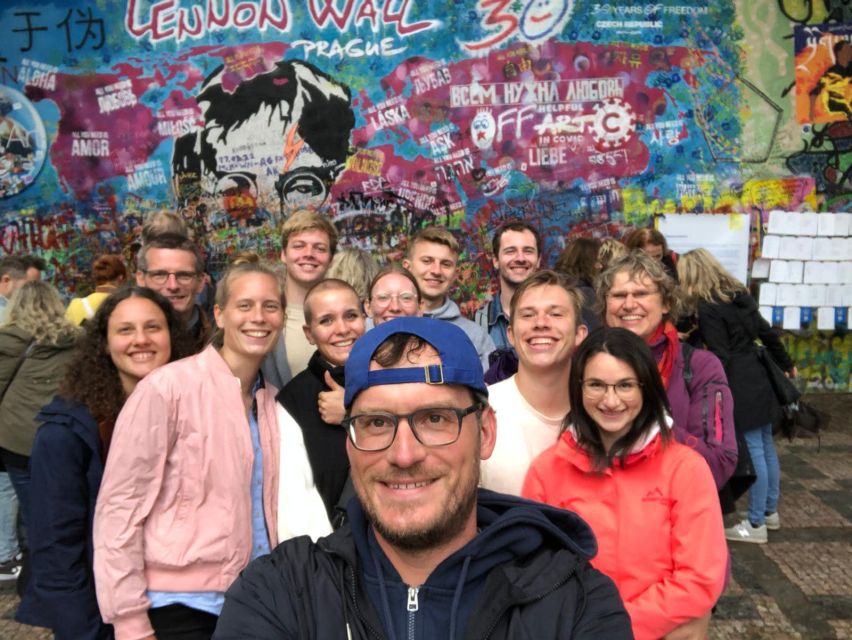
The tour ends at the John Lennon Wall, one of Prague’s most recognizable modern landmarks. By the time you arrive, you’ve gone from medieval defenses and art icons to synagogue-area stories and Charles Bridge. The Lennon Wall lands like a pop of present-day meaning.
It’s a fitting finish because it shows a different side of Prague: a city that remembers its past, but also uses public spaces to express ideas. If you want a last quick place to decompress and plan what’s next, this is a good stop to sit for a moment and look around.
The guide will also set you up with recommendations for what to explore further—museums and attractions—so the walking tour doesn’t end when you reach the wall.
Price and value: what $20 buys in real guidance
At about $20 per person for a 3-hour, English-only guided walk, this is built for value. You’re not paying for bus comfort or a long schedule with lots of ticketed interiors. You’re paying for someone to help you read the city quickly and correctly.
That’s why the included certified local guide matters. In a place like Prague, it’s easy to walk past meaningful details and miss the connections. A guide who can explain the Astronomical Clock, point out why defensive walls shaped Old Town, and give you a sensible way to continue in the Jewish Quarter is exactly where your money tends to pay off.
Group size is usually in the 6 to 30 range, which helps keep the experience lively without feeling like you’re lost in a mega-bus crowd. If you care about asking questions, that smaller group reality is a plus.
Who this tour is best for
This works especially well if:
- It’s your first day in Prague and you want orientation fast
- You like a mix of major highlights plus stories that explain the city’s layers
- You want an Astronomical Clock lesson instead of a quick photo stop
- You’re comfortable walking 3 kilometers on historic streets
It’s not a good fit if you need wheelchair access or have mobility limits that make uneven pavement and steady walking difficult.
Should you book this Prague orientation tour?
Yes, if you want a smart first pass at Prague’s core landmarks with a guide who can connect the dots. The best reason to book is the combination of practical interpretation—especially the Clock lesson—and the way the Jewish Quarter segment is handled with context plus direction for later interior visits.
If you hate crowds, you’ll still see crowds at key sights, but you’ll be better positioned and better informed. If you love history only when it’s quiet and slow, you might prefer a longer, less central route. For most people who want to start strong and keep exploring after, this hits the right balance.
FAQ
Where do I meet the guide?
Meet the guide in front of the Powder Gate (Prašná Brána). The guide will have a red opened umbrella with a white 100 logo.
How long is the tour and how much walking is involved?
The tour lasts about 3 hours and includes around 3 kilometers of walking.
Is the tour in English?
Yes. The tour is conducted in English only.
What sights are included in the walking route?
You’ll cover Old Town, the Jewish Quarter, cross Charles Bridge, and finish at the John Lennon Wall. Along the way you’ll see the Powder Tower area, the House of the Black Madonna, Old Town Square, the Astronomical Clock area, Church of Our Lady before Týn, Jan Hus Monument, and several Jewish Quarter landmarks.
Does the tour include the interior visits to synagogues?
No. The tour won’t visit the interiors of the synagogues due to ticket requirements, but the guide will explain what you can expect inside and help you with ticket guidance for later.
Is there a break during the tour?
Yes. There’s a 15-minute coffee and restroom break.
What’s the walking style—rain or shine?
The tour runs rain or shine.
Is Prague Castle part of this tour?
No. Prague Castle isn’t included. The provider offers another castle-focused tour for the interiors.
What should I wear or bring?
Wear comfortable shoes and comfortable clothes, since you’ll walk around in central Prague.