REVIEW · PRAGUE
Prague Through the Eyes of Franz Kafka 150 minutes Tour
Book on Viator →Operated by Get Prague Guide · Bookable on Viator
Kafka’s Prague feels uncomfortably close. This 2.5-hour, English-language tour lets you connect Kafka’s life to real streets and buildings, with a licensed guide leading the way and a practical meeting point off Old Town Square. You start at Get Prague Guide (Maiselova 5) and follow a Kafka-themed route that often brings you to spots other walks skip.
I especially like the tea or coffee stop in a literary-style cafe, because it slows the pace without breaking the theme. I also like how the guide uses Prague’s Jewish quarter, Josefov, and the surrounding Old Town streets to explain why the city shaped Kafka’s imagination, not just his biography. The only possible drawback: if you’re hoping for heavy, text-focused analysis of Kafka’s literary impact, you may feel the emphasis lands more on places, atmosphere, and Jewish community history than on deep literary interpretation.
In This Review
- Key Kafka-Prague details that make this tour work
- Entering Kafka’s Prague: what you’re really buying for $40.85
- Meeting at Get Prague Guide (Maiselova 5) without wasting time
- Staroměstské náměstí: Prague’s famous square, used as Kafka’s doorway
- Josefov: the former Jewish Ghetto and why it’s central to the story
- Old Town streets tied to Kafka’s family, studies, and Felice Bauer
- Getting a tea or coffee break at a Kafka-style cafe
- Tour pace, group size, and who it suits best
- Price and value: what makes this feel fair for a guided walk
- Should you book Prague Through the Eyes of Franz Kafka?
- FAQ
- How long is the Prague Through the Eyes of Franz Kafka tour?
- Where do I meet the guide, and what time does it start?
- Is the tour offered in English?
- What’s included in the price?
- Do children need to be accompanied?
- Can I cancel for free?
Key Kafka-Prague details that make this tour work
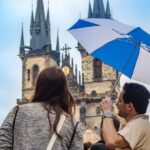
- Blue-and-white umbrella meeting point: you meet at Get Prague Guide, Maiselova 5—easy to spot so you’re not wandering streets early.
- Small-group feel: capped at 50 travelers, which helps you actually hear the guide and ask questions.
- Tea or coffee included: a short, thoughtful pause in a Kafka-friendly cafe setting.
- Josefov context matters: the tour ties Kafka to Prague’s former Jewish Ghetto and the city’s wider multicultural story.
- Stops built around real-life milestones: from Staroměstské náměstí to the Old Town area connected to Kafka’s schooling and meeting Felice Bauer.
Entering Kafka’s Prague: what you’re really buying for $40.85
At $40.85 per person for about 2.5 hours, this is priced like a quality walking tour—especially because the core value is a licensed guide plus tea or coffee. You’re not paying extra for museum-style tickets on the route, and most of what you’ll get is the guide’s framing: why Kafka’s Prague matters, and how you can read the city like a map of his life.
I like that the tour is built for people who want more than just photos. You get stories that place Kafka’s world in specific streets: the kind of context that makes Prague feel more personal and a bit more complicated.
The other practical win: it’s offered in English, and the tour is designed so most people can take part. If you’re traveling solo, as a couple, or with friends, you’ll be in a group that’s big enough to meet people but small enough to keep moving.
You can also read our reviews of more tours and experiences in Prague.

Meeting at Get Prague Guide (Maiselova 5) without wasting time
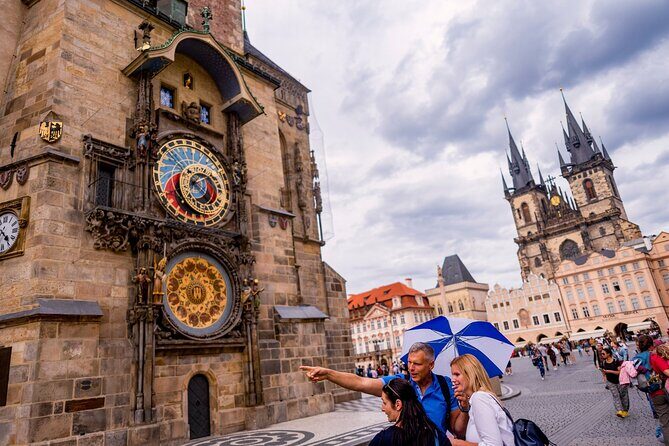
This tour starts at Get Prague Guide, at Maiselova 5, 110 00 Prague 1. The key tip is simple: look for the blue-and-white umbrella. You meet there first, then the group heads out toward Old Town.
Start time is 1:30 pm, and the tour ends back in Prague 1 near Old Town. I like this setup because it’s straightforward: you can plan your morning around museums, lunch, or a quick river wander, then step into a guided walk that finishes near where you’ll likely continue exploring.
Because you’ll need to locate the meeting office early enough to settle in, I recommend arriving 10 minutes ahead. It’s not because the process is difficult; it’s just how you avoid stress in a city where street names can be close and intersections can get busy.
Staroměstské náměstí: Prague’s famous square, used as Kafka’s doorway
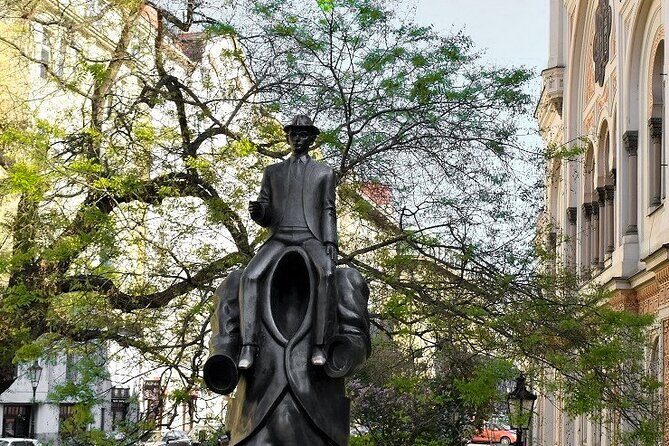
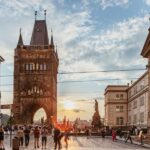
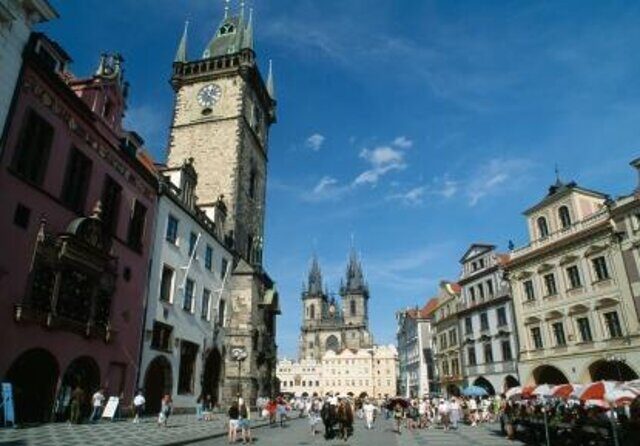
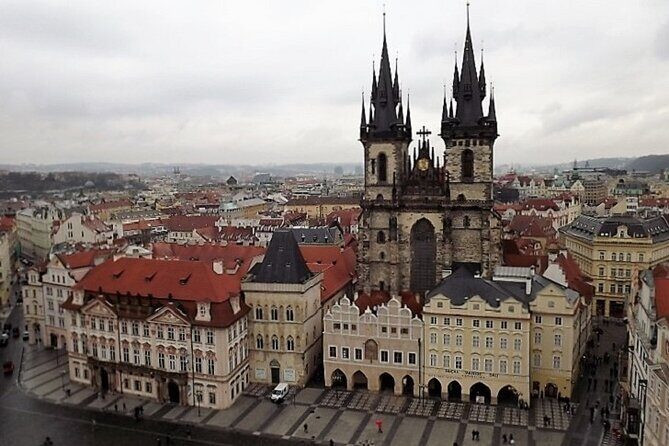
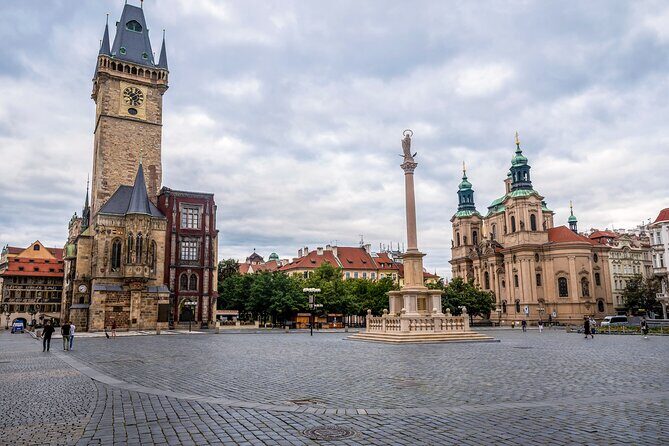
One of the first real moments is Staroměstské náměstí, Prague’s iconic Old Town Square. The tour doesn’t treat this place like a postcard stop. Instead, you use the square as a starting point for thinking about Kafka’s era and the social city around him.
This is where the guide starts building the feeling you’ll carry through the walk. You’re not only learning what the landmarks are; you’re learning how Kafka’s world worked—who lived where, what communities existed, and how Prague’s identity kept shifting over time.
If you’re the type who gets impatient at “checklist tours,” this section should feel more like a story-driven orientation. You get a fast, focused introduction, and then you move on to less obvious but more meaningful stops.
Josefov: the former Jewish Ghetto and why it’s central to the story
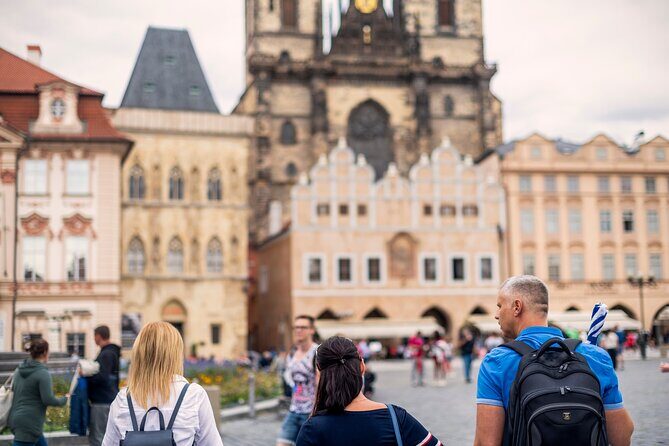
Josefov is the tour’s emotional center. Kafka spent much of his life and wrote many major works with Prague’s Jewish community and neighborhood realities in mind, and the walk makes that connection concrete by bringing you into the context of Josefov.
Here, the guide focuses on more than names and dates. You’ll hear about the fate of Prague’s Jewish community and how the city’s multicultural history intersects with art and literature. It’s the part of the tour where your takeaway shifts from I saw a building to I understand what life in this city meant.
I also like that the tour doesn’t keep everything inside “Kafka facts.” It broadens the lens: Jewish history in Prague isn’t just background noise—it’s part of the creative atmosphere that shaped how people wrote, thought, and lived. That’s often what makes Kafka resonate with people, even if they’re not hardcore literary scholars.
One caution: if you’ve already done a long, detailed Jewish quarter walk that day or the day before, you might find some overlap. Still, this route uses that material to support the Kafka angle, so even familiar streets can feel newly explained.
Old Town streets tied to Kafka’s family, studies, and Felice Bauer
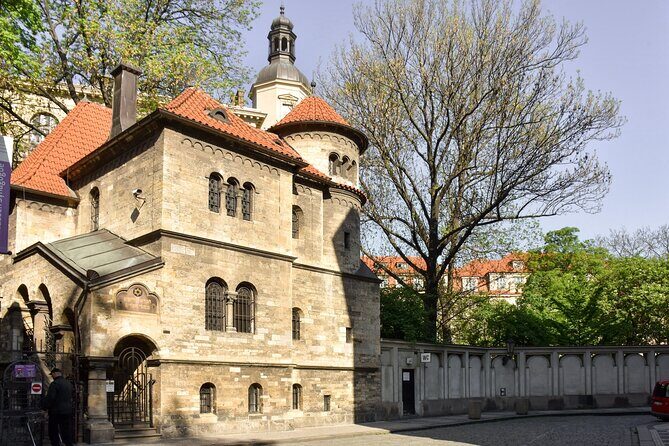
After Josefov, you move through the Old Town area and follow a route that’s specifically connected to Kafka’s life. The tour passes by apartments where the Kafka family lived, and it also points you toward places where Kafka went to school and university.
What I find especially useful is the guide’s emphasis on the human timeline. You’re not just hearing that he grew up somewhere; you’re getting a sense of the city as a chain of lived-in moments. That makes it easier to picture him moving through Prague rather than treating him like a distant author in a book.
The tour also includes the romantic and personal side of his story. You walk near where Kafka met his fiancée, Felice Bauer, and you get help connecting those personal milestones to the kind of reflective, often anxious world that shows up in his writing. The guide’s job here is to keep the city readable, so the places don’t just blur together.
As you go, you’ll also pass by salons and synagogues that helped shape Kafka’s literary contemplations. This matters because it explains why his work feels so tied to systems, everyday rules, and rooms full of thought. Prague isn’t just scenery—it’s part of how his ideas take shape.

Getting a tea or coffee break at a Kafka-style cafe
A small pause can make a walking tour feel better, and this one gives you tea or coffee as part of the experience. The stop is described as happening in a Kafka-liking literary cafe setting, which means it fits the theme instead of feeling like a random refreshment stop.
I like breaks like this for two reasons. First, it gives you time to settle your legs without stepping away from the story. Second, it’s often when questions come out—people ask about Prague culture, Jewish history, and how Kafka’s relationships show up in his writing.
It’s also a good moment to regroup if you’re the kind of traveler who likes to take a few notes. If you’re writing down names of streets or places you want to revisit later, you’ll be grateful the tour includes a built-in pause.
Tour pace, group size, and who it suits best
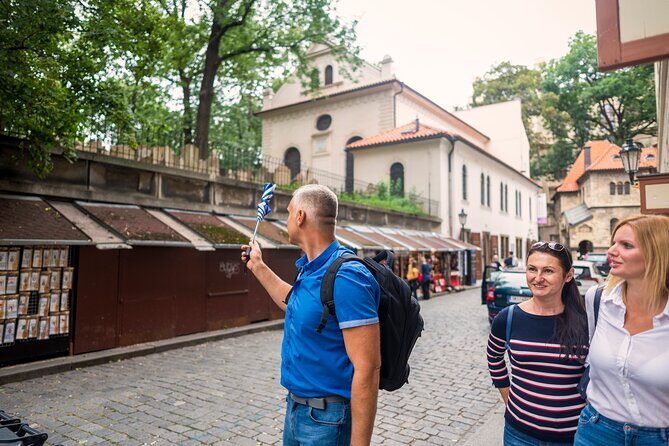
This is a 2-hour 30-minute walk designed to keep moving but not rush. Expect a guided stroll with stops that feel like short chapters rather than long speeches. Total time is roughly 2.5 hours, and that schedule is long enough to connect the dots, but short enough that you can still enjoy Prague after.
With a maximum group size of 50 travelers, you’re unlikely to feel packed in like some big-city bus-style tours. It’s still a group format, so it helps if you’re comfortable walking city blocks and listening in outdoor conditions.
This tour can work well for:
- Kafka fans who want a map of his Prague in real places
- First-time Prague visitors who prefer guided context over self-guided wandering
- Travelers who enjoy history through people, not just monuments
It may be less ideal for people who want only museum-style content or who want a strict, text-heavy critique of Kafka’s books with lots of quote-level analysis. The emphasis here is on the city as a character.
For families: children must be accompanied by an adult. For everyone else: most travelers can participate.
Price and value: what makes this feel fair for a guided walk
The biggest value driver is what’s included. You pay for:
- A live licensed tour guide
- Tea or coffee
And you’re not expected to buy separate admissions as part of the tour stops. That turns the ticket price into something closer to paying for expertise and storytelling rather than managing add-ons.
At $40.85, the deal gets better if you:
- want a guide to point out specific locations connected to Kafka
- enjoy learning in motion
- would otherwise spend time researching where Kafka’s life intersected with Prague’s neighborhoods
If you’re traveling on a tight budget, it’s still not the cheapest Prague walk. But if you’ll appreciate guided framing—especially around Josefov and Old Town—this is one of those experiences that can save you time and help you see more meaning per hour.
One more practical note: this tour is often booked about 12 days in advance on average. If your dates are fixed, don’t leave it until the last moment.
Should you book Prague Through the Eyes of Franz Kafka?
Book it if you want Prague to feel personal and literary. I’d especially recommend it if you:
- have read Kafka at least once and want to see the city behind the pages
- like walking tours that explain why places matter
- want a practical introduction to Josefov’s context and the way it shaped Prague life
Skip or pair it differently if your main goal is deep, quote-level discussion of Kafka’s books, where you’re expecting the guide to focus heavily on the literary contribution itself. You might leave with a strong sense of Kafka-in-Prague, but not necessarily with the type of literary evaluation you might be craving.
If you’re on the fence, the easiest decision rule is this: if you enjoy connecting authors to real neighborhoods and everyday spaces, you’ll likely find this tour a satisfying use of your afternoon.
FAQ
How long is the Prague Through the Eyes of Franz Kafka tour?
It runs for about 2 hours 30 minutes.
Where do I meet the guide, and what time does it start?
You meet at Get Prague Guide, Maiselova 5, 110 00 Prague 1. The start time is 1:30 pm, and the tour ends in Old Town (Prague 1).
Is the tour offered in English?
Yes. The tour is offered in English.
What’s included in the price?
The price includes a live licensed tour guide and tea or coffee. Admission tickets are not included as separate paid items, and everything else not listed is excluded.
Do children need to be accompanied?
Yes. Children must be accompanied by an adult.
Can I cancel for free?
You can cancel for a full refund if you cancel at least 24 hours before the experience’s start time. Free cancellation is available up to 24 hours in advance.