REVIEW · PRAGUE
Prague Jewish Quarter Private Half-Day Walking Tour
Book on Viator →Operated by Eva Prague Tours · Bookable on Viator
Synagogues, stories, and old stones underfoot. This private half-day walking tour takes you through Prague’s Jewish Quarter, a district that once functioned as a ghetto, and pairs the architecture with the lived details behind it. I like that you’ll see multiple synagogues that form part of the Jewish Museum story, not just one stop. I also like the way the route gives you scene-setting highlights like the Old Jewish Cemetery and the legend of Golem, plus stops that connect the area to Franz Kafka. One consideration: the Jewish Museum admission fee is not included (budget €25 per person).
I found the guiding style described here especially appealing: Eva Prague Tours is called out for clear English and an easygoing pace, and even for adapting when someone needs a break or a different flow through lines. You get a private setup, so the tour can run at the right speed for your feet, your questions, and your comfort level.
You’ll meet at the Prague Marriott Hotel (V Celnici 8, Nové Město) and the tour loops back to the start. Pickup is offered if you’re staying elsewhere—just share the exact address. Dress code is smart/casual, and you’re in good shape if you can handle walking a few hours on uneven old streets.
In This Review
- Key things I’d plan around
- Entering Prague’s Jewish Quarter with a private guide
- Getting value from a $192.04 price tag (and what’s extra)
- How the route flows: a half-day that stays focused
- Stop 1: Old-New Synagogue (services, rules, and age)
- Stop 2: Old Jewish Cemetery and the story behind the stones
- Stop 3: Spanish Synagogue and Moorish style that hints at Spain
- Stops 4 to 6: Klausen, Pinkas, and Maisel synagogues as a single connected story
- Stop 7: Jewish Museum Ceremonial Hall and how death was handled
- Where Franz Kafka fits into the walk
- Tips for making your 4 hours feel like more
- Who should book this Prague Jewish Quarter private tour
- Should you book this tour or choose something else?
- FAQ
- Is admission to the Jewish Museum included?
- How long is the Prague Jewish Quarter private walking tour?
- Is this tour private or shared?
- Do you offer hotel pickup?
- What language is the tour offered in?
- What if my plans change?
Key things I’d plan around
- Private pacing with real attention: it’s just your group, so you’re not stuck with a crowd schedule.
- Working synagogue context: the Old-New Synagogue is still active, so you may see seating rules tied to services.
- Old Jewish Cemetery scale: you’ll hear about a cemetery dating to 1439 and the staggering number of burials.
- Multiple synagogue stops: you’re not just “looking in,” you’re getting the story behind Spanish, Klausen, Pinkas, and Maisel.
- Museum admission is extra: the Jewish Museum ticket is €25 per person and is listed as not included.
- Potential reconstruction disruption: the Spanish Synagogue has had a closure period for reconstruction starting May 2019, so check current status before you go.
Entering Prague’s Jewish Quarter with a private guide
Prague’s Jewish Quarter isn’t just a list of pretty buildings. It’s a neighborhood that holds layers: medieval community life, later museum-era preservation, and the heavy break created by World War II. A private walking tour makes a difference here because the details matter. You’ll want time to look at what’s in front of you, then connect it to the bigger story—without feeling rushed.
This is built as a half-day route (about 4 hours), which is long enough to cover several sites but short enough to stay focused. Each main stop is timed at around 30 minutes, with Maisel Synagogue getting a longer look (about 45 minutes). That structure helps you avoid the common problem in self-guided tours: getting “synagogue fatigue” where everything blurs together.
The guide-led format also helps you make sense of what you’re seeing. For example, you’re not only learning dates and names. You’re learning why a synagogue’s design choices (like style, additions, or rebuilding) connect to the period when the Jewish community lived there. You also get references in the narrative to legends like Golem and cultural touchpoints like Franz Kafka, so the walk feels like a story you can follow through the streets.
You can also read our reviews of more walking tours in Prague


Getting value from a $192.04 price tag (and what’s extra)
At $192.04 per person, you’re paying for more than a route. You’re paying for a professional local guide and a setup where only your group participates. That matters in Prague, where turning time into real learning is the whole game.
There’s one clear extra cost: entrance is not included. The Jewish Museum admission fee is €25 per person, and the synagogue stops listed as part of the museum experience also note admission ticket not included. So your true budget becomes tour price plus museum ticket.
Is it still good value? In my view, yes—if you want depth in a limited time window. You’re covering multiple synagogues and a major cemetery area. You’re also getting a guide who can manage pacing. One of the most practical reasons to choose a private tour is time saved: you don’t waste your energy trying to figure out what matters, when to go in, or how to prioritize what you truly want to see.
One pricing note to keep you sane: if you’re traveling with someone who needs more pauses (Mobility issues were mentioned in the tour experience details), a private guide can be the difference between a stressful outing and a comfortable one.
How the route flows: a half-day that stays focused
This walk is organized as a sequence of emotionally and architecturally distinct places. The order also works. You start with a site tied to active religious life (Old-New Synagogue), then move to the oldest major burial ground (Old Jewish Cemetery). After that, you pivot into museum-administered synagogue interiors (Spanish, Klausen, Pinkas, Maisel), ending with a museum building experience tied to burial practices (the Jewish Museum Ceremonial Hall).
That rhythm keeps the tour from turning into a “same-room, different plaque” problem. Each stop changes the feeling. You’ll go from living synagogue rules and separation during services, to the quiet weight of thousands of burials, then to ornate architecture and remembrance halls.
You’ll also see a theme repeat: space shaped by rules, rules shaped by history. That’s true whether you’re in a synagogue where women and men are treated differently during services, or in a cemetery where generations were buried with limited room.
Stop 1: Old-New Synagogue (services, rules, and age)
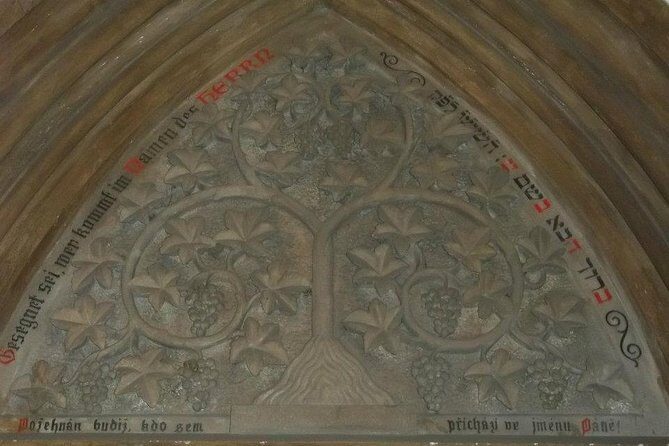
Your first stop is the Old-New Synagogue, described as the oldest synagogue in Europe and the oldest in the world outside of Israel from 1270 A.D. It’s still functioning as a working synagogue, which changes the tone. Instead of being treated purely as a museum object, it’s a place of continuity.
You’ll also learn something important about how religious life affects what you experience as a visitor. Women are not allowed to be present during the services, and men and women are separated into different halls, with women able to hear some of the words. The tour frames it as an orthodox synagogue, so expect the feeling of a community site, not a staged set.
Practical tip: because it’s active, the timing and what you’ll see inside can feel different than a building that’s always open purely for visitors. If you want the full effect, keep your expectations flexible and rely on your guide to explain what’s happening in the space while you’re there.
Stop 2: Old Jewish Cemetery and the story behind the stones
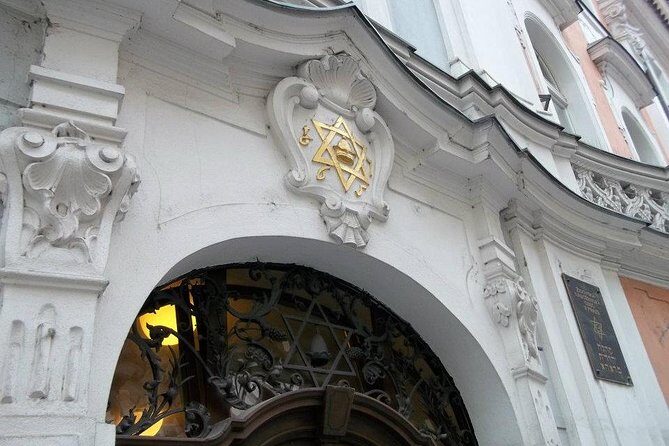
Next comes one of Prague’s most haunting spaces: the Old Jewish Cemetery. This cemetery dates to 1439 A.D. and is described as the oldest still preserved Jewish cemetery in Prague. The key detail is the scale—more than 100,000 people are said to be buried there, with people interred on top of one another due to lack of space.
That “stacking” reality can hit you in the chest if you let it. It’s not just a fun fact; it’s a reminder that a community’s history is also a community’s limits—space, time, and repeated loss.
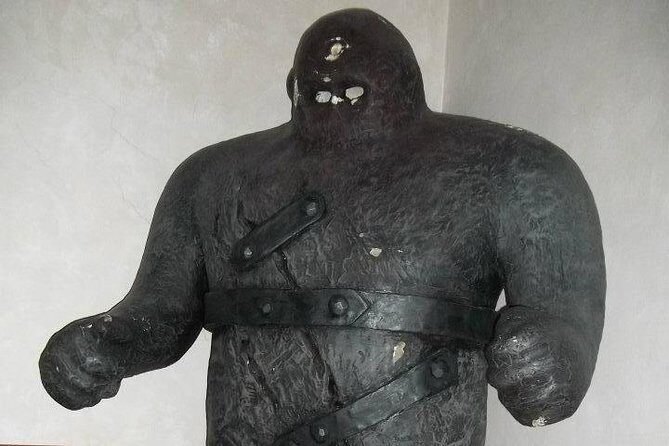
You’ll also hear a historical note tied to Joseph II of the Habsburgs. In 1787, the cemetery was abolished. Yet the legends and memory remained part of the area’s identity. This is also where the tour highlights the legend of Golem. Even if you already know the tale, hearing it in this setting makes it feel less like folklore for entertainment and more like a coping story people told themselves.
A simple way to get the most out of this stop: slow down. The cemetery is a place where looking quickly makes you miss the power of the details.
You can also read our reviews of more private tours in Prague





Stop 3: Spanish Synagogue and Moorish style that hints at Spain
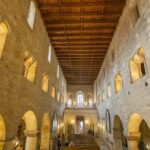
After the cemetery’s weight, the tour moves into architecture. The Spanish Synagogue (listed here as part of the Jewish Museum in Prague experience) was built in 1868 to replace an older 12th-century synagogue. Inside, it’s described as oriental and Moorish in style, with an interior that reminds people of the Alhambra in Spain—hence the nickname.
This is also where your tour becomes more than sightseeing. The Spanish Synagogue has been used for classical music concerts, so it functions partly like a concert hall. That means you might notice the space as something designed for sound as much as for worship.
There is one real-world consideration you should take seriously before you lock in your travel dates: Spanish Synagogue has had reconstruction closures, with closure starting May 2019 for two years. Since your trip is happening now, you can’t assume it’s always open. Check current operating status close to departure. If it’s closed, your guide can often help you understand what’s still accessible and what you can swap in your viewing expectations.
Stops 4 to 6: Klausen, Pinkas, and Maisel synagogues as a single connected story
Once you’re in the museum-administered part of the Jewish Quarter, the tour works best if you think of the synagogues as chapters rather than separate attractions.
Klausen Synagogue is described as the largest synagogue in the former Prague Jewish ghetto and as a single example of an early Baroque synagogue in the area. Today it’s administered by the Jewish Museum in Prague. This stop helps you see how style changes over time—even when the purpose of the building remains part of the community’s core life.
Then comes Pinkas Synagogue, described as the second oldest surviving synagogue in Prague. It’s connected with the Horowitz family, and today it commemorates about 79,000 Czech Jewish victims of the Shoah. The emotional weight here is the point. When a synagogue becomes a memorial space, you understand that cultural institutions can also carry grief forward into the present.
Last in this run is Maisel Synagogue, which gets more time (about 45 minutes). It was erected in 1592 thanks to a privilege granted by Emperor Rudolf II, with Mordecai Maisel as the founder. The story includes an architectural detail: it was originally a Renaissance temple with three naves, which was unusual for its day. Then it burned in the 1689 ghetto fire and was rebuilt, later gaining its Neo-Gothic form by Prof. A. Grotte (1893–1905).
That “build, burn, rebuild, re-style” arc is what makes Maisel such a powerful stop. It isn’t just decorative. It’s the physical record of disruption and recovery.
Stop 7: Jewish Museum Ceremonial Hall and how death was handled
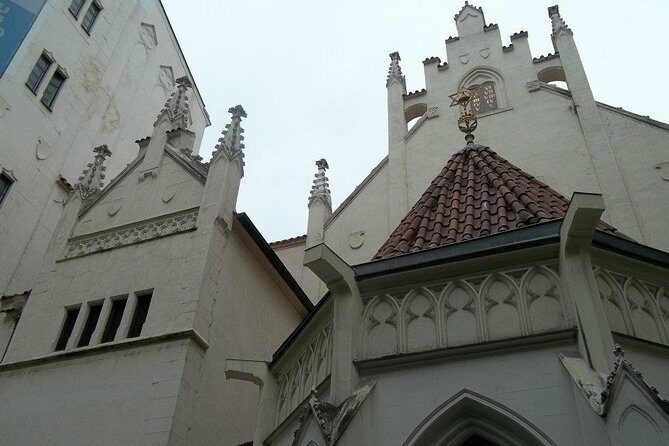
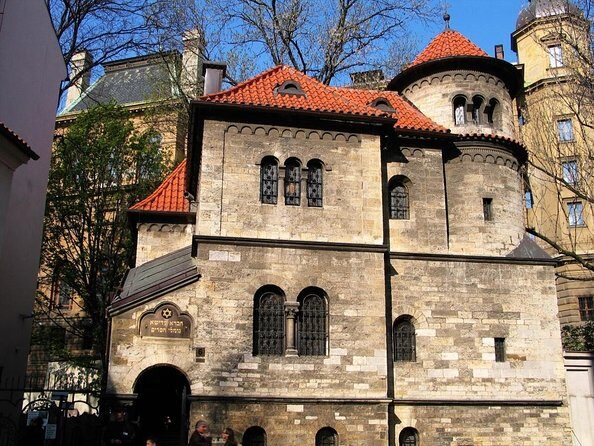
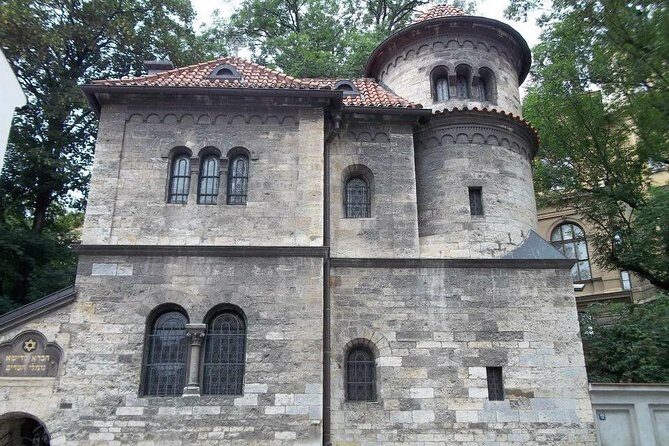
The route finishes at the Jewish Museum in Prague, with a focus on the Ceremonial Hall. This building sits near the Old Jewish Cemetery on the site of an old mortuary used by the Prague Burial Society (Hevrah Kaddisha).
You’ll learn that the ceremonial hall was built in Neo-Romanesque style between 1906–08. It also had practical functions: on the first floor, there was space for ritual washing of the dead, and on the second floor was a club room for the burial society.
That matters because it keeps the conversation human. When you think about Jewish history in Prague, it’s easy to get stuck on dates and big events. This part brings the focus back to what people did day-to-day—especially in the hardest moments. It’s also a reminder that community care systems existed, had roles, and were built into the physical fabric of the neighborhood.
Where Franz Kafka fits into the walk
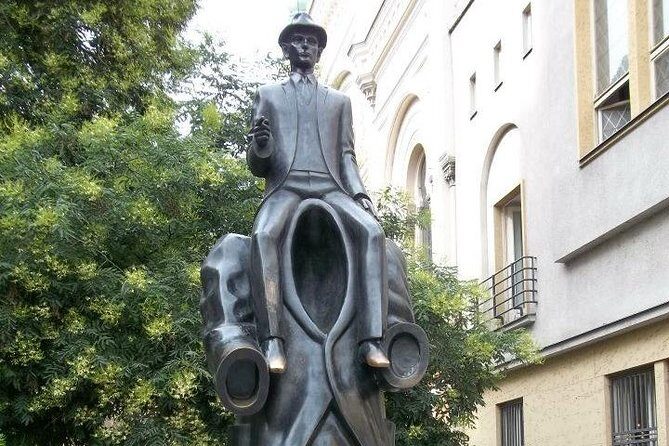
The tour highlights the idea of following in the steps of Franz Kafka. That can sound vague until you connect it to a place where Jewish community life and later disruption shaped the city’s cultural atmosphere. This is exactly the kind of context a good guide helps you notice: street angles, neighborhood boundaries, and the “why here” behind the stories.
If you care about literature, bring an active curiosity. Kafka wasn’t just writing about abstract ideas; he was reacting to real environments. A guided walk helps you spot the connections faster than reading alone.
Tips for making your 4 hours feel like more
Here are a few small moves that help you get the most out of this style of tour:
- Budget for the museum ticket: plan €25 per person on top of the tour price.
- Wear comfortable shoes: old-town Prague is uneven, and the tour is long enough to feel it if your footwear isn’t ready.
- Go in with questions: the route covers synagogues, cemetery history, memorial space, and architectural style. If something grabs you, ask why it looks that way.
- Treat it as a story arc: cemetery first, then synagogues, then ceremonial hall. Don’t try to “optimize” it like a checklist.
And if you’re traveling with someone who needs extra breaks, this is one of those tours where a private guide can help keep things from getting stressful. The pacing can adjust to you.
Who should book this Prague Jewish Quarter private tour
Book this if you want a structured half-day with depth, not a quick picture loop. It’s a strong fit if you care about:
- Jewish history in Prague across time (medieval community life through World War II)
- Architecture you can actually read, including Baroque vs. Neo-Gothic shifts
- The combination of synagogues plus the Old Jewish Cemetery
- A tour style that supports questions and a comfortable pace
It’s also a good option if you’ll appreciate context on legends and literature, like the Golem story and Kafka connections, woven into the walk rather than tossed in as trivia.
If you prefer to wander entirely on your own with no structure, you might feel boxed in. But if you want someone to point out what matters and why, this is built for that.
Should you book this tour or choose something else?
I’d lean toward booking if you like your history with explanations and you want to cover several key sites without spending your energy figuring it out on your own. The private format is the real advantage here, especially given how rules and function can differ inside places like the Old-New Synagogue.
The main reason to hesitate is cost on top of the tour price. With the €25 per person Jewish Museum admission added, your total will be higher than the headline figure. If you’re trying to keep things ultra-budget, a self-guided route could work—but you’ll give up the guided connections that tie the buildings together.
If you do book, plan to check current status for the Spanish Synagogue stop, since reconstruction closures have happened in the past. Then show up ready to walk and ready to listen.
If you’re the kind of person who likes to understand what you’re seeing instead of just photographing it, this one earns its place on your Prague list.
FAQ
Is admission to the Jewish Museum included?
No. Entrance to the Jewish Museum is listed as not included, at €25.00 per person.
How long is the Prague Jewish Quarter private walking tour?
It’s about 4 hours (approx.).
Is this tour private or shared?
It’s private, so only your group participates.
Do you offer hotel pickup?
Yes, pickup is offered from your hotel or other accommodation. You’ll need to share the exact address and name.
What language is the tour offered in?
The tour is offered in English.
What if my plans change?
Free cancellation is available up to 24 hours in advance for a full refund. If you cancel less than 24 hours before the start time, the amount paid won’t be refunded.