REVIEW · PRAGUE
Prague Castle St. Vitus Cathedral, Royal Palace, St. George’s Basilica
Book on GetYourGuide →Operated by Robert Procházka · Bookable on GetYourGuide
Prague Castle feels like a living museum. This 3-hour German tour is built around the people and events that shaped Bohemia, with your historian guide Robert Procházka turning key sights into clear, human stories, not just stone facts. I especially liked how the stop at St. Vitus Cathedral connects architecture to coronations and burials in a way that clicks fast.
I also loved the shift from royal power to everyday life at Golden Lane, where Rudolf II’s alchemists and Franz Kafka both fit into the same short walk. The one real drawback: it’s German only, so if you’re hoping for English, you’ll feel the gap.
In This Review
- Key things that make this tour worth your time
- Prague Castle in 3 hours: what you’ll get and why it works
- Where to meet at the Pražský hrad streetcar stop
- How St. Vitus, the Palace, and the Basilicas connect
- St. Vitus Cathedral and the Wenceslas Chapel spiral
- Inside the Old Royal Palace: crown jewels, the throne room, and a political shock
- St. George’s Basilica: St. Ludmila’s tomb and a painful family story
- Golden Lane at the end: Rudolf II’s alchemists and Kafka’s little house
- Views from the castle grounds: when the whole city finally makes sense
- Tickets and value: does €18 (or €14) make the tour worth it?
- Who should book this German tour (and who might skip it)
- Should you book Prague Castle with St. Vitus, the Royal Palace, and Golden Lane?
- FAQ
- Do I need an entrance ticket for St. Vitus Cathedral, the Royal Palace, St. George’s Basilica, and Golden Lane?
- What language is the guided tour in?
- How long is the tour?
- Where do I meet the guide?
- Where does the tour end?
- Who is the guide?
- Is the tour suitable for children?
- Can I cancel and get a full refund?
Key things that make this tour worth your time
- Robert Procházka’s historian approach: you get the why behind the wow, with stories tied to each building.
- St. Vitus Cathedral’s layered timeline: Romanesque beginnings, then 14th-century Gothic, plus the Wenceslas Chapel details.
- Royal Palace highlights: the replica Bohemian crown jewels, the throne room, and the Third Defenestration site.
- St. George’s Basilica stop: St. Ludmila’s tomb and the family drama tied to Bohemian history.
- Golden Lane after the big monuments: alchemy rumors, life in small houses, and Kafka’s connection.
Prague Castle in 3 hours: what you’ll get and why it works
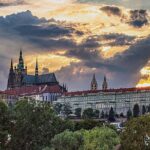
If you’ve ever stood inside Prague Castle and felt a little lost, this tour helps you get your bearings fast. In three hours, you’ll focus on four major areas: St. Vitus Cathedral, the Old Royal Palace, St. George’s Basilica, and then Golden Lane. You also get the Prague Castle grounds moment, where the views make the whole complex feel bigger than any single building.
What makes this plan work is the rhythm. You start with sacred space and royal legitimacy, then move to palace power and historic political shocks, and end with Golden Lane’s small-scale, curious life. That last change is a nice reset after long cathedral corridors and palace rooms.
Also: your guide brings it together in German. If you follow along, you’ll leave with a map in your head, not just photos on your phone.
You can also read our reviews of more tours and experiences in Prague.

Where to meet at the Pražský hrad streetcar stop
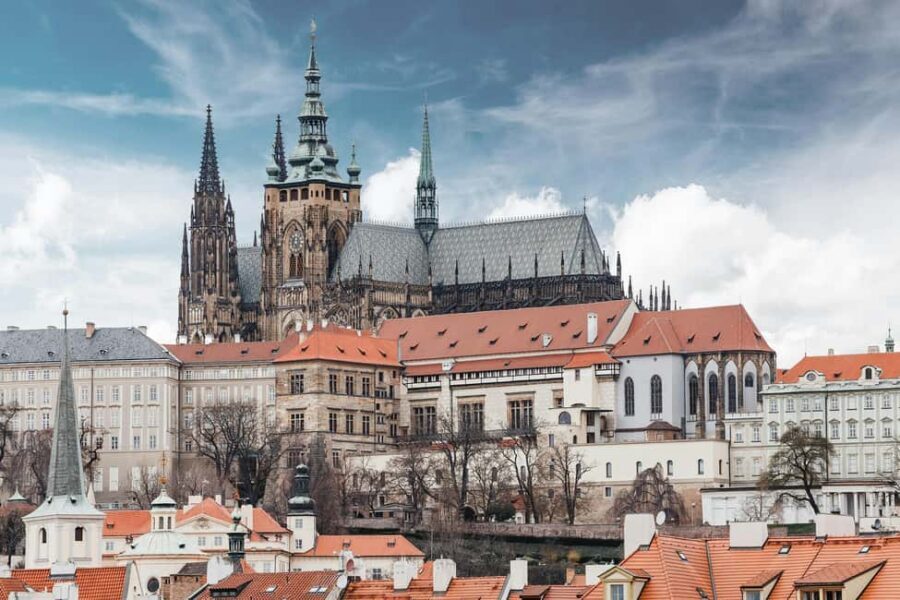
Meeting is straightforward. You’ll meet directly at the streetcar stop Pražský hrad in the direction of Bílá hora (streetcar lines 22 or 23). Once you’re in the right place, the tour flows from the castle area naturally, because the focus is inside major castle buildings.
This matters because Prague Castle can feel like a maze if you arrive without a plan. Starting at the Pražský hrad stop keeps you from wasting time figuring out routes, especially if you’re juggling stairs, slopes, and changing walkways.
The tour also ends back near the castle area (with Golden Lane as the tour finish point), so you can keep exploring immediately after the guide’s walk-through.
How St. Vitus, the Palace, and the Basilicas connect
Bohemian history can feel like names and dates until someone links them to real places. That’s what you’ll experience as your route moves from the cathedral to the palace and then to the two smaller sacred sites.
Here’s the key pattern to listen for while you tour:
- St. Vitus Cathedral anchors the story of kingship through burial and coronation.
- The Old Royal Palace shows royal power in buildings and artifacts, plus a dramatic political turning point.
- St. George’s Basilica shifts from crowns to people—family ties and a tomb with a grim backstory.
- Finally, Golden Lane brings you to everyday life and curiosities, including alchemy myths and one of Prague’s best-known writers.
That structure is why this tour feels efficient. You’re not bouncing randomly; you’re walking through the same big story from different angles.
St. Vitus Cathedral and the Wenceslas Chapel spiral
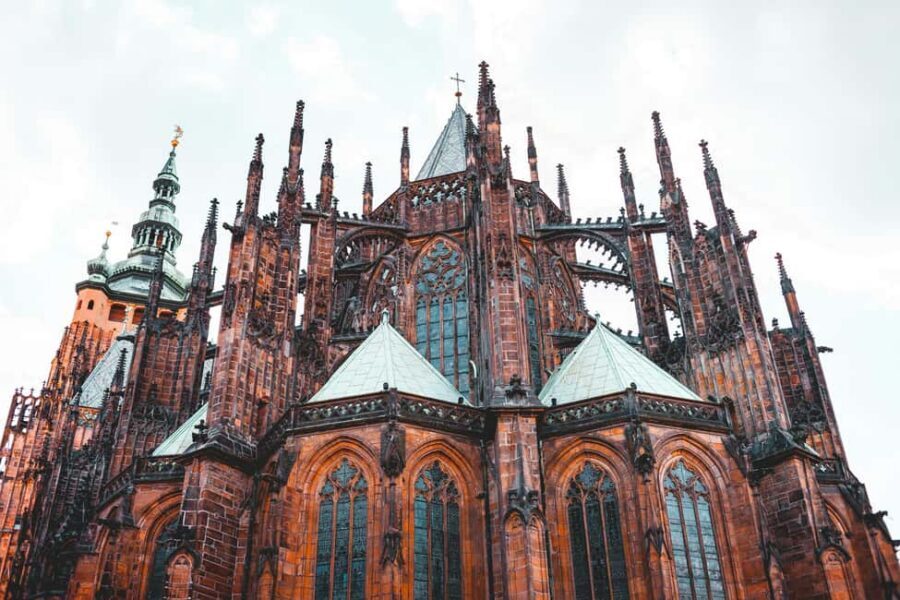
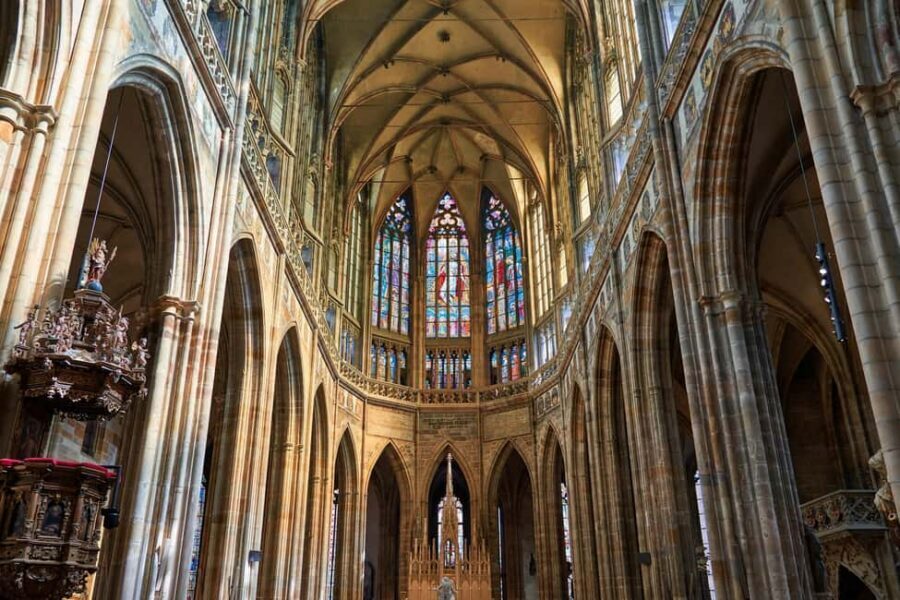
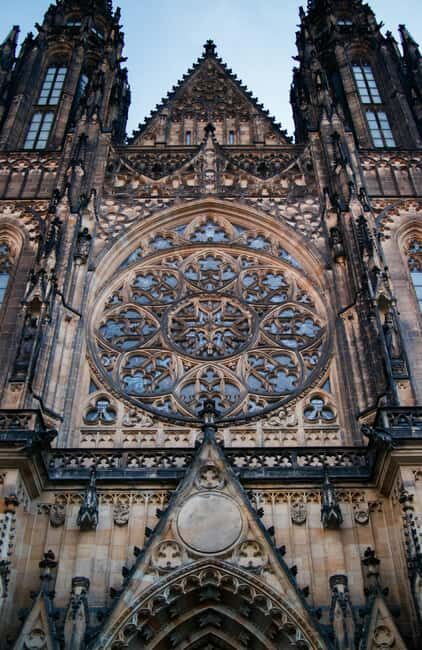
Your cathedral visit is the heart of the tour. St. Vitus Cathedral is the burial and coronation site of Bohemian kings, so it’s not just a pretty Gothic church—it’s part of how authority was displayed and remembered.
A few specific details your guide is likely to highlight will make the building easier to read:
- The cathedral’s roots include an older Romanesque rotunda, founded around 925.
- The cathedral is described as a masterpiece of 14th-century Gothic architecture.
- Important Bohemian patron saints, including St. Wenceslas and St. Adalbert, are buried here.
One moment to look for is the Wenceslas Chapel, decorated with semi-precious stones. You’ll hear about the remains of St. Wenceslas resting in a Gothic shrine there. The spiral staircase connecting the Wenceslas Chapel area up toward the crown chamber helps you picture the cathedral as a vertical map of sacred and royal space.
Then there’s the crown chamber idea: it’s where the coronation regalia are kept. Even if you’re not a medieval-history fanatic, the symbolism lands because the tour frames what these objects meant.
Inside the Old Royal Palace: crown jewels, the throne room, and a political shock
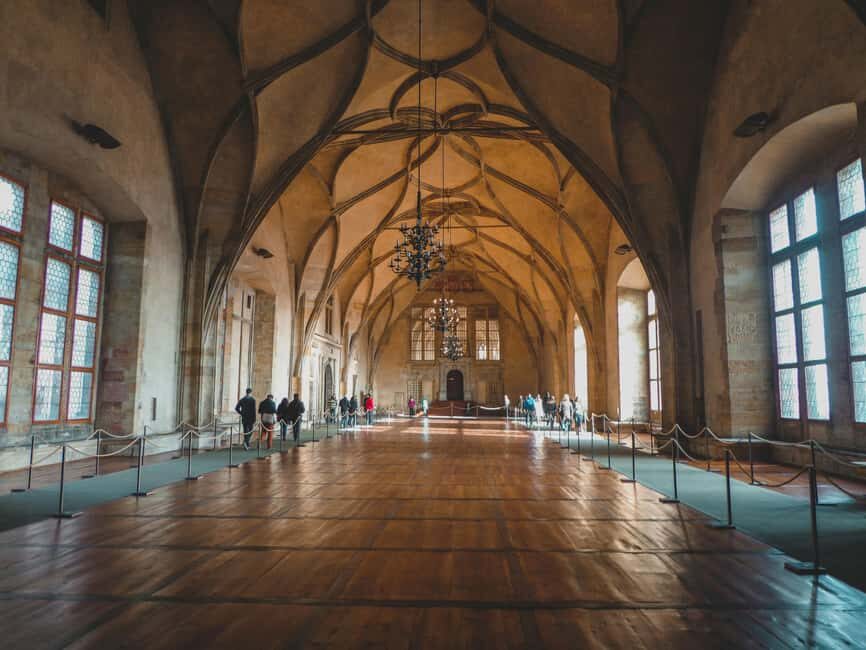
Next up is the Old Royal Palace, where you’ll shift from sacred legitimacy to state power and court life. You can see a replica of the Bohemian crown jewels, plus visit the largest late Gothic throne room in Central Europe. Those two elements do a lot of work quickly: they show pageantry and show ambition.
This is also where the tour gets dramatic. You’ll visit the site of the Third Defenestration of Prague, connected with the start of the Thirty Years’ War. It’s the kind of event that sounds like a headline until you stand at the location and realize how politics can flip with astonishing force.
Why I like this stop for visitors: the palace doesn’t ask you to memorize. It gives you physical cues—rooms, artifacts, and a clear link to a major historical turning point. The guide’s job is to connect those cues into a story you can follow in real time.
Also, because you’ll be moving through interiors, it’s a nice contrast to outside castle viewpoints. If the weather turns, you’ll still have meaningful sights.

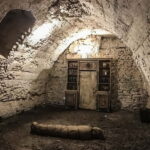


St. George’s Basilica: St. Ludmila’s tomb and a painful family story
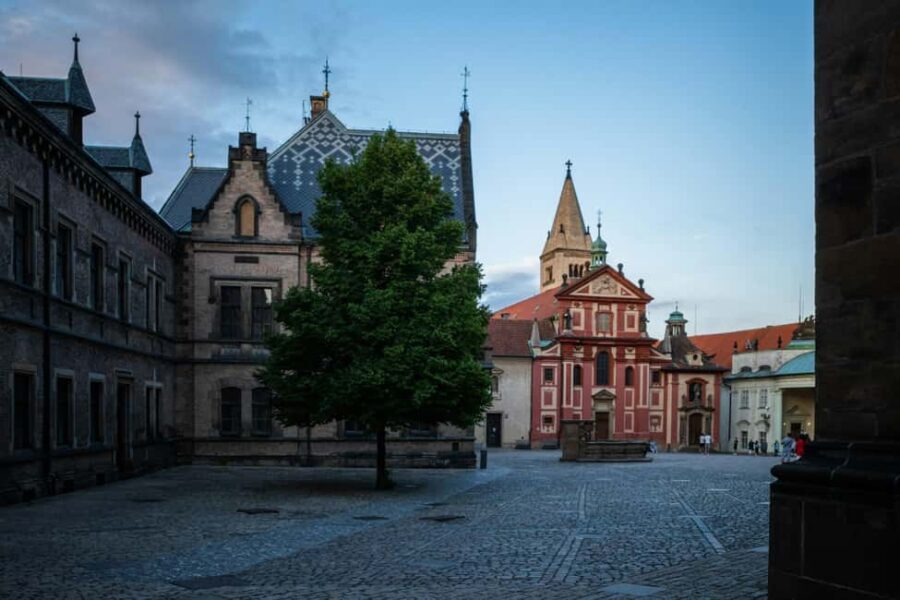
St. George’s Basilica brings you into a different emotional register. This church dates back to the 10th century and houses the tomb of St. Ludmila, the grandmother of St. Wenceslas.
The reason this matters to your understanding is the story attached to her death. Ludmila was strangled to death by Viking warriors on behalf of her daughter-in-law. That kind of detail turns a tomb into a doorway for understanding how family power struggles—and alliances—could become lethal.
The basilica stop also balances the overall route. You’ve spent time with kingship in St. Vitus and court power in the palace. Here, the focus narrows down to one person and one story. That narrowing is useful. It helps you remember the castle complex as more than a single grand monument.
Golden Lane at the end: Rudolf II’s alchemists and Kafka’s little house
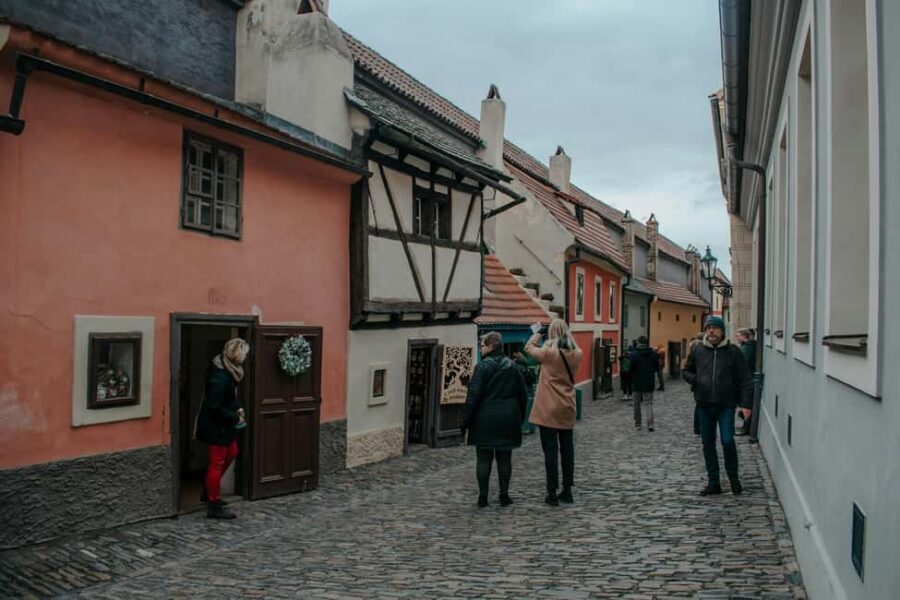
Golden Lane is where Prague Castle slows down and gets interesting in a different way. You’ll step into a picturesque area tied to the 16th century, when Emperor Rudolf II’s alchemists searched for an elixir of life and tried to produce gold from lead.
That premise can sound like legend—until you realize it’s exactly the sort of obsession that historically made smart people keep tinkering long after the odds seemed impossible. Your guide will help you connect the alchemy idea to the broader creative curiosity of Prague at the time.
Then there’s Franz Kafka. You’ll hear that Kafka lived in one of the little houses along Golden Lane. That’s the kind of fact that makes Golden Lane feel less like a “period reenactment” and more like a real slice of city life that stayed in people’s memories.
This stop is also a great wrap-up because you’re finishing the tour in a place where you can look around at close range. After cathedral scale and palace grandeur, Golden Lane gives you room to absorb details.
Views from the castle grounds: when the whole city finally makes sense
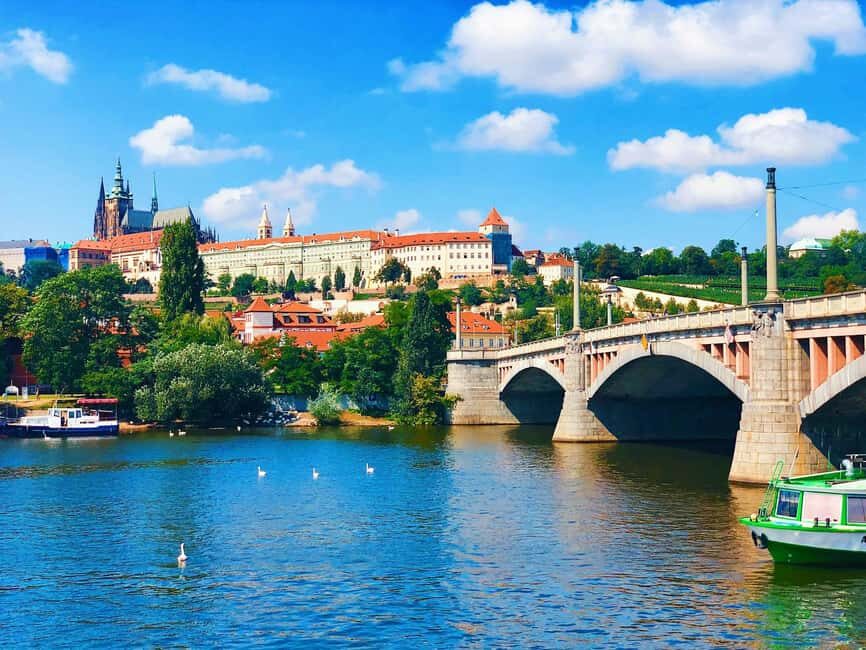
Between the interiors, you’ll spend time in the castle grounds, and that part is genuinely worth paying attention to. The grounds are described as the largest enclosed castle grounds in the world and are even listed in the Guinness Book—so even before you notice specific buildings, you’re walking inside a huge pocket of Prague’s history.
The big payoff is the view. The castle grounds give you a breathtaking view of the whole of Prague, and that perspective helps connect what you saw indoors with what you’ll see outside later in the day.
Here’s a practical tip: when you get a view point, pause for a few seconds and mentally match the city shapes to the direction you came from. The tour route helps you build that mental map.
Tickets and value: does €18 (or €14) make the tour worth it?
The tour price is listed as $41 per person, and the key value point is what’s included: a three-hour guided tour in German with a historian through the castle grounds and the interiors of the historic buildings.
Entrance tickets are not included. Adults pay 18 EUR, and seniors (from 65) pay 14 EUR. The guide will accompany you to the castle ticket office so you can pay with a card, or you can hand over the amount in EUR directly to the guide, who will obtain the tickets for you. Since the tickets are purchased at a counter exclusively for guides, you won’t have to queue long.
So is it good value? For Prague Castle, yes—if you want interpretation. You’re not just buying entry. You’re paying for a structured walk through the big sites, with a historian named Robert Procházka guiding what to notice and how the pieces fit: Gothic architecture, royal artifacts, and Golden Lane life stories.
If you’re the kind of visitor who enjoys reading plaques alone, you could DIY it. But if you want the meaning behind the meaning, this format is efficient. Three hours is long enough to absorb a lot, but not so long you lose focus.
Who should book this German tour (and who might skip it)
This tour is a solid fit for adults and teens who want a guided overview of the most important Prague Castle sites without turning the day into a full-day marathon. It’s especially good if you like connections—how a cathedral relates to coronation, how a palace relates to conflict, and how Golden Lane relates to curious everyday life.
It’s also a good match if you enjoy architecture and want the periods explained through real locations. Your tour highlights the mix of Gothic, Renaissance, and Baroque architectural influence across the complex.
One note for families: it’s not suitable for children under 10. If you’re traveling with younger kids, you may find the pacing and German-only narration harder to manage.
And remember the language: it’s German only. If you don’t speak it, the guide’s storytelling will be the missing piece.
Should you book Prague Castle with St. Vitus, the Royal Palace, and Golden Lane?
I’d book this tour if you want a high-impact introduction to Prague Castle that actually explains what you’re seeing. The combination of St. Vitus Cathedral, the Old Royal Palace, St. George’s Basilica, and Golden Lane covers the big themes in a short time: kingship, power, family tragedy, alchemy curiosity, and Kafka’s Prague.
Skip it if German narration is a deal-breaker for you. Also consider that you’ll still need to pay for entrance tickets separately, even though the guide handles the ticket office part with minimal hassle.
FAQ
Do I need an entrance ticket for St. Vitus Cathedral, the Royal Palace, St. George’s Basilica, and Golden Lane?
Yes. Entrance tickets are not included. Adults pay 18 EUR and seniors (from 65) pay 14 EUR. The guide will take you to the ticket office so you can pay with a payment card or hand over EUR to the guide.
What language is the guided tour in?
The tour is conducted in German.
How long is the tour?
The duration is 3 hours.
Where do I meet the guide?
Meet directly at the streetcar stop called Pražský hrad (Prague Castle), for streetcar line 22 or 23 in the direction Bílá hora.
Where does the tour end?
The tour ends in Golden Lane. The activity is listed as ending back at the meeting point in the Prague Castle area.
Who is the guide?
The historian guide is Mr. Robert Procházka.
Is the tour suitable for children?
It is not suitable for children under 10 years.
Can I cancel and get a full refund?
Yes. You can cancel up to 24 hours in advance for a full refund.