REVIEW · PRAGUE
Half-Day WWII Prague Walking Tour
Book on Viator →Operated by Explore Prague · Bookable on Viator
WWII Prague hits hard in 3.5 hours. This half-day walk ties major events of the war to real street corners and buildings, with a route that mixes on-foot history and a little public transportation time-saving. I especially like the tight Operation Anthropoid / Heydrich assassination storytelling, and the way the stops include museum entry plus period photos that make the details stick.
One possible drawback: the pace can feel fast, and you’ll cover a lot of ground on cobblestones, so take that seriously if your walking is limited.
In This Review
- Key points at a glance
- WWII Prague in 3.5 hours: the Operation Anthropoid storyline
- Where you meet and where you finish in Prague
- The opening walk: turning Prague landmarks into wartime clues
- Former SS and Gestapo HQ: seeing power, not just hearing it
- The church and crypt moments that slow everything down
- The museum stop tied to Prague’s last battle
- Old Town Square: connecting resistance to the city’s public face
- The coffee break that keeps the tour from burning out
- Pacing and walking reality: smart shoes and a plan
- English guide quality and small-group advantages
- Price and value: why $47.06 often feels fair
- What you should know before you go (without overthinking it)
- Should you book this WWII Prague walking tour?
- FAQ
- What time does the Half-Day WWII Prague Walking Tour start?
- Where does the tour start and end?
- How long is the tour?
- Is the tour in English?
- What’s included in the price?
- Are meals included?
- How big is the group?
- Is it fully refundable if I cancel?
Key points at a glance
- Operation Anthropoid focus with the Reinhard Heydrich thread running through the route
- Museum entry included, tied to Prague’s late-war fight and resistance
- Former SS and Gestapo headquarters stop, adding a grim sense of place
- Coffee break included in a local café to reset without losing momentum
- Small group size (max 15) for questions and real back-and-forth
- Public transport fees included, so you’re not stuck doing extra long detours
WWII Prague in 3.5 hours: the Operation Anthropoid storyline
This tour is built around a chilling question: what did the war do to Prague, person by person and street by street? You won’t get a vague “Europe during WWII” lecture. Instead, you follow a guided line through the city’s wartime reality, starting with the assassination of Reinhard Heydrich—often called the Butcher of Prague—and then moving outward to what made that operation possible and what came after.
What makes it work is the framing. Guides like Michal, Jack (Honza), Martin, Matt, and Jaca are repeatedly praised for storytelling that stays coherent even when the subject matter gets heavy. The route is about cause and consequence: the Czech resistance, the crackdown, and how Prague itself became part of the plot.
If you like WWII facts but also want them connected to places you can picture, this is one of the better ways to do it in Prague. It’s also a good fit for people who have visited before. Even repeat visitors tend to realize they walked right past significant wartime locations without knowing what they were seeing.
You can also read our reviews of more walking tours in Prague
Where you meet and where you finish in Prague
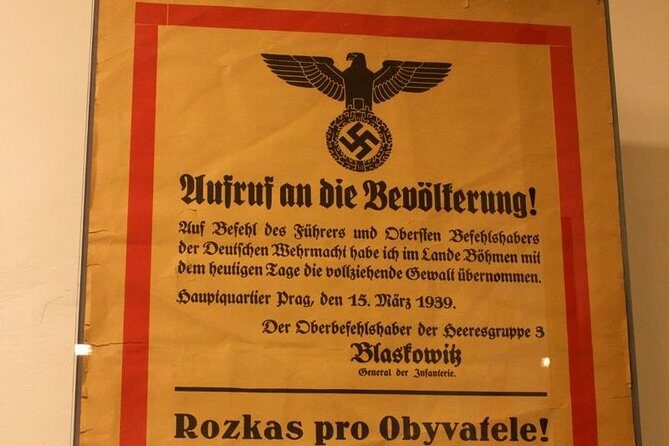
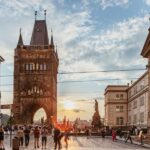
You meet at Křižovnické náměstí at 1:30pm and the tour ends in the Old Town Square area. The walk stays in central Prague, so you’re not wasting time on long transfers.
The duration is about 3 hours 30 minutes. That’s long enough for context and multiple stops, but not so long that you’re stuck dragging your feet across the city for an entire afternoon. A coffee break is built in, too, so you’re not forced to choose between learning and getting human.
One detail that matters for planning: public transportation fees are included. That usually means the guide uses transport to reduce unnecessary walking between key points. You still walk a lot, but you avoid a “why are we walking across town again?” feeling.
The opening walk: turning Prague landmarks into wartime clues
Right after meeting, you start moving through central Prague with a guide who explains what you’re looking at and why it mattered during the occupation. The early part of the tour works like a map for your brain: you learn the names, roles, and pressures that shaped the city, then you start seeing how those pressures showed up in specific buildings and streets.
Some guides also bring in a bit of the wider political background before WWII, which helps if you know the basics but want more of the lead-up. That context matters because Prague under the Germans wasn’t just one thing. It was changing rules, propaganda, fear, and organized resistance—often happening simultaneously.
What I like here: you’re not asked to memorize a timeline. Instead, the guide gives you anchor points you can remember later when you’re back in your hotel, looking at photos and wondering what that “random building” was.
Former SS and Gestapo HQ: seeing power, not just hearing it
One of the strongest stops is at the former SS and Gestapo headquarters. This is the kind of location where a short explanation can do a lot, because the building’s wartime function turns into a physical fact. You’re not just told that the occupiers were ruthless. You stand near the machinery of control and the guide helps you connect the dots.
A big reason this matters for value: Prague has plenty of beautiful architecture. Without context, it’s easy to treat the city as scenery. This tour makes you treat the streets as evidence.
Expect the guide to connect this stop to later events tied to resistance and retaliation. That connection is the heart of why the Heydrich assassination story isn’t floating in the air—it becomes part of how the occupation tightened and how people responded.
The church and crypt moments that slow everything down
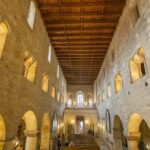
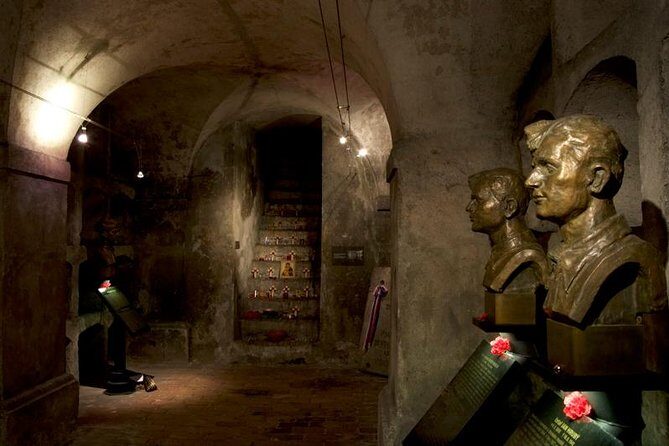
A standout element in the experience is time at the church of St Cyril and Methodius, including the crypt. This is where the tour becomes emotionally specific. Operation Anthropoid isn’t only a headline; it becomes people making decisions under impossible pressure, followed by aftermath and pursuit.
Guides often use authentic photos from the time to help you visualize what you’re hearing. Photos do something that spoken history can’t always do: they put faces, rooms, and arrangements in your mind. That helps you understand why the resistance acted the way it did, and why the consequences were so brutal.
If you’re traveling with kids or you’re worried about the tone, this section is still workable, but it’s clearly sober. In one family case, the guide tailored the pacing so both a WWII buff and a child stayed engaged. That’s a useful clue: the tour can handle heavy material while still staying readable and not turning into a lecture that puts everyone to sleep.
You can also read our reviews of more tours and experiences in Prague
The museum stop tied to Prague’s last battle
Midway through the route, you stop at a place where the Czechs fought their last battle, now presented as a museum. Museum entry is included, which is a real advantage—half-day walking tours sometimes cut these parts to avoid extra fees.
This stop changes the rhythm. Walking gives you speed and coverage, but museums give you density. Here, you get a clearer view of what happened at the end phase of the war and how Prague’s resistance story doesn’t end at one dramatic operation.
One practical tip: if the museum offers any film or short presentation, pay attention when it’s available. Some guides have been able to include related footage even when it wasn’t planned to be shown at that moment, so timing can matter once you arrive inside.
Old Town Square: connecting resistance to the city’s public face
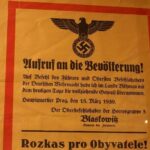
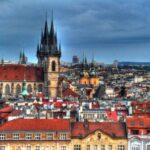
You’ll spend time around Old Town Square, where the guide ties wartime events back to the civic center of Prague. This section is useful because it helps you see how occupation and resistance played out not only in back rooms and hiding places, but also in the public identity of the city.
You’ll likely hear stories of Czech defenders and see how the occupation shaped daily life. The tour doesn’t treat the square like just a postcard stop. It frames it as a place where power was displayed and where the consequences of resistance weren’t abstract—they affected streets people had to walk on.
And because Old Town Square is busy, the guide’s pacing helps. You get a guided lens, not an “I’m here, now good luck” experience.
The coffee break that keeps the tour from burning out
A coffee break is included—coffee, tea, or a soft drink in a local café. This is a small item on paper, but it’s big in practice. Three and a half hours on cobblestones can wear you down, and WWII stories can be emotionally taxing. The break gives you a chance to reset without losing continuity.
It also helps your group energy. With a maximum of 15 travelers, you can still ask questions, but coffee makes it less frantic and more conversational. One guide even used the break to keep the pacing comfortable instead of rushing people out the door.
If you’re sensitive to caffeine, tea is usually available, and you can choose soft drinks as well.
Pacing and walking reality: smart shoes and a plan
Let’s be honest about the physical side. This is still a walking tour, and it covers a lot of ground in 3.5 hours. One review specifically warned that the pace can be fast and the route extensive, and that cobblestones can be tough if you have difficulty walking.
So here’s the practical take:
- Wear comfortable walking shoes with good grip.
- Plan for uneven stone and short distances that still add up.
- Bring a layer if the day is warm, because you’ll keep moving.
The good news is that guides work with the route and include public transportation to avoid turning it into a long slog. Still, you shouldn’t treat this as a “sit-and-see” tour.
English guide quality and small-group advantages
This experience is offered in English, and the maximum group size is 15. That matters because WWII history has details you might want to ask about: names, dates, locations, and why one decision led to another. With a small group, you’re more likely to get real answers instead of a guide speaking into the void.
There’s also evidence of responsiveness. Guides like Matt and Michal are praised for stepping in or tailoring the tour when plans shifted, including making sure the right material still landed for the group.
One extra plus: some guides bring a human angle, including how their own family memories connected to WWII-era occupation. That kind of context doesn’t replace facts, but it adds weight and clarity.
Price and value: why $47.06 often feels fair
At $47.06 per person, you’re paying for more than a standard walking lecture. You’re getting:
- A professional local guide
- Coffee break (included)
- Museum entry (included)
- Public transportation fees (included)
- A tightly timed route of about 3.5 hours
Many city tours charge extra for entry fees, transit, or even a simple café stop. Here, those costs are folded in. The result is that you’re more likely to finish with fewer surprise expenses and fewer “ticket hunting” hassles mid-tour.
Is it “cheap”? Not really. But for what you get—guided WWII storytelling tied to specific places—it’s a solid value. The only people who might feel it’s expensive are those who want a very slow tour, or who don’t want any museum time at all.
What you should know before you go (without overthinking it)
If you’re trying to get the most out of the tour, do this one thing: consider watching Anthropoid before you arrive. A guide recommendation like this is common with this tour, because the operation has a well-known dramatized storyline and the tour adds the Czech-practical details behind it.
Also, bring curiosity. This isn’t a “follow the guide, get photos, leave” experience. It rewards you for listening closely to what connects one stop to the next—especially the way the Heydrich assassination storyline links to resistance planning, occupation crackdown, and the city’s late-war response.
Should you book this WWII Prague walking tour?
Book it if:
- You want WWII Prague in a focused 3.5-hour format, not a random list of WWII facts.
- You like city history that uses specific sites, not only general descriptions.
- You care about Operation Anthropoid and the Czech resistance story, including the sober places tied to it.
Skip it or choose something gentler if:
- You need an easy, low-walking outing. Cobblestones and pace are real considerations.
- You want only a super-lengthy museum experience. This tour is structured to keep moving, with museum time as one chunk of the afternoon.
If you’re the kind of traveler who likes learning fast and then walking around later with new eyes, this one is a strong pick. It turns central Prague into a readable wartime map, with enough included extras—museum entry, coffee, and transit—to keep it feeling complete rather than piecemeal.
FAQ
What time does the Half-Day WWII Prague Walking Tour start?
It starts at 1:30pm.
Where does the tour start and end?
The meeting point is Křižovnické náměstí, and the tour ends at Old Town Square (Staroměstské náměstí).
How long is the tour?
The duration is about 3 hours 30 minutes.
Is the tour in English?
Yes, it’s offered in English.
What’s included in the price?
A professional local guide, a coffee break, museum entry, and public transportation fees are included.
Are meals included?
No. Food and drinks are not included unless specified; only the coffee break is included.
How big is the group?
The group has a maximum of 15 travelers, and a minimum of 2 people is required per booking.
Is it fully refundable if I cancel?
Cancellation is free up to 24 hours in advance for a full refund. Canceling less than 24 hours before the start time isn’t refundable.