REVIEW · PRAGUE
Communism & Nuclear Bunker Tour + 70s Canteen Lunch (own expense)
Book on Viator →Operated by Prague Extravaganza Tours · Bookable on Viator
Prague’s Cold War past is surprisingly close. This small-group walking tour uses real locations to connect Czech and Czechoslovak history—from 1918 independence to the Velvet Revolution—then ends with access to a real nuclear bunker from the 1950s. I like how the story stays human-sized, with plenty of chances to ask questions, and I also like that the group stays under 10. The main thing to consider is the bunker is not for everyone: it is a walk into tight spaces, so if you feel uneasy in enclosed areas, think carefully.
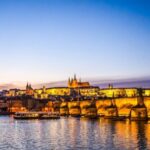
You start at Powder Tower near Republic Square, right where the Old Town meets the New Town, so you get fast orientation as history starts rolling. You’ll walk past key Communist-era landmarks around Old Town and Wenceslas Square, then pause at a working-class canteen with 70s vibes before heading underground into the shelter.
In This Review
- Key highlights to look for
- Cold War Prague on Foot: 3.5 Hours That Put History in Context
- Meeting at Powder Tower and Getting Oriented Fast
- Republic Square to Old Town Square: Independence, Elections, and the Fear Years
- Wenceslas Square: 1968, 1989, and the Prague Spring You’ll Understand Better
- Lunch Stop at a 70s Worker’s Canteen: Kofola and Real Working-Class Food
- Entering a 1950s Nuclear Bunker in Vaclavské náměstí
- Price, Group Size, and Value for What You Actually Get
- Who Should Book This and Who Might Skip It
- Should You Book the Communism & Nuclear Bunker Tour in Prague?
- FAQ
- What’s the duration of the tour?
- Where does the tour start and end?
- Is the tour in English?
- How big is the group?
- Does the price include the nuclear bunker admission?
- Is lunch included?
- What should I bring for the canteen stop?
- Is the bunker visit suitable for claustrophobic people?
- Where do I find the guide at the meeting point?
- Can I cancel for a full refund?
Key highlights to look for
- A real 1950s nuclear bunker you can actually enter, with Cold War-era atmosphere
- Maximum 10 people so your guide can slow down for questions and real discussion
- Hard-to-see streets and symbols tied to 1948, 1968, and 1989
- A 1970s-style worker’s canteen stop for Kofola and a proper lunch
- A guide you can quiz, including storytelling styles from locals like Klara or Leo
Cold War Prague on Foot: 3.5 Hours That Put History in Context
This tour is built like a timeline you can walk through. You cover the big political turning points, but you do it by moving your feet between recognizable Prague locations—so the story sticks. Instead of treating communism as something abstract, you get everyday-life details: what daily work felt like, how fear shaped routine, and how public celebrations and public pressure looked on the ground.
I also like the pacing. You get a structured set of stops, but you’re not trapped in a lecture. With a maximum of 10 people, the guide can adjust, answer your questions, and explain connections as you go. That matters in a subject like this, where names and dates can blur if the guide doesn’t keep it clear.
One more practical point: the tour is mostly a walk between Old Town and the Wenceslas Square area. Prague cobblestones and stairs are part of the deal, so comfy shoes help. And then there’s the bunker itself, where you should expect narrow, enclosed conditions.
You can also read our reviews of more tours and experiences in Prague

Meeting at Powder Tower and Getting Oriented Fast
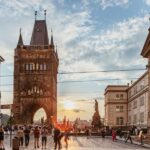
You meet at Powder Tower, on Nám. Republiky 5 in the Old Town area. It’s a smart starting choice because Republic Square sits at the junction between Prague’s Old and New Towns. That means you’re not only learning history—you’re also getting a clean mental map for the rest of your days in Prague.
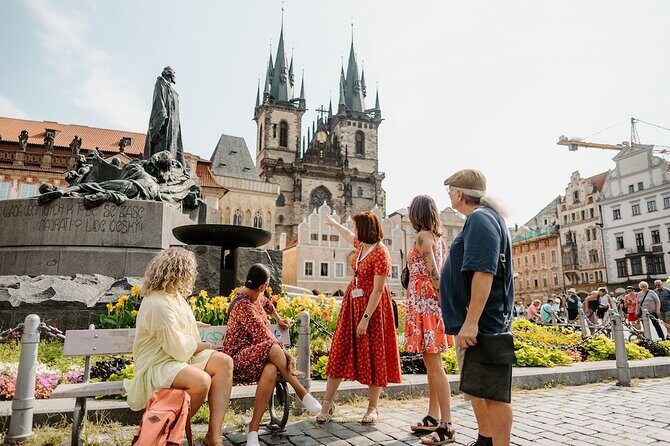
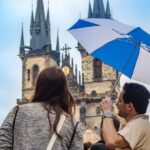
Look for the guide holding a blue umbrella. This is also near public transportation, so you can arrive without a big logistics headache. Your guide starts with the big picture right away: how Czechoslovakia formed in 1918, why Adolf Hitler saw this region as strategically important, and how World War II shaped what came next.
Then the story tightens to the post-war years. You hear why the Communist Party won elections in 1946 and how that political shift set up the fear years that followed. Even if communism is not your usual topic, this opening works because it connects international events to a local outcome you can see on the street.
If you like history that connects to real people and real consequences, this start will feel grounded rather than textbook.
Republic Square to Old Town Square: Independence, Elections, and the Fear Years
After Republic Square, you continue into the Old Town area. This is where the tour leans into symbols—places where power was shown and where propaganda rhythms became part of daily life.
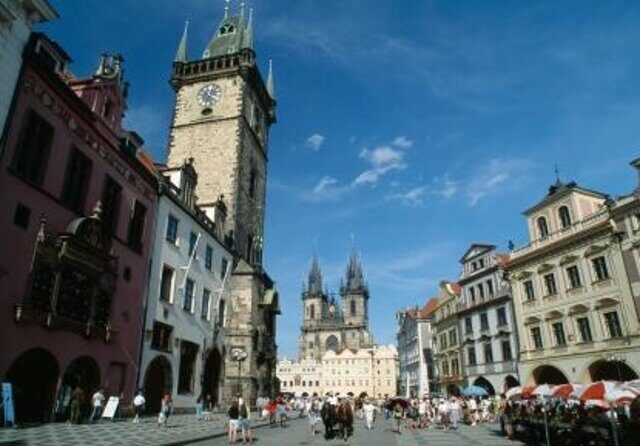
At Staroměstské náměstí (Old Town Square), you focus on 1948, when Communist Party leaders celebrated their victory in a highly visible public space. That moment matters, because it shows how political change wasn’t just government policy; it was designed to be seen, repeated, and felt.
The guide then explains the 1950s as the era of fear. You’ll hear how working camps functioned, how trials were manipulated, and how collectivisation changed everyday work and personal freedom. The tour keeps circling back to the idea that the state didn’t just control politics—it controlled normal life, including what people dared to say and where they dared to go.
You also get references to physical remnants of past power. For example, the tour includes where a major Stalin monument used to stand. Even if you’ve seen Prague’s grand architecture, this is the part that makes you notice how ideology used stone, scale, and public space to project control.
One practical benefit: these stops are around major squares. That means fewer long detours and more time hearing the story clearly.
Wenceslas Square: 1968, 1989, and the Prague Spring You’ll Understand Better
Next is Wenceslas Square, where the tour connects two major turning points: 1968 and 1989.
In 1968, you learn about the Prague Spring, including how the Soviet occupation played out in this area and around Vinohradska Street. The guide focuses on the difference between official framing and lived reality—how what was sold as help was actually a crushing force against reform dreams.
Then in November 1989, you shift to the protests against the Communist regime. You’ll hear about the date and the event on Narodni Street—where state police massacred students on 17 November 1989—and how that sparked wider resistance. This act is tied to what became known as the Velvet Revolution, and the tour touches on key figures such as Václav Havel.
Here’s what I think makes this part valuable: it doesn’t treat these dates as isolated “events.” It shows cause and effect. You start to understand how repression built pressure over time, and how the cracks widened until the system finally faced public collapse.
If you want to photograph Wenceslas Square, plan to do it between parts of the story. The square is large and busy, but the guide’s narration makes it feel specific rather than generic.
Lunch Stop at a 70s Worker’s Canteen: Kofola and Real Working-Class Food
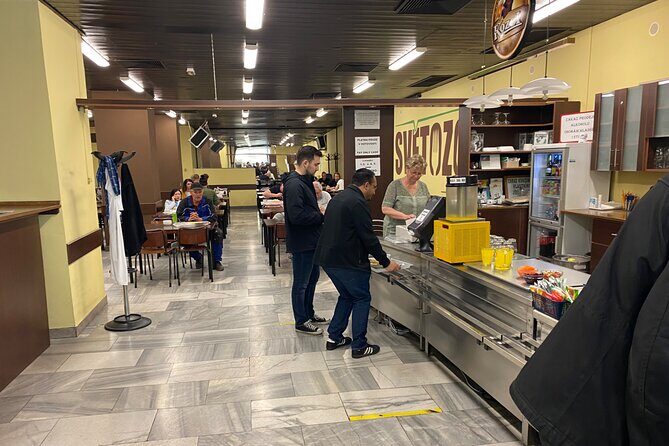
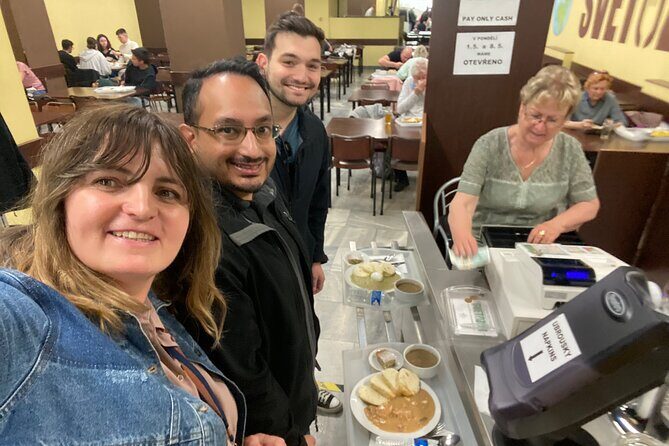
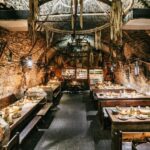
Between the history beats, you take a break at a local worker’s canteen with strong 70s character. This stop is great for two reasons.
First, it’s a reset. You’ve been walking and hearing heavy stories. Food and a soda break helps you digest what you learned without feeling like you rushed through it.
Second, it turns communism from a political topic into a daily-life experience. The canteen is part of how the era felt: plain, functional, and designed around working rhythms—not the restaurant-tour vibe.
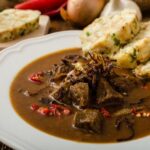
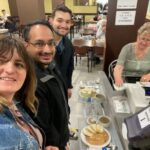
What can you expect to order? You can sip Kofola and you can try a proper working-class lunch. One review example mentioned a dish like pork on paprika with potatoes, but the key point for you is this: you’re not buying a modern “tourist adaptation.” You’re choosing from the canteen menu as it’s served there.
Important practical note: food and drinks are not included. Bring cash or be ready to pay on-site for what you want. This is also the best moment to decide if you want a quick meal or just a drink.
Entering a 1950s Nuclear Bunker in Vaclavské náměstí
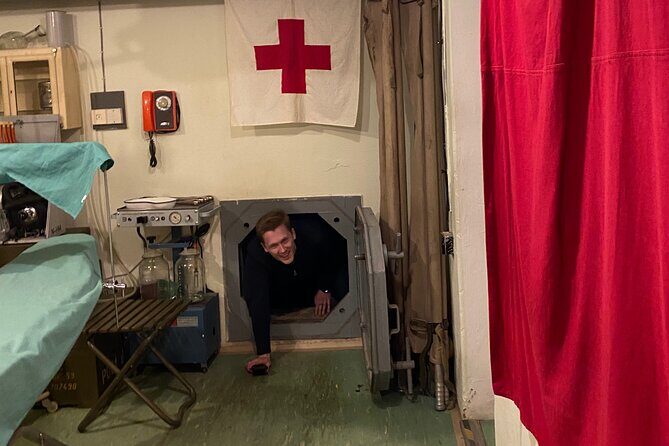
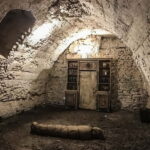
The tour’s climax is the bunker. You finish in the upper part of Václavské náměstí, where you enter a Cold War-era nuclear shelter dating from the 1950s. The admission fee of 10 EUR is included in the tour price, so you won’t have to scramble at the last stop if you booked the full experience.
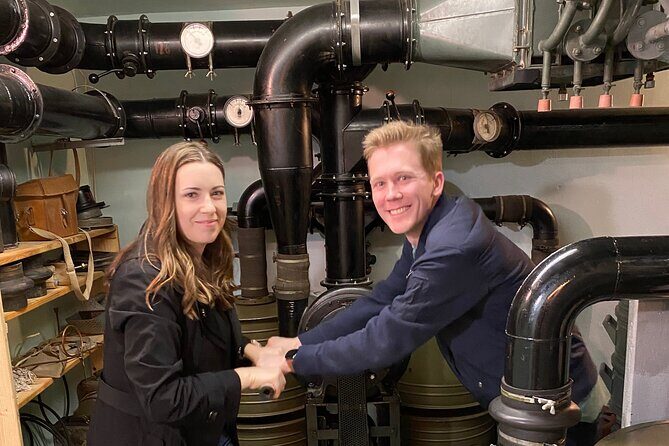
Before you go in, keep your expectations realistic. This is not a movie set. It’s a functioning-style underground space with narrow passages and a serious purpose. The tour is not recommended for claustrophobic travellers.
One more helpful detail: a guide mentioned they take you by elevator one level down, then you walk about 30 steps to reach a second level below. So even if you can handle stairs, you should expect a physically “down” experience, not a gentle ramp.
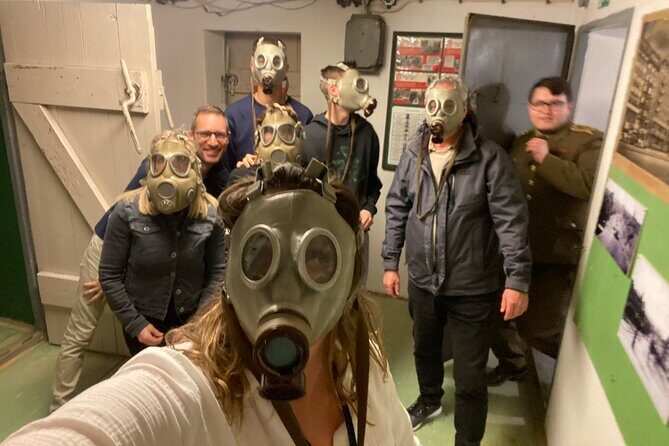
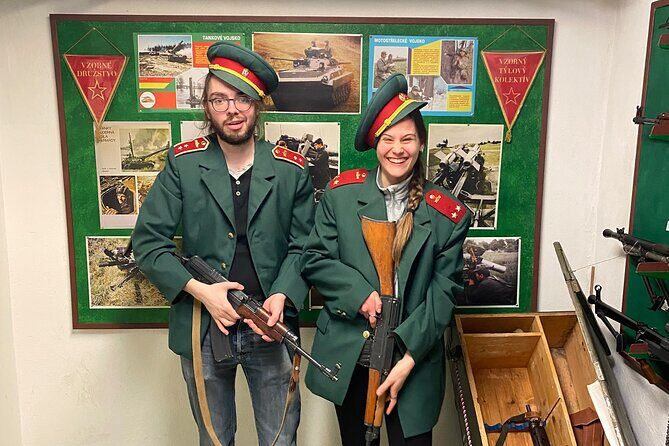
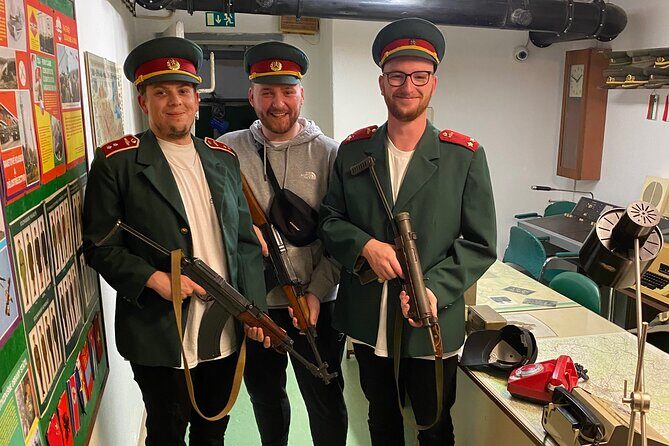
In the bunker, the atmosphere does the work. You’ll see exhibits connected to Cold War planning and daily preparation for worst-case scenarios. Some experiences described in the tour feedback include interactive moments—such as trying on a gas mask and doing role-play style “interrogation” content tied to the secret police theme. Others also mention handling bunker props like equipment used in the bunker setting. The tone stays serious, but it’s not all grim; your guide often uses a bit of humor to keep the message clear.
This is the part that history buffs tend to love, because you stop talking about fear and start standing inside it.
Price, Group Size, and Value for What You Actually Get
At $35.07 per person for about 3 hours 30 minutes, this is a strong value if you want more than a quick overview. The price includes a local guide and the Cold War bunker museum admission fee (10 EUR). That inclusion matters, because the bunker is the rare piece you can’t easily replicate on your own without hunting down separate tickets.
You’re also getting a small-group setup, capped at 10 people. That’s not just comfort; it’s how you get better explanations. When the guide can keep eye contact and answer follow-ups, the tour becomes more than a route—it becomes a real conversation about what the system did to daily life.
The downside for budgeting is simple: you still pay for food and drinks during the canteen stop. The good news is you get a chance to choose what you want. You can treat the lunch as a full meal, or keep it light with a drink like Kofola.
Also, this is booked fairly ahead on average (around 40 days), which is a sign it’s in demand. If your dates are fixed, it’s smart to book early rather than wait.
Who Should Book This and Who Might Skip It
This tour suits you if you want:
- A guided walk that connects Prague streets to 20th-century political change
- A practical history focus: what daily life looked like under the Communist system
- A hands-on feel from the bunker experience, not just photos of buildings
- Small-group discussion, with guides who can keep the story understandable and answer questions
You might skip it if:
- You’re very uncomfortable in enclosed spaces (the bunker isn’t recommended for claustrophobia)
- You prefer light, casual sightseeing only, since the themes include repression and political violence
- You don’t want to pay extra for meals and drinks during the canteen stop
Should You Book the Communism & Nuclear Bunker Tour in Prague?
I’d book it if communism and Cold War history are your kind of thing—or if you’ve already seen Prague’s castles and squares and want the part that explains how the people lived through fear. The mix is the real value: Old Town and Wenceslas Square context plus the rare option to go inside a 1950s bunker.
If you’re sensitive to tight spaces, plan carefully. Otherwise, this is one of those tours that turns a city you already think you know into a place with a sharper, more human story.
FAQ
What’s the duration of the tour?
The tour runs about 3 hours 30 minutes (approx.).
Where does the tour start and end?
It starts at Powder Tower, Nám. Republiky 5, Staré Město, Prague 1 and ends at the upper part of Václavské náměstí, Prague 1.
Is the tour in English?
Yes, it’s offered in English.
How big is the group?
The group size is capped at a maximum of 10 people.
Does the price include the nuclear bunker admission?
Yes. The Cold War Museum fee for the nuclear shelter (10 EUR) is included in the price.
Is lunch included?
No. Food and drinks are not included, though there is a canteen stop where you can buy items like Kofola and a working-class lunch.
What should I bring for the canteen stop?
Plan to pay for what you order there since food and drinks are not included. Having cash can help, especially for small purchases.
Is the bunker visit suitable for claustrophobic people?
No. It is not recommended for claustrophobic travellers.
Where do I find the guide at the meeting point?
Look for the guide holding a blue umbrella.
Can I cancel for a full refund?
Yes. You can cancel up to 24 hours in advance for a full refund.