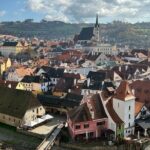
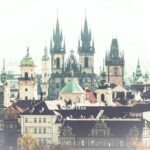
Prague gets heavy in the best way. This tour threads World War II and Soviet-era communism into one easy half-day ride, with a guide who turns street corners into real stories. I really like how the e-bikes make the route feel efficient, and how the included Communism Museum ticket gives you context right after the street stops.
I also like the small group size (up to 15), which helps you get answers instead of just hearing facts at speed. One thing to consider: the subject matter is intense, so if you want mostly light sightseeing, this will feel like a history course on wheels.
You start in Malá Strana, roll out into the city, hit major landmarks plus several lesser-known spots, and finish with a Czech beer tasting. It is a practical way to understand modern Prague without spending your whole trip reading plaques and guessing what matters.
In This Review
- Key things I’d zero in on
- An e-bike history ride through Prague’s WWII and communist years
- Price and value: $78.09 that includes bike, helmet, museum, and beer
- Where you meet in Prague 1 and how the tour runs
- The WWII section: bombing locations and why the city still shows scars
- Communism era stops: the Victims of Communism memorial and the SS Headquarters story
- Old Town landmarks in one route: John Lennon Wall, Kafka Museum, and Jewish Old Town
- Revolution and resistance: Velvet Revolution birthplace and the Anthropoid film location
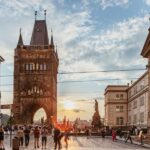
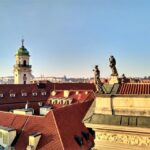
- Photo views and quick breaks that keep the pace sane
- The Communism Museum ticket: why it’s better after the street stops
- Beer tasting at the end: a social reset after serious history
- Who this tour suits best (and who should pass)
- Should you book this Communism and World War II Prague City Tour?
- FAQ
- What’s included in the tour?
- How long is the Prague City Tour?
- Where does the tour start and end?
- What departure times are available?
- Do I need to bring passport details?
- Can I cancel and get a full refund?
Key things I’d zero in on
- E-bike coverage for big mileage with less effort so you see more than a walking loop
- Communism Museum entry included, which ties the street stories to what’s inside
- Major Prague landmarks hit on one route like the John Lennon Wall and Jewish Old Town
- WWII and bombing sites included, not just broad political themes
- Beer tasting at the end to soften the edges after a serious topic
- A guide named Michal leading with energy and lots of Q&A time
An e-bike history ride through Prague’s WWII and communist years
This isn’t a tour that stays vague. You focus on the years when Prague’s identity was squeezed by outside power—first under Fascist Nazi Germany from 1938 to 1945, then under Soviet communism from 1948 to 1989. The guide helps you connect why certain places matter, instead of treating Prague like a set of pretty backdrops.
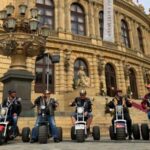
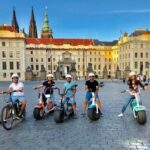
The e-bikes matter more than you might think. Prague’s center has curves, hills, and long sightlines. On foot, it is easy to cover ground but miss context because you’re tired or distracted. On this route, you can actually pay attention, stop for photos, and still keep moving.
What you gain is a sense of how modern history lives in the city. You do not just learn dates. You learn how slogans, memorials, and even murals show up where people live, work, and remember.
You can also read our reviews of more city tours in Prague
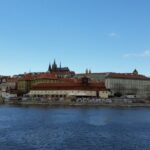
Price and value: $78.09 that includes bike, helmet, museum, and beer
At $78.09 per person, you’re paying for a package, not just a guide with a slideshow. Here’s what that price realistically buys you:
- Use of an electric bicycle and helmet
- Bottled water
- A professional local tour guide
- Communism Museum entry (so you’re not hunting for tickets later)
- Free Czech beer tasting plus alcoholic beverages
In practice, the value comes from avoiding the usual trip friction. You don’t need to coordinate a museum visit on your own time, and you don’t need to plan transport between scattered sites. For a 3 to 3.5 hour experience, that’s a solid trade-off—especially if you want your history concentrated into one half-day.
Where you meet in Prague 1 and how the tour runs
You meet at Prague by E-Bike Shop, Besedni 2, in Prague 1 (Malá Strana). Departure is 10:00 or 14:00, and the tour typically runs about 3 to 3.5 hours.
The tour ends back at the meeting point. That matters because you’re not rebuilding your day around a new drop-off location. It’s also helpful if you want to pair this with dinner, a brewery stop, or another paid attraction.
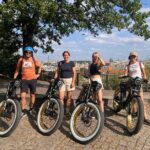
Before you ride, you’ll be set up with the helmet and the e-bike, plus a bottle of water. Dress for the weather, because you’ll be outside for hours—though the e-bike does help a lot when the pace gets hilly.
Also note: you’ll provide passport details at booking for all participants. That is the kind of admin step that can slip past people planning last-minute, so I’d treat it as part of the upfront prep.
The WWII section: bombing locations and why the city still shows scars
The tour takes you through Prague’s WWII era with stops tied to what happened on the ground, not just what textbooks summarize. WWII in Prague is the kind of history where the details matter—who controlled what, and what ordinary people saw and suffered.
One of the most practical parts is that you don’t just hear general background. You’re directed to WW2 bombing locations, and the guide uses those places as anchors for the story. Standing near a spot like that (even if it looks unchanged at first glance) gives you a better feel for what conflict does to an everyday city.
You’ll also hear how the city’s layers formed during those years. That is key to understanding why later communist propaganda and memorial culture hit so hard in public spaces. Without that bridge, the later sights can feel like random monuments. With it, you understand the logic.
Communism era stops: the Victims of Communism memorial and the SS Headquarters story
Once the tour shifts into communist Prague, the tone gets more serious. You’ll visit places that force you to face what communism meant for people living under surveillance, pressure, and repression.
A standout stop is the Victims of Communism memorial. It’s the kind of location where context changes everything. With the guide’s framing, you’re not only looking at a memorial—you’re learning what it is trying to prevent from being forgotten.
The tour also includes SS Headquarters. This is a heavy stop, and the value is in the explanation: the guide connects Nazi occupation power structures to what came afterward. It helps you see how one regime’s presence can shape the next era’s fear and politics.
This is where the small group size matters again. You can ask questions if something feels unclear, especially around the overlap of fascist occupation, post-war settlement, and the way communism took control.
Old Town landmarks in one route: John Lennon Wall, Kafka Museum, and Jewish Old Town
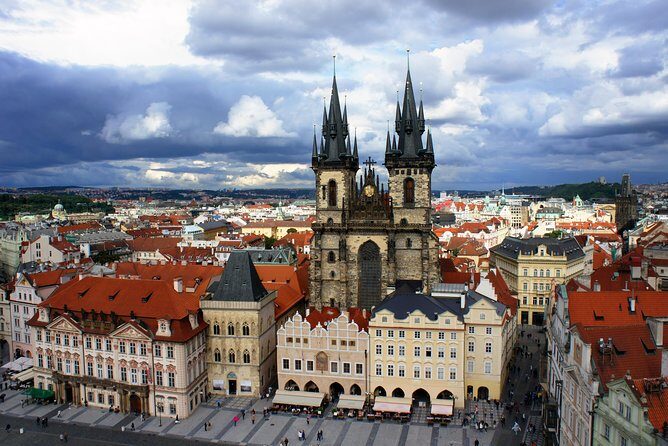
One smart thing about this tour is that it doesn’t keep all the stops in the most obvious places. You hit major landmarks, but the guide ties them back to political meaning and everyday life.
You’ll see the John Lennon Wall, a place many people recognize at least from photos. What the tour adds is the reason it became an emblem of resistance. Even if you’ve read about the Wall before, having the route context helps it click as more than street art.
The Kafka Museum is another stop that benefits from being placed within the broader history narrative. Prague is full of famous names, but the guide helps you understand why Prague’s intellectual and cultural identity stayed important—even when politics tried to dominate public space.
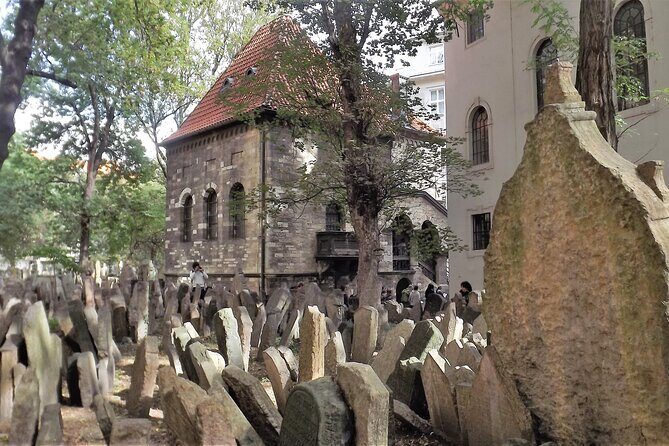
You also visit Jewish Old Town. The route approach is useful here because it gives you historical framing while you look at the streets and monuments. It is not just a quick pass-by; the guide works to connect what you’re seeing to the larger story of Prague across the 20th century.
Revolution and resistance: Velvet Revolution birthplace and the Anthropoid film location
If you want proof that history is not just past tense, this part delivers. The tour includes the Birth Place of the Velvet Revolution, where you get a direct link between political activism and the city’s shift away from communist rule.
This is where the guide’s storytelling becomes more than facts. You start to understand how public pressure, dissidents, and ideas turned into visible change. The place itself becomes more meaningful when you know what happened nearby and why people risked standing out.
Another specific stop on this theme is Cyril and Methodius Church, noted as the location of the film Anthropoid. Even if you know the film, the tour helps you connect the site to real events and the role of resistance. It’s a practical reminder that movies often borrow their settings from history that people lived through.
Photo views and quick breaks that keep the pace sane
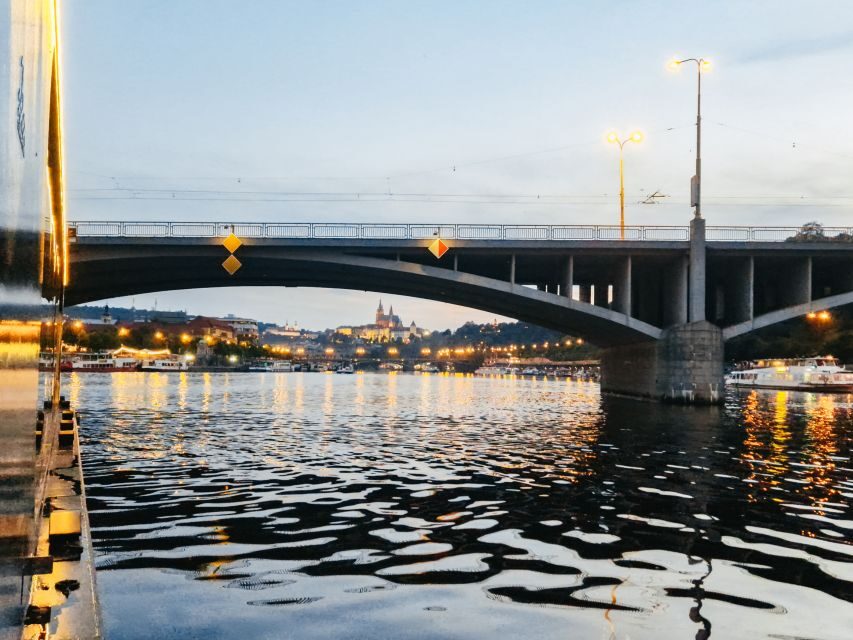
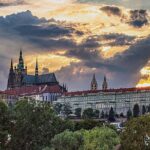
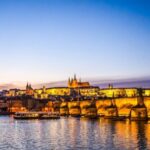
The tour calls out 6 photo views, and that’s exactly what you want from a half-day e-bike route. You get moments designed for pictures, not just constant motion.
What I like about that structure is it keeps the experience from feeling like a race. Even if the history topic is heavy, the pacing gives your brain a moment to reset. Those photo stops also help you re-orient, so you can mentally map where you are and why it matters.
And because the e-bike is doing much of the work, you’re less likely to miss details because you’re focused on your legs.
The Communism Museum ticket: why it’s better after the street stops
The tour includes free entrance into the Museum of Communism. That is a big deal, because it means you are not just viewing a museum on a random schedule. You’re feeding it with the street-level context you just received.
When you walk into a museum with background already in your head, you read differently. Instead of guessing what exhibits connect to, you can connect them back to what you saw outside. The tour guide’s framing helps you understand why certain themes show up repeatedly—propaganda, control, daily life under the system, and the eventual collapse.
If you’re the type who likes museums but hates wasting time, this timing is a smart way to make your visit feel efficient.
Beer tasting at the end: a social reset after serious history
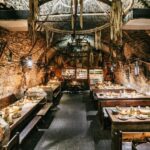
The tour finishes with a Czech beer tasting. It’s included, and it’s served at the end, which makes the timing feel right. After absorbing WWII sites, repression, and revolution, you get a chance to exhale.
I also like that you get something small to keep the day going. One review mentioned getting a tin of beer for the road plus a discount at a local restaurant, which suggests the experience can act as a springboard to the next bite and sip.
Just keep your head about you: you’re still in the middle of a city day, and you’ll want to enjoy beer without turning your afternoon into a nap.
Who this tour suits best (and who should pass)
This tour works best if you want a clear view of modern Prague and you like stories with real-world stakes. You’ll enjoy it if you want to connect the dots between WWII, Nazi occupation power, Soviet-era communism, and the Velvet Revolution.
It also suits travelers who want a lot of ground covered without exhausting themselves on hills. The e-bikes make it practical for people who might struggle with a long walking day.
If you’re hoping for a light, casual city spin with minimal heavy topics, this one may feel too intense. The tour is built around suffering, repression, and political conflict. You can still have fun—just don’t come expecting comedy-history trivia only.
Should you book this Communism and World War II Prague City Tour?
Book it if you want context, not just sights. The included Communism Museum ticket, the WWII bombing locations, and the mix of landmark stops like John Lennon Wall and Jewish Old Town make this more than a standard highlight run.
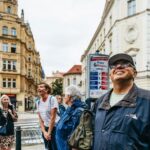
I’d especially recommend it if you appreciate a guide who can connect history to what you’re seeing right now. The guiding style described here—full of energy and lots of back-and-forth—helps the route feel coherent, even when the topics are tough.
Skip it if your idea of Prague is mostly churches, castles, and postcard views with a relaxed pace and no heavy subject matter. This tour is built to make you think, and it does.
FAQ
What’s included in the tour?
The tour includes the electric bicycle use, helmet, a bottle of water, a professional tour guide, Czech beer tasting, and free entrance into the Museum of Communism. Alcoholic beverages are also included.
How long is the Prague City Tour?
It runs about 3 to 3.5 hours.
Where does the tour start and end?
It starts at Prague By E-Bike Shop, Besedni 2, Prague 1 (Malá Strana) and ends back at the same meeting point.
What departure times are available?
Departures are at 10:00 and 14:00.
Do I need to bring passport details?
Yes. Passport name, number, expiry, and country are required at the time of booking for all participants.
Can I cancel and get a full refund?
Yes. Free cancellation is available, and you can cancel up to 24 hours in advance of the experience for a full refund.