REVIEW · PRAGUE
Classic Prague Castle Tour, Strahov Monastery & Castle District
Book on Viator →Operated by Prague Pulse Tours · Bookable on Viator
Climbing toward Prague Castle feels like stepping into a timeline. This tour links Strahov Monastery and the Prague Castle courtyards with story-first guiding, so you understand what you’re looking at instead of just ticking off buildings. I also like the added value of learning how to use Prague transit early on, right at Klarov Park, and the route is paced to keep the views coming without feeling chaotic (guides such as Dylan and Aris tend to bring extra energy and humor).
The main consideration: it’s a walking tour with cobblestones and lots of uphill. Also, while the tour says it doesn’t enter paid monuments, you may still want to buy tickets for interiors like St. Vitus Cathedral depending on what you’re hoping to see.
In This Review
- Key Highlights You’ll Actually Notice
- Why This Route Hits: Hilltop Views, Clear Stories, Zero Guesswork
- Price and Value: $3.63 Means You’re Paying for Guiding, Not Monument Entry
- Getting Started at Josef Manes: A Smooth Launch Point for the Climb
- Stop 1: Klarov Park and the Transit Mini-Lesson
- Stop 2: Strahovsky Klášter (Strahov Monastery) and the Brewery Moment
- Stop 3: Strahov Library—Curiosities You’ll Remember
- Stop 4: Cernin Palace and the Defenestration Story
- Stop 5: The Castle District Main Square and Schwarzenberský Palace
- Stop 6: Entering Prague Castle—Main Gate First, Context First
- Stops 7 and 8: Fourth and Second Courtyards—Changes Through Time
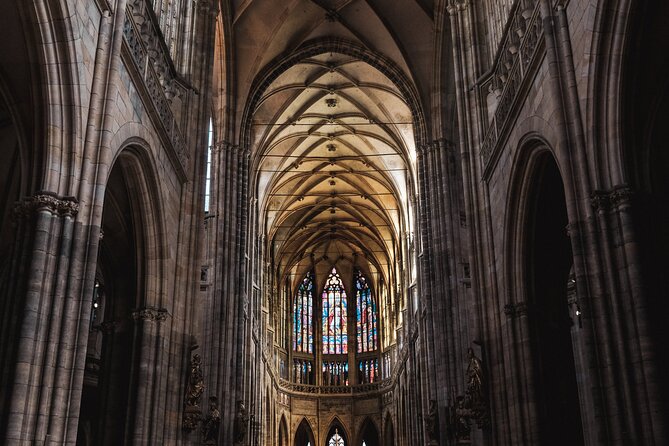
- Stop 9: St. Vitus Cathedral—History in Plain Sight
- Stop 10: Third Castle Courtyard—Best Angles and Presidential Office Area
- Stop 11: Old Royal Palace—An Architecture Timeline in One Place
- Stop 12: Gardens Below Prague Castle (Mar–Oct Only)—Views and the 1618 Defenestration
- Pace, Walking Surfaces, and How to Prepare
- The Guides Make the Difference: Dylan, Aris, Lyle, and More
- Who This Tour Fits Best
- Should You Book This Classic Prague Castle and Strahov Tour?
- FAQ
- How long is the Classic Prague Castle Tour with Strahov Monastery?
- What language is the tour offered in?
- How much does it cost?
- Where do we meet and where does the tour end?
- Does the tour include paid monument entry fees?
- Is there any public transport cost?
- When is the gardens stop available?
- Can I cancel for free?
Key Highlights You’ll Actually Notice
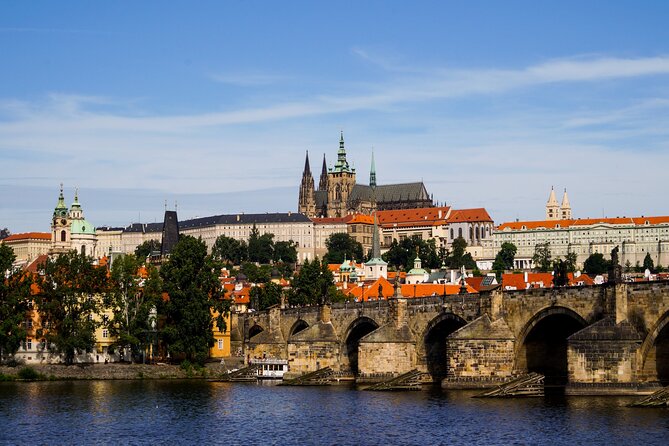
- Strahov Monastery on the hill: a dramatic setting with easy-to-understand context for the Castle District.
- Two defenestrations, two viewpoints: Cernin Palace for a later defenestration story, then 1618 linked with the gardens below.
- Architecture you can spot fast: sgraffito at Schwarzenberský Palace and the way courtyards show upgrades over centuries.
- St. Vitus Cathedral with “what to look for”: the guide helps you notice history in plain sight.
- Small group feel (max 30): plenty of room for questions, and guides like Lyle, Andy, and Jan are repeatedly praised for making it engaging.
- Seasonal garden stop (Mar–Oct): only if the timing works, but it’s one of the best view breaks.
Why This Route Hits: Hilltop Views, Clear Stories, Zero Guesswork
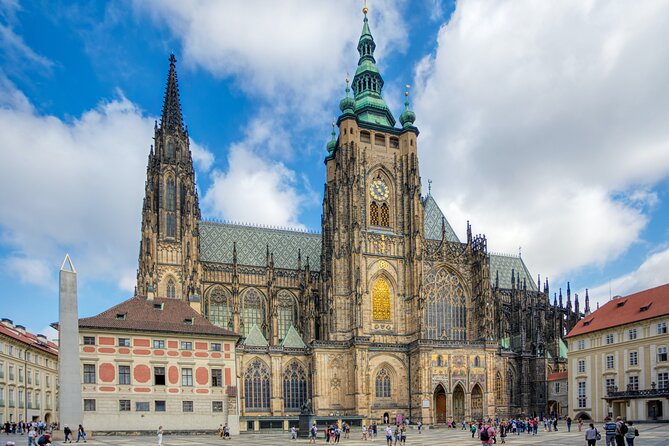
Prague Castle can feel like an endless stone maze. This tour helps you read it like a map: where you are, why it matters, and what detail you should hunt for next. You start in Prague 1 and climb into the Castle District, hitting Strahov and the Castle complex in a logical flow that makes the uphill feel worth it.
I particularly like how the tour doesn’t rely only on big names and dates. It uses concrete prompts—main gates, courtyards, specific palaces—to explain how power and architecture changed over time. In the reviews, guides such as Dylan, Aris, and Lyle get singled out for connecting the dots and keeping a lively pace without turning into a lecture.
One more practical win: the tour builds in a quick intro to using public transport in Prague at the first stop. That’s useful because once you leave the Castle area, you still need a sane way to get around.
You can also read our reviews of more tours and experiences in Prague.

Price and Value: $3.63 Means You’re Paying for Guiding, Not Monument Entry
At $3.63 per person, this tour’s value is mostly in the licensed local guide and the route planning. The tour states that you won’t be entering any paid monuments. That helps keep costs low and keeps the focus on seeing the complex from key viewpoints and exterior spaces.
However, here’s the reality check: a couple of reviews mention that visitors still need tickets to see the inside of St. Vitus Cathedral and other areas. So what should you do with that?
- Treat this as a highly guided exterior-and-courtyard walkthrough.
- If you strongly want interiors, plan to budget for tickets on the day for the specific spaces you care about most.
- The guide should help you understand what’s in the “included viewing path” versus what’s optional paid entry.
Also note the small extra cost for getting around: the public transport ticket is 30 CZK (about 1.2 EUR). The tour is near public transportation, but it’s still nice to have that option ready.
Getting Started at Josef Manes: A Smooth Launch Point for the Climb
You meet at the Josef Manes monument on Alšovo nábř., Staré Město (Old Town). This is a good choice because you’re already in the zone where trams and walking connections make sense. It’s not a weird far-out departure spot that forces you into taxis.
And you end near the Prague Castle ramparts (end address: Hradčany 192). That matters because you’re finishing with one of the most useful things the Castle area offers: a view that helps you re-orient. From there, you’re not trapped in the middle of the complex wondering how you’ll get back down.
Stop 1: Klarov Park and the Transit Mini-Lesson
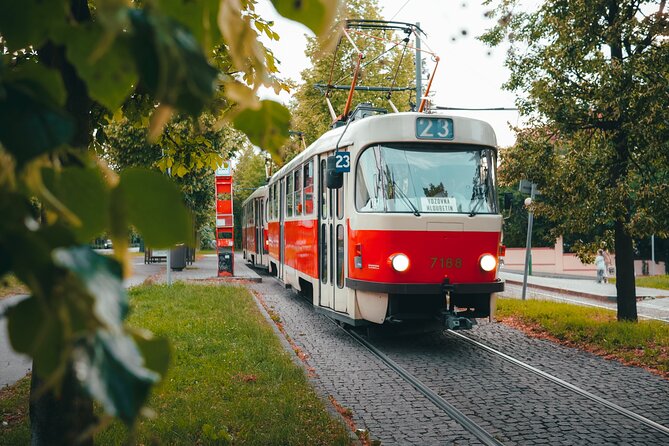
The tour begins with a short visit to Klarov Park. The guide uses this space to explain how to use public transport in Prague.
Why I think this is smart: Prague can be simple once you have a system, and the Castle area is far enough that your return plan matters. Instead of learning transit after you’re already tired and sweaty, you get it early—right when you’re still fresh enough to pay attention.
This is also a breather before the hill. Even a few minutes of flat-ish ground helps your legs feel less betrayed later.
Stop 2: Strahovsky Klášter (Strahov Monastery) and the Brewery Moment
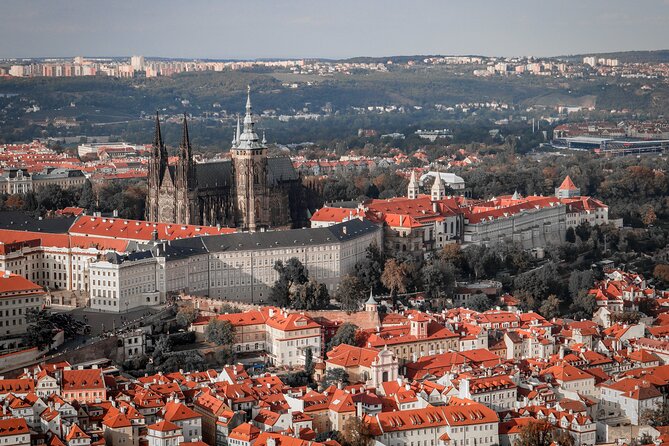
Then you move up to Strahov Monastery, perched high in the Castle District hilltop setting. Expect the kind of place where you look around and instantly understand why locals built major sites here: the views do half the explaining.
Your guide spends time on the monastery itself (about 10 minutes), and there’s also a stop to see the monastery brewery. That’s a fun detail because it ties the monastery to everyday life, not just grand ceremonial history.
One caution: this part is on the move. If you’re the type who hates stepping on cobblestones, slow down and let the group pace you rather than sprinting ahead for the photo.



Stop 3: Strahov Library—Curiosities You’ll Remember
From Strahov Monastery, you head to the Strahov Library area. The focus here is on the stories behind the library and its odd curiosities.
This is one of those stops where a good guide makes the difference. A librarian collection is already interesting. But the best guiding turns it into a “how did they think this way?” moment—especially if you get a guide who enjoys explaining details with a bit of humor. Reviews repeatedly point out that the guides are engaging and that the pace stays structured rather than rushed.
Stop 4: Cernin Palace and the Defenestration Story
Next up: Cernin Palace, with a story tied to the most recent defenestration of Prague. Even if you don’t know the word, you know the vibe: Prague history loves dramatic plot twists.
This stop is short, but it works. The guide uses the building and location as a launch pad for explaining the broader context. It keeps the tour from being only “pretty buildings.” You get the human drama that makes the city feel alive.
Stop 5: The Castle District Main Square and Schwarzenberský Palace
You then see the main square of the Castle District and stop at Schwarzenberský Palác.
Here’s where you start noticing “how” as much as “what.” Schwarzenberský Palace is known for its sgraffito architecture, and the guide helps you spot what you’d otherwise skim past.
If your travel style is part sightseeing and part detective work, this is a good fit. Sgraffito only looks impressive once you understand the technique, and a guide makes that click fast.
Stop 6: Entering Prague Castle—Main Gate First, Context First
Before you even go inside the Castle area, you get a primer. The guide explains how the complex was founded over 1,000 years ago, and you look at the impressive ornate main gate before moving deeper.
I like this approach. Prague Castle is huge, and if you jump straight to St. Vitus or the courtyards, you miss the “why this place exists” thread. Starting at the gate gives you a mental anchor.
Also, the time here (about 15 minutes) is enough for the big-picture framing without overstaying.
Stops 7 and 8: Fourth and Second Courtyards—Changes Through Time
You then move through the Fourth Courtyard and the Second Courtyard, each with guide notes about the castle’s final touches in the 20th century.
This part matters because it teaches you a key lesson about Prague Castle: it isn’t frozen in one moment. It’s a living complex that kept being adapted. When you stand in a courtyard and get the “what changed when” explanation, the architecture stops looking random.
If you want to take photos, use the courtyards as your baseline shots. You’ll come back to them mentally later when you’re trying to remember what you saw.
Stop 9: St. Vitus Cathedral—History in Plain Sight
The highlight stop for many people is St. Vitus Cathedral. You’re there for about 20 minutes, and the guide connects the Cathedral to King Charles IV and other layers of history.
Two practical tips:
- If you want interior viewing, plan for the fact that tickets may be needed, even though this tour isn’t built around paid monument entry.
- Pay attention to what the guide tells you to look for. The Cathedral is famous, but the best moments are often in the details you’d never notice by yourself.
In reviews, guides were praised for turning complex history into something you can follow. That skill helps a lot here, because the Cathedral’s story isn’t one straight line.
Stop 10: Third Castle Courtyard—Best Angles and Presidential Office Area
Next: the Third Castle Courtyard. You get a look at where the Czech presidents office is located and you also get a view angle that lets you see the Cathedral from a particularly strong perspective.
This is a smart stop because it gives you a “photo plus context” pairing. You’re not just wandering until your phone battery dies; you’re moving toward a viewpoint the guide knows will land.
Some reviews also mention that guides can help you catch sightlines for major moments like the Changing of the Guard, while avoiding the thickest crowds. No promises here, but it’s a real reason to listen closely when the guide talks about timing and angles.
Stop 11: Old Royal Palace—An Architecture Timeline in One Place
You then see the Old Royal Palace. The guide frames it as a building upgraded over and over, so you can spot an evolution of architecture in one footprint.
This kind of stop is ideal for people who get bored when a tour becomes only “look at this, look at that.” Here, you’re learning to read the building like a patchwork record—what was added, what changed, and why.
Time here is short (about 5 minutes), so be ready to focus. If you want extra time, you can always linger afterward depending on the day’s access.
Stop 12: Gardens Below Prague Castle (Mar–Oct Only)—Views and the 1618 Defenestration
The tour ends with a seasonal highlight: The Gardens Below Prague Castle, available only during summer season Mar–Oct. You get about 20 minutes there.
This is where you cash in on the reason people climb: best city views and a location linked to the defenestration of Prague of 1618. Two defenestrations in one day can sound like a lot, but it actually helps the stories stick because each one is tied to a physical place you saw.
If your trip is outside Mar–Oct, don’t assume you’ll get this stop. It’s clearly seasonal, so adjust expectations and plan other viewpoints for the season you’re traveling.
Pace, Walking Surfaces, and How to Prepare
This is a tour with lots of walking, and the area is full of cobblestones. Reviews call this out directly. That’s not a dealbreaker, but it means your shoes matter.
Here’s my practical advice:
- Wear comfortable walking shoes with grip.
- Start hydrated. The early climb can trick you if the weather is mild.
- Don’t rush. The guide’s job is to keep you together and make sense of the complex. If you sprint ahead, you’ll miss the “why” parts.
Group size is capped at 30 travelers, which usually keeps things manageable. And multiple reviews mention that the pace is structured and not frantic—one of the main reasons people give this tour such a high score.
The Guides Make the Difference: Dylan, Aris, Lyle, and More
One theme pops up again and again: the best part is the guide. Names that surfaced in feedback include Dylan, Aris, Lyle, Andy, Paul, Filip, Jan, Zach, and Jeremy.
What you should look for in a guide for a place like this:
- They explain architecture so you can spot it quickly.
- They tell the stories in a way that’s easy to follow.
- They keep energy high without making you feel rushed.
- They answer questions without making you feel like you’re slowing things down.
If you get a guide who does that well—like the ones mentioned in feedback—you’ll feel like you understood Prague Castle by the time you step away.
Who This Tour Fits Best
This tour is a strong choice if:
- You want a guided introduction to Prague Castle and Strahov without getting lost.
- You like history told through locations and buildings, not just dates.
- You’d rather have a plan than guess your own route in the Castle District.
- You want views built into the itinerary, including the gardens in the right season.
It may be less ideal if:
- You hate uphill walking or cobblestones.
- You expect a full “paid interior” museum-style experience for every major stop. This one focuses on free viewing areas and guidance, with interiors potentially requiring separate tickets.
Should You Book This Classic Prague Castle and Strahov Tour?
Yes, if you want the Castle District to make sense fast and you like your sightseeing guided with humor and context. The value is real here: a licensed local guide, a compact time window (about 2 hours 30 minutes), and a route that hits the places you’d most likely miss if you went solo.
Before you book, decide what matters most to you:
- If you want interiors like St. Vitus Cathedral, assume you may need tickets separately and plan for that.
- If you’re okay with a guided exterior/courtyard experience and you’ll enjoy viewpoints and story stops, this is an efficient way to do Prague Castle.
FAQ
How long is the Classic Prague Castle Tour with Strahov Monastery?
It runs about 2 hours 30 minutes (approx.).
What language is the tour offered in?
The tour is offered in English.
How much does it cost?
The price is $3.63 per person.
Where do we meet and where does the tour end?
You start at Josef Manes monument (Alšovo nábř., Staré Město) and the tour ends near Hradčany 192 by the Prague Castle ramparts.
Does the tour include paid monument entry fees?
No. The tour states it will not enter any paid monuments, so there’s no admission fee included for paid monuments.
Is there any public transport cost?
The tour notes a public transport ticket cost of 30 CZK (about 1.2 EUR).
When is the gardens stop available?
The Gardens Below Prague Castle are available only during summer season Mar–Oct.
Can I cancel for free?
Yes. You can cancel up to 24 hours in advance for a full refund.