REVIEW · PRAGUE
World War II History Tour of Prague’s Old Town
Book on Viator →Operated by Rosotravel - Ostrava City Tours · Bookable on Viator
Prague’s WWII scars are still visible. This Old Town history tour links major landmarks to real Nazi occupation choices, Czech resistance pressure, and the fear that followed. I love how the route is built around specific sites (not just general talking), and I also like that the guide work is paced and clear, with names like Hubert showing up in the experience stories.
You’ll also get deep context without getting lost in textbook language. The Maisel Synagogue and Spanish Synagogue connection to a planned Nazi exhibit hits hard, and the story of Josefov and deportations gives you a sense of how the machinery of occupation worked.
One possible drawback: this is a mostly outdoor walk, and when Prague turns rainy or chilly, you’ll feel it. Pack layers, because you’ll be standing on streets and in squares more than you’ll be ducking into cover.
In This Review
- Key highlights you’ll notice right away
- Why this WWII Old Town walk hits harder than a museum day
- Meeting at World of Franz Kafka: a fast start with instant location context
- Kafka area to the Maisel Synagogue: the Nazi plan behind the synagogue walls
- Josefov walk: when 1941 changed everything
- Old Town Hall and the Astronomical Clock: Prague uprising damage, and survival
- Petschek Palace: Gestapo headquarters in a grand building
- Vaclavske Namesti and Wenceslas Square: resistance under a spotlight
- Heydrich Terror memorial in the Cathedral crypt: the underground ending
- Old Town Square landmarks: a calmer finish with sharper context
- Price and value: what $93.36 buys you in real terms
- Rain, layers, and how to survive an outdoor Prague history day
- Who should book this WWII Old Town history tour
- Should you book this Prague WWII history tour?
- FAQ
- FAQ
- How long is the WWII History Tour of Prague’s Old Town?
- Where does the tour start, and where does it end?
- Is the tour offered in English?
- Is this tour private?
- Will the Heydrich Terror Memorial be included?
- What happens if it rains?
- Can I cancel for a full refund?
Key highlights you’ll notice right away
- Kafka-area start that sets a tense tone immediately, before you even reach the first big WWII-linked landmark
- Synagogue stops tied to Nazi plans, including the idea of objects being stored for a museum project about Jews
- Josefov, plus the 1941 deportation shift, when the Nazi system began sending Czech Jews toward Theresienstadt
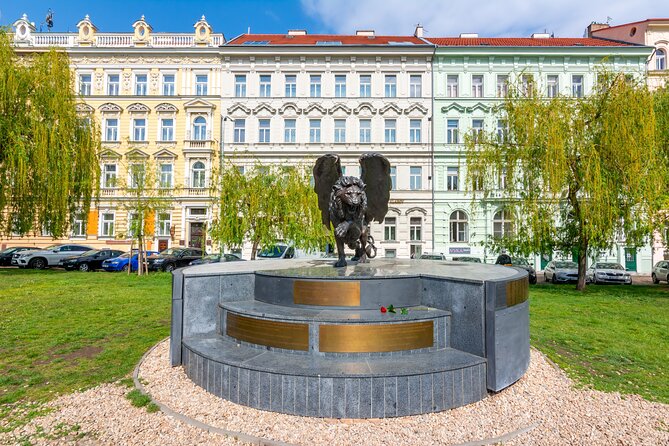
- Gestapo history at Petschek Palace, a former seat of Nazi police power in plain view on a grand building
- A real underground finale at the Heroes of Heydrich Terror memorial crypt, connected to the assassination aftermath
- Weather matters, because this is a street-and-square style tour that doesn’t slow down for drizzle
Why this WWII Old Town walk hits harder than a museum day
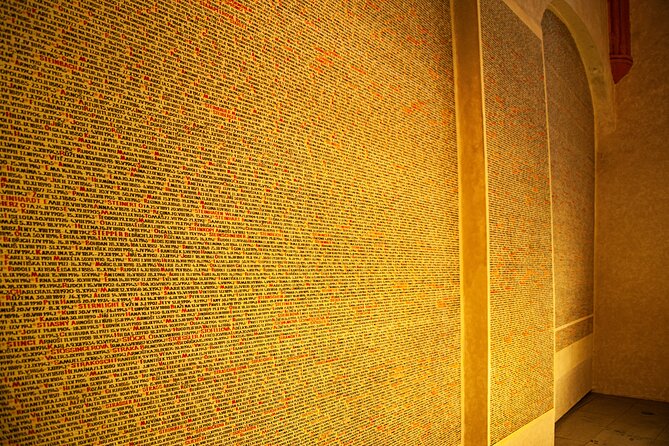
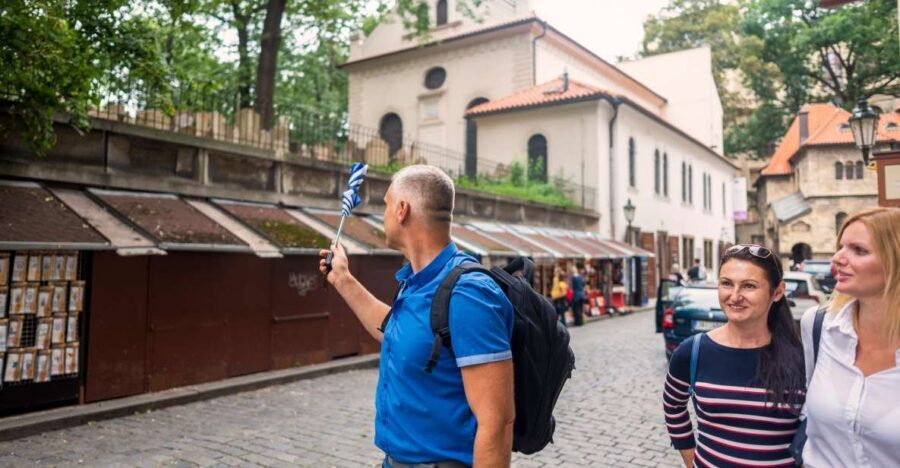
This tour works because it forces you to look at Prague in the same way people looked at it during the occupation: one corner at a time. Instead of treating the Nazi era like a distant chapter, you stand in front of buildings that were used, repurposed, or targeted. Then your guide connects those places to what was happening at street level.
The strongest part for me is the mix of locations: Jewish quarter sites, Czech resistance markers, and the symbols of German power. You get the sense of a city under pressure, where culture, policing, and propaganda all collided.
If you want a WWII experience that’s not just dates and names, this is the kind of tour where the streets do the storytelling.
You can also read our reviews of more tours and experiences in Prague.

Meeting at World of Franz Kafka: a fast start with instant location context
You meet in front of the World of Franz Kafka at Nám. Franze Kafky 16/1 in Staré Město. This matters more than you’d think. You’re starting in a recognizable Old Town pocket, and that helps you later when the tour loops back toward the heart of the historic center.
From the beginning, your guide sets up how the day will read: you’ll move from symbolic places tied to Prague identity, to occupation-era infrastructure, then to resistance survival stories. Even if you’re not a deep-history person, you’ll be able to follow the logic.
This is also a practical start point. It’s near public transportation, so getting there (and getting home later) usually feels straightforward.
Kafka area to the Maisel Synagogue: the Nazi plan behind the synagogue walls

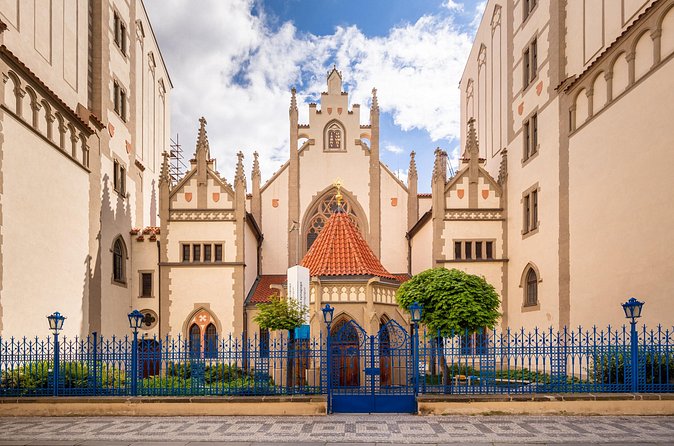
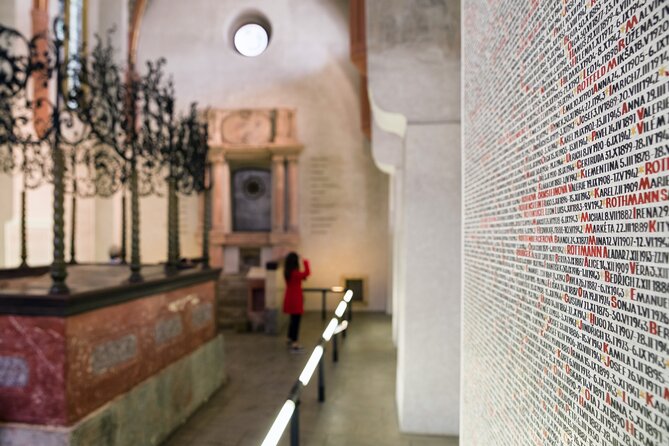
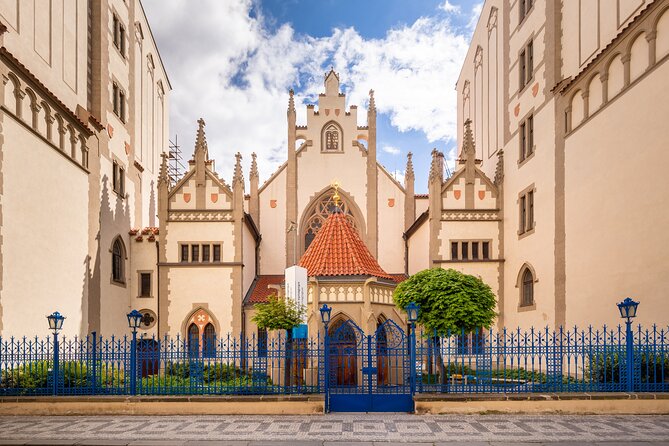
Early on, you’ll see the Maisel Synagogue and the Spanish Synagogue, with a focus on what happened to Jewish objects under Nazi control. The key idea you’ll learn is that some valuable Jewish items were stored with the intention of installing them in a Nazi museum about a so-called extinct race.
That single detail reframes the visit. You’re not only looking at beautiful historic interiors from the outside. You’re also seeing how Nazi ideology tried to turn Jewish culture into something to be displayed, stripped of context, and used as propaganda.
If you’re the type who likes meaning to go with architecture, this stop gives you both. And because the tour is short and timed, it doesn’t wander. You’ll get the point quickly, then move on while it’s still fresh in your mind.
One note for planning: if you join on a Saturday, you may find some Jewish venues have limited public access. Your guide should be able to work around it, but it’s good to know the calendar can affect what you can actually enter.
Josefov walk: when 1941 changed everything
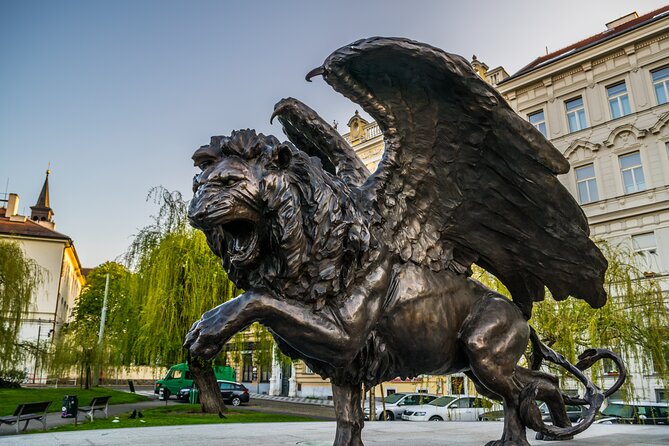
Next you’ll walk through Josefov, Prague’s Old Jewish Quarter, and hear why this area drew such attention from the Nazi regime. A major moment in the story is 1941, when the transport of Czech Jews to Theresienstadt began.
This stop is valuable because it connects a geographic place to a specific shift in what the Nazis were doing. You’re standing in a neighborhood that matters, then you’re told what made it matter to the occupiers.
What I like about how this portion is handled is the balance of place and system. It’s not only about what the buildings are. It’s about what was done there through policies, fear, and forced movement. That’s often what gets lost when you only visit memorials after the fact.
You’ll have time on the street to take it in, and your guide’s explanations help you avoid the trap of turning it into a blur of plaques and facts.
Old Town Hall and the Astronomical Clock: Prague uprising damage, and survival
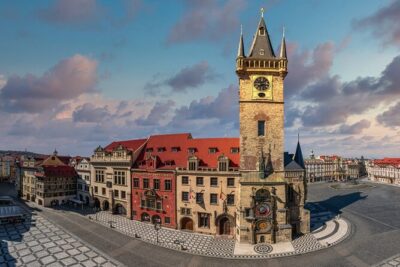
After Josefov, the tour shifts toward the Old Town’s central landmarks. You’ll take a closer look at the facade of the Old Town Hall, which suffered heavy damage during the Prague uprising in May 1945. The Astronomical Clock, the iconic feature here, has survived.
That contrast is the point. You see destruction tied to a specific uprising, then you see persistence in something the city still recognizes instantly. Your guide frames the clock not just as a pretty Old Town must-see, but as a survivor of a violent turning point.
This is where the tour becomes more than WWII and starts to show the idea of Prague after the conflict: things broke, people fought, and some symbols endured long enough to become part of how the city remembers.
If you love photography, this is also one of the easier stops to shoot from the street level. You’ll likely have short moments to capture the clock and the surrounding facade before the group moves on.

Petschek Palace: Gestapo headquarters in a grand building
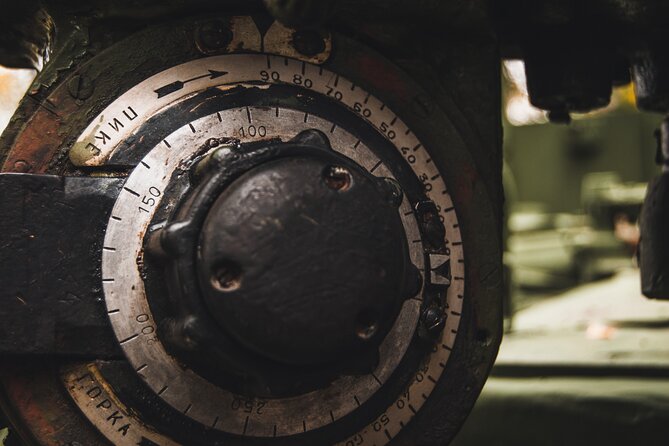
Petschek Palace is another one of those stops where you feel the contradiction: a formal palace setting used for secret police power. Here, you’ll learn it was the former seat of the Gestapo headquarters.
That’s a heavy theme, but it’s also one of the most historically useful stops on the route, because it gives you a tangible location for the machinery of interrogation and control. The guide links this to the resistance pressures described later in Wenceslas Square and the memorial crypt.
A practical note from real-world experience: Petschek Palace is now the US Ambassador’s residence, so photos may be limited or best taken from farther back. Your guide can help you understand what’s sensible without turning the day into an argument with local rules.
Also, depending on timing and route, you might use short public-transport hops to get between areas smoothly. In at least one guide-led experience, Metro use was explained clearly to help the group manage it without stress.
Vaclavske Namesti and Wenceslas Square: resistance under a spotlight
You’ll spend time around Vaclavske Namesti and then move toward Wenceslas Square. The story here is about public space and public pressure.
On the corner of a building you’ll find a memorial plaque dedicated to the Czech resistance. Your expert guide explains the resistance efforts and the grim reality of interrogations and torture. Then you’ll end up in Wenceslas Square, a place the Nazis used for mass demonstrations.
This sequence matters. It’s one thing to hear about resistance in theory. It’s another to watch how your guide connects it to where power showed itself. Wenceslas Square isn’t just a pretty boulevard. It becomes a stage set for occupation.
If you’re the kind of traveler who likes to understand why a city feels the way it does, this is where your mental map changes. You start to notice squares and broad streets as tools—tools for crowds, control, and morale.
Heydrich Terror memorial in the Cathedral crypt: the underground ending
The finale for the longer options is the National Memorial to the Heroes of the Heydrich Terror. It’s located in the underground crypt of the Cathedral of Saints Cyril and Methodius. This part is the kind of stop that slows your thinking down.
You’ll learn that it’s the last hideout of seven SOE-trained Czechoslovakian agents involved in the assassination of Reinhard Heydrich. The focus stays on the resistance story and what came next: the search and the danger faced by the people involved and those hiding them.
This is also the stop that many people remember the next day, because it’s underground and because it turns the story from one of events into one of survival. It’s not an abstract “what happened.” It’s a place tied to what the people had to do to stay alive.
Timing matters here. The tour notes that the visit to this memorial is not included in the basic 2-hour option. If this is a must-see for you, choose the longer option so you don’t leave Prague without the crypt ending.
Old Town Square landmarks: a calmer finish with sharper context
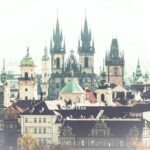
To close, you’ll return to the Old Town Square area and see landmarks like the Church of St Nicholas, the Kinsky Palace, and the Church of Our Lady before Týn.
On the surface, these are classic Prague icons. But after you’ve spent the day with occupation and resistance stories, they stop being just sightseeing and start feeling like settings where history happened around the edges—even when the buildings themselves aren’t the central actors in WWII.
This ending works well if you want your day to end with beauty, but without pretending the past isn’t heavy. You leave with the feeling that Prague’s “main sights” have always lived alongside difficult chapters.
Price and value: what $93.36 buys you in real terms
The price is $93.36 per person, for about 2 to 4 hours depending on the option you choose. On paper, that’s not the cheapest stroll in town. In practice, it can be good value because you’re paying for focused interpretation at multiple meaningful stops, not just walking.
A few value points to think about:
- The tour is private for your group, so you’re not sharing explanations with strangers.
- Admission ticket listings for the stops are marked free, which helps keep the day from turning into an extra-fees problem.
- The Heydrich memorial inclusion depends on the option, so you’re choosing how complete you want the story to be.
Also, it’s commonly booked about 42 days in advance on average. That’s usually a sign you should lock in your slot early if your schedule is fixed.
If your goal is WWII context without spending days piecing it together yourself, this format is efficient.
Rain, layers, and how to survive an outdoor Prague history day
This tour has an outdoor feel, and one review experience called it fully outside. That means you should dress like you’ll be outside even if the sun tries to behave.
My best practical advice:
- Wear layers, because chilly air plus standing around can drain you fast.
- Bring a rain jacket or small umbrella.
- Comfortable walking shoes matter, since you’ll be moving through Old Town streets and squares.
If you use Prague’s public transport to connect between spots like Petschek, treat it as part of the plan, not an extra chore. In at least one guide-led experience, the Metro instructions were clear enough that the transfer didn’t feel stressful.
Who should book this WWII Old Town history tour
This tour fits best if you:
- Want a guided storyline across several historic sites, not a single museum stop
- Prefer WWII history that ties to street-level locations in Prague
- Like the mix of Jewish quarter context, Gestapo-linked power, Czech resistance recognition, and the Heydrich plot aftermath
It may be less ideal if you:
- Hate outdoor walking in bad weather
- Want a totally leisurely pace with lots of museum time
- Only care about the most famous buildings and don’t want the darker context attached
Should you book this Prague WWII history tour?
I’d book it if you want your Prague day to feel purposeful. The route is built around specific places tied to occupation, resistance, and survival, and the guide explanations seem to bring those connections into focus. The price isn’t bargain-basement, but it can feel fair for what you’re actually getting: guided meaning at multiple key stops.
If the Heydrich Terror memorial matters to you, don’t assume it’s included in the shorter option. Choose the longer version so you get the underground crypt ending.
If you’re flexible and prepared for weather, this is the kind of tour that gives you a sharper, more human understanding of the city.
FAQ
FAQ
How long is the WWII History Tour of Prague’s Old Town?
It runs about 2 to 4 hours, depending on the selected option.
Where does the tour start, and where does it end?
You meet in front of the World of Franz Kafka at Nám. Franze Kafky 16/1, 110 00 Staré Město. The tour ends back at the meeting point.
Is the tour offered in English?
Yes, it is offered in English.
Is this tour private?
Yes. Only your group participates.
Will the Heydrich Terror Memorial be included?
It depends on the option. The visit to the National Memorial to the Heroes of the Heydrich Terror is not included in the basic 2-hour option.
What happens if it rains?
It’s a mostly outdoor tour, so you should plan for rain and chilly weather and dress accordingly.
Can I cancel for a full refund?
Free cancellation is available. You can cancel up to 24 hours in advance for a full refund.