REVIEW · PRAGUE
Walking through ages: 11th to 21st century, Prague flavoured
Book on Viator →Bookable on Viator
Prague’s big sights, tightly timed, on foot. This walking tour strings together Prague from the 11th to the 21st century flavor: Prague Castle and St. Vitus Cathedral, the baroque sweep of Lesser Town, Charles Bridge, the Jewish quarter around Josefov, Old Town Square, Mozart’s Estates Theatre area, and then forward to Art Nouveau and modern Czech identity at Obecní dům and Wenceslas Square. I especially like the small group feel and the way the guide, Vadim, handles questions with smart, detailed answers without rushing you.
One thing to keep in mind: it’s mostly exterior viewing, and several major sites list admission as not included. If you want interiors like St. Vitus Cathedral, St. Nicholas Church, or the Old-New Synagogue, you’ll need to plan for extra tickets and time on top of the guided route. That said, for a first taste of Prague’s most important areas, this format is a very efficient way to see a lot while still feeling human-sized.
In This Review
- Key highlights that make this tour work
- Prague in four hours: 11th to 21st century in one walking loop
- Starting at Prague Castle and getting your bearings fast
- Prague Castle: the seat of power you can actually see from outside
- St. Vitus Cathedral: gothic symbolism for Czech state and nation
- Hradčany Square views, then down into Lesser Town’s baroque world
- Malá Strana’s St. Nicholas Church: a skyline dome moment
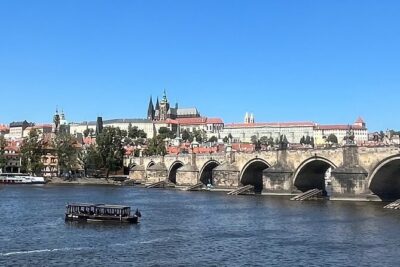
- Charles Bridge: a 700-year-old statue gallery with real views
- Josefov and the Old-New Synagogue: Prague’s Jewish quarter in a condensed visit
- Old Town Square and the Astronomical Clock area: where the city shows off
- Stare Město and Mozart’s Estates Theatre: a rare connection you can actually point to
- Obecní dům and Czech Art Nouveau: civic pride in stone
- Wenceslas Square: 20th and 21st century Prague in one long gaze
- Price and value: is $60.21 worth it for four hours?
- Who this tour suits best
- Should you book this walking tour of Prague’s epochs?
- FAQ
- How long is the Prague tour?
- How much does the tour cost?
- What’s included in the price?
- Are admission tickets included?
- Where does the tour start and what time?
- Where does the tour end?
- Is the tour in English, and how large is the group?
- Is free cancellation available?
Key highlights that make this tour work
- Vadim’s Q&A style: he stays flexible with timing and answers lots of questions
- A focused route across key districts: Hradčany, Lesser Town, Charles Bridge, Josefov, Old Town, and New Town
- Exterior-first sightseeing: you get the big visual hits without getting stuck in long ticket lines
- Mozart + Czech identity stops: Estates Theatre area and Wenceslas Square’s mixed styles
- Jewish quarter story details: including the legend tied to the Golem and the Old-New Synagogue
Prague in four hours: 11th to 21st century in one walking loop
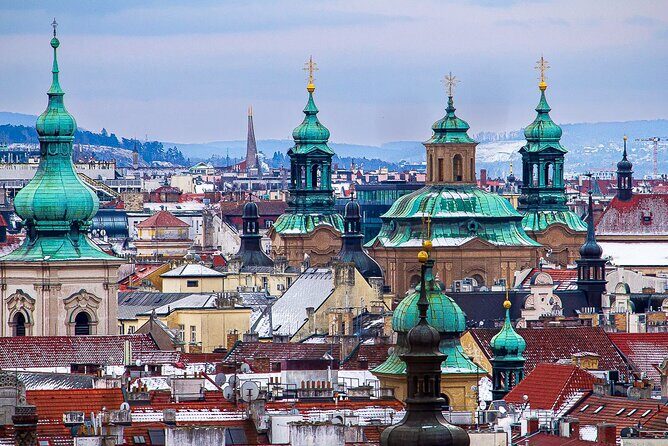
If you’re trying to understand Prague fast, this tour is built for that job. The route moves forward through time in a way that feels logical on the ground: medieval power at Prague Castle, gothic Czech state symbolism in and around St. Vitus Cathedral, baroque charm in Lesser Town, then the Old Town core with its famous clock area and Mozart connections. From there, you jump to 19th/20th century civic identity at Obecní dům and the political-and-cultural layers that show up around Wenceslas Square.
The big win here is pacing. It’s about four hours, and the group size is capped at 10, so the guide can keep the tour moving while still checking in with you. You’re not stuck listening to a monologue from start to finish. You also get a structure with clear stop points, so even if you only catch bits of information, you still leave with a mental map of where things are and what they represent.
And yes, it’s a walking tour. Plan on comfortable shoes and bring water or snacks if you’re the kind of person who gets hungry before you realize you’re hungry. You’ll get exterior views at many stops, so you’ll want to slow down occasionally and look up, not just forward.
You can also read our reviews of more walking tours in Prague



Starting at Prague Castle and getting your bearings fast
The tour starts at Prague Castle area (Pražský hrad) at 10:00am and ends at Wenceslas Square. That start matters. Prague Castle is not just a landmark; it’s the spine of the city’s story, and seeing it early helps you read everything else later.
Even better: the tour format includes getting to the starting point by public transport, and pickup is offered. In the real-world view, that means you don’t have to spend your first Prague morning figuring out which tram goes where, at least not alone. One of the strongest practical takeaways from the experience is the guide helping you understand how to use the trams so you can move around easier during the rest of your stay.
The route also makes sense geographically. Starting at the castle lets you walk through districts that are higher and older first, then gradually work toward the lower, central city and end in the broader New Town area. In plain terms, you get a tour that reduces backtracking, which is where many short sightseeing plans break down.
Prague Castle: the seat of power you can actually see from outside
Prague Castle is UNESCO-listed and has been the seat of Bohemian rulers since the 10th century. In this tour, you’ll get a brief look and understand why it dominates the city skyline. Even when you’re viewing from outside, the complex still tells you a lot: you can sense how the rulers placed their authority above the streets and how the castle area became the visual anchor for generations.
Why it’s worth your time: Prague’s old streets and squares become much easier to interpret once you understand where the power center was. If you later wander into the neighborhoods near the river or the Old Town core, you’ll keep thinking, this all grew outward from that hilltop.
The main consideration is time and access. The tour provides only exterior sightseeing here, and an admission ticket isn’t included for this stop. If you want to go inside, you’ll need separate entry planning. On a four-hour schedule, that choice can be tricky, so think about what you personally value more: a quick, broad overview or a deeper interior moment.
St. Vitus Cathedral: gothic symbolism for Czech state and nation
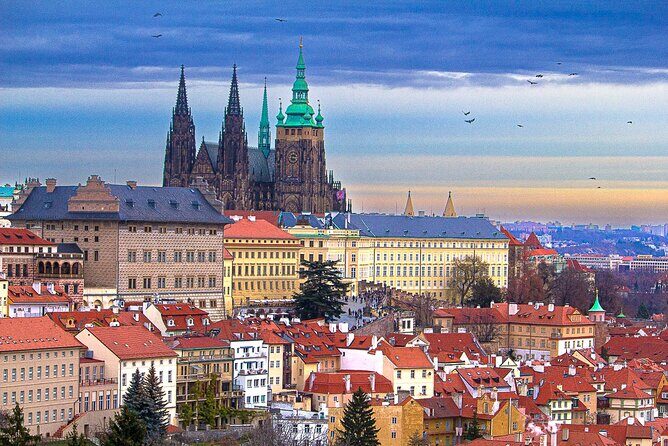
Right after Prague Castle, you’ll have a brief look at St. Vitus Cathedral. It’s described as a world-famous gothic masterpiece and also as a symbol of Czech state. Even if you don’t go inside, the cathedral’s scale and style communicate what the centuries were trying to build: a national statement in stone.
This stop is short by design (about 10 minutes in the plan), so don’t expect a full cathedral visit. Still, it’s a great moment to connect style to identity. Gothic architecture in Prague isn’t just pretty. It’s tied to the way Czech rulers, institutions, and later national narratives used monumental buildings to show legitimacy.
If you’re the type who likes interiors—stained glass, chapels, and close-up stonework—then plan extra time. Admission isn’t included here, and the tour focuses on exterior viewing. If you go for the exterior, bring your curiosity and just let your eyes do the reading.
Hradčany Square views, then down into Lesser Town’s baroque world
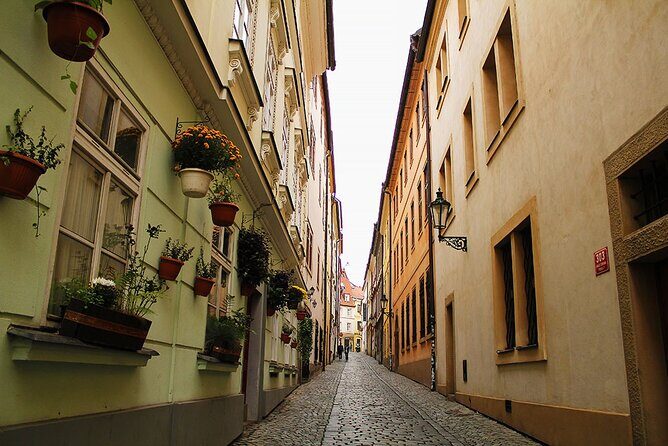
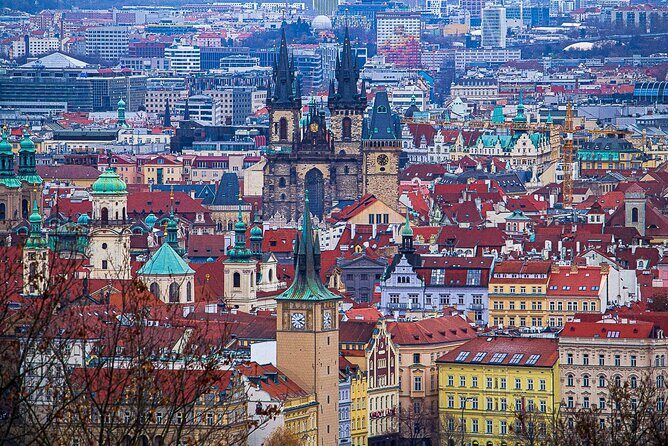
From the cathedral area, the tour heads to Hradčanské náměstí, the square in front of Prague Castle. This is one of those places where Prague suddenly looks cinematic. You get views over the city and you see the surrounding 17th century palaces of powerful noblemen that helped shape the city’s look and social structure.
Then you shift into Lesser Town, or Malá Strana. This part of Prague is one of the best preserved baroque quarters in Europe. In practice, that means you get leafy gardens, grand palaces, and side streets that feel calmer than the big central areas. The tour gives you about 30 minutes here, which is a good chunk for both walking slowly and spotting details without feeling lost.
What I like about including Lesser Town: it balances the heaviness of castle politics with the human scale of everyday streets. You’ll also find cozy restaurant zones and small shops around here. That makes the district useful even if your main goal is sightseeing, because you can use it to plan your next meal without guessing.
If you’re hoping to tour interiors inside churches, some may require admission tickets not included in the tour. For example, St. Nicholas Church is a short stop where tickets aren’t included. If you want inside access, you’ll want to plan that separately.




Malá Strana’s St. Nicholas Church: a skyline dome moment
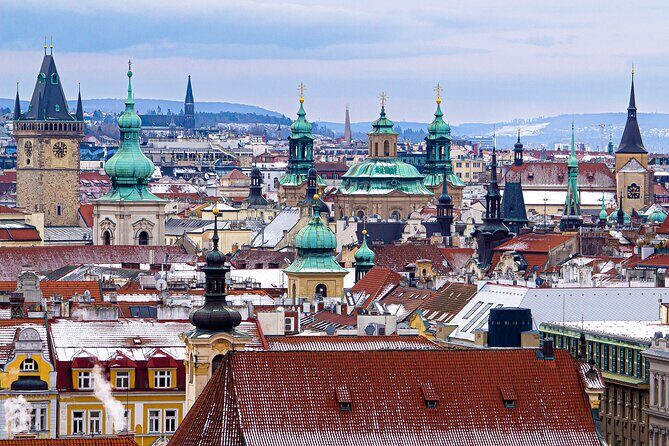
St. Nicholas Church is listed as a baroque jewel, and the dome is described as one of the most recognizable sights on Prague’s skyline. Even in a brief stop, this is valuable because skyline landmarks act like navigation tools. Once you know what the dome looks like from street level, you’ll start spotting it later while you wander on your own.
This stop is quick (about 10 minutes), so the goal is mainly to orient your eye. You’re not meant to finish a long worship-style visit on this tour. Admission is not included, so if you want to go inside and see more, that’s an add-on rather than part of the package.
For your day planning: consider whether you prefer to spend your limited time inside one major church, or collect more exterior viewpoints. Prague rewards both styles, but only one of them will fit neatly inside a four-hour plan.
Charles Bridge: a 700-year-old statue gallery with real views
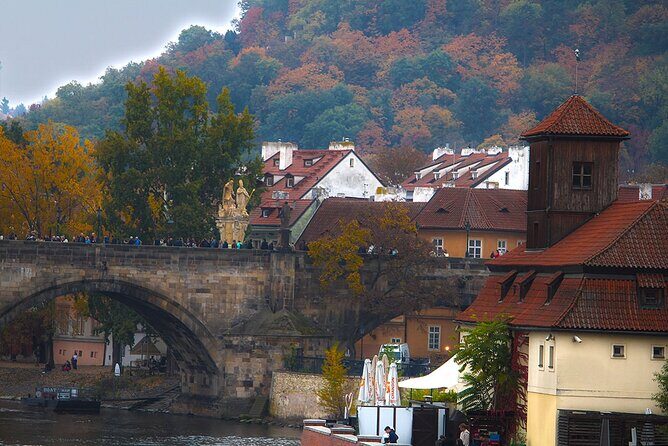
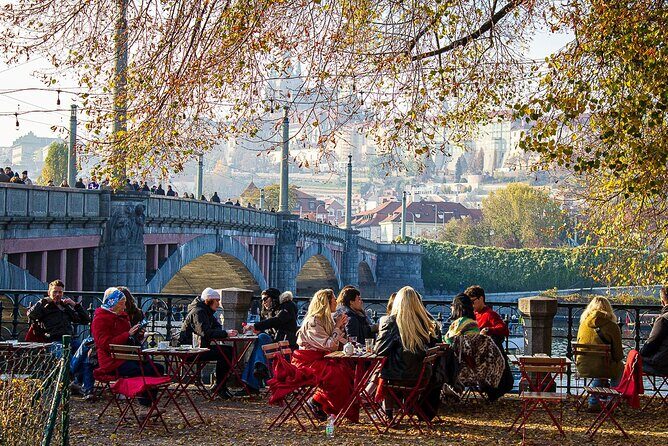
Charles Bridge is one of Prague’s signature sights: a main landmark about 700 years old, lined with statues and famous for the way it frames the city views. The tour gives you around 15 minutes here, which is enough to walk a bit, stop for photos, and actually look at the perspective lines—where the bridge leads your eye toward castle and towers.
Here’s the practical truth: Charles Bridge can be crowded at peak times. This tour’s timing and group size help keep you moving, but you should still expect the usual high-traffic vibe. The win is that you’ll know where to stand and what to look for because the guide is tying the bridge into the broader Prague story, not treating it like a separate postcard stop.
Admission isn’t part of this stop, so you won’t lose time buying tickets. That makes Charles Bridge a good payoff mid-tour: you’ve already climbed through castle and church context, and now you get the city panorama that ties it together.
Josefov and the Old-New Synagogue: Prague’s Jewish quarter in a condensed visit
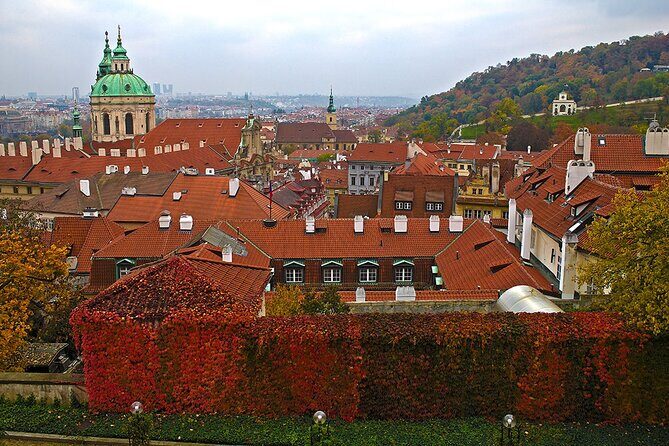
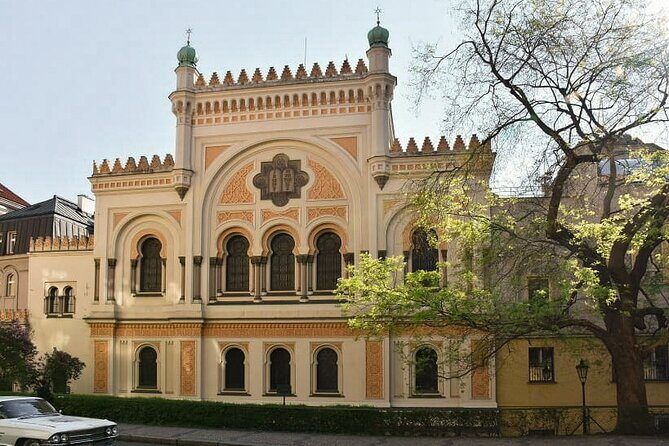
After the bridge, the tour heads into Josefov, Prague’s Jewish quarter. The focus here is the rebuilt character of the neighborhood across the late 19th and early 20th centuries, with neorenaissance and art nouveau influences. It’s one of those areas where you see how cities keep rewriting themselves after tragedy, politics, and changing laws.
You’ll get about 30 minutes in Josefov, which is a nice time window to understand that this quarter isn’t just one building—it’s a collection of layers. You’ll then stop at the Old-New Synagogue area, described as one of the oldest surviving synagogues in Europe, dating back to 1270.
What I find compelling is the legend connected with the place: the idea that a closed attic holds the remains of the Golem, a human-like creature tied to an old master story. Even if you treat legends as stories, not evidence, they still show you how communities preserved identity through narrative. It’s culture you can feel, not just facts on a plaque.
Admission isn’t included at this stop, so you’ll likely focus on the exterior context unless you choose to add an interior visit later.
Old Town Square and the Astronomical Clock area: where the city shows off
Old Town Square is the city heart, and it’s famous for its 800-years worth of layers and the Astronomical clock. In this tour, you get about 20 minutes, which is enough to understand why people treat this square like a destination even if they already walked through it quickly once.
This is also a useful orientation stop. Once you see Old Town Square in person, it becomes easier to navigate. You start recognizing the sight-lines and the way Prague funnels people into historic core areas.
What you’ll appreciate most here is how the guide frames the square’s role in Prague’s identity over time. It’s not only about a clock. It’s about how public space became a stage for power, faith, and civic life.
You’ll also get a further step into the Old Town area with Charles University and the Estates Theater area mentioned in the route, keeping you inside the intellectual-and-arts thread of Prague.
Stare Město and Mozart’s Estates Theatre: a rare connection you can actually point to
Next you move into Stare Město, the legendary Old Town. This area connects to Charles University, one of the oldest in Europe, and to the Estates Theater zone. The Estates Theater is described as the only theater in the world still in operation where Wolfgang Amadeus Mozart personally conducted his operas.
That’s the kind of claim that usually sounds grand, but on the ground, it helps you understand something simple: Prague wasn’t only a political city. It also mattered for music, performance, and educated culture.
You’ll have about 30 minutes in the Old Town area and about 10 minutes specifically tied to the Estates Theatre. That makes it a good match for different styles: if you want to linger for a bit, you can spend time around the educational and performance atmosphere. If you’re more visual, you can use the short stop to build a mental map for later.
Admission isn’t included at the Estates Theatre stop, so again, interiors may require separate planning. But even without that, the location has a strong sense of continuity. You’ll feel how Prague’s arts scene is rooted in its historic institutions.
Obecní dům and Czech Art Nouveau: civic pride in stone
As the tour shifts toward modern Prague, you’ll stop at Obecní dům (Municipal House area). This building is described as the flagship of Czech Art Nouveau, built on the site of the former Royal Court. It was completed on the eve of Czechoslovak independence and conceived as a celebration of Czech art and national identity, and it was where the new state was proclaimed in 1918.
That’s a lot of meaning for one stop, and it’s why I like having it on this walking route. Castle and cathedral tell you about medieval authority. Obecní dům tells you how identity got redefined later, with art and architecture becoming political language.
You’ll have about 10 minutes here for a look. Admission isn’t included for this stop in the plan. Still, even a short exterior view helps you connect the idea that Prague’s evolution isn’t a straight line. It’s a set of different eras all making their case for what the city is.
Wenceslas Square: 20th and 21st century Prague in one long gaze
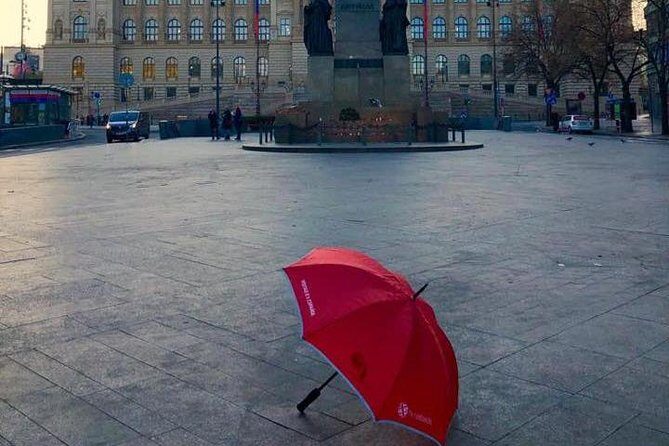
Finally, the tour ends at Wenceslas Square, described as the main square of new-time Prague and a place that never sleeps. It’s also where you see the mixture of epochs and styles that marks Prague’s 20th and 21st century story. The route mentions specific landmarks around it, including the gothic church of Our Lady of the Snows, meant to be the biggest in Prague, the neo-classical National Museum, Art Deco Hotel Europa, and even rondocubism from the third decade of the 20th century.
This stop is about 20 minutes, which is enough time to get a sense of how layered the architecture is. If you’ve been looking at medieval stone and baroque forms earlier, Wenceslas Square feels like the city turning the page and keeping the pen moving.
Practical thought: because this is an end point in the New Town area, it’s a great place to decide your next move. You can keep exploring on foot, grab food, or use it as a transit anchor to reach neighborhoods you didn’t cover.
Price and value: is $60.21 worth it for four hours?
The tour price is $60.21 per person and the duration is about 4 hours. What you’re paying for is mostly the guide service and the organized route that links major districts efficiently, plus practical group-size management. Admission fees are not included, and the tour is described as exterior only, so you’re not buying a guaranteed museum checklist in this price.
So is it value? For many people, yes, because Prague is spread out and it’s easy to waste time on guesswork. Having an expert guide who can connect places—castle to cathedral to Jewish quarter to Old Town to Art Nouveau—turns a collection of sights into a coherent experience. The small group cap of 10 also helps the guide stay responsive, and the guide you’ll likely meet, Vadim, is known for detailed answers and tailoring timing to fit what the group needs.
What you might spend extra on: admission tickets if you choose to go inside any of the stops marked as not included, plus food or drink. The tour also includes that you reach the starting point via public transport, and public transport is listed as €2.00 per person, unless pickup is used.
If you want a fast, well-structured sampler of Prague’s most important districts, the price fits that goal.
Who this tour suits best
This is a strong fit if you want:
- A guided route that connects major neighborhoods without needing a map app addiction
- An expert guide who can answer questions and adjust to your timing needs
- A four-hour plan that covers big visual landmarks, then gets you back into the city’s day
It’s also good for first-time visitors who feel overwhelmed by Prague’s size and variety. The itinerary focuses on recognizable anchors like Prague Castle, Charles Bridge, Old Town Square, Estates Theatre area, Obecní dům, and Wenceslas Square, so you’ll leave with anchors you can find again later.
If your priority is going inside a bunch of museums and churches, you might feel limited because the tour is exterior first and admissions aren’t included at several stops. You can still use it as a foundation, then add interior visits on a second day.
Should you book this walking tour of Prague’s epochs?
I’d book it if you want a guided, time-efficient story of Prague—medieval to modern—without turning your day into a ticket-and-line marathon. The best reason to choose it is the combination of efficient route planning and a guide who can explain what you’re seeing in a way that sticks.
Skip it only if you already know Prague well and you’re mostly chasing interior access. In that case, you’d probably be happier with a tour that guarantees more museum time or specific building entries.
If you’re like most visitors—first or second visit, short on time, and hungry for context—this is a very solid way to get your bearings fast and enjoy the city with less friction.
FAQ
How long is the Prague tour?
It runs for about 4 hours.
How much does the tour cost?
The price is $60.21 per person.
What’s included in the price?
The guide service is included. The tour also uses a mobile ticket.
Are admission tickets included?
No. The tour is listed as exterior only, and several stops note that admission tickets are not included.
Where does the tour start and what time?
It starts at Pražský hrad (Prague Castle area) at 10:00am.
Where does the tour end?
It ends at Wenceslas Square (Václavské nám.).
Is the tour in English, and how large is the group?
The tour is offered in English, and it has a maximum of 10 travelers.
Is free cancellation available?
Yes. You can cancel for free up to 24 hours in advance for a full refund.