REVIEW · PRAGUE
Second World War & Communism (Tip-based 3 hour tour)
Book on Viator →Operated by Real Prague Guides · Bookable on Viator
Prague history moves fast here. This 3-hour, English-language WWII-to-Cold-War walk strings together major Prague landmarks so the story makes sense, not just dates and names. I especially like the way the route connects resistance, Jewish history, and the Communist takeover into one continuous narrative you can follow street by street.
My other favorite part is the free stop at the Museum of Operation Anthropoid, ending in the crypt tied to the operation. The one drawback to watch: this is a fair bit of walking, and it’s not a good fit if mobility is limited or if your group has a hard time with city-street pacing.
In This Review
- What I liked most about this WWII & Communism tour
- Prague’s WWII-to-Velvet Revolution storyline, compressed into 3 hours
- Klárov: Second Resistance memorials and the road to independence
- Pinkas Synagogue: Czech Jewish fate, emigration, and what was lost
- Old Town Square and the Prague Uprising: how WWII ending shaped Communism
- Wenceslas Square: 1968 Warsaw Pact invasion and Jan Palach’s place
- OC Quadrio and the Rotating Head of Kafka: art under Communism
- Narodní třída’s hands-out-of-the-wall: the Velvet Revolution’s fall of a system
- The National Theatre and Vaclav Havel: resistance to presidency
- St Cyril and St Methodius Cathedral: Operation Anthropoid in the crypt
- Guides and pacing: why the story stays clear
- Who should book this tour, and who should skip it
- Should you book this tip-based Prague history walk?
- FAQ
- How long is the Second World War & Communism tour?
- Where does the tour start and end?
- Is the tour in English?
- What’s included for price?
- How much is the tour?
- Is there a lot of walking?
- Is it suitable for mobility issues or pets?
What I liked most about this WWII & Communism tour
- WWII and Communism in one clean storyline: you go from occupation and resistance straight to 1968 and the end of the regime.
- Jewish history is treated directly at Pinkas Synagogue, including what happened to Czech Jewish communities.
- Operation Anthropoid has real weight because the tour includes entry to the Museum of Operation Anthropoid and finishes in the related crypt.
- Storytelling is clear and linear, with guides such as Kamil and Vaclav praised for straightforward explanations and suspenseful pacing.
- You get art as a political clue at places like the Rotating Head of Kafka at OC Quadrio.
- Flexible value for the cost: it’s priced as a tip-based experience, and multiple guides received credit for being worth tipping.
Prague’s WWII-to-Velvet Revolution storyline, compressed into 3 hours
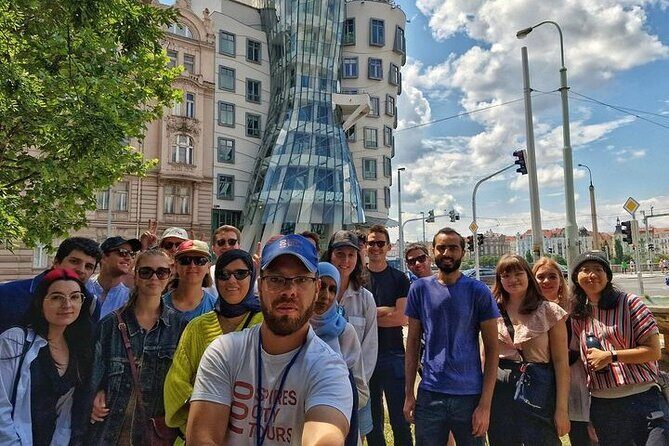
A good history walk does two things: it explains why events happened, and it shows where you can still feel them in the city. This one aims right at that. You start at Klárov and end near the National Theater area, with a route that links Czechoslovakia’s 20th-century turning points in a way that’s easier to hold in your head than reading a book after the fact.
The big win is the structure. Instead of treating World War II as one chapter and the Cold War as another, the stops keep pointing forward: what occupation did to Czech lands, what resistance looked like, and then how the end of the war set conditions for Communism. The tour also doesn’t stick to politics alone. You’ll encounter personal stories—Jewish families facing deportation, people pushing back against the state, and the role of figures like Vaclav Havel in the Velvet Revolution.
At $3.60 per person listed price, this is one of those experiences that makes you think about what you’re really paying for. The listed price doesn’t feel like the whole deal. It’s set up as a tip-based tour, and reviews praise guides for clarity and impact—so plan to budget for tipping if you feel it delivered.
Practical note: the tour is private in the sense that it’s only your group, but one comment flagged that group size can vary. If your group has preferences (or needs extra spacing), it’s worth confirming the number of participants when you book.
You can also read our reviews of more tours and experiences in Prague
Klárov: Second Resistance memorials and the road to independence
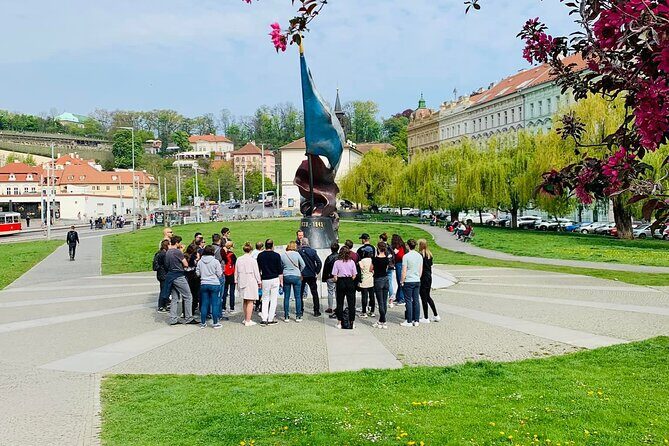
You begin in the Klárov area, where two monuments anchor the opening. The memorial to the Second Resistance and the Winged Lion Memorial help set the tone: this isn’t just about who fought, but about why resistance formed and how Czechs and Slovaks navigated shifting power.
The guide framing here is practical. You get the background for how Czechoslovakia gained independence after World War I, then why Hitler’s forces moved in early, and what happened to Czechoslovak soldiers during World War II. That context matters because later stops won’t feel random. When you reach the Jewish sites, the uprising square, and the Communist-era markers, you’ll understand the chain of cause and effect.
What I like about starting here is that it’s not immediately “museum mode.” It’s outdoors, with public memorials doing the work of time travel. If you’re the type who gets bored by pure lecture-style tours, this first stretch usually keeps your brain awake: look at the memorial, listen to the connection, then walk to the next chapter.
Admission at this start point is listed as free, which is a relief for a short, tight schedule.
Pinkas Synagogue: Czech Jewish fate, emigration, and what was lost
Next comes Pinkas Synagogue, one of the most important places in Prague for Jewish memory. The tour focuses on the fate of Czech Jewish communities during WWII—how many managed to emigrate and what happened to those who couldn’t.
Even if you know the broad outline of the Holocaust, this stop has a different impact because it’s tied to place. Prague wasn’t just a backdrop; it was home to communities with real neighborhoods, routines, and families. When you connect that to the wartime persecution, the story stops being abstract.
This is also where the tour’s tone matters. The subject is heavy. For me, the value is in the balance: the tour doesn’t only give you a tragedy headline. It gives you decision points—emigration, survival options, and the brutal limits people faced. If you’re bringing teenagers or first-time history travelers, this is the part that often makes the whole course of events feel human.
The listed visit time is short—about 15 minutes—and that’s exactly why it works within a 3-hour tour. You leave understanding the why, not just the what.
Old Town Square and the Prague Uprising: how WWII ending shaped Communism
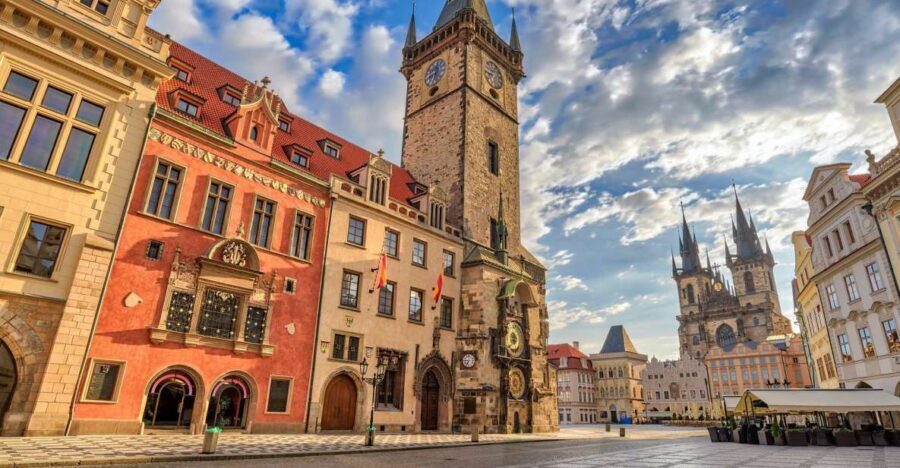
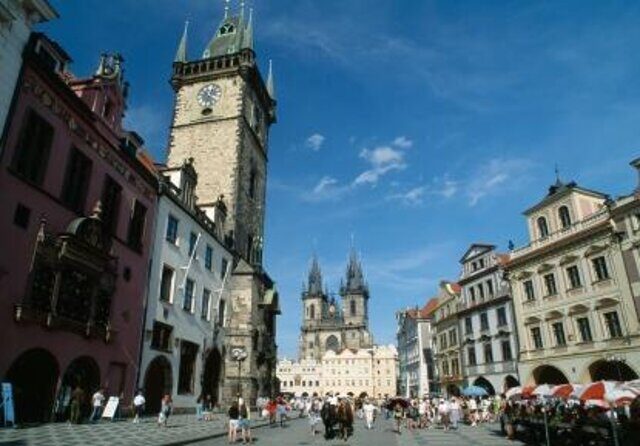
Then you move to Staroměstské náměstí, near the Old Town Hall. The tour zeroes in on the Prague Uprising—how it unfolded and why it mattered in the final stretch of WWII.
But the real payoff here is the bridge to Communism. The tour explains how the end of the war created the conditions for Communism’s rise in Czechoslovakia. In other words: you don’t just learn what happened during the uprising; you see what happened after, and why victory didn’t automatically mean freedom.
This is one of those history moments where it’s easy to get lost in dates. A good guide keeps it anchored: who had power, what the uprising changed in the short term, and what shifted once the war ended. Guides named in reviews—like Vaclav and Kamil—were praised for being clear and linearly structured here, with storytelling that stays easy to follow as you walk.
Admission is listed as free for this segment, which helps you keep momentum without constant ticket stops.
Wenceslas Square: 1968 Warsaw Pact invasion and Jan Palach’s place
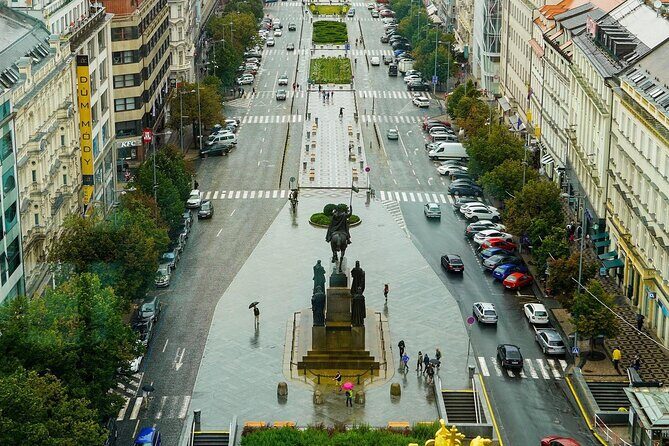
Wenceslas Square can feel like a classic sightseeing area, but the tour turns it into a political map. The focus is what happened after Communism started in Czechoslovakia—why Warsaw Pact armies invaded in 1968, and where Jan Palach’s self-immolation took place.
This stop is useful because it highlights the “pressure points” after WWII. Once the Communist system is in place, resistance changes form. It can be organized, it can be underground, and sometimes it becomes a brutal public act intended to break through official silence.
If you’re the type who likes Cold War history more than WWII facts, you’ll probably love this section. It also gives you language for Prague’s later dissident storylines, which show up in the next few stops.
The walking time here is about 20 minutes, enough to absorb the connections without dragging your feet.
OC Quadrio and the Rotating Head of Kafka: art under Communism
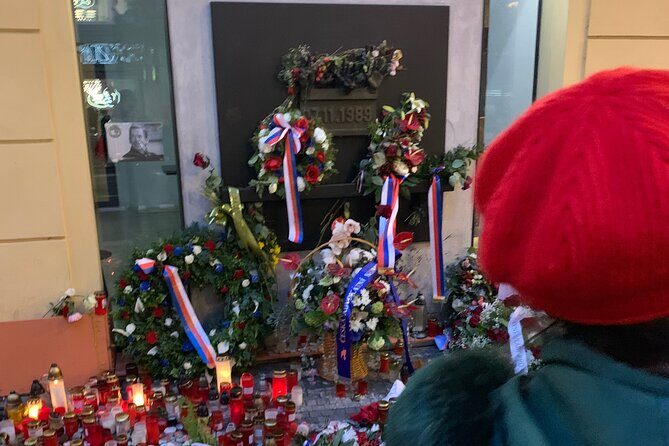
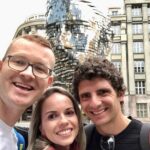
At OC Quadrio, you’ll see the Rotating Head of Kafka, and the tour uses it as a springboard into how art functioned during Communism. This is a smart shift. When you only focus on armies and protests, Communism can start feeling like a distant machine.
Art shows the mood. It shows what could be expressed, what had to be coded, and what people did to keep culture alive even when politics tried to control the narrative.
The tour keeps it short—about 15 minutes—but focused. You get a “why this matters” explanation instead of a quick photo stop. If you enjoy Prague for its creative edge (not just its historic scars), this is a good mid-tour reset.
Narodní třída’s hands-out-of-the-wall: the Velvet Revolution’s fall of a system
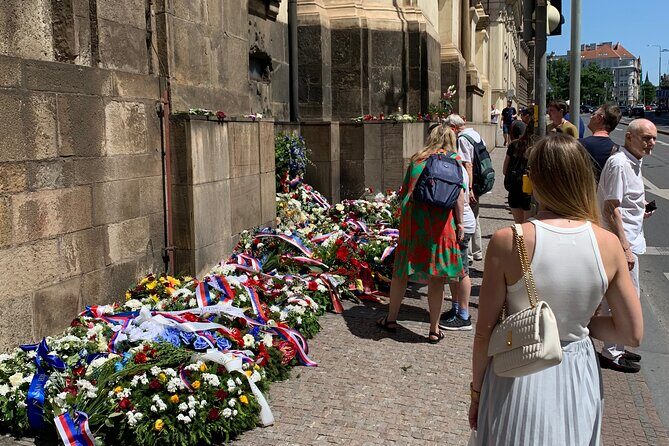
Then comes Narodní třída and the memorial sculpture often described as hands reaching out of the wall. Here, the tour moves from Communism’s mechanics to the human breaking point—and the Velvet Revolution.
This is where the tour turns less into “why people suffered” and more into “how the regime fell.” The Velvet Revolution is often described as peaceful in tone, but the setup usually involved pressure, dissent, and years of controlled life. Seeing a memorial in the street and linking it to that story gives the Revolution texture. It’s not just a headline that ended a chapter. It’s a route through Prague where people pushed back until the system cracked.
The visit time is about 15 minutes.
The National Theatre and Vaclav Havel: resistance to presidency
Near the end, you reach the National Theatre area and get introduced to Vaclav Havel, who became the first president of Czechoslovakia after the fall of Communism.
Havel is a key figure for understanding the emotional logic behind the Velvet Revolution. He represents the idea that ideas and moral pressure can matter, not just elections or battlefield power. When the tour connects him to the events of the uprising and the later dissident era, it helps you see Prague’s 20th-century timeline as one evolving story, not disconnected eras.
This stop is shorter—around 10 minutes—but it lands the ending point: what came after Communism, and why Havel mattered.
St Cyril and St Methodius Cathedral: Operation Anthropoid in the crypt
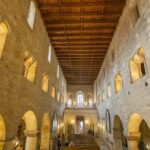
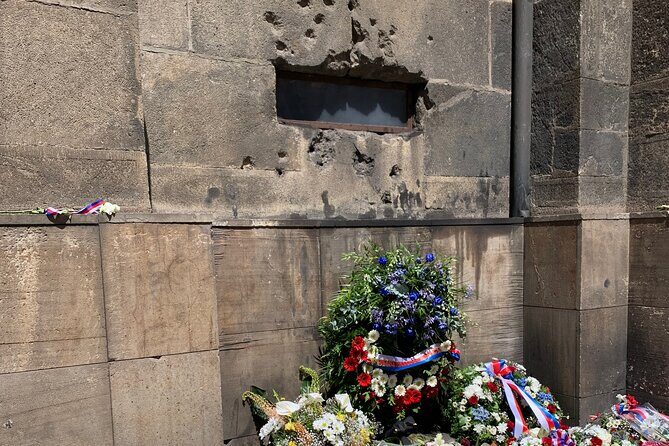
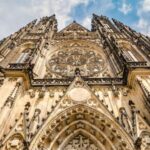
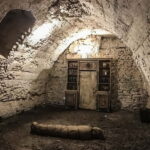
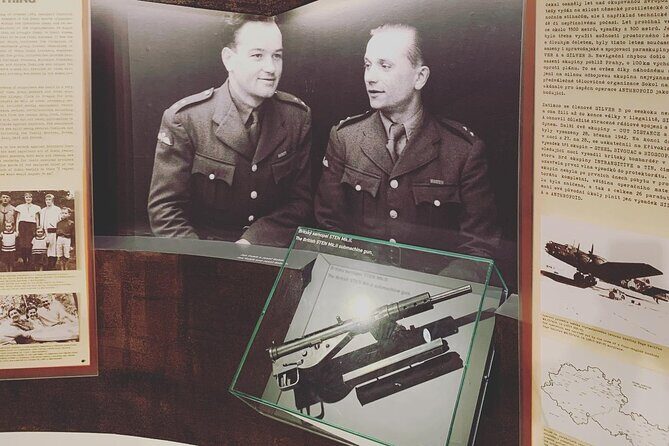
The finale is at St Cyril and St Methodius Cathedral. The tour ends with Operation Anthropoid, the big resistance achievement in WWII. You also get to enter the Museum of Operation Anthropoid (free with the tour), and the end point is in the crypt, described as a hideout of soldiers involved in the operation.
This is the part that feels the most grounded, because it’s tied to real space associated with the operation. A crypt is different from a display case. It’s the kind of setting that makes you instinctively lower your voice.
Timing here is about 20 minutes, which is enough to take in the story without feeling rushed. The tour ends at the crypt, and the crypt is about a minute walk from the Dancing House or Charles Square. That’s helpful if you’re planning what to do after, since you won’t be stuck far from the action.
One more practical detail: animals are not allowed inside the war memorial you visit at the end. Service animals are allowed.
Guides and pacing: why the story stays clear
A short, high-impact tour lives and dies by the guide. Several guides are named in feedback—Kamil, Vaclav, Katerina/Katarina, Kuba/Kuba—each credited with clarity and strong storytelling. One review highlighted suspense-building narratives, and another praised guides for explaining political actions and decisions behind WWII and the Cold War.
What that means for you: the tour is designed to be understandable while walking city streets. You aren’t stuck in one place listening to a lecture. You also aren’t left with random facts. The best part of a Prague history walk is when the city starts to sound like a story, and these guides appear to know how to do that.
If you’re picky about pacing, look for the guide’s style when you arrive. If they explain things linearly—moving cause to effect—you’ll get more out of every stop.
Who should book this tour, and who should skip it
You should book if:
- You want a quick but meaningful history route through Prague’s WWII and Communist eras.
- You care about human stories tied to specific sites: Jewish history at Pinkas Synagogue, resistance at Klárov and Operation Anthropoid, and dissident-era markers like Jan Palach’s link.
- You like guided explanation more than self-guided museum wandering.
You might skip (or choose carefully) if:
- Mobility is limited. The tour says it’s not recommended for travelers with mobility problems.
- You prefer short, low-walking experiences. It’s a city-walk tour, and one review called out about 5K walking as a lot.
- You get overwhelmed by intense WWII and persecution subject matter. This is historical education, not comfort tourism.
Should you book this tip-based Prague history walk?
I think this is a strong pick for first-time Prague history lovers and for anyone who wants the WWII-to-Communism bridge explained without extra homework. The itinerary is packed but not chaotic: memorials, Jewish memory, uprising and invasion, art under Communism, and a direct finish at Operation Anthropoid in the crypt.
The price is low on paper because it’s tip-based, so your real value comes from what the guide delivers. Since multiple guides were praised for clarity, passion, and suspenseful storytelling, you’re likely to feel the tour paid off—especially if you’re interested in Czechoslovakia’s modern story, not just medieval streets.
If you can handle a solid walking pace and you’re comfortable with heavy history, I’d book it.
FAQ
How long is the Second World War & Communism tour?
It’s approximately 3 hours.
Where does the tour start and end?
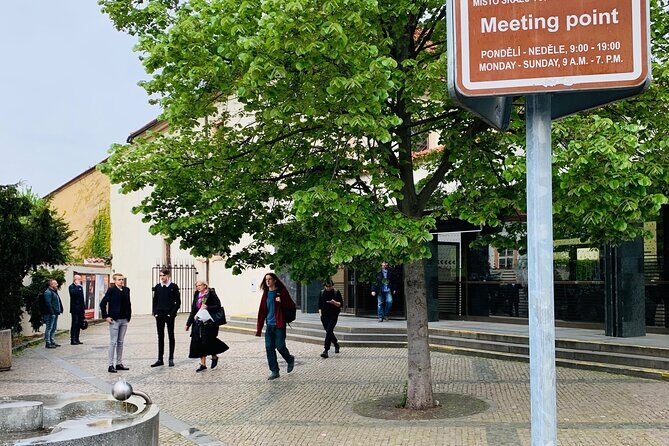
It starts at Metrocafe Klárov, Klárov 51, Prague 1. It ends at the Orthodox Cathedral of Saints Cyril and Methodius, Resslova 9a, Prague 2, in the crypt tied to Operation Anthropoid.
Is the tour in English?
Yes, it is offered in English.
What’s included for price?
You get a certified in-person English guide, and free entry to the Museum of Operation Anthropoid.
How much is the tour?
The listed price is $3.60 per person and it’s described as a tip-based tour.
Is there a lot of walking?
It’s a walking tour through central Prague with multiple stops, and the route can be a bit of work on foot.
Is it suitable for mobility issues or pets?
It’s not recommended for travelers with mobility problems. Service animals are allowed, and animals are not allowed inside the war memorial at the end of the tour.