REVIEW · PRAGUE
Prague: WWII Tour with Local Historian SMALL GROUP
Book on GetYourGuide →Operated by Local Historian Tours · Bookable on GetYourGuide
Prague feels darker after this WWII walk. This 2.5-hour, small-group tour follows the story of Nazi occupation through key places in the city, then pulls it into sharp focus with Operation Anthropoid, the Heydrich assassination, and the end-of-war uprising moments. You also stop at sites that connect resistance, rescue, and surviving families in a way that feels real—because it’s happening in front of you.
I really like the small group size (limited to 7), because you get a more personal conversation with the local historian. I also love the way the tour centers on the Operation Anthropoid story and other stand-out figures, including Reinhard Heydrich and Nicholas Winton, instead of doing a generic checklist of monuments.
One possible drawback: the subject matter is heavy and the walk can be demanding for some people. The tour is listed as not suitable for children under 10, pregnant women, and also has conflicting notes about wheelchair use—so check fit carefully.
In This Review
- Key Points You’ll Care About
- A WWII Walk That Starts at Wenceslas Square
- Reinhard Heydrich: The Man the City Couldn’t Escape
- Operation Anthropoid: Where Resistance Became Personal
- Bullet Holes and the Paratroopers Church Stop
- The Former Gestapo Headquarters: Secrets, Shadows, and Fear
- Nicholas Winton and the Kindertransports: A Different Kind of Courage
- Prague in 1945: Bombing, Uprising, and the Endgame
- Small Group Dynamics: How You Get More Than a Lecture
- Price and Value: Is $61 Worth 2.5 Hours?
- Who This Tour Fits Best (and Who Should Consider Alternatives)
- Should You Book This Prague WWII Tour?
- FAQ
- How long is the Prague WWII tour?
- How many people are in the group?
- What language is the tour in?
- Where does the tour start?
- Where does the tour end?
- What is included in the price?
- What are the key WWII topics covered?
- Is it suitable for kids or families?
- Is it suitable for pregnant travelers?
- Is it wheelchair accessible?
Key Points You’ll Care About
- Small group (max 7) keeps the pace human and the Q&A actually useful
- Heydrich and Operation Anthropoid get explained through the places you can still see today
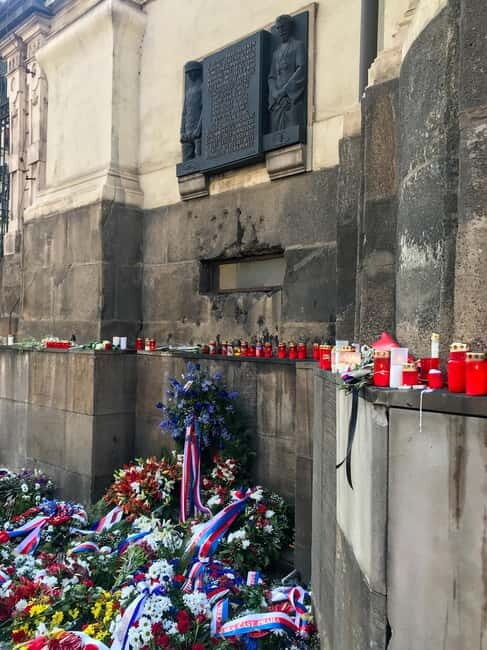
- Paratroopers Church stop includes time to notice bullet holes tied to the resistance story
- Nicholas Winton and Kindertransports bring the WWII narrative to the rescue side
- Gestapo headquarters and 1945 moments show how pressure shifted as liberation approached
A WWII Walk That Starts at Wenceslas Square
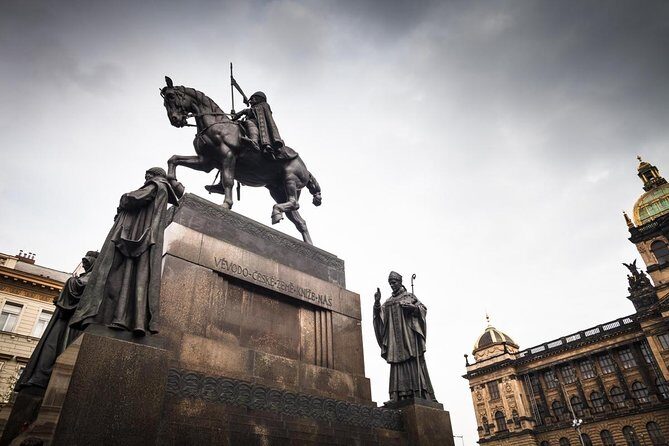
The tour meets at the Statue of Saint Wenceslas on Václavské náměstí, in front of the National Museum area—easy to find because it’s close to a McDonald’s. It’s a good starting choice: you’re in the public heart of Prague, surrounded by grand architecture, and yet the story soon turns into something far more grim.
What I like about the setup is that it doesn’t try to “shock” you with big claims. Instead, you’re guided to connect cause and effect—occupation, terror, resistance, and then the final squeeze of 1945. In a short 2.5 hours, you can get your bearings fast on what mattered and why.
You’ll also get a Prague public transport ticket as part of the experience. That’s a small detail, but it matters in real life: you won’t have to stop and figure out transit while you’re thinking about war and timelines.
You can also read our reviews of more tours and experiences in Prague.
Reinhard Heydrich: The Man the City Couldn’t Escape
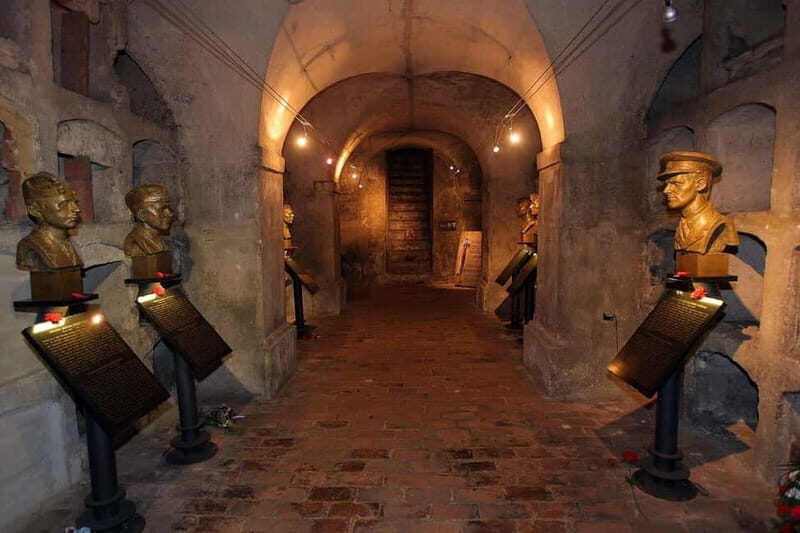
One of the main threads is the story of Reinhard Heydrich, described on this tour as a top Nazi figure—often referred to in the guide’s telling as the architect of death and the No. 3 Nazi. You’ll learn how his role set the tone for occupation in Prague and why his downfall became such a major symbolic hit for the resistance.
Heydrich isn’t presented like a movie villain you only meet on screen. You’re guided to understand him as a system—power built on fear, surveillance, and brutal enforcement. That framing helps you read the city differently. A street corner stops being just a street corner and starts feeling like the edge of a much larger machine.
This is also where the local historian part really matters. In the comments from past guests, guides like Gerry and Jiri are singled out for being strong on context and story craft. You can expect a narrative style that keeps moving, while still giving you names, motives, and outcomes in a way you can follow.
Operation Anthropoid: Where Resistance Became Personal
The tour’s resistance story centers on Operation Anthropoid, the daring assassination effort tied to the Killing of Heydrich. You’ll walk through the meaning of that operation as a turning point, not just a single dramatic moment.
The key is how the guide links it to place. You’re not just told what happened—you’re shown the kind of environment where it happened, including why Prague became a stage for both covert action and harsh retaliation. This is the part of the tour that makes it feel like WWII isn’t trapped in a textbook.
You’ll also learn why the operation is often treated as a pinnacle of resistance. The tour doesn’t claim this was a “happy” chapter of history. But it does show why people saw it as necessary, and why it shook the Nazi hierarchy at the top.
If you’re the type who likes facts and timelines, this works well. If you’re more of a feelings-and-meaning traveler, it also works, because the guide keeps coming back to what risk looked like for real people.
Bullet Holes and the Paratroopers Church Stop
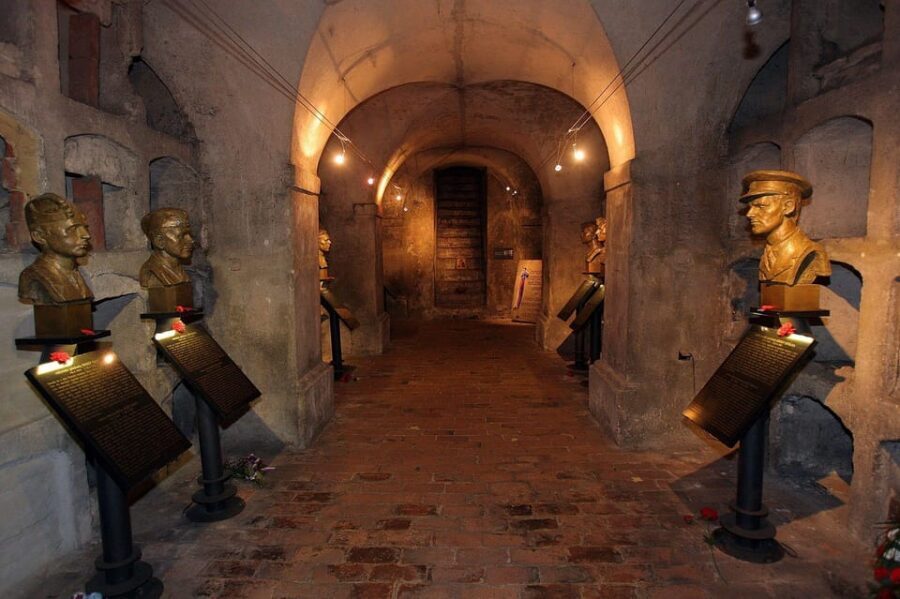
One of the most striking stops is the Parachutists Church, where you’ll see unique bullet holes connected to the resistance story. This is the kind of detail that doesn’t need special effects. It’s physical evidence. It makes the WWII narrative snap into focus.
Here’s why that matters for you: bullet holes turn history into something measurable. It’s no longer abstract dates and names. You can stand where people stood, notice where impacts were, and feel the mismatch between what you’re seeing now and what the world was like then.
The tour includes entrance to the church, and it also notes that you’ll skip the ticket line for that stop. In other words, you don’t lose time to logistics while you’re in the emotional zone of the story.
You’ll get water along the way too. It sounds basic, but when you’re standing, walking, and absorbing heavy content, hydration helps you stay present instead of mentally checking out.
The Former Gestapo Headquarters: Secrets, Shadows, and Fear
Another major moment is the stop at the former Gestapo headquarters. The guide doesn’t treat it like a museum photo-op. Instead, you’re guided to understand the building’s role in the occupation system and what that meant for ordinary life: fear of being watched, fear of being questioned, fear of consequences.
This kind of stop can go two ways on tours: either it’s a list of facts, or it’s a story that actually explains why people behaved the way they did. This one aims for the second approach. You’ll hear how the resistance had to operate under constant danger—and why surviving often depended on more than courage.
There’s also a balancing act here. The tour covers terror and repression without turning it into spectacle. That tone is important if you’re hoping for an educational experience, not a shock ride.
If you’ve been to Prague before and think you already know the city, this is where the tour quietly corrects that. You’ll start seeing how the architecture and street layout could support surveillance and control—because in wartime, even the layout of everyday places becomes part of the story.

Nicholas Winton and the Kindertransports: A Different Kind of Courage
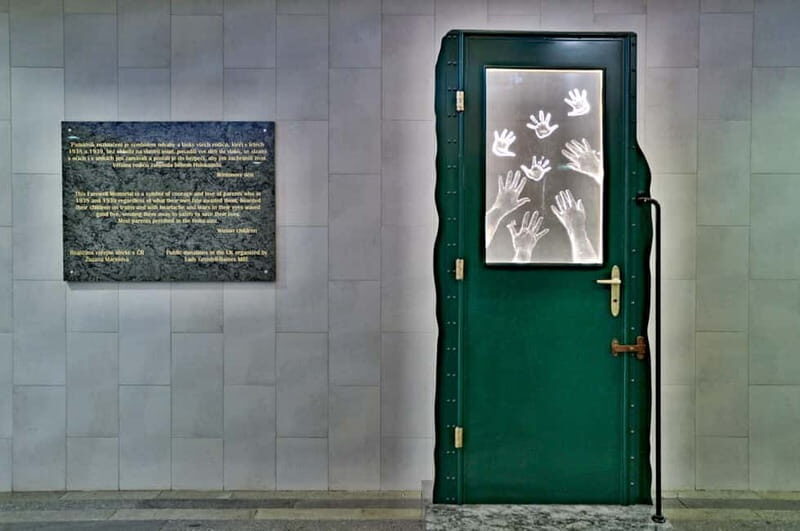
Not every WWII lesson has to end in destruction. This tour includes a powerful counterpoint: the story of Nicholas Winton, who helped save 669 Jewish children through the Kindertransports. The guide also connects it to the broader public awareness created by the Hollywood film One Life.
What I like about this inclusion is that it widens your view of resistance beyond sabotage. This is courage that doesn’t always look like action on a rooftop. It looks like organizing, advocating, and moving children toward safety when the world is closing in.
For you, this part can change the tone of the entire tour. You’ve spent time on occupation and retaliation. Then suddenly you’re following a rescue narrative that shows how one person’s determination can affect hundreds of lives.
It’s also a good reminder that history isn’t only what governments did to people. It’s also what individuals and networks managed to do in the face of danger.
Prague in 1945: Bombing, Uprising, and the Endgame
The last stretch of the tour looks at what happened as the war shifted toward the end. You’ll hear about the bombing of Prague, the Prague uprising in 1945, and the dramatic American bombing of Prague in 1945.
This is where the tour helps you understand the city’s final wartime phase. The story isn’t only “Nazi rule ended.” It’s more complicated than that. Cities can suffer from multiple directions, and liberation can still bring chaos and trauma.
You’ll also learn how the uprising fits into the larger pattern—why timing mattered, why power structures were under strain, and why people acted when they saw a window opening. Even in a short tour, the guide keeps connecting the dots so the end of WWII in Prague doesn’t feel random.
Small Group Dynamics: How You Get More Than a Lecture
A big value here is the small group size, limited to 7 participants. With a group that size, it’s easier for the guide to move at a pace that matches you. It’s also easier to ask questions without feeling rushed or ignored.
From the strongest feedback on the experience, past guests praised guides like Gerry and Jiri for story clarity and for sharing material that felt personal—plus an emphasis on survivor-linked viewpoints. That kind of skill matters when you’re dealing with WWII content. If the guide can explain without rushing, you can actually process what you’re hearing.
Another practical plus: the tour includes live English guiding. You won’t be stuck reading a pamphlet while trying to interpret grim details. You’ll hear the story shaped into something you can follow as you walk.
Price and Value: Is $61 Worth 2.5 Hours?
At $61 per person for about 2.5 hours, you’re paying for two things: a focused local historian and built-in logistics that keep your time efficient.
Here’s what you’re getting that raises the value above a casual walking tour:
- A historian-guided narrative around specific WWII turning points
- Public transport ticket included (so you’re not doing extra planning)
- Church entrance included at the Parachutists Church, plus skip-the-line help
- Water provided
Also, the tour isn’t trying to cover every WWII site in Prague. It’s tightly focused. That can feel like a relief if you’re only in Prague for a few days and you want the highlights that actually connect.
If you like “place-based history,” this is the kind of tour where the price starts making sense fast. You’re not paying for distance. You’re paying for explanation at the exact stops where the story lives.
Who This Tour Fits Best (and Who Should Consider Alternatives)
This tour is a strong match if you want:
- A WWII-themed Prague walk that focuses on key resistance and survival stories
- A small-group format with room for real conversation
- Real places tied to Heydrich, Operation Anthropoid, the Gestapo, and 1945 events
It’s likely a harder fit if:
- You need a very light, casual experience. This is heavy material with an emotional tone.
- You’re traveling with kids under 10, since the tour is listed as not suitable for children under 10.
- You’re pregnant, since the tour is listed as not suitable for pregnant women.
- You rely on wheelchair use or have mobility limitations. The data includes a wheelchair accessibility note, but it also says it’s not suitable for wheelchair users and people with mobility impairments. That mismatch means you should confirm with the provider directly before planning.
Should You Book This Prague WWII Tour?
I’d book it if you want a short, well-structured Prague WWII experience that focuses on meaning—Heydrich, Operation Anthropoid, resistance consequences, and the Kindertransport rescue story—rather than a scattered monument tour.
It’s especially worth it if you enjoy seeing how history plays out on real streets and in specific buildings, including a stop where you can literally see evidence like bullet holes. And if you care about guides who can tell a clear story—past guests highlight experts like Gerry and Jiri—this one looks built for you.
FAQ
How long is the Prague WWII tour?
It runs for about 2.5 hours.
How many people are in the group?
It’s a small group limited to 7 participants.
What language is the tour in?
The tour is in English.
Where does the tour start?
It starts at the Statue of Saint Wenceslas on Václavské náměstí, in front of the National Museum area.
Where does the tour end?
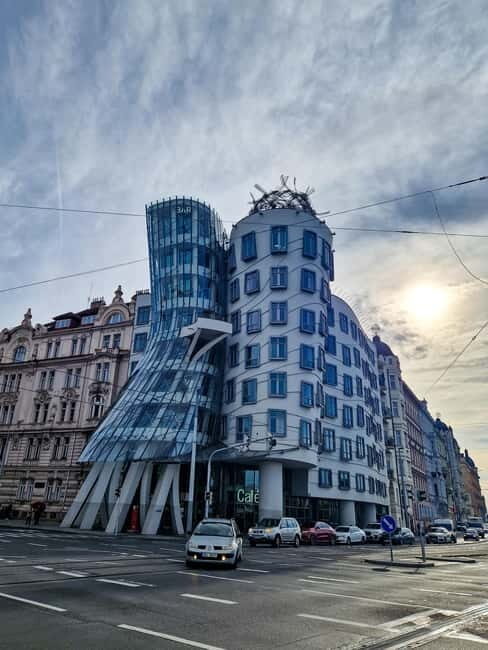
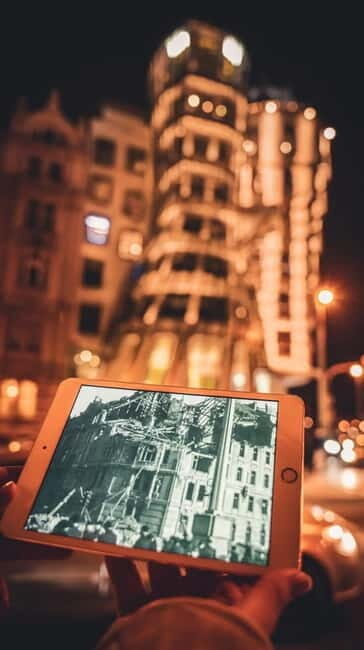
It finishes at the Dancing House area and the activity ends back at the meeting point.
What is included in the price?
You get a local historian guide, a Prague public transport ticket, all fees and taxes, entrance to the Parachutists Church, skip-the-line entry for that stop, and water.
What are the key WWII topics covered?
You’ll cover the killing of Reinhard Heydrich, Operation Anthropoid, the Parachutists Church stop, the former Gestapo headquarters, Nicholas Winton and the Kindertransports (669 children), and key 1945 events including bombing and the uprising.
Is it suitable for kids or families?
It is listed as not suitable for children under 10.
Is it suitable for pregnant travelers?
It is listed as not suitable for pregnant women.
Is it wheelchair accessible?
The information includes a wheelchair accessibility note, but it also lists it as not suitable for wheelchair users and people with mobility impairments. Check with the provider before booking so you can confirm what works in practice for your needs.