REVIEW · PRAGUE
Prague Renaissance and Baroque Gardens Walking Tour
Book on GetYourGuide →Operated by insightcities.com · Bookable on GetYourGuide
Prague gardens can feel like secret courts of power. This 3-hour walk strings together Renaissance-to-Baroque garden design through the people who paid for it, from Emperor Ferdinand I to Albrecht von Wallenstein. I like that the story is specific, not vague. You’ll connect garden features to politics, religion, and status, instead of treating it like pretty landscaping.
Two things I really appreciate: the focus on real named spaces (Belvedere Summer Palace, Fig House, Wallenstein Garden, Vrtba Garden) and the way the guide explains why each planting and fountain exists. One thing to plan for: expect stairs, including narrow or steep sections, so you may want a private route if mobility is a concern.
In This Review
- Key highlights at a glance
- Gardens in Prague: power you can walk through
- Starting at Bagel Lounge Malostranska (and moving on foot)
- Emperor Ferdinand I and the Italian Renaissance at Prague Castle
- The Giardinetto and the Singing Fountain trick (1564)
- Fig House and Orangery: early Central Europe fruit growing
- Crossing the stag moat and descending the Bull Stairs
- South Gardens: Garden of Paradise and the Garden on the Bulwark
- Wallenstein Garden: albino peacocks and mythical fountains
- Vrtba Garden (1720): a Baroque walled garden you’ll actually notice
- Price and value: what $123 buys you in real terms
- Who should book this tour (and who should consider private)
- Book it or skip it: my quick call
- FAQ
- FAQ
- What is the duration of the Prague Renaissance and Baroque Gardens Walking Tour?
- Where do I meet for the tour?
- Is the tour guided, and what language is it in?
- What’s included in the price?
- Are Prague Castle garden areas and Vrtba Garden admission included?
- How much does the tour cost?
- Is the tour only for large groups?
- Is cancellation free, and how far in advance do I need to cancel?
- Is this tour suitable if I have mobility issues?
Key highlights at a glance
- Emp. Ferdinand I’s Italian team: how Renaissance classicism took root north of the Alps
- Belvedere Summer Palace: a standout Renaissance pleasure palace outside Italy
- Singing Fountain (bell bronze, 1564): water drops that make the bowl resonate
- Fig House and Orangery: early cultivation of figs, almonds, oranges, and lemons in Central Europe
- Wallenstein Garden: albino peacocks, statues, grotto wall, and mythical fountains
- Vrtba Garden (1720): a walled Baroque garden with marine-themed grotto and city views
Gardens in Prague: power you can walk through
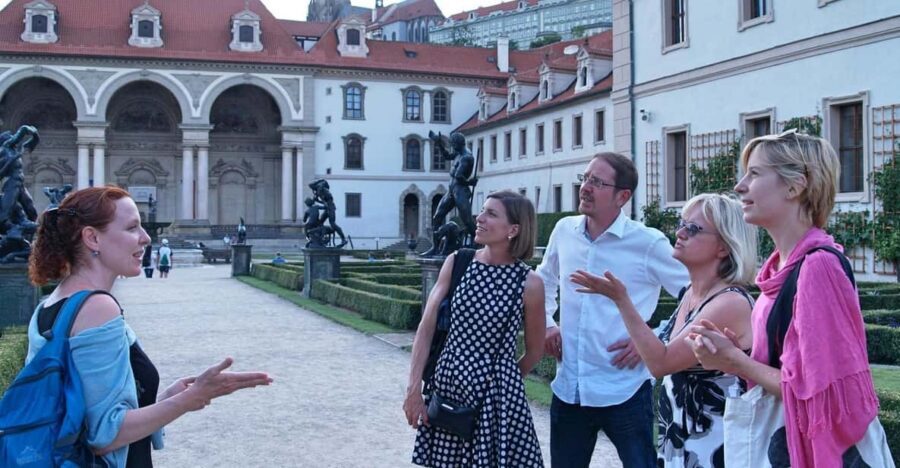
This tour treats gardens like cultural messages. When rulers and nobles sponsored a garden, they were also sponsoring an idea: who mattered, what taste looked like, and which worldview should feel “correct.” You’ll start in the Castle area where the garden language turns Renaissance and then follow it as it shifts toward the more dramatic, theatrical Baroque mindset.
That makes this more interesting than a standard sightseeing loop. Instead of just saying a fountain is pretty, you’ll hear how the design signals ambition, learning, and control. The tour also helps you see Prague differently, because you notice horticulture clues scattered around the city, from older styles to newer touches.
You can also read our reviews of more walking tours in Prague



Starting at Bagel Lounge Malostranska (and moving on foot)
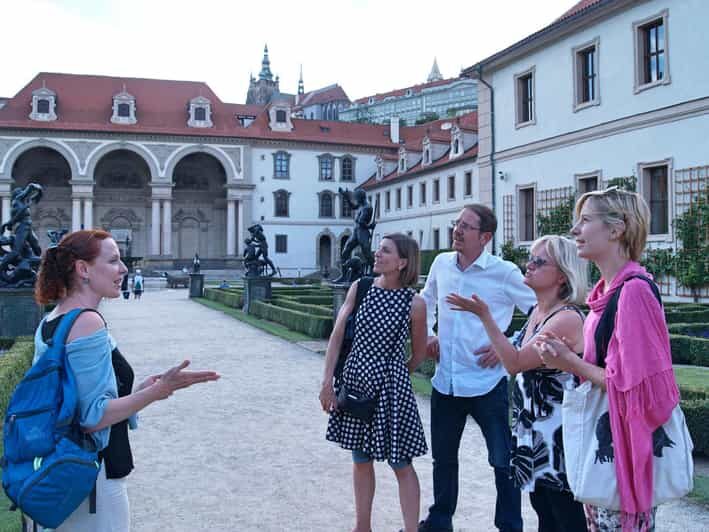
Meet at the door of Bagel Lounge Malostranska. From there, you’ll work your way through garden spaces tied to Prague’s biggest historical storylines. The whole experience takes about 3 hours, so pace matters.
Bring comfortable shoes. The tour involves going up and down stairs that can be narrow or steep in places. If you know your limits, you’ll likely be happier choosing a private or small-group option so your guide can adjust the route and timing without you feeling rushed.
Also plan your energy around late-day legs. This is a walking tour, not a sit-and-watch museum day. The reward is that the garden “set pieces” land in a way that feels like you’re entering different chapters of one book.
Emperor Ferdinand I and the Italian Renaissance at Prague Castle
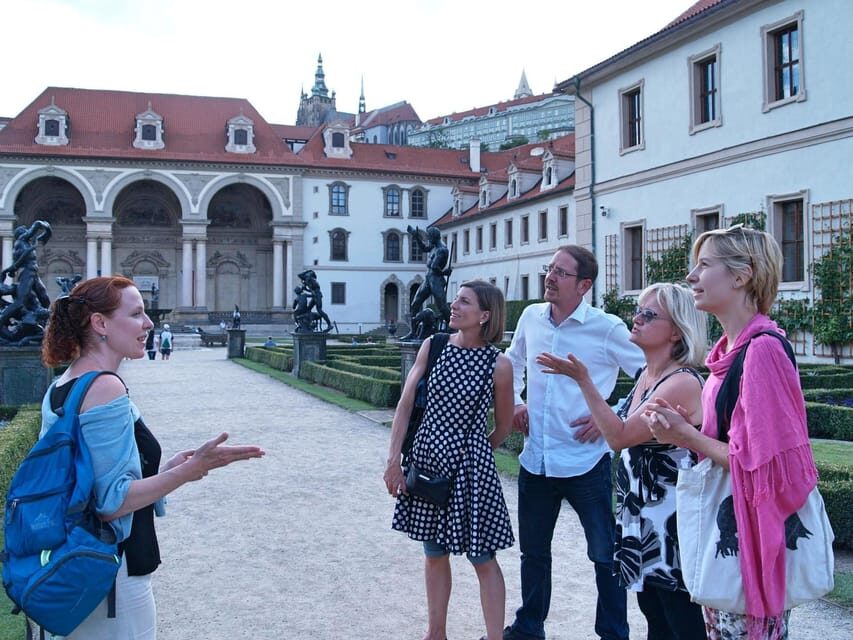
The center of gravity here is the period when Emperor Ferdinand I decided Prague deserved Mediterranean garden beauty. The story goes like this: early medieval gardens were often practical—herbs for medicine and food—while the Renaissance idea of a large, showy palace garden came later, and Ferdinand pushed it hard by bringing Italian landscapers and architects.
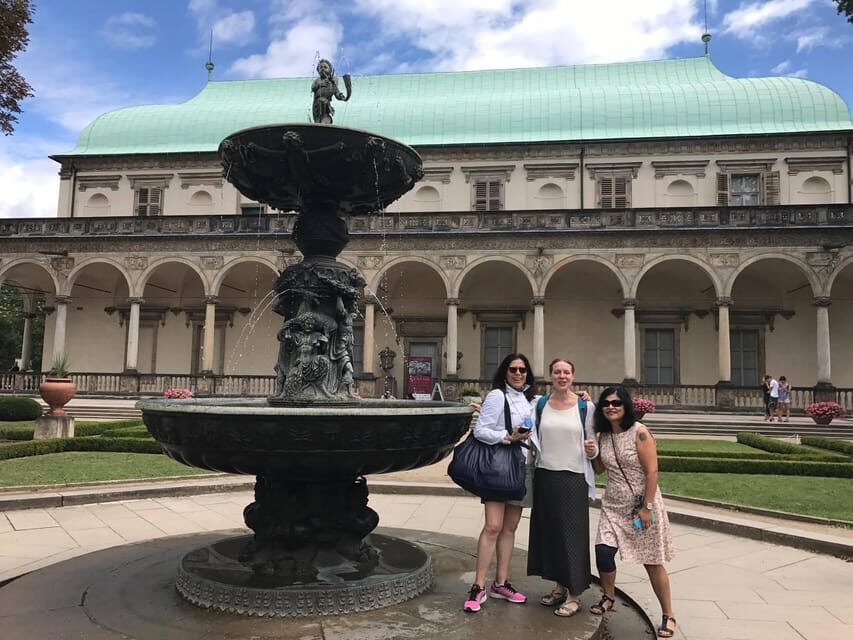
One key stop is the Belvedere Summer Palace, commissioned by Ferdinand I as a gift for his wife, Queen Anne. She didn’t live to see it finished, which adds a bittersweet edge to what is otherwise an elegant showpiece. The reliefs are part of the storytelling too: one depicts Ferdinand giving his wife a flower from the Royal Gardens around the palace.
The palace itself is credited as one of the most beautiful Renaissance structures outside Italy, designed by Paola della Stella. Even if you only know one or two names in a history tour, you’ll remember hers after this.
The Giardinetto and the Singing Fountain trick (1564)
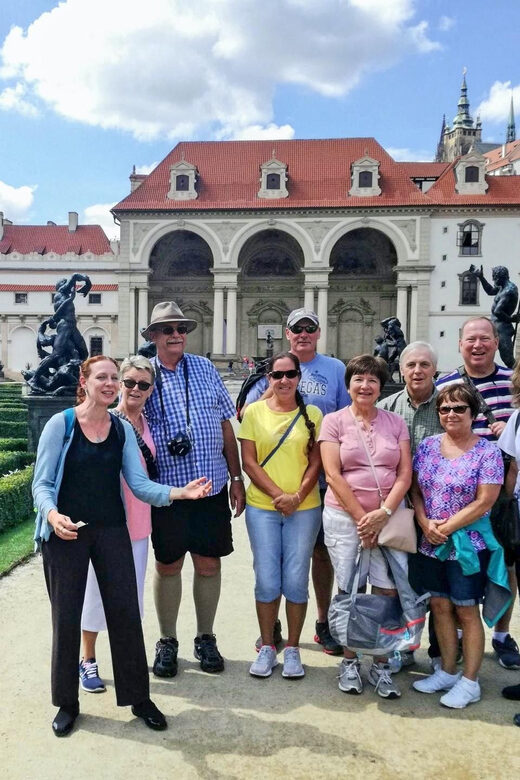
In front of the pleasure palace, you’ll find a Giardinetto with the Singing Fountain, cast in 1564 in bell bronze. Here’s the clever part: when water drops into the bowl, it resonates or sings. It’s a reminder that Renaissance and Baroque garden design wasn’t only visual. It was also acoustic, experiential, and intentional.
This is the kind of detail that makes a tour worth paying for. If you wander Castle grounds alone, you can miss why a feature exists. With a guide, the same water noise turns into a clue about craftsmanship and how rulers wanted their gardens to feel alive.
Fig House and Orangery: early Central Europe fruit growing

After the palace area, you move into the practical heart of Ferdinand’s horticultural dream: the Fig House and Orangery. These weren’t decorative by accident. This is where you learn how serious the operation was.
You’ll hear how figs, almonds, oranges, and lemons were grown there for the first time in Central Europe. That alone gives you a new lens for the gardens. They weren’t just for strolls and statues; they were for cultivation, experimentation, and showing off control over climate and supply.
The tour also brings a travel-and-trade twist. As you approach the western end of the garden, you’ll hear how tulips—previously unknown in Europe—were introduced into the Royal gardens as an exotic gift from the Sultan of Constantinople. It’s a garden story that moves like diplomacy.
If you like botany, you’ll love this part. If you don’t, it still works because the plants become evidence of how the empire connected itself to the world.






Crossing the stag moat and descending the Bull Stairs
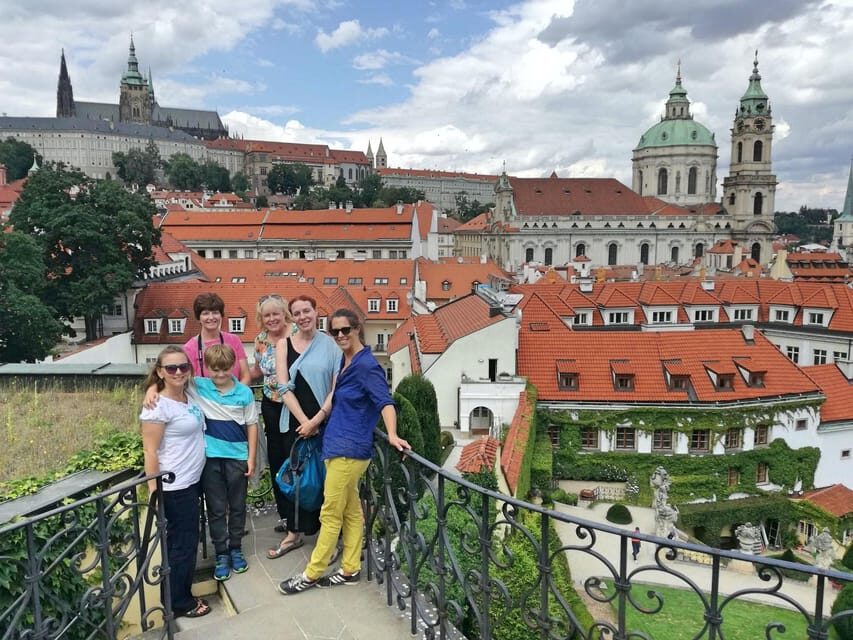
Then you hit the staging section of the route: the stag moat before crossing through the courtyard and heading down the Bull Stairs toward the South Gardens. This is where the tour shifts from “palace beauty” to “garden theater.”
Notice how the design guides your movement. The stairs and transitions are not only functional. They set up viewing angles and make you arrive at the next place feeling like you’ve stepped into a new environment. That’s one reason walking tours can beat bus tours for garden sites.
South Gardens: Garden of Paradise and the Garden on the Bulwark
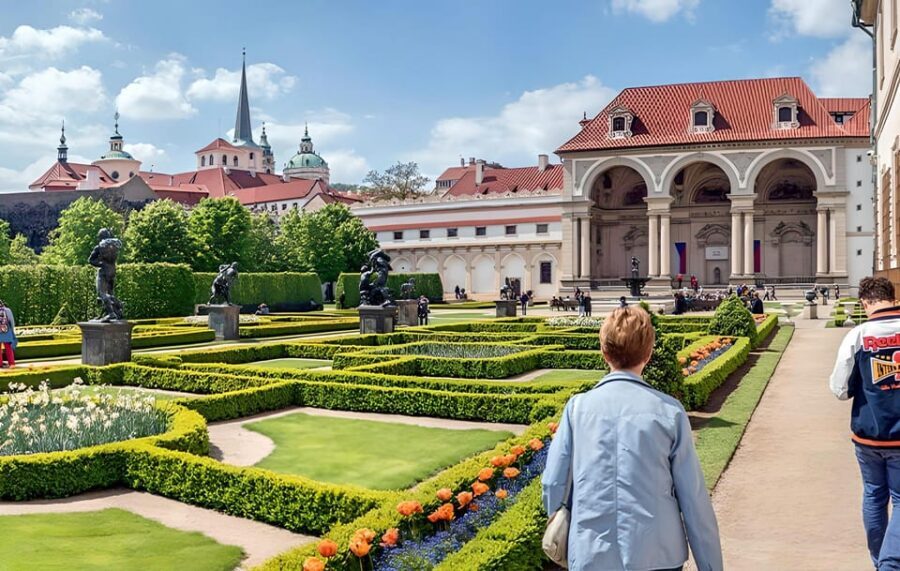
Next come the South Gardens, including the Garden of Paradise and the Garden on the Bulwark. The names alone hint at the vibe: these spaces are meant to be moral, emotional, and symbolic, not just pretty.
As you explore, the guide helps connect what you’re seeing to big shifts in taste. The tour explains the transition from Renaissance classicism to Baroque philosophy—and you can feel the difference. Renaissance often feels orderly and balanced. Baroque tends to feel more dramatic and persuasive.
You’ll then continue downhill through terraced gardens below the Castle. This isn’t random wandering. You’re moving through a structured hierarchy of spaces, which is exactly what garden design does when it’s built for patrons who want to control experience.
Wallenstein Garden: albino peacocks and mythical fountains
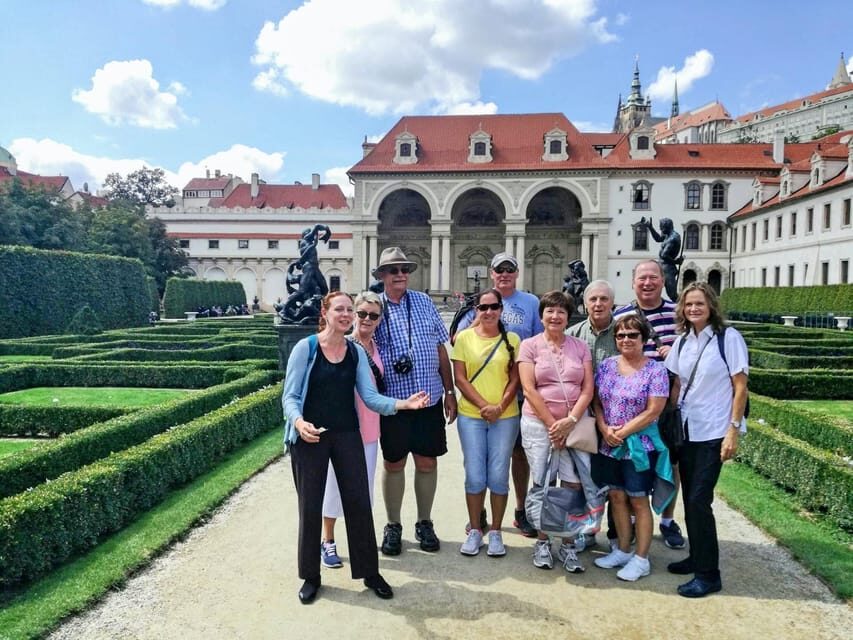
The highlight payoff is the Wallenstein Garden, grand and unforgettable once you reach the lower area. This is where the Baroque attitude becomes obvious: showmanship with a wink.
You’ll see albino peacocks, Mannerist statues, a grotto wall, and mythical fountains. That mix of creature, sculpture, and water theater makes the garden feel like a staged story rather than a quiet park.
The guide also brings you into the human drama behind it. You’ll learn about the life of the garden’s commissioner, Albrecht von Wallenstein, and how the garden reflects the ups and downs of someone who wanted power and image to match.
If you only remember one thing from this tour, make it Wallenstein Garden’s combination of weirdness and mastery. The albino peacocks alone create instant conversation with your own brain. The fountains and grotto elements then make the place feel like a designed dream.
Vrtba Garden (1720): a Baroque walled garden you’ll actually notice
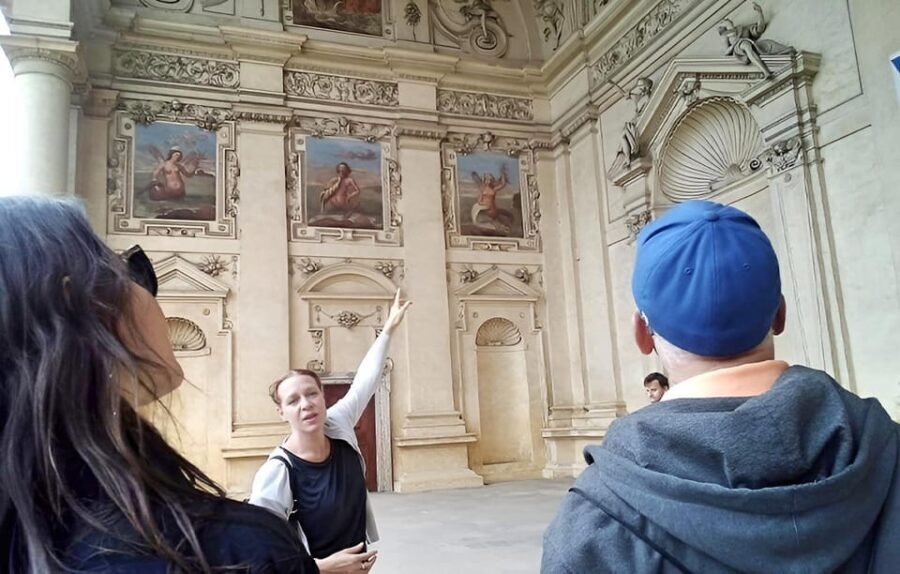
As the tour winds down, you’ll visit Vrtba Garden, a walled Baroque garden dating from 1720 in Prague’s Lesser Town (Mala Strana). It’s less common for casual tourists to see, so this is where you get a different angle on Prague than the usual postcard trail.
Here the design shifts again into Baroque intimacy. The walls matter because they change how you perceive space. You feel protected, like you’ve stepped into a private world of noble aesthetics rather than a public square.
At the top courtyard, there’s a marine-themed grotto. That detail is the kind of playful, theatrical Baroque touch that makes Vrtba memorable. When you climb up, you also get stunning vistas of Prague’s cityscape—views that feel like a reward for the walking you did to get there.
Price and value: what $123 buys you in real terms
At $123 per person for a 3-hour guided history walk, the value depends on what you want from Prague gardens.
If you want facts, context, and interpretation, this price makes sense. You’re not only visiting famous spaces; you’re getting a guided explanation of why they were built—Italian gardeners under Ferdinand I, the significance of the Singing Fountain, the early cultivation of fruit and tulips, and the Baroque ideas tied to Wallenstein’s garden.
You should also factor the extra costs that aren’t included:
- Prague Castle gardens admission fee (for the garden areas under Prague Castle)
- Vrtba Garden admission fee
For me, the right way to think about this is simple: you’re paying for the guide’s ability to connect garden details into a clear story. If you go on your own, you can still enjoy the views, but you’ll miss the cause-and-effect that makes the whole day click.
Who should book this tour (and who should consider private)
This is a great fit if you:
- enjoy history tied to everyday spaces (gardens, fountains, structures)
- like visual details that become meaningful with context
- want a focused route rather than wandering and hoping you find the story
It’s also a good match for people who like to see cultural shifts in one compact block—Renaissance classicism to Baroque philosophy—without spending the whole day in line.
The biggest caution is mobility. Because the route includes stairs that can be narrow and/or steep, I’d strongly consider a private tour if you’ll struggle with stairs. A private guide can leave out some sites or adjust the pace so you still get the main ideas without pain.
Book it or skip it: my quick call
I’d book this if you want more than a stroll. The tour is built around named garden spaces and the people behind them, with very specific details like the Singing Fountain (1564) and the albino peacocks at Wallenstein Garden. The guidance also seems to land well with guests, with one standout comment praising Miriam for being very informative and relaxed.
Skip it only if you strongly prefer an unstructured, low-walking day, or if you know you can’t handle stairs even with adjustments. In those cases, a lighter garden-focused plan or a private route is the smarter move.
FAQ
FAQ
What is the duration of the Prague Renaissance and Baroque Gardens Walking Tour?
It lasts 3 hours.
Where do I meet for the tour?
Meet at the door of Bagel Lounge Malostranska.
Is the tour guided, and what language is it in?
Yes. It’s a live tour with an English-speaking historian guide.
What’s included in the price?
Included is the 3-hour guided history walk with a historian guide.
Are Prague Castle garden areas and Vrtba Garden admission included?
No. The gardens under Prague Castle and Vrtba Garden admission fees are not included.
How much does the tour cost?
The price is $123 per person.
Is the tour only for large groups?
No. Private or small groups are available.
Is cancellation free, and how far in advance do I need to cancel?
Free cancellation is available up to 24 hours in advance for a full refund.
Is this tour suitable if I have mobility issues?
The standard route includes walking up and down stairs that can be narrow and/or steep. If stairs are an issue for you, consider booking a private tour so the guide can tailor the route and rhythm.