REVIEW · PRAGUE
Prague Old Town and Jewish Quarter Walking Tour
Book on Viator →Operated by McGee's Trips & Tickets · Bookable on Viator
Prague in two neat hours.
This walk helps you get your bearings fast while threading together Old Town landmarks and Prague’s Jewish Quarter through a local guide’s stories. I like how it’s structured enough to keep you moving, but thoughtful enough to explain what you’re actually looking at. You’ll also get a simple start point, so you aren’t hunting around when you’re tired.
Two things I really like: the local guide angle (they point out stuff you’d normally skip) and the tight timing, about 2 hours, which is ideal when Prague daylight is already slipping away. One drawback to keep in mind: most synagogue moments are exterior-focused, and at least one key site can be closed on certain Jewish holidays, depending on the day.
In This Review
- Key Highlights I’d Plan Around
- Týnská 627/7: A Simple Start That Gets You Oriented
- Old Town Square and Gothic Landmarks You Might Otherwise Miss
- The Old Town Hall Astronomical Clock: More Than a Tourist Photo
- University and Theater Exteriors: Prague’s Big Ideas in Small Frames
- A Hidden Courtyard Stop That Explains Prague’s Trade Past
- Entering the Jewish Quarter: Synagogues, Cemetery Layers, and Burial Traditions
- The Spanish Synagogue May Be Exterior Only on Some Days
- Kafka’s Statue and the Mood Shift at the End
- Walking Time, Stairs, and What to Wear
- Guides Make the Difference: Allen, Radek, Vojtech, and Martin
- Price and Value: What $24.19 Buys You
- Should You Book This Old Town and Jewish Quarter Walk?
- FAQ
- What time does the Prague Old Town and Jewish Quarter walking tour start?
- How long is the walking tour?
- Where is the meeting point?
- Is the tour in English, and do I need a paper ticket?
- What’s included in the price?
- Is hotel pickup or drop-off included?
- Are there any paid entries during the tour?
- Can kids join the tour?
- What if the tour is canceled because of minimum group numbers?
Key Highlights I’d Plan Around
- Meet right at Týnská 627/7 for an easy, low-stress start in Staré Město
- Old Town Square to the Astronomical Clock with clear context for the medieval “time show”
- Jewish Quarter stops that move from architecture to real burial traditions (including the Old Jewish Cemetery, ticket not included)
- Photo-and-walk pace that fits a short Prague schedule without packing in too much
- Small-group energy on many departures, which makes it easy to ask questions to guides like Allen, Radek, and Vojtech
Týnská 627/7: A Simple Start That Gets You Oriented
The tour starts at the address Týnská 627/7 in Staré Město (Prague 1), in front of McGee’s Trips & Tickets. Meeting in the Old Town like this matters more than you’d think: Prague’s streets look similar when you’re new, and a clear meeting point saves time and nerves.
You’ll begin with an intro to the area and Czech history, which works well as a warm-up. Instead of walking past buildings as decorations, you’re already learning the “why” before you hit the heavier landmarks. The guide also keeps the route moving smoothly, and that keeps the two-hour window feeling full rather than rushed.
Timing is also a plus: the start time is 10:30am, and the whole walk is about 2 hours. That’s long enough to feel like you did something meaningful, but short enough to still fit a museum visit or lunch afterward.
You can also read our reviews of more walking tours in Prague


Old Town Square and Gothic Landmarks You Might Otherwise Miss
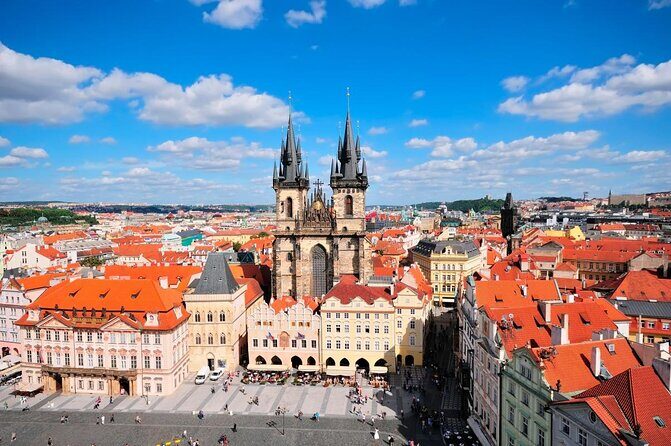
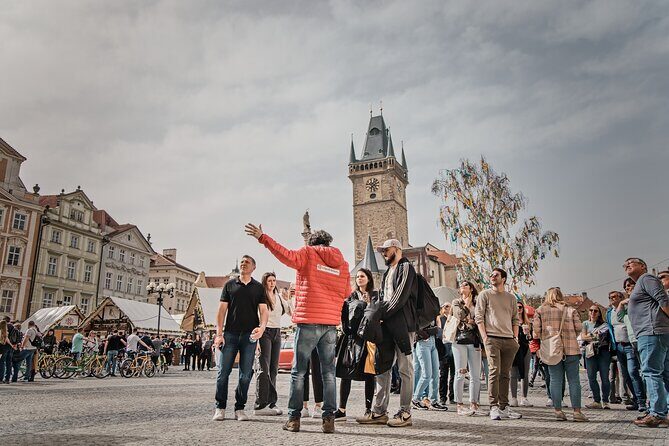
From the start, you’ll head into the core of Old Town life at Staroměstské náměstí. This is the place where people aim their cameras first. The guide’s value here is context: you’ll get a clear, readable explanation of what the space meant historically, and what to look for as you weave around the buildings.
A quick stop at the Church of Our Lady before Týn helps you “read” the skyline. The church is famous for its striking twin spires, but the point of the stop is more than photos. You’ll get a brief historical frame that ties the church into the broader story of the city’s development.
Next comes the Stone Bell House, a Gothic building exterior stop that’s often connected with Charles IV. The phrasing you’ll hear may be cautious—history here is wrapped in tradition and interpretation—but either way, this is a worthwhile moment. It’s one of those details that makes you feel like you’re seeing Prague as a living city, not a stage set.
You’ll also pass the Jan Hus Monument, and you’ll hear a short but pointed explanation of who Hus was and why people still connect him to major European religious change (often compared to the era of Martin Luther). This stop gives you a “Czech history lens” that makes later sights land better.
The Old Town Hall Astronomical Clock: More Than a Tourist Photo
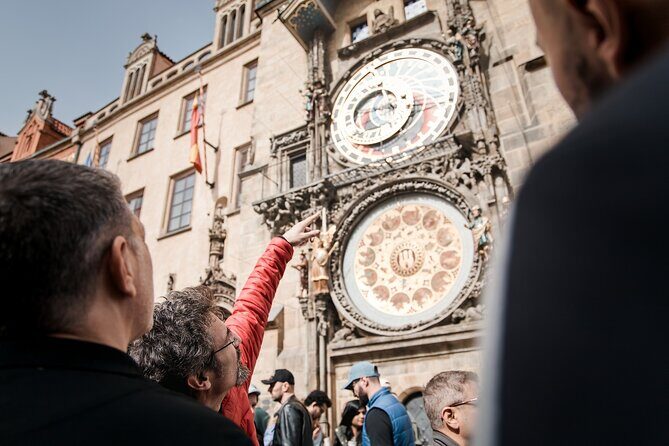
The big hitter in this loop is the Old Town Hall and Astronomical Clock stop. The guide doesn’t treat it like a yes/no landmark. You’ll hear how the medieval clock works and what makes it feel like a miracle: different time measurements showing at once, plus the position of celestial bodies such as the Moon and Sun.
Here’s why this stop is worth your time even if you’ve seen clock towers in other cities: you’re learning the logic behind the display. Instead of staring at moving parts, you’re watching a medieval attempt to connect politics, faith, and science in one machine.
Even if you’re not the type who gets excited about astronomy, the explanation makes the clock feel less random and more purposeful. And since this is only a short stop, you get the payoff without burning half your morning.
University and Theater Exteriors: Prague’s Big Ideas in Small Frames
A couple of exterior stops add variety so the walk doesn’t feel like one long history lecture.
You’ll see the exterior of Karolinum, associated with the 1st university in Central Europe. It’s a short stop, but it signals something important: Prague wasn’t only about kings and churches. It also produced learning institutions that shaped the region.
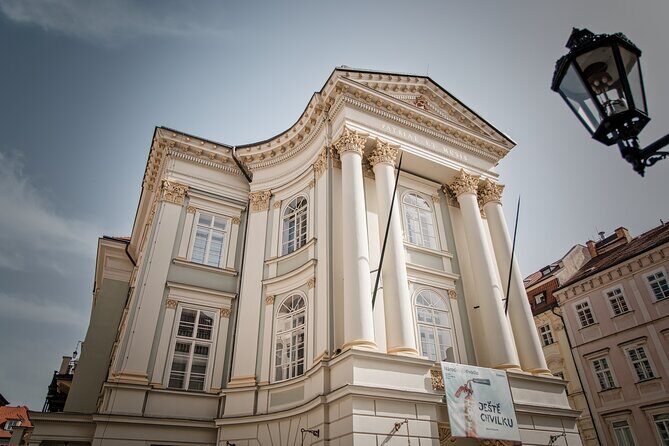
Then there’s Theatre Des Etats, where you’ll hear that Mozart’s Don Giovanni premiered here. This is the kind of detail that turns a pretty building into a memory you’ll recognize later when you watch opera or read about the composer. Again, the value is the guide’s connection between place and cultural history.
Along the way, you’ll also notice other architecture nods that many self-guided walkers overlook, including:
- The House of the Black Madonna, described as the only pure cubist building in Prague
- Church of St. James, founded in Gothic style, then rebuilt in Baroque after a fire, with a legend tied to a hanging item inside the entry area
These are quick stops, but quick is exactly what you want on a two-hour tour. You get a curated “greatest hits” feel without the fatigue of a full-day crawl.
A Hidden Courtyard Stop That Explains Prague’s Trade Past
One stop that really helps the route feel specific to Prague is Týn Yard – Ungelt, a medieval courtyard tucked into the center of the city. You’ll learn how foreign merchants paid customs there when bringing goods into Prague.
This matters because it gives you a different Prague than the one people expect. You’re not only seeing royal power and religious architecture. You’re also seeing commerce, rules, and daily movement of people and products that built the city’s wealth.
If you’re the type who likes to understand what economic life looked like in a place, this is the pause that gives you something practical to “hold onto” while you walk.



Entering the Jewish Quarter: Synagogues, Cemetery Layers, and Burial Traditions
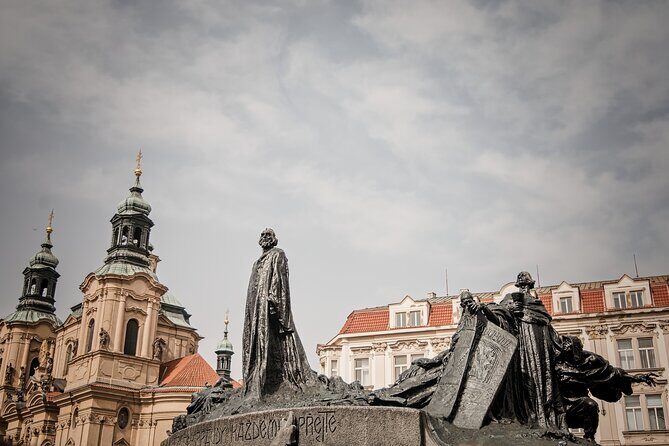
The Jewish Quarter portion of the walk feels different from the rest, mostly because the buildings aren’t just pretty. They carry memory, ritual, and hard history. The guide’s job here is to connect architecture to lived tradition.
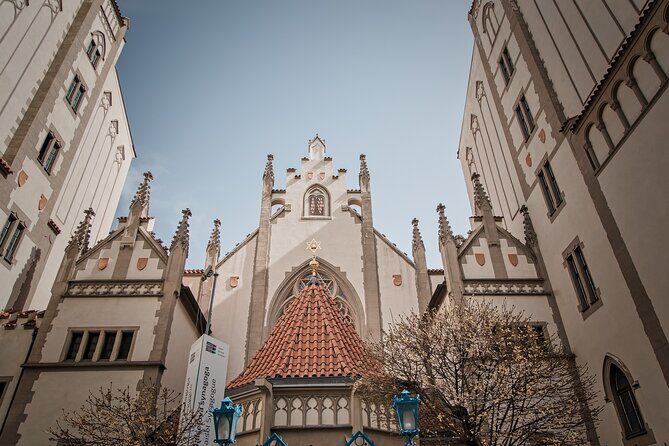
You’ll start with Maisel Synagogue (neo-gothic exterior). The focus is on the key facts and the story of Jewish life in the Czech lands. This stop is a warm lead-in: it gives you enough grounding to understand the next synagogues without feeling lost.
Then you’ll reach Old Jewish Cemetery, where you’ll hear why it’s such a landmark of layered history. The cemetery is described as having layers and gravestones that surprise people who expect a simple field. Ticket entry for this part is not included, so plan for that extra cost if you want to go in.
After that, you’ll see Klausen Synagogue, described as the largest synagogue in the former Prague Jewish ghetto. This stop goes beyond bricks. You’ll hear about Jewish customs and burial ceremonies, which is exactly the kind of context that makes a cemetery visit make emotional sense.
Next is the Old-New Synagogue, one of the earliest Gothic synagogue buildings in Prague. The guide will explain its place in the story of surviving medieval Jewish architecture, including its twin-nave design. You may also hear the legend that stones used in the building were allegedly taken from the Solomon Temple in Jerusalem. Even if you treat legends as legends, the bigger point lands: Prague preserved meaning through centuries, not just stone.
The Spanish Synagogue May Be Exterior Only on Some Days
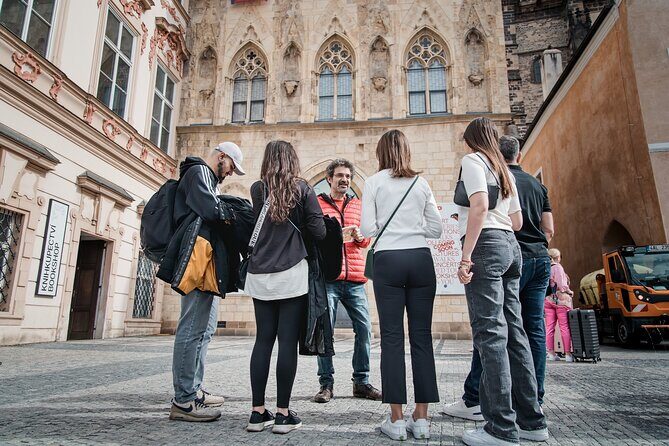
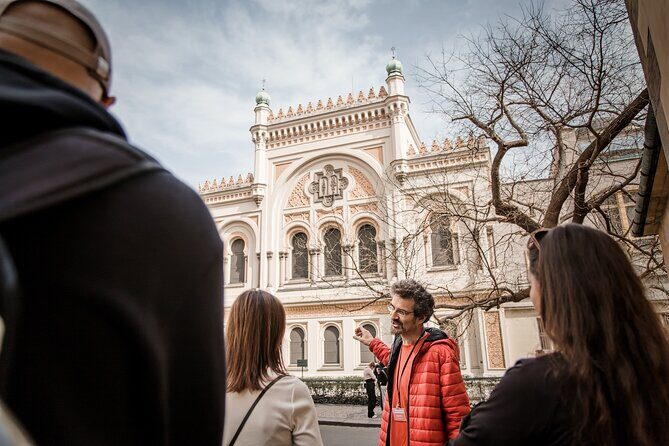
Another synagogue stop is the Spanish Synagogue and Jewish Museum area. In this tour format, you’re set up for history plus exterior viewing, and you’ll hear about the impressive interior style influenced by the Alhambra.
Important practical note: one guest experience included the Spanish Synagogue being closed to the public because of Jewish holidays. So don’t build your morning around an interior visit being guaranteed. If it’s shut, you’ll still get the architectural and historical framing, but your time will stay focused on what you can see outside.
That said, the guide still makes it worth it. When you understand the style references, the building stops being just a decorative stop and starts feeling like a cultural statement.
Kafka’s Statue and the Mood Shift at the End
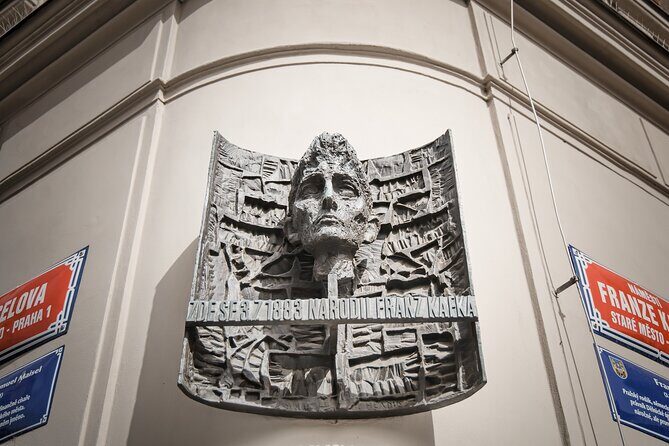
Late in the walk, you’ll end with the Franz Kafka statue by Jaroslav Rona. This stop is short, but it gives the walk a literary finish. The guide may also toss in a darker, joking line about Kafka’s books and the mood they carry—useful, because it helps the whole route feel human, not museum-polished.
By the time you reach Kafka, you’ve moved from civic landmarks to religious architecture to memory-heavy sites. That arc is one reason this walk works as an introduction to Prague: you leave with more than photos. You leave with themes.
Walking Time, Stairs, and What to Wear
This is built as a 2-hour walking tour, starting at 10:30am and ending back at the meeting point. That means you should dress for steady walking and plan for uneven Old Town pavement.
As a practical caution, one participant noted there were 82 steps up and down during their guide’s version of the route. That doesn’t mean every departure is identical, but it does mean you should treat stairs as possible. If you have a heart condition or any mobility limits, wear supportive shoes and consider asking when you book how much stair climbing is involved on your date.
Even if you’re fine physically, good shoes matter here. Prague looks gorgeous at sidewalk level, and you’ll want to keep your footing while the guide points out details.
Guides Make the Difference: Allen, Radek, Vojtech, and Martin
The guide quality shows up in the pace and in the storytelling style. I like tours where the guide answers questions without acting like you’re slowing them down. This one tends to hit that mark, especially when group size stays small.
You might meet guides such as:
- Allen, who leads with lots of depth and even adds humor, plus a clear explanation of the Astronomical Clock
- Radek, who focuses on explaining things well and keeping the tone upbeat
- Vojtech, with an engaging style that ties together why the city looks the way it does
- Martin, who mixes legends with humor and can point you toward local places to eat afterward
On some departures, the group can be very small, which means you hear everything clearly and can ask your own questions on the spot. If you’d rather not shout over other languages, this structure is a solid fit.
Price and Value: What $24.19 Buys You
At $24.19 per person, this tour is priced like a smart impulse buy for first-time Prague visitors. The real value isn’t only the cost. It’s that you’re paying for:
- a guide who helps you spot what matters
- a time-efficient route that covers two big areas
- a lot of exterior landmarks that don’t require you to plan separate admissions
Most stops in the walk are described as admission ticket free, which keeps it budget-friendly and reduces decision fatigue. The Old Jewish Cemetery is the main exception where admission is not included, so you may want a little extra spending money if you decide to enter.
If you like to travel with a plan but hate rigid schedules, this is a good match. You’re buying orientation and context for a small chunk of time, then you can wander on your own with a better sense of direction.
Should You Book This Old Town and Jewish Quarter Walk?
Book it if you:
- want a fast Old Town plus Jewish Quarter introduction without overcommitting your day
- like guided context for iconic places like the Astronomical Clock
- want a budget-friendly route with lots of free exterior viewing
Skip it or choose a different format if you:
- expect guaranteed interior access to major synagogue spaces every day
- know you struggle with stairs and can’t handle an Old Town route where stair counts may be high
My take: for the price, and with the chance to meet a strong guide like Allen or Radek, this is one of the better ways to start understanding Prague beyond the postcard level.
FAQ
What time does the Prague Old Town and Jewish Quarter walking tour start?
The tour starts at 10:30am.
How long is the walking tour?
It lasts about 2 hours.
Where is the meeting point?
The meeting point is at Týnská 627/7, Staré Město, Prague 1 (in front of McGee’s Trips & Tickets). The tour ends back at the meeting point.
Is the tour in English, and do I need a paper ticket?
Yes, it’s offered in English, and you’ll receive a mobile ticket.
What’s included in the price?
A local guide is included.
Is hotel pickup or drop-off included?
No, hotel pickup and drop-off are not included.
Are there any paid entries during the tour?
Most stops are marked as admission ticket free. The Old Jewish Cemetery has admission ticket not included.
Can kids join the tour?
Children up to 6 years old are free of charge, and children must be accompanied by an adult.
What if the tour is canceled because of minimum group numbers?
Minimum numbers apply, and there’s a possibility of cancellation after confirmation if not enough passengers meet the requirements. If that happens, you’ll be offered an alternative date/experience or a full refund.