Prague rewards people who slow down—and this tour helps you do just that. I like how it keeps the focus on authentic Czech food and not tourist theater. I also love the small group size, because it makes it easier to ask questions and actually talk with your guide.
You meet at Saint Ludmilla Church in Prague’s Peace Square, then move through a run of bakeries and local restaurants for multiple tastings of classics like Svíčková, Knedlík, Koláč, and Klobása. You’ll finish with Czech beer plus a shot of Becherovka, which turns the last stop into a real send-off rather than a quick taste and goodbye.
The one thing to consider: this is a food-forward, sit-and-sample format, so if you’re not excited about trying several dishes in a single 3-hour window, you might feel a bit rushed. Also, you’ll want to show up on time for the meet point outside the church.
In This Review
- Key highlights at a glance
- Why this Prague food tour feels local (and not staged)
- Starting outside Saint Ludmilla Church in Peace Square
- Bakery tasting: Koláč-style sweetness and Czech café comfort
- Restaurant stop number one: getting your first real flavor hit
- The middle of the tour: switching between hearty dishes
- Klobása and the savory part of Prague
- The last stop: Czech beer and a Becherovka shot
- Price, and whether $99 is actually a good deal
- How long the tour takes, and how to pace yourself
- Who should book this Czech food tour
- Practical tips before you go
- Should you book it?
- FAQ
- Where do we meet for the Prague local food tour?
- How long is the tour?
- What’s included in the price?
- What dishes will we get to try?
- How big is the group?
- What languages are the tour guide available in?
Key highlights at a glance
- Meet outside Saint Ludmilla Church in Peace Square so you start in a real neighborhood setting
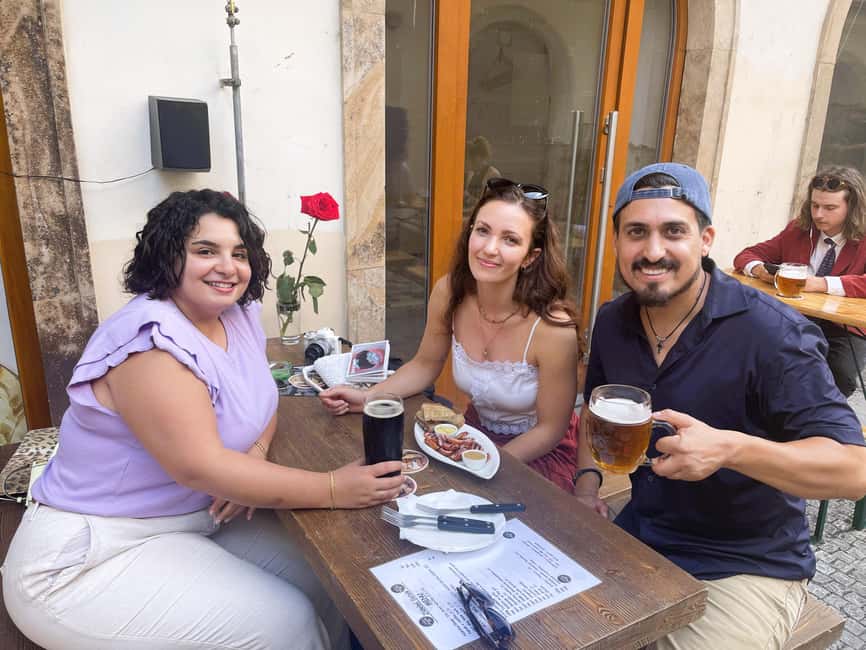
- Small group limited to 10 participants keeps the tour friendly and question-friendly
- Multiple tastings across bakery and local restaurants rather than one meal and done
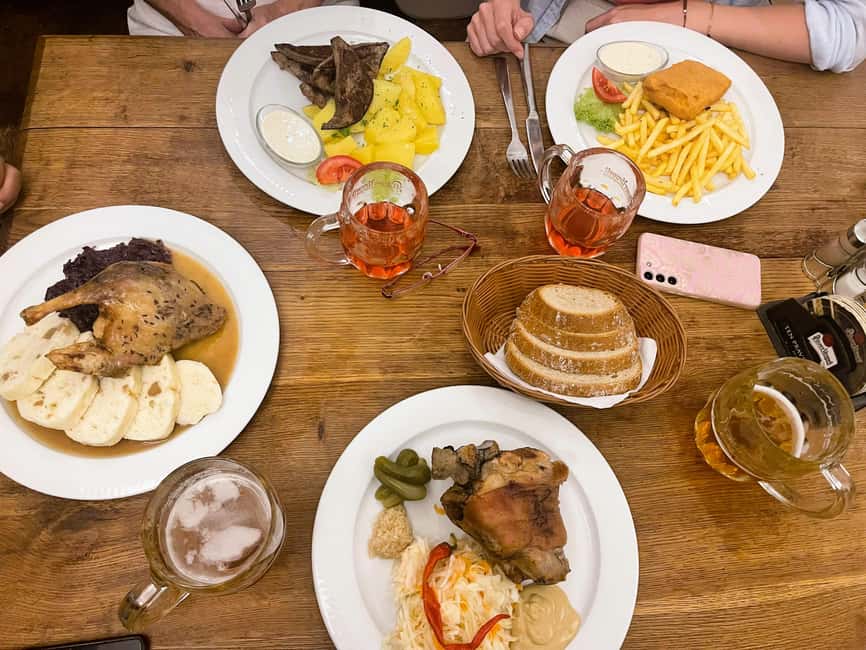
- Czech standouts you’ll try like Svíčková, Knedlík, Koláč, and Klobása
- Beer plus a Becherovka shot to close the experience with classic Czech flavor
Why this Prague food tour feels local (and not staged)
Prague has plenty of food stops that look great on a sign and feel empty once you sit down. This tour is built for the opposite feeling: you’re there to taste Czech comfort food the way locals actually order it.
What makes it work is the flow. You’re not bouncing around for photos; you’re moving from place to place where the tastings line up with different parts of Czech eating—bakery sweets, hearty main-dish favorites, and then drinks at the end. That sequence helps you understand what you’re tasting instead of just collecting bites.
The other part I really appreciate is the guide. The tour runs with live English and Spanish support, and guides like Juan (mentioned as a standout host) tend to keep the mood easy and engaging. You’ll get more than a list of dishes—you’ll get context that helps the food make sense in Prague.
You can also read our reviews of more tours and experiences in Prague.

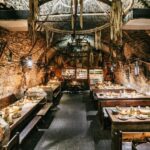
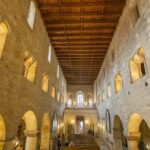
Starting outside Saint Ludmilla Church in Peace Square
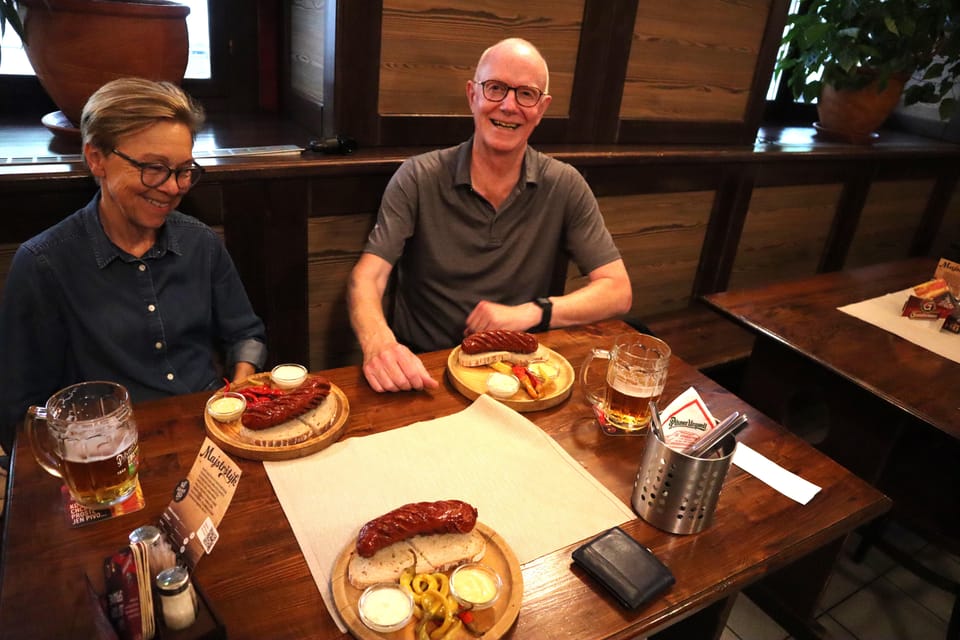
The meeting point is outside the main entrance of Saint Ludmilla Church in Peace Square. It’s a smart start because it gives you a clear anchor point, and you’re not spending your first 20 minutes hunting for the right street corner.
From there, you’re guided into the kind of local rhythm that’s hard to find on your own. You’ll be stepping away from the most obvious tourist corridors and heading toward spots that are more about regular customers than quick sales.
This is also where the tour sets expectations. A food tour works best when you know what kind of evening you’re in. Here, you know you’ll be doing tastings for roughly 3 hours, plus a beer and Becherovka at the finish—so you can show up ready to eat, not just to browse.
Bakery tasting: Koláč-style sweetness and Czech café comfort
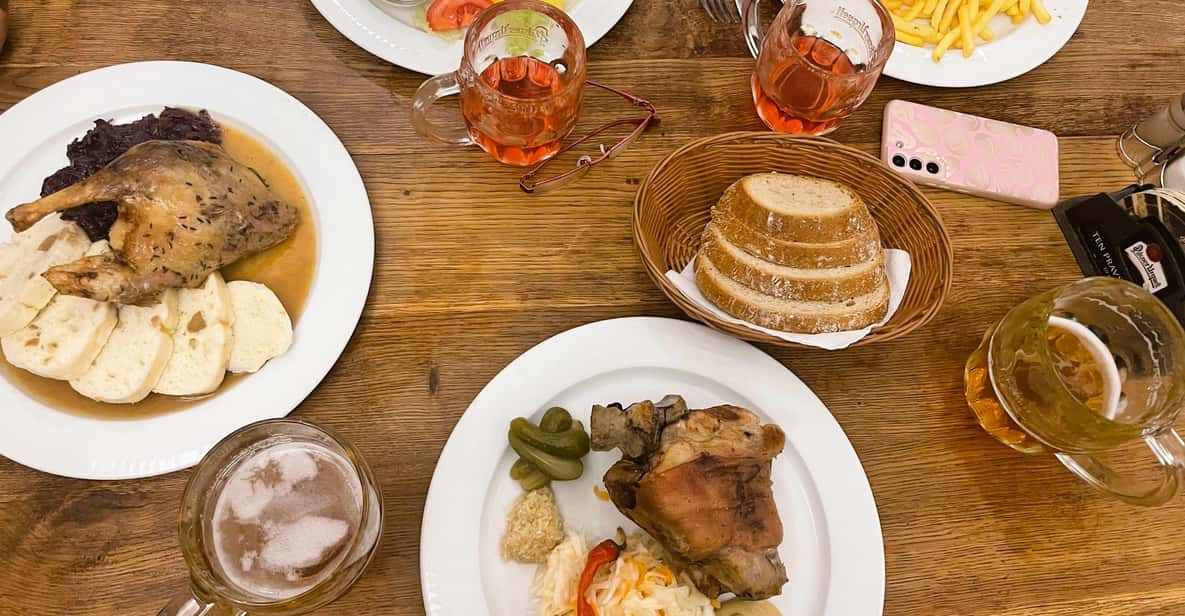
Your first taste stop is a local bakery, with about 35 minutes there. This is a good pacing choice, because bakery time is perfect for sampling without the heaviness of a full restaurant meal.
In practical terms, you’ll get the kind of Czech sweetness that’s made for everyday life: the kind of pastry you’d grab and actually eat later, not something built only for tourists. Koláč is specifically called out as one of the dishes you’ll try, and it fits this moment of the tour well.
What I like about starting with a bakery is how it sets your palate. You start with something straightforward and comforting, then later you shift into the richer dishes like Svíčková and the pillowy satisfaction of Knedlík. If you start at the wrong place—like jumping straight to heavy mains—you can end up too full to enjoy the tour’s range.
Restaurant stop number one: getting your first real flavor hit
Next comes a local restaurant tasting for about 45 minutes. This longer block matters. It gives you enough time not only to taste, but to settle in, ask questions, and learn the story behind what you’re eating.
This tour is built around Czech mainstays, and you’ll see Svíčková, Knedlík, and other classics show up as part of the tastings. These are the flavors that people talk about when they talk about Czech comfort food—meant to feel warm, filling, and deeply local.
A 45-minute restaurant stop also gives you a chance to slow down. Food tours can move too fast if every stop is “five bites and out.” Here, you get time to enjoy the dish you’re trying instead of treating food like a checklist.
The middle of the tour: switching between hearty dishes
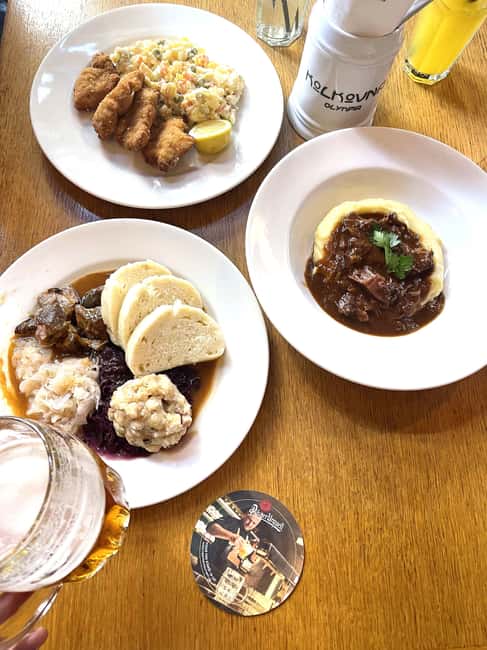
After that first restaurant, there’s another tasting at a local restaurant for roughly 35 minutes. Then you’re back in yet another local restaurant setting for about 45 minutes.
That mix—shorter, then longer—keeps you from burning out. You’ll likely notice a rhythm: sweet to savory, heavier to satisfying, and then back again as the dishes rotate through the tour’s Czech lineup.
This is also where the guide’s pacing really helps. If you’re eating Czech food for the first time, it’s easy to think everything is the same until you compare bites. By the time you’re at the second restaurant stop, the variety starts to click, especially with dishes named in the tour description like Knedlík and Klobása.
If you want value from a food tour, variety is the key. You don’t just want one great dish—you want a set of dishes that makes you understand the cuisine’s balance. The tour’s schedule gives you that chance.


Klobása and the savory part of Prague
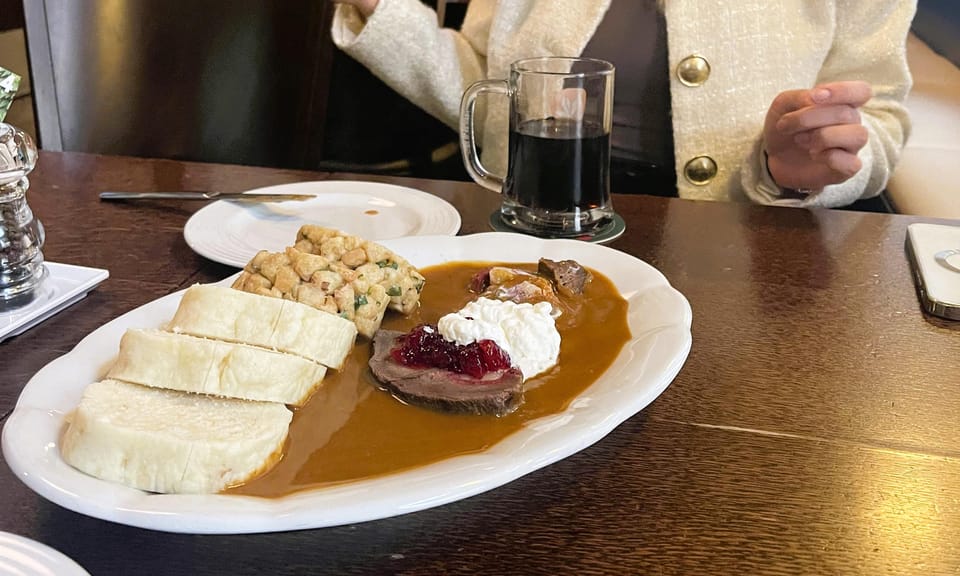
Klobása is one of the dishes you’re set up to try, and it fits naturally into a restaurant-heavy stretch. If you like savory flavors that feel sturdy and filling, this is the part of the tour you can look forward to.
Also, the tour format helps you compare without over-ordering. In regular restaurants, you’re stuck choosing one main. Here, the structure nudges you to try different items that represent different sides of Czech food.
This matters for the kind of traveler who likes learning by eating. You leave with a better sense of what Czech cuisine actually tastes like—not just what it looks like on a menu.
The last stop: Czech beer and a Becherovka shot
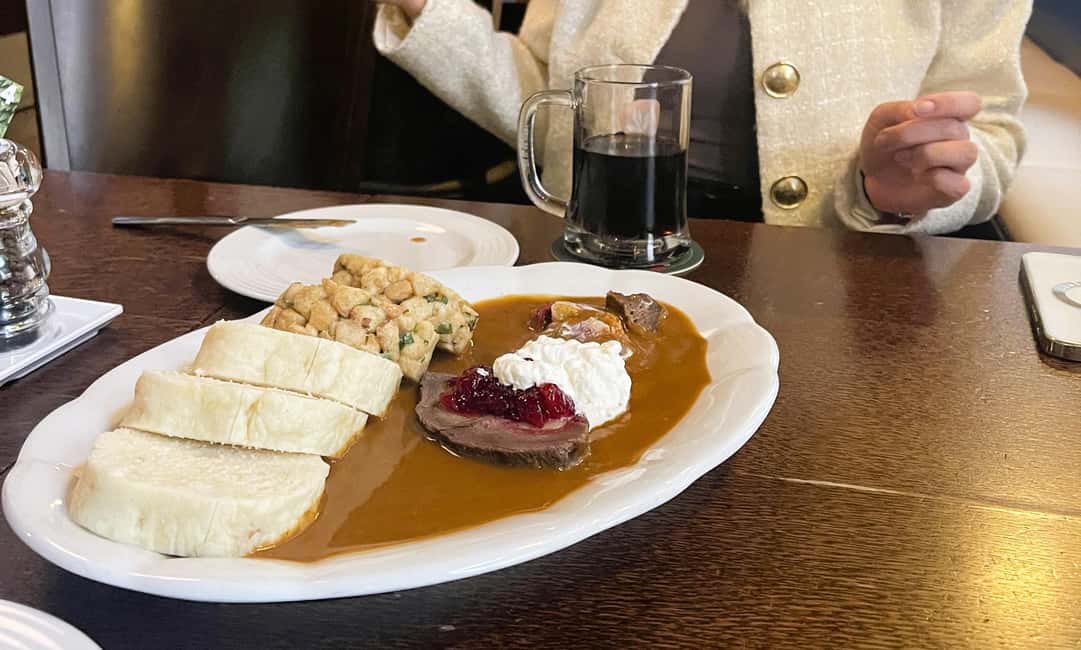
The tour ends back at Saint Ludmilla Church, after a final tasting stop and then the traditional drinks finish. You’ll have Czech beer, plus a shot of Becherovka.
That ending is more than a fun finale. It connects the food to the way many Czech locals treat dining—as something that includes a drink, not just a plate. Ending with beer makes the experience feel relaxed and celebratory. Following it with Becherovka gives you a distinct Czech flavor marker that’s hard to forget.
If you’re the type who likes finishing a tour with one memorable takeaway, this does the job. It’s also a gentle way to transition back into the rest of your Prague evening since you return to the starting area.
Price, and whether $99 is actually a good deal
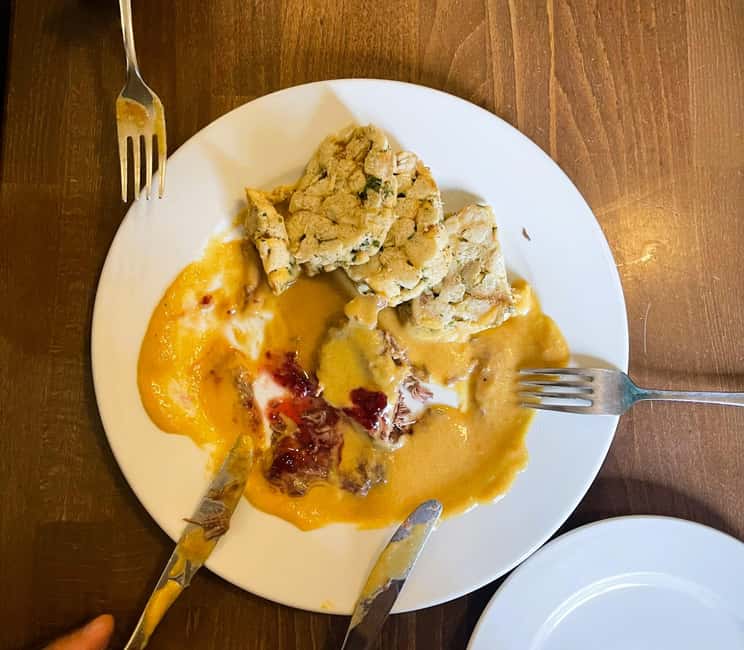
At $99 per person for a 3-hour guided tour with tastings plus beer and Becherovka, you’re paying for three things: organization, access, and enough food to make the cost feel real.
This isn’t just “a guide walking you around.” You get included food tastings across a bakery and multiple local restaurants, and the drink finish is part of the package, not an add-on at the end. Add in the small group size (limited to 10), and the price starts to make sense for people who don’t want to spend their time researching which places to try.
There’s also the practical side. The tour includes a skip-the-ticket-line element, which matters because wasted waiting time can shrink the value of any walking experience.
So the value comes down to you. If you like eating enough to justify the ticket, this is a strong deal. If you’re hungry-light and mostly want strolling and sightseeing, you may find it expensive relative to what you actually consume.
How long the tour takes, and how to pace yourself
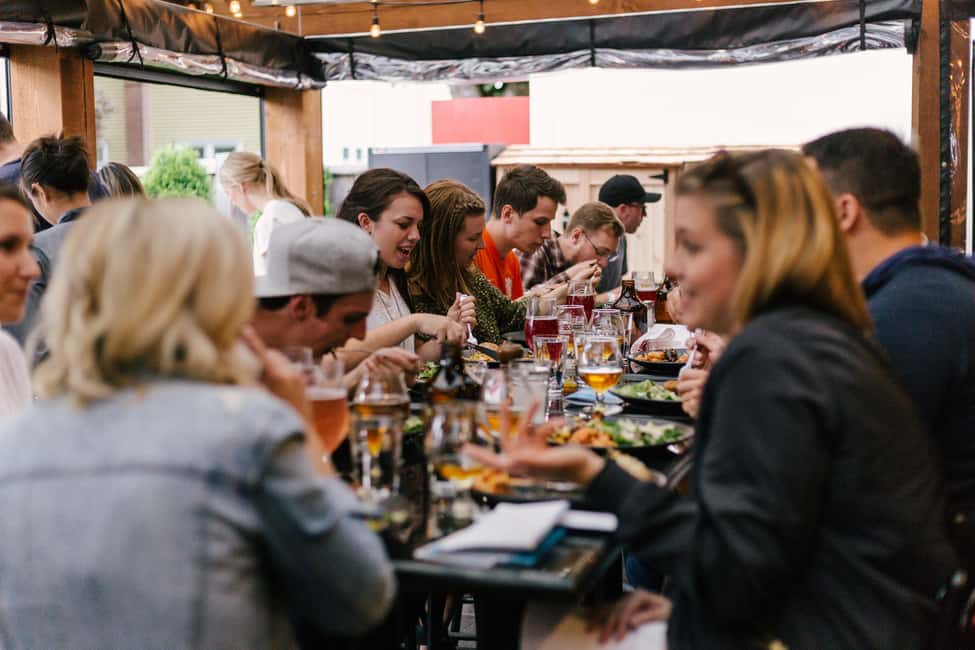
The total duration is 3 hours, with specific tasting blocks that add up to a substantial chunk of sit-down time: 35 minutes at the bakery, then 45, 35, and 45 minutes at the restaurant stops.
That structure means you’ll be eating through the tour, not just grazing. It’s ideal if you usually like food experiences that leave you satisfied, not just “curious.”
A simple way to get the most out of it: arrive hungry but not desperate. If you show up starving, the early sweet stop can hit too fast. If you show up too full, the later savory dishes and the drinks finish won’t land the way you want.
Also, wear comfortable shoes. The tour is built around moving between establishments, and even if you don’t know the exact distances, you should assume some walking.
Who should book this Czech food tour
This is a great fit if you want:
- a guided way to taste multiple Czech dishes in one evening
- real local establishments rather than menu-hunting on your own
- a small-group pace where you can talk with the guide in English or Spanish
It’s especially good for first-timers to Czech food who want a rounded introduction: you’ll try sweet (Koláč), hearty (Svíčková), dumpling comfort (Knedlík), and savory sausage style (Klobása). The tour gives you variety without making you decide between ten different restaurant options.
You might consider skipping it if you prefer to build a long, independent restaurant night where you choose one place and linger. This tour is designed for tasting coverage, not a slow, single-restaurant evening.
Practical tips before you go
A few small moves will make the experience smoother.
1) Eat a light pre-dinner snack
You’ll be tasting across multiple venues, and the drinks finish is included. A snack beforehand keeps you from feeling overwhelmed by early sweetness.
2) Plan your evening around being satisfied
Because the tastings are built into the 3-hour program, you’ll likely want something simple after. Don’t schedule a big second meal right away.
3) Bring questions
A good guide turns food into context. Even basic questions like what people usually order, or why these dishes are paired, can make the tour feel twice as useful.
4) Wear layers
You’ll be starting outside at Saint Ludmilla Church and moving between stops. Prague weather can change quickly, so dress for that.
Should you book it?
If you like guided food experiences that prioritize tastings, this one is a strong yes. The combination of multiple venues, classic Czech dishes (Svíčková, Knedlík, Koláč, Klobása), and the Czech beer plus Becherovka finish makes it feel like a complete “food night” rather than a short snack tour.
I’d book it if you want a local-style evening with minimal research and a guide who can keep the tone friendly—especially if you’re traveling with a small group vibe in mind. If you’re not excited about trying several Czech dishes in one sitting, you’ll likely get less value.
FAQ
Where do we meet for the Prague local food tour?
Meet your guide outside the main entrance of Saint Ludmilla Church in Peace Square.
How long is the tour?
The tour lasts about 3 hours.
What’s included in the price?
The tour includes a guide, food tastings, plus Czech beer and a shot of Becherovka.
What dishes will we get to try?
The tour features Czech dishes such as Svíčková, Knedlík, Koláč, and Klobása.
How big is the group?
It’s a small group with a limit of 10 participants.
What languages are the tour guide available in?
The live tour guide is available in English and Spanish.