REVIEW · PRAGUE
Prague: Jewish Quarter Premium Tour
Book on GetYourGuide →Operated by Precious Legacy Tours s.r.o. · Bookable on GetYourGuide
Four synagogues, one unforgettable story.
This Prague Jewish Quarter Premium Tour takes you through the places where Jewish life in the city was lived, interrupted, and remembered. I love the mix of still-active sacred spaces with Holocaust-focused exhibits, and I also love that you’ll see the Old Jewish Cemetery’s layered graves, which hits you differently than photos ever could. One thing to consider: it’s a walking tour and can feel busy, so bring stamina and expect a faster pace than a slow museum day.
The guides are a big part of why this tour works. Guides such as Donna and Clara are known for clear, careful explanations, and I particularly appreciate the emotional weight some guides bring—like the guide Valentina whose family story connects to survival and reunion after the war. The possible drawback is practical: if you booked expecting a specific language for live narration, live guiding is only Czech or English, so you may need the included audio options for other languages.
In This Review
- Key highlights you’ll actually feel
- Why the Jewish Quarter still feels like Prague
- Meeting at Golem Café: getting your bearings fast
- Old-New Synagogue exterior: the one stop you don’t go inside
- Pinkas Synagogue: Holocaust memory through children’s drawings
- Klausen Synagogue: the Maharal and everyday ritual life
- Maisel and the Spanish Synagogue: Judaica and restoration
- Chevrah Kaddisha’s ceremonial hall and the Old Jewish Cemetery
- Guides: why Donna, Clara, and Valentina matter
- Price and value: what $117 buys you
- Who should book this premium Jewish Quarter tour
- Should you book this tour?
- FAQ
- FAQ
- How long is the Prague Jewish Quarter Premium Tour?
- Where do I meet the guide?
- Which synagogues are included in the tour admission?
- Do I enter the Old-New Synagogue?
- Is the tour offered on Saturdays?
- What languages are available?
- What should I wear?
- How much does the tour cost?
- Can I get a refund if I change plans?
Key highlights you’ll actually feel
- Four synagogue interiors included: Pinkas, Klausen, Maisel, and the Spanish Synagogue are part of your admissions.
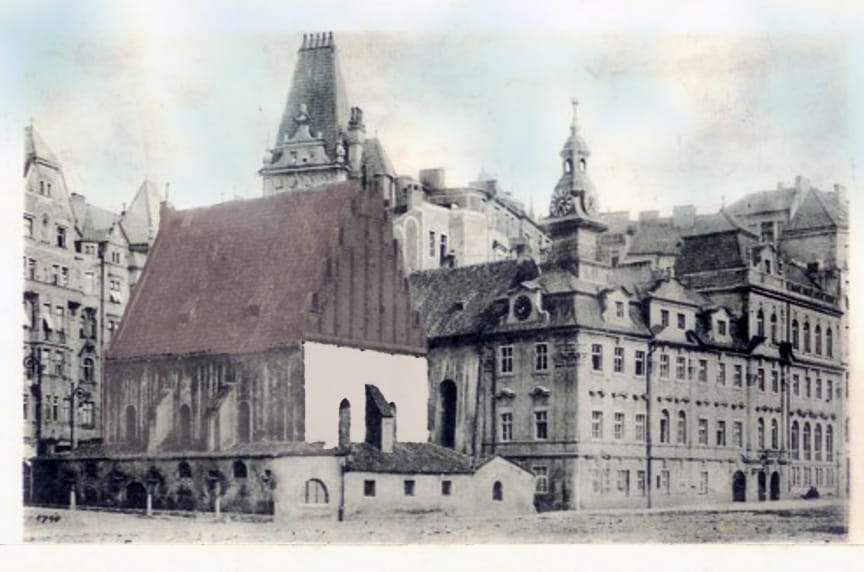
- Old-New Synagogue exterior stop: a chance to see a still-active site dating to the 13th century, while admission to the interior isn’t included.
- Terezin Ghetto drawings at Pinkas: a child-created perspective on a crushing history.
- Maharal of Prague at Klausen: learn how one major rabbinic figure connects to tradition and community life.
- Old Jewish Cemetery’s layered graves: graves stacked in dense layers, sometimes reported as reaching up to 12 levels deep.
- Ceremonial Hall at Chevrah Kaddisha: the burial society’s space adds context to what you see later in the cemetery.
Why the Jewish Quarter still feels like Prague
The Jewish Quarter in Prague isn’t just sightseeing—it’s a lived geography of faith, community customs, and history’s interruptions. On this tour, the synagogues aren’t presented as separate attractions. They’re treated like chapters that link together: worship spaces, memory spaces, and communal responsibility.
You’ll also notice how the story changes with each building. One stop focuses on Holocaust remembrance through children’s work. Another shifts to heritage through scholarship and ritual. That pacing matters. It helps you absorb heavy material without turning it into a single long doom scene.
You can also read our reviews of more tours and experiences in Prague.

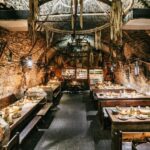
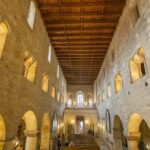
Meeting at Golem Café: getting your bearings fast
You meet at the Golem Café in the Information Centre of the Jewish Museum in the city center area. From there, you head out on foot and settle into the walking rhythm of the Jewish Quarter.
This matters because the tour covers several nearby sites in a short window (about a 3-hour walking tour). Wear comfortable shoes and dress for the weather. The route includes time outdoors, then short museum-style visits where you’ll want to hear the guide clearly and stay close as groups move.
One practical note from the structure of the experience: it’s not designed for lingering at every doorway like a free stroll. If you prefer unhurried pacing, you’ll have to decide where you want extra time once you’re inside.
Old-New Synagogue exterior: the one stop you don’t go inside
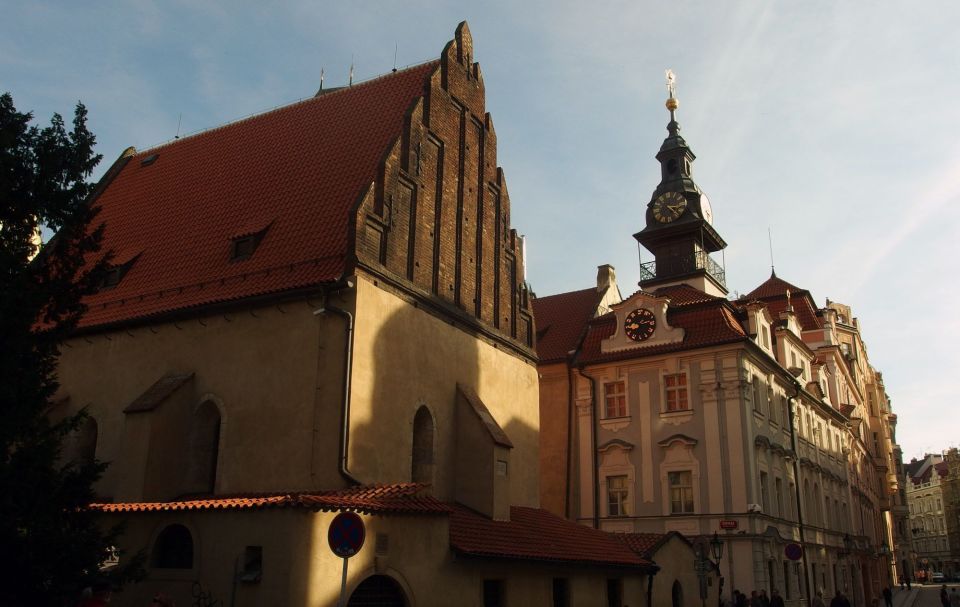
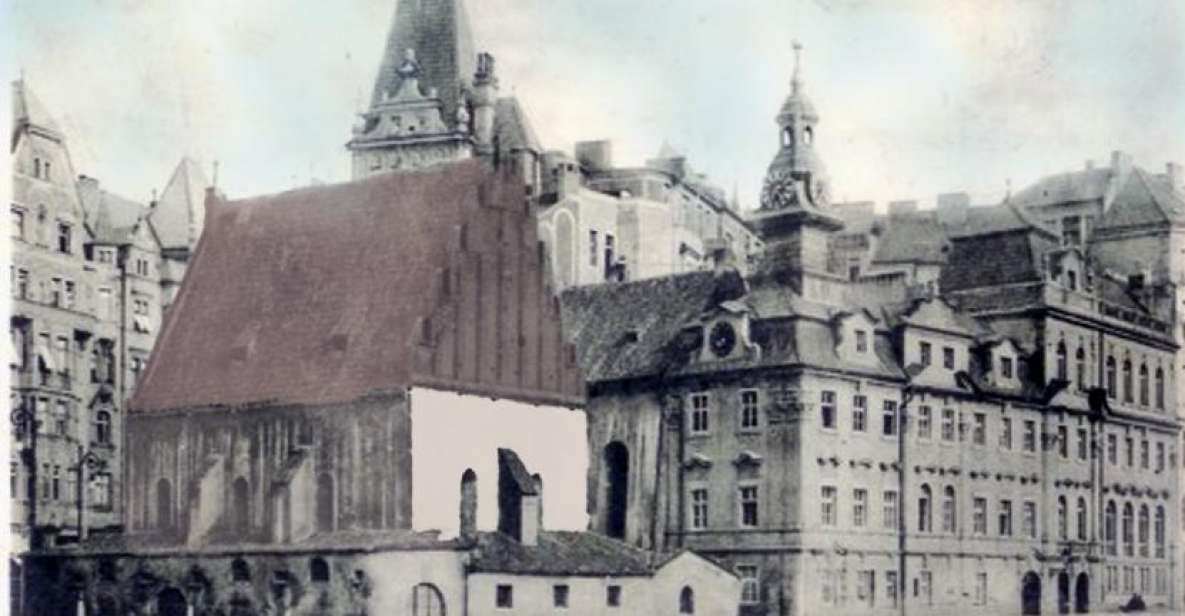
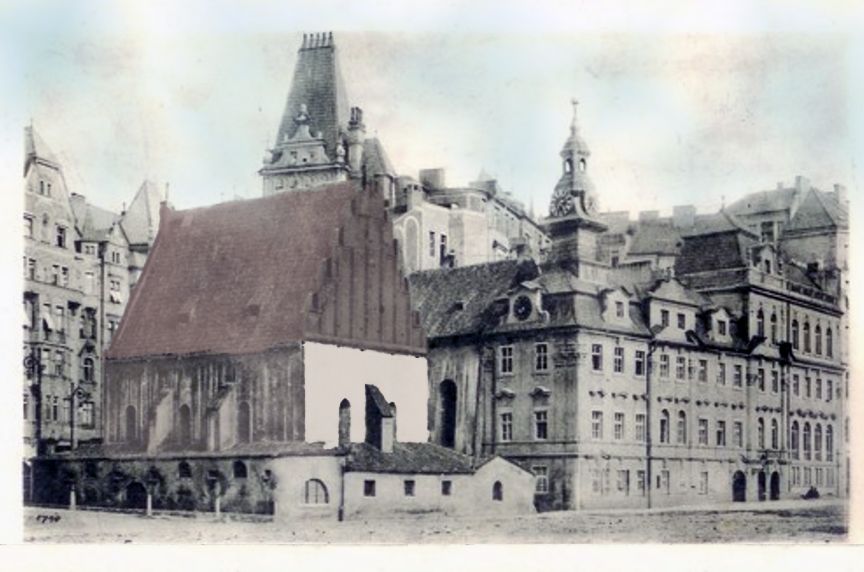
The first major sight is the Old-New Synagogue, a 13th-century landmark and still active today. You’ll admire the exterior as you learn why it’s often described as Europe’s oldest synagogue north of the Alps.
This stop works even without interior access because it anchors the whole tour in continuity. You’re looking at a living institution, not only a preserved ruin. For many people, that contrast—old and still used—creates the right emotional frame before you move to memorial spaces.
Just know the fine print: admission to the Old-New Synagogue isn’t included. The tour focuses on viewing the exterior, so if interior access is a must for you, you’d need to arrange it separately.
Pinkas Synagogue: Holocaust memory through children’s drawings
Next up is the Pinkas Synagogue, which functions as a memorial museum. This is where you’ll learn about Czech Jewish victims of the Holocaust and see the emotionally intense exhibition of drawings created by children from the Terezin Ghetto.
The emotional force here comes from the perspective, not just the subject. These are not adult summaries. They’re child-made expressions—sometimes simple, sometimes startlingly direct. A sensitive guide style makes a difference in moments like this, and the tour’s best guides tend to slow down and explain without rushing your processing.
It’s also a stop where you may feel a wave of discomfort, which can be a good thing. This tour doesn’t try to soften what happened. Instead, it gives you context so you can hold the material rather than just absorb it.
If you’re traveling with kids, this can still work. One family-style highlight from the guide experience is that the tour has been recommended for an 11-year-old and delivered in a way that keeps moving, but not shallow.
Klausen Synagogue: the Maharal and everyday ritual life
At the Klausen Synagogue, you’ll see a permanent collection tied to the Maharal of Prague and the tradition around him. The experience doesn’t only focus on a famous name. It connects scholarship to the daily realities of Jewish life—how community members understood faith, how ritual shaped routine, and how belief showed up beyond the synagogue walls.
This stop is especially valuable if you want more than tragedy and memorial. It helps you understand continuity: Judaism isn’t just history; it’s practices, texts, and shared meaning.
You’ll likely come away with a clearer sense of why these buildings were central to everyday identity. Even when the exhibits feel academic, the tour approach tends to bring them back to human scale—what people did, why they did it, and how it mattered.


Maisel and the Spanish Synagogue: Judaica and restoration
The Maisel Synagogue is next, and it’s known for an extensive collection of Judaica. This is where you’ll spend time with objects tied to Jewish life and worship—things that help you picture the texture of community practice rather than only the big historical events.
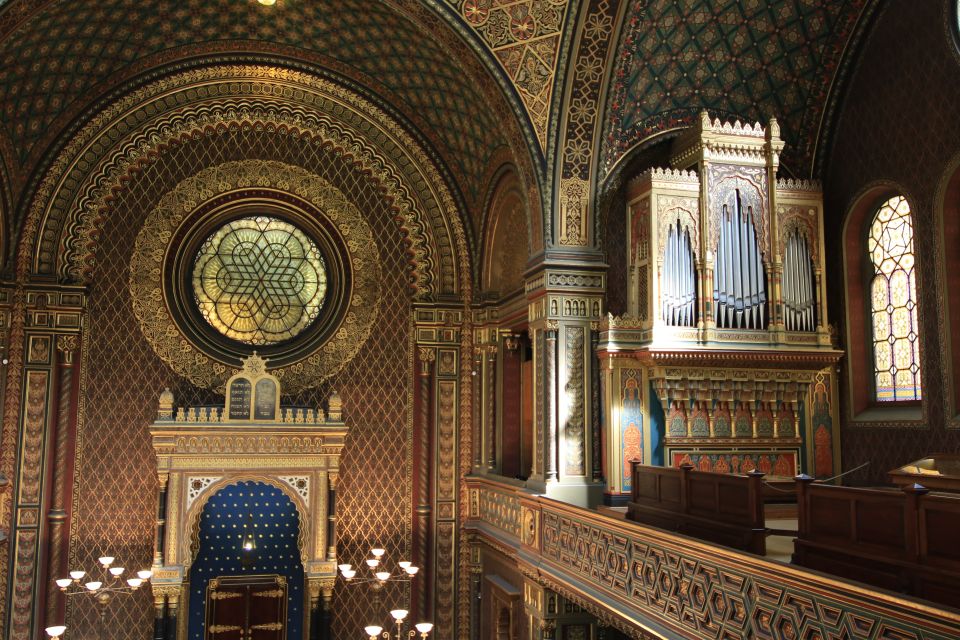
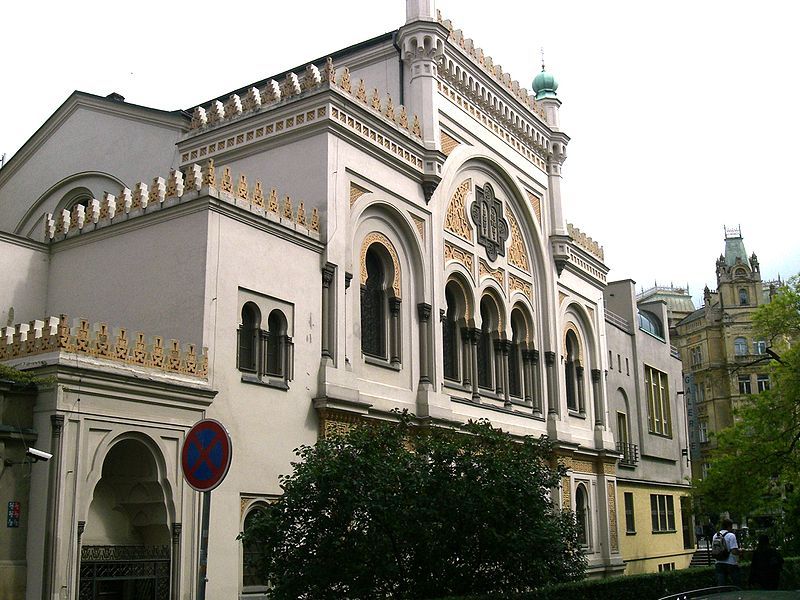
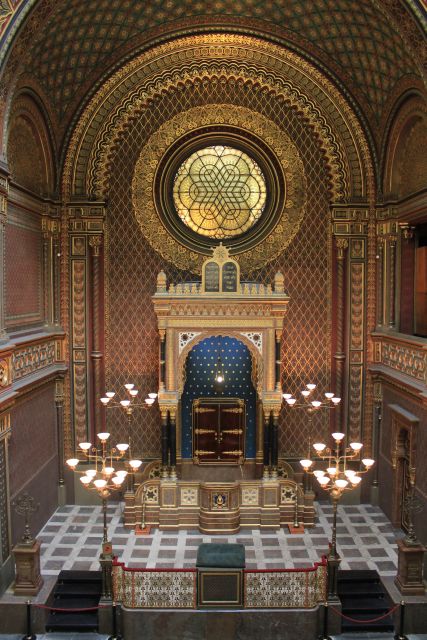
After that, your tour ends at the Spanish Synagogue, a newly restored Moorish-inspired building. This is a different visual experience than the older medieval structures. The restoration aspect matters because it shows recovery and continued cultural care.
For many visitors, the final visual shift to the Spanish Synagogue is like a breath of air—still serious, but no longer only focused on remembrance. It gives you a stronger sense that the story includes survival and rebuilding, not only loss.
Chevrah Kaddisha’s ceremonial hall and the Old Jewish Cemetery
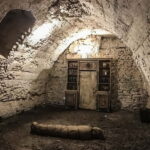
One of the tour’s most distinctive experiences is the stop at the Ceremonial Hall of the Prague Burial Society at the Chevrah Kaddisha building. This isn’t a typical museum stop. It frames burial customs as community responsibility—how people cared for one another even after death.
Then you go to the Old Jewish Cemetery, where the graves are densely packed and layered. The cemetery is often described as having layers of graves sometimes reported up to 12 levels deep, which is hard to process until you see it.
This is where the tour earns its premium label. Seeing the cemetery adds context to what you learned at the burial society site. The building explains the meaning of communal burial care. The cemetery shows what it looks like when that system operated over generations.
If you have mobility limitations, plan for uneven terrain and standing time. The tour is outdoors for parts of this section, and the emotional topic can also slow your pace as you look around.
Guides: why Donna, Clara, and Valentina matter
The tour’s reviews consistently point to one pattern: the guide makes the material land. Names that come up include Donna, Clara, and Valentina, and the common theme is careful storytelling.
Some guides bring personal connection to the history in a way that changes how you hear the facts. For example, Valentina’s family story includes meeting in a concentration camp and marrying after the war, and that kind of background tends to show up as more than good delivery—it shapes how the guide chooses their tone and pacing.
In the best moments, the group size supports questions and dialogue. A smaller group means you’re not left behind while the guide moves on to the next exhibit. You also hear better when people ask questions and the guide responds with detail.
That said, there’s a caution worth listening to: this tour can be crowded and the pace can feel fast, which makes it tougher to follow if you’re slow to walk or if noise levels are high. If hearing is a key factor for you, arrive ready to stay close and consider using the included audio options as backup.
Price and value: what $117 buys you
At $117 per person, this is not the cheapest way to see the Jewish Quarter. But the value is tied to what’s included.
Admission is included for Pinkas Synagogue, Klausen Synagogue, Maisel Synagogue, and the Spanish Synagogue. That matters because you’re not just touring exteriors—you’re entering multiple sites with exhibits, each with a different focus. Add a live guide with Czech or English narration, and you get both structure and context.
The trade-off is clear: Old-New Synagogue admission isn’t included. You’ll see its exterior, but you won’t enter as part of this package.
Also, remember the tour’s emotional weight. A premium price can be worth it when the guide handles sensitive material carefully and keeps you oriented. This tour’s strongest moments come from thoughtful guiding that helps you connect details across stops.
Who should book this premium Jewish Quarter tour
I’d point you toward this tour if you want a guided, story-driven route through the core sites of Prague’s Jewish Quarter rather than a self-guided checklist. It’s also a good fit if you like your history connected—synagogue to cemetery, memorial museum to burial society, ritual life to scholarship.
It can work for kids who can handle serious topics, especially when a guide keeps things understandable and interactive. One family recommendation highlighted that an 11-year-old enjoyed the experience.
This may be less ideal if you hate walking tours, strongly prefer quiet pacing, or need maximum time alone in each room. You’re moving as a group. You’ll get time, but not unlimited time.
Should you book this tour?
Book it if you want a guided route that covers the Jewish Quarter’s heavy-hitting places in a logical order: Pinkas for Holocaust memory, Klausen for Maharal and ritual context, Maisel for Judaica, Spanish for restoration, plus the burial society and cemetery layers that make everything feel real.
Skip or rethink it if you need a slow, quiet experience, or if you’re expecting Old-New Synagogue interior access included in the ticket. Also, plan your timing to avoid Saturdays. The tour doesn’t operate on Saturdays because the Jewish Museum is closed.
If you’re considering language, check your expectations. Live guide narration is in Czech or English, and the tour provides audio in many languages, including Hebrew (as well as German, French, Spanish, Portuguese, Polish, Dutch, Italian, Chinese, Czech, Russian).
FAQ
FAQ
How long is the Prague Jewish Quarter Premium Tour?
It’s a 1-day activity, planned as a walking tour of about 3 hours.
Where do I meet the guide?
Meet at the Golem Café in the Information Centre of the Jewish Museum.
Which synagogues are included in the tour admission?
Admission is included for Pinkas Synagogue, Klausen Synagogue, Maisel Synagogue, and the Spanish Synagogue.
Do I enter the Old-New Synagogue?
You visit the Old-New Synagogue for its exterior. Admission to the Old-New Synagogue is not included.
Is the tour offered on Saturdays?
No. Tours do not operate on Saturdays because the Jewish Museum is closed.
What languages are available?
The live guide offers Czech and English. Audio guides are also included in German, French, Hebrew, Spanish, Portuguese, Polish, Dutch, Italian, Chinese, Czech, and Russian.
What should I wear?
Dress for the weather and wear comfortable shoes, since it’s a walking tour.
How much does the tour cost?
The price is $117 per person.
Can I get a refund if I change plans?
Yes. Free cancellation is available up to 24 hours in advance for a full refund.