REVIEW · PRAGUE
Prague: Jewish Quarter Half-Day Private Walking Tour
Book on GetYourGuide →Operated by Prague Private Tour Guide Ljuba Poleva · Bookable on GetYourGuide
A walk through Prague’s Jewish memory. You start under the Franz Kafka statue by the Spanish Synagogue and spend about three focused hours piecing together Jewish life in Prague—from synagogues and museums to the Old Jewish Cemetery. This tour also leans into one big story: the Jewish Quarter’s survival and the extraordinary Judaica collection tied to it.
What I especially like is the stop-by-stop guided commentary that explains what you’re seeing instead of rattling names. I also like how the cemetery visit connects architecture and tradition to the famous Rabbi Loew and the golem legend, including how graves are stacked up to 12 layers deep in the Old Jewish Cemetery.
One thing to plan for: entrance fees aren’t included (about 350–600 CZK), so your budget will be a bit higher once you add synagogue and Jewish Museum admission.
In This Review
- Key things that make this tour worth it
- Why Prague’s Jewish Quarter still hits differently
- Starting under Kafka: the Spanish Synagogue setup you’ll be glad you get
- Spanish Synagogue to Pinkas: learning how each synagogue tells a different story
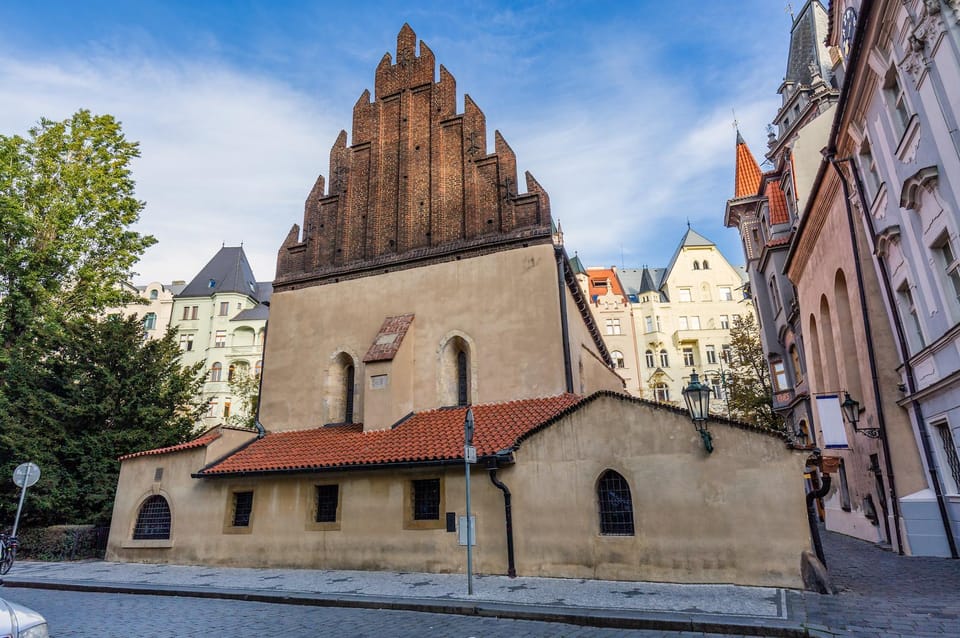
- Old-New Synagogue: Europe’s older synagogue story, explained clearly
- Klausen Synagogue: traditions and artifacts you can actually picture
- Old Jewish Cemetery and Chevrah Kaddisha: Rabbi Loew and the 12-layer graves
- The Judaica angle: what “the largest collection” means for your visit
- A flexible evening add-on: restaurants and a Spanish Synagogue concert discount
- Price and value: why $42 works (and what to budget on top)
- Who this tour suits best
- Should you book the Prague Jewish Quarter half-day private walking tour?
- FAQ
- Where does the tour meet?
- How long is the tour?
- Is this tour private?
- Which synagogues are included?
- Do you visit the Old Jewish Cemetery?
- What else do we see besides synagogues?
- What is included in the price?
- Are entrance fees included?
- What should I bring or wear?
- What languages are available for the guide?
Key things that make this tour worth it
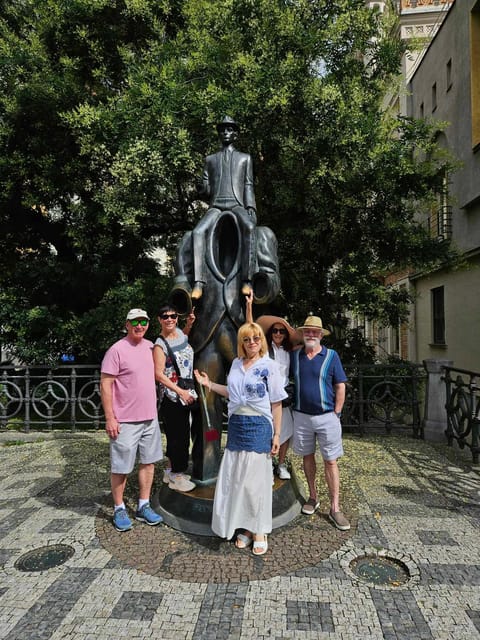
- Meet at the Kafka statue by the Spanish Synagogue, so you don’t waste time hunting for the group
- Licensed guide from Prague’s Jewish community, with lived context behind the facts
- Four major synagogues + the Old Jewish Cemetery, each with its own story and emphasis
- Old Jewish Cemetery details, including the Chevrah Kaddisha building and graves up to 12 layers deep
- Rabbi Loew / golem legend told alongside real places, not just as folklore
- Price includes the guide and commentary, while synagogue/museum entry is a separate line item
Why Prague’s Jewish Quarter still hits differently
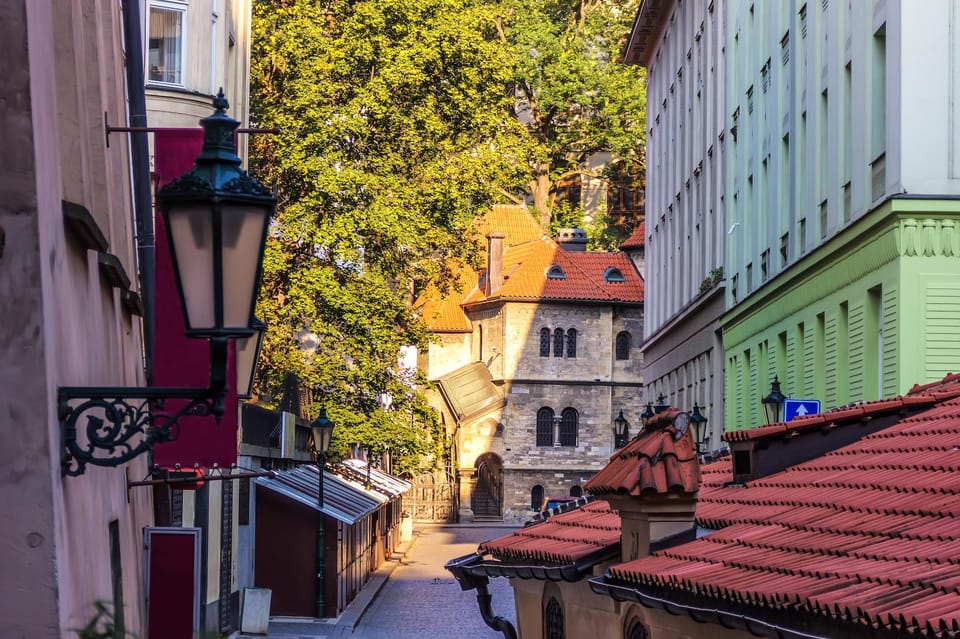
Prague’s Jewish Quarter is one of those places where history isn’t a distant chapter—it’s built into the streets and the buildings. You’re walking cobblestone lanes where the layout and the sites still guide how people understand what happened here over centuries.
What makes this half-day private tour valuable is the pacing. You get a manageable block of time—three hours—to visit several key synagogues and then shift from the public face of worship to the quieter, heavier ground of the cemetery. The guide’s job is to keep those threads straight. That matters, because without context, synagogue visits can turn into a blur of interiors and plaques.
There’s also a practical angle: this quarter is famous for Judaica collections, and the tour frames why those objects and documents matter. You’re not just looking at buildings. You’re seeing how a community preserved identity through objects, ritual, and memory.
You can also read our reviews of more tours and experiences in Prague.

Starting under Kafka: the Spanish Synagogue setup you’ll be glad you get
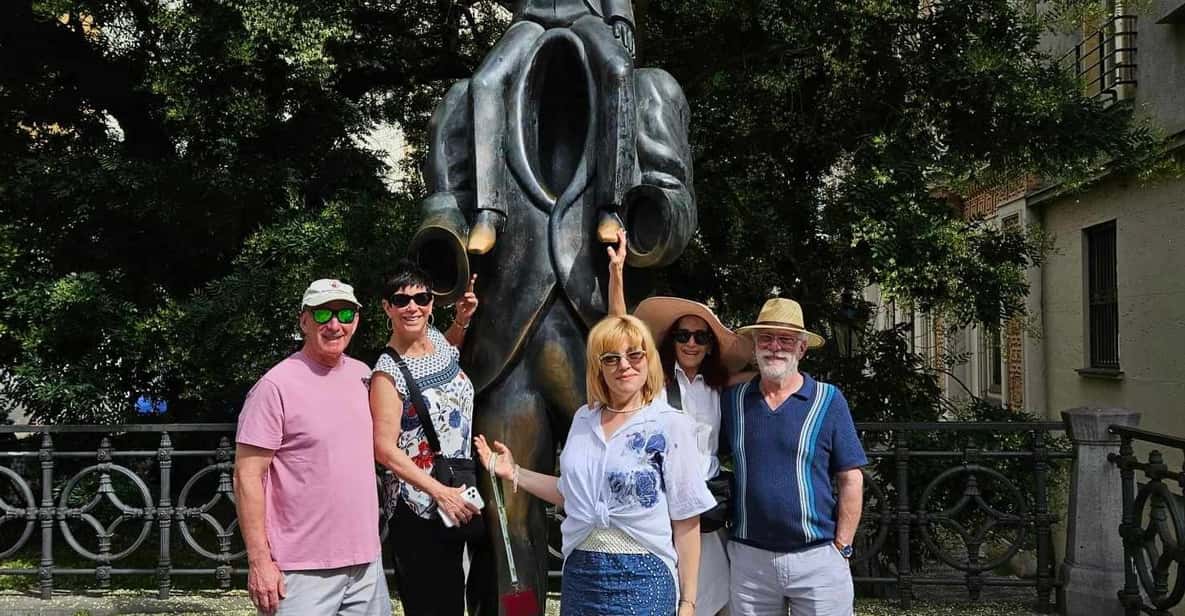
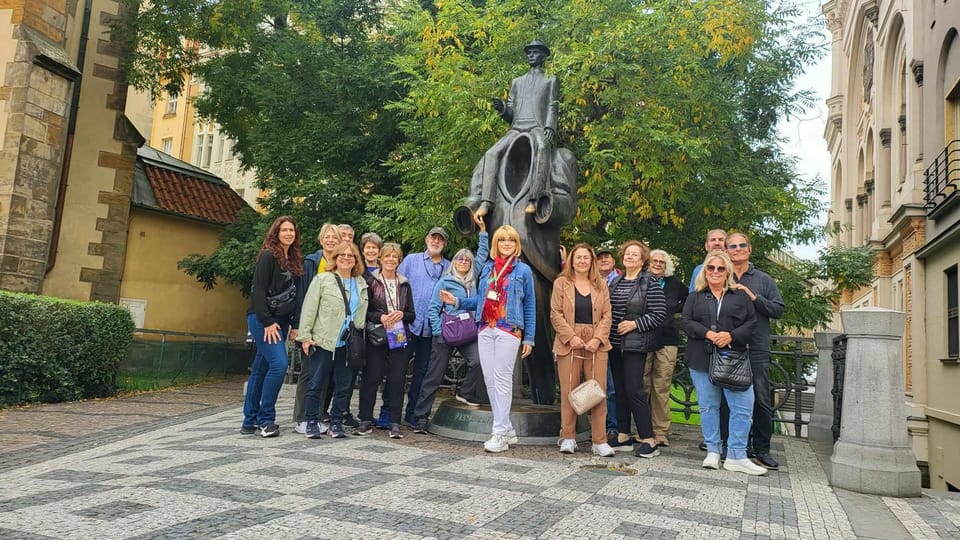
Your meeting point is the statue of Franz Kafka beside the Spanish Synagogue (Vězeňská 1). I like that setup because it gives you a clear landmark before the walk begins. It also sets the tone: Prague is a city where literature, history, and identity overlap, and Kafka is part of that web.
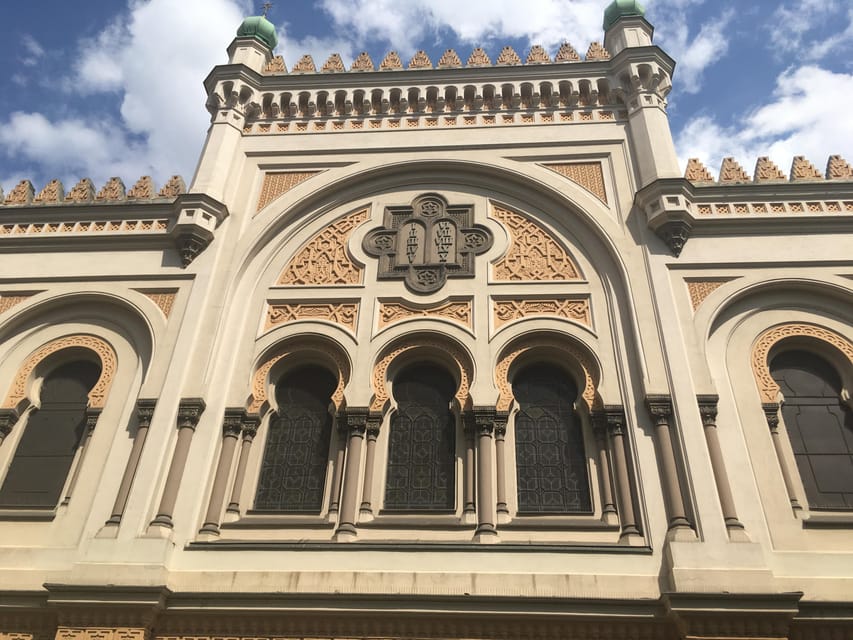
The first stop is the Spanish Synagogue, with about 30 minutes of guided time. This matters because you’re starting with a place that’s visually distinctive and historically significant, which gives your guide a foundation to explain what follows. In tours where you start mid-route, you often miss the logic. Here, the Spanish Synagogue acts like the opening sentence.
If you’re the type who likes to understand why a place looks the way it does, pay attention to how the guide connects architecture and tradition—then you’ll be better prepared for what’s different in the next synagogues.
Spanish Synagogue to Pinkas: learning how each synagogue tells a different story
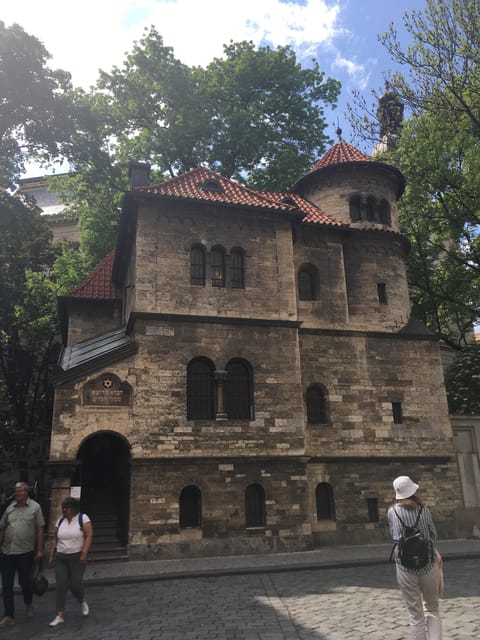
After the Spanish Synagogue, you move to the Pinkas Synagogue for about 30 minutes. The Pinkas is known for its role as a museum space tied to the memory of Czech Holocaust victims. Your guide’s commentary is what turns that into something more than a somber visit. You’ll get context for what you’re seeing and why it was preserved.
Then comes a crucial shift: you’re not only learning history in the abstract. You’re noticing that each synagogue has a specific identity. Some emphasize tradition and ritual. Others carry the weight of later remembrance. That contrast is one of the reasons this tour works so well in a short window.
I also appreciate the private/small-group format. When you have time for questions, the story doesn’t stay one-size-fits-all. Guides on this route have been noted for answering questions quickly and even bringing personal context into the explanation, which can make the visit feel more human and less like a checklist.
Old-New Synagogue: Europe’s older synagogue story, explained clearly
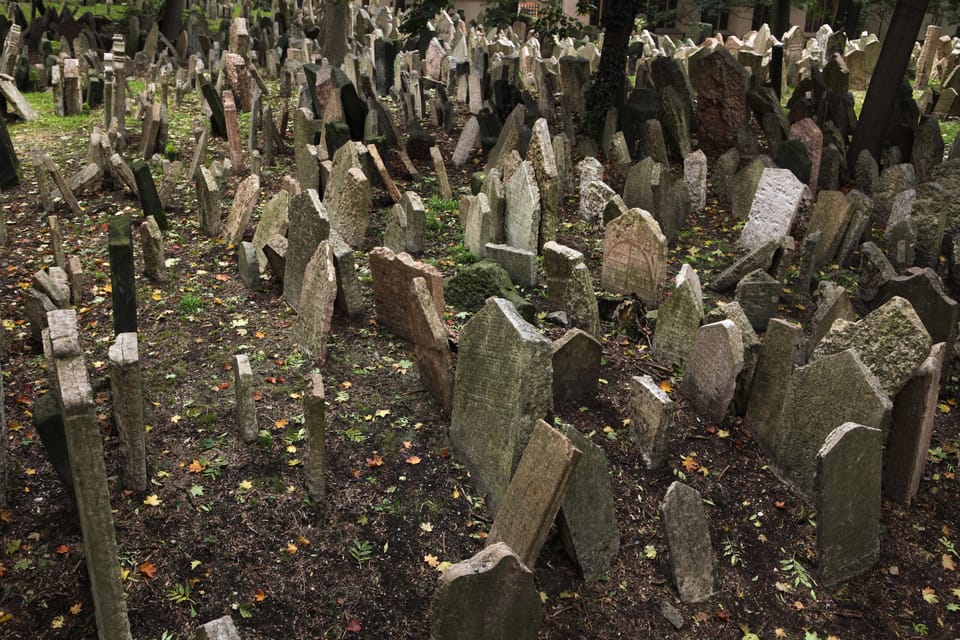
Next on the walk is the Old-New Synagogue, also about 30 minutes. The key takeaway here is that it’s described as the oldest synagogue in Europe, dating back to the 13th century. That’s the kind of fact that can feel dramatic on paper—until you’re actually standing inside a space that old.
The guide helps you connect the age of the building to the continuity of Jewish religious life in Prague. You’re not just hearing a date. You’re learning how community life could persist and change over long periods, while still keeping core traditions.
What’s smart is that you’ll still get time to look around. With a 30-minute block, you won’t feel rushed into a photo-and-run routine, but you also won’t get stuck somewhere while the rest of the story waits behind you.
Klausen Synagogue: traditions and artifacts you can actually picture
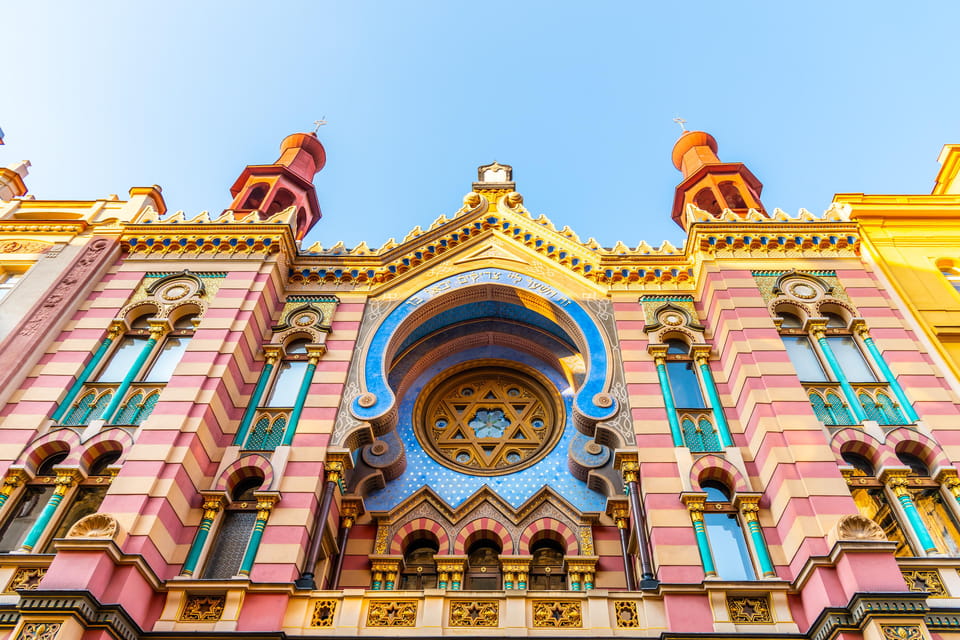
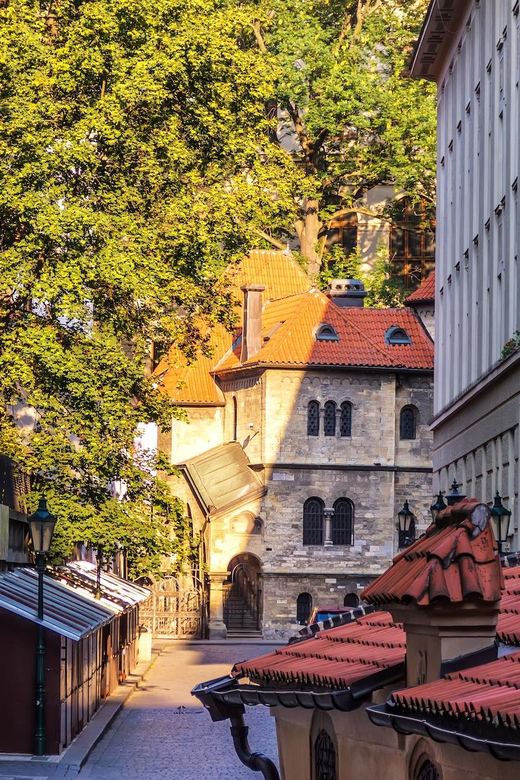
The Klausen Synagogue is where the tour leans into exhibitions of Jewish traditions and artifacts (again, about 30 minutes guided). This is a great stop if you like objects—ritual items, artifacts, and museum-style storytelling—because it helps you translate what you learned in the earlier synagogues into “how people lived.”
This part of the tour also benefits from being placed after the big historical stops. By now, you’ve got some context for what a synagogue space represents. Now the guide can show how traditions are expressed and preserved through material culture.
One practical note: if you’re someone who reads slowly, plan to take in the highlights rather than trying to absorb everything at once. In a half-day tour, the goal is understanding the thread. Your guide’s job is to help you see which details matter most.


Old Jewish Cemetery and Chevrah Kaddisha: Rabbi Loew and the 12-layer graves
The Old Jewish Cemetery is where the tour turns from public worship and museum exhibitions to something quieter and more intense. You also visit the Chevrah Kaddisha building, and the cemetery stop is guided for about 30 minutes.
One of the most striking details is the cemetery’s stacking: graves are up to 12 layers deep. That physical reality can be hard to picture until you’re there, and your guide’s explanation helps the “how” and “why” make sense. It’s not just a creepy fun fact—it’s a window into how a community confronted loss while continuing forward.
Then there’s Rabbi Loew. The tour connects his resting place to the legend of the golem, using the cemetery location as the anchor point. Even if you don’t care about folklore, it’s a good example of how legends attach themselves to real places—and how those places become part of identity.
A balanced thought: this stop is emotionally weighty. If you’re traveling with kids or you’re sensitive to memorial spaces, it helps to go slowly and let your guide set the pace. The structure of the tour keeps this from feeling like an endless, heavy detour.
The Judaica angle: what “the largest collection” means for your visit
This tour places big emphasis on Judaica and the claim that Prague has the largest collection of Judaica in the world. Even if you’ve never heard that before, you’ll leave understanding why it’s a big deal: Judaica isn’t just decorative. It’s history you can hold in your mind—ritual objects, documents, and artifacts that represent how a community expressed faith, learning, and identity.
The other major framing point is survival. The tour’s story highlights that this Jewish Quarter is one of the areas the Nazis purposely did not destroy. For you, that matters because it explains why so much material culture survived to be collected, displayed, and interpreted.
This is also why entrance planning matters. Entrance fees for the synagogues and the Jewish Museum aren’t included (about 350–600 CZK). I see this as part of the cost of doing it properly: you’re paying for access to the actual sites and exhibitions, not just walking past buildings.
A flexible evening add-on: restaurants and a Spanish Synagogue concert discount
I like that this experience comes with suggestions that go beyond the walk. You’ll be offered restaurant recommendations for a Jewish dinner afterward, which is handy because the “where should we eat?” question is always the hardest one on a first visit.
There’s also a perk if you’re interested in live culture: a special evening concert in the Spanish Synagogue with a 10% discount when you book this tour. If you’re planning to stick around the city after the walk, this is the kind of add-on that can turn a good afternoon into a full themed evening.
Price and value: why $42 works (and what to budget on top)
At $42 per person for about three hours, you’re paying primarily for a local licensed guide and for guided time inside multiple major sites. That’s the value: you’re not just touring. You’re getting commentary designed to connect the stops.
The extra cost is entrance fees to the synagogues and the Jewish Museum, roughly 350–600 CZK. For me, that’s the main thing to budget for. If you want the full effect—seeing the exhibitions and spending time in the museum-related spaces—plan on those admissions. Think of the base price as covering the guidance and the flow of the route, and then admissions as the site access.
Also note the guide language options: Czech, English, German, and Russian. Having multiple language choices can make a big difference in how much you absorb, especially when the material is emotionally and historically layered.
Who this tour suits best
This tour is a good fit if you want your Prague sightseeing to include real context. You’ll probably enjoy it most if you like:
- Jewish history and culture
- synagogue architecture and how buildings reflect tradition
- Holocaust remembrance presented through specific places and museum spaces
- legends that are tied to real locations (like Rabbi Loew and the golem)
It’s also a strong choice if you prefer a private or small-group format. With guides who can answer questions—people have highlighted guide humor, accommodation, and personal experience in how they explain the sites—you’ll get more than a script.
Should you book the Prague Jewish Quarter half-day private walking tour?
If your goal is to see the main synagogues and the Old Jewish Cemetery with clear guidance and local perspective, I’d book it. The structure makes sense for first-timers: Spanish Synagogue to Pinkas, onward to Old-New and Klausen, then the cemetery with the Chevrah Kaddisha building and the graves story.
Skip this only if you’re trying to do everything on a strict “no extra costs” budget, because synagogue and museum entrances aren’t included. Also skip it if you want a fully self-guided tour with no scheduled commentary—this is designed around a guide leading the whole thread.
For most visitors, the mix of guided explanations, memorable place-based details, and the practical three-hour length adds up to solid value.
FAQ
Where does the tour meet?
You meet underneath the statue of Franz Kafka located beside the Spanish Synagogue at Vězeňská 1, Prague 1.
How long is the tour?
The duration is about 3 hours.
Is this tour private?
Yes, it offers private or small-group options.
Which synagogues are included?
You visit the Spanish Synagogue, Pinkas Synagogue, Old-New Synagogue (Oldest in Europe), and Klausen Synagogue.
Do you visit the Old Jewish Cemetery?
Yes. The tour includes a guided visit to the Old Jewish Cemetery, including commentary on what you see there.
What else do we see besides synagogues?
You also visit the Chevrah Kaddisha building as part of the cemetery portion.
What is included in the price?
You get a local licensed tour guide (a member of Prague’s Jewish community) and guided commentary on each synagogue plus the Old Jewish Cemetery and Judaic exhibitions the Jewish Museum offers.
Are entrance fees included?
No. Entrance fees to the synagogues and the Jewish Museum are not included and are approximately 350–600 CZK.
What should I bring or wear?
Wear comfortable shoes.
What languages are available for the guide?
The tour guide is available in Czech, English, German, and Russian.