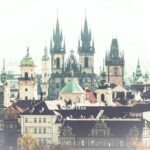
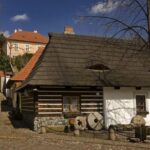
Prague rewards slow walking. This 3-hour route links major squares with quieter churches and side streets, so you see the famous stuff and then the lesser-seen angles. I like the focus on architecture (church interiors, styles, and details you’d miss alone) and the small group size—up to 15—which makes questions easy. The main drawback to consider: if you’ve already done a big Old Town highlights tour, the first portion can feel a bit familiar, and the final climb to Vyšehrad is uphill.
You’ll meet at Staroměstské nám. 1 in Old Town at 10:00 am, then keep moving through a mix of squares, churches, and tucked-away courtyards. In the guide lineup, people have especially praised guides such as Honza (often called Jack) and Mike for being friendly, organized, and willing to answer lots of questions. Just bring comfortable shoes, because this is a walking tour, not a sit-down history lecture.
The value here is strong if you want more than photos. Most stops have free admission tickets included, and Emmaus Monastery is specifically listed as included. If you hate walking or don’t enjoy church and architecture stops, this tour may feel long—but if you do, you’ll get your money’s worth.
In This Review
- Key Points to Know Before You Go
- A 3-Hour Walking Tour Built for the In-Between Streets
- Getting Your Bearings at Staroměstské náměstí
- Church of St. James the Greater: Where the Interior Matters
- The House of the Black Madonna and Prague’s Cubism Clue
- Wenceslas Square’s 20th-Century Stories
- Our Lady of the Snows and Franciscan Garden: Big Plans, Quiet Air
- Vodičkova Street: Learning to See Instead of Just Walk
- Karlovo náměstí (Charles Square) and the Astronomical Clock Angle
- Emmaus Monastery: The Stop With Admission Included
- Finishing at Vyšehrad Castle: River Views and a Real Climb
- Price and Value: What $44.32 Really Buys
- Who This Tour Fits Best (And Who Might Skip It)
- Should You Book This Walk of Prague’s Lesser-Seen Sights?
- FAQ
- Where does the tour start and end?
- What time does it begin?
- How long is the walking tour?
- Is it in English?
- Is Emmaus Monastery admission included?
- Are other attractions tickets included too?
- What about kids, food, and mobility?
Key Points to Know Before You Go
- Small group (max 15 people) means better pacing and more time for questions.
- Most admissions are free for the listed stops, and Emmaus Monastery is included.
- Architecture-focused route: church interiors, Prague-specific cubism, and standout stonework details.
- Smart mix of famous + quiet: Old Town Square, Wenceslas Square, and Vyšehrad, plus side streets locals use.
- Ends at Vyšehrad with river views, so you finish with a payoff.
A 3-Hour Walking Tour Built for the In-Between Streets
This tour is designed for people who already know Prague has beauty, but want the bits between the postcards. The format is simple: a guided walk that mostly stays in central Prague, then gradually shifts from the busiest squares toward calmer corners.
You should plan on a steady pace. It’s short—about 3 hours—but the stops are meaningful. You’re not just “passing by.” You’ll pause at churches and buildings long enough to hear the story behind what you’re looking at, including details inside where many visitors rush through without context.
Also, this is a route that works best with a guide who talks like a person, not a script. The names that show up in strong feedback—Honza (Jack) and Mike—fit that style: clear explanations, patience with questions, and a sense of humor about what you’re seeing.
You can also read our reviews of more walking tours in Prague


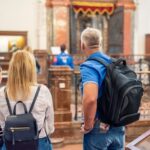
Getting Your Bearings at Staroměstské náměstí
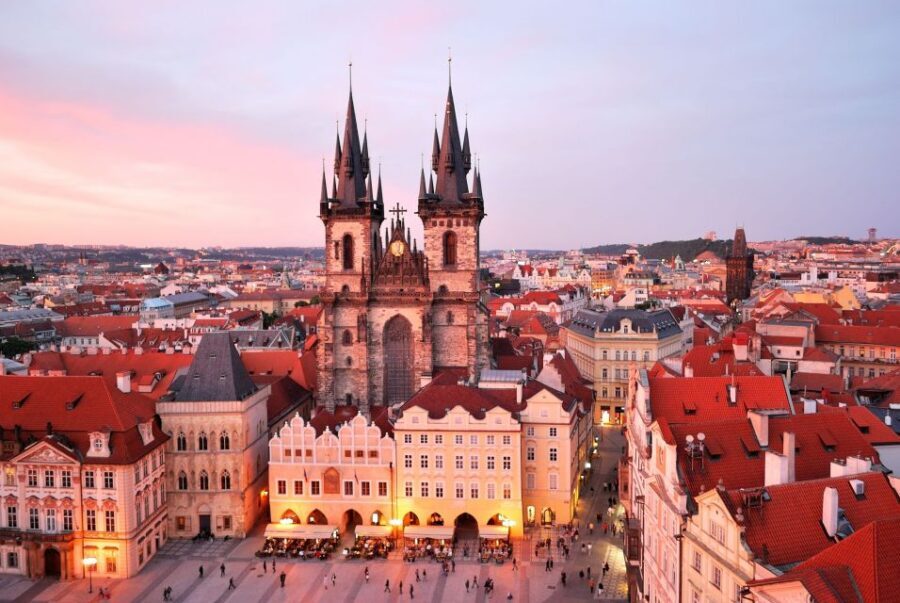
The tour starts where it makes sense: Staroměstské náměstí (Old Town Square). Your guide gives a quick introduction to Prague’s overall story right in the square, so you don’t wander in blank-space mode.
From there, the tour turns into “look closer” mode. Old Town Square is busy, full of visual drama—but it’s also easy to miss the logic of the city. This opening sets up how to read what comes next: why certain buildings sit where they do, and how the city’s changing eras left marks you can still recognize.
If you’re arriving in Prague for the first time, this start helps you get your bearings fast. If you’ve already been in Old Town a lot, you may still appreciate the explanation because it connects the sights into one timeline instead of letting each location float on its own.
Church of St. James the Greater: Where the Interior Matters
One of the best-value moments on this tour comes at the Church of St. James the Greater. The stop is short on paper, but the focus is the interior. That’s important. Many Prague churches look stunning from outside, but the inside is where the “wow” factor lands.
Your guide walks you through the church’s history and highlights what to pay attention to inside—so you’re not just staring at random decoration. This is the kind of stop that turns architecture into a story you can follow.
Practical note: churches often have hours or access limits, and sometimes an interior can be less accessible than expected. The upside is that the guide approach tends to keep the tour meaningful even when timing shifts, since you’re already learning how to observe and interpret what you see.
The House of the Black Madonna and Prague’s Cubism Clue
Next up is the House of the Black Madonna, where the tour leans into a very Prague-specific angle: cubism. This is a great stop if you like the “how is this possible?” feeling—because Prague cubism isn’t what most first-time visitors expect to see on a casual city walk.
Here’s what makes this part useful: you learn the story behind the building, not just that it exists. That way, when you spot other cubist features later, your brain has a reference point.
And this is where the tour earns its name as a “less-expected” route—without turning into a scavenger hunt. You’re still in the center of Prague, just in the lane where fewer people stop to look.
Wenceslas Square’s 20th-Century Stories
Then you move to Wenceslas Square, a place tied to major events in Czech history. The tour gives you the short version of the big 20th-century story, aimed at helping you understand why the square matters beyond its shops and traffic.
This stop works well because it connects a location you’ve probably walked through with meaning. Without that context, Wenceslas Square can feel like a wide street full of noise. With it, it starts to feel like a stage—one where history unfolded.
The timing here is brief, so don’t expect a deep lecture. Instead, think of it as a map key: you leave knowing what to watch for when you revisit the area on your own.

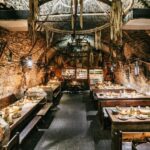


Our Lady of the Snows and Franciscan Garden: Big Plans, Quiet Air
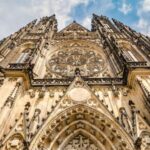
At the Church of Our Lady of the Snows, you get a story with a twist: it was originally intended to become one of the grandest churches in Central Europe. Your guide explains what happened and why the final result isn’t the biggest version of that plan.
Even if you don’t think you care about church history, this stop can change your mind. It shows how buildings reflect ambition, politics, resources, and timing. You look at what’s there with a new question in your head: What did people plan, and what stopped them?
As you leave, the route slips off the busier line of sight to a quieter local pocket: Franciscan Garden. This is a smart breather. After squares and facades, you get calm air and a moment to slow down. It’s also a reminder that Prague isn’t only grand spaces—it’s small escapes.
Vodičkova Street: Learning to See Instead of Just Walk
On Vodičkova Street, the guide points out architecture you might otherwise miss. This is the kind of street stop that teaches a skill. The buildings are right there, but unless someone shows you where to look—shape, placement, style shifts—you’ll probably keep walking at “pretty street” speed.
This stop is short, which keeps it from turning into a long detour. You’ll get enough cues to notice details after you’re back on your own, which is exactly what a good walking tour should do.
Karlovo náměstí (Charles Square) and the Astronomical Clock Angle
Next is Karlovo náměstí (Charles Square). Your guide explains the square’s history from its foundation to today, with enough clarity that it sticks.
One of the most fun details here is the mention of an astronomical clock in Prague besides the one in Old Town Square. That gives you a broader view of how Prague people have long treated time as something you can “see” in public spaces—mechanical, symbolic, and tied to civic life.
This stop also helps connect the tour’s two worlds: monumental Prague and practical Prague. Squares were places where daily movement, ceremonies, and changing politics all overlapped.
Emmaus Monastery: The Stop With Admission Included
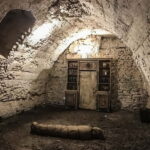
Emmaus Monastery is described as a true hidden-list stop—old, richly decorated, and still readable through the damage it survived. The key factual hook is that it’s one of the oldest monasteries in Prague and that it was financed by the emperor.
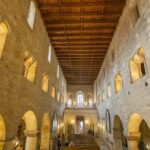
The interiors are where you’ll feel the value. Frescoes and surviving decoration create a sense of living layers, and the tour’s focus on what remains is more interesting than just listing what once existed.
This is also the one stop where admission is included. That matters for value. Even if the other church stops list free admission, paying attention to a monastery interior is exactly the kind of experience that turns a “walk” into something you’ll remember.
Finishing at Vyšehrad Castle: River Views and a Real Climb
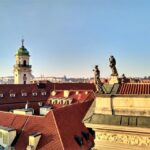
The tour ends at Vyšehrad National Cultural Monument, with a climb up toward Vyšehrad Castle. This part is worth it. The tour wraps with a viewpoint over the river, and that makes the uphill stretch feel justified rather than like a chore.
Vyšehrad is described as a former seat of Czech kings in early medieval times, with an important role in Prague’s defense system. Your guide ties those ideas to what you can see from where you stand, so the castle isn’t just a scenic rooftop—it’s a place with purpose.
If you have limited stamina, plan for the final uphill part. The tour recommends a moderate fitness level, and the street up to Vyšehrad is steeper than you’d guess from flat-map expectations.
Price and Value: What $44.32 Really Buys
At $44.32 per person for about 3 hours, the price is competitive for a guided walk in central Prague—especially because the itinerary is packed with paid-interior potential.
What boosts the value:
- Local guide included throughout.
- Most admission tickets are free for the listed stops.
- Emmaus Monastery admission is included, which removes one of those “wait, do I need to buy this?” moments.
- Mobile ticket for convenience.
What to keep in mind:
- Food and drinks aren’t included, so you’ll want a plan for lunch or a snack after (or before) the tour.
- This is a walking tour with church and architecture stops. If your ideal Prague day is mostly riverside lounging, this may not match your style.
For many people, the biggest win is not saving a few dollars on admissions. It’s the fact that you’re learning what to look for, in a city where “pretty” is easy but “understanding” takes someone showing you the logic.
Who This Tour Fits Best (And Who Might Skip It)
I’d point you toward this tour if you:
- Want a route that mixes famous Prague landmarks with calmer back streets.
- Like churches, interiors, and architecture details—not only exteriors.
- Enjoy a guide who answers questions and connects history to what you’re seeing right now.
You might consider a different plan if you:
- Already feel church fatigue after a packed Prague itinerary.
- Have trouble with uphill walking, especially the end at Vyšehrad.
- Want a purely outdoors, minimal-walking experience.
Should You Book This Walk of Prague’s Lesser-Seen Sights?
Yes, if you want a structured way to see Prague’s “middle layer”—the churches, squares, and street details that don’t automatically show up when you just follow the busiest route.
Book it when you have enough energy for a real walk, and you’ll appreciate the guide-led explanations. Skip it if you’re only interested in quick photos of the obvious sights, because this tour spends time on interpretation, not just scenery.
If you do book, wear good shoes and arrive on time at Staroměstské náměstí. The best tours are the ones where you can actually hear the stories while you’re standing in the right place.
FAQ
Where does the tour start and end?
The tour starts at Staroměstské nám. 1, 110 00 Prague 1 and ends at Vyšehrad, 128 00 Prague 2 (Vyšehrad Castle area).
What time does it begin?
The start time is 10:00 am.
How long is the walking tour?
It’s about 3 hours.
Is it in English?
Yes, the tour is offered in English.
Is Emmaus Monastery admission included?
Yes. Emmaus Monastery admission is included on the tour.
Are other attractions tickets included too?
The stops listed with admission show free admission ticket entries (and Emmaus Monastery is the included admission stop).
What about kids, food, and mobility?
Children under 18 must be accompanied by an adult. Food and drinks are not included. The tour recommends comfortable cloth and walking shoes and mentions a moderate physical fitness level due to walking.