REVIEW · PRAGUE
Prague Communism History and Nuclear Bunker Tour
Book on Viator →Operated by Communism and Nuclear Bunker Tour · Bookable on Viator
Prague doesn’t just talk communism. You walk from visible street-level history to a nuclear bunker buried four floors underground, and the contrast hits fast. I love how the route threads together the stories of secret police repression and the Velvet Revolution, then seals it with the bunker survival angle. I also like that you get printed materials like a photo booklet and a bunker survival guide, not just a running commentary. One possible drawback: the bunker is stairs-and-tight-spaces territory, so it’s not a good match if you get claustrophobic or you have mobility limits.
Many guides bring the topic alive with personal context from people who actually lived through the era. Names that come up again and again in strong tours include Ladislav, Stan, Pavel, and Lada, and you can feel the difference when the guide has lived the material. If you prefer very strict, quick facts only, you’ll want to note that some groups report the pacing can stretch due to transit time and guide style.
In This Review
- Key things I’d underline before you go
- Why Prague’s Cold War story feels different on the street
- Start at Malé Náměstí: Meeting point, pace, and what to expect
- StB Holding Cells: where the secret police story turns personal
- Velvet Revolution Memorial, Národní třída, and Wenceslas Square in one connected narrative
- Olšanské náměstí: socialist architecture that still reads clearly today
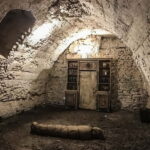
- Descending four floors: the Prague nuclear bunker museum experience
- Price and value: does $45.16 make sense for this mix?
- Practical tips that keep you comfortable (and safe)
- Who this communist history and bunker tour suits best
- Should you book this Prague Communist History and Nuclear Bunker Tour?
- FAQ
- How long is the Prague Communism and Nuclear Bunker Tour?
- What does the ticket price include?
- Where do I meet the tour?
- Is the tour suitable for people with claustrophobia or mobility issues?
- Can I take photos or record video?
- What language do I need for the tour?
Key things I’d underline before you go
- You go from city landmarks to an underground nuclear bunker with museum content and survival-style material
- StB Holding Cells are part of the story, including how Václav Havel connects to the secret police era
- Velvet Revolution and Soviet-era locations show up in one connected narrative
- Olšanské náměstí keeps the socialist-architecture feel you can still see in the 1970s concrete-era buildings
- You’ll ride to the bunker (trolley/tram time can be a big chunk of your schedule)
- This is not a sit-and-watch tour: comfortable shoes matter, and the bunker has lots of steps
Why Prague’s Cold War story feels different on the street
Prague’s communist chapter isn’t trapped in a textbook here. You can stand near places tied to the Velvet Revolution and then, on the same day, look at the kind of emergency planning that existed during the Cold War. That swap—street politics to underground fear—gives you a clearer sense of what people were up against.
The best value in this tour is how it pushes beyond slogans. You get explanations that connect the systems of repression (secret police, surveillance culture, political control) to the moments when Czechoslovakia fought back, including the 1989 Velvet Revolution thread. Then you go underground to see how governments planned for catastrophe. It’s the same theme—power and survival—just at two very different scales.
You can also read our reviews of more tours and experiences in Prague.

Start at Malé Náměstí: Meeting point, pace, and what to expect
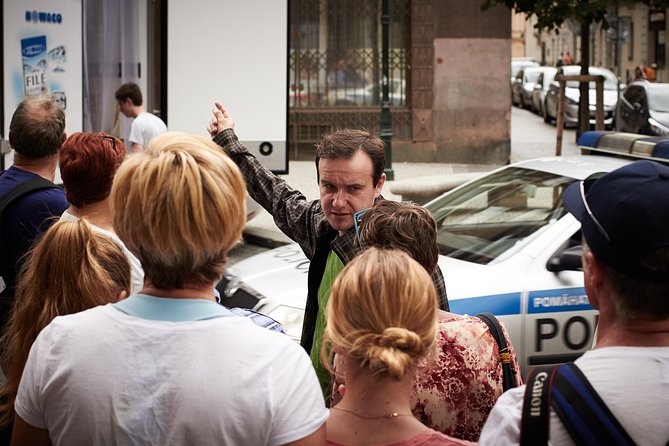
You meet at the ticket office inside the Passage at Malé Nám. 459/11, about 20 meters to the right from Hotel U Prince. From there, the tour is a walk with frequent short stops, then a longer segment inside the bunker museum.
Timing is listed at about 2 hours 20 minutes (with the usual variation of roughly 10–15 minutes depending on group size). The day isn’t a pure sprint. You’ll spend meaningful time traveling to the bunker and moving through multi-level exhibits. In other words: plan this as a half-day anchor, not something you stack lightly between other plans.
Group size stays capped at 26 travelers, which usually helps keep the guide’s attention closer and the pace more manageable. You’ll also want to choose the right language option up front, since the tour has a safety requirement that you must speak the chosen language of the guide.
StB Holding Cells: where the secret police story turns personal
One of the first true “this is real” moments is the stop at StB Holding Cells, a former secret police building. The StB story is one of those topics where context matters. Without it, the building is just old walls. With it, the site becomes a window into how state power worked day to day.
This stop also ties to Václav Havel, which is a smart way to connect the secret police era to a Czech figure many visitors already recognize from later history. You’re not just learning names. You’re learning the atmosphere—how fear and control shaped what people did and what they dared to say.
Practical note: this is a walk-and-talk format with short time at each location, so come prepared to pay attention quickly. If you drift into phone mode, you’ll miss the short, important context the guide is likely to deliver.
Velvet Revolution Memorial, Národní třída, and Wenceslas Square in one connected narrative
The tour keeps building momentum by stacking several major public-history stops close together.
At the Velvet Revolution Memorial, you hear the story of the 1989 Velvet Revolution, the moment when peaceful mass pressure helped break the communist grip. This is a key emotional stop. It shifts the tone from control to resistance, and it helps explain why the Czech political identity after 1989 feels so strongly tied to that specific turning point.
Then the route moves to Národní třída, where you’ll cover historical events and also connect to more recent political history. The point here isn’t only the past. It’s how the memory of that era still shapes public life and political thinking.
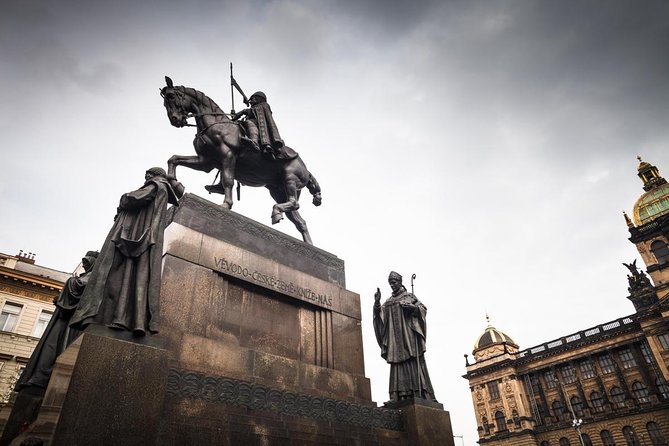
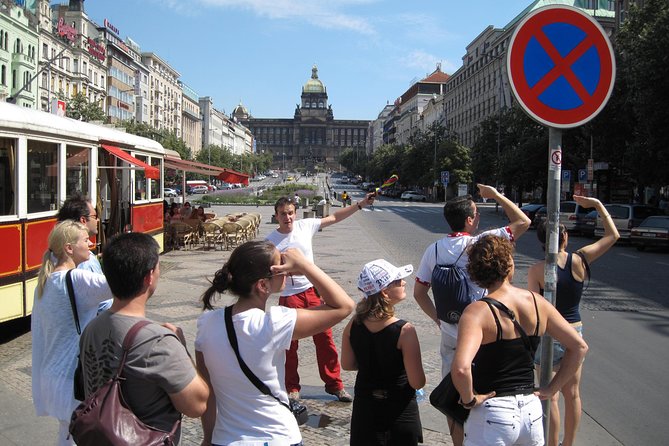
Next is Wenceslas Square, where you focus on the Soviet invasion of August 1968 and the role of Alexander Dubček. This is where the tour clarifies a common confusion: the story isn’t just communism vs. freedom in one clean line. It’s reform attempts, pressure from outside powers, and the reality that political change can be met with force.
If you like history that gives you cause-and-effect, this string of stops works well. It’s not just “see landmark, get fact.” It’s “see landmark, understand the chain.”
Olšanské náměstí: socialist architecture that still reads clearly today
At Olšanské náměstí, the tour leans into something I think most visitors miss: the visible, everyday shape of the socialist era. This area sits in what was a workers district and still shows typical socialist architecture, including original buildings from the 1970s concrete era.
Why does this matter? Because communism wasn’t only secret police and revolutions. It also shaped daily life through planning, housing, and the physical layout of neighborhoods. When you stand in front of architecture like this, you can start to understand why people describe the era as totalizing. It wasn’t only politics happening to them; it was the environment around them.
This stop is short, but it does a lot. Even in a brief window, you’ll come away seeing those concrete-era buildings as part of the story rather than just background scenery.

Descending four floors: the Prague nuclear bunker museum experience
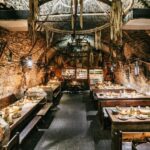
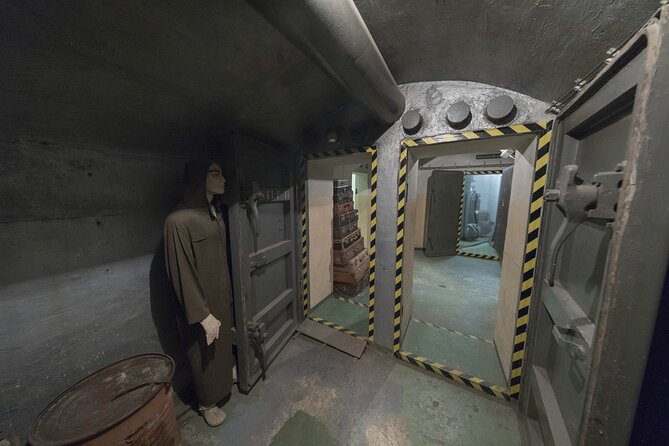
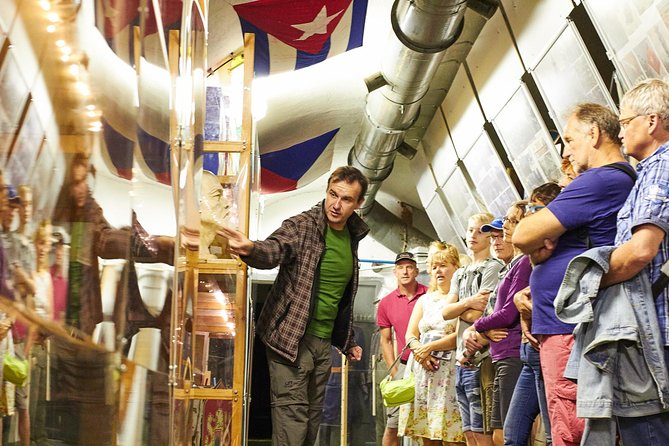
The centerpiece is the nuclear bunker, described as hidden four floors underground. You’ll visit the Prague Nuclear Bunker Communism and Cold War Museum with included entry, plus guided commentary in your chosen language.
What you should know upfront: this is a physical experience. You’ll be walking through a bunker designed for fear-based preparedness, and the route includes lots of stairs and ramps. One thing that comes through strongly from guide-style feedback is that the bunker often delivers shocking information in a sobering way. That tone is part of the value here.
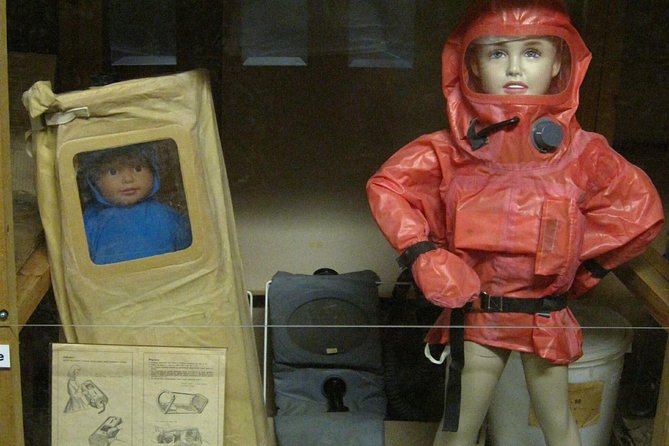
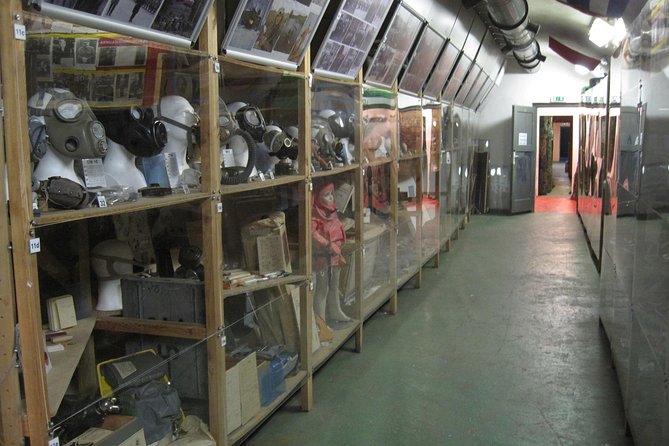
The museum itself is a mix of survival-themed context and Cold War interpretation. Some visitors feel the exhibits can come off like staged museum displays, including elements that resemble 1980s-era memorabilia rather than a direct reenactment of daily communist life. If you’re expecting a documentary-style walkthrough of ordinary living under communism, temper that expectation. This stop is more about the fear system—how bunker planning and Cold War thinking worked—than a single “day in the life” story.
Still, the bunker’s setting does something plain and powerful: it makes the concept of civil defense feel physical. Going underground is the point. Even if the exhibits aren’t your exact taste, the setting helps the lesson land.
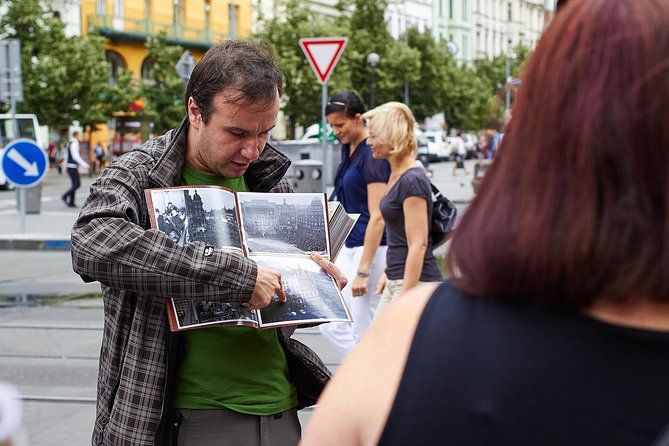
Also included are the materials that connect to this theme: you’ll receive a bunker survival guide and a photo booklet. These are useful because they let you review what you heard without relying on memory after the tour ends.
Price and value: does $45.16 make sense for this mix?
At $45.16 per person, you’re paying for a guided walk plus a museum admission plus transportation to and back from the bunker, and you’re getting printed materials.
Here’s how I judge the value:
- You get English live guiding, not a self-guided audio replacement.
- The bunker entry is included, which is usually the most expensive part of tours like this.
- Transportation to and back from the bunker is included, so you don’t need to coordinate logistics mid-day.
- The printed photo booklet and bunker survival guide add practical take-home value.
Where value can feel less satisfying is time allocation and guide fit. Some reports complain that a large chunk of time is spent on tram or trolley travel, or that the tour duration feels longer than expected. Others mention that guide style can vary: some guides keep it factual and tight, while others spend more time on personal stories or repetitive explanations.
So the real question isn’t only price. It’s whether you want a guided story delivered at human pace (with transit and stops) and whether you’ll appreciate personal narratives as part of the teaching.
Practical tips that keep you comfortable (and safe)
This tour has clear rules because the experience isn’t just walking on flat sidewalks.
- Bring comfortable shoes. Expect normal walking footwear, plus extra attention to steps inside the bunker.
- The tour is not possible for people with any walking disability or mobility issue, and it’s also not recommended for high pregnant travelers.
- It’s not for people with claustrophobia or serious heart issues (and similar concerns). The bunker is underground and multi-level.
- You need to speak the chosen language of the tour due to safety requirements, and you can’t translate during the tour to other languages.
- Photos are allowed, but video recording needs special permission.
One more small thing: avoid planning this if you’re running late or juggling multiple time-critical reservations. This tour is designed to move in sequence, and if the group has left the start point, joining later isn’t guaranteed.
Who this communist history and bunker tour suits best
This is a strong choice if you love modern history and you want to connect it to the physical city. It’s also great if you like guides who bring personal context, because this tour is built around sites where stories matter.
You’ll likely enjoy it most if:
- you want a guided arc through repression, resistance, and Cold War fear
- you’re curious about how Czechoslovakia lived under Soviet pressure, including the 1968 invasion and Alexander Dubček
- you like the contrast of street history plus an underground museum
I’d think twice if:
- you have claustrophobia or you dislike tight underground spaces
- you have mobility limits (the tour isn’t designed for that)
- you want a very fact-dense, lecture-style tour with minimal stops and minimal transit
Should you book this Prague Communist History and Nuclear Bunker Tour?
Book it if you want a memorable, narrative-driven look at Prague’s communist era that goes beyond plaques and photos. The mix of StB Holding Cells, Velvet Revolution memorial history, Soviet-era landmarks, and then the nuclear bunker four floors underground is the whole point—and it makes the Cold War feel real instead of abstract.
Skip or choose carefully if you’re very sensitive to enclosed spaces or you need a low-stairs, low-ramps experience. Also, go in knowing that guide style can affect pacing. If you care most about brisk factual bullet points only, you might find some tours run long or feel repetitive.
If you match the tour’s physical and emotional reality, this one can be a standout day in Prague—dark, human, and built around places you won’t stumble into on your own.
FAQ
How long is the Prague Communism and Nuclear Bunker Tour?
It runs about 2 hours 20 minutes, but the duration can vary roughly 10–15 minutes depending on group size.
What does the ticket price include?
Admission to the Nuclear Bunker Museum, an English live guide, a photo booklet and a bunker survival guide, and transport to and back from the bunker.
Where do I meet the tour?
You meet at the ticket office inside the Passage at Malé Nám. 459/11 (about 20 meters to the right from Hotel U Prince).
Is the tour suitable for people with claustrophobia or mobility issues?
No. It is not recommended for claustrophobia and it is not possible for people with any walking disability or mobility issue.
Can I take photos or record video?
Photos are allowed. Video recording requires special permission.
What language do I need for the tour?
You must speak the chosen language of the tour for safety, and you cannot translate during the tour to other languages.