REVIEW · PRAGUE
Prague Communism and World War II Walking Tour
Book on Viator →Operated by Fun in Prague, s.r.o. · Bookable on Viator
Prague’s 20th century history is everywhere. This guided walk puts you in the middle of it, moving from Nazi occupation to communist rule and then to the 1989 Velvet Revolution. With stops timed for views and key street-level reminders, you’ll get a clear, chronological sense of how the city changed—and what that meant for real people.
I especially like how the geography does the explaining. You’re not just hearing dates; you’re standing where power was projected and where people resisted. I also like that guides such as Tomas (and others like Martin, Maria, and Dominick) bring a human layer, sharing firsthand or family-connected angles on life under communism.
A possible drawback: this is mostly a political and historical storytelling tour. If you’re hoping for lots of physical wartime sites like tunnels or parachutist hideouts, you may find it less focused than a dedicated WWII-mystery type of tour.
In This Review
- Key things you’ll notice on this Prague Communism and WWII walking tour
- Prague’s 20th century story, told on foot
- Meeting at Křižovnické náměstí and catching the Prague Castle view
- New Town and the road through monarchy, democracy, Nazi rule, and communist takeover
- Wenceslas Square: Prague Spring to Soviet tanks, 1969 protests, and 1989’s Velvet Revolution
- Why the guide’s voice matters more than the facts alone
- Walking comfort, pace, and what to expect with a 2-hour format
- Value check: is a $30.12 Prague communism tour worth your time?
- Who this Prague Communism and World War II walking tour suits best
- Should you book this tour?
- FAQ
- How long is the Prague Communism and World War II walking tour?
- What is the price per person?
- Where do I meet the guide?
- What language is the tour offered in?
- What’s included in the tour price?
- Is food included?
Key things you’ll notice on this Prague Communism and WWII walking tour
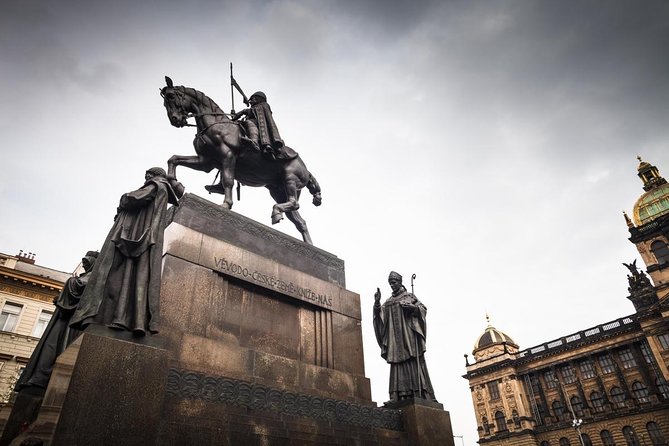
- A fast orientation to central Prague while still covering heavy 20th-century events
- Křižovnické náměstí views that set up the story with Prague Castle in sight
- Stalin-era trivia tied to a major landmark that once dominated the city
- Operation Anthropoid explained in the context of the Nazi Protectorate
- Wenceslas Square moments connecting 1968 tank invasion to 1969 student self-immolation and 1989 change
- Firsthand-style perspectives from guides who lived through or studied the communist era
Prague’s 20th century story, told on foot
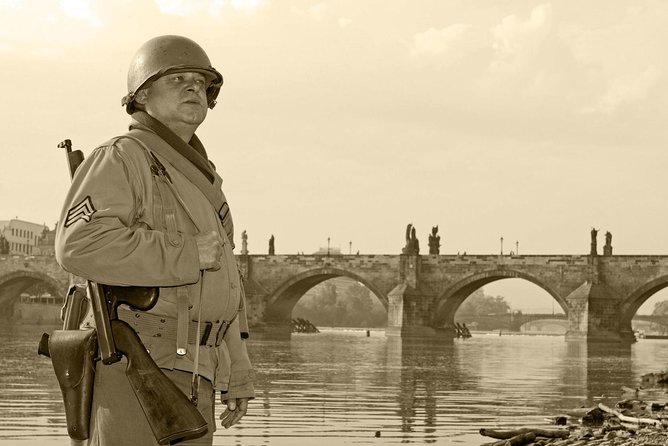
This is the kind of tour that helps you read Prague like a timeline. The route takes you through the parts of the city where big decisions were made, carried out, and resisted. You’ll hear how Prague shifted from an earlier democratic culture into a Nazi-controlled world during WWII, and then into the communist system after the war.
What makes it work is the pacing. It’s long enough to build continuity—Nazi occupation to communist takeover to the Prague Spring and finally the Velvet Revolution—but short enough that you’ll still feel like you’re sightseeing. At a price of about $30.12 per person for roughly 2 hours, the value is in the guide’s narrative skill and the tight focus on 20th-century Prague.
Also, the tour is offered in English, with a mobile ticket, so you can keep things simple.
You can also read our reviews of more tours and experiences in Prague.
Meeting at Křižovnické náměstí and catching the Prague Castle view
You start in the Old Town area at Křižovnické náměstí. The meeting spot is set up for two things: convenience and perspective. You’re in central Prague, near public transport, and you begin with an overview that helps everything else make sense.
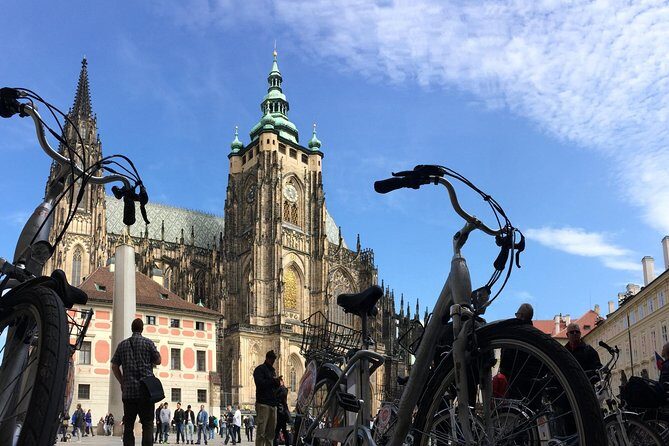
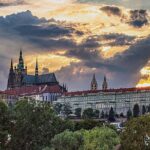
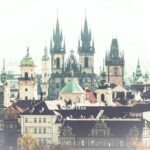
One of the main early moments is the panoramic view of Prague Castle. Even if you’ve seen photos already, standing there changes how you understand the story. The castle isn’t just scenery; it’s part of the political gravity of Czech history. From this vantage, your guide ties the castle’s role to the larger 20th-century upheavals that followed.
Then comes a standout detail: you learn that not far from here once stood the largest statue of Joseph Stalin in the world. This kind of “what used to be here” fact is exactly what gives the walk its edge. Prague has layers, and this tour points them out in a way that sticks.
Time on this stop is about 15 minutes, so don’t expect a deep museum-style experience. Think of it as your story kickoff—context first, then you move into the streets where ideology shows up in everyday life.
New Town and the road through monarchy, democracy, Nazi rule, and communist takeover
Next you head toward Nove Mesto (New Town) for the tour’s WWII-and-beyond section. This part matters because it doesn’t jump straight from “then WWII happened” to “then communism happened.” Instead, you get the setup: how a country can be pulled from one system into another.
You’ll hear how the Czech nation moved from the Austrian monarchy toward an independent Czechoslovak democratic state. The tour frames this as more than a political change—it’s also about economic strength and the reality that after 1933, Czechoslovakia remained one of the last functioning democracies in Eastern and Central Europe.
Then your guide connects that democratic foundation to WWII. You’ll learn about the suffering under the Nazi Protectorate of Bohemia and Moravia. This is where terms you might have read in books start getting human weight.
A key story you’ll hear here is Operation Anthropoid, presented as the only successful assassination of a senior Nazi leader during World War II. That single line can feel abstract until it’s placed into the broader context of occupation, planning, and consequences. Your guide’s job is to show why this matters in the Czech memory of resistance.
The stop also covers how the communist regime gained control. You’ll hear about the methods and strategies used by the new rulers, plus the enduring influence of the USSR. The story line is clear: democracy gets transformed into a tough dictatorship, and human life is treated as less important than the system.
Time on this stop is about 30 minutes, so it’s concentrated. If you’re the type who loves timelines and cause-and-effect, this is where you’ll feel especially satisfied.
Wenceslas Square: Prague Spring to Soviet tanks, 1969 protests, and 1989’s Velvet Revolution
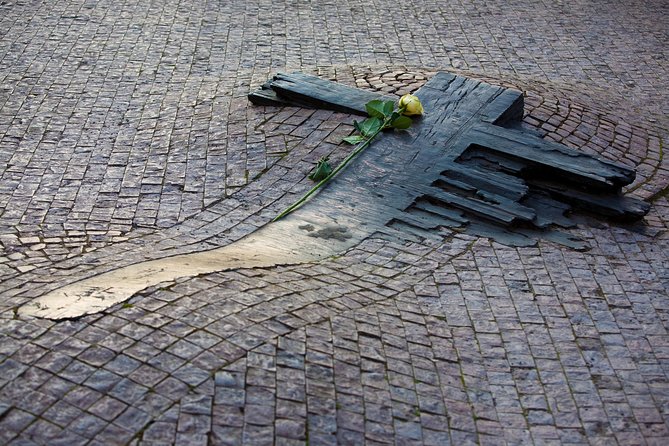
The final and longest stop is Václavské náměstí (Wenceslas Square). This is the emotional climax of the walk because it’s where the tour connects public events to what people did with their own bodies, voices, and choices.
You’ll start with the euphoria of Prague Spring and then move quickly to the brutal reset: in 1968, Soviet tanks invade Prague. The guide also points out how this violence landed in real places, including the report that the tanks fired at the building of the National Museum on Wenceslas Square.
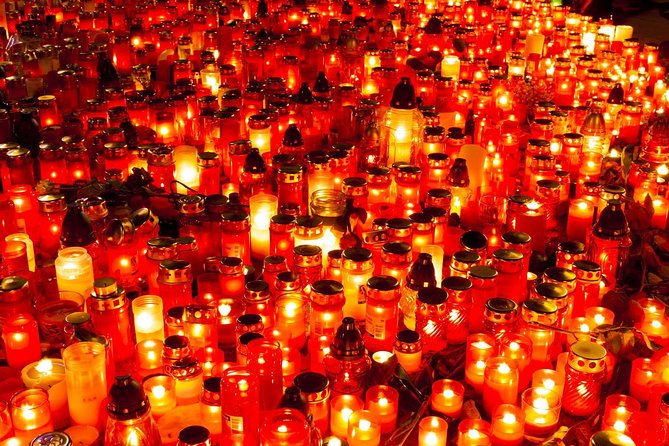
Then the tour shifts from political repression to a deeply personal kind of protest. In 1969, the tour honors the memory of young students who burnt themselves alive as an act aimed at uniting the nation against a common enemy. This moment is hard to hear, and the guide’s tone matters. The goal isn’t shock value—it’s understanding what despair and resistance looked like when politics felt sealed shut.
As history moves into the 1970s and 1980s, the guide ties those decades to what you see in the streets you walk through. The big theme becomes how the city absorbs decades of control—and how that control eventually cracks.
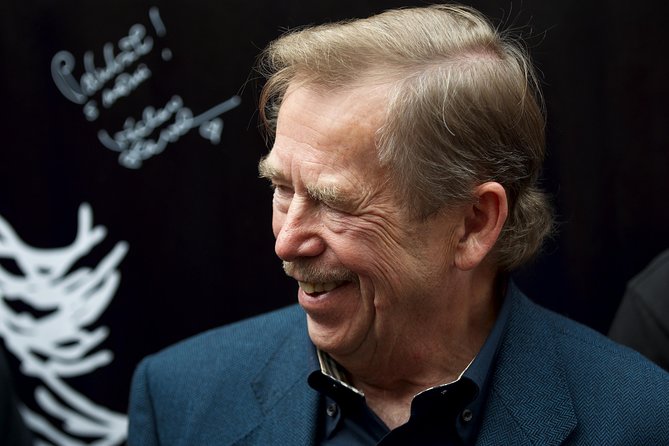
Finally, you reach 1989 and the Velvet Revolution. Expect stories about Václav Havel, courageous students, brutal police forces, and the clashes at Národní třída. One of the best parts of this ending is that you’re not left only with tragedy. You get some humorous and obscure stories about the early days after freedom returns—small details that make the history feel less like a lecture and more like a lived turning point.
Time on this stop is about 1 hour, so you’ll likely walk slower here to take it in.
Why the guide’s voice matters more than the facts alone
A lot of tours give you dates. This one gives you a sense of how those dates felt on the ground.
In the reviews you’ll see a pattern: guides aren’t just reciting. They bring perspective. For example, one guide was a student demonstrator during the Velvet Revolution, which changes the tone from “historian mode” to “I remember what it was like” energy. Another guide shared personal touches from childhood under communist systems, including experiences like atomic drills in primary school.
You’ll also notice that the best guides handle questions well. In at least one instance, the walking pace turned into a longer discussion because the group had time and the guide wanted to answer properly. That’s a good sign if you like conversations, not just a script.
Practical tip: if there’s a topic you care about—resistance, propaganda, everyday life, or what changed after 1989—bring it up early. This kind of tour tends to reward curiosity.
Walking comfort, pace, and what to expect with a 2-hour format
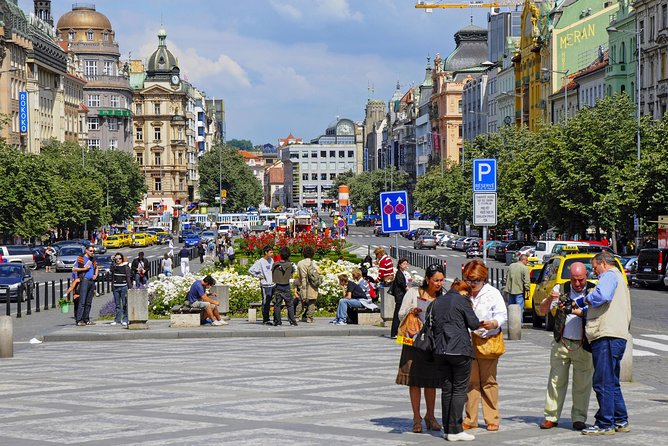
This is a walking tour through central Prague, and the 2-hour duration adds up. Wear comfortable shoes. Even when the route is manageable, Prague streets have cobbles and small turns that slow your pace.
Good news: the meeting point is in a central area, and the tour is near public transportation. So if you need to adjust your timing or take a quick reset, you’re not stuck far from transit.
Group size is capped at 25 travelers, which usually keeps the experience from turning into a crowded parade. In several cases, tours have run with very small groups, which gives you more back-and-forth time with the guide.
No food is included. If you’re doing this in the morning at the listed 10:00 am start, plan on grabbing coffee or a snack afterward. Several guides give practical recommendations after the tour—like where to get local beer and Czech comfort food.
Value check: is a $30.12 Prague communism tour worth your time?
At $30.12 per person for about 2 hours, the value is strong if you want a guide to connect the dots. You’re paying for:
- a structured storyline from WWII to communist rule to 1989
- a local interpretation of why events mattered
- on-foot orientation through central districts
It’s also a good price point compared with longer, museum-heavy history tours. You don’t have to choose between “seeing Prague” and “learning the hard stuff.” The tour’s format gives you both, without requiring paid entries.
What you’re not buying is extra activities. There’s no food included, and this is not a tunneling, underground-survivor-scenery type of tour based on the focus described. So it’s best for people who enjoy explanation and street-level context more than hands-on artifacts.
Who this Prague Communism and World War II walking tour suits best
I’d point you to this tour if:
- you want a clear timeline of Prague’s Nazi and communist eras
- you’re planning other Prague sights and want the big picture first
- you like history that includes everyday life, not just battles and dates
- you enjoy asking questions and getting real answers from a local guide
You might want to look elsewhere if:
- you want mostly physical WWII sites and specialized underground locations
- you’re hoping for a strong focus on one niche topic like the Jewish Quarter specifically, since the coverage is broad and timeline-driven
Either way, do wear good shoes and bring patience. The subject matter is heavy, and the guide pacing helps you process it.
Should you book this tour?
Yes—if your goal is to understand Prague’s 20th century story without getting lost in names and dates. The route is built around viewpoints and major public spaces, which makes the political story feel real. And the guide-led element seems to be the reason people rave: guides like Tomas, Martin, Maria, and Dominick bring stronger-than-average context, plus the kind of human detail you don’t get from a guidebook.
If you’re more into one-off WWII sites with very specific themes, you might find this less targeted. But for most history-minded visitors, this is a smart use of a morning or early day slot: central, focused, and packed with meaning.
FAQ
How long is the Prague Communism and World War II walking tour?
It runs for about 2 hours.
What is the price per person?
The price is $30.12 per person.
Where do I meet the guide?
You meet at Křižovnické náměstí, 110 00 Praha 1-Staré Město, Czechia.
What language is the tour offered in?
The tour is offered in English.
What’s included in the tour price?
A professional guide is included.
Is food included?
No, food and drinks are not included.