REVIEW · PRAGUE
Prague city tour + Charles Bridge and Campa island small groups
Book on Viator →Operated by Pre našu planétu · Bookable on Viator
Prague has a way of grabbing you fast.
This small-group city tour links the Vltava river sights with big stories, told by a local guide born in Czechoslovakia during communist times. You’ll move through the center with an enthusiastic, very human style—less textbook, more I-can-tell-you-why-this-matters.
I love two things most: the way the tour explains places like Rudolfinum as living parts of Prague (music and art, not just stone), and the focus on Charles Bridge’s backstory—what was there before, who built it, and why that bridge became the famous one we see today. It’s the kind of walk that helps you connect the dots as you wander on your own afterward.
One heads-up: at 2 hours 30 minutes, the pace can feel long if you only want quick highlights. One guest even said the guide was very chatty, and time felt stretched by the end—so if you prefer short-and-snappy, keep that in mind.
In This Review
- Key things to know before you go
- Why this Prague walk feels different than a standard highlights tour
- Jan Palach Square: your easy starting point
- Rudolfinum: music, art, and why this building matters
- Manesův Most: the Vltava crossing with a painter’s name
- Vojanovy Sady: a quiet orchard pocket inside the city center
- Malá Strana Bridge Tower: the gateway feeling of the Little Quarter
- Charles Bridge: the story behind the stone and the crowd magnet
- Alcohol included (and snacks not): how to plan without fuss
- How much you’ll actually see in 2.5 hours
- Price and value: what $26.93 buys you in Prague
- Who should book this tour (and who might want to skip it)
- Should you book this Prague city tour with Charles Bridge and the Campa island area?
- FAQ
- How long is the Prague city tour?
- What does it cost?
- Is it a small-group tour?
- Is a mobile ticket used?
- Are you required to pay for admission at the stops?
- Are alcoholic beverages included?
- Are snacks included?
- Where is the meeting point?
- Does the tour end at the same place?
- What happens if the weather is poor?
Key things to know before you go
- A local, communist-era perspective from the guide makes the stories feel grounded, not scripted
- Rudolfinum on Jan Palach Square ties Prague’s architecture directly to music culture
- Manesův Most bridge details connect engineering to Czech art (Josef Mánes)
- Vojanovy Sady pause in the middle of it all gives you a quieter pocket with an orchard
- Charles Bridge timeline covers King Charles IV to the early-1400s finish, plus what replaced Judith Bridge
- Small groups (max 30) with a mobile ticket helps it feel organized and easy to join
Why this Prague walk feels different than a standard highlights tour
This isn’t the usual “here’s the main square, take a photo, move on” setup. The charm is that you’re walking with a Czechoslovak native guide who grew up in communist-era Prague, and that viewpoint changes how certain details land. You start listening differently. A building isn’t just pretty—it’s tied to how Prague works, what people cared about, and what changed over time.
You’ll also like that the tour is built around small, connected stops along the river corridor—then finishing at the iconic crossing. That matters because Prague’s best surprises often happen when you’re actually moving through the streets, not when you’re staring at maps.
The group size is capped at 30, so you’re not swallowed by a giant crowd. And because it starts and ends back at the same place, you don’t have to re-plan your whole day around a complicated route.
You can also read our reviews of more tours and experiences in Prague.

Jan Palach Square: your easy starting point
You meet at 1 nám. J. Palacha, right in Prague 1–Staré Město. That’s a location that’s simple to find and easy to get back to later—especially helpful if you’re hopping between other plans.
From the first stop area, you’ll get the basic rhythm of the tour: the guide points out what you’d normally walk past, then adds context so the place clicks. This is a good first-day activity if you’re new to Prague, because it helps you orient yourself fast—streets, river direction, and the logic of the old-city layout.
Also, it’s a mobile ticket tour with confirmation received at booking time. That keeps your “what do I need to bring?” stress low.
Rudolfinum: music, art, and why this building matters
The tour starts with Rudolfinum, the neo-renaissance style building on Jan Palach Square along the Vltava. It’s been linked with music and art since it opened in 1885, and you’ll hear how that cultural role shaped its reputation.
What I like here is that the tour doesn’t treat Rudolfinum as a postcard. You get specifics about what’s inside today: the Czech Philharmonic Orchestra and Galerie Rudolfinum are based in the building. You’ll also hear about Dvořák Hall, one of the main venues of the Prague Spring International Music Festival and known for its excellent acoustics.
Practical takeaway: you’re not just learning one fact. You’re understanding why people go there, why Prague values performance spaces, and how a single building can anchor a whole cultural season. Even if you don’t attend a concert, the story makes it easier to spot why the place has gravity.
Manesův Most: the Vltava crossing with a painter’s name
Next you head to Manesův Most, the road and tramway bridge over the Vltava. This isn’t a random crossing—it connects the Aleš Embankment and Rudolfinum to the Lesser Quarter (Malá Strana).
The best part of this stop is the “why it’s called that” detail. The bridge is named after Czech painter Josef Mánes. That’s the kind of connection tours sometimes skip: you see a bridge, and it just becomes scenery. Here, it becomes a clue about how Prague names things and honors people.
There’s also some useful historical context: Manesův Most replaced an earlier Rudolf footbridge built in 1869. You get a sense of how the city keeps upgrading itself while still telling stories through names and structures.
Vojanovy Sady: a quiet orchard pocket inside the city center
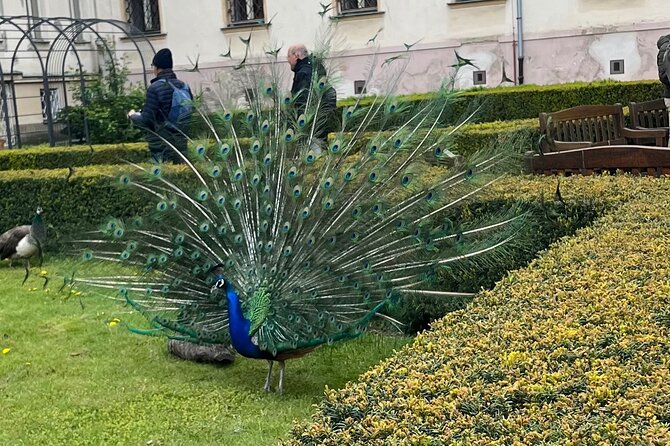
Then you get a breather at Vojanovy Sady, a park with an orchard. The tour frames it as being on the site of one of the oldest gardens in Prague, which turns a simple walk-through park into something more meaningful.
This stop works for two reasons. First, it breaks up the “bridge after bridge” rhythm. Second, it gives you a taste of the way Prague blends built-up city life with older green spaces—small areas where history survives in a different form.
If you like photos, this is where you’ll likely pause for them. And if you’re the kind of person who gets tired of constant monuments, this orchard stop lets your brain reset before the main show.


Malá Strana Bridge Tower: the gateway feeling of the Little Quarter
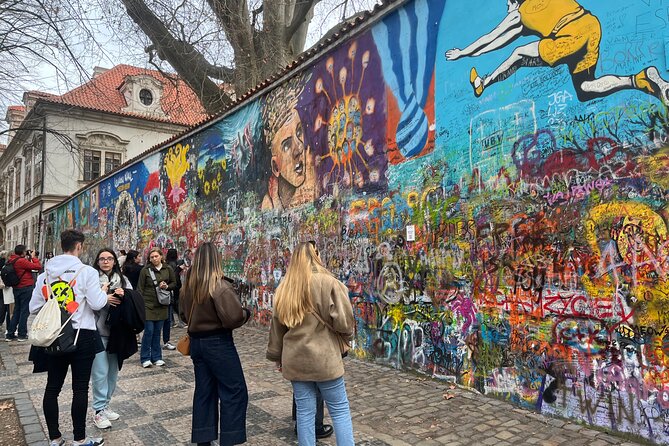
From there, you reach the Little Quarter Bridge tower—the tower that serves as an entrance to Malá Strana from Charles Bridge.
This is one of those architectural moments that helps you understand Prague’s geography. Malá Strana isn’t just “the other side.” It feels like a place you enter, and this bridge-tower setup contributes to that sensation.
Even if you’ve never visited Prague before, you’ll start recognizing the city’s internal logic: river crossings are not just transportation. They’re transitions between atmospheres.
Charles Bridge: the story behind the stone and the crowd magnet
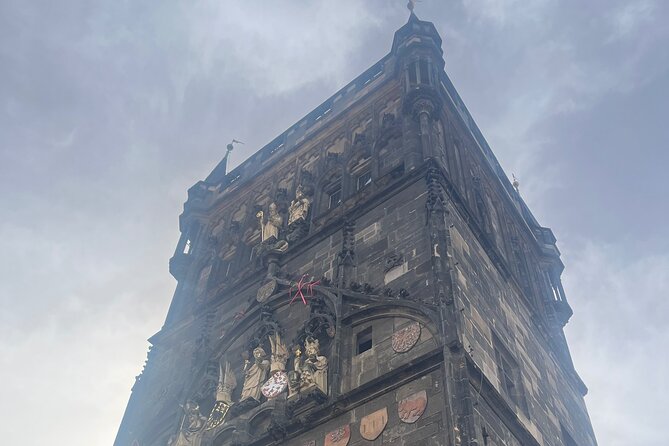
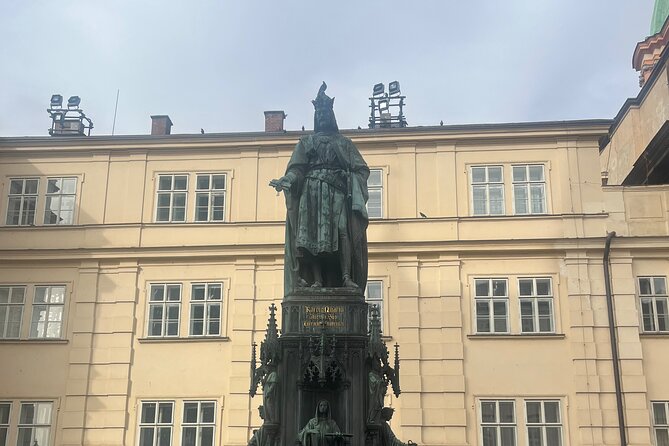
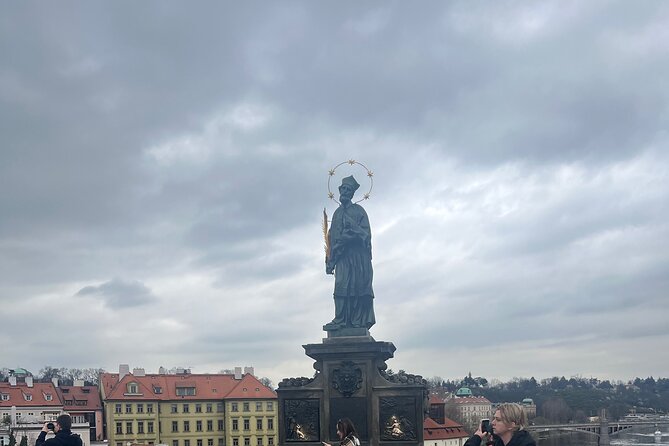
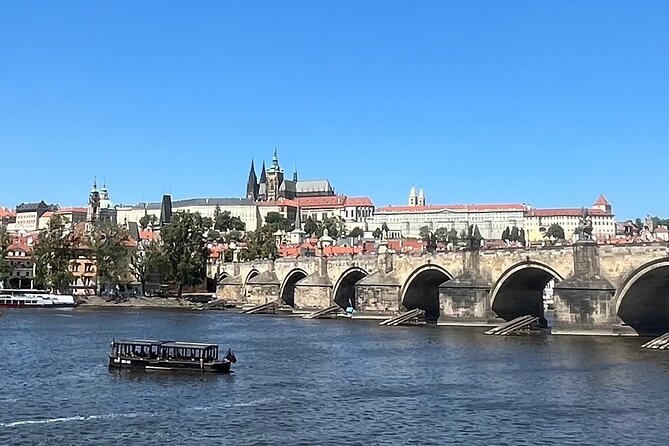
Finally, you hit the headline: Charles Bridge. Construction started in 1357 under King Charles IV and finished in the early 15th century. The tour also explains what came before: it replaced the older Judith Bridge built between 1158 and 1172, which had been badly damaged by a flood in 1342.
That replacement story is important. It’s one of the reasons Charles Bridge became the lasting symbol—it’s not just old, it’s the bridge Prague decided to rebuild as a long-term link.
The tour also covers how the name evolved. It was originally called Stone Bridge or Prague Bridge, and later became known as Charles Bridge since 1870. This detail is small, but it trains you to look for how modern names often hide older identities.
Campa island note: the tour title includes Campa island, and the overall route keeps you oriented to that Vltava river setting near the bridge area. Even if you’re not going “somewhere on an island” in the strict sense, you still get the right river context—the key to understanding why Charles Bridge became such a powerful meeting point.
Alcohol included (and snacks not): how to plan without fuss
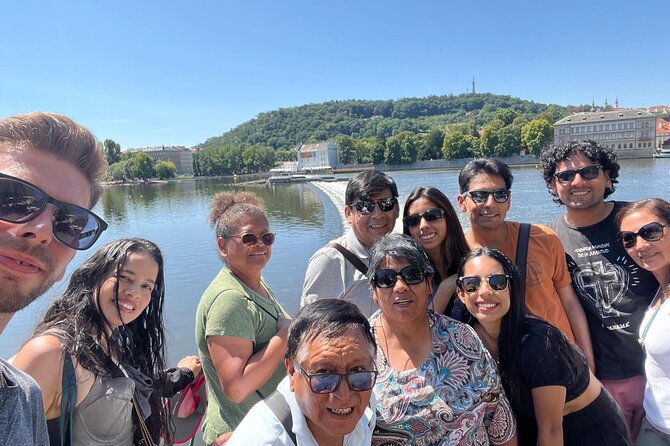
One nice value perk: alcoholic beverages are included. That’s not something every walking tour adds, and it makes the experience feel like more than a lesson-only format.
But snacks aren’t included, so don’t count on this to cover your hunger. If you’re prone to getting snacky while walking, either eat before you go or plan to grab something after. The tour is 2 hours 30 minutes long, and it’s mostly time outdoors, so you’ll feel the gap if you skipped a meal.
Also, because it depends on good weather, this is a day-tour you should mentally pair with a flexible plan. If Prague weather turns, the tour can be rescheduled or refunded—so build your day around the idea that the outdoors part might shift.
How much you’ll actually see in 2.5 hours
This is a short-but-focused walk: Rudolfinum, Manesův Most, Vojanovy Sady, the Malá Strana Bridge Tower, and then Charles Bridge. You’ll have enough time to stop, listen, and take photos at each location, but you won’t feel like you’re touring for half a day.
One caution from the overall pacing: some people prefer faster highlight-style tours. At least one guest felt the tour ran long for what they saw. That doesn’t mean the sights aren’t worth it—it means the tour leans into storytelling, and the guide’s talk time can run a bit.
So here’s how to make it work for you:
- If you enjoy stories, you’ll probably love it. The guide uses the route to teach how Prague functions.
- If you’re more photo-first, expect to actively guide your own pace. You can still enjoy the info without needing to stay parked for every word.
Price and value: what $26.93 buys you in Prague
At $26.93 per person, this is priced as an entry-level walking tour, not a premium “private guide all day” experience. The value comes from three places:
1) Guide-led context at multiple key sites. Instead of hitting only Charles Bridge, you also get Rudolfinum and the Vltava crossings, which makes your money go farther.
2) Small group size (max 30), which helps keep the tour from turning into a herd.
3) Alcoholic beverages included, which is a real perk for a tour that still stays relatively affordable.
The tradeoff is that you’re paying for the guide’s time and presentation, not for paid museum entry. The stops are marked as free for admission within the tour structure, so you shouldn’t expect this to be a skip-the-line ticket deal.
Who should book this tour (and who might want to skip it)
This tour is a great match if:
- You’re on a first visit to Prague and want a fast orientation to the river and Malá Strana area.
- You like walking tours that explain more than just where to stand for photos.
- You enjoy hearing a guide describe how a city’s culture and politics shaped everyday life.
It might be less ideal if:
- You only want the bare minimum and you’re very time-sensitive. The 2h30 length plus storytelling means you’ll feel it.
- You dislike talky guides. One guest specifically flagged that the guide was very chatty and time felt too long.
Should you book this Prague city tour with Charles Bridge and the Campa island area?
If you want a guided walk that connects Prague’s river landmarks into one clear story line, I’d book it. The stops are the right mix: music/art at Rudolfinum, city-bridge details at Manesův Most, a calm park break at Vojanovy Sady, the gateway feel at the Malá Strana bridge tower, and then the big payoff at Charles Bridge.
Just be honest with yourself about pace. This is more presentation-forward than speed-forward. If you enjoy that, the value is strong—especially with drinks included and a small-group cap.
If your idea of a great tour is pure efficiency and minimal talking, you might prefer a shorter option. But for most first-timers who want Prague to make sense quickly, this one earns a spot on day one.
FAQ
How long is the Prague city tour?
The tour lasts about 2 hours 30 minutes.
What does it cost?
It costs $26.93 per person.
Is it a small-group tour?
Yes. The group is capped at a maximum of 30 travelers.
Is a mobile ticket used?
Yes, you’ll have a mobile ticket.
Are you required to pay for admission at the stops?
The listed stops are marked as admission free within the tour structure.
Are alcoholic beverages included?
Yes, alcoholic beverages are included.
Are snacks included?
No, snacks are not included.
Where is the meeting point?
The meeting point is at 1 nám. J. Palacha 79, 110 00 Praha 1-Staré Město, Czechia.
Does the tour end at the same place?
Yes, it ends back at the meeting point.
What happens if the weather is poor?
The experience requires good weather. If it’s canceled due to poor weather, you’ll be offered a different date or a full refund. The tour can also be canceled if the minimum number of travelers isn’t met.