REVIEW · PRAGUE
Discover Prague’s most Photogenic Spots with a Local
Book on Viator →Operated by LocalBini - The go-to platform for Experiences by Locals in Europe · Bookable on Viator
Prague hits different when you know where to look. This 90-minute photo-focused walk is built around the city’s most camera-friendly corners, with a local guiding you between modern architecture and famous landmarks. I especially like the mix of iconic sights and David Černý-style look-up art that rewards stopping for angles, not just checking boxes.
Two things I’d count on for your money: you get small-group time (up to 8) and personalised recommendations that help you frame shots on the move, not after the fact. One thing to consider: the quality of the factual detail can vary by host, so if you care about very specific answers, be ready with follow-up questions.
You’ll finish with the kind of photos that usually take a full day of wandering. Expect brisk but adaptable walking, and stops that can shift with the weather and your interests. If you’re hoping for museums with tickets included, this won’t be that kind of tour.
In This Review
- Key things to know before you go
- Price and what you really get in 90 minutes
- Start at Jiráskovo náměstí, then move fast on purpose
- Dancing House: modern Prague you can photograph from the sidewalk
- David Černý stops: look up, then decide your angle
- Old Town Square and the Astronomical Clock in motion
- Charles Bridge: 14th-century icons plus statue-focused framing
- Lennon Wall and Isla Kampa: messages, scale, and street drama
- Pařížská Street: when Prague turns into fashion photography
- Letná Park and the Metronom Monument: finish with sky and viewpoint shots
- What makes this tour worth it, and when it might not be
- Photo and pacing tips so you don’t miss the best shots
- Should you book this Prague photo tour?
- FAQ
- How long is the Prague photo tour?
- How large is the group?
- What language is the tour offered in?
- Are entry tickets included for museums and monuments?
- Where does the tour start and end?
- Are service animals allowed?
Key things to know before you go
- Small group (max 8), so you’re not fighting a crowd for sightlines.
- Photo stop lineup spans modern Prague (Dancing House) to landmark viewpoints (Letná Park).
- David Černý landmarks you’ll actively look up at: Kafka’s rotating head and Freud’s Man Hanging Out.
- Old Town Square timing matters because you’ll see the Astronomical Clock in motion.
- Finish in Letná area, giving you a natural landing spot for photos and walking after the tour.
Price and what you really get in 90 minutes
At $76.46 per person for about 1 hour 30 minutes, this isn’t a budget “walk-and-talk” price. The value comes from the fact that you’re paying for a local who helps you work the angles at multiple major photo stops, while keeping the group small enough to move efficiently.
What’s included is the human part that most self-guided routes lack: a knowledgeable local, a small-group experience, and personalised recommendations. What’s not included is also important. You won’t have tickets bundled for public transport, museums, or monuments, so if you plan to add extra paid entries, you’ll want to budget.
One more practical note: this tour seems popular enough that the average booking window is about 53 days in advance, so if you’re traveling in peak season, booking earlier is smart.
You can also read our reviews of more tours and experiences in Prague.
Start at Jiráskovo náměstí, then move fast on purpose
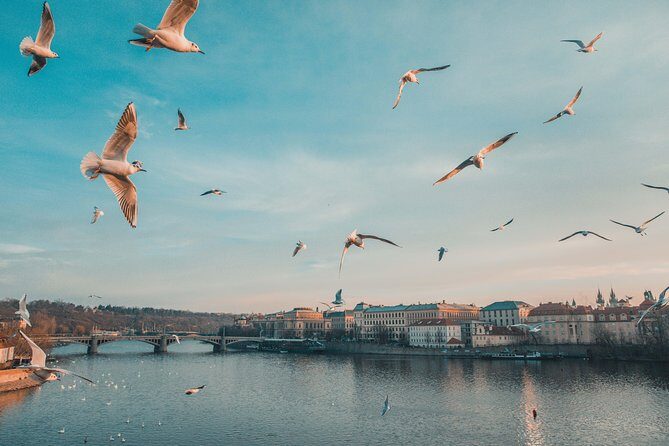
The tour begins at Jiráskovo náměstí, in Nové Město, and ends at Letenské sady near Letná. That start-to-finish flow matters: you’re moving from central sights toward viewpoints, so the walk feels like a gradual upgrade in perspective instead of a random shuffle.
You’ll also get a mobile ticket, and the tour is in English. It runs near public transportation, which is useful if you’re using transit to connect before or after the tour.
One detail worth noting: an independent local hosts it, and like any local-host setup, the style can vary. In one example guide situation named Stefan, the meeting instructions were handled promptly by text, and the group stayed on track. If you get solid pre-meet communication like that, you’ll spend less time hunting the exact starting spot and more time shooting.
Dancing House: modern Prague you can photograph from the sidewalk
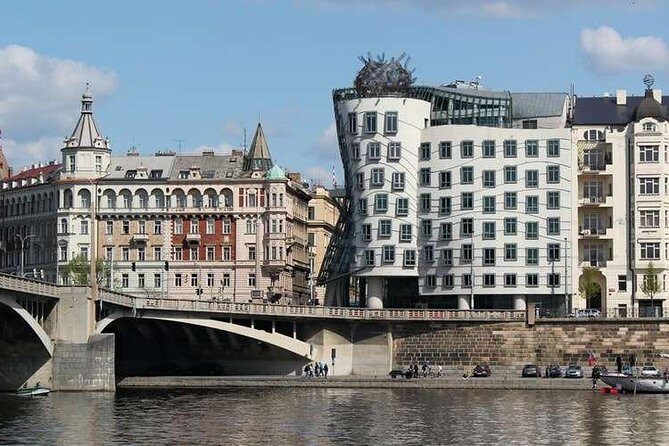
Your first major architectural stop is the Dancing House. It’s the kind of building that makes you stop even if you’re not trying to. The whole point is motion: the structure twists playfully away from strict, straight-laced norms, so it photographs differently depending on where you stand.
I like this kind of opener because it breaks the spell of “every city landmark looks similar.” Dancing House gives you modern lines, curved silhouettes, and a strong subject to practice framing. It also helps you train your eye for the tour’s bigger theme: Prague isn’t only medieval stone. It’s also ideas, experiments, and bold design.
Drawback to watch for: because it’s an outdoor photo stop, your results depend on conditions—light and crowds can change quickly, and the walking pace can tighten when the group needs to keep moving.
David Černý stops: look up, then decide your angle
A big reason this tour works for photos is the way it encourages eye-level and above-street perspectives. You’ll hit multiple David Černý pieces, including three that demand you pause and look carefully.
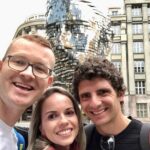
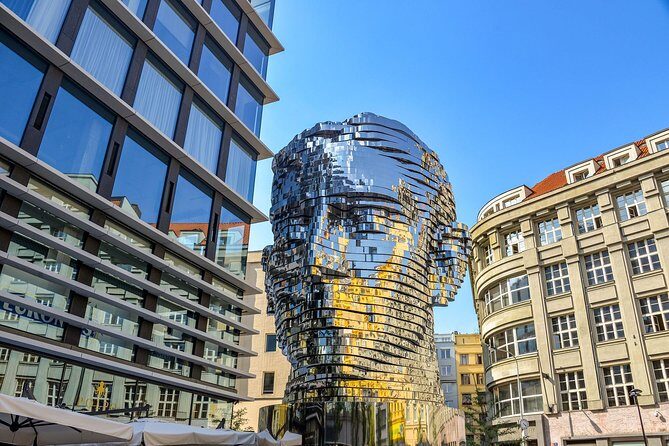
First up is Prague’s tribute to Franz Kafka: a 11-meter rotating metallic head with 42 moving layers. The key here isn’t just the scale; it’s the motion. Rotating metal creates different textures and reflections, and you’ll get better shots if you take a moment to reposition rather than firing from your first stance.
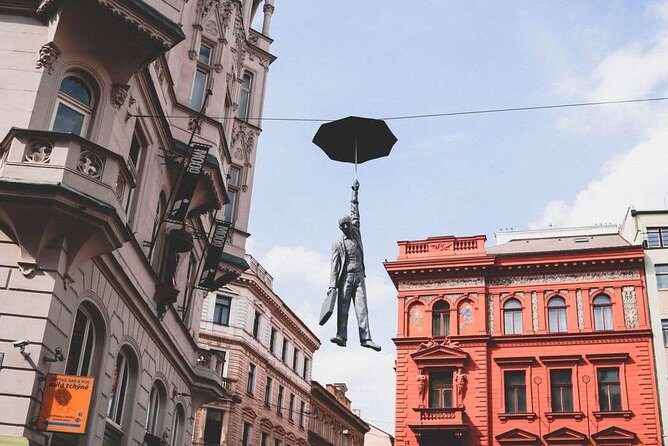
Next comes Man Hanging Out – Sigmund Freud, a provocative installation that asks you to slow down and think about what modern intellect looks like when it’s turned into public art. The “look-up” format is perfect for photos because it adds height and drama.
Later you’ll also see Babies, bronze sculptures crawling around Isla Kampa. This is a great counterpoint to all the official monuments. Instead of solemn statues, you get oddly tense little figures moving through the city’s landscape.
One consideration: with works like these, some guides may explain concepts more generally than fact-by-fact. If you want deeper context, ask specific questions like what story the artist is aiming for, or how Prague has treated these kinds of installations over time.
Old Town Square and the Astronomical Clock in motion
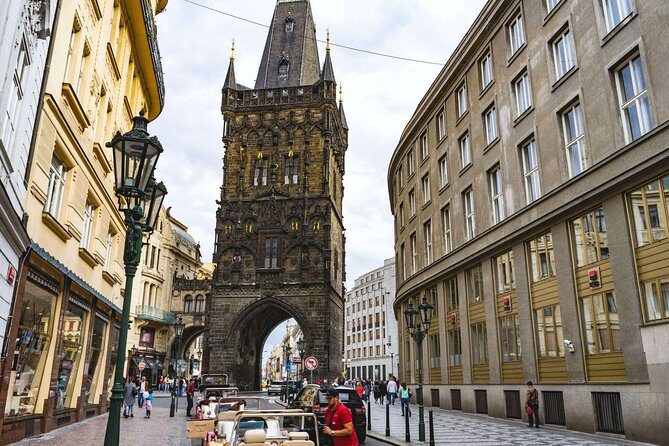
Old Town Square is the moment where the tour leans into pure landmark energy. Here you’ll see the Astronomical Clock and watch it in motion, plus take in the surrounding medieval architecture and the feeling of standing on a place that has seen centuries of events.
For photography, the clock is tricky in a good way. You’re balancing crowd lines, stone textures, and the clock face as a moving focal point. The advantage of having a local guide isn’t that they magically remove crowds; it’s that they help you choose a spot and timing so you don’t end up with a perfect photo opportunity ruined by the wrong position.
The other practical value: a guide can point out details you might otherwise miss when you’re just staring at the big show. That’s where the “personalised recommendations” piece becomes real.
If you’re sensitive to crowds, plan to stay flexible. This is one of Prague’s busiest areas, and your best shot might require a quick shift in angle rather than a long standstill.
Charles Bridge: 14th-century icons plus statue-focused framing
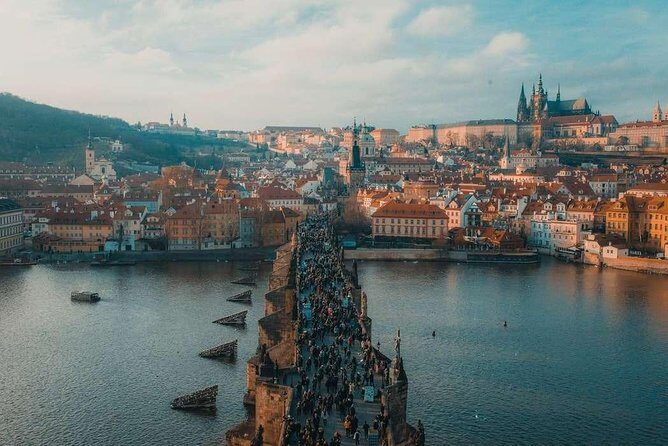
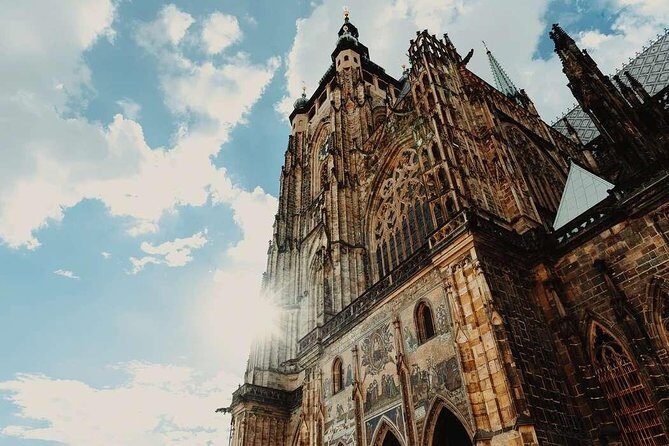
Then it’s Charles Bridge, dating back to the 14th century. This stop is classic for a reason: it’s wide enough to set up shots, but full of texture—stone, statues, and repeating visual lines that reward patience.
I like Charles Bridge for photography because it naturally creates layers. You get foreground detail (statues and railings), middle-distance architecture, and background views over rooftops. If you’re shooting portraits or silhouettes, the bridge also gives you a strong sense of place without needing a separate location scout.
The bridge is also more than a postcard. A guide’s job here is to translate the “why it matters” part—how it became a cultural route and what the statues represent—so you’re not just collecting images, you’re collecting meaning.
Possible drawback: this is a busy corridor. Even with a small group, you’ll share the space. So if your expectation is a calm, personal photo session, you’ll want to adjust your mindset.
Lennon Wall and Isla Kampa: messages, scale, and street drama
Next you’ll reach the Lennon Wall, known for messages associated with freedom and peace. For photos, it’s all about color and texture—posters, handwritten notes, and the layered look that builds over time. It’s a strong stop if you like documentary-style travel images, because it looks alive even when it’s still.
From there, you’ll move into the Isla Kampa area to see Babies by David Černý. This pairing works because you go from public writing on a wall to sculptural figures interacting with their surroundings. The “crawling bronze” concept gives you a different kind of composition: you’ll want to photograph both the figures and the way they relate to the nearby walkway and angles.
If you’re worried about being able to catch the “moment,” this part of the tour is good because the subjects aren’t reliant on the clock. You can keep adjusting your position until the framing clicks.
Pařížská Street: when Prague turns into fashion photography
Pařížská Street is Prague’s prestigious boulevard, and it’s a welcome change of pace after monuments and sculptures. This stop is about fashion and atmosphere—shops, architecture edges, and the feeling of a more refined Prague street scene.
Photography-wise, Pařížská works well for street portraits, details, and geometry shots. Instead of chasing one major object, you’re capturing a vibe. A local’s help matters because they can suggest what to frame so your photos don’t turn into random storefront snapshots.
Don’t expect quiet here. This street feels more “downtown city” than “historic square.” If you want a calmer run of images, consider slowing down for only a few minutes and then staying with the group so you don’t lose the rest of the route.
Letná Park and the Metronom Monument: finish with sky and viewpoint shots
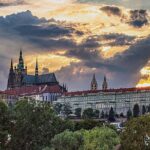
The tour ends at Letná Park, and the payoff is the view angle over Prague plus the presence of the Metronom Monument. Letná is a great closing stop because it lets you step back and see the city as a whole after a day of close-up details.
For photos, viewpoints are about timing and light. Even if clouds move, you’ll still get payoff because the composition is built around the city’s layers and the monument’s silhouette. This is where your earlier stops make sense: the city’s modern architecture, the theatrical sculptures, and the old-town icons all start looking like one story.
One practical consideration: this tour is not recommended for guests with impaired mobility, so if stairs, uneven pavement, or longer walking distances are a concern for you, plan accordingly.
What makes this tour worth it, and when it might not be
The best part of this experience is how it turns a short time window into a curated-feeling photo route without making you feel trapped. You get a small group, a local who can recommend where to stand, and a stop sequence that moves from modern architecture to landmark history to viewpoints.
The high value is practical. If you’ve only got a day or two in Prague, doing these photo hits with a local helps you avoid the usual time sink: searching for the right angles while you’re already tired.
The main risk is uneven depth in explanations. One feedback example included a guide who was polite and prompt, but the building context felt vague and some Q&A answers weren’t always precise. That doesn’t mean the tour is bad; it means you should set your expectations. Treat it as a photo-focused route with historical notes, not a textbook lecture. If you want specific facts, ask direct questions and watch how your guide responds.
Photo and pacing tips so you don’t miss the best shots
This tour is built for movement, so your goal is to keep your camera ready without slowing the group.
- Bring a camera strap or quick-access setup. You’ll be looking up often for Kafka, Freud, and other sculptures.
- When you arrive at a stop, take 30 seconds to pick one framing spot before firing lots of shots. That saves time at Old Town Square and Charles Bridge.
- Wear shoes that handle cobblestones. Your best angles often require small repositioning, not long standing.
- If weather is rough, stay flexible. Stops can vary, and shifting priorities is part of how the local adapts to conditions.
If you want the most from the photography, don’t just chase the “big object.” Capture the small relationships: reflections near metal sculpture, stone textures near the clock and bridge, and street context near Pařížská.
Should you book this Prague photo tour?
Book it if you want a short, efficient way to photograph Prague’s most recognizable—and most playful—spots with a local and a small group. The route makes sense for limited time, and the mix of Charles Bridge, the Astronomical Clock moment, and David Černý art gives you variety that’s hard to replicate with a random self-guided walk.
Skip it (or at least adjust expectations) if you’re expecting museum-level detail or very deep, super-specific historical explanations at every stop. With a host-led experience, the factual depth can vary, and you’ll get the best results if you come with curiosity and ask targeted questions.
If you’re mainly there for photos and a smooth route from central Prague to Letná, this is a solid fit. Just bring a flexible mindset and plan to slow down at the look-up art moments, because that’s where the real story—and the best shots—usually happen.
FAQ
How long is the Prague photo tour?
It lasts about 1 hour 30 minutes.
How large is the group?
It’s a small group with a maximum of up to 8 travelers.
What language is the tour offered in?
It’s offered in English.
Are entry tickets included for museums and monuments?
No. Entry tickets for public transportation, museums, and monuments are not included.
Where does the tour start and end?
It starts at Jiráskovo náměstí (Praha-Praha 2) and ends at Letenské sady 173 (Praha 7-Holešovice).
Are service animals allowed?
Yes, service animals are allowed.