REVIEW · CESKY KRUMLOV
Český Krumlov 20th century tour
Book on Viator →Operated by Wiseman Free Tour · Bookable on Viator
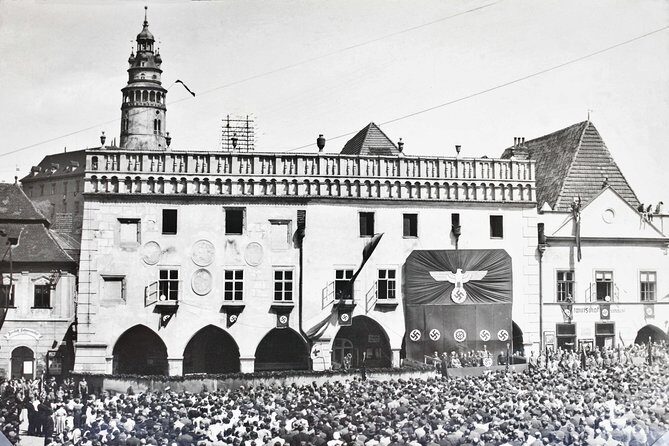
A town’s history hits different when you see it in order. This Český Krumlov 20th-century walking tour connects the town’s modern turning points—Hitler’s visit, WWII-era tensions, and the 1968 Soviet invasion—using real places and black-and-white photos.
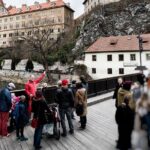
I really liked how the walk moves fast but stays clear, especially when it shifts between the stories of Jews, Nazis, and nobles. I also appreciated the fact that it’s private to your group (up to 15), so your questions don’t get swept aside.
One possible drawback: the total time is about 2 hours, so if you’re hoping for a long, museum-style visit inside the castle or synagogue, this format may feel short. Still, it’s a strong way to get your bearings and understand what mattered.
In This Review
- Key points worth your attention
- Why Český Krumlov’s 20th-Century Story Feels Real
- Price and Private-Group Value for a 2-Hour Walk
- Where the Tour Starts and Ends (and Why That’s Handy)
- Stop 1: Český Krumlov Historic Center and the 20th-Century Timeline
- Stop 2: Synagogue of Český Krumlov and the Local Jewish Story
- Stop 3: The Spot Linked to Hitler’s Arrival
- Stop 4: Český Krumlov Castle and the Last Lord vs Nazis
- Stop 5: Budějovická Gate and the 1938 Battle Context
- The Photographs: Why Black-and-White Works So Well
- Pace, Weather, and Who This Tour Fits
- Should You Book This Český Krumlov 20th-Century Tour?
- FAQ
- How long is the Český Krumlov 20th century tour?
- What does the tour cost?
- Is this tour private?
- Where does the tour start and end?
- Which locations are included?
- Do I get a mobile ticket?
- Does the tour run in bad weather?
- What is the cancellation policy?
- Are service animals allowed?
Key points worth your attention
- A tight 2-hour route through the town’s most meaningful WWII-era locations
- Private group experience with your own guide-led pace and questions
- Historic photos that make events feel more concrete than dates alone
- Synagogue stop focused on the Jewish community’s local story
- Castle storytelling about the last lord and resistance under Nazi pressure
- Budějovická Gate + 1938 battle context that explains why the town mattered
Why Český Krumlov’s 20th-Century Story Feels Real
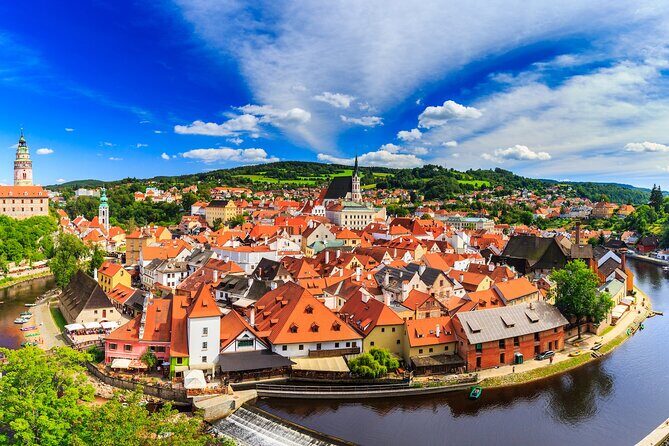
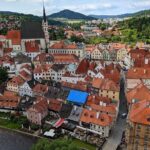
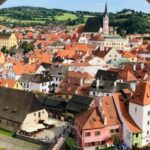
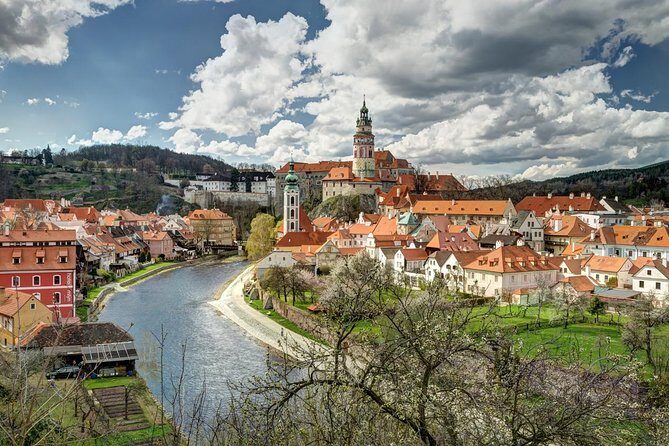
Český Krumlov can look like a movie set from far away—until you start hearing the 20th-century events attached to the streets. What I like about this tour is that it keeps the focus on the human scale: who was affected, where power showed up, and how a small town gets pulled into big history.
You’ll hear about Adolf Hitler’s arrival before the war, the town’s WWII role, and the shock of the Soviet invasion in 1968. The guide doesn’t treat it like a textbook list. Instead, the story gets anchored to corners you can actually point at.
Also, the tone is practical. This is not just facts—it’s context you can carry with you as you keep walking around Český Krumlov afterward.
You can also read our reviews of more tours and experiences in Cesky Krumlov.
Price and Private-Group Value for a 2-Hour Walk
The price is $90.76 per group (up to 15 people) for about 2 hours. That matters because you’re not paying per person for a longer, busier tour where you’re squeezed into the same talking points as everyone else.
In plain terms: if you’re traveling with friends or family, the per-group pricing can feel like real value. It also means the guide can adjust to your pace and questions without needing to manage a large crowd.
You’ll also use a mobile ticket, which is handy when you’re hopping between stops in a town where walking is the whole game. The stops themselves list admission as free, which helps you avoid surprise add-ons just to view the key spots.
Where the Tour Starts and Ends (and Why That’s Handy)
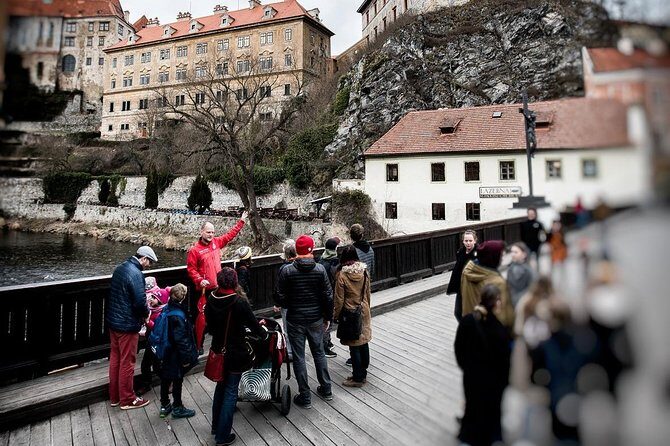
You start at Info Czech Krumlov náměstí Svornosti 2, Český Krumlov 381 01, and you finish at Budějovická Gate (Budějovická brána), Latrán 106, Český Krumlov 381 01.
That start-and-finish setup is more than a detail. If you’re the type who likes to plan your day, ending near Budějovická Gate can make it easier to keep moving without crisscrossing the old town the hard way.
It’s also close to public transportation, so you can pair this with other stops without needing a car plan. And yes, service animals are allowed, which is always worth checking before you commit.
Stop 1: Český Krumlov Historic Center and the 20th-Century Timeline
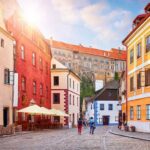
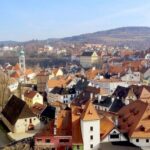
Stop 1 is the historic center, with about 40 minutes on modern history. This is where you get the storyline straight, before the tour starts pointing at the more specific locations tied to major events.
This chunk is important because it sets expectations. If you arrive knowing only the postcard view of Český Krumlov, this stop gives you the framework for the rest: why the town mattered, how outside forces pressed in, and how different groups experienced the same streets very differently.
A practical tip here: listen for the transitions. The guide connects the pre-war atmosphere to the WWII years and then onward to later events like 1968. If you catch those links early, everything else later makes more sense.
Potential drawback: because this is focused and chronological, it may not satisfy you if you’re hoping for lots of stops where you can wander on your own for long stretches. Here, the value is structure.
Stop 2: Synagogue of Český Krumlov and the Local Jewish Story
Next comes the Synagogue of Český Krumlov, scheduled for about 15 minutes. This is one of the stops I’d call essential on this tour because it expands the story beyond war politics and into local community life.
You’ll explore the history of Jews in Český Krumlov, and you’ll also see the tour’s visual style at work. The experience includes photographs—including black-and-white images connected to the synagogue—which helps turn history into something less abstract.
Why this stop matters: when a town’s history is told only through buildings tied to power, you miss the people who lived through it. This stop gives you that missing human layer.
One consideration: the synagogue time is short by design. If you need longer quiet time at the site or want to read everything slowly, plan to return later on your own after the tour so you can go at your pace.
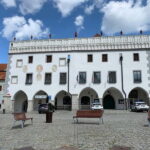
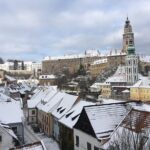
Stop 3: The Spot Linked to Hitler’s Arrival
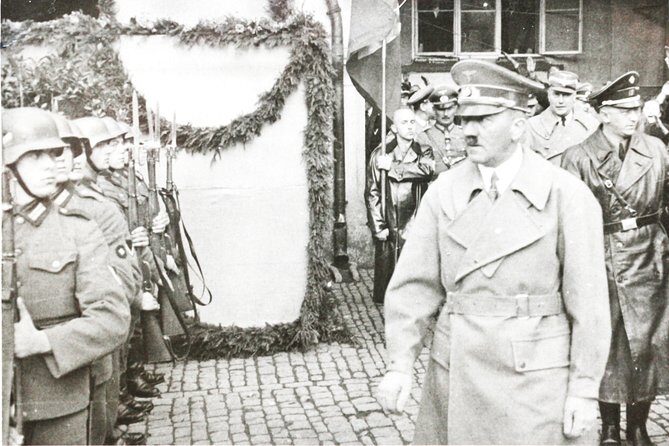
Stop 3 is brief—about 10 minutes—but it’s one of the most striking moments of the tour. You’ll learn about Adolf Hitler’s arrival to Český Krumlov, connected to events before the war.
In a walking tour like this, short stops can still land hard, because the guide can explain why the location mattered and what it meant for locals. Here, the goal isn’t long sightseeing. It’s context.
What I liked is that it’s not just name-dropping. The tour ties the visit into the broader buildup of WWII pressures, so the moment feels like a piece of a larger picture rather than a random headline.
If you’re sensitive to heavy history, this stop is one to take slowly. But it’s also one of the best examples of how the tour treats the past seriously without turning it into spectacle.
Stop 4: Český Krumlov Castle and the Last Lord vs Nazis
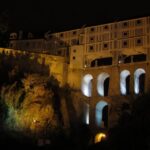
Stop 4 is Český Krumlov Castle, about 20 minutes, and this is where the tour’s storytelling gets very grounded. You’ll hear a story about the last lord of the town and his struggle against Nazis.
This stop is especially valuable if you want your understanding of WWII to include more than military events. The guide connects power, resistance, and everyday consequences—how big forces played out through local leadership.
You’ll also hear why people call Český Krumlov’s castle special in a national context. It’s described as the second biggest castle in the Czech Republic, and even if you’re not thinking “biggest” in the architectural sense, the size and prominence help explain why it carried symbolic weight.
Practical note: because the castle time is limited, you won’t get a full self-guided castle day here. Instead, you get the human story and visual cues to help you make sense of what you’re seeing.
Stop 5: Budějovická Gate and the 1938 Battle Context
The final stop is Budějovická Gate (Budějovická brána), with about 15 minutes. This is where the tour tightens the WWII thread and brings in the battle of Český Krumlov in 1938.
Gates sound simple, but in wartime they can become strategic nodes—places where movement, defense, and control matter. Here, the guide uses the gate to explain why this part of town wasn’t just pretty architecture. It was part of how the conflict unfolded.
You’ll also get the bigger framing of WWII history as the tour wraps up. That ending is useful because you can then walk on with a clearer idea of what the town’s defensive posture and geography meant.
If you like a clean finish, this works well. You end at a point that’s easy to orient from, and your questions about the town’s role don’t feel dangling.
The Photographs: Why Black-and-White Works So Well
A key ingredient on this tour is the use of black-and-white photographs. These images don’t just decorate the story. They help you bridge time.
When you’re standing in modern streets, a photo can quickly show what changed and what didn’t. That’s why this kind of visual storytelling is effective: it stops you from treating history like a separate world.
In this experience, you’ll see photos connected to key places, including the local synagogue area. That means the visuals reinforce the route you’re walking, not just random scenes.
One small tip: if you can, pause where the guide tells you to pause. Even a 10-second stop at the right angle makes the photo’s point clearer. It’s a small effort that pays off.
Pace, Weather, and Who This Tour Fits
The pacing is tour-guide paced and stop-based, with a total of roughly 2 hours. Expect short segments, clear explanations, and time caps at each location. It’s the right rhythm if you want historical orientation without spending a whole day in a single site.
The tour requires good weather. That means if the forecast looks bleak, you might want to choose a different day rather than forcing it.
This is also a good match if you:
- want a 20th-century focus in a town that’s usually marketed for older eras
- like story-driven walking tours with photos
- travel with a group and want a private setup rather than a large crowd
It may be less ideal if you’re the type who needs long on-site time for reading, self-guided exploration, or quiet museum-style immersion.
Should You Book This Český Krumlov 20th-Century Tour?
I’d book it if you want history that feels specific to Český Krumlov, not just generic WWII talk. The combination of a structured 2-hour route, visual black-and-white photos, and stops that cover the synagogue, Hitler’s arrival, castle resistance, and Budějovická Gate (1938 battle context) makes the tour a strong primer.
If your priority is spending hours inside buildings or doing a deep architectural crawl, you might feel more satisfied pairing this with independent time afterward. But for most visitors, this tour hits the sweet spot: it gives you clarity fast and helps you read the town with better eyes.
FAQ
How long is the Český Krumlov 20th century tour?
It runs for about 2 hours (approx.).
What does the tour cost?
It costs $90.76 per group, up to 15 people.
Is this tour private?
Yes. It’s a private tour/activity, and only your group participates.
Where does the tour start and end?
It starts at Info Czech Krumlov nám. Svornosti 2, 381 01 Český Krumlov and ends at Budějovická Gate (Budějovická brána), Latrán 106, 381 01 Český Krumlov.
Which locations are included?
You visit the Historic Center of Český Krumlov, the Synagogue of Český Krumlov, a stop about Adolf Hitler’s arrival, Český Krumlov Castle, and Budějovická Gate.
Do I get a mobile ticket?
Yes, this tour uses a mobile ticket.
Does the tour run in bad weather?
The tour requires good weather. If it’s canceled due to poor weather, you’ll be offered a different date or a full refund.
What is the cancellation policy?
You can cancel for free up to 24 hours in advance for a full refund.
Are service animals allowed?
Yes, service animals are allowed.